
UNITED STATES SECURITIES AND EXCHANGE COMMISSION Washington, D.C. 20549 FORM (Mark One) For the fiscal year ended or For the transition period from to Commission File Number: (Exact name of registrant as specified in its charter) (State or other jurisdiction of incorporation or organization)______________________ (I.R.S. Employer Identification No.) (Address of principal executive offices) (Zip code) ( (Registrant’s telephone number, including area code) | ||
Securities registered pursuant to Section 12(b) of the Act: | ||||||||
| Title of each class | Trading symbol(s) | Name of each exchange on which registered | ||||||
Securities registered pursuant to section 12(g) of the Act: None _____________________________________________________________________________________________________ (Title of class) Indicate by check mark if the registrant is a well-known seasoned issuer, as defined in Rule 405 of the Securities Act. Indicate by check mark if the registrant is not required to file reports pursuant to Section 13 or Section 15(d) of the Act. Yes o Indicate by check mark whether the registrant (1) has filed all reports required to be filed by Section 13 or 15(d) of the Securities Exchange Act of 1934 during the preceding 12 months (or for such shorter period that the registrant was required to file such reports), and (2) has been subject to such filing requirements for the past 90 days. Indicate by check mark whether the registrant has submitted electronically every Interactive Data File required to be submitted pursuant to Rule 405 of Regulation S-T (§232.405 of this chapter) during the preceding 12 months (or for such shorter period that the registrant was required to submit such files). Indicate by check mark whether the registrant is a large accelerated filer, an accelerated filer, a non-accelerated filer, a smaller reporting company, or an emerging growth company. See the definitions of “large accelerated filer,” “accelerated filer,” “smaller reporting company,” and "emerging growth company" in Rule 12b-2 of the Exchange Act. | ||
| x | Non-accelerated filer | ☐ | ||||||||||||
| Accelerated filer | ☐ | Smaller reporting company | ||||||||||||
| Emerging growth company | ||||||||||||||
If an emerging growth company, indicate by check mark if the registrant has elected not to use the extended transition period for complying with any new or revised financial accounting standards provided pursuant to Section 13(a) of the Exchange Act. ☐ Indicate by check mark whether the registrant has filed a report on and attestation to its management’s assessment of the effectiveness of its internal control over financial reporting under Section 404(b) of the Sarbanes-Oxley Act (15 U.S.C. 7262(b)) by the registered public accounting firm that prepared or issued its audit report. If securities are registered pursuant to Section 12(b) of the Act, indicate by check mark whether the financial statements of the registrant included in the filing reflect the correction of an error to previously issued financial statements. Indicate by check mark whether any of those error corrections are restatements that required a recovery analysis of incentive-based compensation received by any of the registrant’s executive officers during the relevant recovery period pursuant to §240.10D-1(b). ☐ Indicate by check mark whether the registrant is a shell company (as defined in Rule 12b-2 of the Exchange Act). Yes ☐ No The aggregate market value of the 401,051,618 shares of Class A common voting stock held by non-affiliates of the Registrant, computed by reference to the closing price as reported on the Nasdaq Stock Exchange, as of the last business day of the registrant’s most recently completed second fiscal quarter (June 30, 2025) was $ As of January 31, 2026, there were | ||
DOCUMENTS INCORPORATED BY REFERENCE | ||

A Letter from Our CEO Dear Shareholders, 2025 marked an important inflection point for Recursion — the year our AI-native foundation began translating from theoretical advantage into clinical reality. We moved from vision and promise to demonstrating tangible clinical evidence powered by our end-to-end AI-native operating system for creating medicines, and we did so with growing confidence, discipline, and momentum. As I reflect on the year behind us and look ahead to 2026 and beyond, I believe Recursion is entering one of its most consequential chapters yet. The foundational question is no longer whether AI can play a role in drug discovery and development. We have demonstrated that it can — and we believe the next decade will be defined by how deeply AI is embedded into the fabric of new medicines itself. The more important question now is: what value does it create, and how does that value show up in the lives of patients? Quality medicines are the standard by which AI in medicine will ultimately be judged. That value will not come from AI layered onto the margins of R&D, but from seamlessly integrating AI into the drug discovery and development process itself — improving probability of success, compressing timelines, and deploying capital more efficiently. We are positioning Recursion not only to meet that standard, but to define it. My conviction in our path forward is rooted in the foundation we have built and the proof points we are beginning to generate through our full stack AI platform. Our strategy is organized around three core pillars, underpinned by exceptional people and a culture grounded in rigor and curiosity. | ||||||||
 | First: Translating Insights into Proof Points — and Ultimately into Medicines. In 2025, we achieved our first AI-enabled clinical proof of concept. In familial adenomatous polyposis (FAP), REC-4881 demonstrated that a novel, platform-derived biological insight — identifying MEK1/2 inhibition as a therapeutic entry point — can translate into meaningful clinical outcomes. For patients living with a progressive, lifelong disease with no approved pharmacotherapies, this represents tangible progress. This milestone is more than a single data readout. It is early validation of a core premise: that systematically decoding biology at scale can yield differentiated medicines — and that the more we learn, the stronger the system becomes. We enter 2026 with five clinical programs advancing with defined differentiation and clear go/no-go criteria, alongside a growing discovery pipeline informed by platform-generated insights. We are also delivering for our partners, having achieved over $500 million in upfront and progress-based milestone payments to date. With Roche and Genentech, we have delivered whole-genome CRISPR phenomaps in human neuronal and microglial cells, generating $213 million in cash inflows. With Sanofi, we are advancing AI-driven small-molecule programs in oncology and immunology, contributing $134 million in cash inflows to date. These are not isolated successes; they are signals that our platform is beginning to compound — generating insights, molecules, and proof from a shared technological core. Second: Surgically Doubling Down on our Full Stack AI Platform Innovation, Grounded in Impact. AI must improve outcomes across the full R&D value chain — not just isolated steps. Our focus is therefore on building and operating an integrated, end-to-end platform spanning biology, chemistry, and clinical development — designed to continuously learn across programs and improve with scale. | |||||||
| “THE FOUNDATIONAL QUESTION IS NO LONGER WHETHER AI CAN PLAY A ROLE IN DRUG DISCOVERY AND DEVELOPMENT. WE HAVE DEMONSTRATED THAT IT CAN — AND WE BELIEVE THE NEXT DECADE WILL BE DEFINED BY HOW DEEPLY AI IS EMBEDDED INTO THE FABRIC OF NEW MEDICINES ITSELF. THE MORE IMPORTANT QUESTION NOW IS: WHAT VALUE DOES IT CREATE, AND HOW DOES THAT VALUE SHOW UP IN THE LIVES OF PATIENTS?” | ||||||||
 | Drug discovery has historically been fragmented, with biological hypotheses, molecular design, and clinical execution optimized independently. We have built Recursion to close that gap — not through incremental tools, but through a deeply integrated architecture that connects experimental data, machine learning, and execution in a unified feedback loop. In biology, phenomics combined with multi-omic and patient-derived data is strengthening translational insight. In chemistry, precision generative design — strengthened by the integration of Exscientia — accelerates convergence on high-quality candidates, including against historically difficult targets. In clinical development, our newly created AI-enabled ClinTech system applies patient-level inference to improve trial design, patient selection, and execution, increasing signal quality and operational efficiency. When AI functions as a continuous system rather than a collection of tools, its impact compounds— and that compounding effect is the foundation of our long-term strategic advantage. That is the platform we are building. Third: Pairing Bold Ambition with Discipline. Ambition must be matched with focus to create durable value. In 2025, we sharpened our portfolio, streamlined operations, and applied more rigorous capital allocation. We materially reduced projected cash burn while preserving investment in our highest-impact programs and platform capabilities. This discipline extends beyond financial stewardship. It shapes how we set milestones, evaluate data, and make transparent go/no-go decisions. As we move into 2026, you should expect continued execution rigor and a relentless orientation toward value creation. The foundation of this progress is our people — teams fluent in both science and AI, who approach biology with humility and technology with rigor. They are connecting data, models, and clinical insight into a unified system designed to deliver differentiated therapies. Making medicines has always been personal for me. Recursion was founded on a belief I deeply share: that biology is complex, but not unknowable — and that advances in AI and automation can fundamentally reshape how medicines are discovered. The next phase is about scaling that belief into durable impact — across programs, partnerships, and ultimately across diseases. We will continue advancing the Recursion Operating System as a source of long-term differentiation while prioritizing programs and partnerships where we have the strongest conviction and greatest opportunity to deliver for patients. Ambition and discipline are not opposing forces — they are mutually reinforcing. Approximately 80% of diseases still lack disease-modifying therapies. The opportunity before us is vast. The credibility of AI in medicine will not be earned through better models alone, but through translation — from data to decisions, from platforms to pipelines, and from science to patients. We intend to be the company that defines that standard. Our objective is clear: apply AI and science with rigor, focus, and humanity to deliver meaningful medicines. Thank you for your continued partnership as we build a company defined not only by impact and discipline, but by the ambition to drive durable value creation to reshape how medicines are discovered and delivered for generations to come. Sincerely,  Najat Khan, Ph.D. Chief Executive Officer, President, and Board Member Recursion | |||||||
| “MAKING MEDICINES HAS ALWAYS BEEN PERSONAL FOR ME. RECURSION WAS FOUNDED ON A BELIEF I DEEPLY SHARE: THAT BIOLOGY IS COMPLEX, BUT NOT UNKNOWABLE — AND THAT ADVANCES IN AI AND AUTOMATION CAN FUNDAMENTALLY RESHAPE HOW MEDICINES ARE DISCOVERED.” | ||||||||
 | ||||||||
TABLE OF CONTENTS
PART I
Risk Factor Summary
Below is a summary of the principal factors that make an investment in the common stock of Recursion Pharmaceuticals, Inc. (Recursion, the Company, we, us, or our) risky or speculative. This summary does not address all of the risks we face. Additional discussion of the risks summarized below, and other risks that we face, can be found in the section titled “Item 1A. Risk Factors” in this Annual Report on Form 10-K.
Risks Related to Our Limited Operating History, Financial Position, and Need for Additional Capital
◦We are a clinical-stage biotechnology company with a limited operating history and no products approved by regulators for commercial sale, which may make it difficult to evaluate our current and future business prospects.
◦We have incurred significant operating losses and anticipate that we will incur continued losses for the foreseeable future, and will need to raise substantial additional funding, which may cause dilution to stockholders, restrict operations, require us to relinquish rights to our technologies or drug candidates, and divert management’s attention from our core business.
◦We may be required to repurchase for cash, or to facilitate the purchase by a third party of, the shares of Class A common stock that were issued to the Bill & Melinda Gates Foundation if we default under the global access commitments agreement with Exscientia, which could have an adverse impact on us.
◦We are engaged in strategic collaborations and we intend to seek to establish additional collaborations, including for the clinical development or commercialization of our drug candidates. If we are unable to do so, or if current and future collaborations are not successful, we may have to alter our development and commercialization plans.
◦We have no products approved for commercial sale and have not generated any revenue from product sales. We or our current and future collaborators may never successfully develop and commercialize our drug candidates, which would negatively affect our results of operation and our ability to continue our business operations.
◦If we engage in future acquisitions or strategic partnerships, this may increase our capital requirements, dilute our stockholders’ equity, cause us to incur debt or assume contingent liabilities, and subject us to other risks.
Risks Related to the Discovery and Development of Drug Candidates
◦Our approach to drug discovery is unique and may not lead to successful drug products for various reasons, including, but not limited to, challenges identifying mechanisms of action for our candidates.
◦Our drug candidates are in preclinical or clinical development, which are lengthy and expensive processes with uncertain outcomes and the potential for substantial delays, including due to difficulties in the enrollment of patients in clinical trials.
◦Our planned clinical trials, or those of our current and potential future collaborators, may not be successful and may not receive regulatory approval or market acceptance.
◦We may develop drug candidates for use in combination with other therapies, which exposes us to additional risks.
◦We conduct clinical trials for our drug candidates outside the United States, and the FDA and similar foreign regulatory authorities may not accept data from such trials.
◦It is difficult to establish with precision the incidence and prevalence for target patient populations of our drug candidates. If such data is not accurate our revenue and ability to achieve profitability will be adversely affected, possibly materially.
◦We may never realize a return on our investment of resources and cash in our drug discovery collaborations.
◦Our competitors may discover, develop, or commercialize products before, or more successfully than, we do.
◦Because we have multiple programs and drug candidates in our pipeline and are pursuing a variety of target indications and treatment modalities, we may expend our resources to pursue a particular drug candidate and fail to capitalize on development opportunities or candidates that may be more profitable or for which there is a greater likelihood of success.
◦Our product candidates may cause significant adverse events, toxicities or other undesirable side effects when used alone or in combination with other approved products or investigational new drugs that may result in a safety profile that could prevent regulatory approval or market acceptance, limit commercial potential, or result in material negative consequences.
Risks Related to Our Platform and Data
◦We have invested, and expect to continue to invest, in research and development efforts to further enhance our drug discovery platform, which is central to our mission. If the return on these investments is lower or develops more slowly than we expect, our business and operating results may suffer.
◦Our information technology systems and infrastructure may fail or experience security breaches and incidents that could adversely impact our business and operations and subject us to liability.
◦Interruptions in the availability of server systems or communications with internet or cloud-based services, or failure to maintain the security, confidentiality, accessibility, or integrity of data stored on such systems, could harm our business.
◦Our solutions utilize third-party open source software (OSS), which presents risks that could adversely affect our business and subject us to possible litigation.
◦Issues relating to the use of artificial intelligence and machine learning in our offerings could adversely affect our business.
Risks Related to Our Operations/Commercialization
◦Even if any drug candidates we develop receive marketing approval, they may fail to achieve the degree of market acceptance by physicians, patients, healthcare payors, and others in medicine necessary for commercial success.
◦If we are unable to establish sales and marketing capabilities or enter into agreements with third parties to sell and market any drug candidates we may develop, we may not be successful in commercializing those drug candidates, if approved.
◦We are subject to regulatory and operational risks associated with the physical and digital infrastructure at both our internal facilities and those of our external service providers.
◦The manufacture of drugs is complex, and our third-party manufacturers may encounter difficulties in production or supply chain. If any of our third-party manufacturers encounter such difficulties, our ability to provide adequate supply of our product candidates for clinical trials or our products for patients, if approved, could be delayed or prevented.
Risks Related to Our Intellectual Property
◦Our success significantly depends on our ability to obtain and maintain patents of adequate scope covering our proprietary technology and drug candidate products. Obtaining and maintaining patent assets is inherently challenging, and our pending and future patent applications may not issue with the scope we need, if at all.
◦Our current proprietary position for certain drug product candidates depends upon our owned or in-licensed patent filings covering components of such drug product candidates, manufacturing-related methods, formulations, and/or methods of use, which may not adequately prevent a competitor or other third party from using the same drug candidate.
◦We may not be able to protect our intellectual property and proprietary rights throughout the world.
◦If we do not obtain patent term extension and data exclusivity for any drug product candidates we may develop, our business may be materially harmed.
◦We may need to license certain intellectual property from third parties, and such licenses may not be available or may not be available on commercially reasonable terms.
◦Changes in U.S. patent law could diminish the value of patents, thereby impairing our ability to protect our products.
◦Issued patents covering our drug product candidates and proprietary technology that we have developed or may develop in the future could be found invalid or unenforceable if challenged in the United States or abroad.
Risks Related to Acquisitions
◦The anticipated benefits of the business combination with Exscientia may vary from expectations.
◦As a company with substantial operations outside of the United States, we are subject to economic, political, regulatory and other risks associated with international operations.
Risks Related to Government Regulation
◦We may be unable to obtain regulatory approval and, as a result, may be unable to commercialize our product candidates.
◦Regulatory authorities may not accept data from trials conducted in locations outside of their jurisdiction.
◦Even if we receive FDA or other regulatory approval for any of our drug candidates, we will be subject to ongoing regulatory obligations and other conditions that may result in significant additional expense, as well as the potential recall or market withdrawal of an approved product if unanticipated safety issues are discovered.
◦Regulatory agencies actively enforce the laws and regulations prohibiting the promotion of off-label uses.
◦Though we have been granted orphan drug designation for certain of our drug candidates, we may be unsuccessful or unable to maintain the benefits associated with such a designation, including the potential for market exclusivity.
◦We are subject to U.S. and foreign laws regarding privacy, data protection, and data security that could entail substantial compliance costs, while the failure to comply could subject us to significant liability.
◦Regulatory and legislative developments related to the use of AI could adversely affect our use of such technologies in our products, services, and business.
Other Risks
◦Third parties that perform some of our research and preclinical testing or conduct our clinical trials may not perform satisfactorily or their agreements may be terminated.
◦Third parties that manufacture our drug candidates for preclinical development, clinical testing, and future commercialization may not provide sufficient quantities of our drug candidates or products at an acceptable cost, which could delay, impair, or prevent our development or commercialization efforts.
◦We may not realize all of the anticipated outcomes and benefits of our Acquisitions.
◦Our future success depends on our ability to attract, retain, and motivate key personnel.
◦We have identified material weaknesses in our internal control over financial reporting.
Cautionary Note Regarding Forward-Looking Statements
This Annual Report on Form 10-K contains “forward-looking statements” about us and our industry within the meaning of Section 27A of the Securities Act of 1933, as amended, and Section 21E of the Securities Exchange Act of 1934, as amended. All statements other than statements of historical facts are forward-looking statements. In some cases, you can identify forward-looking statements by terms such as “may,” “will,” “should,” “would,” “expect,” “plan,” “anticipate,” “could,” “intend,” “target,” “project,” “contemplate,” “believe,” “estimate,” “predict,” “potential,” or “continue” or the negative of these terms or other similar expressions. Forward-looking statements contained in this report may include without limitation those regarding:
•our research and development programs;
•the initiation, timing, progress, results, and cost of our current and future preclinical and clinical studies, including statements regarding the design of, and the timing of initiation and completion of, studies and related preparatory work, as well as the period during which the results of the studies will become available and key milestones will be met;
•our continued ability to achieve milestones and receive associated milestone payments and royalties from current and future collaborations;
•our ability to use our combined assets from our business combination to create a fully integrated, technology-first drug discovery platform;
•our ability to reduce our cash burn;
•the timing and likelihood of our ability to shift our wet-lab from a source of data generation to a model for validating data from AI-generated results and the projected impact of our ClinTech platform on our business;
•the ability and willingness of our collaborators to continue research and development activities relating to our development candidates and investigational medicines;
•future agreements with third parties in connection with the commercialization of our investigational medicines and any other approved product;
•the timing, scope, and likelihood of regulatory filings and approvals, including the timing of Investigational New Drug applications and final approval by the U.S. Food and Drug Administration, or FDA, of our current drug candidates and any other future drug candidates, as well as our ability to maintain any such approvals;
•the timing, scope, or likelihood of foreign regulatory filings and approvals, including our ability to maintain any such approvals;
•the size of the potential market opportunity for TechBio companies, including the expected impact of AI-enabled technologies;
•the size of the potential market opportunity for our drug candidates, including our estimates of the number of patients who suffer from the diseases we are targeting;
•our ability to identify viable new drug candidates for clinical development and the rate at which we expect to identify such candidates, whether through an inferential approach or otherwise;
•our expectation that the assets that will drive the most value for us are those that we will identify in the future using our datasets and tools;
•our ability to develop and advance our current drug candidates and programs into, and successfully complete, clinical studies;
•our ability to reduce the time or cost or increase the likelihood of success of our research and development relative to the traditional drug discovery paradigm, including the use of data sets from our partners to accelerate the development of our AI-enabled technologies;
•our ability to improve, and the rate of improvement in, our infrastructure, datasets, biology, technology tools, and drug discovery platform, and our ability to realize benefits from such improvements;
•our ability to effectively use machine learning and artificial intelligence in our drug development process;
•our ability to leverage our collaborations and partnerships to develop our products and grow our business;
•our expectations related to the performance and benefits of our BioHive-2 supercomputer, Recursion OS, and our digital chemistry platform;
•our ability to realize a return on our investment of resources and cash in our drug discovery collaborations;
•our ability to sell or license assets and re-invest proceeds into funding our long-term strategy;
•our ability to scale like a technology company and to add more programs to our pipeline each year;
•our ability to acquire and generate datasets to train and develop our AI-enabled technologies;
•our ability to successfully compete in a highly competitive market;
•our manufacturing, commercialization, and marketing capabilities and strategies;
•our plans relating to commercializing our drug candidates, if approved, including the geographic areas of focus and sales strategy;
•our expectations regarding the approval and use of our drug candidates in combination with other drugs;
•the rate and degree of market acceptance and clinical utility of our current drug candidates, if approved, and other drug candidates we may develop;
•our competitive position and the success of competing approaches that are or may become available, including with respect to our AI-enabled technologies;
•our estimates of the number of patients that we will enroll in our clinical trials and the timing of their enrollment;
•the beneficial characteristics, safety, efficacy, and therapeutic effects of our drug candidates;
•our plans for further development of our drug candidates, including additional indications we may pursue;
•our ability to adequately protect and enforce our intellectual property and proprietary technology, including the scope of protection we are able to establish and maintain for intellectual property rights covering our current drug candidates and other drug candidates we may develop, receipt of patent protection, the extensions of existing patent terms where available, the validity of intellectual property rights held by third parties, the protection of our trade secrets, and our ability not to infringe, misappropriate or otherwise violate any third-party intellectual property rights;
•the impact of any intellectual property disputes and our ability to defend against claims of infringement, misappropriation, or other violations of intellectual property rights;
•our ability to keep pace with new technological developments, including with respect to AI;
•our ability to utilize third-party open source software and cloud-based infrastructure, on which we are dependent;
•the adequacy of our insurance policies and the scope of their coverage;
•the potential impact of a pandemic, epidemic, or outbreak of an infectious disease, such as COVID-19, or natural disaster, global political instability, or warfare, and the effect of such outbreak or natural disaster, global political instability, or warfare on our business and financial results;
•our ability to maintain our technical operations infrastructure to avoid errors, delays, or cybersecurity breaches;
•our continued reliance on third parties to conduct additional clinical trials of our drug candidates, and for the manufacture of our drug candidates for preclinical studies and clinical trials;
•our ability to obtain, and negotiate favorable terms of, any collaboration, licensing or other arrangements that may be necessary or desirable to research, develop, manufacture, or commercialize our platform and drug candidates;
•the pricing and reimbursement of our current drug candidates and other drug candidates we may develop, if approved;
•our estimates regarding expenses, future revenue, capital requirements, and need for additional financing;
•our financial performance;
•the period over which we estimate our existing cash and cash equivalents will be sufficient to fund our future operating expenses and capital expenditure requirements;
•our ability to raise substantial additional funding;
•the impact of current and future laws and regulations, and our ability to comply with all regulations that we are, or may become, subject to;
•the need to hire additional personnel and our ability to attract and retain such personnel;
•the impact of any current or future litigation, which may arise during the ordinary course of business and be costly to defend;
•our ability to maintain effective internal control over financial reporting and disclosure controls and procedures, including our ability to remediate the material weaknesses in internal control over financial reporting;
•our anticipated use of our existing resources and the net proceeds from our public offerings; and
•other risks and uncertainties, including those listed in the section titled “Risk Factors.”
We have based these forward-looking statements largely on our current expectations and projections about our business, the industry in which we operate, and financial trends that we believe may affect our business, financial condition, results of operations, and prospects. These forward-looking statements are not guarantees of future performance or development. These statements speak only as of the date of this report and are subject to a number of risks, uncertainties and assumptions described in the section titled “Risk Factors” and elsewhere in this report. Because forward-looking statements are inherently subject to risks and uncertainties, some of which cannot be predicted or quantified, you should not rely on these forward-looking statements as predictions of future events. The events and circumstances reflected in our forward-looking statements may not be achieved or occur and actual results could differ materially from those projected in the forward-looking statements. Except as required by applicable law, we undertake no obligation to update or revise any forward-looking statements contained herein, whether as a result of any new information, future events, or otherwise.
In addition, statements that “we believe” and similar statements reflect our beliefs and opinions on the relevant subject. These statements are based upon information available to us as of the date of this report. While we believe such information forms a reasonable basis for such statements, the information may be limited or incomplete, and our statements should not be read to indicate that we have conducted an exhaustive inquiry into, or review of, all potentially available relevant information. These statements are inherently uncertain and you are cautioned not to unduly rely upon them.

Item 1. Business.
Business Overview
Recursion is a clinical-stage TechBio company with a mission to decode biology to radically improve lives. We have advanced a portfolio of differentiated internal programs and strategic partnerships powered by our integrated drug discovery and development platform, the Recursion Operating System (OS). This platform provides end-to-end, AI-native capabilities that span from novel biological ideas through the clinic, integrating multimodal biological data generation, AI-powered small molecule synthesis, and AI-enabled clinical development. All of our technologies are designed to translate complex science into medicines that matter — faster, better, and at scale — for patients who are waiting.
Historically, it has taken over ten years and an average capitalized R&D cost of approximately $2-3.5 billion to move a drug discovery project from early discovery to an approved therapeutic, with less than 4% of drug discovery programs initiated resulting in an approved medicine.1,2,3,4,5,6 Today, we are working to transform the traditional high-attrition, “V-shaped” discovery funnel by pivoting to a ‘T-shaped’ model. By leveraging advanced computational tools across biology, chemistry and clinical development, we aim to rapidly narrow a broad set of potential medicines to the candidates with the highest probabilities of success, with the goal to move programs through development more efficiently and with less attrition.
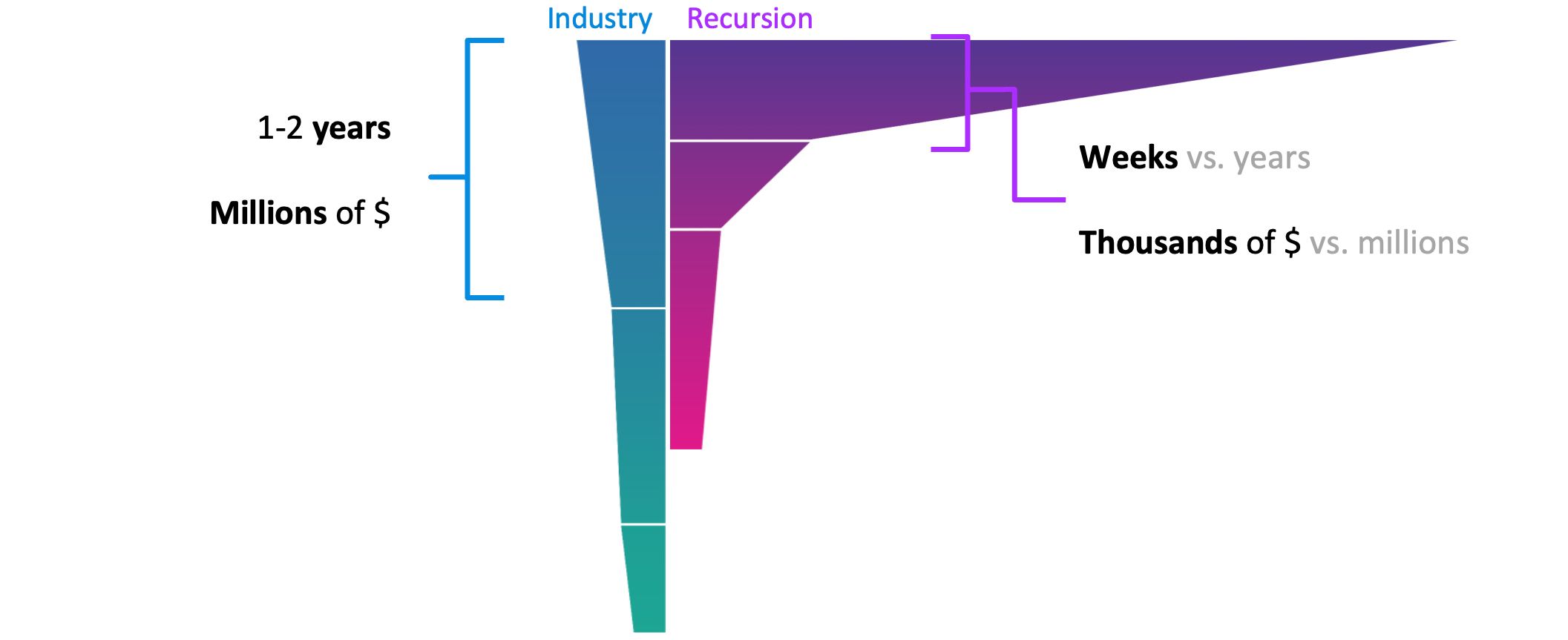
Figure 1. Illustrative. Reshaping the drug discovery funnel. Recursion’s goal is to leverage technology to reshape the typical drug discovery funnel towards its ideal state by moving failure as early as possible to rapidly narrowing the funnel into programs with the highest probability of success.
In recent years, advances in artificial intelligence and machine learning (“AI/ML”) have increasingly influenced both the technology and biopharmaceutical industries. Industry reports estimate that a majority of large biopharmaceutical companies now employ AI/ML in some aspect of drug discovery or development, and global investment in AI-enabled drug discovery has grown to several billions of dollars annually. Regulators and policymakers have also engaged more actively in this area, with AI/ML-enabled approaches being applied across multiple stages of drug discovery and development, including target identification, molecular design, chemical synthesis, clinical development, and manufacturing. We believe the increasing adoption of these technologies reflects a growing industry consensus that AI/ML has the potential to improve efficiency, decision-making, and productivity in drug discovery and development — the extent and timing of these benefits remain subject to ongoing validation and focus on proof-of-concept by leading players, including Recursion.
1 Zhou, S. and Johnson, R. (2018). Pharmaceutical Probability of Success. Alacrita Consulting, 1-42.
2 Steedman, M, and Taylor, K. (2024). Measuring the return from pharmaceutical innovation. Deloitte. 1-28.
3 DiMasi et al. (2016). Innovation in the pharmaceutical industry: New estimates of R&D costs. Journal of Health Economics. 47, 20-33.
4 Paul, et al. (2010). How to improve R&D productivity: the pharmaceutical industry’s grand challenge. Nature Reviews Drug Discovery. 9,203-214.
5 Martin et al. (2017). Clinical trial cycle times continue to increase despite industry efforts. Nature Reviews Drug Discovery. 16, 157.
6 European Federation of Pharmaceutical Industries and Associations (EFPIA). (2024). The pharmaceutical industry in figures: Key data 2024.
Our Strategic Focus Across Three Pillars
The Recursion OS provides a common foundation for mapping biology, navigating disease space, designing molecules, and optimizing clinical trials across therapeutic areas and modalities. We deploy these capabilities to meet the specific differentiation and risk-reward needs of each program, tailoring our approach based on medical, market, regulatory, and capital considerations through a combination of internal pipeline development and strategic partnerships.
This approach allows us to balance near-term learning and proof generation with longer-term platform innovation, while allocating capital where Recursion has the highest confidence and greatest potential for differentiation. The three strategic pillars described below reflect how we operationalize this model to drive disciplined value creation and impact.
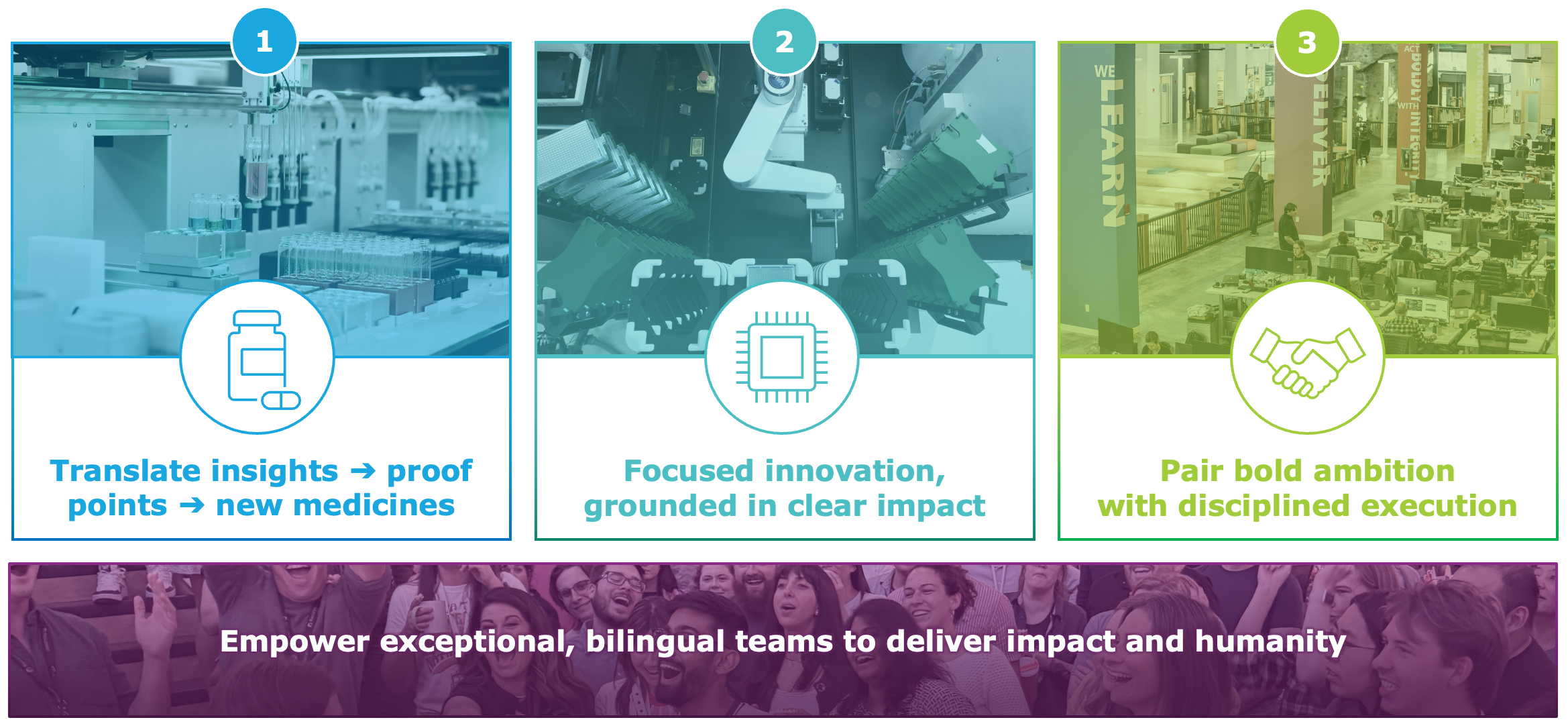
Figure 2. Recursion’s strategy is organized around three core pillars, described below.
Pillar 1 – Translate insights to proof points – on the path to new medicines
A core pillar of our strategy is demonstrating that our AI platform can consistently translate scientific insights into medicines that deliver meaningful patient impact. In 2025, we made tangible progress against this objective, including a positive clinical readout from our familial adenomatous polyposis (FAP) program, where our novel platform-derived insight, identifying the potential therapeutic benefit of MEK1/2 inhibition in FAP, translated into clinically meaningful reductions in polyp burden in a disease with no approved therapies. We have several clinical-stage and multiple preclinical programs that are differentiated by novel biology, chemistry, and/or patient understanding from our platform. We have achieved key progress-based milestones across multiple strategic partnerships that further validate the applicability of our platform across diverse aspects of discovery and therapeutic areas. To date, we have received over $500 million in partner payments for novel data generation (e.g. maps optioned by Roche and Genentech) and advancing AI-designed small molecule programs with Sanofi and others. We expect to receive additional milestone payments as programs continue to progress. Together, these advancements across our internal and partnered pipeline provide growing evidence that our approach can convert insights into early proof points.
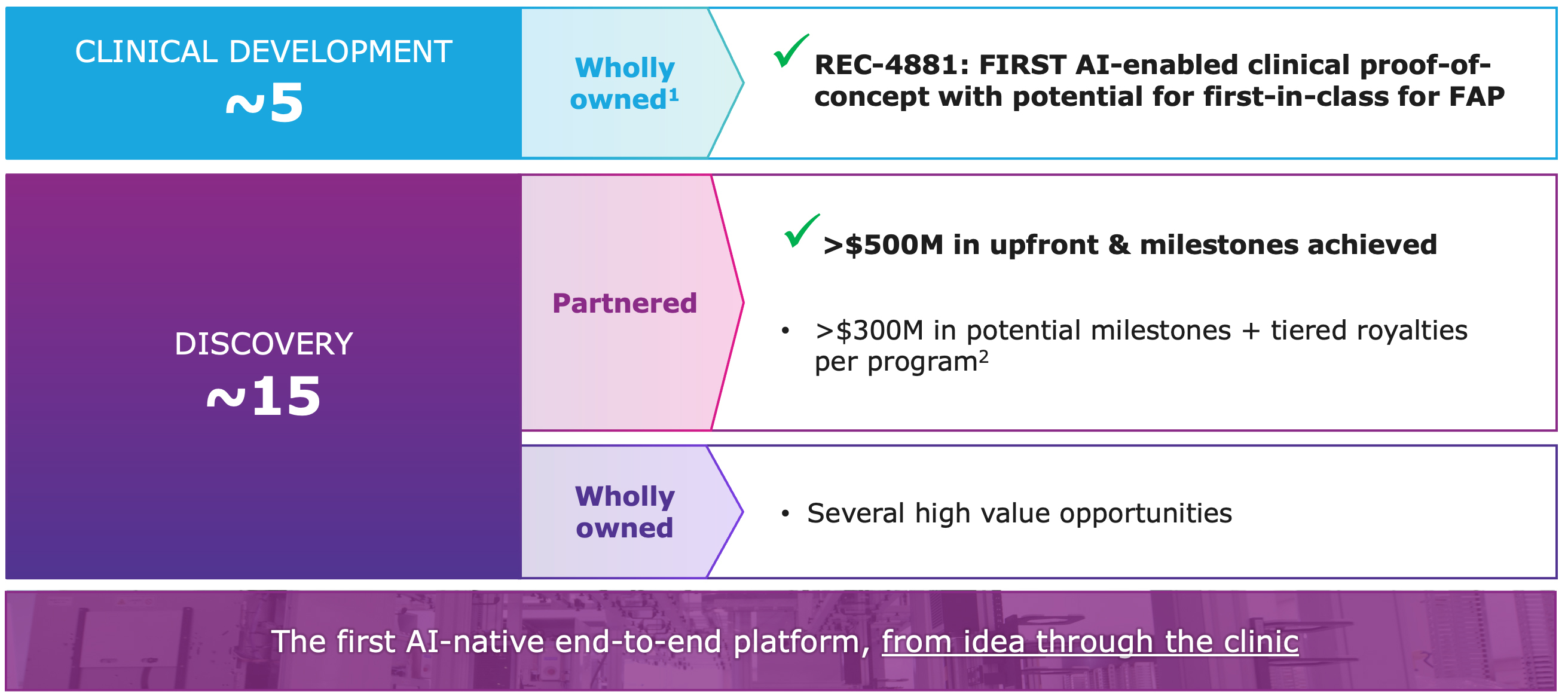
Figure 3. Recursion: Progress, by the numbers. 1. Includes preclinical programs that are expected to enter the clinic within the next 18 months. 2: Milestones: Potential Roche and Genentech and Sanofi milestones per small molecule program. Royalties: Recursion is eligible for tiered royalties up to high single digits (Roche and Genentech) and up to double digits (Sanofi).
Pillar 2 – Focused innovation, grounded in clear impact
We have built an end-to-end, AI-native platform that spans biological discovery, small molecule design, and clinical development, and our strategy is to continue investing selectively in capabilities that improve the probability of success, speed, and confidence of scientific and clinical decision-making. For example, a key area of focus in 2025 was the build out of our ClinTech capabilities, where we are applying data, automation, and AI to enable more efficient trial design, patient stratification, and evidence generation. Leveraging our Recursion OS platform, we have also been able to advance small molecule drug candidates that potentially solve complex design problems, while synthesizing approximately 90% fewer compounds than the industry average. Looking ahead, we will continue to direct resources toward platform capabilities that address critical bottlenecks in research and development and that we believe can drive durable differentiation and long-term value creation.
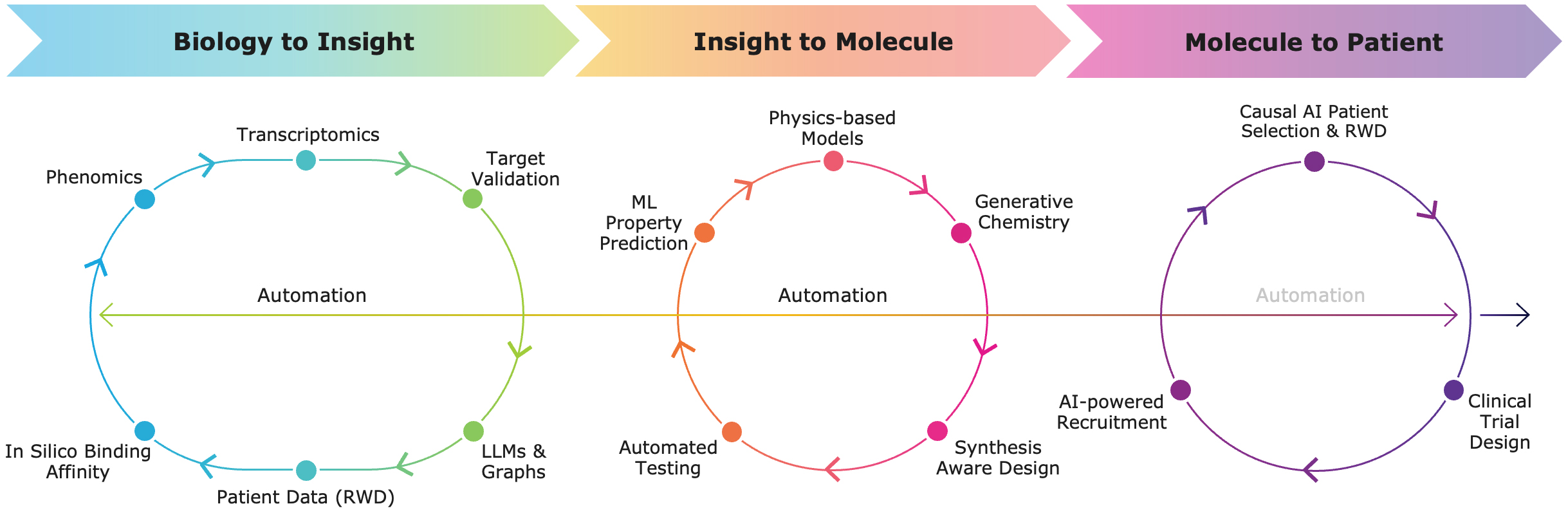
Figure 4. The Recursion OS. The Recursion OS is designed to use AI to advance and accelerate decision-making and insight across the entire R&D value chain with the end goal to make novel medicines that matter. The Recursion OS generates value by advancing a pipeline of differentiated investigational medicines, in addition to building pipelines for our partners.
Pillar 3 – Pair bold ambition with disciplined execution
Our strategy emphasizes pairing long-term ambition with disciplined execution, clear prioritization, and prudent capital allocation. We apply rigorous go/no-go decision-making across our portfolio and focus resources on programs and initiatives where we believe we have a true strategic advantage. Actions taken in 2025, including prioritizing our clinical portfolio and streamlining operations, reflect this disciplined approach and are intended to support sustainable execution over the long term. Going forward, we will continue to balance investment in innovation with operational and financial discipline, aligning resources with our highest-impact opportunities while maintaining flexibility as we advance our mission.
Foundation – Empowering exceptional, bilingual teams to deliver impact with humanity
As Recursion works to transform how better medicines are brought to patients, we believe a new, integrated culture is essential to success. A core foundation of our strategy is our people, which we view as a critical operating advantage in translating platform capability into real-world impact. Recursion has intentionally built integrated, bilingual teams that operate fluently across science, computation, and engineering, enabling tight collaboration between wet-lab experimentation, model development, and clinical strategy. We continue to invest in our people and teams to reduce friction across workflows, accelerate iteration, and ensure that experimental design, AI models, and development decisions are informed by a common context. Paired with a culture that emphasizes rigor, accountability, and disciplined execution, this talent model is expected to enable us to pursue bold scientific ambition while consistently delivering progress toward medicines that matter — with speed, confidence, and humanity.
Building a Pipeline – Wholly Owned and Partnered Discovery
Our combined wholly-owned and partnered pipeline represents the primary vehicle for translating novel insights and capabilities from the Recursion OS into tangible medicines. We utilize a wide range of AI and automation to achieve differentiation in biology, chemical design, and clinical development, targeting areas of high unmet need with a speed and precision unique to our AI-native approach. The progression of the portfolio through clinical development represents a critical step in validating our OS-driven methodology. Our goal remains for these proprietary insights to be translated into successful clinical outcomes across our internal focus areas of oncology and rare disease, as well as for our partners across oncology, neuroscience, immunology, and other therapeutic areas with high unmet need. All of our programs target differentiated medicines in select patient populations.
Advancing our Wholly Owned Pipeline
We are accelerating critical clinical milestones while delivering measurable progress against diseases with high unmet medical needs. To focus resources on programs with the strongest scientific rationale and the highest potential for near- and long-term impact, such as REC-4881 in FAP and REC-617 in advanced solid tumors, we streamlined our portfolio in May 2025. As part of this prioritization, the clinical programs REC-2282 for NF2, REC-994 for CCM, and REC-3964 for C. difficile were discontinued and/or partnering opportunities are being pursued.
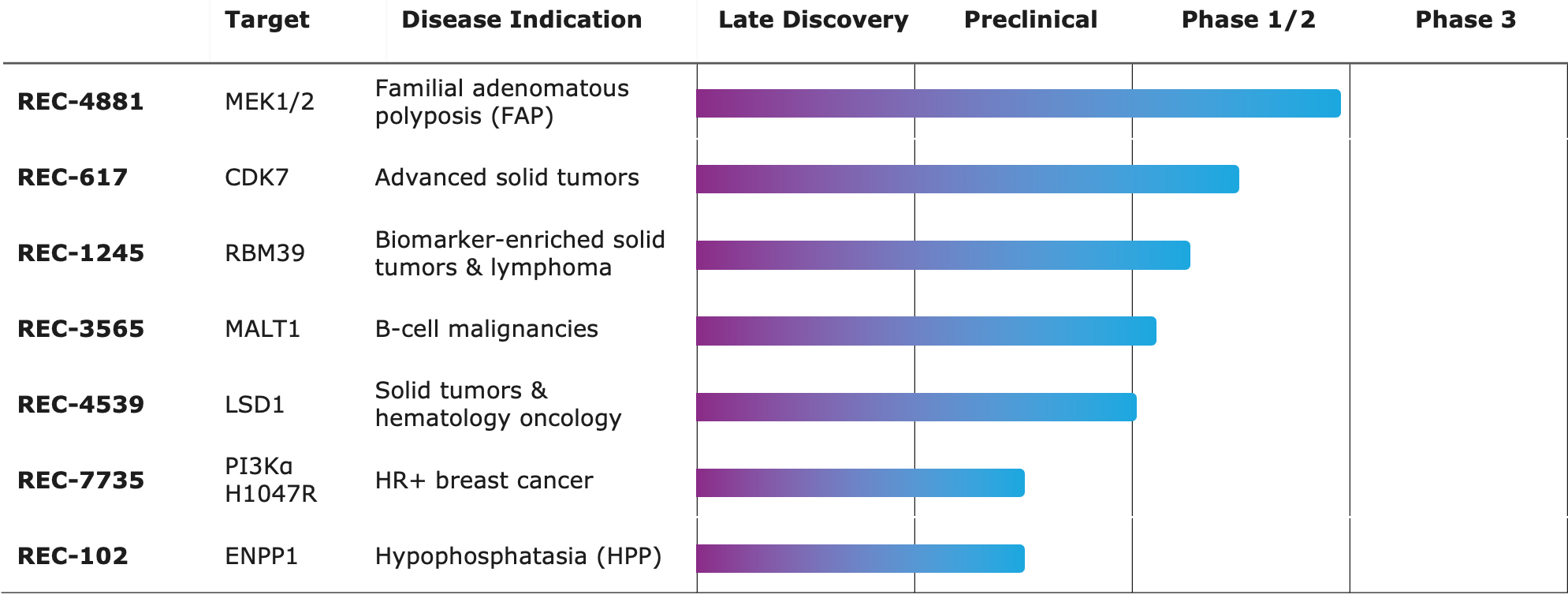
Figure 5. Recursion’s wholly-owned clinical pipeline includes differentiated medicines across oncology and rare disease. The current pipeline consists of 5 clinical programs and 2 preclinical programs with the potential to enter Phase 1 pending go/no go decision.
Pipeline Highlights from 2025
In 2025, we reported the first clinical validation of the Recursion OS, with positive Phase 1b/2 results from our REC-4881 MEK1/2 inhibitor program in FAP. The rapid and durable reduction in polyp burden observed in the Phase 2 portion of the TUPELO study shows how unbiased phenotypic and mechanistic insights from the Recursion OS, such as MEK1/2 rescue of APC loss-of-function, can translate to novel, differentiated therapeutics for diseases like FAP. We expect to engage with the FDA to define a potential registration path for REC-4881 while further optimizing dosing schedule in the ongoing TUPELO trial, to continue to progress in this disease with no approved pharmacotherapies.
In parallel, Recursion has three other clinical studies ongoing: ELUCIDATE (Phase 1/2, REC-617, CDK7i), DAHLIA (Phase 1/2, REC-1245, RBM39 degrader) and EXCELERIZE (Phase 1, REC-3565, MALT1i). A fourth study, ENLYGHT (REC-4539, LSD1i) is expected to enter Phase 1 for solid tumors in 2026. IND-enabling studies are ongoing for REC-7735 (PI3Kα H1047Ri) and REC-102 (ENPP1i), with the potential to enter Phase 1 studies pending go/no go decision.
Anticipated Near-term Catalysts
Recursion is poised for a catalyst-rich period, with multiple programs reaching meaningful milestones over the next 24 months. In the first half of 2026, we will engage with the FDA to define a registration path for REC-4881, and we will report early monotherapy safety and PK data for REC-1245 (RBM39 degrader) during the same period. Go/no-go decisions on the initiation of Phase 1 studies for REC-7735 (PI3Kα H1047Ri) and REC-102 (ENPP1i) are expected in the second half of 2026. Additional clinical data for REC-4881 (MEK1/2i), early combination safety and PK data for REC-617 (CDK7i), and early monotherapy safety and PK data for REC-3565 (MALT1i) will be reported in the first half of 2027, with early monotherapy safety and PK data for REC-4539 (LSD1i) reported in the second half of that year.
Impact Through Partnered Pipeline
Through our partnerships with leading pharmaceutical companies including Roche and Genentech, Sanofi, Bayer, and Merck KGaA (Darmstadt, Germany), we have secured more than $500 million in upfront and progress-based milestone payments to date, with the potential for over $20 billion in additional milestones before royalties. These global collaborations not only provide near-term cash flows but also combine our scaled biology, precision chemistry, and automated synthesis capabilities to pave the way for transformative therapies in oncology, neuroscience, immunology, and other therapeutic areas with high unmet need. By partnering with some of the best biopharmaceutical companies in their respective areas, our platform and team have an opportunity to learn from some of the most experienced in the industry. By uniting our AI-driven platforms, vast proprietary data, and deep scientific expertise, we continue to unlock powerful innovations and expand patient impact. Below are some of the latest developments illustrating this momentum:
Sanofi: Designing molecules against difficult and diverse protein targets in challenging data-poor and data-rich environments
•Small Molecule Joint Portfolio: Recursion is using its platform to discover and advance a joint portfolio of 5+ AI-driven and differentiated novel small molecule programs in immunology and oncology therapeutic areas. The joint collaboration has the potential for up to 15 AI-driven small molecule programs.
•Milestones and Collaboration: In February 2026, we achieved our fifth milestone across the collaboration, generating a $4 million payment from Sanofi. In total, we have achieved $134 million in upfront and progress-based milestones to date. There is potential for additional near-term milestones as the first programs advance towards development candidate milestones and earlier-stage programs progress.
Roche and Genentech: Turning novel insights from proprietary digital maps of complex biology into potential novel therapeutics
•Neuron Map: In partnership with Roche and Genentech, Recursion built the first whole-genome CRISPR knockout map generated from a subset of 1 trillion internally manufactured iPSC-derived neuronal cells ($30 million milestone payment, accepted in 2024). This proprietary dataset is being used in partnership with Roche and Genentech to identify potential new targets in neuroscience, a field which has historically suffered from limited new discoveries.
•Microglia Map: Recursion built and Roche and Genentech accepted a second neuroscience Phenomap, a first-of-its-kind whole-genome CRISPR knockout map generated from over 100 billion internally manufactured iPSC-derived microglial cells ($30 million milestone payment, accepted in 2025). With approximately 46 million images, the scale and quality of this proprietary map enables us, in partnership with Roche and Genentech, to leverage the power of AI to explore novel targets and pathways.
•Gastrointestinal-Oncology Advancements: We have built four proprietary Phenomaps which are being leveraged under the collaboration to identify novel insights that can be used to initiate programs for a gastrointestinal-oncology indication including continuing to advance one program optioned by Roche and Genentech.
•Milestones and Collaboration: In total, Recursion has received $213 million in upfront and milestone payments from the collaboration. Roche and Genentech have accepted six Phenomaps and initiated one small molecule program based on Phenomap insights to date. The companies have also identified a number of biological insights from Phenomaps that are now being validated or advanced as potential novel targets.
Bayer: Developing programs in challenging oncology indications with high unmet need
•Oncology: With our partners at Bayer, we are advancing multiple programs towards lead series milestones in precision oncology.
Merck KGaA (Darmstadt, Germany): Leveraging Recursion’s discovery engine to identify differentiated targets across oncology and immunology
•Oncology and immunology: With our partners at Merck KGaA, we are focused on identifying differentiated targets across oncology and immunology and assessing target tractability using our precision design chemistry platform.
The Recursion OS – A Platform that Powers a Portfolio
The Recursion OS is a unified, AI-native operating system for drug discovery and development that integrates biology, chemistry, and clinical execution end-to-end. Built on proprietary, multimodal data generated at unprecedented scale through automated wet and dry labs and partnerships, the OS combines large-scale phenomics, emerging omics layers, AI-driven chemistry design, and clinical development intelligence into a single, closed-loop system. Powered by purpose-built models, scalable compute, and bilingual teams fluent in both science and AI, the Recursion OS enables faster translation of insights into proof points, reduces R&D bottlenecks, and supports the delivery of better medicines at scale for patients who are waiting.
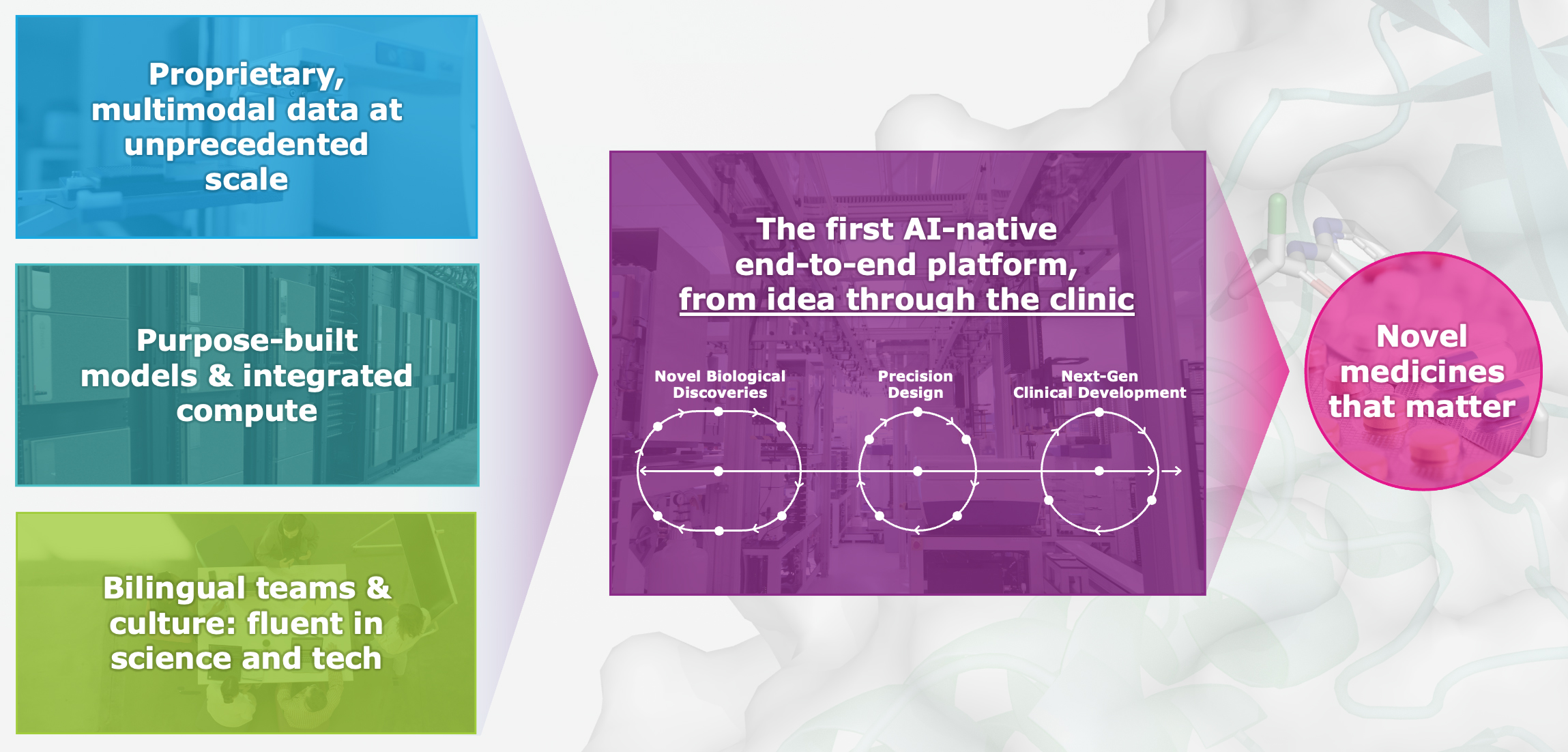
Figure 6. Recursion combines proprietary multimodal data, purpose-built models and compute, and our bilingual teams and culture to create the first AI-native, end-to-end platform spanning idea through the clinic.
Rather than optimizing isolated steps, the Recursion OS improves decision-making across the entire R&D value chain—from decoding unknown biology and generating first-in-class targets, to designing synthetically feasible molecules, to selecting the right patients and executing trials more efficiently. By systematically generating, integrating, and analyzing high-dimensional experimental and real-world data, we train purpose-built machine learning and foundation models that translate complex biology into actionable insights across discovery and development. Throughout these processes, we are deploying AI agents and automated systems to help orchestrate our wet-lab experimentation and dry-lab modeling, standardizing workflows, coordinating data generation and analysis, and enabling faster, more consistent, and higher-confidence decisions at scale.
Figure 7. The Recursion OS. The Recursion OS is designed to use AI to advance and accelerate decision-making and insight across the entire R&D value chain with the end goal to make novel medicines that matter. The Recursion OS generates value by advancing a pipeline of differentiated investigational medicines, in addition to building pipelines for our partners.
As models are increasingly integrated across biology, chemistry, and clinical data, Recursion is building a systems-level representation of how biology and chemistry function. This enables high-confidence predictions about previously untested hypotheses and shifts the role of the wet lab from primarily generating data to scaled validation of model-derived insights. In practice, the platform is used to simulate and prioritize targets, mechanisms, and chemistries with the highest probability of clinical success and a well-defined target product profile, followed by rapid experimental validation.
Bilingual Teams and Culture – Fluent in Tech and Science
Our mission at Recursion, Decoding Biology to Radically Improve Lives, flows naturally from our vision. We interpret our mission expansively and believe it to be a durable direction and source of inspiration for our team. We seek not only to radically improve the lives of patients who could benefit from the medicines we help to deliver, but the lives of those who care for those patients, the lives of our employees and their families, as well as the communities in which we operate our company.
We’ve intentionally designed our culture to fuel the pursuit of our mission. Our Guiding Principles are guideposts for scientific and technical decisions, and our Values underpin how our employees engage day-to-day with colleagues inside and outside the company. The Recursion Mindset, a deep commitment to achieving impact at unprecedented scale through new industrialized approaches, is an essential component of building our TechBio ecosystem. Our employees bring all these to life, contributing their unique expertise and experiences from their incredible breadth of fields and industries.
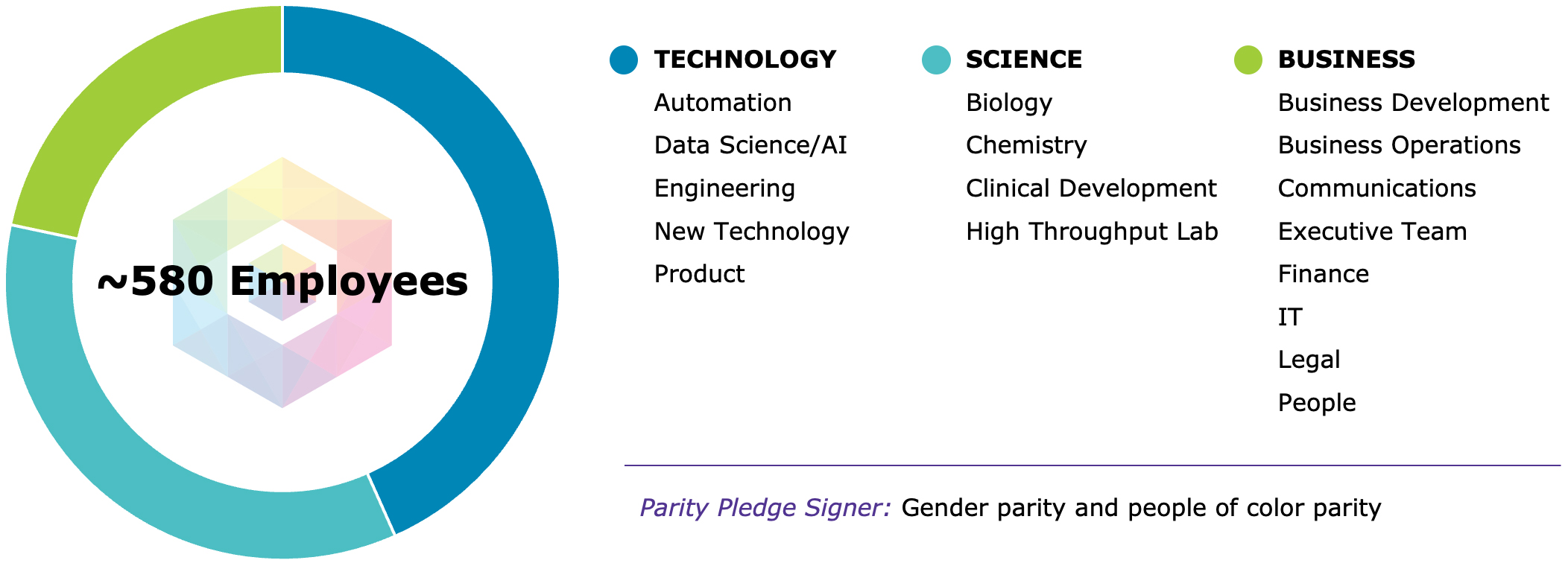
Figure 8. Recursion’s teams operate at the interface of many diverse fields. We have bilingual teams and cultures, scientists that understand AI, and AI researchers that understand science.

Figure 9. Recursion’s Guiding Principles and Values support our ambitious mission. Together, these elements shape Recursion’s culture by guiding our people to high-impact decision-making and behaviors.
Recursion In-Depth
AI-native end-to-end platform from idea to clinic: making novel medicines that matter
We have built an integrated, AI-native platform to decode complex biology and chemistry from multi-modal data into potentially transformative medicines. The strength of our platform is not defined by a single asset or model, but by the scale and quality of our core capabilities and underlying infrastructure, including:
•Proprietary Data: We have generated one of the largest relatable data sets in biopharma using our automated high throughput labs, which can run over 2 million experiments per week. Our data includes cellular phenomics, captured using brightfield microscopy, as well as chemical synthesis, transcriptomics, proteomics, ADMET, genomics, and patient data.
•Models & Compute: We use our proprietary data to train purpose-built AI models that accelerate learning and address specific bottlenecks across the R&D value chain. We largely train models using our own supercomputer, BioHive-2, one of the largest supercomputers in biopharma, built in collaboration with NVIDIA.
•People & Culture: A core differentiator is our people and culture—a unique, "bilingual" team of experts fluent in both life sciences (biology/chemistry) and technology (data science/engineering).
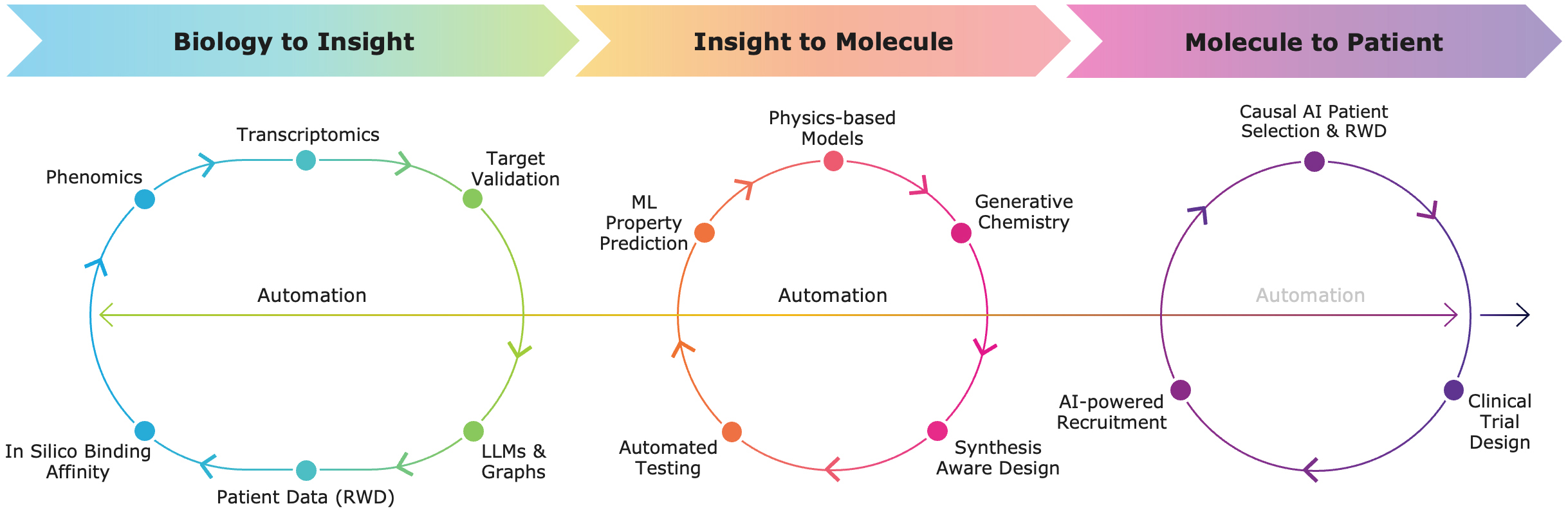
Figure 10. The Recursion OS. The Recursion OS is designed to use AI to advance and accelerate decision-making and insight across the entire R&D value chain with the end goal to make novel medicines that matter. The Recursion OS generates value by advancing a pipeline of differentiated investigational medicines, in addition to building pipelines for our partners.
Our Portfolio
Our portfolio reflects the industrial scale of our discovery engine, comprising a robust pipeline of wholly owned programs alongside strategic partnerships with leading pharmaceutical companies. This pipeline currently includes approximately five wholly owned programs in clinical development and roughly 15 discovery-stage programs spanning our internal and partnered efforts. Each milestone across this diverse portfolio serves as a critical proof point for our ability to translate AI-native insights into meaningful clinical candidates, with the breadth of the pipeline providing multiple, concurrent opportunities to validate the Recursion OS as a transformative engine for drug discovery.
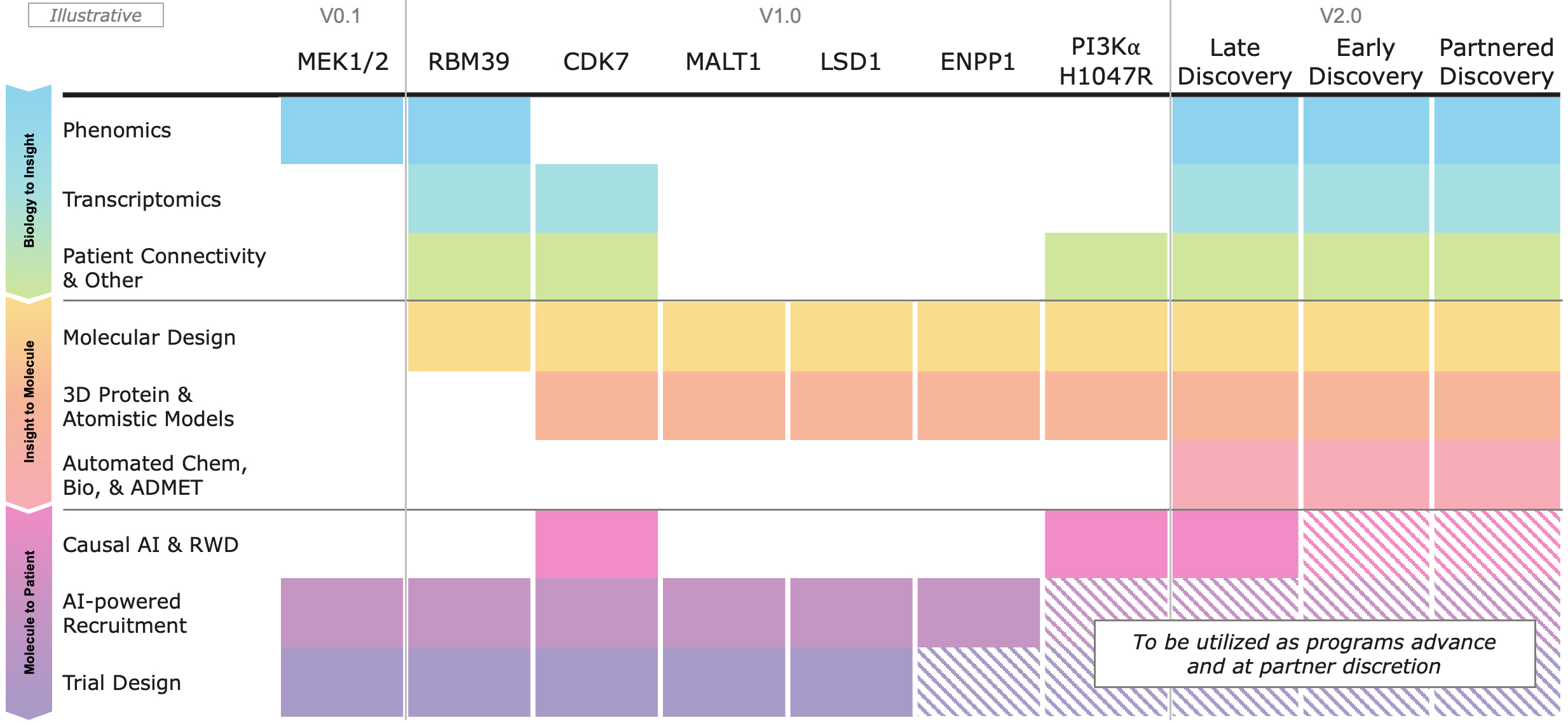
Figure 11. All pipeline programs leverage our platform, which has evolved, across biology to insight, insight to molecule, and molecule to patient. We leverage and track how we use our platform across every single program. For example. some programs are focused on novel biological insight, design, or both.
Our Internal Pipeline: Clinical Programs Overview in Oncology and Rare Disease
REC-4881 – Familial Adenomatous Polyposis
We are developing REC-4881, a highly potent and selective, potential best-in-class MEK1/2 inhibitor, for familial adenomatous polyposis (FAP). FAP is a genetic condition characterized by the development of adenomas throughout the GI tract. It is an orphan disease caused by inactivating mutations in APC, with most patients undergoing prophylactic colectomy due to nearly 100% likelihood of CRC by age 40.
During a collaboration with Takeda, we leveraged machine learning and automated analysis to quantify hundreds of cellular parameters linked to APC siRNA knockdown. We screened numerous compounds in this genetic background within 24 hours and identified REC-4881 as a potent molecule that rescued the phenotype in a concentration dependent manner. In preclinical studies, REC-4881 demonstrated over 1,000-fold selectivity in APC-mutant tumor cell lines and effectively inhibited spheroid growth and organization. In the APCmin mouse model of FAP, REC-4881 showed up to a 70% reduction in total polyps, surpassing celecoxib’s 30% reduction, highlighting its potential as a highly selective and efficacious therapy for FAP.
The IND was reactivated by Recursion and the Phase 1b/2 trial (TUPELO) of REC-4881 was initiated. As of December 31, 2025, Part 1 of the study is complete and Part 2 remains ongoing. In Part 1, which assessed safety, tolerability, and PK in FAP patients, REC-4881 was observed to have a safety profile consistent with other MEK inhibitors. A 4 mg dose of REC-4881 was shown to be pharmacologically active in FAP and progressed to Part 2. In May 2025, preliminary Phase 1b/2 data was shared at Digestive Disease Week 2025 for 6 patients following 13 weeks of treatment with REC-4881, demonstrating reduced polyp burden and an early safety profile generally consistent with that of prior MEK1/2 inhibitors. Expanded data was shared in December 2025 for a larger cohort of FAP patients treated for 12 weeks with REC-4881, followed by a 12 week off-treatment phase. Rapid reductions in polyp burden were demonstrated by week 13 (median polyp burden reduction of 43%), with a durability of effect and reductions maintained through the off-treatment phase at week 25 (median polyp burden reduction of 53%). The safety profile of REC-4881 was consistent with MEK1/2 inhibition, with adverse events predominantly low grade and N=4 discontinuations. This data provided the first clinical validation of the Recursion OS, from an unbiased phenotypic signal identifying MEK1/2 inhibition as a rescue mechanism for APC loss-of-function, through mechanistic confirmation and clinical translation, to positive clinical data. In the first half of 2026, we expect to engage with the FDA to define a registration path while further optimizing dosing schedule in the ongoing TUPELO trial. We expect to provide additional clinical data in the first half of 2027.
REC-617 – Advanced Solid Tumors
REC-617 is a potential best-in-class, potent and selective oral small molecule inhibitor of CDK7 with demonstrated activity in preclinical studies. CDK7 controls cell cycle progression and gene transcription, often overexpressed in advanced stage cancers reliant on transcriptional pathways. This program utilized our generative AI and active learning platform to optimize molecule design, including non-covalent binding and improved ADME/PK for rapid absorption. This rapid design cycle enabled us to synthesize 136 novel compounds and select REC-617 as our lead candidate in under 11 months.
A multicenter, open-label, Phase 1/2 dose escalation and dose expansion study (ELUCIDATE) is currently ongoing in advanced solid tumors. Initial results from 19 patients were presented at the 2024 AACR Special Conference in Cancer Research, with data from a larger cohort of 29 heavily pretreated patients reported in November 2025. From this monotherapy dose escalation (QD and BID) portion of the study, REC-617 demonstrated signs of preliminary efficacy. One heavily pre-treated ovarian cancer patient achieved a confirmed durable partial response (PR), which correlated with significant reductions in clinical tumor markers (CA125 and TK1). Five additional patients achieved durable stable disease (SD) as their best response. REC-617 was generally well-tolerated, with adverse events predominantly low grade and the most common DLTs being nausea and thrombocytopenia. 7% (N=2) discontinued due to a treatment-related adverse event. The MTD was established at 10 mg once daily.
Monotherapy dose escalation remains ongoing to assess alternative dosing schedules, and in 2025 the ELUCIDATE study was expanded into platinum-resistant ovarian cancer (PROC), with a Phase 2 dose expansion monotherapy cohort ongoing and a Phase 1 dose escalation combination arm also initiated. Initial combination regimens include bevacizumab plus paclitaxel or pegylated liposomal doxorubicin (PLD). We expect to provide early safety and PK combination data in 2027.
REC-1245 – Biomarker-enriched Solid Tumors and Lymphoma
REC-1245 is a potential first-in-class, novel, potent, and selective molecular glue degrader of RBM39, a critical RNA-binding protein involved in alternative splicing and DNA damage repair (DDR) pathways. Leveraging the Recursion OS, we discovered that genetic knockout of RBM39 can phenotypically mimic CDK12 loss – a validated DDR target – without impacting CDK13 which, to our knowledge, is the first report of this novel biological insight. Utilizing our phenomics based platform for SAR, we synthesized 204 candidates and advanced this program from target ID to IND-enabling studies in 18 months (vs. industry average of 42 months).
Preclinical data confirmed strong anti-tumor activity, including tumor regressions in a BRCA-proficient ovarian cancer model, minimal off-target effects, and no CDK12 kinase inhibition. With over 100,000 addressable patients in the US and EU5 each year, REC-1245 has the potential to be a novel therapy in a biomarker-enriched advanced solid tumor and lymphoma patient population – either as a monotherapy and/or in combination regimens.
Following IND clearance, we initiated a Phase 1/2 study (DAHLIA) to evaluate the safety, tolerability, PK/PD, and preliminary efficacy of REC-1245 in unresectable, locally advanced, or metastatic cancers. This includes a biomarker-enriched population that may benefit most from targeted RBM39 degradation. In the third quarter of 2025, we reported updated information on the population being enrolled into the DAHLIA study, to include cancers with high genomic instability (for example endometrial cancer) and to confirm specific biomarker-enriched populations (for example 2L+ MSI-H/dMMR) based on early preclinical data that showed that REC-1245 reduces viability in tumors characterized by replication stress and DNA repair vulnerabilities (DDR defects) across multiple solid tumor types. The trial is currently enrolling at sites in the US and Canada, and we expect to share early safety and PK data from the Phase 1 monotherapy dose-escalation portion of the study in the first half of 2026.
REC-3565 – Relapsed / Refractory B-cell Malignancies
We are advancing REC-3565, our reversible allosteric potential best-in-class MALT1 inhibitor, for the treatment of patients with relapsed or refractory B-cell malignancies. A variety of mutations seen in lymphomas induce constitutive MALT1 protease activation, leading to aberrant NF-κB signaling that drives survival and proliferation of B-cell tumors. Key preclinical data demonstrates sustained anti-tumor activity as a single-agent or in combination with BTK inhibitors.
We leveraged physics-based predictive modelling using our molecular dynamics toolkit and AI-powered hotspot analysis to deliver a candidate with lower predicted safety risk in the clinic. We synthesized 344 novel compounds and advanced this program from hit ID to lead candidate in 15 months.
The molecule’s unique profile minimizes UGT1A1 inhibition risk, demonstrating superior target selectivity compared to oral competitors, both of which reported treatment-related hyperbilirubinemia in early Phase 1/2 studies. As a result, REC-3565’s enhanced selectivity supports the potential for a more favorable therapeutic index not only as a monotherapy, but also in combinations with BTK and BCL2 inhibitors. A multicenter, open-label, dose escalation Phase 1 study (EXCELERIZE) is ongoing, with the first patient dosed in April 2025. We expect to share early safety and PK monotherapy data in the first half of 2027.
REC-4539 – Solid Tumors and Hematology Oncology
REC-4539 is a reversible, CNS penetrant, orally bioavailable, and potential best-in-class inhibitor of LSD1. LSD1 is an epigenetic enzyme that removes methyl groups from histones to control gene expression. LSD1 is abnormally overexpressed in a broad spectrum of solid tumors including lung, breast, prostate, esophageal, and bladder cancers, as well as acute myeloid leukemia, with evidence suggesting that LSD1 is a promising therapeutic target. This is exemplified within lung cancer by small cell lung cancer (SCLC). SCLC is particularly dependent on LSD1 to maintain a neuroendocrine phenotype that drives tumor cell survival in this aggressive lung cancer subtype. In AML, LSD1 has been shown to disrupt normal hematopoiesis by modulating key oncogenic pathways and transcriptional regulators like GFI1 and SNAI1. Preclinical studies demonstrate that REC-4539 shows anti-tumor activity in SCLC and AML human xenografts with limited impact on platelets.
Our program used multi-parameter optimization to design a unique candidate combining reversibility with CNS penetrance. We synthesized 414 novel candidates to arrive at our lead candidate in 22 months. Following IND clearance in January 2025, the program was placed on strategic pause in May 2025. While the broader field has faced safety challenges, REC-4539 remains highly differentiated by its optimized profile, with a potential improved therapeutic index through better management of on-target toxicities e.g. reduced impact on platelets. We now expect to initiate the Phase 1 trial (ENLYGHT) in the first half of 2026, with early monotherapy safety and PK data expected in the second half of 2027.
Deep Dive into Clinical Programs
REC-4881 for Familial Adenomatous Polyposis (FAP) - Phase 1b/2
REC-4881 is an orally bioavailable, non-ATP-competitive, allosteric small molecule inhibitor of MEK1 and MEK2 currently under development for familial adenomatous polyposis (FAP). REC-4881 demonstrated dose-dependent increases in exposure and pharmacological activity, with a safety profile consistent with other MEK inhibitors. We are currently enrolling patients in TUPELO, a Phase 1b/2, open-label, multicenter study to evaluate the effect of REC-4881 on polyp burden reduction. Orphan Drug Designation in the US and EU as well as Fast Track Designation in the US were granted to REC-4881 for FAP. Following positive clinical data from TUPELO shared in 2025, in the first half of 2026 we expect to engage with the FDA to define a registration path while further optimizing dosing schedule within the trial. We expect to provide additional clinical data from TUPELO in the first half of 2027.
Disease Overview
FAP is a rare, inherited tumor predisposition syndrome affecting more than 50,000 patients in the US and EU5, resulting from autosomal dominant mutations in the APC gene, a key negative regulator of the Wnt signaling pathway. FAP is a lifelong continuum of disease progression and intervention driven by chronic polyposis, with an almost 100% lifetime risk of colorectal cancer by the age of approximately 40 if untreated.
In adolescence and early adulthood, patients typically develop hundreds to thousands of precancerous adenomas in their colon and rectum. As disease burden increases, most patients will require a colectomy to remove the colon and manage disease progression and cancer risk. While this surgery addresses immediate cancer risk in the colon, it does not stop the development of further adenomas in the remaining rectum, pouch, or duodenum. Post-colectomy, patients with FAP still require decades of repeat endoscopies and excisional procedures. Approximately 50% of these patients will eventually require removal of the remaining rectum pouch in order to manage uncontrolled polyposis, a life-altering surgery that impacts quality of life. Disease progression continues in the upper GI tract, where approximately 90% of FAP patients will develop duodenal adenomas, which can often be difficult to manage endoscopically. Around 6% of these patients will undergo duodenectomy or Whipple surgeries, which are some of the most significant life-altering surgeries associated with high morbidity and mortality. Despite this substantial disease burden, no approved therapies currently exist for FAP.
Insights from Recursion OS
REC-4881 was identified as a potential first-in-disease therapy for FAP using a high-content phenotypic screening approach targeting APC-deficient human cells. In this screen, REC-4881 emerged as a potent allosteric MEK1/2 inhibitor that rescued an APC siRNA genetic knockdown-associated morphological phenotype. Compared to other MEK inhibitors, REC-4881 demonstrated a highly selective and concentration-dependent response, suggesting best-in-class potential. As a result, REC-4881 was in-licensed from Takeda and subsequently advanced into preclinical studies.
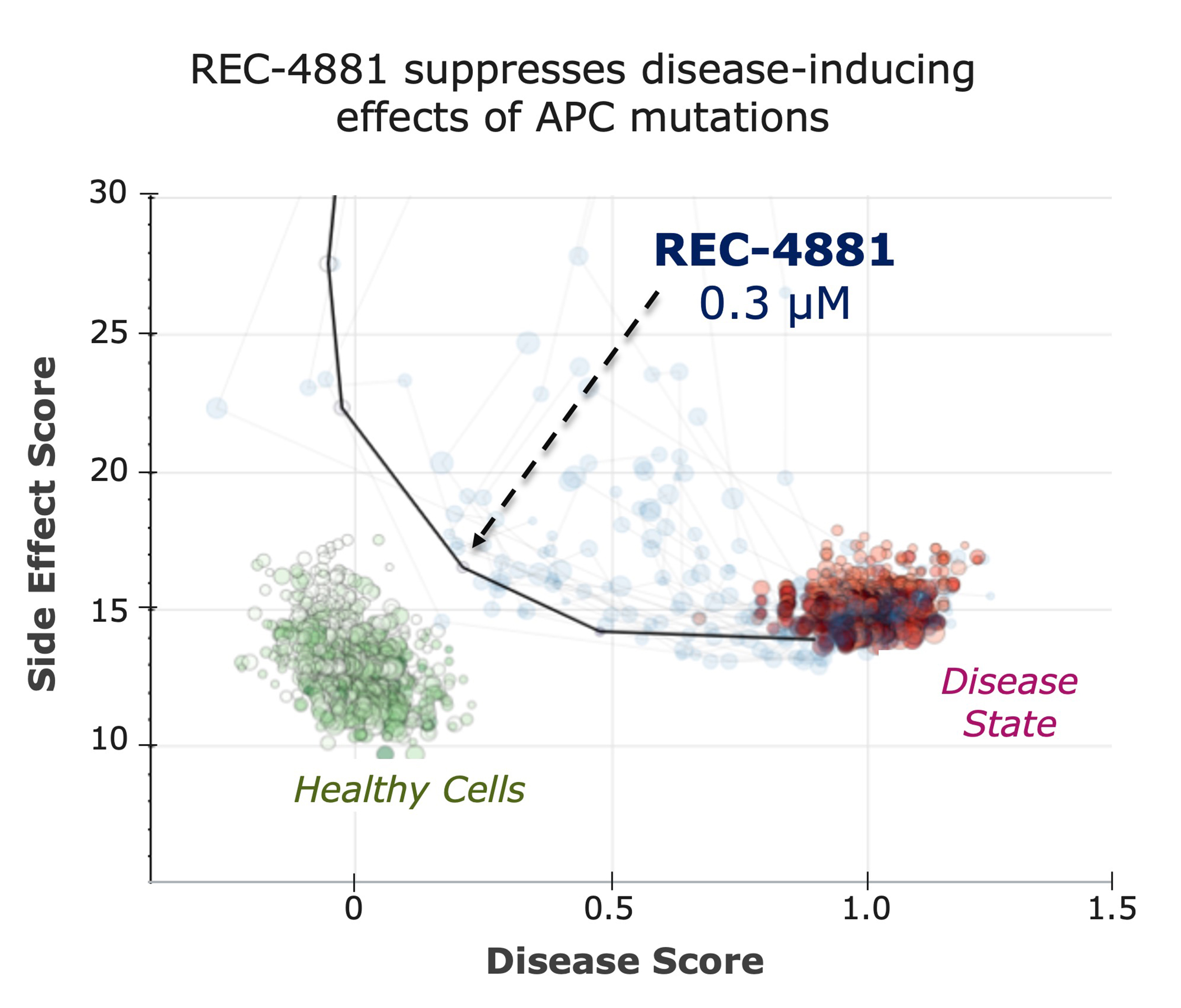
Figure 12. Discovery of REC-4881 in Recursion OS. Compared to thousands of other molecules tested, REC-4881 rescued phenotypic defects associated with APC siRNA genetic knockdown.
REC-4881 is an orally bioavailable, non-ATP-competitive allosteric inhibitor of MEK1 (IC50: 2-3 nM) and MEK2 (IC50: 3-5 nM) being developed as a potential first-in-disease therapy for FAP. Loss of APC disrupts β-catenin regulation, leading to uncontrolled Wnt signaling, RAS stabilization, and ERK pathway activation, which drives MYC-dependent proliferation. REC-4881 inhibits MEK1/2, and blocks ERK phosphorylation downstream. This reduces MYC expression levels in the cell and potentially restores Wnt pathway control. Given ERK signaling activity in both adenoma epithelium and tumor stroma, as well as frequent MAPK-activating mutations in FAP, MEK inhibition offers a targeted strategy to suppress disease progression.
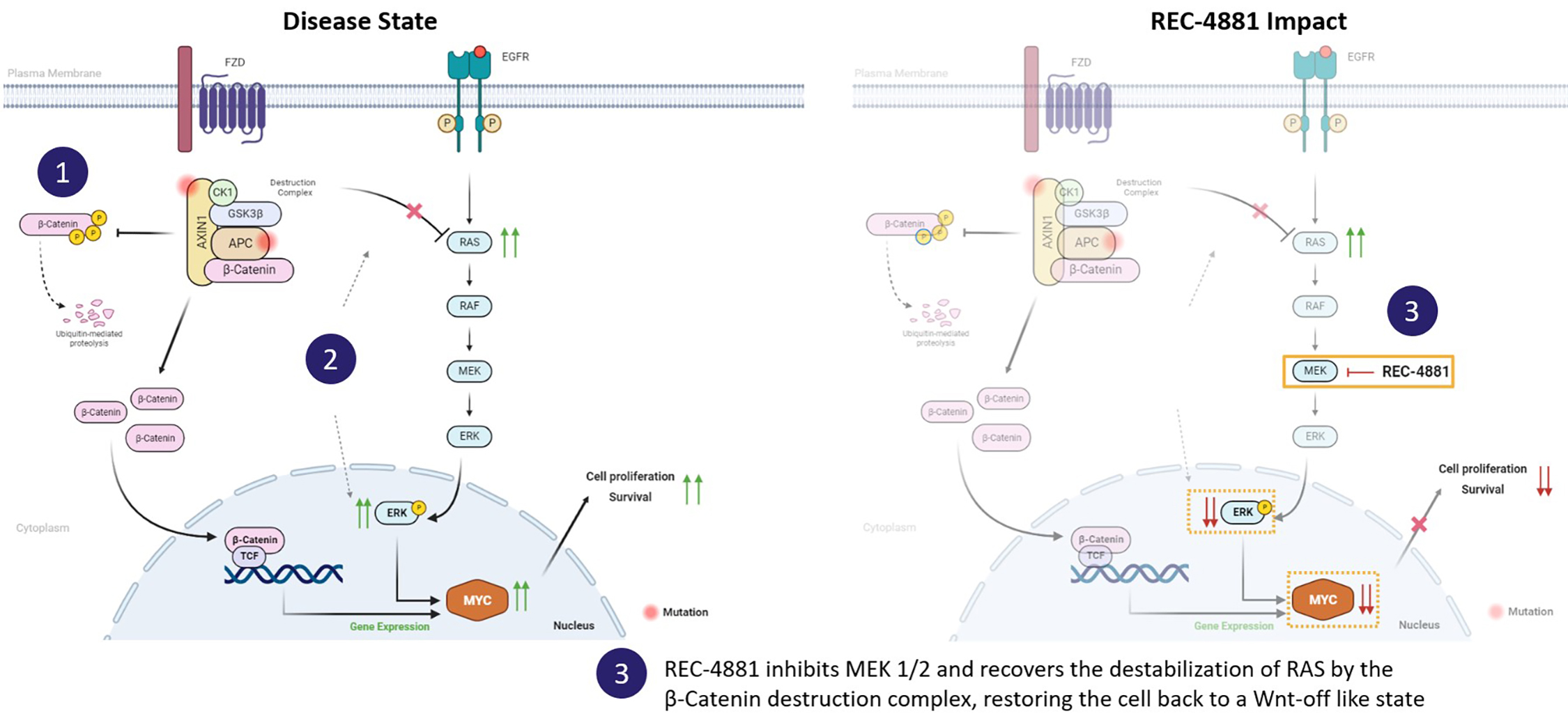
Figure 13. REC-4881 inhibits APC-mutation induced MAPK signaling to block cell proliferation in the context of FAP. A potential mechanism of action of REC-4881 in cells with loss of function mutations in APC.7
7 Jeon, WJ, et al. (2018). Interaction between Wnt/β-catenin and RAS-ERK pathways and an anti-cancer strategy via degradations of β-catenin and RAS by targeting the Wnt/β-catenin pathway. NPJ Precision Oncology, 2(5).
Preclinical
REC-4881’s activity was validated in tumor cell lines and spheroid models derived from APC-mutant human epithelial tumor cells. In these systems, REC-4881 inhibited spheroid growth and disrupted cellular organization, demonstrating over 1,000-fold selectivity in APC-mutant cells. In a disease-relevant FAP model, ApcMin/+ mice were treated with multiple oral doses of REC-4881 or celecoxib over eight weeks. While celecoxib reduced polyp formation by approximately 30% compared to vehicle, REC-4881 treatment led to a reduction of 50% (1-3 mg/kg), and 70% (10 mg/kg). Mice that were treated with 10 mg/kg REC-4881, the highest dose tested, exhibited an approximately 70% reduction in total polyps. Histological analysis of gastrointestinal tissues further revealed that, unlike celecoxib, which primarily affected benign polyps, REC-4881 significantly reduced both benign polyps and high-grade adenomas. These findings suggest that REC-4881 not only limits early polyp formation but may also inhibit progression to advanced adenomas, highlighting its potential to address both pre- and post-colectomy FAP populations.
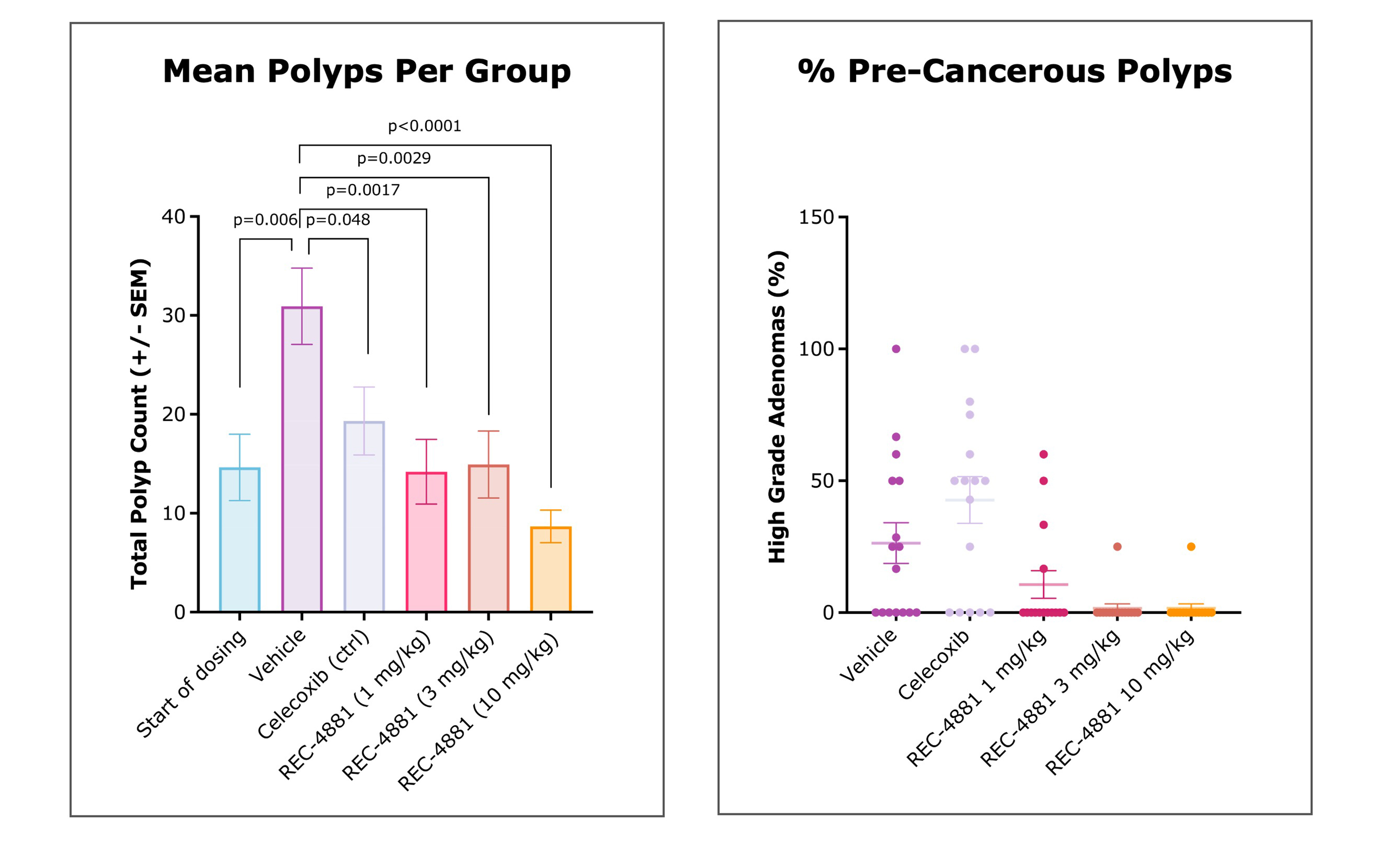
Figure 14. REC-4881 reduces GI polyp count and pre-cancerous, high-grade adenomas in the APCMin/+ mouse model of FAP. GI polyp count (left) and the percentage of high-grade adenomas (right) after oral administration of indicated dose of REC-4881, celecoxib, or vehicle control for 8 weeks. Polyp count at the start of dosing reflects animals sacrificed at the start of study (15 weeks of age). P < 0.001 for all REC-4881 treatment groups vs. vehicle control. Quantification of high-grade adenomas versus total polyps was based on blinded histological review by a pathologist. While celecoxib reduces benign polyps, most remaining lesions are high-grade adenomas. By contrast, REC-4881 reduces both polyps and high-grade adenomas.8
Clinical
REC-4881 has been evaluated in multiple clinical studies, demonstrating a well-tolerated safety profile and pharmacological activity.
Phase 1 Oncology Studies
In a prior dose-escalation study (C20001) conducted by Millennium Pharmaceuticals in 51 participants with advanced solid tumors, REC-4881 (formerly TAK-733) was administered at doses ranging from 0.2 mg to 22 mg once daily on days 1–21 of 28-day treatment cycles. The maximum tolerated dose (MTD) was determined to be 16 mg. The most common adverse events (AEs) were rash (67%; 57% Gr1-2, 10% Gr3), diarrhea (29%, All Gr1-2), and increased blood CPK (20%, 10% Gr1-2, 10% Gr3). Treatment-related serious adverse events (SAEs) were infrequent. No unexpected safety concerns emerged, and pharmacokinetic analyses showed a less-than-dose proportional increase in exposure.
REC-4881-101 (Healthy Volunteers)
We conducted a Phase 1 study to evaluate the safety and pharmacokinetics of REC-4881 in 25 healthy participants receiving single doses of 4 mg, 8 mg, and 12 mg. REC-4881 was well tolerated, with no SAEs or dose-related safety concerns. The most common treatment-emergent adverse events (TEAEs) were mild and self-limiting, including transient blurred vision and vitreous floaters. No QTcF abnormalities were observed.
8 Data on file.
Phase 1b/2 in FAP (TUPELO)
We are currently enrolling patients in a Phase 1b/2 open-label, multicenter study (TUPELO) evaluating the efficacy, safety, pharmacokinetics, and pharmacodynamics of REC-4881 in FAP. Part 1 assessed safety, tolerability, and pharmacokinetics in FAP patients receiving 4 mg once daily for 14 days. REC-4881 was generally well-tolerated, with a safety profile consistent with other MEK inhibitors. Pharmacodynamic data showed that the 4 mg dose was pharmacologically active in FAP, and this dose progressed to Part 2 of the study. Part 2 is evaluating efficacy, safety, and pharmacokinetics in post-colectomy FAP patients with confirmed germline APC mutations. Participants will receive once-daily REC-4881 for three months (the on-treatment phase, with readout at week 13), followed by a 3 month off-treatment phase (with a readout at week 25).
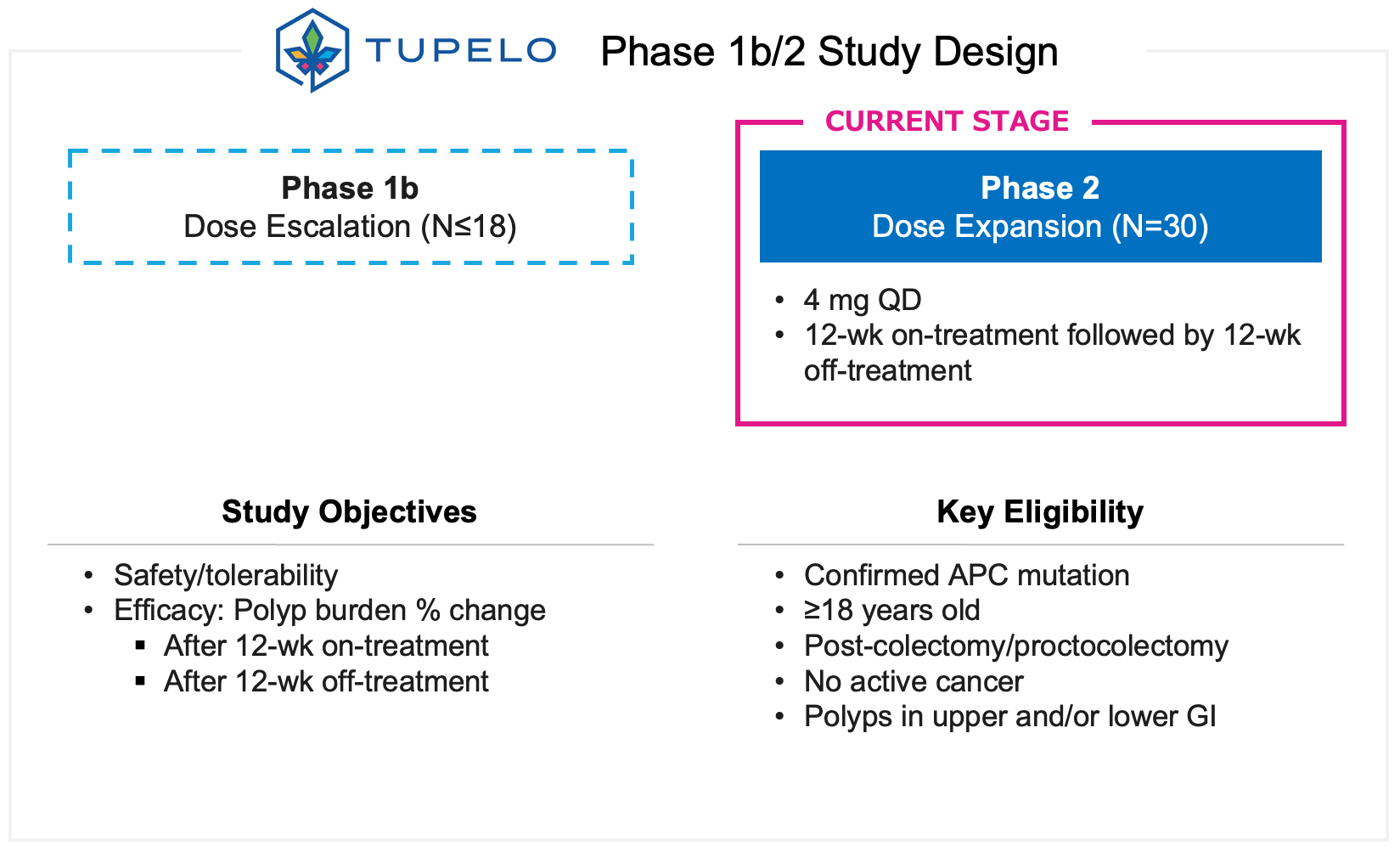
Figure 15. TUPELO study design. Phase 1b/2 clinical study to assess the efficacy, safety, and pharmacokinetics of REC-4881 in patients with classical familial adenomatous polyposis (FAP)
As of December 2025, treatment with REC-4881 (4 mg QD) demonstrated meaningful and durable reductions in polyp burden in patients with FAP within the Phase 2 portion of TUPELO. A rapid reduction in polyp burden was reported at week 13. The majority of evaluable patients responded, with 75% showing reductions in polyp burden, and a median 43% reduction in total polyp burden observed among 12 efficacy-evaluable patients. 40% of patients also achieved a ≥1-point improvement in Spigelman stage from baseline, which is a clinically meaningful measure of upper GI disease severity to assess surveillance and clinical management. Durability of effect was maintained at week 25, following the 12 week off-therapy phase. 82% (N=9) of 11 evaluable patients responded to treatment with REC-4881, with a 53% median reduction in total polyp burden observed from baseline, which is shown in the figure below. 40% of patients also maintained a ≥1-point improvement in Spigelman stage from baseline.
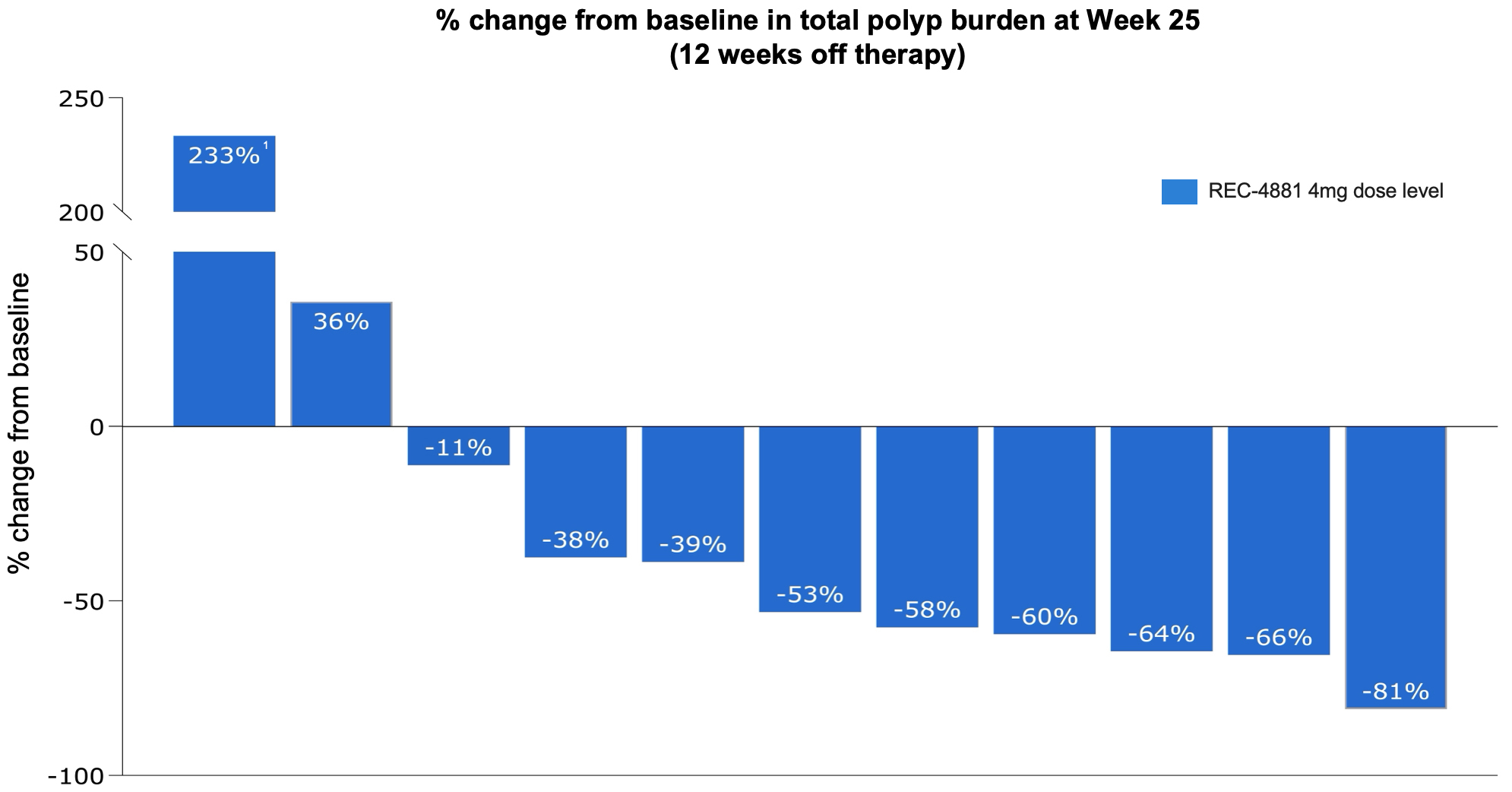
Figure 16. Durable reductions in polyp burden at week 25 of the TUPELO study. Percent change in baseline in total polyp burden at week 25 (12 weeks on therapy / 12 weeks off therapy) for patients with FAP treated with 4mg REC-4881. Percent (%) change from baseline calculates the change between post-resection value from screening visit to the pre-resection value at Week 25/EOT visit. Note: Polyp burden defined as the sum of all diameters of polyps in the GI. 1Non-responder with 233% increase – polyp burden increased from 3mm to 10mm due to one polyp growth at Week 25. Efficacy Evaluable Population: Defined as all participants who have measurable disease (non-zero polyp burden) at end of baseline endoscopy, received at least 75% of study drug, and have at least one post-baseline on study endoscopic assessment. One patient who had a week 13 endoscopy did not have a Week 25 endoscopy.9
The safety profile of REC-4881 4 mg QD across the combined Phase 1b/2 cohort (19 safety evaluable patients) was consistent with prior MEK1/2 inhibitors. Treatment-related adverse events were predominantly low grade and N=4 discontinuations occurred due to TRAEs. The most frequent TRAEs (at greater than or equal to 10%) included dermatitis acneiform (57.9%; 52.6% Grade 1/2, 5.3% Grade 3) / rash (31.6%; all Grade 1/2) and blood CPK increase (36.8%; 26.3% Grade 1/2, 10.5% Grade 3).
Natural History Analysis
In December 2025, we reported on a natural history analysis in collaboration with Amsterdam University Medical Centre to contextualize the single-arm efficacy TUPELO trial of REC-4881, and to better understand the natural history of FAP. The study analyzed a subset of 55 patients from a FAP registry which met key inclusion criteria of TUPELO. Results suggested that the natural history of FAP is to progress: 87% of untreated patients in the registry experienced annualized increase in polyp burden, with 10% being stable and 3% experiencing a modest decrease in polyp burden, shown in the figure below. A mean increase of 60% and median increase of 28% in annualized polyp burden was observed.
9 Data on file.
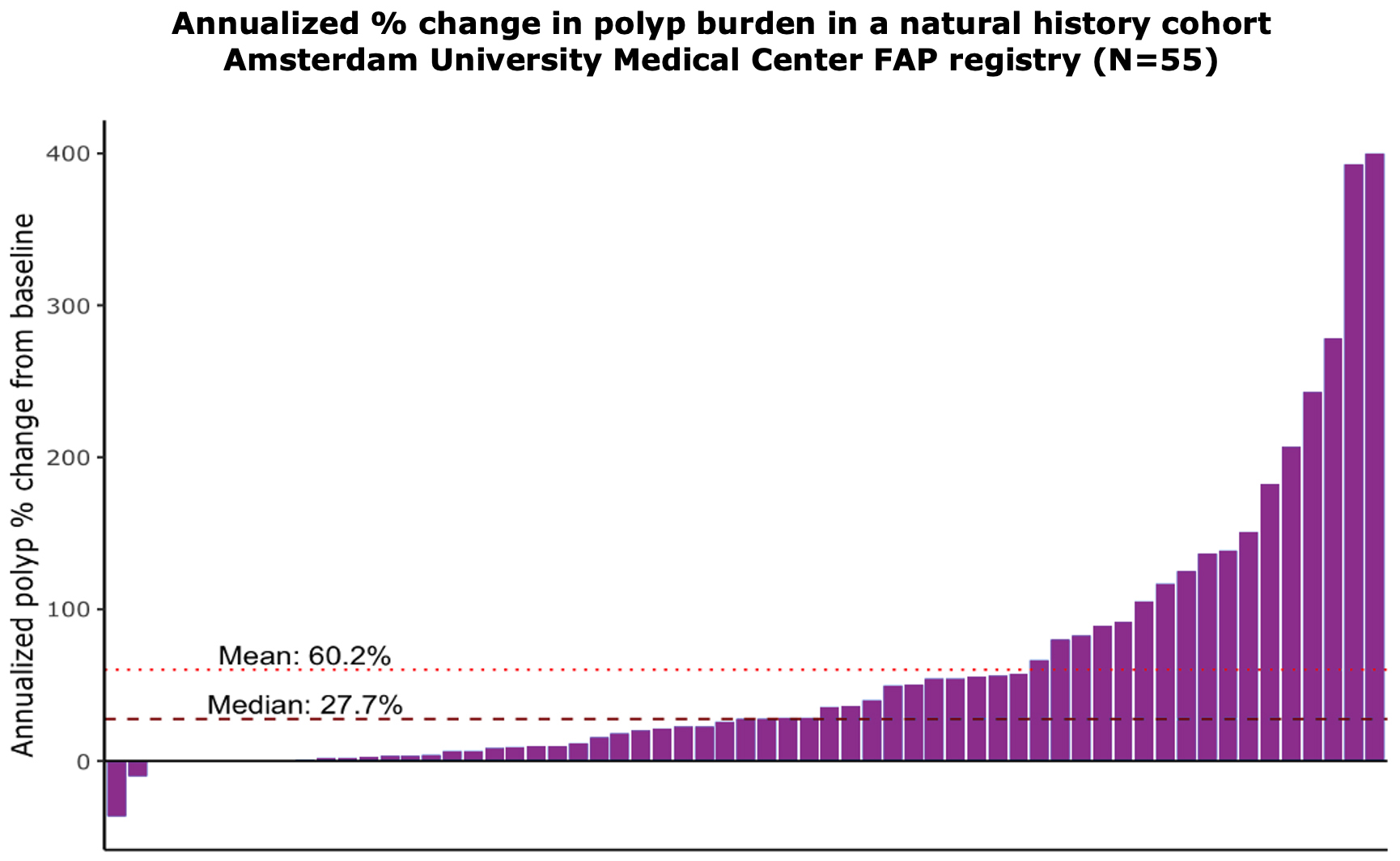
Figure 17. Annualized percent change in polyp burden in a natural history cohort. Each bar represents one patient. 6 patients had separate endoscopic evaluations for upper and lower GI involvement and have repeated bars. Data includes 55 patients aged ≥55 with a history of colectomy and measurable polyp burden at baseline endoscopy. In routine care, endoscopies for lower and upper GI are performed annually with variability. Therefore, polyp burden percent change was annualized. 52 (97%) of the 55 patients had an increase or stable polyp burden.10
Competitors
No drugs have been approved for FAP patients, though some generic drugs are used in selected patients to reduce polyp burden. The following programs represent the most clinically advanced efforts specifically evaluated in FAP populations:
•Flynpovi (Panbela Therapeutics) — A fixed-dose combination of sulindac and eflornithine. The combination of the individual drugs was previously evaluated vs. the individual drugs alone in a randomized Phase 3 trial in FAP. Post hoc analyses suggested a potential effect on delaying lower gastrointestinal surgery; Panbela had indicated plans for a new Phase 3 study in FAP patients, including those with an intact colon, although the company has provided no updates on development plans since 2023.
•eRapa (Biodexa Pharmaceuticals) — A formulation of rapamycin currently being evaluated in a Phase 3 study in FAP patients both prior to and following colectomy, with primary completion in 2030.
◦Phase 2 data among adult patients with and without intact colon in cohort 2 (Phase 3 dose) showed a 29% median reduction in total polyp burden at 12 months.
•Eicosapentaenoic Acid (SLA Pharma) — A derivative of an omega-3 fatty acid which was under evaluation in a Phase 3 study for polyp suppression in FAP, completed over 6 years in 2024 and is pending data updates. It has previously shared data from a Phase 2/3 study:
◦A 17% reduction in polyp size (diameters) vs baseline at 6 months, which translates to 29.8% mean reduction vs. placebo.
◦A decrease 34% from baseline in global rectal polyp burden was reported vs. a 9% increase with placebo.
Depending on jurisdiction, this product may be regulated differently from traditional prescription pharmaceuticals.
The following programs are in early clinical development or include FAP as a subset of a broader development strategy:
•FOG-001 (zolucatetide, Parabilis Medicines) — A peptide-based investigational therapy with early clinical evidence reported in FAP. Additional clinical data are expected in 2026.
•TPST-1495 (Tempest Therapeutics) — A dual EP2/EP4 antagonist with a Phase 2 study in FAP(NCI run study) anticipated to initiate in 2026.
•ZKN-013 (Eloxx Pharmaceuticals / Almirall) — A small-molecule read through agent currently in a Phase 1 clinical trial that includes a cohort of patients with FAP.
10 Data on file.
REC-617 for Advanced Solid Tumors – Phase 1/2
REC-617 is an orally bioavailable, cyclin-dependent kinase 7 (CDK7) inhibitor currently under development for the treatment of advanced solid tumors. Inhibiting CDK7 targets both cell cycle dysregulation and transcriptional "addiction", which are hallmarks of multiple aggressive cancers including, but not limited to, CDK4/6 resistant breast cancer, ovarian cancer, and other solid tumors. There are currently no CDK7 inhibitors approved by the FDA. ELUCIDATE, a Phase 1/2 open-label, multicenter, safety, PK, PD and preliminary efficacy study is currently underway. Interim monotherapy Phase 1 safety, PK, PD, and efficacy data were shared in the fourth quarter of 2024, with expanded data from a larger cohort of patients shared in the fourth quarter of 2025. Phase 1 monotherapy dose escalation is ongoing in 2026, to evaluate alternative dosing schedules. Phase 1 dose escalation combination cohorts were initiated in 2L+ PROC in 2025, with initial combination regimens including bevacizumab plus paclitaxel or pegylated liposomal doxorubicin (PLD). A Phase 2 dose expansion monotherapy cohort in PROC was also initiated in 2025. We expect to provide early safety and PK combination data in 2027.
Disease Overview
The importance of cell cycle inhibitors in oncology has been established with CDK4/6 inhibitors, which generated approximately $10.5 billion in sales in 2023. Aberrant CDK7 overexpression is common in many cancer indications and associated with poor prognosis. CDK7 presents an opportunity to improve treatment outcomes over CDK4/6 inhibitors due to CDK7’s dual role in cell cycle progression and transcription. Potential specific indications include ovarian cancer, HR+ breast cancer, triple negative breast cancer, pancreatic cancer, ovarian cancer, head and neck cancer, and NSCLC for which we estimate an addressable population of approximately 150,000 drug-treatable patients per year in the US and EU5.
Insight from Recursion OS
CDK7 inhibitor development has faced significant challenges, primarily due to off-target effects and suboptimal pharmacokinetics. Previous attempts often employed covalent binding mechanisms or exhibited poor oral bioavailability, leading to undesirable side effects in the clinic. Current candidates in development for CDK7 feature covalent binding or extended half-lives potentially resulting in substantial on-target toxicity. In addition, the reversible inhibitors under investigation are transporter substrates, likely compromising their absorption and exacerbating gastrointestinal adverse events. These limitations underscore the critical need for novel CDK7 inhibitor designs that optimize both safety and efficacy profiles.
Leveraging our AI-driven multi-parameter optimization approach, we identified critical design limitations in existing CDK7 inhibitors. This insight led to an improved target product profile and a novel molecule design. REC-617 is an orally bioavailable, potent and selective CDK7 inhibitor with enhanced oral bioavailability. It has a non-covalent, reversible mechanism of action, and a predicted shorter human half-life compared to other drugs in development. These characteristics potentially offer an improved therapeutic index, less off-target effects, and more consistent absorption.
Preclinical
REC-617 has demonstrated strong anti-tumor activities in preclinical studies, and in vivo experiments showed potent tumor regression across multiple solid tumor types. Notably, in the OVCAR3 ovarian cancer xenograft model as shown below, complete tumor regression was observed in all 8 mice treated with 10 mg/kg by Day 27. Importantly, no significant body weight loss was observed across treatment arms. Mouse PK studies revealed that maintaining 8-10 hours of CDK7 IC80 coverage resulted in potent tumor regression with minimal side effects, while coverage beyond 10 hours led to significant body weight loss. This defined an optimal therapeutic window that guided target efficacious exposures in the clinic.
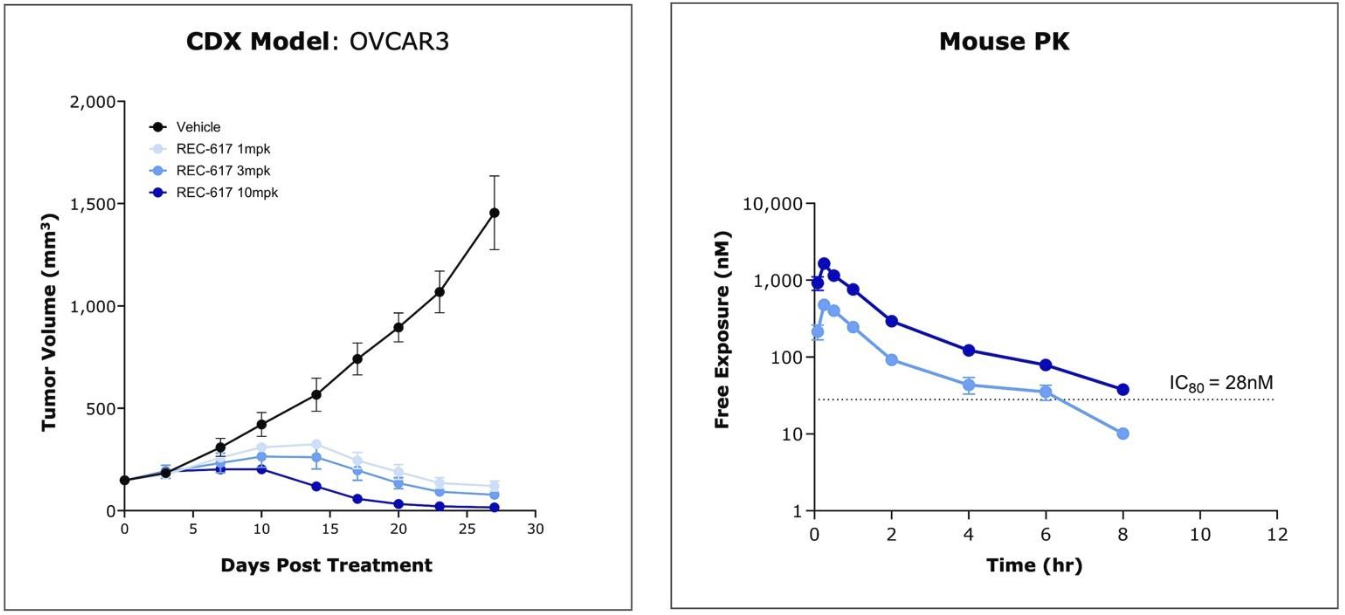
Figure 18. REC-1245 anti-tumor activity and PK in preclinical tumor models. (Left) REC-617 induces tumor regression in the OVCAR3 cell line derived xenograft mouse model. N=8, 28 days of treatment, REC-617 administered QD PO. (Right) REC-617 administration results in 8-10 hours of therapeutic coverage at IC80. PK studies conducted in CD1 mice, single-dose administration PO.11,12
Clinical
In the third quarter of 2023, we initiated a Phase 1/2 open-label, multicenter study (ELUCIDATE) in patients with advanced solid tumors, with the design shown in the figure below.
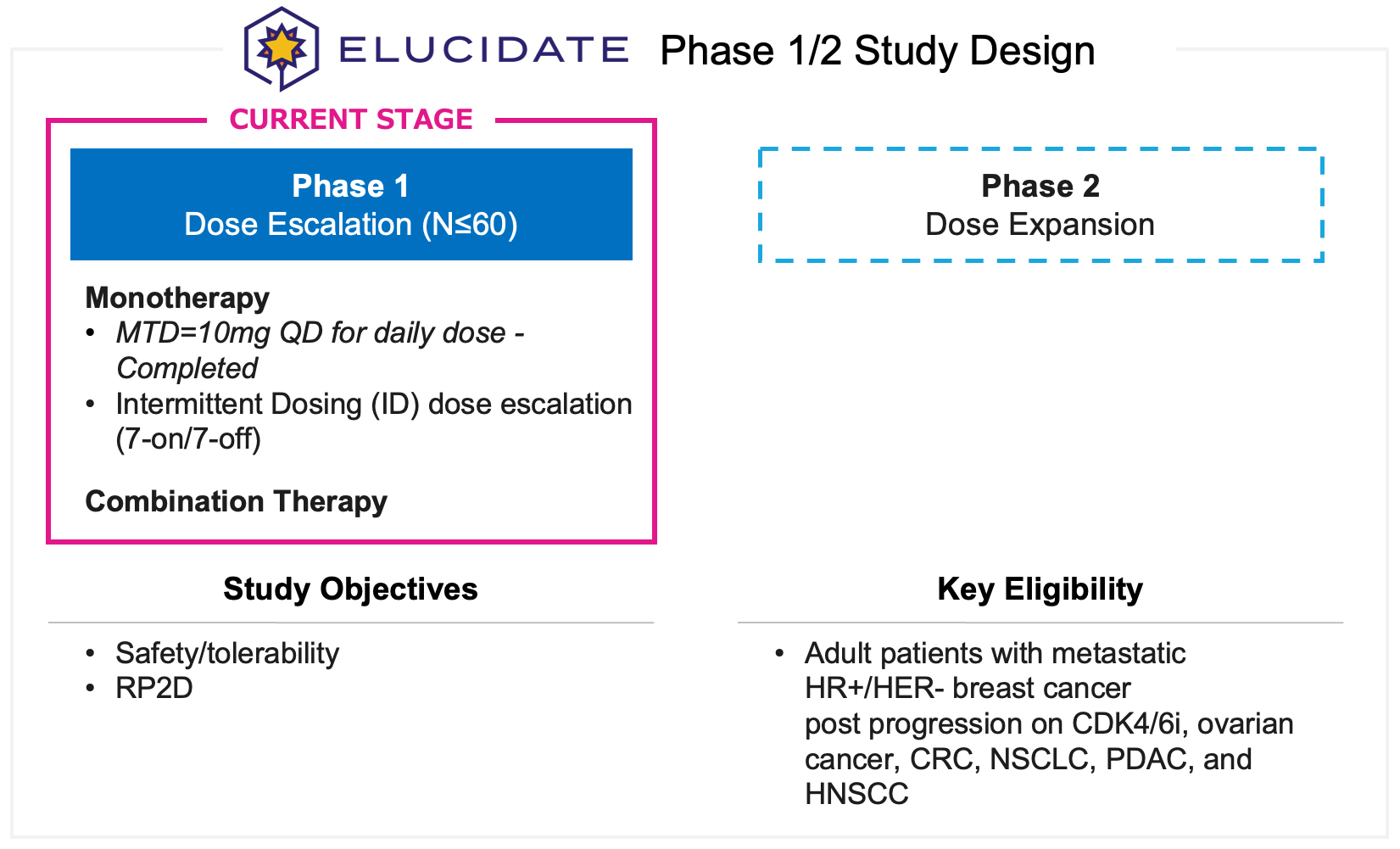
Figure 19. ELUCIDATE study design. Phase 1/2 trial design to assess the safety, PK, exploratory PD, and efficacy of REC-617 in patients with advanced solid tumors.
11 Besnard, et al. (2022). AI-driven discovery and profiling of GTAEXS-617, a selective and highly potent inhibitor of CDK7 [abstract]. AACR; Cancer Res 2022;82(12_Supplement): 3930.
12 Hallett, et al. (2024). Overcoming traditional design limitations with AI-based discovery. AACR Special Conference in Cancer Research: Optimizing Therapeutic Efficacy and Tolerability through Cancer Chemistry; Plenary Session 1
In December 2024, we presented results from the initial 18 response evaluable patients from Phase 1 monotherapy dose escalation at an AACR Special Conference in Cancer Research. In November 2025, updated results from a monotherapy cohort of 29 heavily pre-treated patients who received 6 dose levels of REC-617 (QD and BID) were reported. REC-617 was well-tolerated with predominantly Grade 1-2 adverse events, and fewer GI side-effects than reported for other CDK7 inhibitors. The most common DLTs were nausea and thrombocytopenia, and 6.9% (N=2) of patients discontinued due to a TRAE. The MTD was established at 10 mg once daily. PK data support dose-proportional exposure (see figure below), rapid absorption, and a short half-life (~5h).
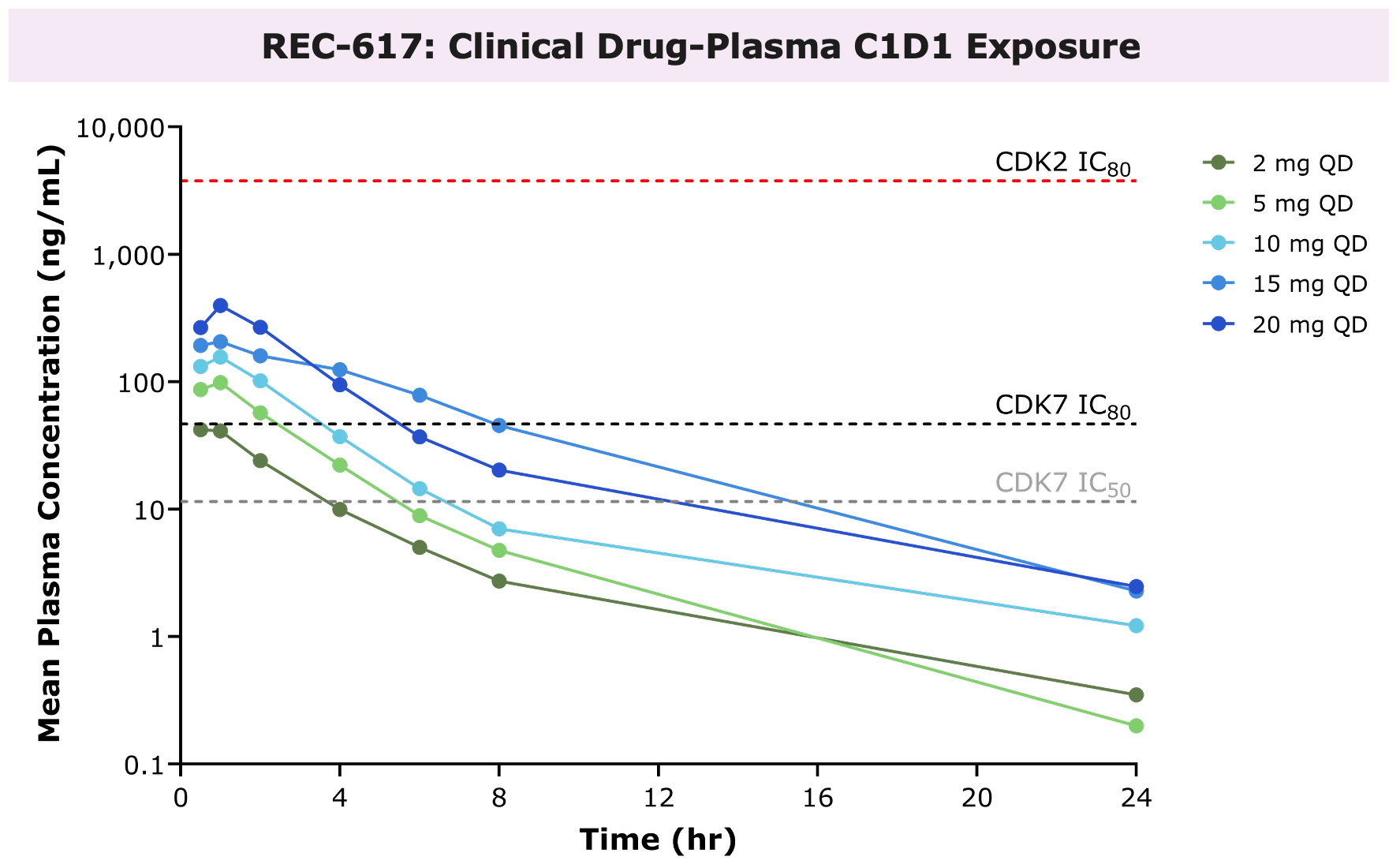
Figure 20. REC-617 clinical plasma pharmacokinetics. REC-617 demonstrates dose-proportional exposures exceeding CDK7 IC50. Exposures remain below CDK2 IC80, supporting selective target inhibition.13
Encouraging antitumor activity included a confirmed partial response (PR), in a heavily pre-treated metastatic ovarian cancer patient. The patient had a maintained durable response and was treated with REC-617 for approximately 7 months. Patient LDH levels were also normalized, and reductions were observed in CA125 (-44%) and TK1 (-68%). Five additional patients achieved the best response of stable disease (SD) lasting up to six months.
Competitors
Several investigational CDK7 inhibitor programs have entered clinical development; however, the competitive landscape remains relatively limited, with only a small number of programs currently advancing in active clinical development. These programs vary by mechanism, combination strategy, geographic focus, and development priority.
Programs with active clinical development and strategic focus
•Samuraciclib (Carrick Therapeutics) — An oral CDK7 inhibitor currently in Phase 2 clinical development, primarily in combination with selective estrogen receptor degraders (SERDs) for patients with HR-positive, HER2-negative breast cancer following progression on CDK4/6 inhibitors.
◦Recent data update from Ph2 randomized study evaluating samuraciclib + fulvestrant vs. fulvestrant alone in, fulvestrant naive, post CDK4/6+AI patient population was directionally positive but with limited quantitative power
▪Positive direction holds true across ORR, CBR, PFS and in sub-cohorts (TP53wt)
•ORR: 28% with combo (n=32) vs. 14% (n=14) with fulvestrant alone
•mPFS: 7.8mo to 8.5mo (n=39) vs. 5.6mo (n=20)
•In TP53mut not detected: mPFS of 9.6-14.5mo (n=30) vs 6.8mo (n=11)
▪The drug continues to show GI toxicities in >80% patients at RP2D (360mg)
•Q-901 (Qurient) — An intravenous CDK7 inhibitor in Phase 1/2 clinical development as monotherapy and in combination with PD-1 inhibitors across solid tumors. No efficacy data has been shared so far. Qurient is also developing a HER2-targeted antibody–drug conjugate (QP-101) that incorporates a CDK7 inhibitor payload in combination with a topoisomerase I inhibitor, currently in preclinical development.
13 Data on file.
Other notable programs with limited or geographically-constrained clinical presence
•TY-2699a (TYK Medicines) — A CDK7 inhibitor currently in Phase 1 clinical development in China.
•EOC-237 (EOC Pharma) — A CDK7 inhibitor currently in Phase 1 clinical development in China.
REC-1245 for Solid Tumors and Lymphoma – Phase 1/2
REC-1245 is a novel, potent and selective molecular glue degrader of RNA-binding motif protein 39 (RBM39) currently under development for the treatment of biomarker-enriched solid tumors and lymphoma. There are currently no RBM39 degraders approved by the FDA. We initiated a Phase 1/2 open-label, multicenter study (DAHLIA) to evaluate the safety, tolerability, PK, PD, RP2D, and preliminary efficacy of REC-1245. In the third quarter of 2025, we reported updated information on the population being enrolled into the DAHLIA study, to include cancers with high genomic instability (for example endometrial cancer) and to confirm specific biomarker-enriched populations (for example 2L+ MSI-H/dMMR). We expect to share early safety and PK data from the Phase 1 monotherapy dose-escalation portion of the study in the first half of 2026.
Disease Overview
Alternative splicing and RNA-binding proteins (RBPs) have emerged as attractive therapeutic targets for cancer due to their critical roles in the regulation of post-transcriptional modifications, impacts on DNA damage repair pathways, and modulation of cell cycle functions. Of these, RNA-binding motif protein 39 (RBM39) is a critical splicing factor that many high-risk cancers rely on to maintain transcriptional integrity and drive tumor progression. As a target, RBM39 is vulnerable to a 'molecular glue' approach, where its selective degradation triggers a cascade of lethal splicing errors across key oncogenic pathways, including those involving DNA damage repair. With over 100,000 addressable patients, with biomarker-enriched solid tumors and other select histologies where RBM39 could be targeted in the US and EU5 each year, REC-1245 has the potential to be used as a single agent or in combination with chemotherapy and/or immunotherapy.
Insight from Recursion OS
Reports suggest that genetic or pharmacologic depletion of CDK12 can reduce the expression of several genes involved in the homologous recombination repair pathway such as BRCA1 and BRCA2, inducing a BRCA-like phenotype and DDR response. Therefore, CDK12 has received considerable interest as a therapeutic target and tumor biomarker for HR-proficient cancers; however, success has been limited by toxicity associated with CDK12 inhibitors also inhibiting the structurally related CDK13. Despite reports of functional redundancy, we observed that the genetic knockout of CDK12 could be clearly distinguished phenotypically from that of CDK13. Using map-based inference to characterize and relate cellular phenotypes, we identified RBM39 as an alternative target that selectively mimics CDK12 loss, but not CDK13, providing a novel approach for targeting CDK12 biology while circumventing any toxicities that may arise due to CDK13. We subsequently discovered REC-1245 as an RBM39 molecular glue degrader that closely mimics the phenotypic loss of CDK12 and RBM39, but not CDK13. Functionally, REC-1245 treatment globally impacts the expression of many DDR genes but does so in a CDK12 independent manner.
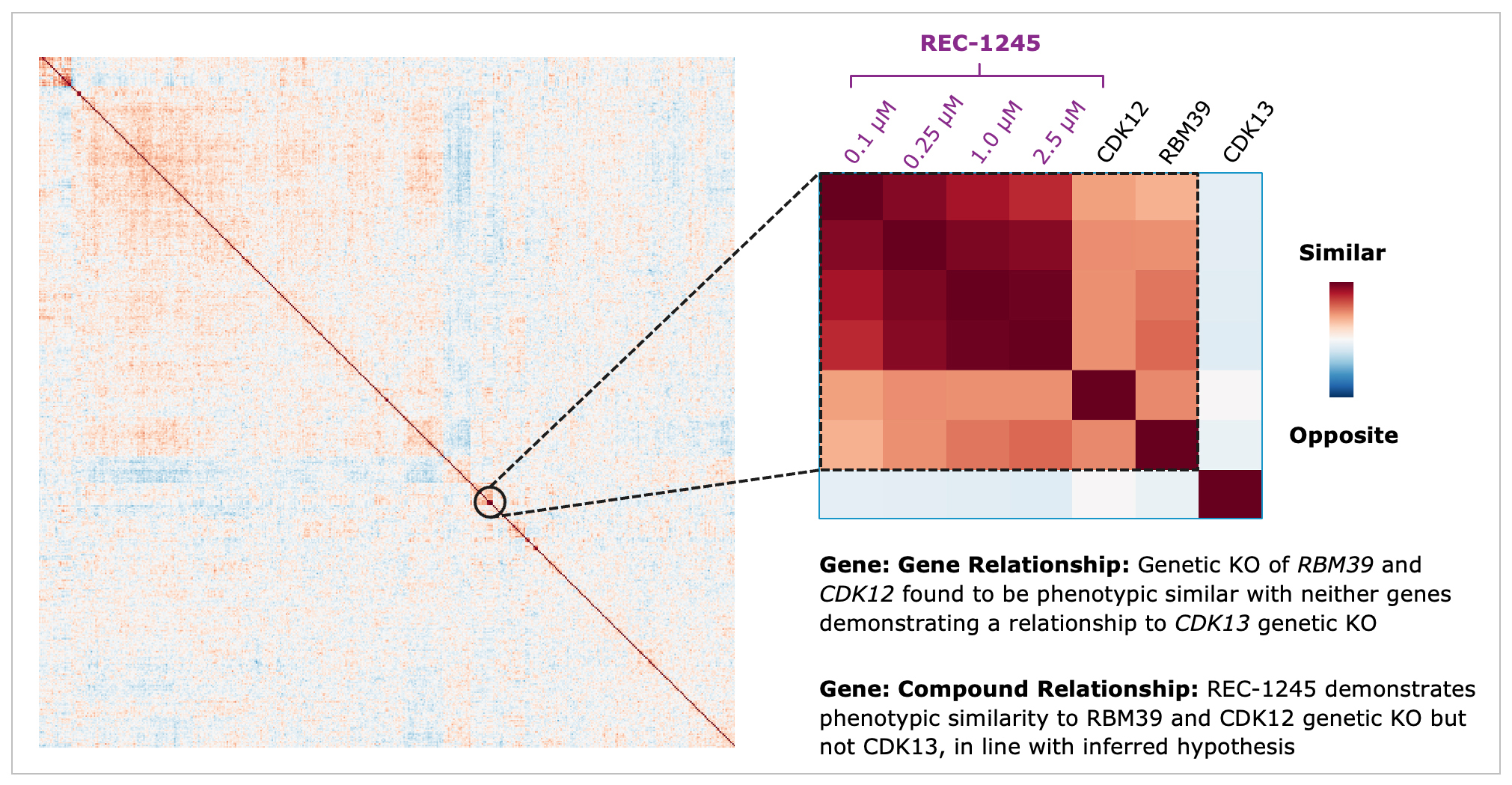
Figure 21. Inferred map relationships between CDK12, CDK13, RBM39, and REC-1245. Map representation demonstrates a high degree of phenotypic similarity between CDK12, RBM39, and multiple concentrations of REC-1245. CDK13 shows little or no functional similarity to CDK12, RBM39, or any concentration of REC-1245.
Preclinical
REC-1245 is a potent, potential first-in-class RBM39 molecular glue degrader with compelling preclinical activity. It showed no significant in vitro safety concerns (CEREP, hERG), no CDK12 kinase activity, and minimal ITGA2 liability – an off-target effect seen with prior RBM39 degraders. As shown in the figures below, REC-1245 demonstrated strong antitumor activities as a single-agent, including tumor regression in an ovarian cancer BRCA-proficient, p53 mutant, OVK18 in vivo cell line derived xenograft (CDX) model. In addition, dose-dependent anti-tumor activity correlated with increases in RBM39 degradation confirming target engagement and an exposure-response-efficacy relationship.
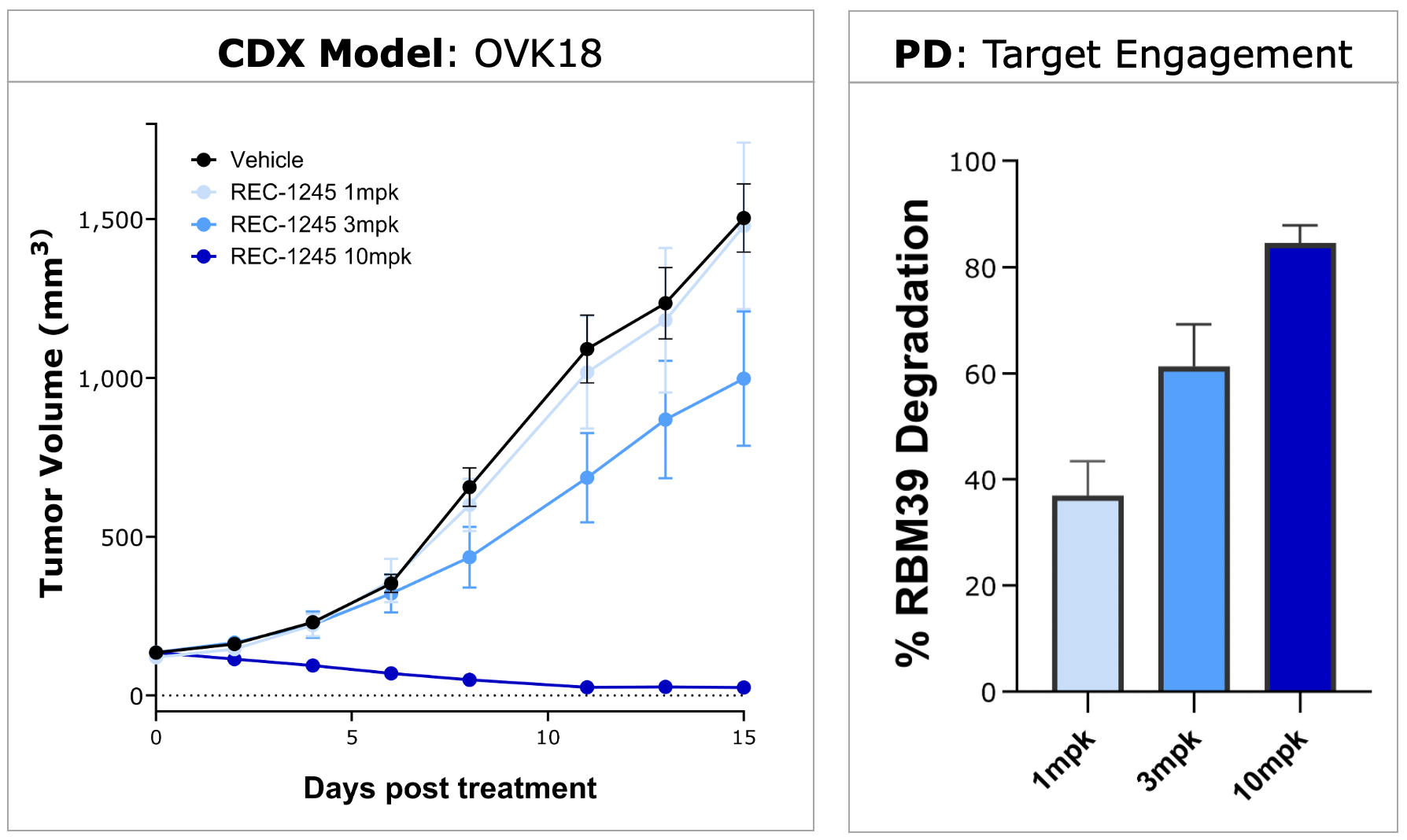
Figure 22. REC-1245 single-agent activity and target engagement. (Left) REC-1245 administered BID PO at doses noted for 15 days. N=8 mice per group. (Right) Percent RBM39 degradation (PD) evaluated at REC-1245 doses noted after 5 days BID oral administration of REC-1245. N=3 mice per group.14
Emerging preclinical data has shown that REC-1245 reduces viability in tumors characterized by replication stress and DNA repair vulnerabilities (DDR defects) across multiple solid tumor types, including MSI-H/dMMR, HRR altered cancers, and other tumors, as shown below, which could provide a potential signature for REC-1245 sensitivity. The data also suggests greater sensitivity to REC-1245 for tumors with high replicative stress signatures and DNA repair vulnerabilities, as shown below.
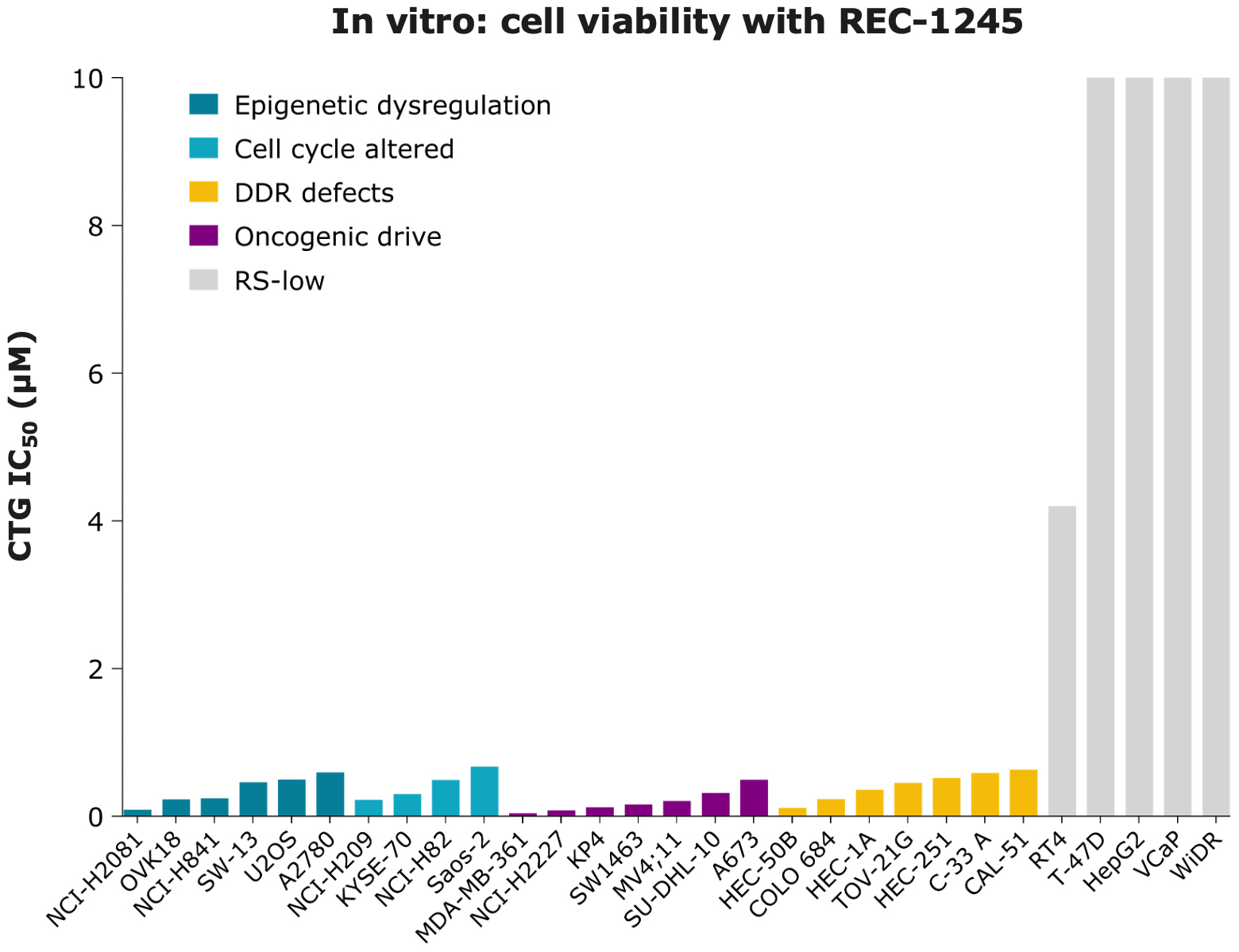
Figure 23. In vitro cell viability following REC-1245 treatment. Cell lines were assigned to broad pathway dysregulation contexts based on 1 or more documented alteration from CCLE/GSDC databases.15
14 Data on file.
15 Data on file.
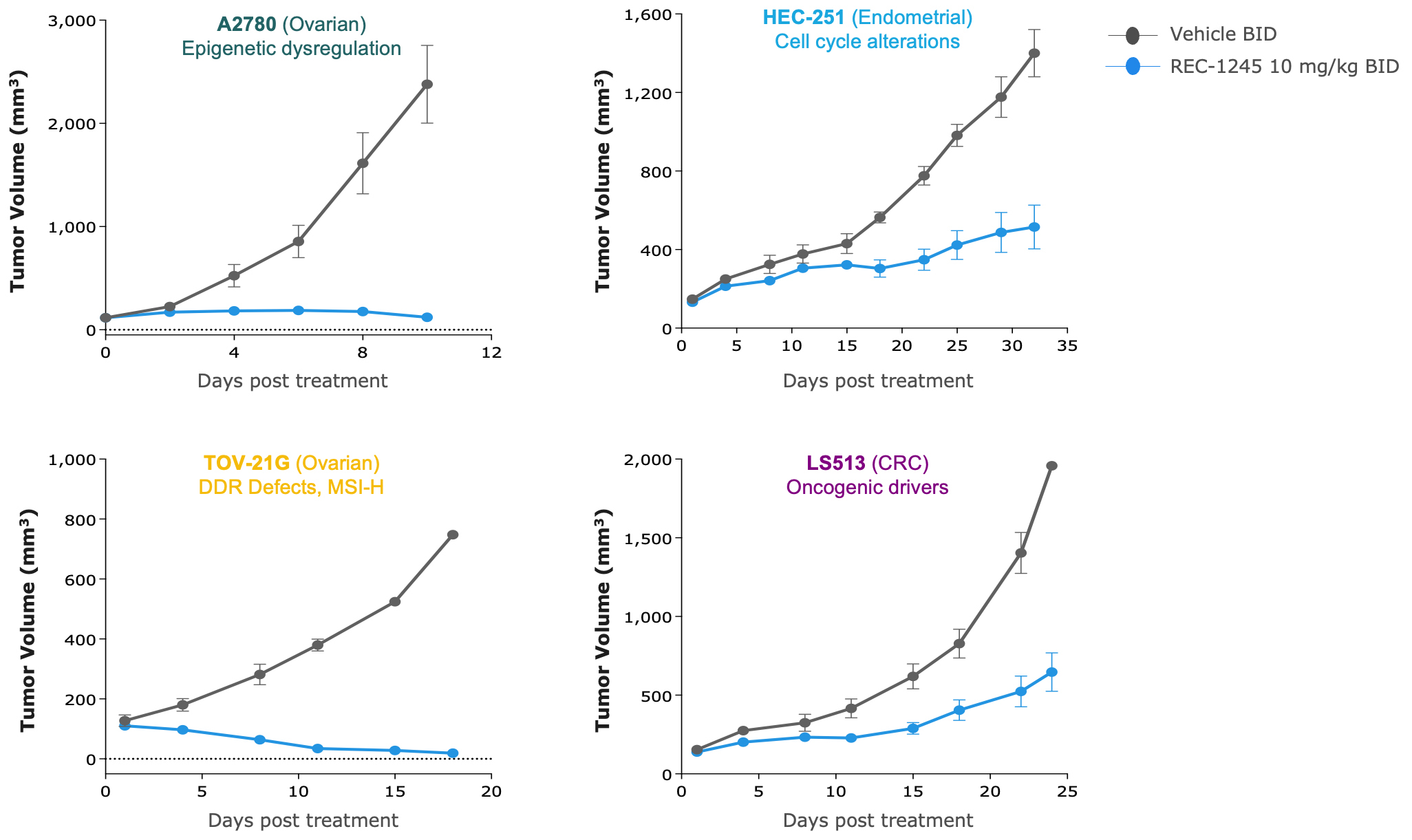
Figure 24. Reduction in tumor volume across different tumors with high replication stress and DNA repair vulnerabilities. N=4 mice per group.16
Clinical
In December 2024, we initiated a Phase 1/2 open-label, multicenter study to characterize the safety, tolerability, PK, PD, and preliminary anti-tumor activity of REC-1245 in participants with unresectable locally advanced or metastatic cancer. As of December 31, 2025, the trial is currently active and enrolling at sites in the US and Canada. We expect to share early safety and PK data from the Phase 1 monotherapy dose-escalation portion of the study in the first half of 2026.
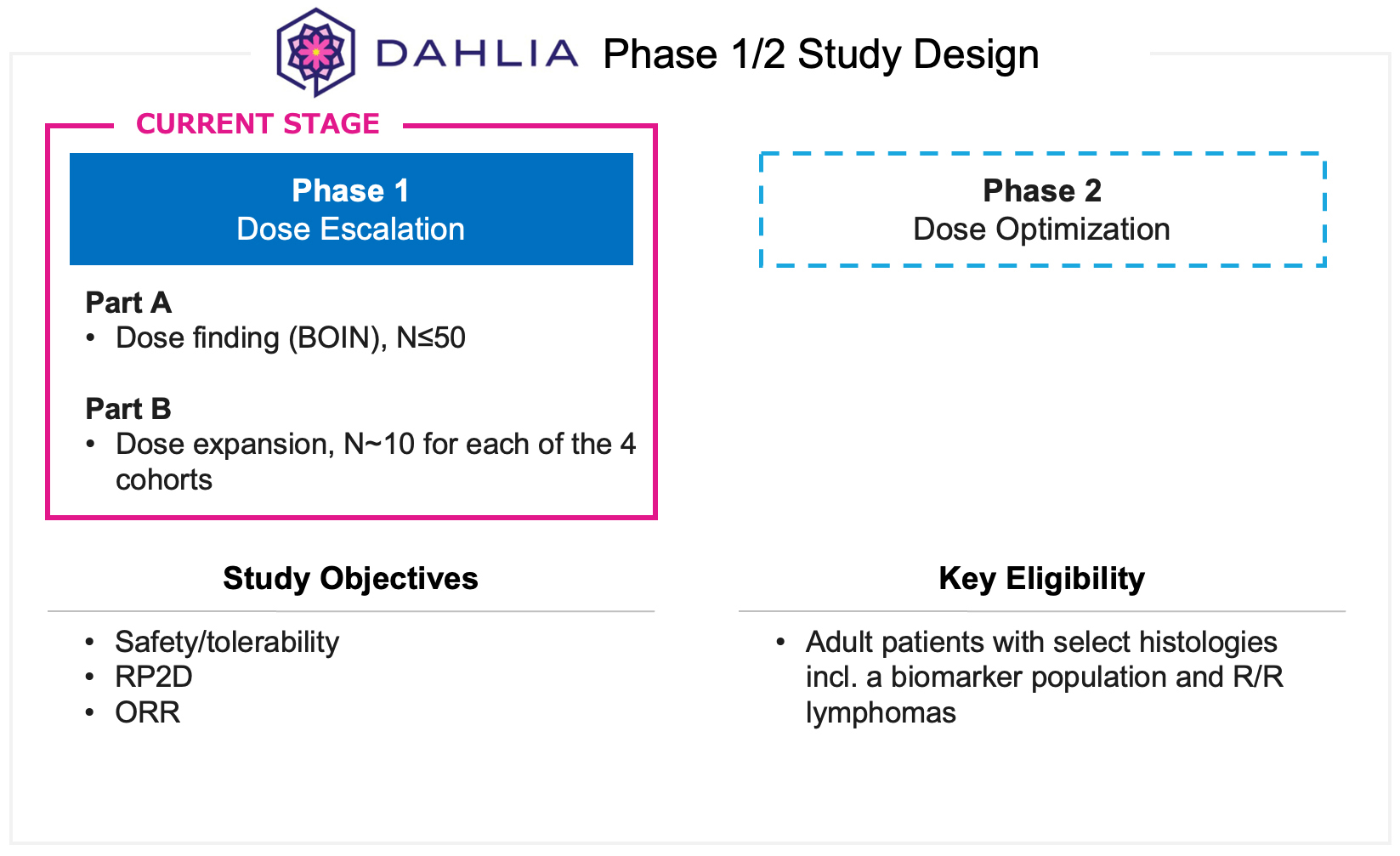
Figure 25. DAHLIA study design. Phase 1/2 trial design to assess the safety, tolerability, PK, PD, and preliminary anti-tumor activity of REC-1245 in participants with unresectable locally advanced or metastatic cancer, and who are refractory to, had a relapse on, or intolerant of, established standard of care treatment.
16 Data on file.
The clinical development landscape for RBM39 degraders remains limited. While the mechanism of RBM39 degradation has been explored historically through legacy aryl-sulfonamide compounds, only a small number of programs are currently believed to be under active clinical development as purpose-built RBM39 degraders.
Active RBM39-focused development programs
•ST-01156 (SEED Therapeutics) — An investigational RBM39 degrader that initiated a Phase 1a open-label clinical trial in patients with advanced solid tumors, with first patient dosed in January 2026.
•E7820 (Eisai) — A legacy aryl-sulfonamide compound now understood to induce RBM39 degradation via DCAF15. Eisai is collaborating with the National Cancer Center (NCC) Japan, which is conducting a Phase 1 investigator-initiated trial (CIRCUS) evaluating E7820 in Japanese patients with unresectable tumors. Advancement to Phase 2 is expected to be considered following determination of tolerability and a recommended Phase 2 dose.
REC-3565 for B-Cell Malignancies – Phase 1
REC-3565 is an orally bioavailable, highly potent and selective, potential best-in-class MALT1 inhibitor currently under development for the treatment of B-cell malignancies, including chronic lymphocytic leukemia (CLL). MALT1 is a protease crucial for activation of the NF-κB pathway, which drives the proliferation of malignant B-cells in hematological cancers. There are currently no MALT1 inhibitors approved by the FDA. Following clearance of a CTA by the MHRA in December 2024, we initiated EXCELERIZE, a Phase 1 open-label, multicenter, dose escalation study to evaluate the safety, tolerability, PK, PD, and preliminary anti-tumor activity of REC-3565 in 2025. The first patient was dosed in April 2025, and we expect to share early safety and PK monotherapy data in the first half of 2027.
Disease Overview
B-cell malignancies encompass a range of hematological cancers, including lymphomas such as diffuse large B-cell lymphoma (DLBCL), follicular lymphoma (FL), mantle cell lymphoma (MCL), and leukemias such as CLL and small lymphocytic lymphoma (SLL). These diseases are characterized by the dysregulated growth or function of B-cells and are often driven by chronic B-cell receptor (BCR) signaling, which leads to unchecked NF-κB activation. MALT1 functions downstream of the BCR and the widely targeted Bruton’s tyrosine kinase (BTK), mediating pro-tumorigenic signals in malignant B-cells. Current therapies (e.g. BTK inhibitors) have transformed the treatment landscape, yet resistance remains a significant challenge. By inhibiting MALT1, REC-3565 may help overcome resistance and improve therapeutic outcomes, either as a monotherapy or in combination with BTK and/or BCL2 inhibitors. Notably, the total addressable population for MALT1 inhibitors spans multiple hematologic indications, with approximately 41,000 relapsed and/or refractory (R/R) patients with CLL and B-cell lymphomas in the US and EU5 annually.
Insight from Recursion OS
BTK inhibitors and other therapies for B-cell malignancies can cause drug-induced liver injury (DILI), limiting combination treatment options. Current MALT1 inhibitor scaffolds significantly inhibit UGT1A1, leading to dose-limiting toxicities, potentially restricting their utility in combination. Leveraging our AI-driven, multi-parameter optimization approach, we focused on an allosteric mechanism to enhance potency, selectivity, and safety for REC-3565. Hotspot analyses and physics-based molecular dynamics guided our design strategy, helping us address the hydrophobic and highly mobile nature of the allosteric binding site. As a result, REC-3565 does not significantly inhibit UGT1A1, potentially mitigating liver toxicity risks and facilitating higher target engagement. This profile also supports combination strategies with agents known to affect liver function like BTK and BCL2 inhibitors, offering a path to potentially deeper and more durable responses.
Preclinical
REC-3565 demonstrated significant antitumor activity across multiple B-cell lymphoma models. As a monotherapy, it drove tumor regressions in ABC-DLBCL xenografts, and in combination with zanubrutinib – a next-generation BTK inhibitor – it produced durable responses, with 70% of mice displaying no palpable tumors 10 days after the last dose. Additional in vitro analyses revealed minimal UGT1A1 inhibitory effects relative to other MALT1 inhibitor scaffolds in clinical development, suggesting an improved safety and combination therapy profile.
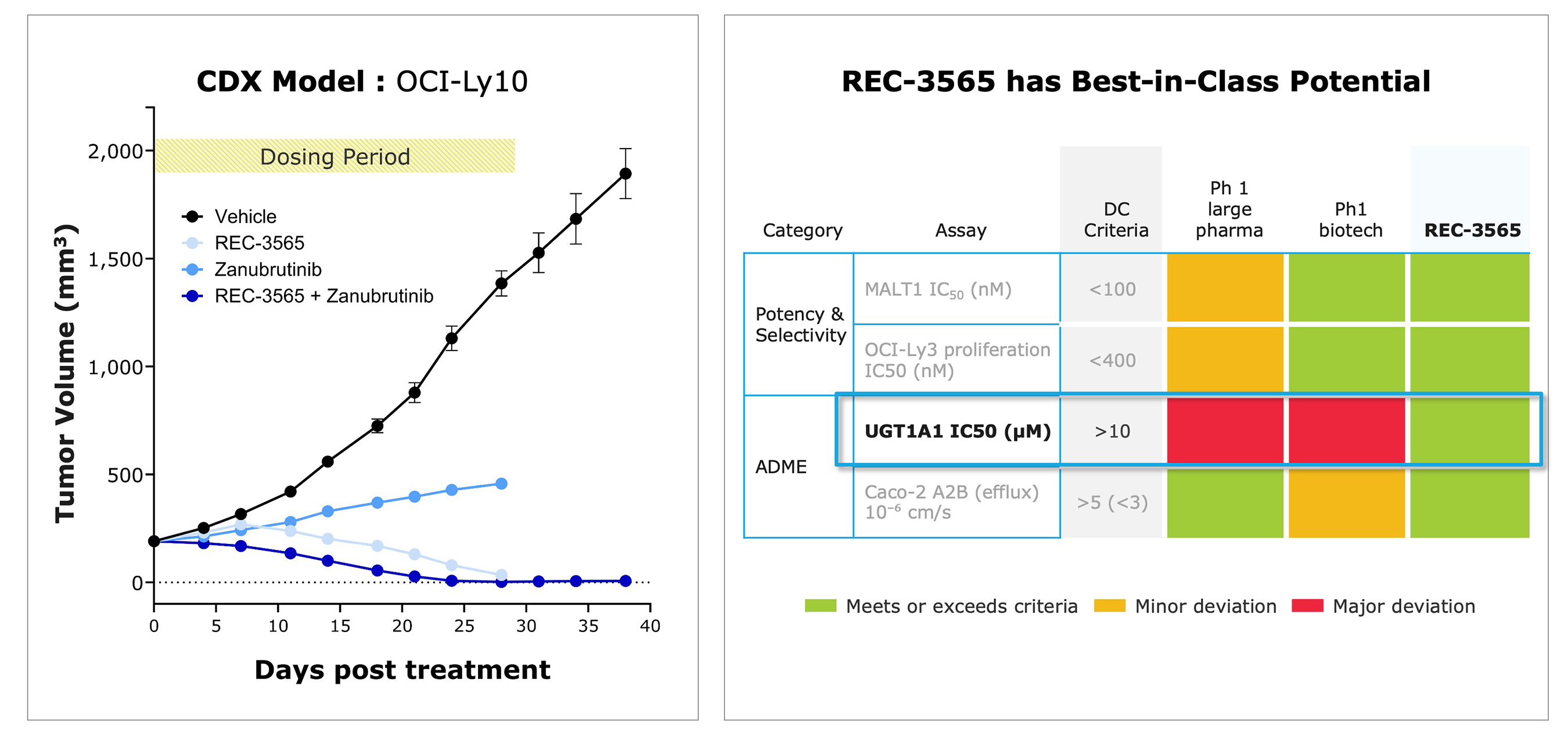
Figure 26. Preclinical data highlighting REC-3565 as a potential best-in-class MALT1 inhibitor. (Left) REC-3565 showed tumor growth regression as a single agent and when combined with zanubrutinib. N=10 per group mice per group, REC-3565 and zanubrutinib dosed BID. PD evaluated after 5 days BID oral administration of REC-1245 at doses noted. N=3 mice per group in PD portion. N=8 mice per group REC-3565 administered BID PO at doses noted. (Right) REC-3565 has best-in-class potential, especially given REC-3565 has >10 uM vs. <1 uM for other MALT1 inhibitors in clinical development. Development candidate criteria: MALT1 IC50 nM: green <100 nM; yellow >100-<300 nM; red>300 nM; OCI-Ly3 IC50 nM: green <400 nM; yellow >400-<1000 nM; red>1000 nM; UGT1A1 IC50 uM: green >10 uM; yellow <10->1 uM; red<1 uM; Caco-2 A2B (efflux): green >5(<3); yellow >1-<5(>3-<10); red <1(>10).17,18
Clinical
EXCELERIZE is a Phase 1 open-label, multicenter, dose escalation study designed to evaluate the safety, tolerability, PK, PD and preliminary anti-tumor activity of REC-3565 in patients with R/R B-cell malignancies. Part A will assess monotherapy dosing to identify a recommended dose for combination in Part B, which will evaluate combination regimens to inform future studies in B-cell cancers. The first patient was dosed in the second quarter of 2025, and we expect to share early safety and PK monotherapy data in the first half of 2027.
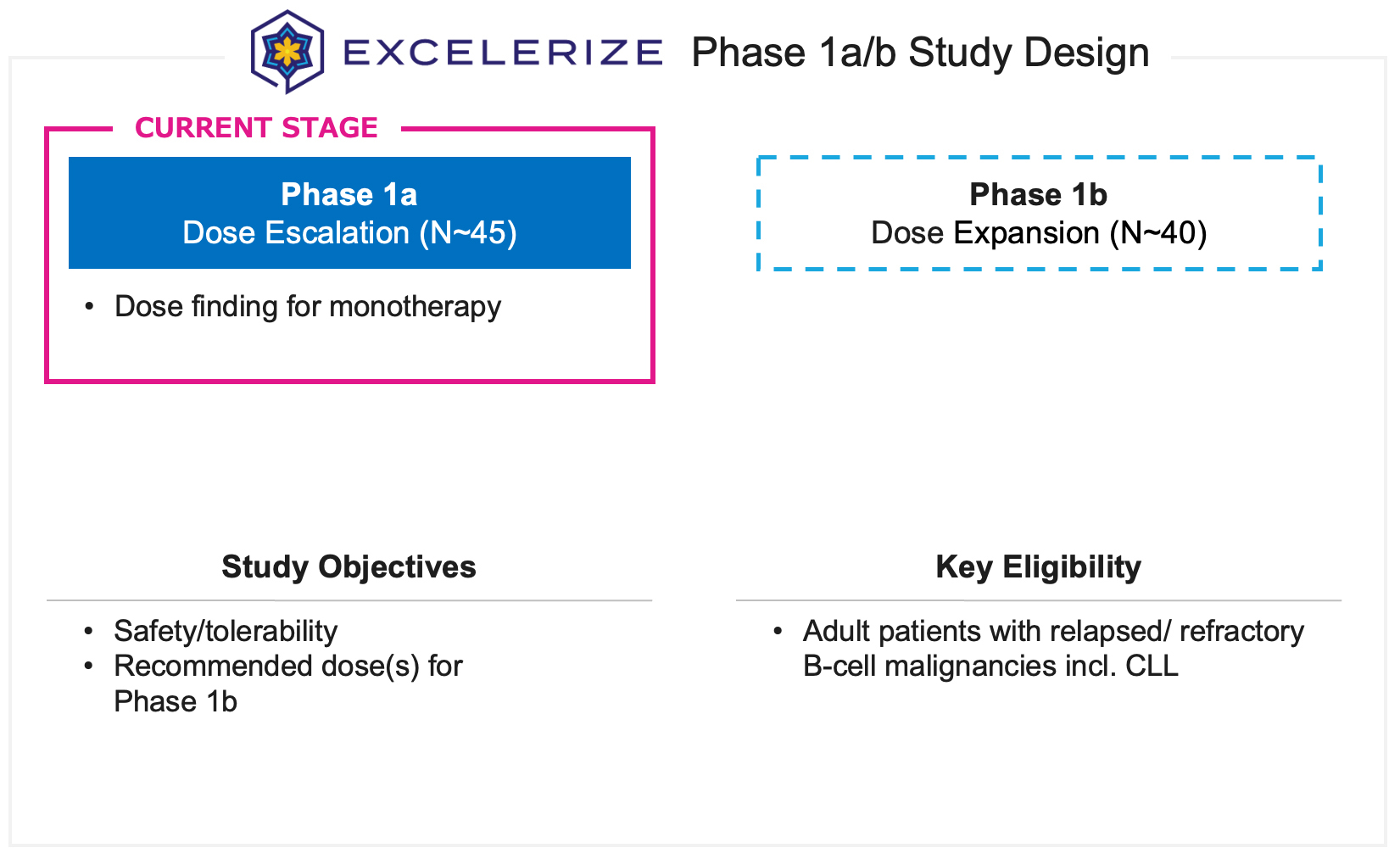
Figure 27. EXCELERIZE study design. Phase 1 trial to evaluate safety, tolerability, PK, PD and preliminary anti-tumor activity of REC-3565 in patients with R/R B-cell malignancies.
17 Payne, et al. (2024). Combining next-generation BTK and MALT1 inhibitors to enhance efficacy and therapeutic utility in B-cell malignancies [poster]. EORTC-NCI-AACR (ENA) Symposium: PB206.
18 Data on file.
Competitors
Early MALT1 inhibitors have shown UGT1A1 liability that has led to instances of hyperbilirubinemia in the clinic and limited combinability, while also potentially leaving efficacy on the table. The following competitors have or are currently generating data in the clinic with a strategic focus on B-cell lymphomas:
•JNJ-6786633 (Johnson & Johnson) - An oral MALT1 inhibitor, that showed significant hyperbilirubinemia in the clinic. Ph2 trials in combination with BTK inhibitors have since started and been marked complete, though no further data has been disclosed.
•SGR-1505 (Schrödinger) - An oral MALT1 inhibitor with Phase 1 monotherapy results reported for the ongoing trial in R/R B-cell lymphomas. Received US orphan drug designation for Waldenström's macroglobulinemia (WM) and mantle cell lymphomas (MCL), along with a fast track designation for treatment of WM patients in post BTK 3L+ setting.
•ABBV-525 (AbbVie/Lupin) - An oral MALT1 inhibitor with a Phase 1/2a trial ongoing in R/R B-cell malignancies. Primary completion of the trial is expected in 2029.
•AUR-112 (Aurigene) - An oral MALT1 protease inhibitor, with Phase I trial (AUR112-101) ongoing for relapsed advanced lymphoma. Initial results were reported at December 2025 press release, which showed limited Gr3 hyperbilirubinemiand 64% response rate (6 PR, 1CR) across B-cell lymphomas.
Other assets that have been discontinued or have a different strategic focus includes:
•CTX-177/ONO-7018 (Chordia/ONO) - An oral MALT1 inhibitor that was in Phase 1 trial for patients with R/R NHL/CLL which has recently been discontinued with the company looking to out license the asset.
•RB-201 (Rarefied Biosciences) - An oral MALT1 inhibitor currently in a healthy volunteer's study, with a strategic focus on autoimmune diseases.
REC-4539 for Solid Tumors and Hematology Oncology – Phase 1
REC-4539 is an orally bioavailable, highly potent and selective, CNS penetrant, and potential best-in-class inhibitor under development for the treatment of solid tumors and hematological malignancies. LSD1 is an epigenetic regulator that removes methyl groups from histones, thereby controlling the expression of tumor suppressors and oncogenes. By inhibiting LSD1, REC-4539 promotes the reactivation of tumor suppressor pathways and may slow tumor growth or enhance sensitivity to cytotoxic agents. There are currently no LSD1 inhibitors approved by the FDA. In January 2025, the FDA cleared an IND application for ENLYGHT, a Phase 1 open-label multicenter study evaluating REC-4359. In May 2025, the program was placed on strategic pause, to allow review of emerging clinical data and to ensure the program has a competitive Target Product Profile. Following completion of this review, we now expect to initiate a Phase 1 trial in the first half of 2026, with the dose escalation study evaluating REC-4539 in patients with SCLC or other select solid tumors. We expect to share early safety and PK data in the second half of 2027.
Disease Overview
LSD1 is abnormally overexpressed in a broad spectrum of solid tumors including lung, breast, prostate, esophageal, and bladder cancers, as well as acute myeloid leukemia (AML), with evidence suggesting that LSD1 is a promising therapeutic target. One indication of focus is SCLC, a poorly differentiated neuroendocrine tumor, representing roughly 15% of all lung cancer diagnoses. The majority of SCLC patients present with metastatic (extensive) or unresectable disease and, notably, over 50% of patients eventually develop brain metastases. Despite some improvements in frontline therapy such as chemotherapy plus immunotherapy, treatment options after progression remain limited. Median survival in ES-SCLC is poor, with a 5-year overall survival rate of approximately 3%. Across the US and EU5, approximately 45,000 patients have a treatable Stage III/IV SCLC each year.
Within SCLC, LSD1 plays a key epigenetic role by demethylating histones that regulate critical tumor suppressor genes. Inhibiting LSD1 can reverse this epigenetic repression, upregulating pathways such as NOTCH, that promote differentiation of neuroendocrine tumor cells into a more quiescent state, potentially sensitizing them to cytotoxic therapies. However, effective LSD1 inhibition requires a reversible, brain-penetrant molecule with a short half-life to minimize risks such as thrombocytopenia. Many LSD1 inhibitors have failed to achieve these parameters, particularly brain penetration and controlled on-target effects, highlighting the unmet need that REC-4539 aims to address.
A second indication of focus is acute myeloid leukemia (AML), which is the most prevalent adult leukemia. The disease accounts for approximately 80% of cases and is characterized by the aggressive expansion of immature "blast cells." While advancements in management have improved outcomes for younger patients, the prognosis for the elderly population remains poor, with cure rates as low as 15%. At the molecular level, LSD1 is abnormally overexpressed, acting as an epigenetic master regulator that complexes with GFI1 to arrest myeloid differentiation and drive the self-renewal of leukemic stem cells.
While the therapeutic potential of LSD1 inhibition is well-documented across various genetic profiles, the broader clinical field has been limited by significant safety hurdles. REC-4539 addresses this critical unmet need with an optimized profile designed to maximize anti-leukemic efficacy while mitigating the systemic risks that have hindered previous candidates, offering a highly differentiated solution for a patient population with few remaining options.
Insight from Recursion OS
Developing a selective LSD1 inhibitor for solid tumor indications requires a reversible mechanism, a short half-life to minimize on-target toxicity (e.g. thrombocytopenia), and the ability to penetrate the blood-brain barrier to address frequent metastases seen in indications such as SCLC. Many existing LSD1 agents fail to meet these criteria, resulting in dose-limiting toxicity and poor CNS exposure. Using our AI-driven, multi-parameter optimization approach, we generated and screened diverse chemical scaffolds for potency, selectivity, ADME properties, and CNS penetration. Active learning identified counterintuitive yet informative compounds, enabling a rapid design breakthrough. As a result, we created REC-4539 – a potent, selective, reversible, brain-penetrant, and potential best-in-class LSD1 inhibitor with a short predicted half-life and potential improved therapeutic index through better management of on-target toxicities such as reduced impact on platelets. We believe these key attributes provide competitive differentiation for REC-4539 versus prior LSD1-targeted molecules.
Preclinical
REC-4539 demonstrated potent anti-tumor activity across multiple preclinical models, including the NCI-H1417 human SCLC xenograft. In this model, dose-dependent tumor growth inhibition correlated with a corresponding decrease in the neuroendocrine tumor biomarker progastrin-releasing peptide (proGRP). Additionally, REC-4539 treatment was well-tolerated, with minimal impact on platelet counts.
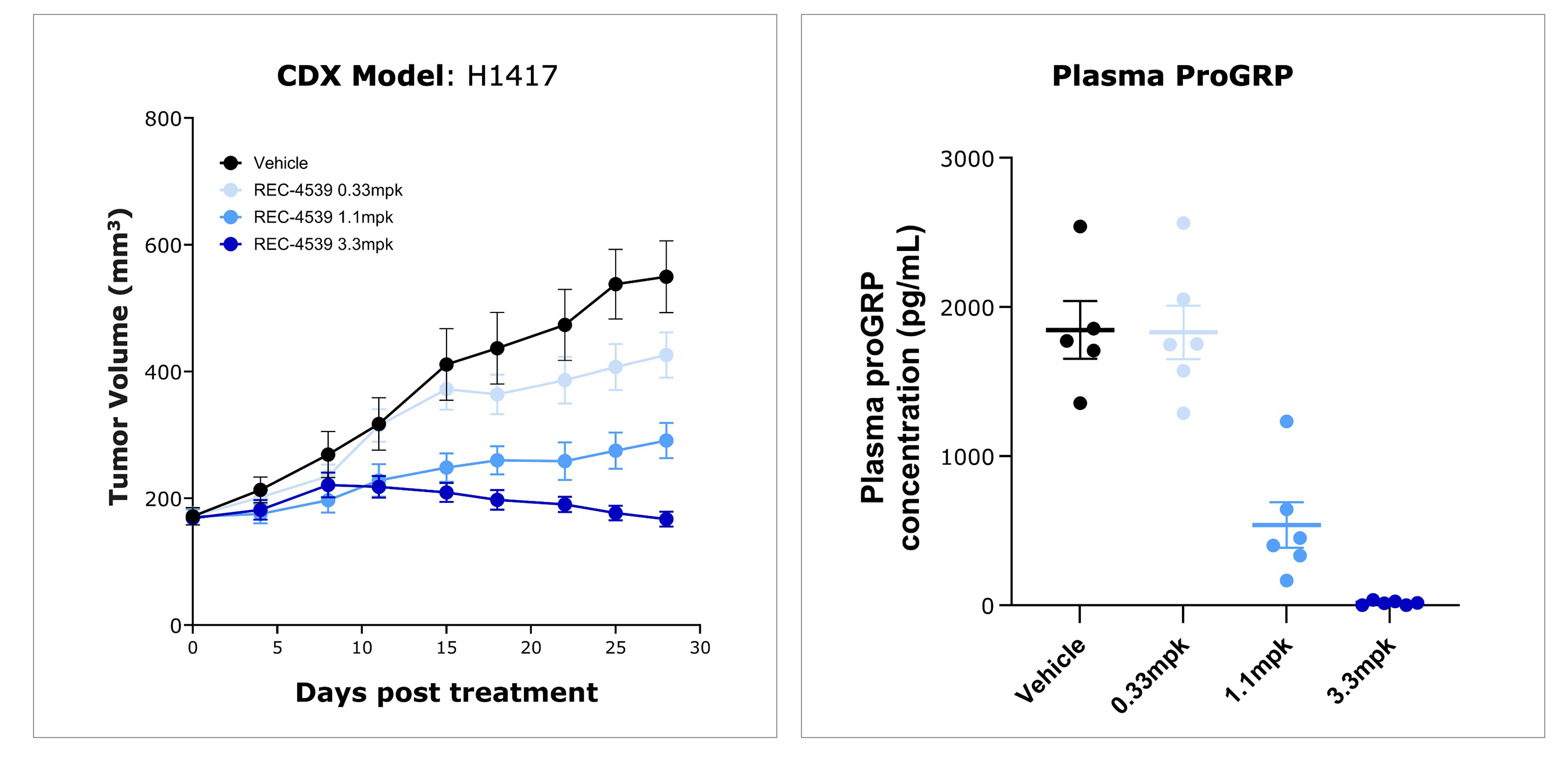
Figure 28. REC-4539 preclinical assessment in SCLC xenograft model. BALB/c mice, REC-4539 dosed BID, 28 day study (Left) REC-4539 induces dose-dependent tumor growth inhibition in the NCI-H1417 SCLC cell line derived xenograft mouse model. (Right) REC-4539 induces dose dependent reductions in plasma proGRP.19,20
19 Payne, et al. (2023). Characterizing Antitumor Responses to EXS74539, a Novel, Reversible LSD1 Inhibitor with Potential in Small-cell Lung Cancer [poster]. American Association for Cancer Research (AACR) Annual Meeting: 6290.
20 Data on file.
Clinical
ENLYGHT is a Phase 1, open-label, multicenter dose escalation study designed to evaluate the safety, tolerability, and preliminary efficacy of REC-4539 monotherapy in patients with select solid tumors. The FDA cleared an IND application in January 2025; the program was then placed on strategic pause in May 2025. While the broader field has faced safety challenges, REC-4539 remains highly differentiated by its optimized profile, and we now expect to initiate a Phase 1 trial in the first half of 2026. The Phase 1 study will evaluate REC-4539 as a monotherapy in patients with SCLC and select other solid tumors, to assess safety and tolerability, PK/PD, to establish the MTD, and to evaluate preliminary efficacy as per the study design diagram below. We expect to share early safety and PK monotherapy data in the second half of 2027.
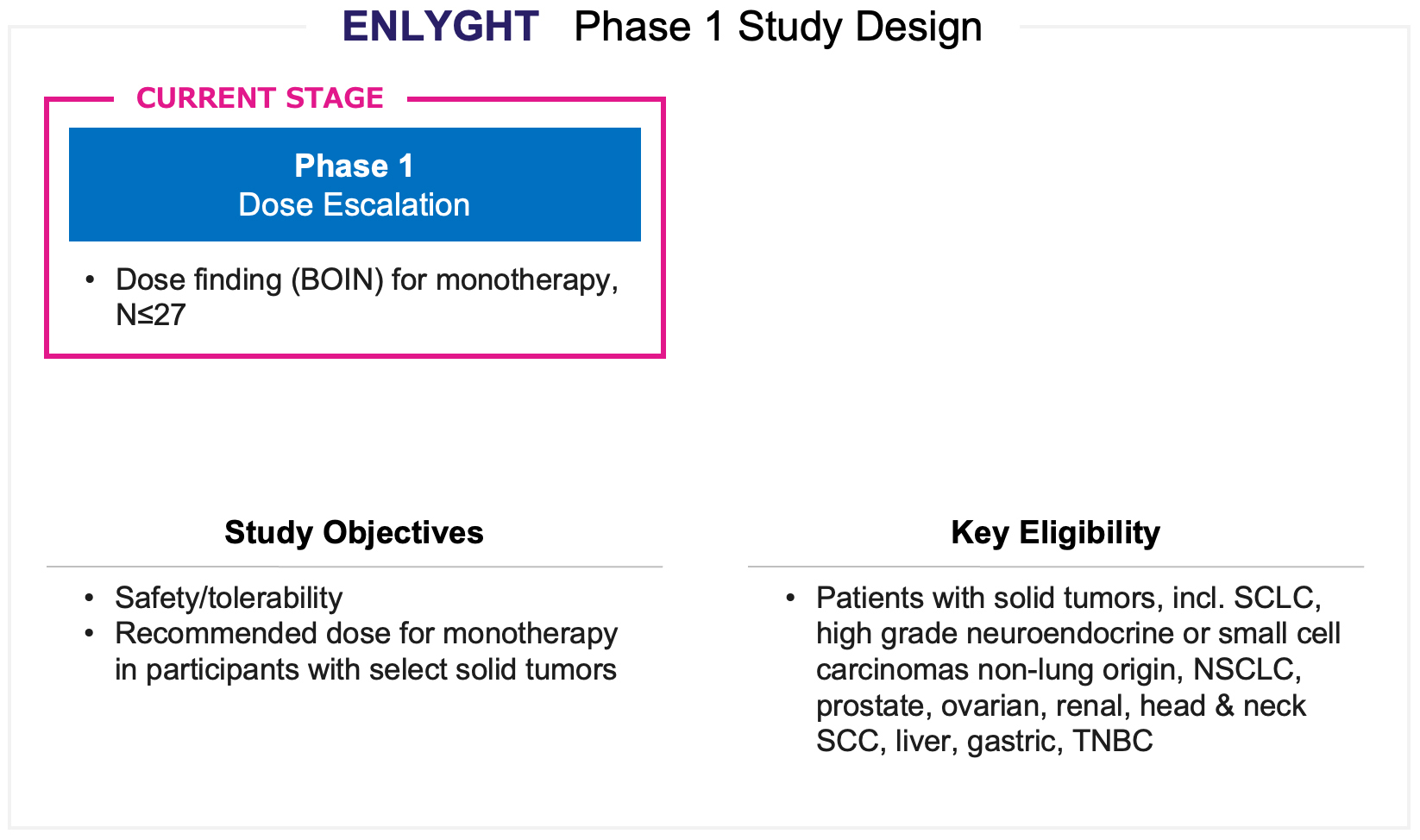
Figure 29. ENLYGHT study design. Phase 1 trial design to assess the safety, tolerability, and preliminary efficacy of REC-4539 monotherapy.
Competitors
The LSD1 inhibitor competitor landscape is limited to a small number of programs currently advancing in active clinical development. These programs vary by indication of interest, combination strategy, and development priority.
Active LSD1i clinical development programs:
•Bomedemstat (Merck) - Merck is focusing on myeloproliferative neoplasms (MPNs) as a route to market for bomedemstat. Bomedemstat is being investigated in a Phase 3 trial in essential thrombocythemia (ET), a Phase 2 study in myelofibrosis (MF) and polycythemia vera (PV), and a Phase 1 IIT study in AML (in combination with venetoclax). Merck terminated a Phase 1/2 SCLC trial in combination with PD-L1 maintenance in 2024 due to low accrual rates.
•Iadademstat (Oryzon) - Iadademstat is being investigated in AML and SCLC patient populations. It is in an ongoing Ph1b study for R/R AML with FLT3 mutation in combination with gilteritinib and in a Ph1b study for newly-diagnosed unfit AML in combination with venetoclax and azacitidine. It is also in a Phase 2 IIT for relapsed/refractory (R/R) SCLC and extrapulmonary high-grade NETs (in combination with paclitaxel), as well as a Phase 1b/2 IIT in first-line extensive-stage SCLC (ES-SCLC) in combination with a checkpoint inhibitor.
•JBI-802 (Jubilant Life Sciences) - JBI-802 is in a Phase 1/2 basket study, with expansion cohorts planned in SCLC, neuroendocrine prostate cancer (NEPC), and other NETs, as well as a Phase 2 study for patients with advanced NSCLC tumors harboring an STK11 Mutation in combination with pembrolizumab.
•TAS1440 (Benz Sciences/ Taiho Pharmaceuticals) - Benz Sciences are preparing for a Phase 1b/2 study for MPN patients, after in-licensing TAS1440 from Taiho Pharmaceuticals in June 2025. Taiho recently completed a Phase 1 trial targeting AML in the US population.

Partnered Discovery
Driving Innovation Across Multiple Diseases
At the core of Recursion’s mission is the pursuit of breakthrough therapeutics for patients. Recursion collaborates with leading pharma partners to identify novel targets and therapeutic candidates across a wide range of disease areas, including neuroscience, oncology, immunology, and inflammation.
Each partnership is designed to advance therapeutic development, with multiple pathways to success:
•Novel Targets: Combining our multi-modal (phenomics, RNA sequencing) maps of human biology with real-world clinical-genomic data, we can identify novel druggable targets with potential therapeutic benefit. Validated targets may be optioned by our partners or advance within the collaborations as a therapeutic program.
•Novel Therapeutics: Using our precision chemistry platform, we can design differentiated molecules across a wide variety of targets. Resulting molecules may be optioned by our partners and advanced for further clinical development.
To date, Recursion has secured over $500 million in upfront milestone payments, with the potential to unlock over $20 billion in additional milestones before royalties. These high-impact collaborations not only generate near-term financial value but also leverage Recursion’s combined capabilities in biology and precision chemistry to accelerate the development of transformative therapies. By collaborating with top-tier biopharmaceutical companies, Recursion gains access to invaluable knowledge from some of the most experienced teams in the industry. Together, we continuously drive innovation and have the potential to expand patient impact, and revolutionize the treatment of complex diseases. Below are some of the latest milestones reflecting this exciting momentum.
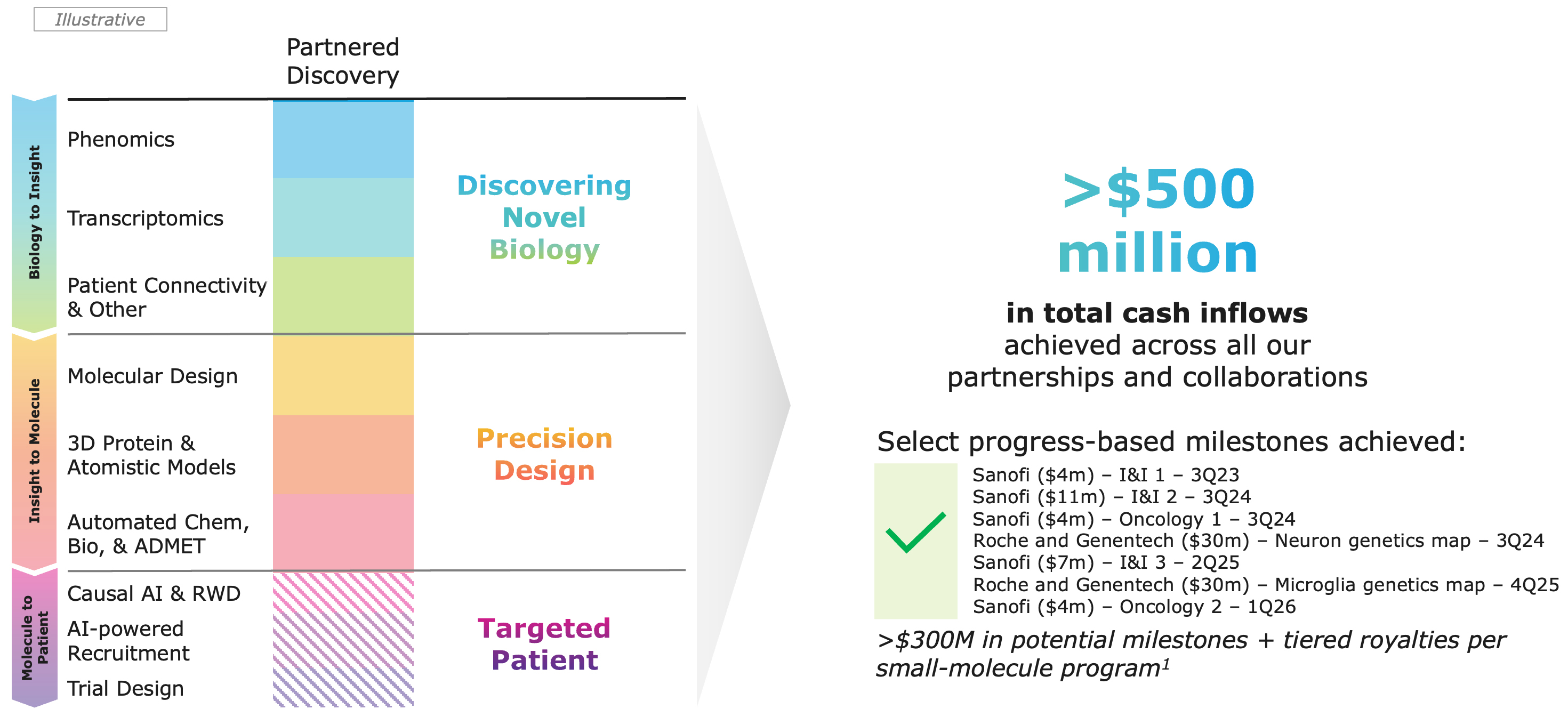
Figure 30. Recursion leveraging its OS across its partnerships. 1. Milestones: Potential Roche and Genentech and Sanofi milestones per small molecule program. Royalties: Recursion is eligible for tiered royalties up to high single digits (Roche and Genentech) and up to double digits (Sanofi)
Roche and Genentech
In December 2021, we entered a multi-year, strategic collaboration with Roche and Genentech in the field of neuroscience and a single oncology indication. Through the partnership, we are leveraging the Recursion OS and extensive single-cell perturbation screening data from Roche and Genentech, to rapidly identify novel biological relationships and advance therapeutic programs. Together, we may initiate up to 40 small molecule programs over a decade or longer. As part of this agreement, we received an upfront cash payment of $150 million, with the potential to receive milestones of more than $300 million per small molecule program plus tiered royalties.
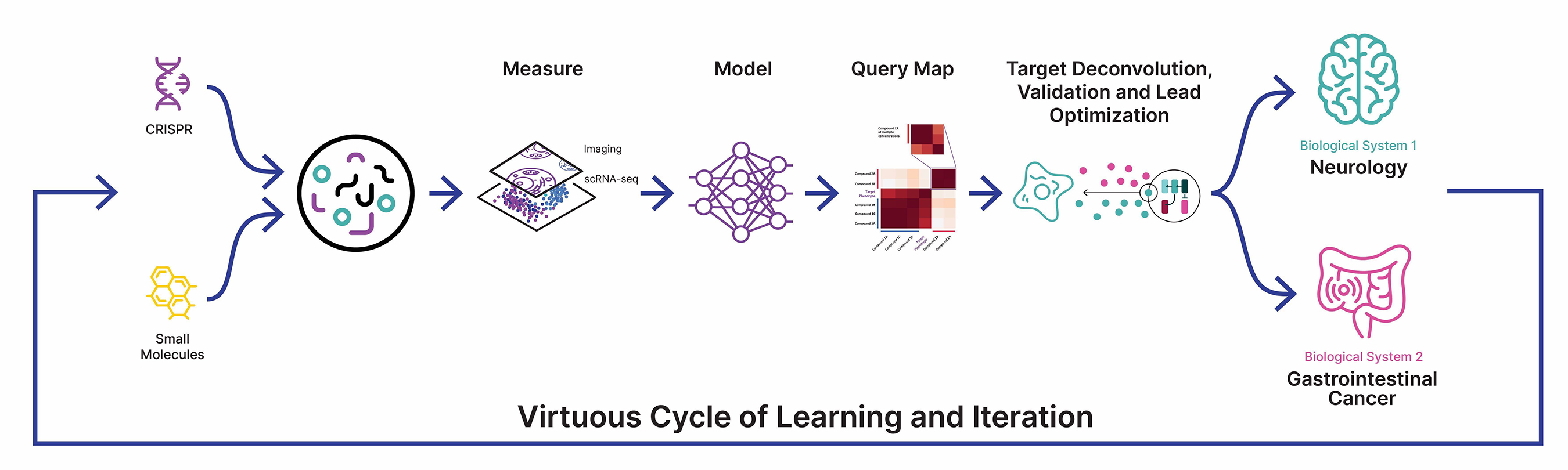
Figure 31. Under our collaboration with Roche and Genentech, we are creating multimodal maps of cellular biology to elucidate novel targets and starting points.
Sanofi
In January 2022, we entered a strategic research collaboration with Sanofi to develop an AI-driven pipeline of precision-engineered, small molecule medicines. Through this collaboration, we are using our end-to-end integrated platform to discover and advance up to 15 novel targets in the oncology and immunology therapeutic areas. As part of this agreement, we received an upfront cash payment of $100 million, with the potential to receive up to $5.2 billion in total aggregate milestone payments plus tiered royalties.
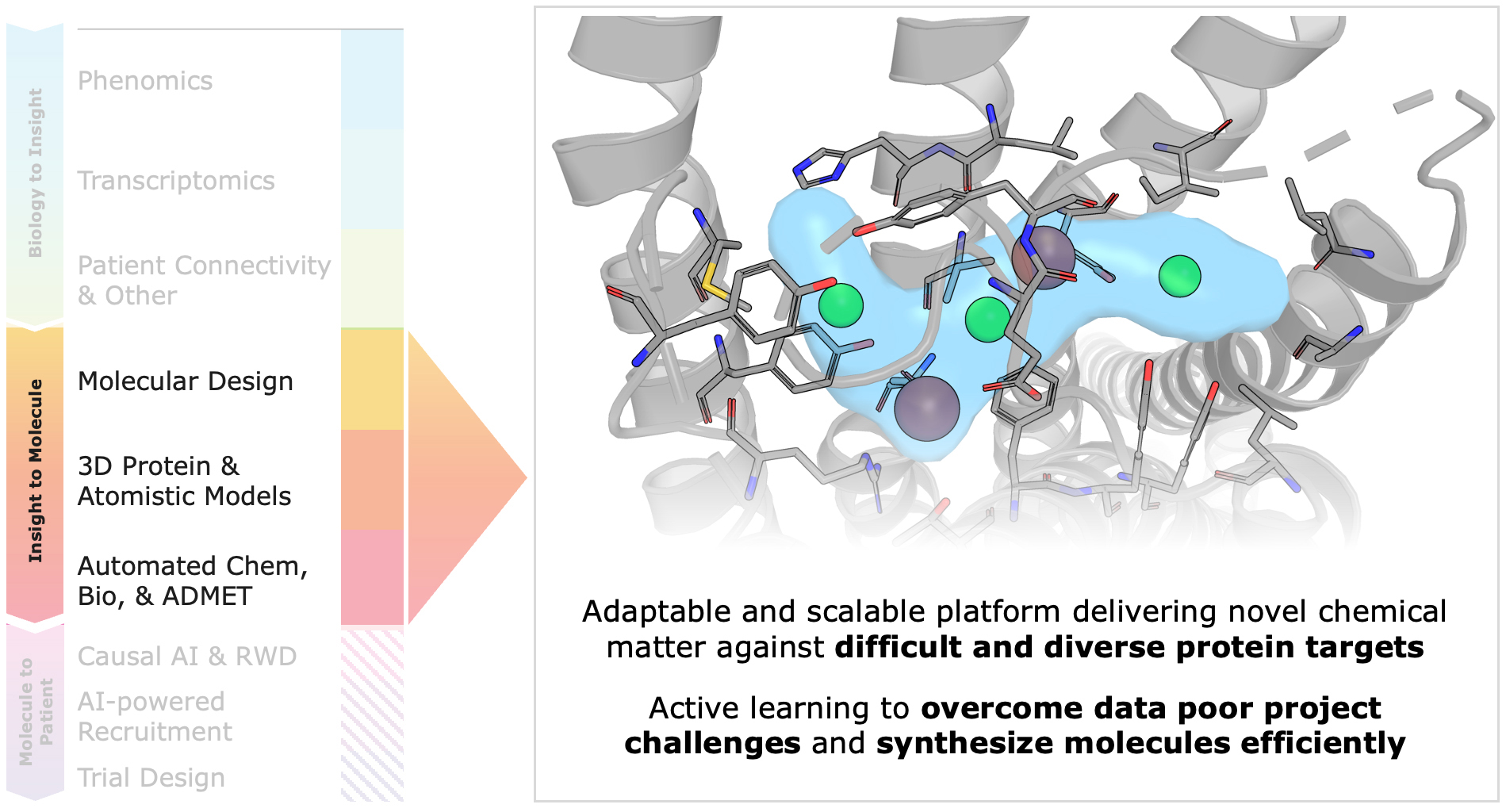
Figure 32. Leveraging the Recursion OS with Sanofi to design small molecules against challenging targets using AI
Bayer
In November 2023, we announced an amended and restated collaboration with Bayer. We are using the Recursion OS to identify and advance up to 7 therapeutic targets for challenging oncology indications with high unmet need. Under the terms of the agreement, Recursion is eligible to receive potential, success-based, future payments of up to $1.5 billion plus royalties on net sales.
Merck KGaA (Darmstadt, Germany)
In September 2023, we entered into a collaboration with Merck KGaA, Darmstadt, Germany. This multi-year collaboration utilizes our AI-driven precision drug design and discovery capabilities while leveraging Merck KGaA, Darmstadt, Germany’s disease expertise in oncology and immunology, clinical development capabilities, and global footprint.
Case Study 1: Delivering the World’s First Neuromap
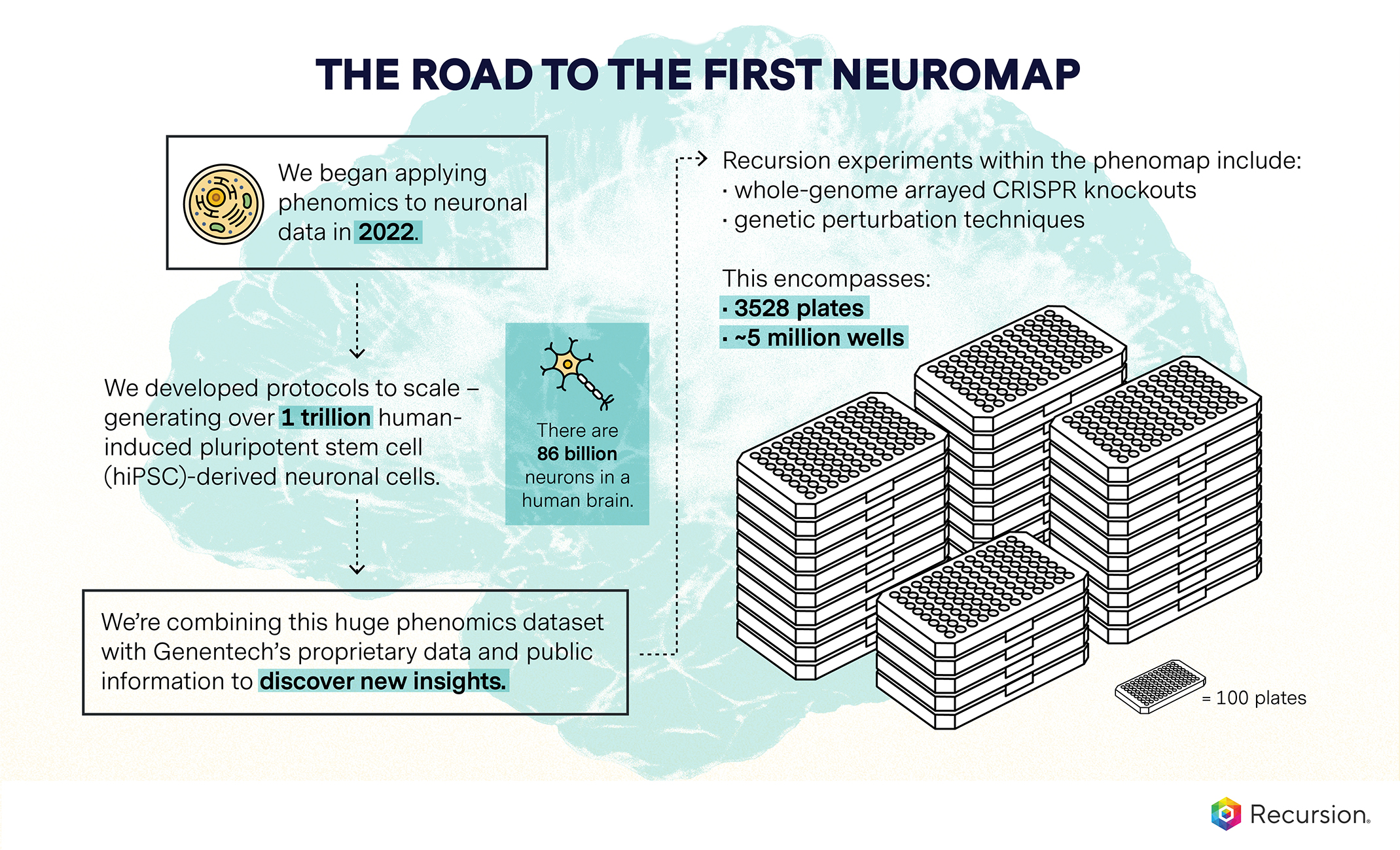
Figure 33. Recursion launched a transformational collaboration with Roche and Genentech, delivering the world’s first whole-genome neuromap in 2024.
Overview
In 2021, Recursion launched a transformational collaboration with Roche and Genentech to create the world’s first neuromap—a comprehensive and scalable neuronal data model powered by machine learning. This effort aimed to uncover novel insights into neurodegenerative diseases, a category of illnesses that has long been difficult to tackle using traditional drug discovery methods. With a dedicated team of 50 people, Recursion set out to overcome numerous technical and biological challenges, all with the goal of driving innovation in neuroscience.
The Challenge
When the project began, the team faced significant uncertainty. The goal was ambitious: produce enough neurons, knock out genes, and generate a reliable signal from machine learning models to guide the development of potential drug programs. This challenge was particularly daunting given the complexity of neuronal cells, which do not divide or proliferate like other cell types. Unlike other cell types, such as human umbilical vein endothelial cells (HUVECs), which Recursion had previously worked with to create large-scale disease maps, neuronal cells posed a unique set of hurdles due to their limited ability to be produced at scale.
Neurodegenerative diseases had long been a difficult area for drug development. Traditional approaches had yielded limited breakthroughs, and the complexity of the biological system presented a higher bar for success. Recursion needed to develop new technologies and methodologies to produce and analyze neuronal data on a scale not attempted before in drug discovery.
Recursion had already proven its ability to create large-scale cell maps in other disease areas, notably in gastrointestinal oncology, as part of its partnership with Roche and Genentech. The success of this collaboration demonstrated the power of Recursion’s phenotypic screening platform, which uses high-throughput technologies to produce vast amounts of biological data. However, creating a neuromap would require more than just expanding on previous work - it required adapting the process to handle the unique challenges posed by neuronal biology.
Execution
To tackle this challenge, Recursion collaborated with Roche and Genentech to develop and refine a model using human-induced pluripotent stem cells (hiPSCs), which could be differentiated into neurons. This protocol enabled Recursion to produce large quantities of neurons, ultimately generating over 1 trillion hiPSC-derived neuronal cells. These neurons served as the foundation for the neuromap, a data-rich resource that Recursion, Roche and Genentech could use to gain deeper insights into the genetic underpinnings of neurodegenerative diseases. In addition to the joint development of the neuronal cell context, Recursion’s machine learning team played a pivotal role in developing algorithms capable of processing the massive amounts of data generated by the neuromap. The combination of scalable cell production and cutting-edge computational models allowed Recursion to generate the first whole-genome neuronal phenomap that can be utilized by the partnership to uncover new relationships between genes and the phenotypes associated with neurodegeneration.
Outcome
Our work led to the exercise of a $30 million option by Roche and Genentech in August 2024 with the neuromap offering an unbiased view of the genetic relationships related to neurodegenerative diseases and providing insights that could pave the way for development of novel therapies in neuroscience. Unlike traditional approaches that are often guided by pre-existing hypotheses, researchers in the collaboration can now explore new biological pathways and identify potential therapeutic targets that may not have been considered before. Together, Recursion, Roche and Genentech have identified a number of biological insights from this first neuroscience-focused phenomap, that could become novel targets of interest.
Case Study 2: Delivering the World’s First Microglia Map
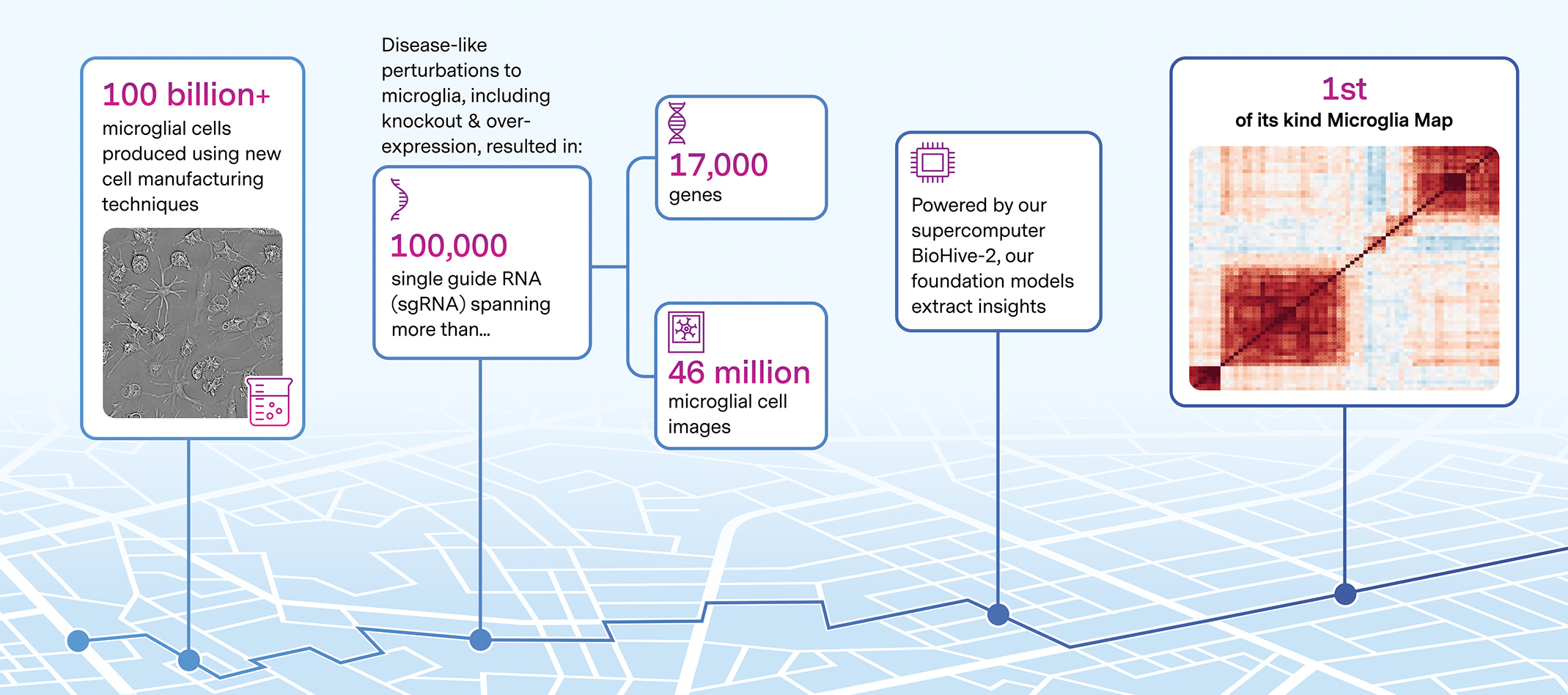
Figure 34. Recursion launched a transformational collaboration with Roche and Genentech, delivering the first-of-its-kind microglia map in 2025.
Overview
In 2025, building on the success of the original neuromap, Recursion reached another milestone in its collaboration with Roche and Genentech by launching the world’s first microglia map. Microglia are the resident immune cells of the brain and play a central role in neuroinflammation and the progression of neurodegenerative diseases. By mapping the whole genome within these complex cells, the microglia map represents a completely new approach to explore the cellular mechanisms underlying neurodegenerative diseases, offering a new approach to explore novel targets and pathways.
The Challenge
Despite decades of research, FDA approvals for neuroscience drugs are less than half of those for other therapeutic areas, and drugs targeting the CNS have some of the highest failure rates in medicine. Attrition rates are high, and traditional approaches can be biased to dominating hypotheses e.g. the "Amyloid Hypothesis" in Alzheimer’s disease. This is the idea that a build-up of the amyloid protein is a major contributor to the disease, and while this hypothesis has historically guided research and led to deep insights into the condition, the underlying biology is both extremely complex and still poorly understood.
To provide an unbiased approach to explore novel targets and pathways, the team studied microglia. However, microglia are very difficult to work with, proving difficult to grow and keep alive and stable outside of the body, in a laboratory setting. Because microglia are the resident immune cells of the brain, they can be highly sensitive to their environment, changing states from relatively stable to becoming more reactive and inflammatory, and they are also highly variable from batch to batch. To create a reliable map, Recursion had to overcome the technical hurdle of producing these sensitive immune cells at a massive, industrial scale while ensuring they remained stable enough to provide a clear biological signal for machine learning models.
Execution
Tackling this effort was a multi-year collaboration that required Recursion and the Roche and Genentech microglia team to develop new protocols for the manufacture of microglial cells. Starting with human-induced pluripotent stem cells (hiPSCs), the team developed a protocol that allowed the most phenotypically active cell Recursion has ever tried to map to be grown at massive scale. Over 100 billion microglial cells were grown in a standardized way and confirmed to be as stable as possible for the start of the mapping process. The collaborative team also worked together to determine the most interesting disease-like perturbations to the microglia from a neuroscience perspective, to generate a rich dataset containing some novel knockdowns and overexpressions not previously tried in other maps. This resulted in 100,000 single guide RNA being used spanning more than 17,000 genes, 46 million microglial cell images, and thousands of chemical compound perturbations. Recursion foundation models, powered by the supercomputer BioHive-2, extracted insights to generate the first-of-its-kind microglia map, allowing scientists to use AI to systematically explore how different genes and compounds may be implicated in a wide range of neurological diseases.
Outcome
The successful completion of the microglia map led to a $30 million milestone payment from Roche and Genentech in October 2025. The microglia map provides a holistic, unbiased approach to drug discovery for neurodegenerative diseases compared with the slow traditional approach, which has yielded very few new therapeutic targets. The map allows for the systematic, unbiased evaluation of thousands of gene targets at once, allowing AI to uncover novel biological connections that humans might miss. Overall, this offers a new approach to exploring novel targets and pathways, addressing a major challenge in neuroscience drug discovery. Following on from development of the map, it will be mined for novel biological insights, which will move forward to robust experimental validation from Recursion in partnership with Roche and Genentech. This could lead to program selection and development, and potential new therapeutic approaches in neurological diseases.
Our Platform
A Unified, AI-Native Platform for Drug Discovery & Development
Recursion is leading the evolution of how medicines are discovered and developed with the Recursion OS: a unified, AI-native intelligence platform designed to translate complex science into medicines that matter — faster, better, and at scale for the patients who are waiting.
Our approach combines proprietary experimental data, purpose-built computational models, and scaled compute infrastructure to support decision-making across the full lifecycle of drug discovery and development. Rather than optimizing isolated tools or workflows, we organize our platform around three tightly connected stages of value creation: novel biological discoveries, precision design, and next-generation clinical development. Together, these stages enable us to initiate programs with stronger biological grounding, design differentiated molecules more efficiently, and advance medicines into the clinic with improved patient relevance.
Across all three stages, Recursion integrates automated wet-lab experimentation with in-house computational analysis. Our laboratories generate large volumes of standardized, high-quality biological and chemical data, while our dry-lab capabilities apply machine learning, physics-based modeling, and statistical inference to extract actionable insights from those data. This tight integration allows experimental results to directly inform computational models, and model outputs to guide subsequent experiments, enabling faster iteration and more consistent decision-making across programs. Additionally, the integration of agentic and automated systems underpins our approach at Recursion and enables us to accelerate learning and decision-making throughout the R&D process.
The Recursion OS
Figure 35. The Recursion OS. The Recursion OS is designed to use AI to advance and accelerate decision-making and insight across the entire R&D value chain with the end goal to make novel medicines that matter. The Recursion OS generates value by advancing a pipeline of differentiated investigational medicines, in addition to building pipelines for our partners.
By leveraging the Recursion OS to explore and advance our programs, we have shown leading indicators of improvement when compared to the traditional drug discovery process, particularly with respect to cost and time. We also use AI/ML tools to better understand which molecules to make and test and ultimately design better quality molecules that can solve complex problems – on average, the industry synthesizes about 2,500 molecules to candidate, compared to the approximately 330 we synthesize per program to advanced candidate.
Biology to Insight
The first stage of the Recursion OS focuses on translating complex biological signals into actionable insights that support program initiation. Recursion combines large-scale cellular phenomics, high-throughput transcriptomics, in silico binding affinity predictions, and real-world patient data to identify disease-relevant mechanisms, validate targets, and prioritize opportunities with stronger biological grounding and patient relevance. These capabilities allow us to systematically interrogate biology at scale and reduce biological uncertainty earlier in the discovery process.
A core differentiator of this approach is the integration of complementary data modalities. Patient-derived data are the most directly relevant to human disease but are often noisy, heterogeneous, and limited in scale. In contrast, cellular phenomics data can be generated reproducibly, at scale, with high completeness and consistency. By integrating these and other modalities through joint forward- and reverse-genetics approaches, Recursion can connect robust experimental signals with patient biology, enabling more confident identification and prioritization of translatable targets.
•Generated and aggregated >50 petabytes of high-quality, multimodal data
•Over 100 novel insights triaged into ~10 actionable and translatable targets for experimental validation within a matter of weeks
•~1.9B-parameter phenomics foundation model delivers ~25–30% gains in biological signal accuracy
•New transcriptional foundation model delivers a 70% improvement in operational efficiency
Deep Dive: Phenomics-based Discovery
Phenomics is Recursion’s large-scale, image-based cellular profiling capability that measures functional cellular responses to genetic and chemical perturbations and serves as a foundational input to biological discovery and program initiation. Using high-content microscopy, automated experiment design and execution, and purpose-built machine learning models, we generate rich, high-dimensional phenotypic data that capture cellular behavior across diverse biological contexts. Our platform is differentiated by its scale, precision, and breadth, operating both Cell Painting and live-cell brightfield microscopy across nearly 50 distinct cell types, including differentiated iPSC-derived neuronal and microglial cells. These experimental capabilities directly enhance our advanced computer vision and foundation models, including our Phenom-2 model series, by enabling our models to learn true biology as opposed to experimental design patterns. The impact of this capability is reflected in both our internal pipeline and strategic partnerships, including the development of two first-of-their-kind whole-genome neuronal and microglia phenotypic maps as part of our collaboration with Roche and Genentech. More broadly, phenomics has enabled Recursion to initiate and advance multiple internal and partnered programs by supporting unbiased discovery, rapid hypothesis triage, and identification of novel biological insights that may translate into new therapeutic opportunities.
Deep Dive: Transcriptional Foundation Model (TxFM)
TxFM is Recursion’s self-supervised transcriptomics foundation model designed for representation learning of complex gene expression data. Built on a transformer-based architecture optimized for biological structure rather than natural language analogies, TxFM harmonizes diverse transcriptomic datasets—including bulk and single-cell RNA sequencing across multiple assays, cell types, and translational systems—into a unified embedding space.
Many transcriptomic models rely on large, heterogeneous public atlases that limit cross-experimental comparability and translational consistency. TxFM leverages Recursion’s proprietary data strategy and architecture decisions to improve cross-sample and cross-experiment relatability, enabling consistent integration of in vitro experiments, in vivo models, and patient-derived samples. This not only captures a more universal biological grammar but also allows us to outperform larger models trained on datasets up to 50x larger in size. By representing experimental perturbations and patient transcriptomes within the same high-dimensional space, we can begin to perform in silico perturbations on digital patient representations, serving as a practical translational bridge between laboratory biology and human disease.
TxFM has demonstrated state-of-the-art performance across multiple zero-shot benchmarks, outperforming existing foundation models and classical baselines. Within the Recursion OS, TxFM improves batch correction and multi-dataset integration, enhances signal recovery from low-read-depth transcriptomic data, and enables consistent mapping of gene–gene and gene–compound relationships. By improving data consistency and reducing the need for experimental re-runs, TxFM has delivered an approximate 70% improvement in operational efficiency for transcriptomics-driven workflows. Furthermore, the model’s learned gene-specific parameters recover known protein complexes and pathways without supervision, providing a non-perturbational gene-gene map for over 40,000 genes, including non-coding RNAs. These capabilities strengthen target discovery, accelerate hypothesis validation, and improve the biological and patient relevance of programs entering the pipeline.
Insight to Molecule
Once we have nominated a program, either through insights derived from our phenomics and multiomics platforms or through the careful selection and validation of a high-potential target, we transition from biological discovery to precision molecular design. Our precision design platform, anchored by Centaur Chemist, represents a transformative shift from traditional trial-and-error drug discovery to a fully integrated, AI-first industrialized process. By fusing massive, high-dimensional biological and chemical datasets with advanced generative AI and automated synthesis, the platform enables the rapid design, prioritization, and physical testing of novel small molecules. This modular end-to-end engine is designed to navigate trillions of biological and chemical relationships with unprecedented speed and efficiency, aiming to deliver higher-quality drug candidates to the clinic while significantly reducing development timelines and costs. Centaur Chemist serves as a critical component of our unified operating system, driving a continuous "design-make-test-learn" or DMTL cycle that refines its predictive capabilities with every successive iteration.
◦100 million+ molecules generated virtually using synthetically aware design in 2025
◦~90% of synthesized molecules are AI-generated, scored, and prioritized – all patentable
◦On average, only ~330 compounds are synthesized per program to achieve an advanced candidate in ~17 months, compared to industry average of over 2,500 compounds and 42 months, respectively,
◦To date, the platform has designed >10 development candidates that address a wide variety of previously unsolved biological or chemistry problems
Deep Dive: Centaur Chemist Methods and Models
At its core, Centaur Chemist is an AI-first learning system that automates the design, prioritization, and optimization of novel small molecules. It is not a single piece of software but an integrated platform within the Recursion OS that enables the development and deployment of a vast number of design tools that have been developed in-house, including the following proprietary models:
•Generative AI and Evolutionary Models: These create novel chemical structures based on target profiles
•Synthesis-Aware Methods: The platform employs an expansive synthesis-driven design toolkit that couples advanced billion-scale search algorithms (e.g. SALSA) and accurate chemo- and regioselectivity models with up-to-date vendor logistics to rigorously generate synthetically feasible compounds and expedite their reduction to practice
•Protein and Target Tractability predictions. These methods predict protein structures with and without the presence of ligands, enabling ligandability and druggability of targets.
•Property Prediction and Scoring: Our industry leading advanced models, including our proprietary version of Boltz-2 that allows us to fine-tune the model on internal program data, predict potency (see figure below), selectivity, and ADMET (absorption, distribution, metabolism, excretion, and toxicity).
•Physics Methods: A toolkit of physics-based methods that apply molecular dynamics and quantum mechanics, which enables us to more accurately predict target-ligand interactions and properties, fully integrated with our generative design capabilities.
The platform not only incorporates our in-house proprietary methods and algorithms but makes it simple to deploy open-source and licensed software, ensuring that we are using state-of-the-art methods developed by the community as well.
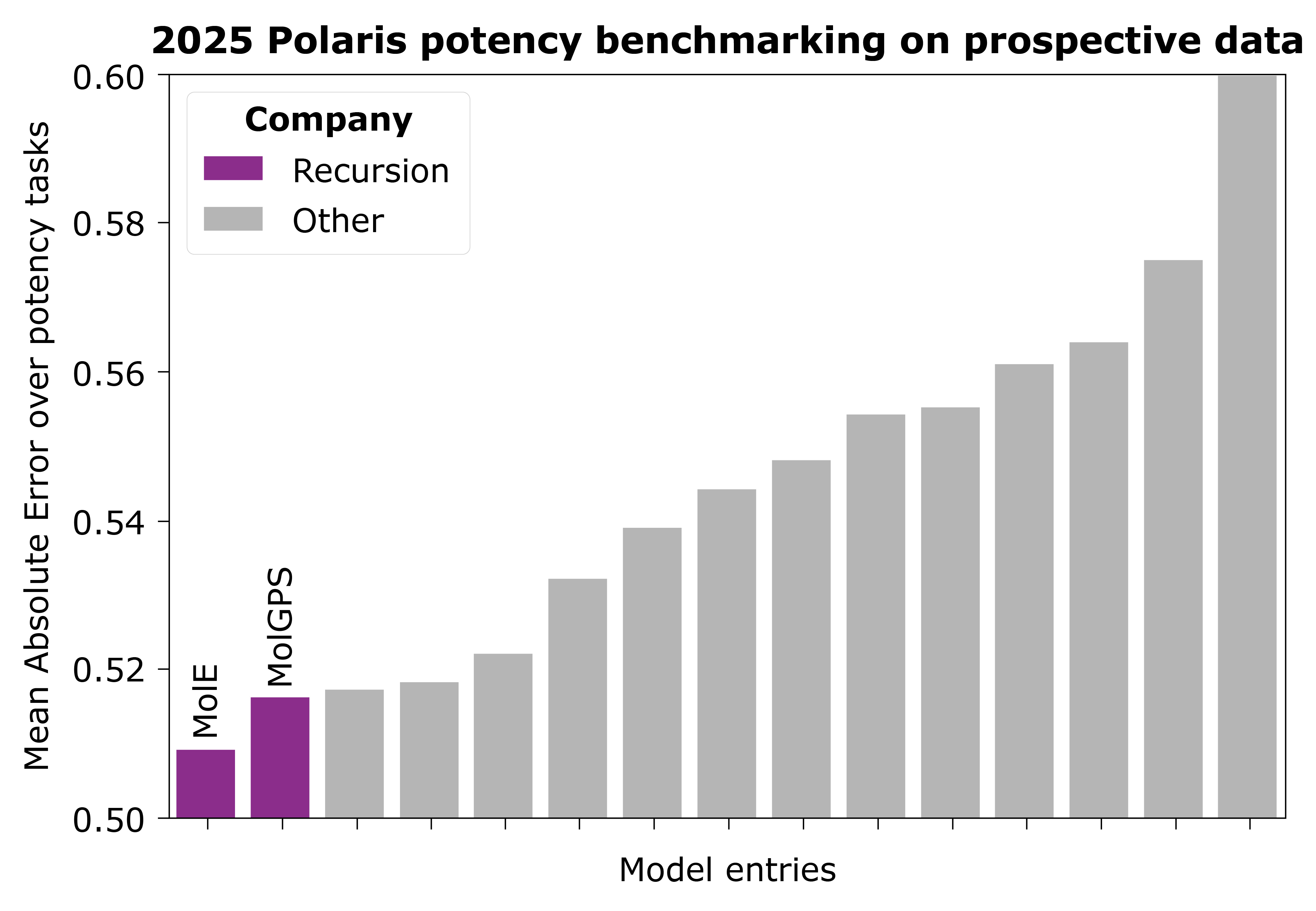
Figure 36. Recursion potency models MolE and MolGPS outperform (lower is better on the Y-axis in figure) all other entrants in the 2025 blind challenge for potency predictions21
Deep Dive: DMTL (Design-Make-Test-Learn) and Automation
With these tools in place, our DMTL procedure begins by defining program objectives via a Target Product Profile (TPP), which is encoded using a multi-parameter optimization (MPO) function. This ensures that potency and affinity are balanced with other critical ADMET properties, such as clearance, solubility, stability, and permeability. Every generated molecule is scored by an integrated function called Merit, allowing us to monitor the quality of chemical matter across the program lifecycle in an unbiased, holistic manner. This allows us to focus our efforts from the start on high-quality molecules that meet the needs of our drug discovery programs, optimizing for both cost and operational efficiency.
Once the Design phase is complete, synthesis (Make) is triggered through the platform, which can be routed through to our in-house chemistry automation studio or dedicated CROs. Because our generative tools prioritize synthesizability from the outset, the platform utilizes property prediction models to guide design toward compounds that are both biologically optimized and amenable to efficient synthesis. To achieve this "synthesis awareness," we account for building-block availability and logistics across different CROs, ensuring the system suggests the most cost- and time-effective synthetic routes. A critical enabler of this physical execution is our in-house chemistry automation studio located in Milton Park, shown in the figure below, designed to support high-throughput DMTL cycles with minimal manual intervention (see Figure 40). The modular, automated lab is designed to accelerate DMTL cycles by utilizing automation flexibly across the full Make workflow, with over 1000 compounds having now been made and tested at Milton Park. The core mission of this DMTL procedure is to automate processes that reduce costs, optimize efficiency, and deliver high quality results to drive program success, not just making compounds that can easily be synthesized with automation. Through 2025 there was a 4-fold increase in reaction classes executed with automation, including 14 reactions that are not typically automated.
21 Polaris hub competition results. Source: https://polarishub.io/competitions/asap-discovery/antiviral-drug-discovery-2025#competiton-results 12 February 2026

Figure 37. Recursion's automated chemistry wet lab, a modular system for chemical synthesis preparation, execution, analysis, work-up, and purification.
Following the Make phase, an assay cascade is initiated (Test). Depending on program needs, this includes ADMET, affinity, and phenomic responses via our proprietary -omics platform in either Salt Lake City or Milton Park facilities. Once an assay is completed, results are ingested back into the platform for analysis alongside all other relevant program data. This data automatically updates our ML models, ensuring the most accurate information informs the next cycle and closes the Learning loop. An example of this improvement is shown in Figure 38, which demonstrates that iterative learning has led to an approximately 50% improvement in a property prediction model. Our models improve over time, not by chance, but by learning.
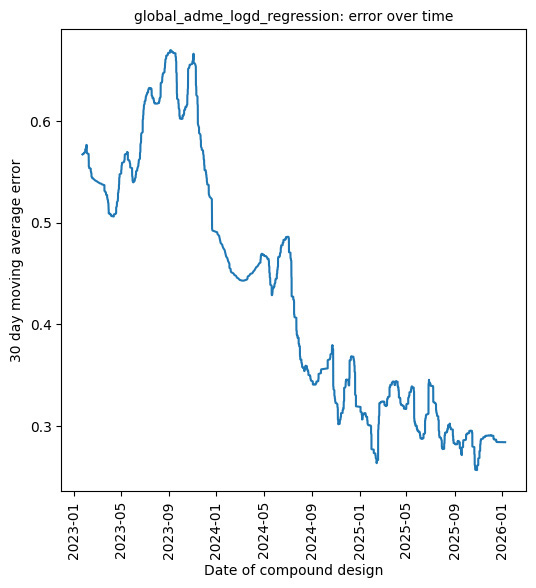
Figure 38. LogD model improvement over time as DMTL cycles progress, showing an approximately 50% increase in accuracy over time.
By tracking all data centrally we can monitor Design, Make, and Test durations, as well as lag times between phases. Streamlining these workflows, both in-house and with CROs, allows us to identify and resolve bottlenecks in real time. This continuous monitoring has driven significant productivity gains: in 2025, our Design-to-Test times improved by 20% over 2024 benchmarks.
To further support our learning system, we also employ our RADME-01 platform. This platform performs high-throughput ADME evaluations through intelligent software prioritization and automation. The system generated over 35,000 total data points across >15,000 novel compounds, including >13,500 human and >5,000 mouse microsomal stability results, alongside thousands of points for PAMPA, protein binding, and rat stability. RADME data is integrated into our proprietary datasets and automatically fed into our suite of ML models for comprehensive ADMET property prediction, which drives drug discovery during Nominations and Design. We employed Active Learning with RADME to generate thousands of datapoints, expanding model training sets and boosting accuracy across design programs. Additionally, new multi-task models optimally combine RADME and CRO assay data for related properties, delivering enhanced predictions to our design programs.
Molecule to Patient
The final stage of the Recursion OS focuses on translating molecules into clinical impact. Recursion utilizes large scale multi-modal datasets to rigorously design and execute clinical trials. As an example, by applying causal AI on human genomics, we select the indications and patient sub-populations most likely to benefit from our investigational therapies. Our AI-driven study planning algorithms applied to our operational data recommend site selection to enhance enrollment in minutes. Our clinical trials incorporate advanced statistical methods across several design elements from selecting optimal doses to forming external control arms to expanding the eligible patient population for our studies.
These capabilities form Recursion’s Clinical Development Technology (ClinTech) platform, an AI-enabled clinical development system that unifies molecule-to-patient decisions within an integrated workflow. It combines global site intelligence data, real-world patient data—including ~300 million real world lives and 1 million molecularly profiled lives—with causal inference, simulation, and agentic automation to continuously inform trial strategy and execution. By embedding patient relevance and operational feasibility earlier in development, ClinTech supports more disciplined trial design and execution at portfolio scale.
◦~1 million molecularly profiled lives between Tempus, Helix, and UK Biobank. Used across our clinical and preclinical portfolio for target validation and patient selection. Impact includes but not limited to:
▪Expansion into ovarian cancer for the CDK7 program
◦De-identified records covering ~300 million real-world lives, including electronic health records, diagnostics, and medical & pharmacy, leading to.
▪10-40% increase in eligible population
▪~1.5X improvement in enrollment rates
◦Global clinical trial site intelligence database covering a wide swath of historical clinical trials
▪Data driven country & site selection in hours vs. months
In practice, ClinTech shortens the cycle from protocol to site activation and enrollment by turning fragmented clinical operations data into actionable, real-time recommendations. For example, the platform can shorten the time to prioritize countries and sites from months (industry standard) to hours using multimodal site intelligence data. It can forecast enrollment trajectories as criteria evolve—enabling benefit-risk tradeoffs that can meaningfully expand the eligible population and improve enrollment performance. It can reinforce upstream portfolio decisions through genetically informed target validation and patient selection. Across the trial lifecycle, these capabilities translate into increased probability of success and timely execution of our clinical studies.
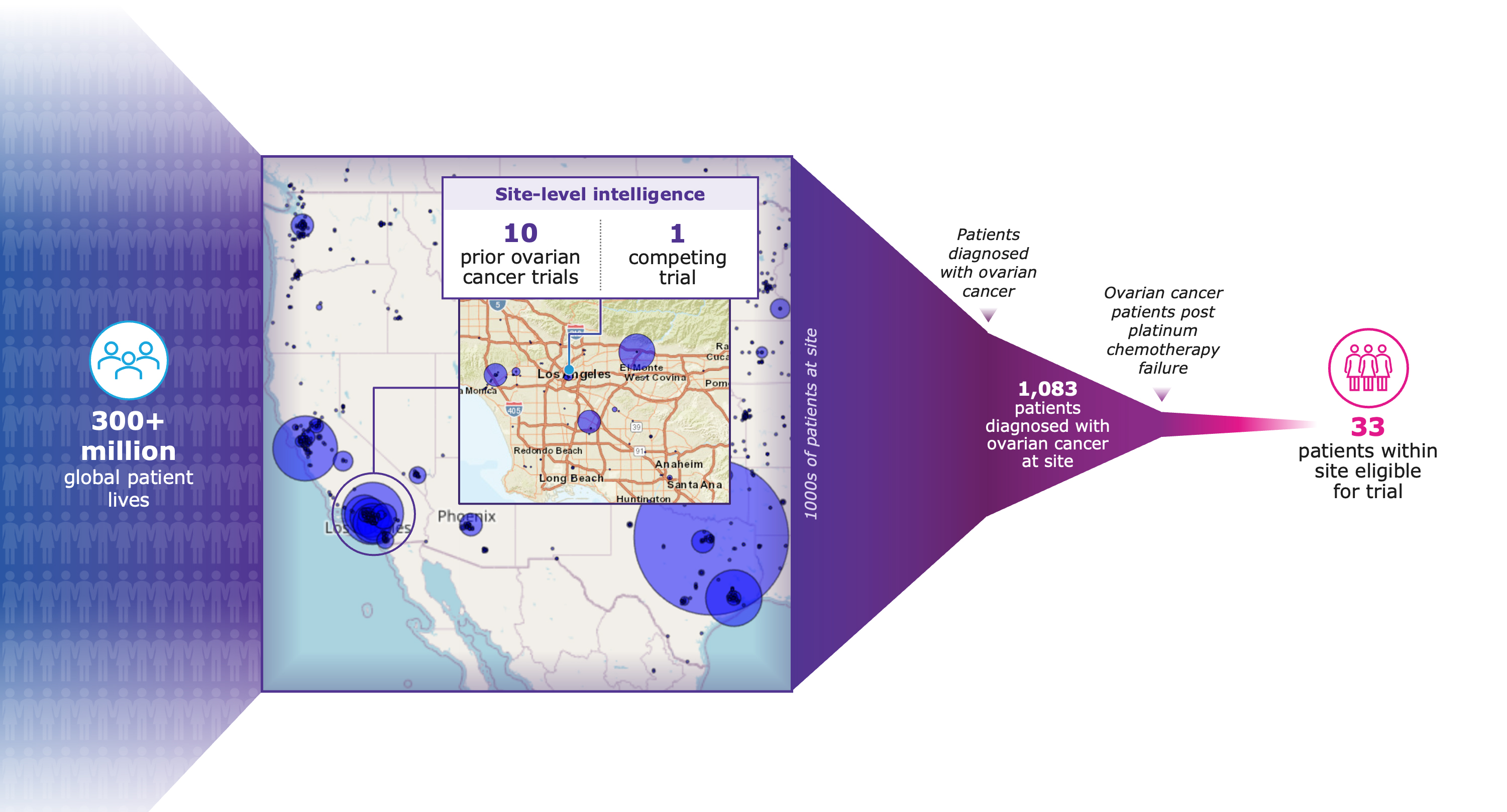
Figure 39. AI-driven clinical development platform for trial design and execution
Deep Dive: Natural History Data in Familial Adenomatous Polyposis (FAP)
Recursion applied its ClinTech platform to generate high-quality natural history evidence to contextualize the single-arm efficacy of REC-4881 in the TUPELO study. Natural history data are increasingly important to regulators in rare diseases, yet for FAP there has historically been limited quantified evidence describing disease progression outside of clinical trials. To address this gap, Recursion leveraged real-world evidence analytics and AI-enabled data extraction to build a comprehensive view of the lived FAP patient experience across routine clinical practice and long-term registry data.
Using ClinTech’s real-world data capabilities, Recursion analyzed records from more than 1,000 US patients with FAP, including over 250,000 unstructured physician notes processed using a custom large language model–based workflow. This analysis enabled systematic characterization of disease burden, intervention frequency, and the progressive nature of polyp growth in everyday clinical care. Recursion extended this work through an academic collaboration with Amsterdam UMC, analyzing nearly 20 years of longitudinal follow-up data from approximately 200 patients enrolled in one of the largest and longest running FAP registries globally. Together, these datasets enabled a level of real-world disease characterization that is rarely available in rare disease development.
Across both real-world and registry datasets, the findings were consistent and clinically meaningful: untreated FAP is characterized by predictable, year-over-year progression of polyp burden in 87% of the trial-relevant patient populations, with a mean annualized increase of 60%. These insights provided a robust, data-driven benchmark for contextualizing therapeutic impact and directly informed the clinical development strategy for REC-4881, including support for a single-arm study design aligned with regulatory expectations. More broadly, this work illustrates how ClinTech augments clinical development with unbiased real-world insight, strengthens the translational path from molecule to patient, and enables more confident engagement with regulators in rare disease programs.
Processing and Data Storage Infrastructure
The need to understand pathways, targets, compounds, and mechanisms of action requires obtaining, synthesizing, or predicting large volumes of data. To store this data in an efficient and low-risk way, Recursion makes use of a combination of cloud storage, and on-premises storage. To process this data efficiently, we bring it close to where the compute will run – either in our HPC datacenter (BioHive) or to our cloud (partnering with Google Cloud). To make this more seamless for our scientists, we have invested in a hybrid storage and compute platform, which enables replication of data and locality of compute to allow us to use these resources as efficiently as possible.
People and Culture
Essential to leading and defining TechBio is our team of close to 600 employees, comprising of life scientists, such as chemists and biologists (approximately 35% of employees) and computational and technical experts such as data scientists and software engineers (approximately 43% of employees). Together our team creates an environment where empirical data, statistical rigor and creative thinking is brought to bear on the problems we address. While we are united in a common mission, Decoding Biology to Radically Improve Lives, our strength lies in our differences: expertise, gender, race, disciplines, experience and perspectives. Deliberately building and cultivating this culture is critical to achieving our audacious goals.
In 2025, we made significant progress to deploy agentic and automated AI solutions across the workforce to enhance enterprise productivity and efficiency. In our technology organization, approximately 91% of employees are actively using AI coding tools to accelerate their work. As a result, 35% of our code is authored by AI, allowing our teams to focus on solving the problems and trusting AI to accelerate creating the solution. This saves an average of 4.3 hours of work per week, per employee.
Employee Recruitment, Development and Training
At Recursion, we believe a diversity of experiences, backgrounds, ideas and expertise will create high performing teams. We are intentional about the employee experience at Recursion, with a fit-for-purpose system that finds, grows and retains top talent to deliver our mission. We employ a targeted approach to identify, attract and hire diverse employees across highly technical scientific disciplines including biology, chemistry, data science, machine learning, engineering, robotics, clinical development and more. People stay at Recursion because of the opportunity to impact the world and grow in a place where they feel challenged, supported, and connected.
Employee Health and Safety
We have dedicated Standard Operating Procedures to manage occupational health and safety, safety training and injury, and illness and incident reporting. Every employee is responsible to ensure these procedures and policies are followed. We offer extensive training to ensure understanding and compliance. Compliance is mandatory for all laboratory employees per requirements of the Occupational Safety and Health Administration standard on Hazardous Chemicals in Laboratories. Our Chemical Hygiene Officer and Lab Manager oversees the day-to-day management of institutional chemical hygiene.
Read more about how we invest in and motivate our people to achieve our mission in Recursion’s latest Environmental, Social and Governance Report, available at our corporate website.
Facilities
Recursion’s global footprint is architected around two primary pillars: industrialized wet lab infrastructure that powers platform operations and offices that allow us to attract and retain top talent.
Industrialized Wet Lab & Platform Operations Hubs
Our two heavy-infrastructure sites in Salt Lake City, Utah and Milton Park, Oxfordshire are designed for the massive-scale data generation that drives our platform. These facilities house our robotics, automation, biology, and chemistry capabilities. Our Salt Lake City site has capacity to generate phenomics and transcriptomics data, and at Milton Park, the automated lab assembles the vision of autonomous DTML loops.
•Salt Lake City, Utah: We utilize 140,000 square feet of laboratory and office space in downtown Salt Lake City. This campus houses our high throughput screening labs, generating large volumes of standardized high quality biological data across phenomic and transcriptomic endpoints.
•Milton Park, Oxfordshire: This 20,151 square foot laboratory and office space serves as our primary European wet lab, focused on DMTL, quantitative pharmacology, complex bioassays, target validation, and automation engineering.
Strategic Talent and Office Hub
Our office locations in New York City, Montreal, and London are positioned in global centers for AI, scientific innovation, clinical development, and executive leadership.
•New York City: In January 2025, we opened a new 11,655 square foot office in New York City’s Hudson Yards neighborhood. This office serves as a key location for our executive leadership, strategy and clinical development teams,
•Montreal: We have a 8,367 square foot site in Montréal that houses our semi-autonomous artificial intelligence research engine, Valence Labs
•London: Located in the knowledge quarter and heart of King’s Cross neighborhood, our 6,792 square foot office serves as a magnet for Europe’s top AI and computational talent.
Commercialization
We retain significant development and commercial rights to some of our drug candidates. If marketing approval is obtained, we may commercialize our drug candidates on our own, or potentially with a partner, in the US and other geographies. We currently have no sales, marketing, or commercial product distribution capabilities. Decisions to create this infrastructure and capability will be made following further advancement of our drug candidates and based on our assessment of our ability to build the necessary capabilities and infrastructure with competitive advantage. Clinical data, the size of the addressable patient population, the size of the commercial infrastructure, manufacturing needs and major trends as to how value is accrued in the industry may all influence or alter our commercialization plans.
Manufacturing
We currently utilize contract development and manufacturing organizations to produce drug substance and investigational drug product in support of the assets within our pipeline. To date, we have obtained drug substance and drug product for our drug candidates from third party contract manufacturers.
Strategic Partnership and Collaboration Agreements
To achieve our mission, we may partner with leading biotechnology companies, pharmaceutical companies and academic research institutions to access datasets, molecules, or other intellectual property.
Roche and Genentech Collaboration and License Agreement
On December 5, 2021, we entered into a Collaboration and License Agreement with Genentech, Inc. and F. Hoffmann-La Roche Ltd, pursuant to which we will construct, using our imaging technology and proprietary machine learning algorithms, unique maps of the inferred relationships amongst perturbation phenotypes in a given cellular context (each a “phenomap”) and together with Roche and Genentech will create multimodal models and maps to further expand and refine such inferred relationships, in both cases, with the goal to discover and develop therapeutic small molecule and target programs in a gastrointestinal cancer indication and neuroscience (each an “Exclusive Field”).
Upfront Payment. In January 2022, Roche and Genentech paid us an upfront cash payment of $150.0 million.
Phenomap Creation, Acceptance and Access. Under the Collaboration Agreement, we are responsible for creating a certain number of phenomaps in each of the Exclusive Fields. We will also provide Roche and Genentech results to requested queries, at Recursion’s discretion, of our pre-existing human umbilical vein endothelial cells (HUVEC) phenomap. Roche and Genentech will have specified rights to request queries or have direct access to the phenomaps to generate novel inferences that may lead to the discovery or development of therapeutic products.
Phenomap-Related Options in neuroscience. Each of the neuroscience phenomaps requested by Roche and Genentech and created by Recursion may be subject to either an initiation fee, acceptance fee or both. Such fees could exceed $250.0 million for sixteen (16) accepted phenomaps. In addition, for a period of time after Roche and Genentech’s acceptance of certain phenomaps, Roche and Genentech will have the option to obtain, subject to payment of an exercise fee, rights to use outside the collaboration the raw images generated in the course of creating those phenomaps. If Roche and Genentech exercises its External Use Option for all twelve (12) eligible phenomaps, Roche and Genentech’s associated exercise fee payments to Recursion could exceed $250.0 million.
Collaboration Programs and Roche and Genentech Options. Roche and Genentech and Recursion will collaborate to select certain novel inferences with respect to small molecules or targets generated from the phenomaps for further validation and optimization as collaboration programs. There can be up to 40 programs initiated as part of this collaboration. Roche and Genentech and Recursion may also combine sequencing datasets from Roche and Genentech with Recursion’s phenomic imaging data and collaborate to generate new algorithms to produce multimodal maps from which additional collaboration programs may be initiated. For every collaboration program that successfully identifies potential therapeutic small molecules or validates a target, Roche and Genentech will have an option to obtain an exclusive license to develop and commercialize such potential therapeutic small molecules or to exploit such target.
Payments if Roche and Genentech Exercises Option for a Collaboration Program. Under the collaboration, Roche and Genentech may initiate up to forty (40) small molecule programs. Each small molecule collaboration program, if optioned and successfully developed and commercialized by Roche and Genentech, could yield more than $300.0 million in research, development, commercialization and net sales milestones for Recursion, as well as mid- to high-single digit tiered royalties on net sales. Recursion is also eligible for research, development, commercialization and net sales milestones for target collaboration programs optioned by Roche and Genentech.
Recursion Programs. If Roche and Genentech does not exercise its options in the Collaboration Agreement for certain collaboration programs, we may, with Roche and Genentech’s prior consent, choose to independently validate, develop and commercialize products in a limited number of such programs, subject to agreed milestones and royalties to Roche and Genentech. Roche and Genentech will have rights to obtain an exclusive license to exploit such products by providing notice and paying us an opt-in fee and economics exceeding those that would otherwise be applicable if Roche and Genentech had exercised its option for such program.
Exclusivity. During an agreed period of time after the Collaboration Agreement’s effective date, we are subject to certain exclusivities that limit our ability to conduct certain research and development activities with respect to compounds and targets in the Exclusive Fields, other than pursuant to the collaboration with Roche and Genentech. However, we may continue pursuing products that we are researching and developing in the Exclusive Fields as of the effective date of the Collaboration Agreement.
Termination. The Collaboration Agreement includes standard termination provisions, including for material breach or insolvency and for Roche and Genentech’s convenience. Certain of these termination rights can be exercised with respect to a particular Exclusive Field or exclusive license, as well as with respect to the entire Collaboration Agreement.
Sanofi License Collaboration and License Agreement
In January 2022, we entered into a Collaboration and License Agreement, with Sanofi, or the CLA, and in July 2023 and December 2023, we amended the Collaboration and License Agreement, with such as amended CLA referred to as the Amended CLA. Pursuant to the Amended CLA, we will use our artificial intelligence-driven, end-to-end integrated platform to discover and validate novel targets in the oncology and immunology therapeutic areas. We will collaborate with Sanofi to advance certain of these targets into small molecule inhibitor drug research projects and accelerate the identification of certain small molecule development candidates.
Sanofi made an upfront cash payment of $100 million to us on signing the CLA and made an additional payment of $4 million in connection with the expansion of the collaboration pursuant to the December 2023 amendment. Under the Amended CLA, Recursion and Sanofi may initiate up to 15 novel small molecule programs. Each program, if successfully researched, developed and/or commercialized, will yield research, clinical development, regulatory, and commercial milestone payments of up to approximately $343 million including up to $193 million in the aggregate for certain specified research, development and regulatory milestones, and up to $150 million in the aggregate for certain specified commercial milestones. The Amended CLA could potentially provide us with up to approximately $5.2 billion in aggregate milestone payments across all 15 potential programs.
In the case that a therapeutic product resulting from the research collaboration is commercialized, we will also be eligible to receive tiered royalties on net sales ranging from high-single-digits to mid-teens. We also have an option for clinical co-investment which, if exercised, would increase the tiered royalty rates to up to 21% on net sales of co-funded products.
The collaboration may utilize Recursion’s AI-based capabilities and precision medicine platform from target identification through patient selection. Once a target is identified, Recursion will be responsible for leading the design, translational and early preclinical studies to determine development candidates. Upon Sanofi’s selection of a compound as a development candidate, Sanofi will be solely responsible for the IND-enabling studies and clinical development, manufacturing and commercialization of such development candidate at its own cost and expense. Under the Amended CLA, Sanofi has agreed to use commercially reasonable efforts to obtain regulatory approval for at least one qualifying small molecule product in at least one agreed upon major market.
The research component of the collaboration will be overseen by a joint steering committee comprised of an equal number of representatives from each of Recursion and Sanofi. Recursion and Sanofi may agree to utilize our precision medicine platform for patient enrichment in Sanofi’s non-small molecule programs.
Pursuant to the Amended CLA, Recursion granted to Sanofi an exclusive license (with the right to grant sublicences through multiple tiers) to the intellectual property that is the subject of each small molecule research program for all purposes, throughout the world. Sanofi has the right to control the prosecution and maintenance of any patent rights related to intellectual property that is the subject of each small molecule research program.
After the CLA’s effective date, we are subject to varying exclusivity arrangements for specified periods of time which limit our ability to conduct research and development, manufacturing or commercialization activities (whether ourselves or in conjunction with a third party) with respect to compounds and targets which are within the scope of the Amended CLA and with respect to certain agreed pathways of interest.
The Amended CLA contains standard termination provisions, including for material breach or insolvency and for Sanofi’s convenience. Certain of these termination rights can be exercised in respect of a given target, or in respect of the CLA as a whole. In certain circumstances, upon termination, we have the right to terminate the licenses granted to Sanofi and to pursue the development, manufacture and commercialization of the product candidates.
Bayer AG Amended and Restated Research Collaboration and Option Agreement
On August 28, 2020, Recursion and Bayer entered into a Research Collaboration and Option Agreement, which was subsequently expanded on December 1, 2021, for research and collaboration on a certain number of projects related to fibrosis. On November 8, 2023, the parties amended and restated the original Bayer Agreement to re-align the collaboration with Bayer’s strategic shift in focus to oncology. As a result, the parties wound down their joint work in fibrosis and the exclusivities with respect to the field of fibrosis were terminated.
Under the Restated Agreement, Recursion will collaborate with Bayer for the remainder of the five-year period under the original Agreement (extendable by up to 2 years to enable completion of certain research activities), to initiate up to seven programs in oncology. During certain agreed time periods within the collaboration term, Recursion is prohibited from conducting certain research and development activities with respect to certain identified genes of relevance in oncology outside of the collaboration, either by itself or together with third parties. However, Recursion may continue research and development activities for any such identified genes that it has initiated prior to the date of identification of such gene.
Under each oncology project, Recursion will work with Bayer to identify potential lead candidates for development. Under the Restated Agreement, Bayer has the first option to license potential candidates; each such license could potentially result in option exercise fees and development and commercial milestones paid to Recursion with an aggregate value of up to approximately $210.0 million for one license and up to approximately $1.5 billion if each program is licensed, as well as tiered royalties for each such license, ranging from low- to mid-single digit percentages of sales, depending on commercial success. Royalty periods for each license are on a country-by-country basis, and the duration of each such period is tied to the duration of patent or regulatory exclusivity in each country (with a minimum term of 10 years each).
If Bayer does not exercise its option with respect to a lead candidate or otherwise discontinues a project prior to completion, within a specified period of time, Recursion may exercise an option to negotiate with Bayer in good faith to obtain an exclusive license under Bayer’s interest in any lead series developed pursuant to the project and backup compounds related thereto, as well as a non-exclusive license under Bayer’s background intellectual property necessary for Recursion’s use of the project results related to such compounds.
Bayer may terminate the collaboration at any time without cause. Either party may terminate the agreement for a material breach by the other party. The term of each license agreement continues on a product-by-product and country-by-country basis until the later of (a) the expiration of the last to expire valid claim of the licensed patents covering such product in such country, (b) the expiration of any applicable regulatory exclusivity period for such product in such country and (c) ten years after the first commercial sale of such product in such country. Bayer may terminate each such license agreement at any time without cause. Either party may terminate each such license agreement for the other party’s uncured material breach.
Merck KGaA, Darmstadt, Germany Research Collaboration Agreement
In September 2023, we entered into a Research Collaboration Agreement, or the RCA, with the Healthcare Business of Merck KGaA, Darmstadt, Germany, referred to as Merck KGaA, Darmstadt, Germany, pursuant to which we will be responsible for the design process, as well as translational and early non-clinical studies to discover development candidates based on the initial agreed targets. Upon Merck KGaA, Darmstadt, Germany’s selection of a compound as a development candidate, Merck KGaA, Darmstadt, Germany will be solely responsible for the non-clinical studies and clinical development, manufacturing and commercialization of such development candidate at its own cost and expense. Under the RCA, Merck KGaA, Darmstadt, Germany has agreed to use commercially reasonable efforts to obtain regulatory approval for at least one product candidate in certain major markets and to commercialize such product if it receives any such regulatory approval.
The research component of the collaboration will be overseen by a joint steering committee comprised of an equal number of representatives from us and from Merck KGaA, Darmstadt, Germany. The collaboration will also have an IP sub-committee comprised of an equal number of patent attorneys from each party that will be the liaison for intellectual property matters that arise in connection with the collaboration.
The RCA allows Merck KGaA, Darmstadt, Germany and us to identify additional targets in oncology and immunology or other mutually agreed disease areas. Should we identify additional targets for the collaboration, we would be responsible for target validation in addition to drug design.
Merck KGaA, Darmstadt, Germany made an upfront cash payment of $20 million to us on signing the RCA, and we remain eligible to receive up to $674 million in discovery, development, regulatory and sales-based milestones, if all milestones for all three initial programs are achieved. Of this amount, up to $113 million is potentially payable on milestones achieved in the discovery phase of development. In addition, we will receive royalty payments ranging from mid-single-digits to low-double-digits on net sales of any products resulting from the initial three targets that are commercialized. If any additional target is identified for the collaboration, we would be eligible to receive additional milestone payments on such target. Pursuant to the RCA, we granted to Merck KGaA, Darmstadt, Germany a worldwide, exclusive, transferable license (with the right to grant sublicenses through multiple tiers) to the intellectual property that is necessary or reasonably useful for development or commercialization of the target compounds and resulting products, if any, in order to develop, manufacture, commercialize and sell the target compounds and resulting products, if any. Merck KGaA, Darmstadt, Germany has the right to control the prosecution and maintenance of any patent rights related to intellectual property that is the subject of each program.
The RCA will remain in effect from September 20, 2023 until such date that no milestone payments or royalties are, or may become, payable under the RCA, unless the RCA is terminated earlier in accordance with its terms. The RCA contains standard termination provisions, including termination by either party for material uncured breach or insolvency of the other party, by us if Merck KGaA, Darmstadt, Germany breaches certain obligations with respect to regulatory and commercialization activities, and by Merck KGaA, Darmstadt, Germany for convenience. Certain of these termination rights can be exercised in respect of a given target, or in respect of the RCA as a whole. In certain circumstances, upon termination, we have the right to terminate the licenses granted to Merck KGaA, Darmstadt, Germany and to pursue the development and commercialization of the target compounds and resulting products, if any.
During the term of the RCA, we are subject to exclusivity obligations that limit our ability to conduct research and development or commercialization activities (whether ourselves or in conjunction with a third party) with respect to the compounds and targets which are within the scope of the RCA.
The RCA contains standard confidentiality provisions and representations and warranties made by each party to the agreement. The parties also provide mutual indemnification under the agreement and the RCA excludes liability of either party for consequential or similar damages, except to the extent prohibited by law.
Tempus Master Agreement
On November 3, 2023, Recursion Pharmaceuticals, Inc., or the Company, and Tempus Labs, Inc., or Tempus entered into a Master Agreement, or the Tempus Agreement pursuant to which Tempus may provide certain services and deliverables to the Company and/or license certain data to the Company. The term of the Tempus Agreement is five years from the effective date of the Tempus Agreement, or the Term.
Under the terms of the Tempus Agreement, the Company is granted a limited right to access Tempus’s proprietary database of de-identified clinical and molecular data for certain therapeutic product development purposes, including to develop, train, improve, modify, and create derivative works of the Company’s machine learning/artificial intelligence models for the purposes of therapeutic product development. The Company is permitted to download a maximum number of de-identified records at any one time, subject to an aggregate cap in the total unique records that can be downloaded over the course of the Term, and to retain each downloaded record for a period of 180 days from the date of download. After such 180-day period, The Company may elect to license such downloaded records for a longer period subject to additional terms and the payment of additional fees.
In exchange for these rights, the Company paid Tempus an initial license fee in an amount equal to $22.0 million, or the Initial License Fee and agreed to pay annual license fees during the Term ranging between $22.0 million and $42.0 million, which, together with the Initial License Fee, totals up to $160.0 million over the Term, subject to the Company’s early termination, which may be triggered only following the third anniversary of the Master Agreement’s effective date, and payment by the Company of an early termination fee (as further discussed below). The Initial License Fee and each annual license fee shall be payable at the Company’s option either in the form of (x) cash, (y) shares of Class A common stock of the Company or (z) a combination of cash and shares of Class A common stock in such proportion as is determined by the Company in its sole discretion; provided
that (a) the aggregate number of shares of Class A common stock that the Company may issue in connection with all payments under this Agreement shall not exceed 19.9% of the aggregate total of shares of Class A common stock and the Company’s Class B common stock outstanding on November 2, 2023 or the date immediately preceding the date of any shares of Class A common stock issued pursuant to the Tempus Agreement, whichever is less (the “Share Maximum”).
In the event that all or any portion of the Initial License Fee or any annual license fee is payable in the form of shares of Class A common stock, the Company shall, subject to the Share Maximum, issue to Tempus a number of shares of Class A common stock equal to (1) the amount of such fee divided by (2) the volume weighted average price of Class A common stock for the seven trading day period ending on the trading day immediately preceding (and including) the date that is five business days before the date on which such fee is paid (any shares so issued, the “Tempus Shares”).
The Company has agreed to use commercially reasonable efforts to prepare and file a registration statement (or a prospectus supplement to an effective registration statement on Form S-3ASR that will become automatically effective upon filing with the SEC pursuant to Rule 462(e)) with the Securities and Exchange Commission as soon as practicable but in no event later than 30 days after each issuance of Tempus Shares under the Tempus Agreement, and to use its commercially reasonable efforts to have the registration statement declared effective as promptly as possible but in any event within 30 days following initially filing (or up to 90 days in the event of full SEC review). After such registration, the Company has agreed to use commercially reasonable efforts to keep such registration statement effective until such date that all Tempus Shares covered by such registration statement have been sold thereunder or may be sold without restriction or volume limitation under Rule 144 as promulgated by the SEC under the Securities Act of 1933, as amended.
The Tempus Agreement also grants the Company the right to access and use Tempus’ LENS software that permits the viewing and analysis of clinical, molecular, and other health data maintained by Tempus. Company will pay Tempus a six-figure annual license fee for the duration of the Term for the use of such software.
In addition to mutual rights to terminate for an uncured breach of the Tempus Agreement, the Company may terminate the Tempus Agreement for convenience after three years upon 90 days prior notice, subject to payment by the Company of an early termination fee equal to (a) an amount per unique record that Company has downloaded prior to termination less (b) the sum of any annual license fees paid prior to termination, which could result in early payment of the aggregate annual license fees contemplated by the Tempus Agreement to the extent all records made available under the Tempus Agreement have been downloaded.
Either party may assign its rights under the Tempus Agreement subject to limited restrictions, but the Company may not assign the Tempus Agreement without Tempus’s consent if the proposed assignee is a large pharmaceutical company.
REC-4881: Takeda License Agreement
In May 2020, we entered into a License Agreement, or the Takeda In-License, with Takeda Pharmaceutical Company Limited, or Takeda, pursuant to which we obtained an exclusive (even as to Takeda and its affiliates), worldwide, sublicensable under certain conditions, transferable, royalty-bearing license to certain Takeda patents, know-how and materials related to develop, manufacture and commercialize Takeda’s clinical-stage compound known as TAK-733, a non-ATP-competitive allosteric inhibitor of MEK1 and MEK2, subject to a non-exclusive, royalty-free, irrevocable, fully paid up, license back to Takeda to use the licensed compounds for non-clinical research purposes. We are currently developing the compound REC-4881 for the treatment of FAP, and patients with spontaneous APC-mutant tumors. We are also evaluating the utility of the compound in additional disease states using our platform.
We are required to use commercially reasonable efforts to develop and commercialize at least one licensed product in each of (a) the US, (b) at least three of the following European countries: the United Kingdom, France, Germany, Italy and Spain and (c) Japan.
Upon execution of the agreement, we paid an upfront fee of $1.5 million to Takeda. Under the Takeda In-License, we are obligated to pay Takeda milestones amounts totaling up to $39.5 million upon achievement of specified development and regulatory milestone events. In addition, we are obligated to pay Takeda low-to-mid single-digit royalties based on net sales of products containing the licensed compounds by us, our affiliates or sublicensees, subject to specified reductions. Our obligation to pay royalties continues on a country-by-country basis until the latest of expiration of the last to expire patent licensed by Takeda that covers the product, expiration of any regulatory exclusivity period for the product and ten years after the first commercial sale of the product, in such country.
Each party has the right to terminate the license agreement for the other party’s material uncured breach, insolvency or bankruptcy. In addition, we may terminate the agreement without cause any time after May 2023, and Takeda may terminate the agreement if we have not conducted any material activities in support of the development or commercialization of the licensed compounds or any product containing a licensed compound and have not demonstrated that we used commercially reasonable efforts towards the development of such compounds or products for a period of 12 consecutive months and such failure is not due to events beyond our reasonable control. Further, Takeda may terminate the license agreement if we challenge the validity or enforceability of a licensed patent. Upon termination for any reason other than for Takeda’s breach of the license agreement, upon Takeda’s request we are obligated to negotiate in good faith, for a period of 120 days, terms and conditions of a license to Takeda under certain technology developed by us during the term of the agreement for the purpose of developing, commercializing and otherwise exploiting the licensed compounds and products containing the licensed compounds.
REC-102: Rallybio Purchase Agreement
In July 2025, we entered into a Membership Interest Purchase Agreement (the “Purchase Agreement”) with RallyBio Corporation and certain of its affiliates (“RallyBio”). Pursuant to the Purchase Agreement, we acquired 50% of the issued and outstanding membership interests (the “Membership Interests”) of RE Ventures I, LLC (“ENPP1 JV”) from RallyBio in exchange for cash and shares of Class A common stock of the Company (the “RallyBio Shares”) with a value of $7.5 million. Prior to the closing of the acquisition, we indirectly held 50% of the membership interests of ENPP1 JV. As a result of the acquisition, ENPP1 JV is an indirect wholly-owned subsidiary of Recursion.
In August 2025, following the satisfaction of certain milestones with respect to the compound developed by the ENPP1 JV, we paid to RallyBio a milestone payment with a value of $12.5 million. The Purchase Agreement also provides that Recursion will make additional cash payments to the Seller contingent upon the occurrence of certain future events, including based on the amount of the proceeds received by the Seller from the sale of the RallyBio Shares under certain circumstances and the occurrence of certain milestones or other events with respect to the compound developed by the ENPP1 JV.
REC-617: Apeiron Asset Purchase Agreement
In July 2024, Exscientia and GT Apeiron Therapeutics Inc. (“Apeiron”) announced that they had entered into an Asset Purchase Agreement, IP Assignment Agreement, Subscription Agreement and Share Surrender Agreement, pursuant to which Exscientia owned the full rights to the intellectual property in REC-617 as well as took full control of the CDK7 inhibitor program (the “IP Rights”) for the purpose of continuing independent research, development and commercialization efforts. Concurrent to the transaction, Exscientia AI and Apeiron terminated the Collaboration Agreement, dated July 1, 2021, by and between Exscientia and Apeiron.
As consideration for the IP Rights, Exscientia made an upfront payment to Apeiron in the amount of $10 million and forgave Apeiron of all outstanding debt. The Company also issued Apeiron $10 million of the Company’s equity in the form of restricted American Depositary Shares. In addition, Exscientia AI surrendered 9,173,021 ordinary shares and 1,549,942 Series Pre-A preferred shares that Exscientia then held in Apeiron with no consideration being due from Apeiron to Exscientia or the Company.
Pursuant to the Asset Purchase Agreement, we shall pay Apeiron a single digit royalty, net of any applicable withholding taxes, if we or a third party commercializes REC-617. We will take on all development costs and shall also pay Apeiron a single digit percentage of any outlicensing income received by us or our affiliates if we enter into an outlicensing agreement with a third party.
Technology Partnerships
As Recursion continues to generate and leverage highly relatable and reliable datasets to support our internal pipeline and therapeutic partnerships, we continue to invest in advanced compute capabilities and data-centric solutions to strengthen our drug discovery and development efforts. Expanding on our previous release of select datasets and models, we are exploring additional opportunities to make more datasets and foundational models available to the broader scientific community. Our technology and data collaborations underline our commitment to implementing data- and technology-enabled solutions to support our efforts to bring better medicines to patients faster.
NVIDIA
In July 2023, we entered a strategic collaboration with NVIDIA to accelerate the development of our groundbreaking AI foundation models for biology and chemistry using our supercomputer, BioHive-1, and priority access on NVIDIA DGX™ Cloud. In May 2024, we completed BioHive-2, Recursion’s new NVIDIA DGX SuperPOD AI supercomputer, powered by 63 DGX H100 systems with a total of 504 NVIDIA H100 Tensor Core GPUs increasing the computational capacity by over 4X. The BioHive-2 supercomputer was ranked as number 76 in the top supercomputers globally by the Top500 list in 2025.
Google Cloud
In October 2024, we announced an expanded collaboration with Google Cloud leveraging their technologies to accelerate drug discovery research and further enhance our ability to bring new medicines to patients faster. Through this strategic partnership, we will explore generative AI capabilities, including Gemini models, to support the Recursion OS. We will improve data search and access from our proprietary dataset with BigQuery and facilitate the scaling of compute resources to run large inference workflows effectively. Additionally, in November 2024, we announced the release of OpenPhenom-S/16 in Google Cloud’s Vertex AI Model Garden. OpenPhenom, a non-commercial, publicly available foundation model built on microscopy data, sets a new “gold standard” for the industry, outperforming CellProfiler. This model offers the potential for researchers to replace their existing workflows with an off-the-shelf model that outperforms traditional microscopy analysis pipelines without requiring any additional tuning or training.
Helix
In May 2024, we entered into a multi-year agreement with Helix to access hundreds of thousands of de-identified records including Helix’s Exome+® genomic data and data from longitudinal health records. Recursion continues to use this data to train causal AI models and design biomarker and patient stratification strategies across broad disease areas. The Helix dataset expands Recursion's integration of real-world patient data and complements Recursion's access to Tempus' oncology data.
HealthVerity
In April 2025, we entered into a license agreement with HealthVerity to access de-identified records for over 340M covered lives in the US. Recursion is leveraging this real-world data to enhance clinical development by enabling smarter clinical trial design, accelerating patient recruitment and generating evidence to support clinical and regulatory decisions.
Competition
Our efforts to date have resulted in several clinical-stage programs, an expansive pipeline of differentiated programs in early discovery and preclinical development, several partnerships with large pharma and technology companies, as well as an intellectual property portfolio comprising patents, trademarks, software and trade secrets. We believe that our differentiated approach provides us with a significant competitive advantage. We are a hybrid company, competing within multiple categories of the pharmaceutical, biotechnology, and technology industries where companies are similarly working to integrate rapidly advancing technologies into their drug discovery and development activities and/or are creating scalable scientific platforms. Notable competitors include:
•TechBio Companies. Such companies apply computational tools to unlock novel insights or accelerate drug discovery and development across different points in the value chain. Representative examples include Relay Therapeutics, Isomorphic Labs, Schrodinger, and AbCellera.
•Scalable Platform Companies. Such companies are applying novel scientific approaches or engineering novel therapeutic modalities with the potential to seed large numbers of therapeutic candidates. These companies may compete directly with our pipeline of predominantly small molecule therapeutics. Representative companies include Moderna, BioNTech, and Roivant Sciences.
•Traditional Biopharma Companies. Such companies, while primarily engaged in late-stage clinical development and product commercialization, are increasingly making their own investments in the application of ML and advanced computational tools across the drug discovery and development value chain. Such investments may include partnerships with other biotechnology companies (including Recursion) from which we may benefit. Representative companies include Janssen (a subsidiary of Johnson & Johnson), Merck, and Pfizer.
•Large Technology Companies. Large technology companies constantly seek growth opportunities. Technology-enabled drug discovery may represent a compelling opportunity for these companies, some of which have research groups or subsidiaries focused on drug discovery and others of which have signed large technology partnerships with biopharma companies. Representative companies include Alphabet, Microsoft, and Amazon.
Intellectual Property
Patents
As of February 2026, the Recursion patent portfolio is balanced between Platform IP and Program IP.
•Platform IP: Approximately one-half of the patents and patent applications that we own or license worldwide relate to the Recursion platform, including patents and applications related to the Recursion OS IP, as well as many other inventions related to Recursion’s machine learning and artificial intelligence capabilities, cell perturbations, gene editing, drug discovery, drug development and hardware solutions. We also pursue a strategy of seeking patent protection on
smaller discrete inventions throughout the breadth of our pipeline, ranging from experiment design, operations within our labs, data collection and analysis (including deep learning insights).
•Recursion Program IP: A breakdown of our Program IP portfolio is below:
◦REC-4881: We own patent applications, or exclusively license Takeda’s interest in patents and patent applications from Takeda, related to composition of matter and methods of reducing polyp burden in people living with FAP using REC-4881. Currently, we expect our licensed issued patents related to REC-4881 to generally expire in 2029, excluding any patent term extension, or other mechanisms for effecting patent term, and assuming payment of all appropriate maintenance, renewal, annuity or other governmental fee. With respect to FAP, orphan drug exclusivity in the U.S. would run seven years from marketing authorization.
◦REC-3964: We own a patent and patent applications related to the composition of matter and methods of inhibiting the toxin produced by Clostridioides difficile in the gastrointestinal tract using REC-3964. Currently, we expect our issued patent related to REC-3964 to expire no earlier than 2042, excluding any patent term adjustment or patent term extension, or other mechanisms for effecting patent term, and assuming payment of all appropriate maintenance, renewal, annuity or other governmental fee.
◦REC-617: We own patent applications related to REC-617; these patent applications relate to composition of matter and methods of treatment of multiple advanced solid tumor indications for REC-617. Upon issuance, we expect our patents resulting from these patent applications will expire no earlier than 2041, excluding any patent term extension, or other mechanisms for effecting patent term, and assuming payment of all appropriate maintenance, renewal, annuity or other governmental fee.
◦REC-1245: We own patent applications related to the composition of matter and methods of treating biomarker-enriched solid tumors and lymphoma using REC-1245. Upon issuance, we expect our patents resulting from these patent applications will expire no earlier than 2043, excluding any patent term adjustment or patent term extension, or other mechanisms for effecting patent term, and assuming payment of all appropriate maintenance, renewal, annuity or other governmental fee.
◦REC-3565: We own patent applications related to the composition of matter and methods of treating multiple hematology indications using REC-3565. Upon issuance, we expect our patents resulting from these patent applications will expire no earlier than 2041, excluding any patent term adjustment or patent term extension, or other mechanisms for effecting patent term, and assuming payment of all appropriate maintenance, renewal, annuity or other governmental fee.
◦REC-4539: We own a Patent Cooperation Treaty (PCT) application related to the composition of matter and methods of treating multiple hematology and solid tumor indications using REC-4539. Upon issuance of a national phase patent from our PCT application, we expect the resulting patents to expire no earlier than 2043, excluding any patent term adjustment or patent term extension, or other mechanisms for effecting patent term, and assuming payment of all appropriate maintenance, renewal, annuity or other governmental fee.
The patent positions of companies like ours are generally uncertain and involve complex legal and factual questions. No consistent policy regarding the scope of claims allowable in patents in the field of biotechnology has emerged in the United States and in Europe, among other countries. Changes in the patent laws and rules, either by legislation, judicial decisions, or regulatory interpretation in other countries may diminish our ability to protect our inventions and enforce our intellectual property rights, and more generally could affect the value of our intellectual property. In particular, our ability to stop third parties from making, using, selling, offering to sell, importing, or otherwise commercializing any of our patented inventions, either directly or indirectly, will depend in part on our success in obtaining, defending and enforcing patent claims that cover our technology, inventions and improvements. With respect to both licensed and company-owned intellectual property, we cannot be sure that patents will be granted with respect to any of our pending patent applications or with respect to any patent applications filed by us in the future, nor can we be sure that any of our existing patents or any patents that may be granted to us in the future will be commercially useful in protecting our platform and drug candidates and the methods used to manufacture them. Moreover, our issued patents and those that may issue in the future may not guarantee us the right to practice our technology in relation to the commercialization of our drug product candidates. The area of patent and other intellectual property rights in biotechnology is an evolving one with many risks and uncertainties, which may prevent us from commercializing our drug candidates and future drug candidates and practicing our proprietary technology.
Our issued patents and those that may issue in the future may be challenged, narrowed, circumvented, or invalidated, which could limit our ability to stop competitors from marketing related platforms or drug candidates or limit the length of the term of patent protection that we may have for our drug candidates, future drug candidates and platforms. In addition, the rights granted under any issued patents may not provide us with complete protection or competitive advantages against competitors with similar technology. Furthermore, our competitors may independently develop similar technologies that achieve similar outcomes but with different approaches. For these reasons, we may have competition for our drug candidates. Moreover, the time required for the development, testing and regulatory review of our candidate products may shorten the length of effective patent protection
following commercialization. For this and other risks related to our proprietary technology, inventions, improvements, platforms and drug candidates, please see the section titled “Risk Factors—Risks Related to Our Intellectual Property.”
Our commercial success will also depend in part on not infringing upon the intellectual property and proprietary rights of third parties. It is uncertain whether the issuance of any third-party patent would require us to alter our development or commercial strategies for our products or processes or to obtain licenses or cease certain activities. Our breach of any license agreements or failure to obtain a license to proprietary rights that we may require to develop or commercialize our future products may have an adverse impact on us. If third parties prepare and file patent applications in the United States that also claim technology to which we have rights, we may have to participate in interference or derivation proceedings in the USPTO to determine priority of invention. For more information, please see “Risk Factors—Risks Related to Our Intellectual Property.”
Some of our pending patent applications in the United States are provisional patent applications. Provisional patent applications are not eligible to become issued patents until, among other things, we file a non-provisional patent application within 12 months of filing of one or more of our related provisional patent applications. If we do not timely file any non-provisional patent applications, we may lose our priority date with respect to our provisional patent applications and any patent protection on the inventions disclosed in our provisional patent applications. While we intend to timely file non-provisional patent applications relating to our provisional patent applications, we cannot predict whether any such patent applications will result in the issuance of patents that provide us with any competitive advantage.
The term of individual patents depends upon the legal term of the patents in the countries in which they are obtained. In most countries in which we file, the patent term is 20 years from the earliest date of filing a nonprovisional patent application related to the patent. However, the actual protection afforded by a patent varies on a product-by-product basis, from country to country, and depends upon many factors, including the type of patent, the scope of its coverage, the availability of regulatory-related extensions, the availability of legal remedies in a particular country, and the validity and enforceability of the patent. A U.S. patent also may be accorded patent term adjustment, or PTA, under certain circumstances to compensate for delays in obtaining the patent from the USPTO. In some instances, such a PTA may result in a U.S. patent term extending beyond 20 years from the earliest date of filing a non-provisional patent application related to the U.S. patent. In addition, in the United States, the term of a U.S. patent that covers an FDA-approved drug may also be eligible for patent term extension (PTE), which permits patent term restoration as compensation for the patent term lost during the FDA regulatory review process. However, with respect to patent term extensions granted as a result of the FDA regulatory review period, the restoration period cannot be longer than five years, the total patent term including the restoration period must not exceed 14 years following FDA approval, only one patent applicable to each regulatory review period may be extended and only those issued claims covering the approved drug or a method for using it may be extended. We may not receive an extension if we fail to exercise due diligence during the testing phase or regulatory review process, fail to apply within applicable deadlines, fail to apply prior to expiration of relevant patents or otherwise fail to satisfy applicable requirements. Moreover, the length of the extension could be less than we request. There can be no assurance that we will benefit from any patent term extension or favorable adjustment to the term of any of our patents.
Rapidly evolving patent laws in the United States and elsewhere make it difficult to predict the breadth of claims that may be allowed or enforced in our patents. Moreover, patent offices in general can require that patent applications concerning pharmaceutical and/or biotechnology-related inventions be limited or narrowed substantially to cover only the specific innovations exemplified in the patent application, thereby limiting the scope of protection against competitive challenges. Thus, even if we are able to obtain patents, the patents may be substantially narrower than anticipated.
Our ability to maintain and defend our intellectual property and proprietary position for our drug product candidates, methods of their use, and other proprietary technologies will depend on our success in obtaining effective claims and enforcing those claims once granted. We do not know whether any of the patent applications that we may file or license from third parties will result in the issuance of any patents. The issued patents that we own, may receive in the future, or license from third parties may be challenged, invalidated, held unenforceable, narrowed or circumvented, and the rights granted under any issued patents may not provide us with proprietary protection or competitive advantages against third parties, including our competitors, with similar technology. Furthermore, third parties, including our competitors, may be able to independently develop and commercialize similar drugs or products, or duplicate our technology, business model or strategy without infringing our patents.
Trademarks
As of February 2025, our trademark portfolio comprises more than 70 registered trademarks or active trademark applications worldwide, among which we have issued trademarks in the U.S. for “Recursion” and “Recursion Pharmaceuticals.”
Trade Secrets
In addition to our reliance on patent protection for our inventions, drug candidates and programs, we also rely on trade secrets, know-how, confidentiality agreements and continuing technological innovation to develop and maintain our competitive position.
For example, some elements of manufacturing processes, proprietary assays, analytics techniques and processes, knowledge gained through clinical experience such as approaches to dosing and administration and management of patients, as well as computational-biological algorithms, and related processes and software, are based on unpatented trade secrets and know-how that are not publicly disclosed. Although we take steps to protect our proprietary information and trade secrets, including through contractual means with our employees, advisors and consultants, these agreements may be breached, and we may not have adequate remedies for any breach. In addition, third parties may independently develop substantially equivalent proprietary information and techniques or otherwise gain access to our trade secrets or disclose our technology. As a result, we may not be able to meaningfully protect our trade secrets. It is our policy to require our employees, consultants, outside scientific collaborators, sponsored researchers and other advisors to execute confidentiality agreements upon the commencement of employment or consulting relationships with us. These agreements provide that all confidential information concerning our business or financial affairs developed or made known to the individual or entity during the course of the party’s relationship with us is to be kept confidential and not disclosed to third parties except in specific circumstances. In the case of employees, the agreements provide that all inventions conceived of by the individual during the course of employment, and which relate to or are reasonably capable or being used in our current or planned business or research and development are our exclusive property. In addition, we take other appropriate precautions, such as physical and technological security measures, to guard against the misappropriation of our proprietary technology by third parties. However, such agreements and policies may be breached, and we may not have adequate remedies for such breaches. For more information regarding the risks related to our intellectual property, see “Risk Factors—Risks Related to Our Intellectual Property.”
Government Regulation
Government authorities in the United States at the federal, state and local level and in other countries regulate, among other things, the research, development, testing, manufacture, quality control, approval, labeling, packaging, storage, record-keeping, promotion, advertising, distribution, post-approval monitoring and reporting, marketing and export and import of drug and biological products. Generally, before a new drug can be marketed, considerable data demonstrating its quality, safety and efficacy must be obtained, organized into a format specific for each regulatory authority, submitted for review and approved by the relevant regulatory authority.
U.S. Drug Development
In the United States, the FDA regulates drugs under the Federal Food, Drug, and Cosmetic Act, or FDCA. Drugs also are subject to other federal, state and local statutes and regulations. The process of obtaining regulatory approvals and the subsequent compliance with appropriate federal, state, local and foreign statutes and regulations requires the expenditure of substantial time and financial resources. Failure to comply with the applicable United States requirements at any time during the product development process, approval process or post-market may subject an applicant to administrative or judicial sanctions. These sanctions could include, among other actions, the FDA’s refusal to approve pending applications, withdrawal of an approval, a clinical hold, untitled or warning letters, product recalls or market withdrawals, product seizures, total or partial suspension of production or distribution, injunctions, fines, refusals of government contracts, restitution, disgorgement and civil or criminal penalties. Any agency or judicial enforcement action could have a material adverse effect on us.
•Our drug candidates are considered small molecule drugs and must be approved by the FDA through the new drug application, or NDA, process before they may be legally marketed in the United States. The process generally involves the following: completion of extensive preclinical studies in accordance with applicable regulations, including studies conducted in accordance with good laboratory practice, or GLP;
•submission to the FDA of an investigational new drug, or IND, application, which must become effective before human clinical trials in the U.S. may begin;
•approval by an independent institutional review board, or IRB, or ethics committee at each clinical trial site before each trial may be initiated;
•performance of adequate and well-controlled human clinical trials in accordance with applicable IND regulations, good clinical practice, or GCP, requirements and other clinical trial-related regulations to establish substantial evidence of the safety and efficacy of the investigational product for each proposed indication;
•submission to the FDA of an NDA;
•a determination by the FDA within 60 days of its receipt of an NDA to accept the filing for review;
•satisfactory completion of an FDA pre-approval inspection of the manufacturing facility or facilities where the drug will be produced to assess compliance with cGMP requirements to assure that the facilities, methods and controls are adequate to preserve the drug’s identity, strength, quality and purity;
•potential FDA audit of the preclinical study and/or clinical trial sites that generated the data in support of the NDA filing;
•payment of user fees for FDA review of the NDA;
•FDA review and approval of the NDA, including consideration of the views of any FDA advisory committee, prior to any commercial marketing or sale of the drug in the United States; and
•compliance with any post-approval requirements, including the potential requirement to implement a Risk Evaluation and Mitigation Strategy, or REMS, and the potential requirement to conduct post-approval studies.
The data required to support an NDA is generated in two distinct developmental stages: preclinical and clinical. The preclinical and clinical testing and approval process requires substantial time, effort and financial resources, and we cannot be certain that any approvals for any current and future drug candidates will be granted on a timely basis, or at all.
Preclinical Studies and IND
Before testing any drug product candidate in humans, the product candidate must undergo rigorous preclinical testing. The conduct of preclinical studies is subject to federal regulations and requirements, including GLP and ICH regulations for safety/toxicology studies. The preclinical developmental stage generally involves laboratory evaluations of drug chemistry, formulation and stability, as well as studies to evaluate toxicity in animals, which support subsequent clinical testing. The sponsor must submit the results of the preclinical studies, together with manufacturing information, analytical data, any available clinical data or literature and a proposed clinical protocol, to the FDA as part of the IND. An IND is a request for authorization from the FDA to administer an investigational product to humans and must become effective before human clinical trials may begin.
Preclinical studies include laboratory evaluation of product chemistry and formulation, as well as in vitro and animal studies to assess the potential for adverse events and in some cases to establish a rationale for therapeutic use. The conduct of preclinical studies is subject to federal regulations and requirements, including GLP regulations for safety/toxicology studies. An IND sponsor must submit the results of the preclinical tests, together with manufacturing information, analytical data, any available clinical data or literature and plans for clinical studies, among other things, to the FDA as part of an IND. Some long-term preclinical testing, such as animal tests of reproductive adverse events and carcinogenicity, may continue after the IND is submitted. An IND automatically becomes effective 30 days after receipt by the FDA, unless before that time the FDA raises concerns or questions related to one or more proposed clinical trials and places the trial on clinical hold. In such a case, the IND sponsor and the FDA must resolve any outstanding concerns before the clinical trial can begin. As a result, submission of an IND may not result in the FDA allowing clinical trials, which are generally required for FDA approval of an NDA, to commence. A separate submission to an existing IND must also be made for each successive clinical trial conducted during product development along with any subsequent changes to the investigational plan. Some long-term nonclinical testing, such as animal tests of reproductive adverse events and carcinogenicity, may continue after the IND is submitted.
Clinical Trials
The clinical stage of development involves the administration of the investigational product to healthy volunteers or patients under the supervision of qualified investigators, generally physicians not employed by or under the trial sponsor’s control, in accordance with GCP requirements, which include the requirement that all research subjects provide their informed consent for their participation in any clinical trial. Clinical trials are conducted under protocols detailing, among other things, the objectives of the clinical trial, dosing procedures, subject selection and exclusion criteria and the parameters to be used to monitor subject safety and assess efficacy. Each protocol, and any subsequent amendments to the protocol, must be submitted to the FDA as part of the IND. Furthermore, each clinical trial must be reviewed and approved by an IRB for each institution at which the clinical trial will be conducted to ensure that the risks to individuals participating in the clinical trials are minimized and are reasonable in relation to anticipated benefits. The IRB must also approve the informed consent form that must be provided to each clinical trial subject or his or her legal representative and must monitor the clinical trial until completed. There also are requirements governing the reporting of ongoing clinical trials and completed clinical trial results to public registries.
A sponsor who wishes to conduct a clinical trial outside of the United States may, but need not, obtain FDA authorization to conduct the clinical trial under an IND. If a foreign clinical trial is not conducted under an IND, the sponsor may submit data from the clinical trial to the FDA in support of an NDA. The FDA will generally accept a well-designed and well-conducted foreign clinical trial not conducted under an IND if the trial was conducted in accordance with GCP and GMP requirements, and the FDA is able to validate the data through an onsite inspection, if deemed necessary, and the practice of medicine in the foreign country is consistent with the United States.
Clinical trials in the United States generally are conducted in three sequential phases, known as Phase 1, Phase 2 and Phase 3, and may overlap.
•Phase 1 clinical trials generally involve a small number of healthy volunteers or disease-affected patients who are initially exposed to a single dose and then multiple doses of the drug candidate. The primary purpose of these clinical
trials is to assess the metabolism, pharmacologic action, tolerability and safety of the drug, the side effects associated with increasing doses, and if possible to gain early evidence on effectiveness.
•Phase 2 clinical trials involve studies in disease-affected patients to determine the dose and dosing schedule required to produce the desired benefits. At the same time, safety and further pharmacokinetic and pharmacodynamic information are collected, possible adverse effects and safety risks are identified, and a preliminary evaluation of efficacy is conducted.
•Phase 3 clinical trials generally involve a large number of patients at multiple sites and are designed to provide the data necessary to demonstrate the effectiveness of the product for its intended use, its safety in use and to establish the overall benefit/risk relationship of the product and provide an adequate basis for product approval. These trials may include comparisons with placebo and/or other comparator treatments. The duration of treatment is often extended to mimic the actual use of a product during marketing.
Post-approval trials, sometimes referred to as Phase 4 clinical trials, are conducted after initial marketing approval. These trials are used to gain additional experience from the treatment of patients in the intended therapeutic indication. In certain instances, the FDA may mandate the performance of Phase 4 clinical trials as a condition of approval of an NDA.
Progress reports detailing the results of the clinical trials, among other information, must be submitted at least annually to the FDA. The sponsor is also responsible for submitting written IND safety reports, including reports of serious and unexpected suspected adverse events, findings from other studies suggesting a significant risk to humans exposed to the drug, findings from animal or in vitro testing that suggest a significant risk for human subjects, and any clinically significant increase in the rate of a serious suspected adverse reaction over that listed in the protocol or investigator brochure.
Phase 1, Phase 2 and Phase 3 clinical trials may not be completed successfully within any specified period, if at all. The FDA or the sponsor may suspend or terminate a clinical trial at any time on various grounds, including a finding that the research subjects or patients are being exposed to an unacceptable health risk. Similarly, an IRB can suspend or terminate approval of a clinical trial at its institution if the clinical trial is not being conducted in accordance with the IRB’s requirements or if the drug has been associated with unexpected serious harm to patients. Additionally, some clinical trials are overseen by an independent group of qualified experts organized by the clinical trial sponsor, known as a data safety monitoring board or committee. This group provides authorization for whether a trial may move forward at designated checkpoints based on access to certain data from the trial.
Concurrent with clinical trials, companies usually complete additional animal safety studies and also must develop additional information about the chemistry and physical characteristics of the drug as well as finalize a process for manufacturing the product in commercial quantities in accordance with cGMP requirements. The manufacturing process, as performed by the manufacturing facility, must be capable of consistently producing quality batches of our drug candidates. Additionally, appropriate packaging must be selected and tested, and stability studies must be conducted to demonstrate that our drug candidates do not undergo unacceptable deterioration over their labeled shelf life.
NDA Review Process
Following completion of the clinical trials, data is analyzed to assess whether the investigational product is safe and effective for the proposed indicated use or uses. The results of preclinical studies and clinical trials are then submitted to the FDA as part of an NDA, along with proposed labeling, chemistry, and manufacturing information to ensure product quality and other relevant data. In short, the NDA is a request for approval to market the drug in the United States for one or more specified indications and must contain proof of safety and efficacy for a drug.
The application must include both negative and ambiguous results of preclinical studies and clinical trials, as well as positive findings. Data may come from company-sponsored clinical trials intended to test the safety and efficacy of a product’s use or from a number of alternative sources, including studies initiated by investigators. To support marketing approval, the data submitted must be sufficient in quality and quantity to establish the safety and efficacy of the investigational product to the satisfaction of the FDA. FDA approval of an NDA must be obtained before a drug may be legally marketed in the United States.
Under the Prescription Drug User Fee Act, or PDUFA, as amended, each NDA must be accompanied by a user fee. FDA adjusts the PDUFA user fees on an annual basis. PDUFA also imposes an annual program fee for each marketed human drug. Fee waivers or reductions are available in certain circumstances, including a waiver of the application fee for the first application filed by a small business. Additionally, no user fees are assessed on NDAs for products designated as orphan drugs, unless the product also includes a non-orphan indication.
The FDA reviews all submitted NDAs before it accepts them for filing and may request additional information rather than accepting the NDA for filing. The FDA must make a decision on accepting an NDA for filing within 60 days of receipt. Once the
submission is accepted for filing, the FDA begins an in-depth review of the NDA. Under the goals and policies agreed to by the FDA under PDUFA, the FDA has ten months, from the filing date, in which to complete its initial review of a new molecular-entity NDA and respond to the applicant, and six months from the filing date of a new molecular-entity NDA designated for priority review. The FDA does not always meet its PDUFA goal dates for standard and priority NDAs, and the review process is often extended by FDA requests for additional information or clarification.
Before approving an NDA, the FDA will conduct a pre-approval inspection of the manufacturing facilities for the new product to determine whether they comply with cGMP requirements. The FDA will not approve the product unless it determines that the manufacturing processes and facilities are in compliance with cGMP requirements and adequate to assure consistent production of the product within required specifications. The FDA also may audit data from clinical trials to ensure compliance with GCP requirements. Additionally, the FDA may refer applications for novel drug products or drug products which present difficult questions of safety or efficacy to an advisory committee, typically a panel that includes clinicians and other experts, for review, evaluation and a recommendation as to whether the application should be approved and under what conditions, if any. The FDA is not bound by recommendations of an advisory committee, but it considers such recommendations when making decisions on approval. The FDA likely will reanalyze the clinical trial data, which could result in extensive discussions between the FDA and the applicant during the review process. After the FDA evaluates an NDA, it will issue an approval letter or a Complete Response Letter. An approval letter authorizes commercial marketing of the drug with specific prescribing information for specific indications. A Complete Response Letter indicates that the review cycle of the application is complete, and the application will not be approved in its present form. A Complete Response Letter usually describes all of the specific deficiencies in the NDA identified by the FDA. The Complete Response Letter may require additional clinical data, additional pivotal Phase 3 clinical trial(s) and/or other significant and time-consuming requirements related to clinical trials, preclinical studies and/or manufacturing. If a Complete Response Letter is issued, the applicant may either resubmit the NDA, addressing all of the deficiencies identified in the letter, or withdraw the application. Even if such data and information are submitted, the FDA may decide that the NDA does not satisfy the criteria for approval. Data obtained from clinical trials are not always conclusive and the FDA may interpret data differently than we interpret the same data. Further, FDA’s “real-time” release of newly issued Complete Response Letters associated with withdrawn or abandoned applications, if applicable to any of our product candidates, can materially impact our business and competitive advantage.
Under the Pediatric Research Equity Act, or PREA, NDAs or supplements to NDAs must contain data to assess the safety and effectiveness of the drug for the claimed indications in all relevant pediatric subpopulations and to support dosing and administration for each pediatric subpopulation for which the drug is safe and effective. The FDA may grant full or partial waivers, or deferrals, for submission of data.
The Best Pharmaceuticals for Children Act, or BPCA, provides NDA holders a six-month extension of any exclusivity—patent or non-patent—for a drug if certain conditions are met. Conditions for exclusivity include the FDA’s determination that information relating to the use of a new drug in the pediatric population may produce health benefits in that population, the FDA making a written request for pediatric studies and the applicant agreeing to perform, and reporting on, the requested studies within the statutory timeframe. Applications under the BPCA are treated as priority applications, with all of the benefits that designation confers.
Orphan Drugs
Under the Orphan Drug Act, the FDA may grant an orphan designation to a drug or biological product intended to treat a rare disease or condition, which is generally a disease or condition that affects fewer than 200,000 individuals in the United States, or more than 200,000 individuals in the United States and for which there is no reasonable expectation that the cost of developing and making the product available in the United States for this type of disease or condition will be recovered from sales of the product.
Orphan drug designation must be requested before submitting an NDA. After the FDA grants orphan drug designation, the identity of the therapeutic agent and its potential orphan use are disclosed publicly by the FDA. Orphan drug designation does not convey any advantage in or shorten the duration of the regulatory review and approval process.
If a product that has orphan designation subsequently receives the first FDA approval for the disease or condition for which it has such designation, the product is entitled to orphan drug exclusivity, which means that the FDA may not approve any other applications to market the same drug for the same indication for seven years from the date of such approval, except in limited circumstances, such as a showing of clinical superiority to the product with orphan exclusivity by means of greater effectiveness, greater safety, or providing a major contribution to patient care or in instances of drug supply issues. However, competitors may receive approval of either a different product for the same indication or the same product for a different indication but that could be used off-label in the orphan indication. Orphan drug exclusivity also could block the approval of one of our products for seven years if a competitor obtains approval before we do for the same product, as defined by the FDA, for the same indication we are
seeking approval, or if a drug candidate is determined to be contained within the scope of the competitor’s product for the same indication. If one of our products designated as an orphan drug receives marketing approval for an indication broader than that which is designated, it may not be entitled to orphan drug exclusivity. Orphan drug status in the European Union has similar, but not identical, requirements and benefits.
Expedited Development and Review Programs
The FDA has a fast track program that is intended to expedite or facilitate the process for reviewing new drugs that meet certain criteria. Specifically, new drugs are eligible for fast track designation if they are intended to treat a serious or life-threatening condition and preclinical or clinical data demonstrate the potential to address unmet medical needs for the condition. Fast track designation applies to both the product and the specific indication for which it is being studied. The sponsor can request the FDA to designate the product for fast track status any time before receiving NDA approval, but ideally no later than the pre-NDA meeting with the FDA.
Any product submitted to the FDA for marketing, including under a fast track program, may be eligible for other types of FDA programs intended to expedite development and review, such as priority review and accelerated approval. Any product is eligible for priority review if it treats a serious or life-threatening condition and, if approved, would provide a significant improvement in safety and effectiveness compared to available therapies.
A product may also be eligible for accelerated approval, if it treats a serious or life-threatening condition and generally provides a meaningful advantage over available therapies. In addition, it must demonstrate an effect on a surrogate endpoint that is reasonably likely to predict clinical benefit or on a clinical endpoint that can be measured earlier than irreversible morbidity or mortality, or IMM, which is reasonably likely to predict an effect on IMM or other clinical benefit. As a condition of approval, the FDA may require that a sponsor of a drug receiving accelerated approval perform adequate and well-controlled post-marketing clinical trials. FDA may withdraw drug approval or require changes to the labeled indication of the drug if confirmatory post-market trials fail to verify clinical benefit or do not demonstrate sufficient clinical benefit to justify the risks associated with the drug. If the FDA concludes that a drug shown to be effective can be safely used only if distribution or use is restricted, it may require such post-marketing restrictions as it deems necessary to assure safe use of the product.
Additionally, a drug may be eligible for designation as a breakthrough therapy if the product is intended, alone or in combination with one or more other drugs or biologics, to treat a serious or life-threatening condition and preliminary clinical evidence indicates that the product may demonstrate substantial improvement over currently approved therapies on one or more clinically significant endpoints. The benefits of breakthrough therapy designation include the same benefits as fast track designation, plus intensive guidance from the FDA to ensure an efficient drug development program. Fast track designation, priority review, accelerated approval and breakthrough therapy designations do not change the standards for approval, but may expedite the development or approval process.
Post-approval Requirements
Following approval of a new product, the manufacturer and the approved product are subject to continuing regulation by the FDA, including, among other things, monitoring and record-keeping requirements, requirements to report adverse events and comply with promotion and advertising requirements, which include restrictions on promoting drugs for unapproved uses or patient populations, known as “off-label promotion,” and limitations on industry-sponsored scientific and educational activities. Although physicians may prescribe legally available drugs for off-label uses, manufacturers may not market or promote such uses. Prescription drug promotional materials must be submitted to the FDA in conjunction with their first use. Further, if there are any modifications to the drug, including changes in indications, labeling, or manufacturing processes or facilities, the applicant may be required to submit and obtain FDA approval of a new NDA or NDA supplement, which may require the development of additional data or preclinical studies and clinical trials.
The FDA may also place other conditions on approvals including the requirement for REMS, to assure the safe use of the product. A REMS could include medication guides, physician communication plans or elements to assure safe use, such as restricted distribution methods, patient registries and other risk minimization tools. Any of these limitations on approval or marketing could restrict the commercial promotion, distribution, prescription or dispensing of products. Product approvals may be withdrawn for non-compliance with regulatory standards or if problems occur following initial marketing.
FDA regulations require that products be manufactured in specific approved facilities and in accordance with cGMP regulations. Manufacturers must comply with cGMP regulations that require, among other things, quality control and quality assurance, the maintenance of records and documentation, and the obligation to investigate and correct any deviations from cGMP. Manufacturers and other entities involved in the manufacture and distribution of approved drugs are required to register their establishments with the FDA and certain state agencies, and are subject to periodic unannounced inspections by the FDA and certain state agencies for compliance with cGMP requirements and other laws. Accordingly, manufacturers must continue to
expend time, money and effort in the area of production and quality control to maintain cGMP compliance. The discovery of violative conditions, including failure to conform to cGMP regulations, could result in enforcement actions, and the discovery of problems with a product after approval may result in restrictions on a product, its manufacturer or the NDA holder, including recalls.
The FDA may withdraw approval if compliance with regulatory requirements and standards is not maintained or if problems occur after the product reaches the market. Later discovery of previously unknown problems with a product, including adverse events of unanticipated severity or frequency, or with manufacturing processes, or failure to comply with regulatory requirements, may result in revisions to the approved labeling to add new safety information; imposition of post-market studies or clinical studies to assess new safety risks or imposition of distribution restrictions or other restrictions under a REMS program. Other potential consequences include, among other things:
•restrictions on the marketing or manufacturing of the product, complete withdrawal of the product from the market, or product recalls;
•fines, warning letters, or holds on post-approval clinical studies;
•refusal of the FDA to approve pending applications or supplements to approved applications;
•suspension or revocation of product approvals;
•product seizure or detention;
•refusal to permit the import or export of products; or
•injunctions or the imposition of civil or criminal penalties.
The FDA strictly regulates marketing, labeling, advertising and promotion of products that are placed on the market. Drugs may be promoted only for the approved indications and in accordance with the provisions of the approved label. The FDA and other agencies actively enforce the laws and regulations prohibiting the promotion of off-label uses, and a company that is found to have improperly promoted off-label uses may be subject to significant liability.
FDA Regulation of Companion Diagnostics
Safe and effective use of a therapeutic product may rely upon an in vitro companion diagnostic for use in selecting the patients that will be more likely to respond to that therapy. If an in vitro diagnostic is essential to the safe and effective use of the therapeutic product and if the manufacturer wishes to market or distribute such diagnostic for use as a companion diagnostic, then the FDA will require separate approval or clearance of the diagnostic as a companion diagnostic to the therapeutic product. According to FDA guidance, an unapproved or uncleared companion diagnostic device used to make treatment decisions in clinical trials of a drug generally will be considered an investigational medical device unless it is employed for an intended use for which the device is already approved or cleared. If used to make critical treatment decisions, such as patient selection, the diagnostic device generally will likely be considered a significant-risk device, which requires the sponsor to obtain an Investigational Device Exemption, or IDE, from FDA before commencing any testing in humans. The sponsor of a significant-risk diagnostic device will be required to comply with the IDE regulations for clinical studies involving the investigational diagnostic device. According to the guidance, if a diagnostic device and a drug are to be studied together to support their respective approvals, both products can be studied in the same clinical trial, if the trial meets both the requirements of the IDE regulations and the IND regulations. The guidance provides that depending on the details of the clinical trial protocol, the investigational product(s), and subjects involved, a sponsor may seek to submit an IDE alone (e.g. if the drug has already been approved by FDA and is used consistent with its approved labeling), or both an IND and an IDE.
Pursuing FDA approval/clearance of an in vitro companion diagnostic would require either a pre-market notification, also called 510(k) clearance, or a pre-market approval, or PMA, or a de novo classification for that diagnostic. The review of companion diagnostics involves coordination of review with the FDA’s Center for Devices and Radiological Health.
510(k) Clearance Process
To obtain 510(k) clearance, a pre-market notification is submitted to the FDA demonstrating that the proposed device is substantially equivalent to a previously cleared 510(k) device or a device that was in commercial distribution before May 28, 1976 for which the FDA has not yet required the submission of a PMA application. The FDA’s 510(k) clearance process may take three to 12 months from the date the application is submitted and filed with the FDA, but may take longer if FDA requests additional information, among other reasons. In some cases, the FDA may require clinical data to support substantial equivalence. In reviewing a pre-market notification submission, the FDA may request additional information, which may significantly prolong the review process. Notwithstanding compliance with all these requirements, clearance is never assured.
After a device receives 510(k) clearance, any subsequent modification of the device that could significantly affect its safety or effectiveness, or that would constitute a major change in its intended use, will require a new 510(k) clearance or require a PMA. In addition, the FDA may make substantial changes to industry requirements, including which devices are eligible for 510(k) clearance, which may significantly affect the process.
De Novo Classification Process
If a new medical device does not qualify for the 510(k) pre-market notification process because no predicate device to which it is substantially equivalent can be identified, the device is automatically classified into Class III. The Food and Drug Administration Modernization Act of 1997 established a different route to market for low to moderate risk medical devices that are automatically placed into Class III due to the absence of a predicate device, called the “Request for Evaluation of Automatic Class III Designation,” or the de novo classification process. This process allows a manufacturer whose novel device is automatically classified into Class III to request down-classification of its medical device into Class I or Class II on the basis that the device presents a low or moderate risk, rather than requiring the submission and approval of a PMA. If the manufacturer seeks reclassification into Class II, the manufacturer must include a draft proposal for special controls that are necessary to provide a reasonable assurance of the safety and effectiveness of the medical device. The FDA may reject the reclassification petition if it identifies a legally marketed predicate device that would be appropriate for a 510(k) or determines that the device is not low to moderate risk and requires PMA or that general controls would be inadequate to control the risks and special controls cannot be developed.
Obtaining FDA marketing authorization, de novo down-classification, or approval for medical devices is expensive and uncertain, may take several years and generally requires significant scientific and clinical data.
PMA Process
The PMA process, including the gathering of clinical and nonclinical data and the submission to and review by the FDA, can take several years or longer. The applicant must prepare and provide the FDA with reasonable assurance of the device’s safety and effectiveness, including information about the device and its components regarding, among other things, device design, manufacturing and labeling. PMA applications are subject to an application fee. In addition, PMAs for medical devices must generally include the results from extensive preclinical and adequate and well-controlled clinical trials to establish the safety and effectiveness of the device for each indication for which FDA approval is sought. In particular, for a diagnostic, the applicant must demonstrate that the diagnostic produces reproducible results. As part of the PMA review, the FDA will typically inspect the manufacturer’s facilities for compliance with the Quality Management System Regulation, or QSMR, which went into effect in February 2026, replacing the former Quality System Regulation. The QSMR imposes extensive testing, control, documentation and other quality assurance and GMP requirements.
After a device is placed on the market, it remains subject to significant regulatory requirements. Among other requirements, medical devices may be marketed only for the uses and indications for which they are cleared or approved, device manufacturers must establish registration and device listings with the FDA and a medical device manufacturer’s manufacturing processes and those of its suppliers are required to comply with the applicable portions of the QSMR, which cover the methods and documentation of the design, testing, production, processes, controls, quality assurance, labeling, packaging and shipping of medical devices. Domestic facility records and manufacturing processes are subject to periodic unscheduled inspections by the FDA and the FDA also may inspect foreign facilities that export products to the U.S.
Other U.S. Regulatory Matters
•Our current and future arrangements with healthcare providers, third-party payors, customers and others may expose us to broadly applicable fraud and abuse and other healthcare laws and regulations, which may constrain the business or financial arrangements and relationships through which we research, as well as, sell, market and distribute any products for which we obtain marketing approval. The applicable federal, state and foreign healthcare laws and regulations that may affect our ability to operate include, but are not limited to: the federal Anti-Kickback Statute, which makes it illegal for any person, including a prescription drug or medical device manufacturer (or a party acting on its behalf), to knowingly and willfully solicit, receive, offer or pay any remuneration that is intended to induce or reward referrals, including the purchase, recommendation, order or prescription of a particular drug, for which payment may be made under a federal healthcare program, such as Medicare or Medicaid. Moreover, the ACA (as defined below) provides that the government may assert that a claim including items or services resulting from a violation of the federal Anti-Kickback Statute constitutes a false or fraudulent claim for purposes of the civil False Claims Act;
•The federal criminal False Claims Act and Civil Monetary Penalties Laws, and the civil False Claims Act that can be enforced by private citizens through civil whistleblower or qui tam actions, prohibit individuals or entities from, among other things, knowingly presenting, or causing to be presented, to the federal government, claims for payment that are
false or fraudulent or making a false statement to avoid, decrease or conceal an obligation to pay money to the federal government and/or impose exclusions from federal health care programs and/or penalties for parties who engage in such prohibited conduct;
•The Federal Health Insurance Portability and Accountability Act of 1996, or HIPAA, prohibits, among other things, executing or attempting to execute a scheme to defraud any healthcare benefit program or making false statements relating to healthcare matters;
•HIPAA, as amended by the Health Information Technology for Economic and Clinical Health Act, and their implementing regulations also impose obligations on covered entities such as health insurance plans, healthcare clearinghouses and certain health care providers and their respective business associates, including mandatory contractual terms, with respect to safeguarding the privacy, security and transmission of individually identifiable health information;
•federal consumer protection and unfair competition laws, which broadly regulate marketplace activities and activities that potentially harm consumers;
•the FD&C Act, which prohibits, among other things, the adulteration or misbranding of drugs, biologics and medical devices;
•The federal Physician Payments Sunshine Act requires applicable manufacturers of covered drugs, devices, biologics and medical supplies for which payment is available under Medicare, Medicaid or the Children’s Health Insurance Program, with specific exceptions, to annually report to Centers for Medicare & Medicaid Services, or CMS, information regarding certain payments and other transfers of value to physicians, certain non-physician healthcare professionals, and teaching hospitals as well as information regarding ownership and investment interests held by physicians and their immediate family members; and
•Analogous state and foreign laws and regulations, such as state anti-kickback and false claims laws which may apply to sales or marketing arrangements and claims involving healthcare items or services reimbursed by non-governmental third-party payors, including private insurers, state laws that require biotechnology companies to comply with the biotechnology industry’s voluntary compliance guidelines and the relevant compliance guidance promulgated by the federal government; state and local laws that require drug manufacturers to report information related to payments and other transfers of value to physicians and other healthcare providers or marketing expenditures and require the registration of their sales representatives, state laws that require biotechnology companies to report information on the pricing of certain drug products and state and foreign laws that govern the privacy and security of health information in some circumstances, many of which differ from each other in significant ways and often are not preempted by HIPAA, thus complicating compliance efforts.
Pricing and rebate programs must also comply with the Medicaid rebate requirements of the U.S. Omnibus Budget Reconciliation Act of 1990 and more recent requirements in the Affordable Care Act of 2010, as amended by the Health Care and Education Reconciliation Act of 2010 (collectively, the “ACA”). If products are made available to authorized users of the Federal Supply Schedule of the General Services Administration, additional laws and requirements apply. Manufacturing, sales, promotion and other activities also are potentially subject to federal and state consumer protection and unfair competition laws. In addition, the distribution of pharmaceutical and/or medical device products is subject to additional requirements and regulations, including extensive record-keeping, licensing, storage and security requirements intended to prevent the unauthorized sale of pharmaceutical and/or medical device products. Products must meet applicable child-resistant packaging requirements under the U.S. Poison Prevention Packaging Act as well as other applicable consumer safety requirements.
The failure to comply with any of these laws or regulatory requirements subjects firms to possible legal or regulatory action. Depending on the circumstances, failure to meet applicable regulatory requirements can result in significant civil, criminal and administrative penalties, including damages, fines, disgorgement, imprisonment, exclusion from participation in government funded healthcare programs, such as Medicare and Medicaid, integrity oversight and reporting obligations, contractual damages, reputational harm, diminished profits and future earnings, injunctions, requests for recall, seizure of products, total or partial suspension of production, denial or withdrawal of product approvals or refusal to allow a firm to enter into supply contracts, including government contracts.
U.S. Patent-Term Restoration and Marketing Exclusivity
Depending upon the timing, duration and specifics of FDA approval of any future drug candidates, some of our U.S. patents may be eligible for limited patent term extension under the Hatch-Waxman Act. The Hatch-Waxman Act permits restoration of the patent term of up to five years as compensation for patent term lost during product development and FDA regulatory review process. Patent-term restoration, however, cannot extend the remaining term of a patent beyond a total of 14 years from the product’s approval date. The patent-term restoration period is generally one-half the time between the effective date of an IND or the issue date of the patent, whichever is later, and the submission date of an NDA plus the time between the submission date of an NDA or the issue date of the patent, whichever is later, and the approval of that application, except that the review period is reduced by any time during which the applicant failed to exercise due diligence. Only one patent applicable to an approved drug, a method for using it, or a method of manufacturing it, is eligible for the extension and the application for the extension must be submitted prior to the expiration of the patent. The USPTO, in consultation with the FDA, reviews and approves the application for any patent term extension or restoration. In the future, if and when our products receive FDA approval, we may apply for restoration of patent term for our currently owned or licensed patents covering products eligible for patent term extension to add patent life beyond its current expiration date, depending on the expected length of the clinical trials and other factors involved in the filing of the relevant NDA. Similar provisions are available in Europe and certain other jurisdictions to extend the term of a patent that covers an approved drug. We may seek patent term extension for any of our issued or licensed patents in any jurisdiction where these are available; however, there is no guarantee that the applicable authorities, including the FDA in the United States, will agree with our assessment of whether such extensions should be granted, and if granted, the length of such extensions.
Market exclusivity provisions under the FDCA also can delay the submission or the approval of certain applications. The FDCA provides a five-year period of non-patent marketing exclusivity within the United States to the first applicant to gain approval of an NDA for an NCE. A drug is an NCE if the FDA has not previously approved any other new drug containing the same active moiety, which is the molecule or ion responsible for the action of the drug substance. During the exclusivity period, the FDA may not accept for review an abbreviated new drug application, or ANDA, or a 505(b)(2) NDA submitted by another company for a generic version of such drug where the applicant does not own or have a legal right of reference to all the data required for approval. However, an application may be submitted after four years if it contains a certification of patent invalidity or non-infringement. The FDCA also provides three years of marketing exclusivity for an NDA, 505(b)(2) NDA or supplement to an existing NDA if new clinical investigations, other than bioavailability studies, that were conducted or sponsored by the applicant are deemed by the FDA to be essential to the approval of the application, for example, new indications, dosages or strengths of an existing drug. This three-year exclusivity covers only the conditions of use associated with the new clinical investigations and does not prohibit the FDA from approving ANDAs for drugs containing the original active agent. Five-year and three-year exclusivity will not delay the submission or approval of a full NDA. However, an applicant submitting a full NDA would be required to conduct or obtain a right of reference to all of the preclinical studies and adequate and well-controlled clinical trials necessary to demonstrate safety and effectiveness or generate such data themselves.
European Union Drug Development
Similar to the United States, the various phases of preclinical and clinical research in the European Union are subject to significant regulatory controls. Although the EU Clinical Trials Directive 2001/20/EC has sought to harmonize the EU clinical trials regulatory framework, setting out common rules for the control and authorization of clinical trials in the EU, the EU Member States have transposed and applied the provisions of the Directive differently. This has led to significant variations in the member state regimes. Under the current regime, before a clinical trial can be initiated, it must be approved in each of the EU countries where the trial is to be conducted by two distinct bodies: the National Competent Authority, NCA, and one or more Ethics Committees, or ECs. Under the current regime all suspected unexpected serious adverse reactions to the investigated drug that occur during the clinical trial have to be reported to the NCA and ECs of the Member State where they occurred.
The Clinical Trials Regulation EU No 536/2014 repealed the Clinical Trials Directive No. 2001/20/EC and harmonizes the processes for assessment and supervision of clinical trials throughout the European Union. From January 31, 2023, all initial clinical trial applications in the European Union must be submitted via the Clinical Trials Information System (CTIS), which provides a single-entry point for sponsors and regulators of clinical trials for the submission and assessment of clinical trial data.
European Union Drug Review and Approval
In the European Economic Area, or EEA, which is composed of the 28 Member States of the European Union and three European Free Trade Association States (Norway, Iceland and Liechtenstein), medicinal products can only be commercialized after obtaining a Marketing Authorization, or MA. There are two types of marketing authorizations.
•The Community MA is issued by the European Commission through the Centralized Procedure, based on the opinion of the Committee for Medicinal Products for Human Use, or CHMP, of the EMA, and is valid throughout the entire territory of the EEA. The Centralized Procedure is mandatory for certain types of products, such as biotechnology medicinal products, orphan medicinal products, advanced-therapy medicines such as gene-therapy, somatic cell-therapy or tissue-engineered medicines and medicinal products containing a new active substance indicated for the treatment of HIV, AIDS, cancer, neurodegenerative disorders, diabetes, auto-immune and other immune dysfunctions and viral diseases. The Centralized Procedure is optional for products containing a new active substance not yet authorized in the EEA, or for products that constitute a significant therapeutic, scientific, or technical innovation or which are in the interest of public health in the EU.
•National MAs, which are issued by the competent authorities of the Member States of the EEA and only cover their respective territory, are available for products not falling within the mandatory scope of the Centralized Procedure. Where a product has already been authorized for marketing in a Member State of the EEA, this National MA can be recognized in another Member States through the Mutual Recognition Procedure. If the product has not received a National MA in any Member State at the time of application, it can be approved simultaneously in various Member States through the Decentralized Procedure. Under the Decentralized Procedure an identical dossier is submitted to the competent authorities of each of the Member States in which the MA is sought, one of which is selected by the applicant as the Reference Member State, or RMS. The competent authority of the RMS prepares a draft assessment report, a draft summary of the product characteristics, or SOPC, and a draft of the labeling and package leaflet, which are sent to the other Member States (referred to as the Member States Concerned) for their approval. If the Member States Concerned raise no objections, based on a potential serious risk to public health, to the assessment, SOPC, labeling or packaging proposed by the RMS, the product is subsequently granted a national MA in all the Member States (i.e. in the RMS and the Member States Concerned).
Under the above described procedures, before granting the MA, EMA or the competent authorities of the Member States of the EEA make an assessment of the risk-benefit balance of the product on the basis of scientific criteria concerning its quality, safety and efficacy. Similar to the U.S. patent term-restoration, Supplementary Protection Certificates, or SPCs, serve as an extension to a patent right in Europe for up to five years. SPCs apply to specific pharmaceutical products to offset the loss of patent protection due to the lengthy testing and clinical trials these products require prior to obtaining regulatory marketing approval.
Coverage and Reimbursement
Sales of our products will depend, in part, on the extent to which our products will be covered by third-party payors, such as government health programs, commercial insurance and managed healthcare organizations. There is significant uncertainty related to third-party payor coverage and reimbursement of newly approved products. In the United States, for example, principal decisions about reimbursement for new products are typically made by CMS. CMS decides whether and to what extent a new product will be covered and reimbursed under Medicare, and private third-party payors often follow CMS’s decisions regarding coverage and reimbursement to a substantial degree. However, no uniform policy of coverage and reimbursement for drug products exists. Accordingly, decisions regarding the extent of coverage and amount of reimbursement to be provided for any of our products will be made on a payor-by-payor basis.
Increasingly, third-party payors are requiring that drug companies provide them with predetermined discounts from list prices and are challenging the prices charged for medical products. Further, such payors are increasingly challenging the price, examining the medical necessity and reviewing the cost effectiveness of medical drug candidates. There may be especially significant delays in obtaining coverage and reimbursement for newly approved drugs. Third-party payors may limit coverage to specific drug candidates on an approved list, known as a formulary, which might not include all FDA-approved drugs for a particular indication. We may need to conduct expensive pharmaco-economic studies to demonstrate the medical necessity and cost effectiveness of our products. As a result, the coverage determination process is often a time-consuming and costly process that will require us to provide scientific and clinical support for the use of our products to each payor separately, with no assurance that coverage and adequate reimbursement will be obtained.
In addition, companion diagnostic tests require coverage and reimbursement separate and apart from the coverage and reimbursement for their companion pharmaceutical or biological products. Similar challenges to obtaining coverage and reimbursement, applicable to pharmaceutical or biological products, will apply to companion diagnostics.
In addition, in most foreign countries, the proposed pricing for a drug must be approved before it may be lawfully marketed. The requirements governing drug pricing and reimbursement vary widely from country to country. For example, the European Union provides options for its member states to restrict the range of medicinal products for which their national health insurance systems provide reimbursement and to control the prices of medicinal products for human use. A member state may approve a specific price for the medicinal product or it may instead adopt a system of direct or indirect controls on the profitability of the company placing the medicinal product on the market. There can be no assurance that any country that has price controls or reimbursement limitations for pharmaceutical products will allow favorable reimbursement and pricing arrangements for any of our products. Historically, products launched in the European Union do not follow the price structures of the United States and generally prices tend to be significantly lower.
Healthcare Reform
The Medicare Prescription Drug, Improvement, and Modernization Act of 2003, or MMA, established the Medicare Part D program to provide a voluntary prescription drug benefit to Medicare beneficiaries. Under Part D, Medicare beneficiaries may enroll in prescription drug plans offered by private entities that provide coverage of outpatient prescription drugs. Unlike Medicare Part A and B, Part D coverage is not standardized. While all Medicare drug plans must give at least a standard level of coverage set by Medicare, Part D prescription drug plan sponsors are not required to pay for all covered Part D drugs, and each drug plan can develop its own drug formulary that identifies which drugs it will cover and at what tier or level. However, Part D prescription drug formularies must include drugs within each therapeutic category and class of covered Part D drugs, though not necessarily all the drugs in each category or class. Any formulary used by a Part D prescription drug plan must be developed and reviewed by a pharmacy and therapeutic committee. Government payment for some of the costs of prescription drugs may increase demand for products for which we receive marketing approval. However, any negotiated prices for our products covered by a Part D prescription drug plan likely will be lower than the prices we might otherwise obtain. Moreover, while the MMA applies only to drug benefits for Medicare beneficiaries, private third-party payors often follow Medicare coverage policy and payment limitations in setting their own payment rates.
The United States government, state legislatures and foreign governments have shown significant interest in implementing cost containment programs to limit the growth of government-paid healthcare costs, including price-controls, restrictions on reimbursement and requirements for substitution of generic products for branded prescription drugs. For example, the Patient Protection and Affordable Care Act of 2010, as amended by the Health Care and Education Reconciliation Act of 2010, or collectively, the ACA, was passed which substantially changed the way healthcare is financed by both the government and private insurers, and significantly impacts the U.S. pharmaceutical industry. The ACA contains provisions that may reduce the profitability of drug products through increased rebates for drugs reimbursed by Medicaid programs, extension of Medicaid rebates to Medicaid managed care plans, mandatory discounts for certain Medicare Part D beneficiaries and annual fees based on pharmaceutical companies’ share of sales to federal health care programs. The Medicaid Drug Rebate Program requires pharmaceutical manufacturers to enter into and have in effect a national rebate agreement with the U.S. Department of Health and Human Services, or HHS, Secretary as a condition for states to receive federal matching funds for the manufacturer’s outpatient drugs furnished to Medicaid patients. The ACA made several changes to the Medicaid Drug Rebate Program, including increasing pharmaceutical manufacturers’ rebate liability by raising the minimum basic Medicaid rebate on most branded prescription drugs from 15.1% of average manufacturer price, or AMP, to 23.1% of AMP and adding a rebate calculation for “line extensions” (i.e. new formulations, such as extended release formulations) of solid oral dosage forms of branded products, as well as potentially impacting their rebate liability by modifying the statutory definition of AMP. The ACA also expanded the universe of Medicaid utilization subject to drug rebates by requiring pharmaceutical manufacturers to pay rebates on Medicaid managed care utilization and by enlarging the population potentially eligible for Medicaid drug benefits. Additionally, for a drug product to receive federal reimbursement under the Medicaid or Medicare Part B programs or to be sold directly to U.S. government agencies, the manufacturer must extend discounts to entities eligible to participate in the 340B drug pricing program. The required 340B discount on a given product is calculated based on the AMP and Medicaid rebate amounts reported by the manufacturer.
Congress has considered legislation that would repeal or repeal and replace all or part of the ACA. While Congress has not passed comprehensive repeal legislation, two bills affecting the implementation of certain taxes under the ACA have passed.
Other legislative changes have been proposed and adopted in the United States since the ACA was enacted. These changes included aggregate reductions to Medicare payments to providers of up to 2% per fiscal year, effective April 1, 2013, which, due to subsequent legislative amendments, will stay in effect through 2032 unless additional congressional action is taken. The American Taxpayer Relief Act of 2012 was signed into law, which, among other things, reduced Medicare payments to several providers and increased the statute of limitations period for the government to recover overpayments to providers from three to five years. These laws may result in additional reductions in Medicare and other healthcare funding, which could have a material adverse effect on customers for our drugs, if approved, and accordingly, our financial operations.
Additionally, there has been heightened governmental scrutiny recently over the manner in which drug manufacturers set prices for their marketed products, which has resulted in several Congressional inquiries and proposed and enacted federal and state legislation designed to, among other things, bring more transparency to product pricing, review the relationship between pricing and manufacturer patient programs and reform government program reimbursement methodologies for drug products. In August 2022, Congress passed the Inflation Reduction Act of 2022 (IRA), which includes prescription drug provisions that have significant implications for the pharmaceutical industry and Medicare beneficiaries, including allowing the federal government to negotiate a maximum fair price for certain high-priced single source Medicare drugs, imposing penalties and excise tax for manufacturers that fail to comply with the drug price negotiation requirements, requiring inflation rebates for all Medicare Part B and Part D drugs, with limited exceptions, if their drug prices increase faster than inflation, and redesigning Medicare Part D to reduce out-of-pocket prescription drug costs for beneficiaries, among other changes. Various stakeholders, including pharmaceutical companies and the Pharmaceutical Research and Manufacturers of America, have initiated lawsuits against the federal government asserting that the price negotiation provisions of the IRA are unconstitutional. Further, the current administration has issued executive orders focused on decreasing prescription drug prices, including directing the Secretary of HHS to establish a mechanism through which American patients can buy drugs directly from manufacturers who sell at a most-favored-nation price and directing the U.S. Trade Representative and Secretary of Commerce to take action to ensure foreign countries are not engaged in practices that purposefully and unfairly undercut market prices and drive price hikes in the U.S. In November 2025, CMS announced a voluntary initiative called the GENEROUS Model (GENErating cost Reductions for U.S. Medicaid Model) to introduce the option of most-favored-nation pricing to the Medicaid program, whereby a drug manufacturer may voluntarily offer supplemental rebates to participating state Medicaid programs for a manufacturer’s covered outpatient drugs. Government agreements with pharmaceutical companies and other measures that use most-favored-nation pricing targets for prescription drugs or that increase generic and biosimilar drug entry sooner than expected can have a material adverse effect on our industry, ability to set adequate pricing for new drugs to recover R&D costs, ability to attract potential investors and potential buyers in the future, or the pricing of our approved product in the U.S. and in foreign countries. The impact of these legislative, executive, and administrative actions and any future healthcare measures and agency rules implemented by the current administration on us and the pharmaceutical industry as a whole is unclear. Similarly, at the state level, legislatures have increasingly passed legislation and implemented regulations designed to control pharmaceutical and biological product pricing, including price or patient reimbursement constraints, discounts, restrictions on certain product access and marketing cost disclosure and transparency measures, and, in some cases, designed to encourage importation from other countries and bulk purchasing.
Available Information
Our principal executive office is located at 41 S Rio Grande Street, Salt Lake City, UT 84101. Our telephone number is (385) 269-0203.
Our annual reports on Form 10-K, quarterly reports on Form 10-Q, current reports on Form 8-K and all amendments to those reports filed or furnished pursuant to Section 13(a) or 15(d) of the Securities Exchange Act of 1934, or the Exchange Act, are available free of charge on our website as soon as reasonably practicable after they are electronically filed with, or furnished to, the SEC. Our website is www.recursion.com. Investors and others should note that we announce material financial and other information to our investors using our investor relations website (https://ir.recursion.com/), SEC filings, press releases, public conference calls and webcasts. We use these channels as well as social media and blogs to communicate with our stakeholders and the public about our company, our services and other issues. It is possible that the information we post on social media and blogs could be deemed to be material information. Therefore, we encourage investors, the media and others interested in our company to review the information we post on the social media channels and blogs listed on our investor relations website. Information contained in, or that can be accessed through, our website is not a part of, and is not incorporated into, this report.
This report includes citations to information published by third parties, including academic and industry research, publications, surveys, and studies. While we believe that such information is reliable, we have not separately verified such information, and such information is not a part of, and is not incorporated into, this report.

Item 1A. Risk Factors.
You should carefully consider the risks and uncertainties described below, together with all of the other information contained in this Annual Report on Form 10-K and our other public filings with the SEC, before making investment decisions regarding our common stock. The risks described below are not the only risks we face. The occurrence of any of the following risks, or of additional risks and uncertainties not presently known to us or that we currently believe to be immaterial, could cause our business, prospects, operating results, and financial condition to be materially and adversely affected.
RISKS RELATED TO OUR LIMITED OPERATING HISTORY, FINANCIAL POSITION, AND NEED FOR ADDITIONAL CAPITAL
We are a clinical-stage biotechnology company with a limited operating history and no products approved by regulators for commercial sale, which may make it difficult to evaluate our current and future business prospects.
Since our inception in November 2013, we have focused substantially all of our efforts and financial resources on building our drug discovery platform and developing our initial drug candidates. All of our drug candidates are still in the discovery, preclinical development, or clinical stages. Before we can commercialize our drug candidates, they require, among other steps, clinical success; development of internal or external manufacturing capacity and marketing expertise; and regulatory approval by the U.S. Food and Drug Administration (FDA) and other applicable jurisdictions. We have no products approved for commercial sale and we can provide no assurance that we will obtain regulatory approvals to market and sell any drug products in the future. We therefore have never generated any revenue from drug product sales, and we do not expect to generate any revenue from drug product sales in the foreseeable future. Until we successfully develop and commercialize drug candidates, which may never occur, we expect to finance our operations through a combination of equity offerings, debt financings, and strategic collaborations or similar arrangements. Biopharmaceutical product development is a highly speculative undertaking and involves a substantial degree of risk. For these and other reasons discussed elsewhere in this Risk Factors section, it may be difficult to evaluate our current business and our future prospects.
We have incurred significant operating losses since our inception and anticipate that we will incur continued losses for the foreseeable future.
We have incurred net losses in each year since our inception. We had an accumulated deficit of $2.1 billion as of December 31, 2025. Substantially all of our operating losses have resulted from costs incurred in connection with research and development efforts, including clinical studies, and from general and administrative costs associated with our operations. We expect our operating expenses to increase as we continue to invest in research and development efforts and the commencement and continuation of clinical trials of our existing and future drug candidates. We also continue to incur additional costs associated with operating as a public company. As a result, we expect to continue to incur substantial operating losses for the foreseeable future. Our prior losses, combined with expected future losses, have had, and will continue to have, an adverse effect on our stockholders’ deficit and working capital. Because of the numerous risks and uncertainties associated with developing pharmaceutical products and new technologies, we are unable to predict the extent of any future losses or when we will become profitable, if at all. Even if we do become profitable, we may not be able to sustain or increase our profitability on a quarterly or annual basis.
We will need to raise substantial additional funding. If we are unable to raise capital when needed, we would be forced to delay, reduce, or eliminate at least some of our product development programs, business development plans, strategic investments, and potential commercialization efforts, and to possibly cease operations.
Our mission, decoding biology to radically improve lives, is broad, expensive to achieve, and will require substantial additional capital in the future. We have programs throughout the stages of development including clinical, preclinical, late discovery and early discovery. We expect to incur additional losses in connection with our ongoing activities as we continue the research and development of, initiate clinical trials of, and potentially seek marketing approval for, our current drug candidates, and as we add to our pipeline what we believe will be an accelerating number of additional programs. Preclinical and clinical testing is expensive and can take many years, so we will
need supplemental funding to complete these undertakings. If our drug candidates are eventually approved by regulators, we will require significant additional funding in order to launch and commercialize our products.
Our future capital requirements will depend on, and could increase significantly as a result of, many factors, including but not limited to the following:
•the number of drug candidates that we pursue and their development requirements;
•the scope, progress, results, and costs of our current and future preclinical and clinical trials;
•the costs, timing, and outcome of regulatory review of our drug candidates;
•if we obtain marketing approval for any current or future drug candidates, expenses related to product sales, marketing, manufacturing, and distribution;
•our ability to establish and maintain collaborations, licensing, and other strategic arrangements on favorable terms, and the success of and timing and receipts of payments from such collaborations, licensing, and strategic arrangements;
•the impact of any business interruptions to our operations or to the operations of our manufacturers, suppliers, or other vendors, including the timing and enrollment of participants in our planned clinical trials, resulting from global supply chain issues or other force majeure events;
•the extent to which we acquire or invest in businesses, products, and technologies;
•the costs of preparing, filing, and prosecuting patent and other applications covering our intellectual property; maintaining, protecting, and enforcing our intellectual property rights; and defending intellectual property-related claims of third parties;
•our headcount growth and associated costs as we expand our business operations and our research and development activities, including into new geographies and through acquisitions;
•the increase in salaries and wages and the extension of benefits required to retain, attract and motivate qualified personnel;
•the increases in costs of components necessary for our business;
•inflation;
•the costs of any commitments to become carbon neutral by 2030 and other environmental, social and governance goals; and
•the costs of operating as a public company.
We historically have financed our operations primarily through private placements of our capital stock, through the net proceeds from our initial public offering, and from other public offerings, including from “at-the market” offerings. We expect that our existing cash position and short-term investments as of the date of this Annual Report on Form 10-K will be sufficient to fund our operating expenses and capital expenditures for at least the next 12 months. However, identifying potential drug candidates and conducting preclinical development testing and clinical trials is a time-consuming, expensive, and uncertain process that takes years to complete, and we may never generate the necessary data or results required to obtain marketing approval and achieve product sales. In addition, our drug candidates, even if approved, may not achieve commercial success. We do not anticipate that our commercial revenues, if any, will be derived from sales of products for at least several years. Accordingly, we will need to continue to rely on additional financing to achieve our business objectives, and we may need to raise substantial additional funds sooner than expected.
Until such time, if ever, as we can generate substantial revenues, we expect to finance our cash needs potentially through a combination of private and public equity offerings and debt financings, as well as strategic collaborations, partnerships, and licensing arrangements. We do not have any committed external source of funds other than amounts payable by Takeda Pharmaceutical Company Limited (Takeda), by Bayer AG (Bayer) by Genentech, Inc. and F. Hoffmann-La Roche Ltd (together, Roche and Genentech), Merck KGaA, Darmstadt, Germany (Merck), Sanofi S.A. (Sanofi), and a limited number of other collaborators with respect to which Recursion has a contractual relationship as a result of the business combination with Exscientia, pursuant to the collaboration agreements. Disruptions in the financial markets in general, including due to potential pandemics, U.S. debt ceiling and budget deficit concerns, and geo-political issues may make equity and debt financing more difficult to obtain. In addition, entry into certain transactions with foreign entities may be subject to government regulations, including review related to foreign direct investment by U.S. or foreign government entities, as well as certain outbound investments. If a transaction with a foreign entity were subject to regulatory review, such regulatory review might limit our ability to enter into the desired strategic alliance and thus our ability to carry out our long-term business strategy. We cannot be certain that future financing will be available in sufficient amounts or on terms acceptable to us, if at all. If we are unable to raise additional funds through equity or debt financings, or strategic collaborations or similar
arrangements, on a timely basis and satisfactory terms, we may be required to significantly curtail, delay, or discontinue one or more of our research and development programs or the future commercialization of any drug candidate, or we may be unable to expand our operations or otherwise capitalize on our business opportunities as desired. Any of these circumstances could materially and adversely affect our business and results of operations and may cause us to cease operations.
Raising additional capital and issuing additional securities may cause dilution to our stockholders, restrict our operations, require us to relinquish rights to our technologies or drug candidates, and divert management’s attention from our core business.
The terms of any financing we obtain may adversely affect the holdings or rights of our stockholders, and the issuance of additional securities, whether equity or debt, or the possibility of such issuance, may cause the market price of our shares to decline. To the extent that we raise additional capital or otherwise issue additional securities through the sale of Class A common stock or securities convertible or exchangeable into Class A common stock, our stockholders’ ownership interests will be diluted.
For example, we have from time to time raised capital through the issuance of shares of Class A common stock in public offerings, private placements, and “at-the-market” offerings and may do so in the future. In February 2026, we entered into a sales agreement for an at-the-market offering for the sale of up to $300 million in Class A common stock (see “Part II - Item 9B - Other Information” for further details). In addition to capital raising issuances, in connection with the acquisitions of Cyclica Inc. (Cyclica) and Valence Discovery Inc. (Valence) in May 2023, we issued 12.4 million shares of our Class A common stock or securities convertible or exchangeable into Class A common stock; in November 2024, we issued approximately 102.1 million shares of our Class A common stock in connection with our business combination with Exscientia plc (Exscientia); and in July and August 2025 we issued an aggregate of 3.9 million shares of our Class A common stock in connection with our purchase of RallyBio Corporation’s 50% membership interest in the ENPP1 joint venture, RE Ventures I, LLC. We have also issued shares of our Class A common stock to Tempus AI, Inc. (formerly known as Tempus Labs, Inc.) (Tempus) in payment for license fees under the terms of that certain Master Agreement entered into by and between us and Tempus (the Tempus Agreement)—including 7.1 million shares in November 2025, 3.5 million shares in December 2024, and 3.2 million shares in December 2023—and may issue additional shares in the future under the Tempus Agreement. Issuances of a substantial number of shares of our outstanding Class A common stock in the public market could occur at any time. These issuances, or the perception in the market that the holders of a large number of shares of our Class A common stock intend to sell shares, could reduce the market price of our Class A common stock.
Moreover, as a condition to providing additional funds to us, future investors may demand, and may be granted, favorable terms that may include liquidation, preferences, dividend payments, voting rights or other preferences that materially and adversely affect the rights of common stockholders. Debt financing, if available, would result in increased fixed payment obligations. In addition, we may be required to agree to certain restrictive covenants, which could adversely impact our ability to make capital expenditures, declare dividends, or otherwise conduct our business. We also may need to raise funds through additional strategic collaborations, partnerships, or licensing arrangements with third parties at an earlier stage than would be desirable. Such arrangements could require us to relinquish rights to some of our technologies or drug candidates, future revenue streams, or research programs, or otherwise agree to terms unfavorable to us. Fundraising efforts have the potential to divert our management’s attention from our core business or create competing priorities, which may adversely affect our ability to develop and commercialize our drug candidates and technologies.
We may be required to repurchase for cash all, or to facilitate the purchase by a third party of all, of the shares of Class A common stock that were issued to the Bill & Melinda Gates Foundation, or the Gates Foundation, in exchange for the Exscientia American Depositary Shares (ADSs) that the Gates Foundation purchased from Exscientia in an October 2021 private placement if we default under the global access commitments agreement with Exscientia, which could have an adverse impact on us.
In connection with the purchase by the Gates Foundation of 1,590,909 of ADSs from Exscientia in a private placement that closed in October 2021, Exscientia entered into a Global Access Commitments Agreement, or the Global Access Agreement. In connection with our business combination with Exscientia, we issued approximately 1.2 million shares of Class A common stock in exchange for such ADSs and became subject to the Global Access Agreement. Pursuant to the Global Access Agreement, we are required to take certain actions to support the Gates
Foundation’s mission. In the event that we are in breach of certain related provisions of the Global Access Agreement, following a cure period, we may be required to repurchase for cash all, or to facilitate the purchase by a third party of all, of such shares of Class A common stock issued to the Gates Foundation in the connection with the closing of our business combination with Exscientia, at terms that may not be favorable to us. If this occurs, cash used for this purpose may adversely affect our liquidity, cause us to reduce expenditures in other areas of our business, or curtail our growth plans. If we do not have sufficient cash on hand to purchase the securities, we may have to seek financing alternatives in order to meet our obligations, and there is no certainty that financing would be available on reasonable terms or at all. During any period that we are unable to repurchase such shares of Class A common stock held by the Gates Foundation or arrange for a third party to purchase such shares, we would not likely be allowed to pay dividends, repurchase the securities of any other shareholder or otherwise make any other distribution to any of our shareholders in connection with their securities. Therefore, meeting this purchase obligation, if necessary, could have a material adverse effect on our business and financial results.
We are engaged in strategic collaborations and we intend to seek to establish additional collaborations, including for the clinical development or commercialization of our drug candidates. If we are unable to establish collaborations on commercially reasonable terms or at all, or if current and future collaborations are not successful, we may have to alter our development and commercialization plans.
Our product development programs and the potential commercialization of our drug candidates will require substantial additional cash to fund expenses. To date our operating revenue has primarily been generated through funded research and development agreements with Roche and Genentech, Takeda, and Bayer. For example, in December 2021, we entered into a Collaboration and License Agreement with Roche and Genentech (the Roche and Genentech Agreement) for discovery of small molecule drug candidates with the potential to treat key areas of neuroscience and an oncology indication, under which we received a non-refundable upfront payment of $150.0 million in January 2022, an option fee for a single molecule validation program in oncology of $3M in October 2023, an acceptance fee for our first neuroscience phenomap of $30 million in September 2024, and an acceptance of $30 million for a Microglia Map in October 2025. These collaborations cover a large number of programs under contract and, therefore, represent a large portion of potential downstream value. We intend to seek additional strategic collaborations, partnerships, and licensing arrangements with pharmaceutical and biotechnology companies. In the near term, the value of our company will depend in part on the number and quality of the collaborations and similar arrangements that we negotiate. Whether we reach a definitive agreement for a collaboration will depend, among other things, on our assessment of the collaborator’s resources and expertise, the terms and conditions of the proposed collaboration, and the potential collaborator’s evaluation of a number of factors. Those factors may include, among others, (i) our technologies and capabilities; (ii) our intellectual property position with respect to the subject drug candidate; (iii) the design or results of clinical trials; (iv) the likelihood of approval by the FDA and similar regulatory authorities outside the U.S.; (v) the potential market for the subject drug candidate; (vi) potential competing products; and (vii) industry and market conditions generally. In addition, the significant number of business combinations among large pharmaceutical companies has reduced the number of potential future collaborators with whom we can partner.
Collaborations and similar arrangements are complex and time-consuming to negotiate and document. We may have to relinquish valuable rights to our product candidates, intellectual property, or future revenue streams, or grant licenses on terms that are not favorable to us or in instances where it would have been more advantageous for us to retain sole development and commercialization rights. We may be restricted under collaboration agreements from entering into future agreements on certain terms with other potential collaborators. In addition, management of our relationships with collaborators requires (i) significant time and effort from our management team; (ii) coordination of our marketing and research and development programs with the marketing and research and development priorities of our collaborators; and (iii) effective allocation of our resources across multiple projects.
Collaborations and similar arrangements may never result in the successful development or commercialization of drug candidates or the generation of sales revenue. The success of these arrangements will depend heavily on the efforts and activities of our collaborators. Collaborators generally have significant discretion in determining the efforts and resources that they will apply to these collaborations, and they may not pursue or prioritize the development and commercialization of partnered drug candidates in a manner that is in our best interests. Product revenues arising from collaborations are likely to be lower than if we directly marketed and sold products. Disagreements with collaborators regarding clinical development or commercialization matters can lead to delays in the development process or commercialization of the applicable drug candidate and, in some cases, the termination of the collaboration arrangement. These disagreements can be difficult to resolve if neither of the parties has final
decision-making authority. Collaboration agreements are typically terminable by the collaborator, and any such termination or expiration would adversely affect us financially and could harm our business reputation. If we were to become involved in arbitration or litigation with any of our collaborators, it would consume time and divert management resources away from operations, damage our reputation, impact our ability to enter into future collaboration agreements, and may further result in substantial payments from us to our collaborators to settle those disputes.
We may not be able to establish additional strategic collaborations and similar arrangements on a timely basis, on acceptable terms, or at all, and to maintain and successfully conclude them. Collaborative relationships with third parties could cause us to expend significant resources and incur substantial business risk with no assurance of financial return. If we are unable to establish or maintain strategic collaborations and similar arrangements on terms favorable to us and realize the intended benefits of those partnering arrangements, our research and development efforts and potential to generate revenue may be limited and our business and operating results could be materially and adversely impacted.
We have no products approved for commercial sale and have not generated any revenue from product sales. We or our current and future collaborators may never successfully develop and commercialize our drug candidates, which would negatively affect our results of operation and our ability to continue our business operations.
Our ability to become profitable depends upon our ability to generate substantial revenue in an amount necessary to offset our expenses. As of December 31, 2025, we have not generated any revenue from our drug candidates or technologies, other than limited grant revenues, as well as payments under collaboration agreements. We expect to continue to derive most of our revenue in the near future from collaborations. We do not expect to generate significant revenue unless and until we progress our drug candidates through clinical trials and obtain marketing approval of, and begin to sell, one or more of our drug candidates, or we otherwise receive substantial licensing or other payments under our collaborations. Even if we obtain market approval for our drug candidates, one or more of them may not achieve commercial success.
Commercialization of our drug candidates depends on a number of factors, including but not limited to our ability to:
•successfully complete preclinical studies;
•obtain approval of Investigational New Drug (IND) applications by the FDA and similar regulatory approvals outside the U.S., allowing us to commence clinical trials;
•successfully enroll subjects in, and complete, clinical trials;
•receive regulatory approvals from other applicable regulatory authorities;
•establish commercial manufacturing capabilities or make arrangements with third-party manufacturers for clinical supply and commercial manufacturing;
•obtain patent and trade secret protection or regulatory exclusivity for our drug candidates, and maintain, protect, defend, and enforce such intellectual property rights;
•launch commercial sales of our drug products, whether alone or in collaboration with other parties;
•obtain and maintain acceptance of our drug products by patients, the medical community, and third-party payors, and effectively compete with other therapies;
•obtain and maintain coverage of and adequate reimbursement for our drug products, if and when approved, by medical insurance providers; and
•demonstrate an acceptable efficacy and safety profile for drug products, obtain an NDA (New Drug Approval), and demonstrate continued acceptable profile post marketing approval.
If we do not achieve one or more of these factors in a timely manner or at all, we could experience significant delays or an inability to successfully commercialize our drug candidates, which would materially harm our business.
Our current or future collaborators would similarly need to be effective in the above activities as they pertain to the collaborators in order to successfully develop drug candidates. We and they may never succeed in developing and commercializing drug candidates. And even if we do, we may never generate revenues that are significant enough to achieve profitability; or even if our collaborators do, we may not receive option fees, milestone payments, or royalties from them that are significant enough for us to achieve profitability. Even if we achieve profitability, we may not be able to sustain or increase profitability on a quarterly or annual basis. Our failure to become and remain profitable would eventually depress our value and could impair our ability to raise capital, expand our business,
maintain our research and development efforts, develop a pipeline of drug candidates, enter into collaborations, or even continue our operations.
Our quarterly and annual operating results may fluctuate significantly due to a variety of factors and could fall below our expectations or the expectations of investors or securities analysts, which may cause our stock price to fluctuate or decline.
The amount of our future losses, and when we might achieve profitability, is uncertain, and our quarterly and annual operating results may fluctuate significantly for various reasons, including, but not limited to, the following:
•the timing of, and our levels of investment in, research and development activities relating to our drug candidates;
•the timing of, and status of staffing and enrollment for, clinical trials;
•the results of clinical trials for our drug candidates, including whether there are any unexpected health or safety concerns with our drug candidates and whether we receive marketing approval for them;
•commercialization of competing drug candidates or any other change in the competitive landscape of our industry, including consolidation among our competitors or partners;
•the timing and cost of manufacturing our drug candidates;
•additions and departures of key personnel;
•the level of demand for our drug candidates should they receive approval, which may vary significantly;
•changes in the regulatory environment or market or general economic conditions;
•the increase in salaries and wages and the extension of benefits required to retain, attract and motivate qualified personnel;
•the increases in costs of components necessary for our business; and
•inflation.
The occurrence of one or more of these or other factors could result in large fluctuations and unpredictability in our quarterly and annual operating results. As a result, comparing our operating results on a period-to-period basis may not be meaningful. This variability and unpredictability could also result in our failing to meet any forecasts we provide to the market, or the expectations of industry or financial analysts or investors, for any period. If one or more of these events occur, the price of our Class A common stock could decline substantially.
If we engage in future acquisitions or strategic partnerships, this may increase our capital requirements, dilute our stockholders’ equity, cause us to incur debt or assume contingent liabilities, and subject us to other risks.
We have engaged and may in the future engage in acquisitions and strategic partnerships, including by licensing or acquiring complementary products, intellectual property rights, technologies, or businesses. Any acquisition or strategic partnership may entail numerous risks, including but not limited to the following:
•increased operating expenses and cash requirements;
•the assumption of indebtedness or contingent liabilities;
•the issuance of our equity securities, which would result in dilution to our stockholders’ equity;
•difficulties in assimilating operations, intellectual property, products, and drug candidates of an acquired company, and with integrating new personnel;
•the diversion of our management’s attention from our existing product programs and initiatives, even if we are unable to complete such proposed transaction;
•our ability to retain key employees and maintain key business relationships;
•uncertainties associated with the other party to such a transaction, including the prospects of that party and their existing products or drug candidates and ability to obtain regulatory approvals; and
•our inability to generate revenue from acquired intellectual property, technology, and/or products sufficient to meet our objectives or even to offset the associated transaction and maintenance costs.
In addition, if we undertake such a transaction, we may assume or incur debt obligations, incur a large one-time expense, or acquire intangible assets, which could result in significant future amortization expenses and adversely impact our results of operations.
Costs of materials necessary for our business increasing more rapidly could increase our net losses.
The costs of materials necessary for our business have risen in recent years and will likely continue to increase given stringency of demands. Competition and fixed price contracts may limit our ability to maintain existing operating margins. Costs increasing more rapidly than market prices may increase our net losses and may have a material adverse impact on our business and results of operations.
RISKS RELATED TO THE DISCOVERY AND DEVELOPMENT OF DRUG CANDIDATES
Our approach to drug discovery is unique and may not lead to successful drug products for various reasons, including, but not limited to, challenges identifying mechanisms of action for our candidates.
We image cells and use cell morphology to understand how a diseased cell responds to drugs and if or when it appears normal. If studying the shape, structure, form, and size of cells does not prove to be an accurate way to better understand diseases or does not lead to the biological insights or viable drug candidates we anticipate, our drug discovery platform may not be useful or may not lead to successful drug products, or we may have to move to a new business model, any of which could have an adverse effect on our reputation and results of operations. If the mechanism of action of a drug candidate is unknown, it may be more difficult to choose the best lead to optimize from an efficacy standpoint and to avoid potential off-target side effects that could affect safety.
We also use our drug discovery platform to conduct AI-enabled chemistry experiments and our technology platform underpins all our efforts. As a result, the quality and sophistication of our platform and technology is critical to our ability to conduct our research discovery activities, to design and deliver promising molecule candidates, and to accelerate and lower the cost of drug discovery as compared to traditional methods for our partnerships. Because AI-designed drug candidates are novel, there is greater uncertainty about our ability to develop, advance and commercialize drug candidates using our AI-design process.
Such uncertainty could make it more difficult to form partnerships with larger pharmaceutical companies, as the expenses involved in late-phase clinical trials increase the level of risk related to potential efficacy and/or safety concerns and may pose challenges to IND and/or New Drug Application (NDA) approval by the FDA or other regulatory agencies.
Our drug candidates are in preclinical or clinical development, which are lengthy and expensive processes with uncertain outcomes and the potential for substantial delays.
Our current drug candidates are in preclinical or clinical development. Before we can bring any drug candidate to market, we must, among other things, successfully complete preclinical studies, have the candidate manufactured to appropriate specifications, conduct extensive clinical trials to demonstrate safety and efficacy in humans, and obtain marketing approval from the FDA and other appropriate regulatory authorities, which we have not yet demonstrated our ability to do. Clinical testing is expensive, difficult to design and implement, can take many years to complete, and is uncertain as to outcome. A failure of a clinical trial can occur at any stage of testing. The outcome of preclinical development testing and early clinical trials may not be predictive of the success of later clinical trials, and interim results of a clinical trial do not necessarily predict final results. We may accelerate development from cell models in our drug discovery platform directly to patients without validating results through animal studies or validate results in animal studies at the same time as we conduct Phase 1 clinical trials. This approach could pose additional risks to our success if the effect of certain of our drug candidates on diseases has not been tested in animals prior to testing in humans.
We have several clinical-stage drug candidates and we anticipate filing IND applications with the FDA or other regulators for Phase 1, Phase 2, or Phase 3 studies, as applicable, for these drug candidates. We may not be able to file such INDs, or INDs for any other drug candidates, and begin such studies, on the timelines we expect, if at all, and any such delays could impact any additional product development timelines. Moreover, we cannot be sure that submission of an IND will result in the FDA or other regulators allowing further clinical trials to begin or that, once begun, issues will not arise that require us to suspend or terminate these trials. For example, prior to the business combination with Recursion, Exscientia stopped the Phase 1/2 clinical trial of EXS21546 after receiving information demonstrating that the drug candidate was not sufficiently promising to justify further clinical development. Commencing each of these clinical trials is subject to finalizing the trial design based on discussions with the FDA and other regulatory authorities. The requirements imposed by these regulatory authorities, or their governing statutes, could change at any time, which may result in stricter approval conditions than we currently
expect and/or necessitate completion of additional or longer clinical trials. Successful completion of our clinical trials is a prerequisite to submitting NDAs to the FDA, as well as Marketing Authorization Applications (MAAs) to the European Medicines Agency (EMA) and the Medicines and Healthcare Products Regulatory Agency (MHRA) for each drug candidate and, consequently, to the ultimate approval and commercial marketing of each drug candidate. We do not know whether any of our future clinical trials will begin on time or be completed on schedule, if at all.
We have experience, and may in the future experience delays in completing our preclinical studies and initiating or completing clinical trials, or numerous unforeseen events during, or as a result of, any clinical trials, that could require us to incur additional costs or delay or prevent our ability to receive marketing approval or to commercialize our drug candidates, including but not limited to those related to one or more of the following:
•regulators, Institutional Review Boards (IRBs), or ethics committees may not authorize us or our investigators to commence a clinical trial or to conduct a clinical trial at prospective trial sites;
•we may have difficulty reaching, or fail to reach, agreement on acceptable terms with prospective trial sites and prospective Contract Research Organizations (CROs), the terms of which can be subject to extensive negotiation and may vary significantly among different CROs and trial sites;
•the number of participants required for clinical trials of our drug candidates may be larger than we anticipate, enrollment in these clinical trials may be slower than we anticipate, or participants may drop out of clinical trials or fail to return for post-treatment follow-up at a higher rate than we anticipate;
•we or our third-party contractors may fail to comply with regulatory requirements, fail to meet their contractual obligations to us in a timely manner or at all, deviate from the clinical trial protocol, or drop out of a trial, which may require that we add new clinical trial sites or investigators;
•the supply or quality of our drug candidates or the other materials necessary to conduct clinical trials of our drug candidates may be insufficient, delayed, or inadequate;
•the occurrence of delays in the manufacturing of our drug candidates;
•reports may arise from preclinical or clinical testing of other therapies that raise safety, efficacy, or other concerns about our drug candidates; and
•clinical trials may produce inconclusive, mixed, or negative results about our drug candidates, including determinations that candidates have undesirable side effects or other unexpected characteristics, in which event, we may decide – or our investigators or regulators, IRBs, or ethics committees may require us — to suspend or terminate the trials.
From time to time as we move through the stages of development, we have published and expect in the future to publish interim top-line or preliminary data from our clinical trials. Interim data from clinical trials are subject to the risk that one or more of the clinical outcomes may materially change as enrollment of participants continues and more data become available. Preliminary or top-line data also remain subject to audit and verification procedures that may result in the final data being materially different from the preliminary data we previously published. As a result, interim and preliminary data should be viewed with caution until the final data are available. Adverse differences between preliminary or interim data and final data could significantly harm our business prospects.
Our product development costs will increase if we experience delays in testing or regulatory approvals. We do not know whether any of our future clinical trials will begin as planned, or whether any of our current or future clinical trials will need to be restructured or will be completed on schedule, if at all. If we decide or are required to suspend or terminate a clinical trial, we may elect to abandon product development for that program. Significant preclinical study or clinical trial delays could also shorten any periods during which we may have the exclusive right to commercialize our drug candidates or could allow our competitors to bring products to market before we do and impair our ability to successfully commercialize our drug candidates. Any delays in or unfavorable outcomes from our preclinical or clinical development programs may significantly harm our business, operating results, and prospects.
If we experience delays or difficulties in the enrollment of patients in clinical trials, our receipt of necessary regulatory approvals could be delayed or prevented.
We may not be able to initiate, continue, and complete clinical trials for current or future drug candidates if we are unable to locate and timely enroll a sufficient number of eligible participants in these trials as required by the FDA or similar regulatory authorities outside the United States. The process of finding potential participants may prove more costly than currently expected and our ability to enroll eligible participants may be limited or may result in slower enrollment than we anticipate due to a number of factors, including but not limited to the following:
•the severity of the disease under investigation;
•the eligibility criteria for the clinical trial in question, such as requirements that participants have specific characteristics or diseases;
•the availability of an appropriate genomic screening test;
•the perceived risks and benefits of the drug candidate under study;
•difficulties in identifying, recruiting, and enrolling a sufficient number of participants to complete our clinical studies;
•our ability to recruit clinical trial investigators with the appropriate competencies and experience;
•the referral practices of physicians;
•whether competitors are conducting clinical trials for drug candidates that treat the same indications as ours, and the availability and efficacy of competing therapies;
•our ability to monitor participants adequately during and after the trial and to maintain participant informed consent and privacy;
•the proximity and availability of clinical trial sites for prospective participants;
•pandemics or other public health crises such as the COVID-19 pandemic, natural disasters, global political instability, warfare, or other external events that may limit the availability of participants, principal investigators, study staff, or clinical sites; and
•the risk that enrolled participants will not complete a clinical trial.
If individuals are unwilling to participate in or complete our studies for any reason, or we experience other difficulties with enrollment or participation, the timeline for recruiting participants, conducting studies, and obtaining regulatory approval of potential products may be delayed.
Our planned clinical trials, or those of our current and potential future collaborators, may not be successful or may reveal significant adverse events not seen in our preclinical or nonclinical studies, which may result in a safety profile that could inhibit regulatory approval or market acceptance of any of our drug candidates.
Before obtaining regulatory approvals for the commercial sale of any products, we must demonstrate through preclinical studies and clinical trials that our drug candidates are both safe and effective for use in each target indication. Failure can occur at any time during the clinical trial process. The results of preclinical studies and early clinical trials of our drug candidates may not be predictive of the results of later-stage clinical trials, and initial success in clinical trials may not be indicative of results that will be obtained when such trials are completed. An extremely high rate of drug candidates fail as they proceed through clinical trials. Drug candidates in later stages of clinical trials also may fail to show the desired safety and efficacy profile despite having progressed through nonclinical studies and initial clinical trials. A number of companies in the biopharmaceutical industry have suffered significant setbacks in advanced clinical trials due to lack of efficacy or unacceptable safety issues, notwithstanding promising results in earlier trials. Most drug candidates that commence clinical trials are never approved for marketing, and there can be no assurance that any of our current or future clinical trials will ultimately be successful or support further clinical development of any of our drug candidates.
As is the case with many treatments for rare diseases and other conditions, there have been, and it is likely that in the future there may be, side effects associated with the use of our drug candidates. If significant adverse events or other side effects are observed in any of our current or future drug candidates, we may have difficulty recruiting participants in our clinical trials, they may drop out of our trials, or we may be required to abandon the trials or our development efforts of one or more drug candidates altogether. Moreover, if we develop drug candidates in combination with one or more disease therapies, it may be more difficult to accurately predict side effects. We, the FDA, other applicable regulatory authorities, or an IRB may suspend or terminate clinical trials of a drug candidate at any time for various reasons, including a belief that subjects in such trials are being exposed to unacceptable health risks or adverse side effects. Some potential therapeutics developed in the biotechnology industry that initially showed therapeutic promise in early-stage trials were later found to cause side effects that prevented their further development. Even if the side effects do not preclude the product from obtaining or maintaining marketing approval, undesirable side effects may inhibit market acceptance of the approved product due to its tolerability versus other therapies. Any of these developments could materially harm our business, operating results, and prospects.
We may develop drug candidates for use in combination with other therapies, which exposes us to additional risks.
We may evaluate current or future drug candidates for use in combination with one or more currently approved therapies. If a drug candidate we develop were to receive marketing approval for use in combination with existing therapies, we would continue to bear the risks that the FDA or similar foreign regulatory authorities could revoke approval of the therapies used in combination with our drug candidate or that safety, efficacy, manufacturing, or supply issues could arise with such existing therapies. This could result in our own products being removed from the market or being less successful commercially.
We may also potentially evaluate current or future drug candidates in combination with one or more other therapies that have not yet been approved for marketing by the FDA or similar foreign regulatory authorities. We will not be able to market and sell any drug candidate we develop in combination with any such therapies that do not ultimately obtain marketing approval whether alone or in combination with our product. In addition, unapproved therapies face the same risks described with respect to our drug candidates currently in development and clinical trials, including the potential for serious adverse effects, delay in their clinical trials, and lack of FDA or comparable non-U.S. regulatory authorities' approval. If safety, efficacy, manufacturing, or supply issues arise with the products we choose to evaluate in combination with our drug candidates, we may be unable to obtain approval of or market such combination.
We conduct clinical trials for our drug candidates outside the United States, and the FDA and similar foreign regulatory authorities may not accept data from such trials.
We have conducted and are currently conducting clinical trials outside the United States, including in Canada, the United Kingdom, Belgium, and Spain, and may in the future choose to conduct additional clinical trials outside the United States in locations that may include Australia, Europe, Asia, or other jurisdictions. FDA acceptance of trial data from clinical trials conducted outside the United States requires that all of FDA’s clinical trial requirements be met. In addition, in cases where data from clinical trials conducted outside the United States are intended to serve as the sole basis for marketing approval in the United States, the FDA will generally not approve the application on the basis of foreign data alone unless (i) the data are applicable to the United States population and United States medical practice; (ii) the trials are performed by clinical investigators of recognized competence; and (iii) the data may be considered valid without the need for an on-site inspection by the FDA or, if the FDA considers such an inspection to be necessary, the FDA is able to validate the data through an on-site inspection or other appropriate means. Additionally, the FDA’s clinical trial requirements, including sufficient size of patient populations and statistical powering, must be met. Many foreign regulatory bodies have similar approval requirements, and such foreign trials would be subject to the applicable local laws of the foreign jurisdictions where the trials are conducted. There can be no assurance that the FDA or any similar foreign regulatory authority will accept data from trials conducted outside of the United States or the applicable jurisdiction. If the FDA or any similar foreign regulatory authority does not accept such data, it would result in the need for additional trials, which would be costly and time-consuming and delay aspects of our business plan, and which may result in our drug candidates not receiving approval or clearance for commercialization in the applicable jurisdiction.
Following the United Kingdom’s departure from the EU (referred to as Brexit) on January 31, 2020, and the end of the “transition period” on December 31, 2020, the EU and the United Kingdom entered into a trade and cooperation agreement that governs certain aspects of their future relationship, including the assurance of tariff-free trade for certain goods and services. As the regulatory framework for pharmaceutical products in the United Kingdom is derived from EU directives and regulations, Brexit will materially impact the future regulatory regime that applies to products and the approval of drug candidates in the United Kingdom. Longer term, the United Kingdom is likely to develop its own legislation that diverges from that in the EU, which may delay or preclude marketing approval for our drug candidates in one or both jurisdictions. As a result of our expanded operations in the United Kingdom following the business combination with Exscientia, any changes made as a result of Brexit may require us to incur additional expenses to develop, manufacture, and commercialize our drug candidates in the EU and the United Kingdom and adversely impact our ability to obtain regulatory approvals in the EU and the United Kingdom. We do not yet know the full extent to which our business could be adversely affected.
It is difficult to establish with precision the incidence and prevalence for target patient populations of our drug candidates. If the market opportunities for our drug candidates are smaller than we estimate, or if any
approval that we obtain is based on a narrower definition of the patient population, our revenue and ability to achieve profitability will be adversely affected, possibly materially.
Even if approved for commercial sale, the total addressable market for our drug candidates will ultimately depend upon, among other things, (i) the indications and diagnostic criteria included in the final label; (ii) acceptance by the medical community; and (iii) patient access, product pricing, and reimbursement by third-party payors. The number of patients targeted by our drug candidates may turn out to be lower than expected, patients may not be amenable to treatment with our products, or new patients may become increasingly difficult to identify or access, all of which would adversely affect our results of operations and our business. Due to our limited resources and access to capital or for other reasons, we must prioritize development of certain drug candidates, which may prove to be the wrong choices and may adversely affect our business.
Although we intend to explore other therapeutic opportunities in addition to the drug candidates that we are currently developing, we may fail to identify viable new drug candidates for clinical development for a number of reasons.
Research programs to pursue the development of our existing and planned drug candidates for additional indications, and to identify new drug candidates and disease targets, require substantial technical, financial, and human resources whether or not they are ultimately successful. For example, under the Roche and Genentech Agreement, we are collaborating with Roche and Genentech to develop various projects related to the discovery of small molecule drug candidates with the potential to treat “key areas” of neuroscience and an oncology indication. There can be no assurance that we will find potential targets using this approach, that the conditions targeted will be tractable, or that clinical trials will be successful. Our research programs may initially show promise in identifying potential indications and/or drug candidates, yet fail to yield results for clinical development for a number of reasons, including but not limited to the following:
•the research methodology used may not be successful in identifying potential indications and/or drug candidates, including as a result of the limited patient sample represented in our databases and the validity of extrapolating based on insights from a particular cellular context that may not apply to other, more relevant cellular contexts;
•potential drug candidates may, after further study, be shown to have harmful side effects or other characteristics that indicate they are unlikely to be effective products; or
•it may take greater human and financial resources than we can allocate to identify additional therapeutic opportunities for our drug candidates or to develop suitable potential drug candidates through internal research programs, thereby limiting our ability to develop, diversify, and expand our product portfolio.
Because we have limited financial and human resources, we will have to prioritize and focus on certain research programs, drug candidates, and target indications while forgoing others. As a result, we may forgo or delay pursuit of opportunities with other drug candidates or for other indications that later prove to have greater commercial potential or a greater likelihood of success. Our resource allocation decisions may cause us to fail to capitalize on viable commercial products or profitable market opportunities.
Accordingly, there can be no assurance that we will ever be able to identify additional therapeutic opportunities for our drug candidates or to develop suitable potential drug candidates through internal research programs, which could materially adversely affect our future growth and prospects.
If we are unable to obtain, or if there are delays in obtaining, required regulatory approvals for our drug candidates in the U.S. or other jurisdictions, or if approval is subject to limitations, we will be unable to commercialize, or will be delayed or limited in commercializing, the drug candidates in such jurisdiction and our ability to generate revenue may be materially impaired.
Our drug candidates and the activities associated with their development and commercialization — including their design, testing, manufacture, safety, efficacy, recordkeeping, labeling, storage, approval, advertising, promotion, sale, distribution, import, and export — are subject to comprehensive regulation by the FDA and other regulatory agencies in the United States and by comparable authorities in other countries. Before we can commercialize any of our drug candidates, we must obtain marketing approval. As of December 31, 2025, all of our drug candidates are in development, and we have not received approval to market any of our drug candidates from regulatory
authorities in any jurisdiction. It is possible that our current and future drug candidates will never obtain regulatory and marketing approval.
We have only limited experience in filing and supporting applications to regulatory authorities and expect to rely on CROs and/or regulatory consultants to assist us in this process. Securing regulatory approval requires the submission of extensive preclinical and clinical data and supporting information to the various regulatory authorities for each therapeutic indication to establish the drug candidate’s safety and efficacy. It also requires the submission of information about the product manufacturing process to, and inspection of manufacturing facilities by, the relevant regulatory authority. Given our novel approach to drug discovery that uses our platform to generate data, regulatory authorities may not approve any of our drug candidates derived from our platform. They may also elect to inspect our platform and facilities and manufacturing and research practices, which may uncover regulatory deficiencies that must be addressed and remedied before research or market authorizations may occur.
The process of obtaining regulatory approvals, both in the United States and abroad, is expensive and often takes many years. If the FDA or a comparable foreign regulatory authority requires that we perform additional preclinical or clinical trials, then approval may be delayed, if obtained at all. The FDA and comparable regulatory authorities in other countries have substantial discretion in the approval process and may refuse to accept any application, or they may decide that our data are insufficient for approval and require additional preclinical, clinical, or other studies. Our drug candidates could be delayed in receiving, or fail to receive, regulatory approval for many reasons, including but not limited to the following:
•the FDA or comparable foreign regulatory authorities may disagree with the design or implementation of our clinical trials;
•we may not be able to enroll a sufficient number of patients in our clinical studies;
•we may be unable to demonstrate to the satisfaction of the FDA or comparable foreign regulatory authorities that a drug candidate is safe and effective for its proposed indication or that a related companion diagnostic is suitable to identify appropriate patient populations;
•a drug candidate may be only moderately effective or may have undesirable or unintended side effects, toxicities, or other characteristics;
•the results of clinical trials may not meet the level of statistical significance required by the FDA or comparable foreign regulatory authorities for approval;
•we may be unable to demonstrate that a drug candidate’s clinical and other benefits outweigh its safety risks;
•the FDA or comparable foreign regulatory authorities may disagree with our interpretation of data from preclinical studies or clinical trials;
•the data collected from clinical trials of our drug candidates may not be sufficient or of sufficient quality to support the submission of an NDA or other submission or to obtain regulatory approval in the United States or elsewhere;
•the FDA or comparable foreign regulatory authorities may find deficiencies with, or fail to approve, our manufacturing processes or facilities, or those of third-party manufacturers with which we contract, for clinical and commercial supplies; and
•the approval policies or regulations of the FDA or comparable foreign regulatory authorities may significantly change such that our clinical or manufacturing data are insufficient for approval.
Even if we obtain approval, regulatory authorities may approve any of our drug candidates for fewer or more limited indications than we request, thereby narrowing the commercial potential of the drug candidate. In addition, regulatory authorities may grant approval contingent on the performance of costly post-marketing clinical trials or may approve a drug candidate with a label that does not include the labeling claims necessary or desirable for the successful commercialization of that drug candidate.
If we are unable to obtain, or experience delays in obtaining, approval of our current and future drug candidates in the U.S. or other jurisdictions, or if approval is subject to limitations, the commercial prospects for the drug candidates may be harmed, and our reputation and ability to generate revenues may be materially impaired.
Our product candidates may cause significant adverse events, toxicities or other undesirable side effects when used alone or in combination with other approved products or investigational new drugs that may
result in a safety profile that could prevent regulatory approval, prevent market acceptance, limit their commercial potential or result in significant negative consequences.
If our product candidates are associated with undesirable side effects or have unexpected characteristics in preclinical studies or clinical trials when used alone or in combination with other approved products or investigational new drugs we may need to interrupt, delay or abandon their development or limit development to more narrow uses or subpopulations in which the undesirable side effects or other characteristics are less prevalent, less severe or more acceptable from a risk-benefit perspective. Treatment-related side effects could also affect patient recruitment or the ability of enrolled subjects to complete the trial or result in potential product liability claims. Any of these occurrences may prevent us from achieving or maintaining market acceptance of the affected product candidate and may harm our business, financial condition and prospects significantly.
Patients in our ongoing and planned clinical trials may in the future suffer other significant adverse events or other side effects not observed in our preclinical studies or previous clinical trials. Our product candidates may be used in populations for which safety concerns may be particularly scrutinized by regulatory agencies. Patients treated with our product candidates may also be undergoing surgical, radiation and chemotherapy treatments, which can cause side effects or adverse events that are unrelated to our product candidate but may still impact the success of our clinical trials. The inclusion of critically ill patients in our clinical trials may result in deaths or other adverse medical events due to other therapies or medications that such patients may be using or due to the gravity of such patients’ illnesses. For example, it is possible that some of the patients enrolled in our clinical trials may die or experience major clinical events either during the course of our clinical trials or after participating in such trials, which has occurred in the past.
If further significant adverse events or other side effects are observed in any of our current or future clinical trials, we may have difficulty recruiting patients to the clinical trials, patients may drop out of our trials, or we may be required to abandon the trials or our development efforts of that product candidate altogether. We, the FDA, EMA, other comparable regulatory authorities or an IRB may suspend clinical trials of a product candidate at any time for various reasons, including a belief that subjects in such trials are being exposed to unacceptable health risks or adverse side effects. Some potential therapeutics developed in the biotechnology industry that initially showed therapeutic promise in early-stage trials have later been found to cause side effects that prevented their further development. Even if the side effects do not preclude the product candidate from obtaining or maintaining marketing approval, undesirable side effects may inhibit market acceptance due to its tolerability versus other therapies. Any of these developments could materially harm our business, financial condition and prospects. Further, if any of our product candidates obtains marketing approval, toxicities associated with such product candidates previously not seen during clinical testing may also develop after such approval and lead to a requirement to conduct additional clinical safety trials, additional contraindications, warnings and precautions being added to the drug label, significant restrictions on the use of the product or the withdrawal of the product from the market. We cannot predict whether our product candidates will cause toxicities in humans that would preclude or lead to the revocation of regulatory approval based on preclinical studies or early-stage clinical trials.
Interim, topline and preliminary data from our clinical trials that we announce or publish from time to time may change as more patient data become available and are subject to audit and verification procedures that could result in material changes in the final data.
From time to time, we may publicly disclose preliminary, interim or topline data from our clinical trials. These interim updates are based on a preliminary analysis of then-available data, and the results and related findings and conclusions are subject to change following a more comprehensive review of the data related to the particular study or trial. For example, we may report tumor responses in certain patients that are unconfirmed at the time and which do not ultimately result in confirmed responses to treatment after follow-up evaluations. We also make assumptions, estimations, calculations and conclusions as part of our analyses of data, and we may not have received or had the opportunity to fully and carefully evaluate all data. As a result, the topline results that we report may differ from future results of the same studies, or different conclusions or considerations may qualify such results, once additional data have been received and fully evaluated. Topline data also remain subject to audit and verification procedures that may result in the final data being materially different from the preliminary data we previously published. As a result, topline data should be viewed with caution until the final data are available. In addition, we may report interim analyses of only certain endpoints rather than all endpoints. Interim data from clinical trials that we may complete are subject to the risk that one or more of the clinical outcomes may materially change as patient enrollment continues and more patient data become available. Adverse changes between interim data and final data could significantly harm our business and prospects. Further, additional disclosure of interim data by us or by our competitors in the future could result in volatility in the price of our common stock.
In addition, the information we choose to publicly disclose regarding a particular study or clinical trial is typically selected from a more extensive amount of available information. You or others may not agree with what we determine is the material or otherwise appropriate information to include in our disclosure, and any information we determine not to disclose may ultimately be deemed significant with respect to future decisions, conclusions, views, activities or otherwise regarding a particular product candidate or our business. If the preliminary or topline data that we report differ from late, final or actual results, or if others, including regulatory authorities, disagree with the conclusions reached, our ability to obtain approval for, and commercialize, any product candidates may be harmed, which could harm our business, financial condition, results of operations and prospects.
If we experience delays or difficulties in the enrollment and/or maintenance of patients in clinical trials, our regulatory submissions or receipt of necessary marketing approvals could be delayed or prevented.
We may not be able to initiate or continue clinical trials for our product candidates if we are unable to locate and enroll a sufficient number of eligible patients to participate in these trials to such trial’s conclusion as required by the FDA, EMA or other comparable foreign regulatory authorities. Often done through biomarker testing, patient identification and enrollment are significant factors in the timing of clinical trials. Our ability to identify and enroll eligible patients may be limited or may result in slower enrollment than we anticipate. If patient identification proves unsuccessful, we may have difficulty enrolling or maintaining patients appropriate for our product candidates. Similarly, enrollment in trials for our product candidates may be limited or slower than we anticipated if any required laboratory biomarker tests are not available due to shortages of staff or reagents.
Enrollment of patients in our clinical trials and maintaining patients in our ongoing clinical trials may be delayed or limited if our clinical trial sites limit their onsite staff or temporarily close as a result of a global pandemic or other public health emergencies. Patient enrollment may be affected if our competitors have ongoing clinical trials for programs that are under development for the same indications as our product candidates, and patients who would otherwise be eligible for our clinical trials instead enroll in clinical trials of our competitors’ programs. Patient enrollment for our current or any future clinical trials may be affected by other factors, including:
•size and nature of the patient population;
•severity of the disease under investigation;
•availability and efficacy of approved drugs for the disease under investigation;
•patient eligibility criteria for the trial in question as defined in the protocol;
•perceived risks and benefits of the product candidate under study;
•clinicians’ and patients’ perceptions as to the potential advantages of the product candidate being studied in relation to other available therapies, including any new products that may be approved or other product candidates being investigated for the indications we are investigating;
•clinicians’ willingness to screen their patients for biomarkers to indicate which patients may be eligible for enrollment in our clinical trials;
•patient referral practices of physicians;
•the ability to monitor patients adequately during and after treatment;
•proximity and availability of clinical trial sites for prospective patients; and
•the risk that patients enrolled in clinical trials will drop out of the trials before completion or, because they may be late-stage cancer patients, will not survive the full terms of the clinical trials.
Our inability to enroll a sufficient number of patients for our clinical trials would result in significant delays or may require us to abandon one or more clinical trials altogether. Enrollment delays in our clinical trials may result in increased development costs for our product candidates and jeopardize our ability to obtain marketing approval for the sale of our product candidates. Furthermore, even if we are able to enroll a sufficient number of patients for our clinical trials, we may have difficulty maintaining participation in our clinical trials through the treatment and any follow-up periods.
We may never realize a return on our investment of resources and cash in our drug discovery collaborations.
We conduct drug discovery activities for or with collaborators who are also engaged in drug discovery and development, which include pre-commercial biotechnology companies and large pharmaceutical companies. Under these collaborations, we typically provide, among other resources, the benefit of our drug discovery platform and platform experts who identify molecules that have activity against one or more specified targets. In consideration, we have received, and expect to receive in the future, (i) equity investments; (ii) upfront fees; and/or (iii) the right to receive option fees, cash milestone payments upon the achievement of specified development, regulatory, or commercial sales milestones for the drug discovery targets, and potential royalties. Our ability to receive fees and
payments and realize returns from our drug discovery collaborations in a timely manner, or at all, is subject to a number of risks, including but not limited to the following:
•our collaborators may incur unanticipated costs or experience delays in completing, or may be unable to complete, the development and commercialization of any drug candidates;
•collaborators have significant discretion in determining the amount and timing of efforts and resources that they will apply to our collaborations and may not perform their obligations as currently expected;
•collaborators may decide not to pursue development or commercialization of drug candidates for various reasons, including results of clinical trials or other studies, changes in the collaborator’s strategic focus or available funding, their desire to develop products that compete directly or indirectly with our drug candidates, or external factors (such as an acquisition or industry slowdown) that divert resources or create competing priorities;
•existing collaborators and potential future collaborators may begin to perceive us to be a competitor more generally, particularly as we advance our internal drug discovery programs, and therefore may be unwilling to continue existing collaborations, or enter into new collaborations, with us;
•a collaborator may fail to comply with applicable regulatory requirements regarding the development, manufacture, distribution, or marketing of a drug candidate or product;
•disagreements with collaborators, including disagreements over intellectual property or proprietary rights, contract interpretation, or the preferred course of development, might cause delays or terminations of the research, development, or commercialization of drug candidates, or might result in litigation or arbitration;
•collaborators may not properly obtain, maintain, enforce, defend, or protect our intellectual property or proprietary rights, or they may use our proprietary information in such a way as to potentially lead to disputes or legal proceedings that could jeopardize or invalidate our or their intellectual property or proprietary rights;
•collaborators may infringe, misappropriate, or otherwise violate the intellectual property or proprietary rights of third parties, which may expose us to litigation and potential liability; and
•drug discovery collaborations may be terminated prior to our receipt of any significant value.
In addition, we may be over-reliant on our partners to provide information for molecules that we in-license, or such molecules may no longer be well-protected because the composition of matter patents that once protected them become expired. Moreover, we may have difficulty obtaining the quality and quantity of active pharmaceutical ingredients (API) for use in drug candidates, or we may be unable to ensure the stability of the molecule, all of which is needed to conduct clinical trials or bring a drug candidate to market. For those molecules that we are attempting to repurpose for other indications, our collaboration partners may not have sufficient data, may have poor quality data, or may not be able to help us interpret data, any of which could cause our collaboration to fail.
Furthermore, the amounts we are entitled to receive upon the achievement of such milestones vary depending on regulatory approval and the level of commercial success achieved, if any.
If any drug discovery collaborations that we enter into do not result in the successful development and commercialization of drug products that result in option fees, milestone payments, royalties, or other payments to us as expected, we may not receive an adequate return on the resources we have invested in such collaborations, which would have an adverse effect on our business, results of operations and prospects. Further, we may not have access to, or may be restricted from disclosing, certain information regarding development and commercialization of our collaborators’ drug candidates and, consequently, may have limited ability to inform our stockholders about the status of, and likelihood of achieving, option fees, milestone payments or royalties under such collaborations.
We may never realize a return on our equity investments in our drug discovery collaborators.
We have decided to take and may decide in the future to take equity stakes in our drug discovery collaborators. We may never realize a return on our equity investments in our drug discovery collaborators. None of the drug discovery collaborators in which we hold equity generate revenue from commercial sales of drug products. They are therefore dependent on the availability of capital on favorable terms to continue their operations. In addition, if the drug discovery collaborators in which we hold equity raise additional capital, our ownership interest in and degree of control over these drug discovery collaborators will be diluted, unless we have sufficient resources and choose to invest in them further or successfully negotiate contractual anti-dilution protections for our equity investment. The financial success of our equity investment in any collaborator will likely be dependent on a liquidity event, such as a public offering, acquisition or other favorable market event reflecting appreciation in the value of the equity we hold. The capital markets for public offerings and acquisitions are dynamic, and the likelihood of liquidity events for the
companies in which we hold equity interests could significantly worsen. Further, valuations of privately held companies are inherently complex due to the lack of readily available market data. If we determine that any of our investments in such companies have experienced a decline in value, we may be required to record an impairment, which could negatively impact our financial results. All of the equity we hold in our drug discovery collaborators is subject to a risk of partial or total loss of our investment.
We face substantial competition, which may result in others discovering, developing, or commercializing products before, or more successfully than, we do.
The development and commercialization of new products in the biopharmaceutical and related industries is highly competitive. There are other companies focusing on technology-enabled drug discovery to identify and develop new chemical entities (NCEs) that have not previously been investigated in clinical trials and/or known chemical entities (KCEs) that have been previously investigated. Some of these competitive companies are employing scientific approaches that are the same as or similar to our approach, and others are using entirely different approaches. These companies include large pharmaceutical companies, specialty pharmaceutical companies, and biotechnology companies of various sizes worldwide. Smaller or early-stage companies may also prove to be significant competitors, particularly through collaborative arrangements with large, established companies. Potential competitors also include academic institutions, government agencies, and other public and private research organizations. Many of the companies that we compete against, or which we may compete against in the future, have significantly greater financial resources and expertise in research and development, manufacturing, preclinical testing, conducting clinical trials, obtaining regulatory approvals, and marketing approval of products than we do. They may also compete with us in recruiting and retaining qualified scientific and management personnel, in establishing clinical trial sites and patient recruitment for clinical trials, as well as in acquiring technologies complementary to, or necessary for, developing our programs.
Within the field of technology-enabled drug discovery, we believe that our approach utilizing a combination of wet-lab biology to generate our proprietary dataset, and the in silico tools in our closed-loop system, sets us apart and affords us a competitive advantage in initiating and advancing drug development programs. We further believe that the principal competitive factors to our business include (i) the accuracy of our computations and predictions; (ii) the ability to integrate experimental and computational capabilities; (iii) the ability to successfully transition research programs into clinical development; (iv) the ability to raise capital; and (v) the scalability of our platform, pipeline, and business.
Any drug candidates that we successfully develop and commercialize will compete with currently-approved therapies, and new therapies that may become available in the future, from segments of the pharmaceutical, biotechnology, and other related industries. The key competitive factors affecting the success of all of our drug candidates, if approved, are likely to be (i) their efficacy, safety, convenience, and price; (ii) the level of non-generic and generic competition; and (iii) the availability and amount of reimbursement from government healthcare programs, commercial insurance plans, and other third-party payors. Our commercial opportunity could be reduced or eliminated if competing products are more effective, have fewer or less severe side effects, are more convenient, or are less expensive than products that we or our collaborators may develop, or if competitors obtain FDA or other regulatory approval more rapidly than us and are able to establish a strong market position before we or our collaborators are able to enter the market.
If our proprietary tools and technology and other competitive advantages do not remain in place and evolve appropriately as barriers to entry in the future, or if we and our collaboration partners are not otherwise able to effectively compete against existing and potential competitors, our business and results of operations may be materially and adversely affected.
Because we have multiple programs and drug candidates in our development pipeline and are pursuing a variety of target indications and treatment modalities, we may expend our limited resources to pursue a particular drug candidate and fail to capitalize on development opportunities or drug candidates that may be more profitable or for which there is a greater likelihood of success.
We currently focus on the development of drug candidates regardless of the treatment modality or the particular target indication. Because we have limited financial and personnel resources, we may forgo or delay pursuit of opportunities with potential target indications or drug candidates that later prove to have greater commercial potential than our current and planned development programs and drug candidates. Our resource allocation decisions may cause us to fail to capitalize on viable commercial products or profitable market opportunities. Our spending on current and future research and development programs and other future drug candidates for specific indications may not yield any future drug candidates that are commercially viable.
We and our collaborators may not achieve projected discovery and development milestones and other anticipated key events in the time frames that we or they announce, which could have an adverse impact on our business and could cause our stock price to decline.
From time to time we have made, and in the future are likely to make, public statements regarding the expected timing of certain milestones and key events, such as the commencement and completion of preclinical and clinical studies in our internal drug discovery programs as well as developments and milestones under our collaborations. Our collaborators, such as Roche and Genentech, have also made public statements regarding expectations for the development of programs under collaborations with us and may in the future make additional statements about their goals and expectations for collaborations with us. The actual timing of these events can vary dramatically due to a number of factors, such as (i) delays or failures in our, or our current and future collaborators’, drug discovery and development programs; (ii) the amount of time, effort, and resources committed by us and our current and future collaborators; and (iii) the numerous uncertainties inherent in the development of drugs. As a result, there can be no assurance that our, or our current and future collaborators’, programs will advance or be completed in the time frames we or they announce or expect. If we or any collaborators fail to achieve one or more of these milestones or other key events as planned and announced, our business and reputation could be materially adversely affected.
RISKS RELATED TO OUR PLATFORM AND DATA
We have invested, and expect to continue to invest, in research and development efforts to further enhance our drug discovery platform, which is central to our mission. If the return on these investments is lower or develops more slowly than we expect, our business and operating results may suffer.
Our drug discovery platform is central to our mission to decode biology by integrating technological innovations across biology, chemistry, automation, data science, and engineering. The platform includes the Recursion Operating System, which combines an advanced infrastructure layer to generate proprietary biological and chemical datasets, a suite of custom software, algorithms, AI models, AI agents, and machine learning tools. Our platform depends upon the continuous, effective, and reliable operation of our software, hardware, databases, and related tools and functions, as well as the integrity of our data. Our ability to develop drug candidates and increase revenue depends in large part on our ability to enhance and improve our platform. The success of any enhancement to our platform depends on several factors, including (i) innovation in hardware solutions; (ii) increased computational storage and processing capacity; (iii) development of more advanced algorithms; and (iv) generation of additional biological and chemical data, such as that which is necessary to our ability to identify important and emerging use cases and quickly develop new and effective innovations to address those use cases.
We have invested, and expect to continue to invest, in research and development efforts, acquisitions, and licensing agreements that further enhance our platform. These investments may involve significant time, risks, and uncertainties, including the risks that any new software or hardware enhancement or the integration of software or hardware from an acquired company or third party licensor may not be introduced in a timely or cost-effective manner; may not keep pace with technological developments; or may not achieve the functionality necessary to generate significant revenues.
Our proprietary software tools, hardware, and data sets are inherently complex. We have from time to time found defects, vulnerabilities, or other errors in our software and hardware that produce the data sets we use to discover new drug candidates, and new errors with our software and hardware may be detected in the future. The risk of
errors is particularly significant when new software or hardware is first introduced or when new versions or enhancements of existing software or hardware are implemented. Errors may also result from the interface of our proprietary software and hardware tools with our data or with third-party systems and data.
If we are unable to successfully enhance our drug discovery platform, or if there are any defects or disruptions in our platform that are not timely resolved, our ability to develop new innovations and ultimately gain market acceptance of our products and discoveries could be materially and adversely impacted, and our reputation, business, operating results and prospects could be materially harmed.
Our information technology systems and infrastructure may fail or experience security breaches and incidents that could adversely impact our business and operations and subject us to liability.
We have experienced significant growth in the complexity of our data and the software tools that our hardware infrastructure supports. We rely significantly upon information technology systems and infrastructure owned and maintained by us or by third party providers to generate, collect, store, and transmit confidential and proprietary information and data (including but not limited to intellectual property, proprietary business information, and personal information) and to operate our business. We also outsource elements of our operations to, and obtain products and services from, third parties and engage in collaborations for drug discovery with third parties, each of which has or could have access to our confidential or proprietary information.
We deploy and operate an array of technical and procedural controls to reduce the risks to our information technology systems, infrastructure and data and to work to maintain the availability, confidentiality and integrity of our data, and we expect to continue to incur significant costs on such detection and prevention efforts.
Despite these measures, our information technology and other internal infrastructure systems face the risk of failures, interruptions, security breaches and incidents, or other harm from various causes or sources, and third parties with whom we share confidential or proprietary information, and third parties on which we otherwise rely, face similar risks and may experience similar events that materially impact us. These causes or sources include but are not limited to the following:
•service interruptions;
•system malfunctions and other technical errors;
•computer viruses and other malicious code;
•natural disasters;
•global political instability;
•warfare;
•telecommunication and electrical failures;
•inadvertent or intentional actions by our employees or third-party providers; and
•cyber-attacks by malicious third parties, including the deployment of ransomware and malware, denial-of-service attacks, social engineering, and other means to affect service reliability and threaten the confidentiality, integrity, and availability of information.
With respect to cyber-attacks, the techniques used by cyber criminals change frequently, may not be recognized until launched, and can originate from a wide variety of sources, including outside groups and individuals with a range of motives (including industrial espionage) and expertise, such as organized crime affiliates, terrorist organizations, or hostile foreign governments or agencies. These risks may be heightened in connection with geopolitical events such as the conflict between Russia and Ukraine. Sophisticated cyber attackers (including foreign adversaries engaged in industrial espionage) are skilled at adapting to existing security technology and developing new methods (including leveraging AI) of gaining access to organizations’ sensitive business data, which could result in the loss of sensitive information, including trade secrets. Further, severe ransomware attacks are becoming increasingly prevalent and can lead to significant interruptions in our operations, ability to provide our products or services, loss of sensitive data and income, reputational harm, and diversion of funds. Extortion payments may alleviate the negative impact of a ransomware attack, but we may be unwilling or unable to make such payments due to, for example, applicable laws or regulations prohibiting such payments.
We take steps designed to detect, mitigate, and remediate vulnerabilities in our information systems (such as our hardware and/or software). We may not, however, detect and remediate all such vulnerabilities on a timely basis or
otherwise. Further, we may experience delays in deploying remedial measures and patches designed to address identified vulnerabilities. Vulnerabilities could be exploited and result in a security breach or other incident.
The costs to us to investigate and mitigate actual and suspected security breaches and other incidents could be significant. We may not be able to anticipate all types of threats and implement preventive measures effective against all such threats. Additionally, actual, potential, or anticipated incidents may cause us to incur increasing costs, including costs to deploy additional personnel and protection technologies, train employees and engage third-party experts and consultants. In addition, an increased amount of work is occurring remotely, including through the use of mobile devices. This could increase our cybersecurity risk, create data accessibility concerns, and make us more susceptible to communication disruptions.
We may experience cyber-attacks, security breaches and other incidents, and other system failures, errors, or outages, although to our knowledge we have not experienced any material interruption or incident as of December 31, 2025. The loss, corruption, unavailability of, or damage to our data would interfere with and undermine the insights we draw from our platform and could impair the integrity of our clinical trial data, leading to regulatory delays or the inability to get our drug candidates approved. If we do not accurately predict and identify our infrastructure requirements and failures and timely enhance our infrastructure, or if our remediation efforts are not successful, it could result in a material disruption of our business operations and development programs, including the loss or unavailability of, damage to, or unauthorized acquisition, disclosure, use, or other processing of our trade secrets, individuals’ personal information, or other proprietary or sensitive data. A security breach or other incident that leads to unauthorized acquisition, disclosure, or other processing of our intellectual property or other proprietary information could also affect our intellectual property rights and enable competitors to compete with us more effectively. Likewise, as we rely on third parties for the manufacture of our drug candidates and to conduct clinical trials, similar events relating to their systems and operations could also have a material adverse effect on our business and lead to regulatory agency actions.
Moreover, any security breach or other incident that leads to loss of, unauthorized access to, disclosure of, or other processing of personal information, including personal information regarding clinical trial subjects, contractors, directors, or employees, or the perception any of these has occurred, could harm our reputation, compel us to comply with federal and/or state notification laws and foreign law equivalents, subject us to mandatory corrective action, and otherwise subject us to liability under laws and regulations that protect the privacy and security of personal information. For more information see “Risk Factors— We are subject to U.S. and foreign laws regarding privacy, data protection, and cybersecurity that could entail substantial compliance costs, while the failure to comply could subject us to significant liability” set forth below.
Failures, disruptions, security breaches and other incidents, cyber-attacks, and other harmful events impacting data processed or maintained in our business, or information technology systems or infrastructure used in our business, including those resulting in a loss of or damage to our information technology systems or infrastructure, or the loss of or inappropriate acquisition, disclosure, or other processing of confidential, proprietary, or personal information, or the perception any of these has occurred, could expose us to a risk of loss, enforcement measures, regulatory agency investigations, proceedings, and other actions, penalties, fines, indemnification claims, litigation, potential civil or criminal liability, collaborators’ loss of confidence, damage to our reputation, and other consequences, which could materially adversely affect our business and results of operations. While we maintain insurance coverage for certain expenses and liabilities related to failures or breaches of our information technology systems, it may not be adequate to cover all losses associated with such events. In addition, such insurance may not be available to us in the future on satisfactory terms or at all. Furthermore, if the information technology systems of third parties with whom we do business become subject to disruptions or security breaches or incidents, we may have insufficient recourse against them, and we may have to expend significant resources to mitigate the impact of such an event and to develop and implement protections designed to prevent events of this nature from occurring.
Interruptions in the availability of server systems or communications with internet or cloud-based services, or failure to maintain the security, confidentiality, accessibility, or integrity of data stored on such systems, could harm our business.
We rely on third-party data centers and telecommunications solutions, including cloud infrastructure services such as Google Cloud and Amazon Web Services, to host substantial portions of our technology platforms and to support our business operations. We have no control over these cloud-based service or other third-party providers, although we attempt to reduce risk by minimizing reliance on any single third party or its operations. We have experienced,
and expect we may in the future again experience, system interruptions, outages, or delays due to a variety of factors, including infrastructure changes, human or software errors, website hosting disruptions, and capacity constraints. A prolonged service disruption affecting our cloud-based solutions could damage our reputation or otherwise materially harm our business.
Further, if the security measures of our third-party data center or cloud infrastructure providers are breached or otherwise compromised by cyber-attacks or other means and unauthorized access to our information technology systems or data occurs, it could result in interruptions to our operations and the loss of proprietary or confidential information, which could damage our reputation, cause us to incur substantial costs, divert our resources from other tasks, and subject us to significant legal and financial exposure and liabilities, any one of which could materially adversely affect our business, results of operations, and prospects. Such third-party providers may also be subject to natural disasters, global political instability, warfare, power losses, telecommunications failures, or other disruptive events that could negatively affect our business and require us to incur significant costs to secure alternate cloud-based solutions. In addition, any changes in our third-party providers’ service levels or features that we utilize or a termination of our agreements could also adversely affect our business.
Our solutions utilize third-party open source software (OSS), which presents risks that could adversely affect our business and subject us to possible litigation.
Our solutions include software that is licensed from third parties under open source licenses, and we expect to continue to incorporate such OSS in our solutions in the future. We cannot ensure that we have effectively monitored our use of OSS, validated the quality or source of such software, or are in compliance with the terms of the applicable open source licenses or our policies and procedures. Use of OSS may entail greater risks than use of third-party commercial software because open source licensors generally do not provide support, updates, or warranties or other contractual protections regarding infringement claims or the quality of the code. OSS may also be more susceptible to security vulnerabilities. Third-party OSS providers could experience service outages, data loss, privacy breaches, cyber-attacks, and other events relating to the applications and services they provide, which could diminish the utility of these services and harm our business. We also could be subject to lawsuits by third parties claiming that what we believe to be licensed OSS infringes such parties’ intellectual property rights, which could be costly for us to defend and require us to devote additional research and development resources to change our solutions.
Issues relating to the use of artificial intelligence and machine learning in our offerings could adversely affect our business and operating results.
We incorporate artificial intelligence and machine learning (“AI”) solutions into our platform, in applications that are important to our operations and our drug discovery processes. There are significant risks involved in utilizing AI. Issues relating to the use of new and evolving technologies such as AI and machine learning may cause us to experience brand or reputational harm, competitive harm, legal liability, and new or enhanced governmental or regulatory scrutiny, and we may incur additional costs to resolve such issues. Known risks of AI currently include inaccuracy, bias, toxicity, intellectual property infringement or misappropriation, privacy, data protection and cybersecurity issues, and data provenance disputes. Perceived or actual technical, legal, compliance, privacy, data protection, cybersecurity, ethical or other issues relating to the use of AI may cause public confidence in AI to be undermined, which could slow our customers’ adoption of our products and services that use AI. In addition, litigation or government regulation related to the use of AI may also adversely impact our and others’ abilities to develop and offer products that use AI, as well as increase the cost and complexity of doing so. See the section titled “—Regulatory and legislative developments related to the use of AI could adversely affect our use of such technologies in our products, services, and business.” Developing, testing and deploying AI systems may also increase the cost profile of our product offerings due to the nature of the computing costs involved in such systems, which could impact our project margin and adversely affect our business and operating results. In addition, AI may have or produce errors or inadequacies that are not easily detectable. If the data used to train AI or the content, analyses, or recommendations that AI applications assist in producing are or are alleged to be deficient, inaccurate, incomplete, overbroad or biased, our business, financial condition, and results of operations may be adversely affected. The legal landscape and subsequent legal protection for the use of AI and the collection and use of data used to train AI models remains uncertain, and development of the law in this area could impact our ability to enforce our proprietary rights or protect against infringing uses. If we do not have sufficient rights to collect or use the data on which our AI relies or to the outputs produced by AI applications, we may incur liability through the alleged violation of certain laws, third-party privacy rights, online terms of service, or other contracts to which we or
our data providers are a party. Our use of AI applications may also, in the future, result in security breaches or other incidents that implicate the personal data of customers or patients. Any such security breaches or other incidents related to our use of AI applications could adversely affect our reputation and results of operations.
RISKS RELATED TO OUR OPERATIONS/COMMERCIALIZATION
Even if any drug candidates we develop receive marketing approval, they may fail to achieve the degree of market acceptance by physicians, patients, healthcare payors, and others in the medical community necessary for commercial success.
The commercial success of our drug candidates that receive marketing approval will depend upon their degree of market acceptance by physicians, patients, third-party payors, and others in the medical community. The degree of market acceptance will depend on a number of factors, including but not limited to the following:
•their efficacy and safety as demonstrated in pivotal clinical trials and published in peer-reviewed journals;
•their potential and perceived advantages compared to alternative treatments, including any similar generic treatments;
•the prevalence and severity of any side effects or adverse events;
•our ability to offer these products for sale at competitive prices;
•our ability to offer appropriate patient access programs, such as co-pay assistance;
•their convenience and ease of dosing and administration compared to alternative treatments;
•the clinical indications for which the drug candidate is approved by the FDA or comparable regulatory authorities;
•product labeling or product insert requirements of the FDA or other comparable foreign regulatory authorities, including any limitations, contraindications, or warnings;
•restrictions on how the product is distributed;
•the timing of market introduction of competitive products;
•publicity concerning these products or competing products and treatments;
•the strength of marketing and distribution support; and
•favorable third-party coverage and sufficient reimbursement.
Sales of medical products also depend on the willingness of physicians to prescribe treatment with our drug products, which is likely to be based on a determination by these physicians that the products are safe, therapeutically effective, and cost effective. In addition, the inclusion or exclusion of products from treatment guidelines established by various physician groups, as well as the viewpoints of influential physicians, can affect the willingness of other physicians to prescribe treatment with our drug products. We cannot predict whether physicians, physicians’ organizations, hospitals, other healthcare providers, government agencies, or private insurers will determine that any product we may develop is safe, therapeutically effective and cost effective as compared with competing treatments. If any drug candidates we develop do not achieve an adequate level of acceptance, we may not generate significant product revenue, and we may not become profitable.
If we are unable to establish sales and marketing capabilities or enter into agreements with third parties to sell and market any drug candidates we may develop, we may not be successful in commercializing those drug candidates, if and when they are approved.
We do not have a sales or marketing infrastructure and have little experience in the sale, marketing, or distribution of pharmaceutical products. To achieve commercial success for any approved product for which we retain sales and marketing responsibilities, we must either develop a sales and marketing organization, develop sales and marketing software solutions, or outsource these functions to third parties. In the future, we may choose to build a focused sales, marketing, and commercial support infrastructure to market and sell our drug candidates, if and when they are approved. We may also elect to enter into collaborations or strategic partnerships with third parties to engage in commercialization activities with respect to selected drug candidates, indications, or geographic territories, including territories outside the United States, although there is no guarantee we will be able to enter into these arrangements.
There are risks involved with both establishing our own commercial capabilities and entering into arrangements with third parties to perform these services. For example, recruiting and training a sales force or reimbursement specialists is expensive and time-consuming and could delay any product launch. If the commercial launch of a
drug candidate for which we recruit a sales force and establish marketing and other commercialization capabilities is delayed or does not occur for any reason, we would have prematurely or unnecessarily incurred these commercialization expenses. This may be costly, and our investment would be lost if we cannot retain or reposition commercialization personnel. Factors that may inhibit our efforts to commercialize any approved product on our own include but are not limited to the following:
•the inability to recruit and retain adequate numbers of effective sales, marketing, reimbursement, customer service, medical affairs, and other support personnel;
•the inability of sales personnel or software tools to obtain access to physicians or persuade adequate numbers of physicians to prescribe any future approved products;
•the inability of reimbursement professionals to negotiate arrangements for formulary access, reimbursement, and other acceptance by payors;
•the inability to price products at a sufficient price point to enable an adequate and attractive level of profitability;
•restricted or closed distribution channels that make it difficult to distribute our products to segments of the patient population;
•the lack of complementary products to be offered by sales personnel, which may put us at a competitive disadvantage relative to companies with more extensive product lines; and
•unforeseen costs and expenses associated with creating an independent commercialization organization.
If we enter into arrangements with third parties to perform sales, marketing, commercial support, and distribution services, they may also experience many of the above challenges. In addition, our product revenue or the profitability of product revenue may be lower than if we were to market and sell any products we may develop internally. We may not be successful in entering into such arrangements, or we may be unable to do so on terms that are favorable to us or them. We also may have little control over such third parties, and any of them may fail to devote the necessary resources and attention to sell and market our products effectively, or they may expose us to legal and regulatory risk by not adhering to regulatory requirements and restrictions governing the sale and promotion of prescription drug products, including those restricting off-label promotion. If we do not establish commercialization capabilities successfully, either on our own or in collaboration with third parties, we will not be successful in commercializing any future approved drug candidates.
We are subject to regulatory and operational risks associated with the physical and digital infrastructure at both our internal facilities and those of our external service providers.
Our facilities in Salt Lake City, Utah and Milton Park, United Kingdom have not been reviewed or pre-approved by any regulatory agency, such as the FDA. An inspection by the FDA could disrupt our ability to generate data and develop drug candidates. Our laboratory facilities are designed to incorporate a significant level of automation of equipment, with integration of several digital systems to improve efficiency of research operations. We have attempted to achieve a high level of digitization for a research operation relative to industry standards. While this is meant to improve operational efficiency, this may pose additional risk of equipment malfunction and even overall system failure or shutdown due to internal or external factors including, but not limited to, design issues, system compatibility, or potential security breaches or other incidents. This may lead to delay in potential drug candidate identification or a shutdown of our facility. Any disruption in our data generation capabilities could cause delays in advancing new drug candidates into our pipeline, advancing existing programs, or enhancing the capabilities of our platform, including expanding our data, the occurrence of which could have a material adverse effect on our business, financial condition, results of operations, and prospects.
In the future, we may manufacture drug substances or products at our facilities for preclinical and clinical use, and we may face risks arising from our limited prior manufacturing capability and experience.
We do not currently have the infrastructure or capability internally to manufacture drug substances or products for preclinical, clinical, or commercial use. If, in the future, we decide to produce drug substances or products for preclinical and clinical use, the costs of developing suitable facilities and infrastructure and implementing appropriate manufacturing processes may be greater than expected. We may also have difficulty implementing the full operational state of the facility, causing delays to preclinical or clinical supply or the need to rely on third-party service providers, resulting in unplanned expenses.
The manufacture of drugs is complex, and our third-party manufacturers may encounter difficulties in production or supply chain. If any of our third-party manufacturers encounter such difficulties, our ability to
provide adequate supply of our product candidates for clinical trials or our products for patients, if approved, could be delayed or prevented.
We currently utilize contract development and manufacturing organizations to produce drug substance and investigational drug product in support of the assets within our pipeline. To date, we have obtained drug substance and drug product for our drug candidates from third party contract manufacturers. Manufacturing drugs, especially in large quantities, is complex and may require the use of innovative technologies. Each lot of an approved drug product must undergo thorough testing for identity, strength, quality, purity and potency. Manufacturing drugs requires facilities specifically designed for and validated for this purpose, as well as sophisticated quality assurance and quality control procedures. Slight deviations anywhere in the manufacturing process, including filling, labeling, packaging, storage and shipping and quality control and testing, may result in lot failures, product recalls or spoilage. When changes are made to the manufacturing process, we may be required to provide preclinical and clinical data showing the comparable identity, strength, quality, purity or potency of the products before and after such changes. If microbial, viral or other contaminations are discovered at the facilities of our manufacturer, such facilities may need to be closed for an extended period of time to investigate and remedy the contamination, which could delay clinical trials and adversely harm our business. The use of biologically derived ingredients can also lead to allegations of harm, including infections or allergic reactions, or closure of product facilities due to possible contamination. Additionally, we may experience supply chain disruptions or slowdowns, including related manufacturing, logistics, labor supply or other factors related to the supply chains of products and materials that we use. If our third-party manufacturers are unable to produce sufficient quantities for clinical trials or for commercialization as a result of these challenges, or otherwise, our development and commercialization efforts would be impaired, which would have an adverse effect on our business, financial condition, results of operations and growth prospects.
Changes in methods of product candidate manufacturing or formulation may result in additional costs or delay.
As product candidates progress through preclinical and clinical trials to marketing approval and commercialization, it is common that various aspects of the development program, such as manufacturing methods and formulation, are altered along the way in an effort to optimize yield and manufacturing batch size, minimize costs and achieve consistent quality and results. Such changes carry the risk that they will not achieve these intended objectives. Any of these changes could cause our product candidates to perform differently and affect the results of planned clinical trials or other future clinical trials conducted with the altered materials. This could delay completion of clinical trials, require the conduct of bridging clinical trials or the repetition of one or more clinical trials, increase clinical trial costs, delay approval of our product candidates and jeopardize our ability to commercialize our product candidates, if approved, and generate revenue.
Recursion, or the third parties upon whom we depend, may be adversely affected by natural disasters, and our business continuity plans and insurance coverage may not be adequate.
Our current operations are located in Salt Lake City, Utah; New York City, New York; London and Milton Park, United Kingdom; and Montreal, Canada. A natural disaster or other serious unplanned event, such as flood, fire, explosion, earthquake, extreme weather condition, pandemic (including COVID-19), power shortage, telecommunications failure, global political instability, warfare, or man-made incident, could result in us being unable to fully utilize our facilities, delays in the development of our drug candidates, interruption of our business operations, or unexpected increased costs, which may have a material and adverse effect on our business. Our collaboration partners, as well as suppliers to us or our collaboration partners, and our third-party service providers and vendors, are similarly subject to some or all of these events. If a natural disaster, power outage, or other event occurs that (i) prevents us from using all or a significant portion of our headquarters or our datacenters; (ii) damages critical infrastructure or our equipment, such as our research facilities or the manufacturing facilities of our third-party contract manufacturers; or (iii) otherwise significantly disrupts operations, it may be difficult, or in certain cases impossible, for us to continue our business for a substantial period of time.
Furthermore, the disaster recovery and business continuity plans we have in place may prove inadequate in the event of a serious disaster or similar event. We may incur substantial expenses, business interruptions, and harm to our research and development programs as a result of the limited nature of our disaster recovery and business continuity plans. As part of our risk management policy, we maintain insurance coverage at levels that we believe are appropriate for our business to the extent it is available on commercially reasonable terms. However, in the event of an accident or incident at these facilities, the amounts of insurance may not be sufficient to cover all of our damages and losses.
In addition, our facilities in Salt Lake City, Utah are located in a busy downtown area. Although we believe we have taken the necessary steps to ensure our operations are safe to the surrounding area, there could be a risk to the public if we were to conduct hazardous material research, including use of flammable chemicals and materials, at our facilities. If the surrounding community perceives our facility as unsafe, it could have a material and adverse effect on our reputation, operations, and prospects.
If we fail to comply with environmental, health and safety, or other laws and regulations, we could become subject to fines, penalties, or personal injury or property damages.
We are subject to numerous environmental, health and safety, and other laws and regulations, including those governing laboratory procedures and the handling, use, storage, treatment, and disposal of hazardous materials and wastes. Our operations involve the use of hazardous and flammable materials, including chemicals and biological and radioactive materials. Our operations also produce hazardous waste products. We generally contract with third parties for the disposal of these materials and wastes. We cannot eliminate the risk of contamination or injury from these materials. In the event of contamination or injury resulting from our use of hazardous materials, we could be held liable for significant damages for harm to persons or property, as well as civil or criminal fines and penalties. Although we maintain workers’ compensation insurance to cover costs and expenses arising from injuries to our employees resulting from the use of hazardous materials, this insurance may not provide adequate coverage against all such potential liabilities.
Our insurance policies are expensive and protect us only from some business risks, which leaves us exposed to significant uninsured liabilities.
We do not carry insurance for all categories of risk that our business may encounter and insurance coverage is becoming increasingly expensive. We do not know if we will be able to maintain existing insurance with adequate levels of coverage in the future, and any liability insurance coverage we acquire in the future may not be sufficient to reimburse us for any expenses or losses we may suffer. If we obtain marketing approval for any drug candidates that we or our collaborators may develop, we intend to acquire insurance coverage to include the sale of commercial products, but we may be unable to obtain such insurance on commercially reasonable terms or in adequate amounts. The coverage or coverage limits currently maintained under our insurance policies may not be adequate. If our losses exceed our insurance coverage, our financial condition would be adversely affected. Clinical trials or regulatory approvals for any of our drug candidates could be suspended, which could adversely affect our results of operations and business, including by preventing or limiting the development and commercialization of any drug candidates that we or our collaborators may identify. Additionally, operating as a public company has made it more expensive for us to obtain directors and officers liability insurance. If we do not maintain adequate levels of directors and officers liability insurance, it may be more difficult for us to attract and retain qualified individuals to serve on our board of directors and in our executive team.
Our ability to utilize our net operating loss carryforwards and certain other tax attributes may be limited.
We have substantial federal and state net operating loss (NOL) carryforwards. To the extent that we continue to generate taxable losses as expected, unused losses will carry forward to offset future taxable income, if any, until such unused losses expire, except the federal NOLs generated during and after fiscal year 2018 are carried forward indefinitely. Under Section 382 of the Internal Revenue Code of 1986, as amended, if a corporation undergoes an “ownership change,” its ability to use pre-change NOL carryforwards and certain other pre-change tax attributes (such as research tax credits) to offset its post-change income could be subject to an annual limitation. An “ownership change” is generally defined as a greater than 50% change by value in the ownership of the corporation’s equity by one or more 5% shareholders over a three-year period. Such annual limitation could result in the expiration of a portion of our NOL carryforwards before full utilization thereof. We may have experienced ownership changes within the meaning of Section 382 in the past and we may experience some ownership changes in the future as a result of subsequent shifts in our stock ownership, such as a result of our follow-on offerings or subsequent shifts in our stock ownership (some of which shifts are outside our control). We have not yet conducted a study to assess whether an ownership change has occurred. Future legislative or regulatory changes could also negatively impact our ability to utilize our NOL carryforwards or other tax attributes. We also have substantial foreign NOLs, which are likely subject to similar restrictions under the laws of the applicable jurisdiction. Provisions of state or foreign tax law may also suspend or otherwise limit our ability to use NOLs and accumulated state or foreign tax attributes. As a result, if we attain profitability, we may be unable to use all or a material portion of our
NOL carryforwards and other tax attributes for federal, state or foreign tax purposes, which could result in increased tax liability and adversely affect our future cash flows.
Changes in tax laws or regulations that are applied adversely to us or disagreements between us and tax authorities regarding the application of existing tax laws or regulations may have a material adverse effect on our business, cash flow, financial condition or results of operations.
New income, sales, use or other tax laws or regulations could be enacted at any time, which could affect our tax profile and our business and financial performance. Further, existing tax laws, statutes, rules, regulations or ordinances could be interpreted, changed, modified or applied adversely to us. For example, the Tax Cuts and Jobs Act of 2017 (TCJA) eliminated the option to deduct research and development expenditures currently and requires taxpayers to capitalize and amortize them over five or fifteen years pursuant to Code Section 174, beginning in 2022. In July 2025, the “One Big Beautiful Bill Act” (OBBA) was signed into law, which suspended the research and development amortization requirement of TCJA with respect to domestic expenses, permitting the full deduction of domestic research and development expenses in the year they are incurred for tax years 2025 through 2029. Further, the Inflation Reduction Act of 2022 (IRA), among other changes, imposes a one-percent excise tax on stock repurchases made on or after January 1, 2023. Any further changes in tax laws or regulations that are applied adversely to us could have a material adverse effect on our business, cash flow, financial condition or results of operations.
A tax authority may disagree with tax positions that we take, and may take the position that tax liabilities, interest and penalties, which could be material, are payable by us. Contesting such an assessment may be lengthy and costly and if we were unsuccessful in disputing the assessment, the implications could increase our anticipated effective tax rate, where applicable.
If our estimates or judgments relating to our critical accounting policies prove to be incorrect, or financial reporting standards or interpretations change, our results of operations could be adversely affected.
The preparation of financial statements in conformity with generally accepted accounting principles in the United States (U.S. GAAP) requires management to make estimates and assumptions that affect the amounts reported in the consolidated financial statements and accompanying notes. We base our estimates on historical experience, known trends and events, and various other factors that we believe to be reasonable under the circumstances, as provided in “Management’s Discussion and Analysis of Financial Condition and Results of Operations—Critical Accounting Policies and Use of Estimates.” The results of these estimates form the basis for making judgments about the carrying values of assets and liabilities that are not readily apparent from other sources. Significant assumptions and estimates used in preparing our consolidated financial statements include stock-based compensation and valuation of our equity investments in early-stage biotechnology companies. Our results of operations may be adversely affected if our assumptions change or if actual circumstances differ from those in our assumptions.
Additionally, we regularly monitor our compliance with applicable financial reporting standards and review new pronouncements and drafts thereof that are relevant to us. As a result of new standards, changes to existing standards, or changes in their interpretation, we might be required to change our accounting policies, alter our operational policies, and implement new or enhanced systems so that they reflect new or amended financial reporting standards, or we may be required to restate our published financial statements, which may have an adverse effect on our financial position and reputation.
Product liability lawsuits could cause us to incur substantial liabilities and could limit commercialization of any drug candidates that we may develop.
We face an inherent risk of product liability exposure related to the testing of drug candidates in human clinical trials, and we will face an even greater risk if we commercially sell any medicines that we may develop. If we cannot successfully defend ourselves against claims that our drug candidates or medicines caused injuries, we could incur substantial damages or settlement liability. Regardless of merit or eventual outcome, liability claims may also result in adverse effects including but not limited to the following:
•decreased demand for any drug candidates or therapeutics that we may develop;
•injury to our reputation and significant negative media attention;
•withdrawal of clinical trial participants;
•significant costs to defend the litigation;
•substantial monetary awards to trial participants or patients;
•loss of revenue; and
•the inability to commercialize our drug candidates.
Although we maintain product liability insurance, including coverage for clinical trials that we sponsor, it may not be adequate to cover all liabilities that we may incur. We anticipate that we will need to increase our insurance coverage as we commence additional clinical trials and if we successfully commercialize any drug candidates. The market for insurance coverage can be challenging, and the costs of insurance coverage will increase as our clinical programs increase in size. We may not be able to maintain insurance coverage at a reasonable cost and with adequate limits to satisfy any and all liability that may arise.
RISKS RELATED TO OUR RELIANCE ON THIRD PARTIES
Third parties that perform some of our research and preclinical testing or conduct our clinical trials may not perform satisfactorily or their agreements may be terminated.
We currently rely, and expect to continue to rely, on third parties to conduct some aspects of research and preclinical testing and clinical trials. The third parties include CROs, clinical data management organizations, contract laboratories, medical institutions, and principal investigators. Any of these third parties may fail to fulfill their contractual obligations, including by not meeting deadlines for the completion of research, testing, or trials, or we or they may terminate their engagements with us. If any of our relationships with these third parties terminate, we may not be able to enter into arrangements with alternative third parties on commercially reasonable terms, or at all. If we need to enter into alternative arrangements, such negotiations could delay product development activities. Termination of or limitations on our relationships with foreign third parties can also occur if U.S. legislation, sanctions, trade restrictions, or other U.S. and foreign regulatory requirements, prohibitions or restrictions, limit or prevent our ability to enter into arrangements with such foreign third parties. For example, we currently rely on foreign CROs and CDMOs, including an affiliate/subsidiary of WuXi AppTec Co., Ltd. (WuXi AppTec) in China that has been listed as a biotechnology company “of concern” in proposed U.S. legislation known as the BIOSECURE Act. While the BIOSECURE Act as currently proposed would restrict purchasing of services or products from WuXi AppTec and other companies of concern in China, in its most recent form it would only impact U.S. companies that contract with or receive funding from the U.S. government, which means that our company may not be directly impacted by such legislation. As another example, the Department of Justice recently issued a final rule which took effect in April 2025 that places limitations, and in some cases prohibitions, on certain transfers of sensitive personal data to business partners located in China or with other specified links to China (and other designated countries). These rules also may broadly require us to extract promises from other third-party service providers that they will not transfer data we share with them onward to parties linked to countries of concern. These and other future further regulations, legislation, sanctions, or restrictions could adversely impact our current or future third-party arrangements with companies such as WuXi AppTec, which in turn could delay or impact clinical trials, add expenses or unforeseen burdens to the process of contracting with service providers, and consequently could delay or obstruct successful commercialization of our drug candidates or reduce our profitability.
Our reliance on third parties for research and development activities reduces our control over these activities, but does not relieve us of our responsibilities. For example, we remain responsible for ensuring that each of our respective clinical trials is conducted in accordance with the general investigational plan and protocols for the trial, as well as applicable legal, regulatory, and scientific standards. We also are required to register ongoing clinical trials and post the results of completed clinical trials on a government-sponsored database within certain timeframes. In addition, the FDA and comparable foreign regulatory authorities require compliance with good clinical practices (GCP) guidelines for conducting, recording, and reporting the results of clinical trials to assure that data and reported results are credible, reproducible, and accurate, and that the rights, integrity, and confidentiality of trial participants are protected. Regulatory authorities enforce GCP compliance through periodic inspections of trial sponsors, principal investigators, and trial sites.
If we or any of the third parties fail to comply with applicable GCP regulations, some or all of the clinical data generated in our clinical trials may be deemed unreliable, and the FDA or comparable foreign regulatory authorities may require us to perform additional nonclinical or clinical trials or to enroll additional patients before approving our
marketing applications. In addition, if we or the third parties fail to comply with our stated protocols or applicable laws and regulations during the conduct of clinical trials, we or the third parties could be subject to warning letters or enforcement actions by the FDA and comparable foreign regulatory authorities, which could result in civil penalties or criminal prosecution, as well as adverse publicity that harms our business.
We also will not be able to obtain, or may be delayed in obtaining, marketing approvals for any drug candidates we may develop if these third parties do not successfully carry out their contractual duties, meet expected deadlines, or conduct clinical trials in accordance with our stated protocols or regulatory requirements. As a result, we may be delayed or unable to successfully commercialize our drug candidates.
Third parties that manufacture our drug candidates for preclinical development, clinical testing, and future commercialization may not provide sufficient quantities of our drug candidates or products at an acceptable cost, which could delay, impair, or prevent our development or commercialization efforts.
We do not currently own or operate any manufacturing facilities and have no manufacturing personnel. We rely, and expect to continue to rely, on third parties for drug supplies for our clinical trials, the manufacture of many of our drug candidates for preclinical development and clinical testing, as well as the commercial manufacture of our products if any of our drug candidates receive marketing approval. We may be unable to establish necessary agreements with third-party manufacturers or to do so on acceptable terms. This reliance on third parties increases the risk that we will not have sufficient quantities of our drug candidates or products, or will not have sufficient quantities at an acceptable cost or quality, which could delay, impair, or prevent our development or commercialization efforts.
In addition, the facilities used by our contract manufacturers to manufacture our drug candidates must be inspected by the FDA pursuant to pre-approval inspections that will be conducted after we submit our marketing applications to the FDA. We do not expect to control the manufacturing process of, and will be completely dependent on, our contract manufacturers for compliance with current good manufacturing practice guidelines (cGMP) in connection with the manufacture of our drug candidates in the near to intermediate term, or possibly the long term. If our contract manufacturers cannot maintain adequate quality control and qualified personnel to successfully manufacture material that conforms to our specifications and the strict regulatory requirements of the FDA or others, including cGMP guidelines, they will not be able to pass regulatory inspections and/or maintain regulatory compliance for their manufacturing facilities.
If the FDA or a comparable foreign regulatory authority finds deficiencies with, does not approve, or withdraws approval of these facilities for the manufacture of our drug candidates, we may need to find alternative manufacturing facilities, which would significantly impact our timelines and ability to develop, obtain regulatory approval for, or market our drug candidates, if approved. There are a limited number of manufacturers that operate under cGMP regulations and that might be capable of manufacturing for us. Our drug candidates and any other products that we may develop may compete with the drug candidates and approved products of other companies for access to manufacturing facilities or capacity, which may further restrict our ability to secure alternative manufacturing sites.
Further, our failure, or the failure of our third-party manufacturers, to comply with applicable regulations could result in sanctions being imposed on us, including clinical holds, fines, injunctions, civil penalties, delays, suspension or withdrawal of approvals, license revocation, seizures or recalls of drug candidates or products that may be approved, operating restrictions, and criminal prosecutions, any of which could significantly and adversely affect our business, supplies of our drug candidates, and prospects.
Even if we are able to establish agreements with third-party manufacturers, reliance on third-party manufacturers entails additional risks, including but not limited to the following:
• reliance on the third party for regulatory compliance and quality assurance;
•the possible breach of the manufacturing agreement by the third party;
•the possible misappropriation of our proprietary information, including our trade secrets and know-how; and
•the possible termination or nonrenewal of the agreement by the third party at a time that is costly or inconvenient for us.
Any performance failure on the part of our existing or future third-party manufacturers could delay clinical development or marketing approval. If it is necessary to replace any such third-party manufacturer, we may incur added costs and delays in identifying and qualifying any a replacement. In addition, any performance failure on the part of our distributors could delay clinical development or marketing approval of any drug candidates we may develop or seek to commercialize, producing additional losses and depriving us of product revenue.
Our current and anticipated future dependence upon others for the manufacture and distribution of our drug candidates or products may adversely affect our future profit margins and our ability to commercialize any products that receive marketing approval on a timely and competitive basis, if at all.
If we are unable to adequately source clinical and commercial supplies, equipment, and active pharmaceutical ingredients (API) from third party vendors as our drug development pipeline matures, our business could be significantly harmed.
We procure raw materials, components, parts, consumables, reagents, and equipment used in the development and operation of our platform and the development of our drug candidates from third party vendors. We also rely on third party vendors to perform quality testing. Particular risks to our platform include reliance on third-party equipment and instrument suppliers and consumable and reagent suppliers. As we increase development of drug products and commence clinical testing and commercialization, we will require expanded capacity across our supply chain. We face risks regarding our sourcing of products and quality-testing services, including but not limited to the following:
•the inability of suppliers and service providers to grow their capacity to meet demand, whether from us or other drug manufacturers, particularly if the field of technology-enabled drug discovery continues to expand;
•termination or non-renewal of supply and service agreements with third parties in a manner or at a time that is costly or damaging to us;
•disruptions to the operations of these suppliers and service providers caused by conditions unrelated to our business or operations, including the bankruptcy of the supplier or service provider or force majeure events, such as public health crises, global political instability, natural disasters, supply chain issues, or warfare; and
•inspections of third-party facilities by regulatory authorities that could have a negative outcome and result in delays in, or termination of, their ability to meet our requirements.
Moreover, certain of our specialized equipment, as well as the API used in our drug candidates, are obtained from single-source suppliers. Our ability to successfully develop our drug candidates, and to ultimately supply our commercial products in quantities sufficient to meet the market demand, depends in part on our ability to obtain equipment and the API for these products in accordance with regulatory requirements and in sufficient quantities for clinical testing and commercialization. We do not currently have arrangements in place for a redundant or second-source supply of any such equipment or ingredients in the event any of our current suppliers fails or is unable to meet our requirements. While our single-source suppliers have generally met our demand for their products on a timely basis in the past, we are not certain that they will be able to meet our future demand, whether due to any of the above factors, the nature of our agreements with those suppliers, our limited experience with those suppliers, our relative importance as a customer, or any other reason. For all of our drug candidates, we intend to identify and qualify additional vendors and manufacturers, as available, to provide such equipment and API prior to our submission of an NDA to the FDA and/or an MAA to the EMA, which may require additional regulatory inspection or approval and result in further delay.
Any interruption or delay in the supply of components, materials, specialized equipment, API, and quality-testing sources at acceptable prices and in a timely manner could impede, delay, limit, or prevent our development efforts, which could harm our business, results of operations, and prospects.
RISKS RELATED TO OUR INTELLECTUAL PROPERTY
Our success significantly depends on our ability to obtain and maintain patents of adequate scope covering our proprietary technology and drug candidate products. Obtaining and maintaining patent assets is inherently challenging, and our pending and future patent applications may not issue with the scope we need, if at all.
Our commercial success depends in significant part on our ability and the ability of our licensors and collaborators to obtain and maintain patent protection and other intellectual property rights in the United States and other countries relating to our drug product candidates and our core proprietary technologies important to the development and implementation of our business.
Patent prosecution is a complex, expensive, and lengthy process, with no guarantee that a patent will issue in a timely fashion or at all, or with sufficiently broad claims to protect our drug product candidates and proprietary technologies. Further, the laws and regulations for obtaining and maintaining patents are subject to change by legislative or judicial action in the relevant jurisdictions. The patent positions of pharmaceutical, biotechnology, and other life sciences companies in particular can be highly uncertain and involve complex legal and factual questions for which important legal principles remain unresolved. No consistent policy regarding the breadth of claims allowed in biotechnology patents has emerged to date in the U.S., and tests used for determining the patentability of patent claims in all technologies are in flux. The pharmaceutical, biotechnology, and other life sciences patent laws and regulations outside the U.S. can be even more uncertain. The U.S. Patent and Trademark Office (USPTO) and patent offices in other jurisdictions have often required that patent applications concerning pharmaceutical and/or biotechnology-related inventions be limited or narrowed substantially to cover only the specific innovations exemplified in the patent application, thereby limiting the scope of protection against competitive challenges.
The issuance of a patent is not conclusive as to its inventorship, scope, validity, or enforceability, and our owned and licensed patents may be challenged in the patent offices and courts in the United States and abroad. Third parties may invent, publish, or file patents of their own in ways which overlap or conflict with our patent rights. Moreover, even if unchallenged, our owned patent portfolio and any patent portfolio we license may not provide us with any meaningful protection or prevent competitors from designing around our patent claims to circumvent our owned or licensed patents by developing similar or alternative technologies or products in a non-infringing manner. For example, a third party may develop a competitive product that provides benefits similar to one or more of our drug candidates, but that has a different composition that falls outside the scope of our patent protection. In addition, patents have a limited lifespan. In the United States, the natural expiration of a patent is generally 20 years after its first effective, non-provisional filing date, and patents protecting drug candidates might expire before or shortly after the candidates are commercialized given the amount of time required for development, testing, and regulatory review. The various governmental patent agencies also require compliance with extensive rules and fee obligations. Failure to do so can, under certain circumstances, result in the abandonment of a patent application or the termination of patent rights. Non-compliance events that could result in abandonment or lapse of a patent or patent application include a failure to respond to official actions within prescribed time limits, non-payment of fees, and failure to properly legalize and submit formal documents.
We have patent applications pending before the USPTO and other patent offices, and we plan to file new applications in the future. Patent offices may require us to significantly narrow our claims based upon prior art discovered by the USPTO or through third-party submissions. Moreover, we do not always have the right to control the preparation, filing, prosecution, and maintenance of licensed patents and applications under arrangements with collaborators or licensors. We may become involved in procedural challenges, including inter partes review, which could result in the narrowing or elimination of our patent rights or those of our licensors. This could limit our ability to stop others from freely using or commercializing similar or identical technology and products, or limit the duration of the patent protection covering our technology and drug candidates. Such challenges may also result in our inability to manufacture or commercialize our drug candidates without infringing third-party patent rights. Further, inadvertent or intentional public disclosures of our inventions prior to the filing of a patent application have precluded us, and in the future may preclude us, from obtaining patent protection in certain jurisdictions. We also could fail to identify patentable aspects of our technology and research and development output in time to obtain patent protection.
We also currently own a number of U.S. provisional patent applications. These provisional applications are not eligible to become issued patents until, among other things, we file a non-provisional patent application within 12 months of filing one or more of our related provisional patent applications. If we do not timely file any non-provisional patent applications, we may lose our priority dates with respect to our provisional patent applications and any patent protection on the inventions disclosed in such applications.
Our current patent portfolio contains a limited number of patents and patent applications, some of which are in-licensed from third parties, related to our drug product candidates and methods of their use. While we license composition of matter patents for REC-4881 and REC-2282, we expect these patents to expire prior to commercial launch. We cannot be certain that any non-provisional patent applications we or our licensors may file will result in
issued patent claims covering the composition of matter of REC-994, REC-2282, REC-4881, REC-3964, REC-617, REC-1245, REC-3565, REC-102, or REC-4539.
We cannot provide any assurances that any of our or our licensors’ pending or future patent applications will issue, or that any pending or future patent applications that mature into issued patents will include claims with a scope sufficient to protect our drug candidates from competition. If we fail to obtain and maintain adequate intellectual property protection covering any technology, invention, or improvement that is important to our business, or if the scope of the patent protection obtained is not sufficiently broad, we may not be able to prevent third parties from launching generic versions of our products, from using our proprietary technologies, or from marketing products that are very similar or identical to ours. If the breadth or strength of protection provided by our patents and patent applications are threatened, it could also dissuade companies from collaborating with us to license, develop, or commercialize current or future drug candidates. This could have a material, adverse effect on our ability to successfully commercialize our technology and products, and on our business, results of operations, and prospects.
Our current proprietary position for certain drug product candidates depends upon our owned or in-licensed patent filings covering components of such drug product candidates, manufacturing-related methods, formulations, and/or methods of use, which may not adequately prevent a competitor or other third party from using the same drug candidate for the same or a different use.
Composition of matter patent protection is generally considered to be desirable for drug products because it provides protection without regard to any particular method of use or manufacturing, or formulation. For some of the molecules that we in-license from our collaboration partners, we cannot rely on composition of matter patent protection as the term on those patents has already expired or is close to expiring.
Method of use patents protect the use of a product for the specified method and formulation patents cover formulations to deliver therapeutics. While we file applications covering method of use for our programs at appropriate times in the development process, we cannot be certain that claims in any future patents issuing from these applications will cover all commercially-relevant applications of molecules in competing uses. These types of patents do not prevent a competitor or other third party from developing, marketing, or commercializing a similar or identical product for an indication that is outside the scope of the patented method, or from developing a different formulation that is outside the scope of the patented formulation. Moreover, with respect to method of use patents, even if competitors or other third parties do not actively promote their product for our targeted indications or uses for which we may obtain patents, physicians may recommend that patients use these products off-label, or patients may do so themselves. Although off-label use may infringe or contribute to the infringement of method of use patents, the practice is common and this type of infringement is difficult to prevent or enforce. Additionally, some commercially-relevant jurisdictions do not allow for patents covering a new method of use of an otherwise-known molecule. Consequently, we may not be able to prevent third parties from practicing our inventions in the United States or abroad, which may have a material adverse effect on our business.
We may not be able to protect our intellectual property and proprietary rights throughout the world.
Filing, prosecuting, maintaining, and defending patents related to our drug product candidates or other proprietary technologies we may develop in all countries throughout the world would be prohibitively expensive, and the laws of foreign countries may not protect our rights to the same extent as the laws of the United States. Consequently, we may not be able to prevent third parties from practicing our inventions in all countries outside the United States, or from selling or importing products made using our inventions in and into the United States or other jurisdictions. Competitors may use our technologies in jurisdictions where we have not obtained patent protection to develop their own products and, further, may export otherwise infringing products to territories where we have patent protection, but enforcement is not as strong as that in the United States. These products may compete with our products, and our patent rights or other intellectual property rights may not be effective or sufficient to prevent them from competing.
Many companies have encountered significant problems in protecting and defending intellectual property rights in foreign jurisdictions. The legal systems of certain countries, such as certain developing countries, do not favor the enforcement of patents, trade secrets and other intellectual property protection, particularly those relating to biotechnology products, which could make it difficult for us to stop the infringement of our patent rights or marketing of competing products in violation of our intellectual property and proprietary rights generally. In addition, some jurisdictions, such as Europe, Japan and China, may have a higher standard for patentability than in the United States, including, for example, the requirement of claims having literal support in the original patent filing and the
limitation on using supporting data that is not in the original patent filing. Under those heightened patentability requirements, we may not be able to obtain sufficient patent protection in certain jurisdictions even though the same or similar patent protection can be secured in the U.S. and other jurisdictions.
Proceedings to enforce our intellectual property and proprietary rights in foreign jurisdictions could result in substantial costs and divert our efforts and attention from other aspects of our business, could put our patent rights at risk of being invalidated or interpreted narrowly, could put our owned or in-licensed patent applications at risk of not issuing and could provoke third parties to assert claims against us. We may not prevail in any lawsuits that we initiate, and the damages or other remedies awarded, if any, may not be commercially meaningful. Accordingly, our efforts to enforce our intellectual property and proprietary rights around the world may be inadequate to obtain a significant commercial advantage from the intellectual property that we develop or license.
Many countries have compulsory licensing laws under which a patent owner may be compelled to grant licenses to third parties. In addition, many countries limit the enforceability of patents against government agencies or government contractors. In these countries, the patent owner may have limited remedies, which could materially diminish the value of such patent. If we or any of our licensors are forced to grant a license to third parties with respect to any patents relevant to our business, our competitive position may be impaired, and our business, financial condition, results of operations and prospects may be adversely affected.
In 2012, the European Patent Package, or EU Patent Package, regulations were passed with the goal of providing a single pan-European Unitary Patent and a new European Unified Patent Court, or UPC, for litigation involving European patents. Implementation of the EU Patent Package began in June 2023, when the UPC opened for business. Under the UPC, all European patents, including those issued prior to ratification of the European Patent Package, will by default automatically fall under the jurisdiction of the UPC. The UPC provides our competitors with a new forum to centrally revoke our European patents and allow for the possibility of a competitor to obtain pan-European injunctions. It will be several years before we will understand the scope of patent rights that will be recognized and the strength of patent remedies that will be provided by the UPC. Under the EU Patent Package, we have the right to opt our patents out of the UPC over the first seven years of the court’s existence, but doing so may preclude us from realizing the benefits of the new unified court.
If we do not obtain patent term extension and data exclusivity for any drug product candidates we may develop, our business may be materially harmed.
Depending upon the timing, duration, and specifics of any FDA marketing approval of any drug candidates we may develop, one or more of our U.S. patents may be eligible for limited patent term extension under the Drug Price Competition and Patent Term Restoration Action of 1984, referred to as the Hatch-Waxman Amendments. The Hatch-Waxman Amendments permit a patent extension term of up to five years as compensation for patent term lost during the FDA regulatory review process. A patent term extension cannot extend the remaining term of a patent beyond 14 years from the date of product approval. Only one patent may be extended and only those claims covering the approved drug, a method for using it, or a method for manufacturing it may be extended. However, we may not be granted an extension because of, for example, failing to exercise due diligence during the testing phase or regulatory review process, failing to apply within applicable deadlines, failing to apply prior to expiration of relevant patents, or otherwise failing to satisfy applicable requirements. Moreover, the applicable time period or the scope of patent protection afforded could be less than we request. If we are unable to obtain patent term extension or the term of any such extension is less than we request, our competitors may obtain approval of competing products following our patent expiration, and our business, financial condition, results of operations and prospects could be materially harmed.
We may need to license certain intellectual property from third parties, and such licenses may not be available or may not be available on commercially reasonable terms.
The growth of our business may depend in part on our ability to acquire, in-license or use third-party intellectual property and proprietary rights. A third party may hold intellectual property that is important or necessary to the development of our products. It may be necessary for us to use the patented or proprietary technology of third parties to commercialize our products, in which case we would be required to obtain a license from these third. For example, when we explore repurposing molecules owned by our collaboration partners or other third parties, we in-license the rights to use those molecules for our use. In addition, our drug product candidates may require specific formulations to work effectively and efficiently, we may develop product candidates containing our compounds and pre-existing pharmaceutical compounds, or we may be required by the FDA or comparable foreign regulatory authorities to provide a companion diagnostic test or tests with our product candidates, any of which could require
us to obtain rights to use intellectual property held by third parties. In addition, with respect to any patent or other intellectual property rights we may co-own with third parties, we may require licenses to such co-owners’ interest to such patent or other intellectual property rights. We may be unable to acquire or in-license any compositions, methods of use, processes or other third-party intellectual property rights from third parties that we identify as necessary or important to our business operations. In addition, we may fail to obtain any of these licenses at a reasonable cost or on commercially reasonable terms, if at all. Were that to happen, we may need to cease use of the compositions or methods covered by those third-party intellectual property rights, and may need to seek to develop alternative approaches that do not infringe, misappropriate or otherwise violate those intellectual property rights, which may entail additional costs and development delays, even if we were able to develop such alternatives, which may not be feasible. Even if we are able to obtain a license, it may be non-exclusive, which means that our competitors may also receive access to the same technologies licensed to us. In that event, we may be required to expend significant time and resources to develop or license replacement technology.
If we are not able to obtain a license, or to obtain one on commercially reasonable terms and with sufficient breadth to cover the intended use of third-party intellectual property, our business could be materially harmed.
The licensing and acquisition of third-party intellectual property rights is a competitive area, and companies that may be more established or have greater resources than we do may also be pursuing strategies to license or acquire third-party intellectual property rights that we may consider necessary or attractive in order to commercialize our product candidates. More established companies may have a competitive advantage over us due to their size, resources and greater clinical development and commercialization capabilities. In addition, companies that perceive us to be a competitor may be unwilling to assign or license rights to us. There can be no assurance that we will be able to successfully complete these types of negotiations and ultimately acquire the rights to the intellectual property related to the products or product candidates that we may seek to develop or market. If we are unable to successfully obtain rights to required third-party intellectual property or to maintain the existing intellectual property rights we have, we may have to abandon development of certain programs and our business, financial condition, results of operations and prospects could suffer.
Changes in U.S. patent law could diminish the value of patents in general, thereby impairing our ability to protect our products.
Changes in either the patent laws or interpretation of the patent laws in the United States could increase the uncertainties and costs surrounding the prosecution of patent applications and the enforcement or defense of issued patents. Assuming that other requirements for patentability are met, prior to March 2013, in the United States, the first to invent the claimed invention was entitled to the patent, while outside the United States, the first to file a patent application was entitled to the patent. After March 2013, under the Leahy-Smith America Invents Act (the America Invents Act) enacted in September 2011, the United States transitioned to a first inventor to file system in which, assuming that other requirements for patentability are met, the first inventor to file a patent application will be entitled to the patent on an invention regardless of whether a third party was the first to invent the claimed invention. A third party that files a patent application in the USPTO after March 2013, but before us could therefore be awarded a patent covering an invention of ours even if we had made the invention before it was made by such third party. This will require us to be cognizant going forward of the time from invention to filing of a patent application. Since patent applications in the United States and most other countries are typically not published until 18 months after filing or until issuance, or in some cases not at all, we cannot be certain that we were the first to either (i) file any patent application related to our therapeutic and diagnostic programs and other proprietary technologies we may develop or (ii) invent any of the inventions claimed in our owned or in-licensed patent applications.
The America Invents Act also includes a number of significant changes that affect the way patent applications will be prosecuted and also may affect patent litigation. These include allowing third party submission of prior art to the USPTO during patent prosecution and additional procedures to attack the validity of a patent by USPTO administered post-grant proceedings, including post-grant review, inter partes review and derivation proceedings. Because of a lower evidentiary standard in USPTO proceedings compared to the evidentiary standard in United States federal courts necessary to invalidate a patent claim, a third party could potentially provide evidence in a USPTO proceeding sufficient for the USPTO to hold a claim invalid even though the same evidence would be insufficient to invalidate the claim if first presented in a district court action. Accordingly, a third party may attempt to use the USPTO procedures to invalidate our patent claims that would not have been invalidated if first challenged by the third party as a defendant in a district court action. Therefore, the America Invents Act and its implementation could increase the uncertainties and costs surrounding the prosecution of our owned or in-licensed patent
applications and the enforcement or defense of patents issuing from those patent applications, all of which could have a material adverse effect on our business, financial condition, results of operations and prospects.
In addition, the patent positions of companies in the development and commercialization of pharmaceuticals are particularly uncertain. Recent U.S. Supreme Court rulings have narrowed the scope of patent protection available in certain circumstances and weakened the rights of patent owners in certain situations. For example, U.S. Supreme Court rulings, such as Amgen Inc. v. Sanofi, 598 U.S. 594, 143 S. Ct. 1243 (2023), may limit the breadth of certain genus patent claims covering composition of matter of pharmaceutical products if enough compounds with shared claimed features are not provided. As such, we cannot guarantee that we will be able to obtain patents covering our drug product candidates. These cases and others like them have created uncertainty with respect to the validity and enforceability of patents, once obtained. Depending on future actions by the U.S. Congress, the federal courts and the USPTO, the laws and regulations governing patents could change in unpredictable ways. In addition, the complexity and uncertainty of European patent laws have also increased in recent years. Any of the foregoing could have a material adverse effect on our owned and in-licensed patent portfolio and our ability to protect and enforce our intellectual property in the future.
Issued patents covering our drug product candidates and proprietary technology that we have developed or may develop in the future could be found invalid or unenforceable if challenged in court or before administrative bodies in the United States or abroad.
Our patent rights may be subject to priority, validity, inventorship and enforceability disputes. Legal proceedings relating to intellectual property claims, with or without merit, are unpredictable and generally expensive and time-consuming and likely to divert significant resources from our core business, including distracting our management and scientific personnel from their normal responsibilities and generally harm our business. If we or our licensors are unsuccessful in any of these proceedings, such patents and patent applications may be narrowed, invalidated or held unenforceable, we may be required to obtain licenses from third parties, which may not be available on commercially reasonable terms or at all, or we may be required to cease the development, manufacture or commercialization of our product candidates. Any of the foregoing could have a material adverse effect on our business, financial condition, results of operations and prospects.
If we or one of our licensors initiated legal proceedings against a third party to enforce a patent covering our drug product candidates or methods of their use, or other proprietary technologies, we may develop, the defendant could counterclaim that such patent is invalid or unenforceable. In patent litigation in the United States, defendant counterclaims alleging invalidity or unenforceability are commonplace. Grounds for a validity challenge could be an alleged failure to meet any of several statutory requirements, including lack of novelty, obviousness or non-enablement. Grounds for an unenforceability assertion could be an allegation that someone connected with prosecution of the patent withheld relevant information from the USPTO, or made a misleading statement, during prosecution. Third parties may raise claims challenging the validity or enforceability of a patent before administrative bodies in the United States or abroad, even outside the context of litigation. Such mechanisms include re-examination, post-grant review, inter partes review, derivation proceedings, and equivalent proceedings in foreign jurisdictions (e.g., opposition proceedings). Such proceedings could result in the revocation of, cancellation of or amendment to our patent rights in such a way that they no longer cover our drug product candidates or methods of their use, and other proprietary technologies we may develop. The outcome following legal assertions of invalidity and unenforceability is unpredictable. With respect to the validity question, for example, we cannot be certain that there is no invalidating prior art, of which we or our licensing partners and the patent examiner were unaware during prosecution. If a third party were to prevail on a legal assertion of invalidity or unenforceability, we would lose at least part, and perhaps all, of the patent protection on our drug product candidates or methods of their use, or other proprietary technologies, that we may develop. Such a loss of patent protection would have a material adverse impact on our business, financial condition, results of operations and prospects.
We may be subject to claims challenging the inventorship of our owned or in-licensed patent rights and other intellectual property.
We may be subject to claims that former employees, collaborators or other third parties have an interest in our patent rights, trade secrets, or other intellectual property as an inventor or co-inventor. For example, we may have inventorship disputes arise from conflicting obligations of consultants or others who are involved in developing our therapeutic and diagnostic programs and other proprietary technologies we may develop. Litigation may be necessary to defend against these and other claims challenging inventorship or our patent rights, trade secrets or
other intellectual property. If we fail in defending any such claims, in addition to paying monetary damages, we may lose valuable intellectual property rights, such as exclusive ownership of, or right to use, intellectual property that is important to our therapeutic and diagnostic programs and other proprietary technologies we may develop. Even if we are successful in defending against such claims, litigation could result in substantial costs and be a distraction to our management and other employees. Any of the foregoing could have a material adverse effect on our business, financial condition, results of operations and prospects.
Intellectual property rights do not necessarily address all potential threats.
The degree of future protection afforded by our intellectual property rights, and particularly those arising from patents, is uncertain because these rights have limitations and may not adequately protect our business or permit us to maintain our competitive advantage. Examples where our intellectual property rights may not further our competitive advantage include but are not limited to the following:
•others may be able to duplicate or utilize similar technology in a manner that infringes our patents but is undetectable or done in a jurisdiction where we have not secured, or cannot secure or enforce, patent rights;
•we, or our licensing partners or collaborators, might not have been the first to make the inventions covered by our owned or licensed current or future patent applications;
•we, or our licensing partners or collaborators, might not have been the first to file patent applications covering our or their inventions;
•others may independently develop similar or alternative technologies or duplicate any of our technologies without infringing our owned or licensed intellectual property rights;
•it is possible that our owned or licensed current or future patent applications will not lead to issued patents;
•any patent issuing from our owned or licensed current or future patent applications may be held invalid or unenforceable, including as a result of legal challenges by our competitors or other third parties, or may not provide us with any competitive advantages;
•our competitors or other third parties might conduct research and development activities in countries where we do not have patent rights and then use the information learned from such activities to develop competitive products for sale in our major commercial markets;
•it is possible that there are prior public disclosures that could invalidate our or our licensors’ patents;
•we may not develop additional proprietary technologies that are patentable;
•the patents or pending or future patent applications of others, if issued, may harm our business; and
•we may choose not to file a patent in order to maintain certain trade secrets or know-how, and a third party may subsequently file a patent covering such intellectual property.
Should any of these events occur, they could have a material, adverse effect on our business, results of operations, and prospects.
If we are unable to protect the confidentiality of our trade secrets and know-how, our business and competitive position may be harmed.
In addition to the protection afforded by patents, we rely on trade secret protection and contractual arrangements to protect proprietary know-how, information, and technology that is not covered by our patents. With respect to curating our data and our library of small molecules generally, we consider trade secrets and know-how to be our primary intellectual property. Unpatented proprietary rights, including trade secrets and know-how, can be difficult to protect and may lose their value if their secrecy is lost or if they are independently developed by a third party.
We seek to protect our proprietary technology and processes, in part, by entering into non-disclosure and confidentiality agreements with parties that have access to them, including our collaborators, scientific advisors, employees, and consultants. We cannot guarantee that we have entered into such agreements with each party that may have or have had access to our trade secrets or proprietary technology and processes. Our agreements with our employees and consultants also require them to acknowledge ownership by us of inventions they may conceive as a result of their work for us and to perfect such ownership by assignment. However, we may not be able to prevent the unauthorized disclosure or use of our trade secrets or other confidential information through these agreements or other preventative measures. In addition, third parties, including our competitors, could independently develop and lawfully use the same or substantially equivalent trade secrets and know-how. Enforcing
a claim that a party illegally disclosed or misappropriated a trade secret is difficult, expensive and time-consuming, and the outcome is unpredictable. In addition, some courts inside and outside the United States are less willing or unwilling to protect trade secrets. If any of our trade secrets were to be lawfully obtained or independently developed by a competitor or other third party, we would have no right to prevent them from using that technology or information to compete with us. Any loss of trade secret protection or other unpatented proprietary rights could harm our business, results of operations, financial condition, and prospects.
We may be subject to claims that third parties have an ownership interest in our trade secrets. For example, we may have disputes arise from conflicting obligations of our employees, consultants or others who are involved in developing our product candidate. Litigation may be necessary to defend against these and other claims challenging ownership of our trade secrets. If we fail in defending any such claims, in addition to paying monetary damages, we may lose valuable trade secret rights, such as exclusive ownership of, or right to use, trade secrets that are important to our therapeutic programs and other proprietary technologies we may develop. Such an outcome could have a material adverse effect on our business. Even if we are successful in defending against such claims, litigation could result in substantial costs and be a distraction to our management and other employees. Any of the foregoing could have a material adverse effect on our business, financial condition, results of operations and prospects.
We may not identify relevant third-party patents or may incorrectly interpret the relevance, scope or expiration of a third-party patent, which might adversely affect our ability to develop and market our drug product candidates.
We cannot guarantee that any of our patent searches or analyses, including the identification of relevant patents, the scope of patent claims or the expiration of relevant patents, are complete or thorough, nor can we be certain that we have identified each and every third-party patent and pending patent application in the United States and abroad that is relevant to or necessary for the commercialization of our current and future products and product candidates in any jurisdiction. The scope of a patent claim is determined by an interpretation of the law, the written disclosure in a patent and the patent’s prosecution history. Our interpretation of the relevance or the scope of a patent or a pending patent application may be incorrect, which may negatively impact our ability to market our products. We may incorrectly determine that our drug product candidates are not covered by a third-party patent or may incorrectly predict whether a third party’s pending patent application will issue with claims of relevant scope. Our determination of the expiration date of any patent in the United States or abroad that we consider relevant may be incorrect, and we may incorrectly conclude that a third-party patent is invalid and unenforceable. Our failure to identify and correctly interpret relevant patents may negatively impact our ability to develop and market our drug product candidates. Any of the foregoing could have a material adverse effect on our business, financial condition, results of operations and prospects.
We may be subject to claims that we or our employees have wrongfully used or disclosed alleged trade secrets of third parties or are in breach of their non-competition or non-solicitation agreements with third parties.
We take efforts intended to ensure that our employees and consultants do not use the intellectual property, proprietary information, know-how, or trade secrets of others in their work for us, or breach any applicable non-competition or non-solicitation agreement. However, we may in the future be subject to claims that we or these individuals have, inadvertently or otherwise, used or disclosed the alleged trade secrets or other proprietary information of a third party, including a former employer or competitor, or that we caused an employee or contractor to breach the terms of their non-competition or non-solicitation agreement with a third party. In addition, while it is our policy to require our employees and contractors who may be involved in the conception or development of intellectual property to execute agreements assigning such intellectual property to us, we may be unsuccessful in obtaining such agreements or an assignment of rights to us.
Litigation may be necessary to defend against or enforce these claims, which may be costly, a distraction to management, and of uncertain outcome. If we are found liable for disclosure or misuse of a third party’s proprietary information, or if we are unable to secure rights to intellectual property developed by an employee or contractor a court could prohibit us from using technologies or features that may be essential to our drug candidates that incorporate or are derived from such proprietary information, in addition to awarding damages. Moreover, any such litigation could also adversely affect our ability to hire or retain employees or contractors. If we are unable to establish our rights to valuable intellectual property or retain key personnel, this failure may prevent us from
successfully commercializing our drug candidates and have an adverse effect on our business, financial condition, and results of operation.
Litigation to defend against third party claims of intellectual property infringement, misappropriation or other violations against us or our collaborators, or to enforce our intellectual property rights or the intellectual property rights of our collaborators, presents numerous risks.
The biotechnology and pharmaceutical industries are characterized by extensive and frequent litigation regarding patents and other intellectual property rights. Intellectual property litigation or other legal proceedings, with or without merit, is generally expensive and time consuming, potentially distracting to technical and management personnel, and subject to uncertain outcomes. We may not have sufficient financial or other resources to adequately conduct such litigation or proceedings. Some of our competitors may be able to sustain the costs of such litigation or proceedings more effectively than we can because of their greater financial resources and more mature and developed intellectual property portfolios.
Our commercial success depends upon our ability, and the ability of our collaborators, to develop, manufacture, market, and sell our drug product candidates, and to use our proprietary technologies, without infringing, misappropriating, or otherwise violating the intellectual property or proprietary rights of third parties. Given the vast and continually increasing number of patents in our field of technology, we cannot be certain that we do not infringe existing patents or that we will not infringe patents granted in the future. We may in the future become party to, or threatened with, litigation or adversarial proceedings initiated by our competitors or other third parties alleging that our products or technologies are covered by their patents.
Many companies have obtained patents or filed patent applications in areas important to our business, including artificial intelligence and deep learning, technology-aided drug discovery, CRISPR, high-throughput screening, and combinations of any or all of these fields. For example, we sublicense CRISPR-Cas9 gene editing technology from a licensed vendor, which provides critical tools upon which portions of our drug discovery process relies. CRISPR-Cas9 gene editing is a field that is highly active for patent filings and there are ongoing disputes between third parties, which we are not party to, regarding the ownership of and licensing rights related to the technology. The extensive patent filings related to CRISPR and Cas make it difficult for us to assess the full extent of relevant patents and pending applications that may cover this technology, and there may be third-party patents, or pending patent applications with claims that may issue in the future, covering our use of CRISPR-Cas9.
If we or our collaborators are found to infringe a third party’s patent or other intellectual property rights, such determination could result in significant damages and costs including treble damages and attorneys’ fees for willful infringement or royalties. In the event of a successful infringement claim against us or our collaborators, we may have to redesign the infringing products or technologies, which may be impossible or require substantial time and monetary expenditure. In addition, we could be required to obtain a license from such third party to continue developing and marketing our drug product candidates or other proprietary technology, which may not be available on commercially reasonable terms or at all, or to cease developing and commercializing the infringing technology or drug product candidates altogether. If we are prevented from commercializing our drug product candidates or forced to cease some of our business operations, this restriction could materially harm our reputation and have a significant adverse impact on our business, results of operations, and prospects.
We may initiate litigation, or file counterclaims, to protect or enforce our patents and other intellectual property rights if we believe competitors or other third parties have infringed, misappropriated, or otherwise violated our intellectual property rights or the intellectual property rights of our collaborators in certain circumstances. Our ability to enforce our intellectual property rights or the intellectual property rights of our collaborators is subject to litigation risks, including that the opposing party may seek counterclaims against us, as well as uncertainty as to the protection and enforceability of those rights in some countries. If we seek to enforce our patents or the patents of our collaborators, we may be subject to findings that these patents should be interpreted narrowly and do not cover the technology at issue, or that these patents are invalid or unenforceable. If we are unable to enforce and protect our intellectual property rights or the intellectual property rights of our collaborators, or if they are circumvented, invalidated, or rendered obsolete by the rapid pace of technological change, it could have an adverse impact on our competitive position, business, financial position, and prospects.
Competing products may also be sold in other countries in which our patent coverage might not exist or might not be as strong. The legal systems of some countries do not favor the enforcement of patents and other intellectual property rights, and other jurisdictions may have limited enforcement rights for patent holders. This could make it difficult for us to stop the infringement of our patents, if obtained, or the misappropriation of our other intellectual property rights in other countries. Consequently, we and our licensors or collaborators may have limited remedies in those foreign countries if patents are infringed, or we or our licensors may be compelled to grant a license to a third party, which could materially diminish the value of those patents and could limit our potential revenue opportunities. In addition, competitors may use our technologies to develop their own products that compete with ours in jurisdictions where we have not obtained patent protection or where we have patent protection but limited enforcement rights. Accordingly, our efforts to protect our intellectual property rights in such countries may be inadequate to obtain a significant commercial advantage from the intellectual property that we own or license.
Even if resolved in our favor, the foregoing proceedings could be very expensive, particularly for a company of our size, and time-consuming. Such proceedings could substantially increase our operating losses and reduce the resources available for development activities or any future sales, marketing or distribution activities. We may not have sufficient financial or other resources to conduct such proceedings adequately. Some of our competitors may be able to sustain the costs of litigation or administrative proceedings.
If we fail to comply with our obligations in the agreements under which we collaborate with or license intellectual property rights from third parties, if the licenses are terminated, if a dispute regarding these licenses arises, or we otherwise experience disruptions to our business relationships with our collaborators or licensors, we could lose rights that are important to our business.
We license certain intellectual property that is important to our business and, in the future, we may enter into additional agreements that provide us with licenses to valuable intellectual property or technology. Our current license agreements impose, and we expect our future license agreements will impose, various development, diligence, commercialization, and other obligations on us in order to maintain the licenses. In spite of our efforts, a licensor might conclude that we have materially breached our obligations under a license agreement and seek to terminate the agreement, thereby removing or limiting our ability to develop and commercialize products and technology covered by the agreement. If these in-licenses are terminated, or if the underlying patent rights licensed thereunder fail to provide the intended exclusivity, competitors or other third parties would have the freedom to seek regulatory approval of, and to market, products identical to ours and we may be required to cease development and commercialization of certain of our drug candidates. Any of the foregoing could have a material adverse effect on our competitive position, business, financial conditions, results of operations, and prospects.
Moreover, disputes may arise regarding intellectual property subject to a licensing agreement, including but not limited to the following:
•the scope of rights granted under the license agreement and other interpretation-related issues;
•whether and the extent to which our technology and processes infringe, misappropriate or otherwise violate intellectual property of the licensor that is not subject to the licensing agreement;
•the sublicensing of patent and other rights under our collaborative development relationships;
•our diligence obligations under the license agreement and what activities satisfy those diligence obligations;
•the inventorship and ownership of inventions and know-how resulting from the joint creation or use of intellectual property by our licensors and us and our partners;
•our right to transfer or assign the license agreement; and
•the priority of invention of patented technology.
The agreements under which we license intellectual property or technology from third parties are, and future agreements are likely to be, complex, and certain provisions in such agreements may be susceptible to multiple interpretations. The resolution of any contract interpretation disagreement that may arise could narrow what we believe to be the scope of our rights to the relevant intellectual property or technology, or it could increase what we believe to be our financial or other obligations under the relevant agreement, either of which could have a material adverse effect on our business, financial condition, results of operations, and prospects. Moreover, if disputes over intellectual property that we have licensed prevent or impair our ability to maintain our licensing arrangements on commercially acceptable terms, we may be unable to successfully develop and commercialize the affected drug candidates, which could have a material adverse effect on our business, financial conditions, results of operations, and prospects.
These and similar issues may arise with respect to our collaboration agreements, such as the Bayer Agreement and the Roche and Genentech Agreement. The Bayer Agreement, the Roche and Genentech Agreement, the Merck Agreement, and the Sanofi Agreement are some of our key collaborations, and there is no assurance that these collaborations will continue past their current terms, on favorable terms or at all, or that at any time while the collaborations are in effect the parties will operate under the agreements without disputes.
Some of our intellectual property has been, and in the future may be, discovered through government-funded programs and thus may be subject to federal regulations such as “march-in” rights, certain reporting requirements, and a preference for U.S.-based companies, and compliance with such regulations may limit our exclusive rights and our ability to contract with non-U.S. manufacturers.
Our intellectual property rights may be subject to a reservation of rights by one or more third parties. For example, certain intellectual property rights that we have licensed, or may in the future license, have been generated through the use of U.S. government funding. As a result, the U.S. government may have certain rights to intellectual property embodied in our current or future processes and related products and services. These U.S. government rights include a non-exclusive, non-transferable, irrevocable worldwide license to use inventions for any governmental purpose. In addition, the U.S. government has the right, under certain limited circumstances, to require the licensor to grant exclusive, partially exclusive, or non-exclusive licenses to any of these inventions to a third party if the U.S. government determines that (1) adequate steps have not been taken to commercialize the invention and achieve practical application of the government-funded technology, (2) government action is necessary to meet public health or safety needs, (3) government action is necessary to meet requirements for public use under federal regulations or (4) we have failed to meet requirements of federal regulations (also collectively referred to as “march-in rights”).
The U.S. government also has the right to take title to these inventions if we or our licensors fail to disclose the invention to the government or fail to file an application to register the intellectual property within specified time limits. These rights may permit the U.S. government to disclose our confidential information to third parties. In addition, our rights in such inventions may be subject to requirements to manufacture products embodying such inventions in the United States. Intellectual property generated under a government-funded program is also subject to certain reporting requirements, compliance with which may require us to expend substantial resources.
Any exercise by the U.S. government of such rights could have a material adverse effect on our competitive position, business, results of operations, financial condition, and prospects.
If our trademarks and trade names are not adequately protected, then we may not be able to build name recognition in our markets of interest and our business may be adversely affected.
Our registered or unregistered trademarks or trade names may be challenged, infringed, circumvented, declared generic, or determined to be infringing on other marks. We may not be able to protect our rights to these trademarks and trade names, which we need to build name recognition among potential collaborators or customers in our markets of interest. At times, competitors may adopt trade names or trademarks similar to ours, thereby impeding our ability to build brand identity and possibly leading to market confusion. In addition, there could be potential trade name or trademark infringement claims brought by owners of other trademarks or trademarks that incorporate variations of our registered or unregistered trademarks or trade names. Over the long term, if we are unable to establish name recognition based on our trademarks and trade names, then we may not be able to compete effectively and our business may be adversely affected. Our efforts to enforce or protect our proprietary rights related to our intellectual property may be ineffective and could result in substantial costs and diversion of resources and could adversely affect our business, financial condition, results of operations, and prospects.
RISKS RELATED TO ACQUISITIONS
The anticipated benefits of the business combination with Exscientia may vary from expectations.
Recursion may fail to realize the anticipated cost savings or other benefits expected from the business combination with Exscientia, which could adversely affect its business, financial condition and operating results. The success of the business combination will depend, in significant part, on Recursion’s ability to successfully integrate the businesses of Recursion and Exscientia and realize the anticipated strategic benefits and synergies from the business combination. Recursion and Exscientia believe that the combination of the two businesses will
complement each party’s strategy by providing a balanced and diversified product portfolio, operational efficiencies, supply chain optimization, complementary geographic footprints, product development synergies and capital raising opportunities. However, achieving these goals requires, among other things, realization of the targeted cost synergies expected from the business combination. The anticipated benefits of the business combination and actual operating, technological, strategic and revenue opportunities may not be realized fully or at all, or may take longer to realize than expected. If Recursion is not able to achieve these objectives and realize the anticipated benefits and synergies expected from the business combination within the anticipated timeframe or at all, Recursion’s business, financial condition and operating results may be adversely affected.
The future results of Recursion will suffer if Recursion does not effectively manage its expanded operations resulting from the business combination with Exscientia.
As a result of the business combination with Exscientia, the size of the business of Recursion has increased significantly. Recursion’s future results depends, in part, upon its ability to manage this expanded business, which will pose substantial challenges for management, including challenges related to the management and monitoring of new operations and associated increased costs and complexity. There can be no assurance that Recursion will be successful or that it will realize the expected operating efficiencies, cost savings, revenue enhancements and other benefits currently anticipated from the business combination.
Business issues currently faced by Recursion or Exscientia may be imputed to the operations of the other.
To the extent either Recursion or Exscientia had, or is perceived by business partners to have had, operational challenges, such as performance, management or workforce issues, those challenges may raise concerns by existing business partners of the other company, which may limit or impede Recursion’s future ability to obtain additional business from those business partners.
Recursion is exposed to greater foreign currency exchange risk.
As a result of integrating the businesses of Exscientia, Cyclica, and Valence, a greater portion of Recursion’s business takes place in international markets. Recursion will conduct its business and prepare its consolidated financial statements in its functional currency, while the financial statements of each of its subsidiaries will be prepared in the functional currency of that entity and the business of that entity will be conducted in the functional currency of that entity. Accordingly, it is expected that Recursion’s revenues and earnings will be exposed to the risks that may arise from fluctuations in foreign currency exchange rates, which could have a material adverse effect on Recursion’s business, results of operations or financial condition.
As a company with substantial operations outside of the United States, we are subject to economic, political, regulatory and other risks associated with international operations.
As a result of our acquisitions, we now have substantial operations in Canada, England, Scotland, and our business is subject to risks associated with conducting business outside of the United States. Many of our suppliers and clinical trial relationships are now located outside the United States. Accordingly, our future results could be harmed by a variety of factors, including:
•economic weakness, including inflation, or political instability in certain non-U.S. economies and markets;
•differing and changing regulatory requirements for product approvals;
•differing jurisdictions could present different issues for securing, maintaining or obtaining freedom to operate in such jurisdictions;
•potentially reduced protection for intellectual property and proprietary rights;
•difficulties in compliance with different, complex and changing laws, regulations and court systems of multiple jurisdictions and compliance with a wide variety of foreign laws, treaties and regulations;
•changes in non-U.S. regulations and customs, tariffs and trade barriers;
•changes in currency exchange rates of the pound sterling, euro and the risk of the imposition of currency controls;
•changes in a specific country’s or region’s political or economic environment;
•trade protection measures, import or export licensing requirements or other restrictive actions by governments;
•differing reimbursement regimes and price controls in certain non-U.S. markets;
•negative consequences from changes in tax laws or practice;
•compliance with tax, employment, immigration and labor laws for employees living or travelling abroad, including, for example, the variable tax treatment in different jurisdictions of options granted under our share option schemes or equity incentive plans;
•workforce uncertainty in countries where labor unrest is more common than in the United States;
•litigation or administrative actions resulting from claims against us by current or former employees or consultants individually or as part of class actions, including claims of wrongful terminations, discrimination, misclassification or other violations of labor law or other alleged conduct;
•difficulties associated with staffing and managing international operations, including differing labor relations;
•production shortages resulting from any events affecting raw material supply or manufacturing capabilities abroad; and
•business interruptions resulting from geo-political actions, including war and terrorism, or natural disasters including earthquakes, typhoons, floods and fires and other natural disasters caused by climate change.
We have in the past and may in the future acquire other companies or technologies, which could divert our management’s attention, result in additional dilution to our shareholders and otherwise disrupt our operations and adversely affect our operating results.
In May 2023, we acquired Cyclica and Valence, and in November 2024, we entered into a business combination with Exscientia. We may in the future seek to acquire or invest in additional businesses, solutions or technologies that we believe could complement or expand our solutions, enhance our technical capabilities, or otherwise offer growth opportunities. The pursuit of potential acquisitions or business combinations may divert the attention of management and cause us to incur various expenses in identifying, investigating and pursuing suitable acquisitions, whether or not they are consummated.
Our success in realizing any such growth opportunities and cost synergies, and the timing of this realization, depends on the successful integration of any acquired company’s, business and operations with our business and operations. Even if we are able to integrate our business with acquired businesses or the business of a future acquisition target successfully, this integration may not result in the realization of the outcomes and benefits, growth opportunities, and cost synergies we expect within the anticipated time frame or at all. Moreover, we may incur substantial expenses in connection with the integration of any acquired company’s business with our business. While we may be able to anticipate that certain expenses will be incurred, such expenses are difficult to estimate accurately, and may exceed our estimates. Accordingly, the outcomes and benefits from any future acquisition may be offset by costs incurred or delays in integrating the potential acquisition targets, which could cause the outcomes and benefits we may anticipate to be inaccurate or not realized.
In addition, a significant portion of the purchase price of companies we acquire may be allocated to acquired goodwill and other intangible assets, which must be assessed for impairment at least annually. In the future, if our acquisitions do not yield expected returns, we may be required to take charges to our operating results based on this impairment assessment process, which could adversely affect our results of operations.
Acquisitions could also result in dilutive issuances of equity securities or the incurrence of debt, which could adversely affect our operating results. In addition, if an acquired business fails to meet our expectations, our business, financial condition, results of operations and prospects may suffer.
RISKS RELATED TO GOVERNMENT REGULATION
We may be unable to obtain U.S. or foreign regulatory approval and, as a result, may be unable to commercialize our product candidates.
Our product candidates are and will continue to be subject to extensive governmental regulations relating to, among other things, research, testing, development, manufacturing, safety, efficacy, approval, recordkeeping, reporting, labeling, storage, packaging, advertising and promotion, pricing, marketing and distribution of drugs. Rigorous preclinical testing and clinical trials and an extensive regulatory approval process must be successfully completed in the United States and in many foreign jurisdictions before a new drug can be approved for marketing. Satisfaction of these and other regulatory requirements is costly, time consuming, uncertain and subject to unanticipated delays. We cannot provide any assurance that any product candidate we may develop will progress through required clinical testing and obtain the regulatory approvals necessary for us to begin selling them.
We have not conducted, managed or completed large-scale or pivotal clinical trials nor managed the regulatory approval process with the FDA or any other regulatory authority. The time required to obtain approvals from the FDA and other regulatory authorities is unpredictable and requires successful completion of extensive clinical trials which typically takes many years, depending upon the type, complexity and novelty of the product candidate. The standards that the FDA and its foreign counterparts use when evaluating clinical trial data can, and often does, change during drug development, which makes it difficult to predict with any certainty how they will be applied. We may also encounter unexpected delays or increased costs due to new government regulations, including future legislation or administrative action, or changes in FDA policy during the period of drug development, clinical trials and FDA regulatory review. The FDA’s decision to release “real-time” newly issued Complete Response Letter associated with withdrawn or abandoned applications, if applicable to any of our product candidates, can materially impact our business and competitive advantage. Further, future government shutdowns or other lapses in government funding could delay or otherwise interfere with obtaining regulatory approval for our clinical trials or product candidates.
Any delay or failure in seeking or obtaining required approvals would have a material and adverse effect on our ability to generate revenue from any particular product candidates we are developing and for which we are seeking approval. Furthermore, any regulatory approval to market a drug may be subject to significant limitations on the approved uses or indications for which we may market, promote and advertise the drug or the labeling or other restrictions. In addition, the FDA has the authority to require a REMS plan as part of approving a marketing application, or after approval, which may impose further requirements or restrictions on the distribution or use of an approved drug. These requirements or restrictions might include limiting prescribing to certain physicians or medical centers that have undergone specialized training, limiting treatment to patients who meet certain safe-use criteria and requiring treated patients to enroll in a registry. These limitations and restrictions may significantly limit the size of the market for the drug and affect reimbursement by third-party payors.
We are also subject to numerous foreign regulatory requirements governing, among other things, the conduct of clinical trials, manufacturing and marketing authorization, pricing and third-party reimbursement. The foreign regulatory approval process varies among countries, and generally includes all of the risks associated with FDA approval described above as well as risks attributable to the satisfaction of local regulations in foreign jurisdictions. Moreover, the time required to obtain approval may differ from that required to obtain FDA approval.
The FDA, EMA and other comparable foreign regulatory authorities may not accept data from trials conducted in locations outside of their jurisdiction.
The acceptance of study data by the FDA, EMA or other comparable foreign regulatory authority from clinical trials conducted outside of their respective jurisdictions may be subject to certain conditions. In cases where data from United States clinical trials are intended to serve as the basis for marketing approval in the foreign countries outside the United States, the standards for clinical trials and approval may be different. There can be no assurance that any United States or foreign regulatory authority would accept data from trials conducted outside of its applicable jurisdiction. If the FDA, EMA or any applicable foreign regulatory authority does not accept such data, it would result in the need for additional trials, which would be costly and time-consuming and delay aspects of our business plan, and which may result in our product candidates not receiving approval or clearance for commercialization in the applicable jurisdiction.
Uncertainty in the regulatory framework could also result in disruption to the supply and distribution as well as the import/export both of active pharmaceutical ingredients and finished product. Such a disruption could create supply difficulties for ongoing clinical trials. The cumulative effects of the disruption to the regulatory framework, uncertainty in future regulation, and changes to existing regulations may increase our development lead time to marketing authorization and commercialization of products in the EU and/or the UK and increase our costs. We cannot predict the impact of such changes and future regulation on our business or the results of our operations.
Even if we receive FDA or other regulatory approval for any of our drug candidates, we will be subject to ongoing regulatory obligations and other conditions that may result in significant additional expense, as well as the potential recall or market withdrawal of an approved product if unanticipated safety issues are discovered.
Even if the FDA or a comparable foreign regulatory authority approves any of our drug candidates, the manufacturing processes, labeling, packaging, distribution, adverse event reporting, storage, advertising, promotion, and recordkeeping for the product will be subject to extensive and ongoing regulatory requirements. These requirements also include submission of safety and other post-marketing information and reports, establishment registration and listing, as well as continued compliance with cGMPs for manufacturing processes
and GCPs for any clinical trials that we conduct post-approval. Any regulatory approvals that we receive for our drug candidates may also be subject to limitations on the approved indicated uses for which the product may be marketed or to the conditions of approval, or they may contain requirements for potentially costly post-marketing studies and surveillance to monitor the safety and efficacy of the drug product.
Any failure to comply with regulatory requirements, or any discovery of previously unknown problems with a drug product — including adverse events of unanticipated severity or frequency — or with our third-party manufacturers or manufacturing processes, may result in, among other things:
•restrictions on the marketing or manufacturing of the drug product, withdrawal of the product from the market, or voluntary or mandatory product recalls;
•clinical trial holds;
•fines, warning letters or other regulatory enforcement action;
•refusal by the FDA to approve pending applications or supplements to approved applications filed by us;
•product seizure or detention, or refusal to permit the import or export of drug products; and
•injunctions or the imposition of civil or criminal penalties.
The occurrence of any of the foregoing actions could materially and adversely affect our reputation, business,
results of operation, and prospects.
Though we have been granted orphan drug designation for certain of our drug candidates, we may be unsuccessful or unable to maintain the benefits associated with such a designation, including the potential for market exclusivity.
As part of our business strategy, we have sought orphan drug designation for certain of our drug candidates and may do so for other drug candidates in the future. Regulatory authorities in some jurisdictions, including the United States and Europe, may designate drugs for relatively small patient populations as orphan drugs. The FDA may designate a drug as an orphan drug if it is intended to treat a rare disease or condition. In the United States, orphan drug designation entitles a party to financial incentives such as opportunities for grant funding towards clinical trial costs, tax advantages and user-fee waivers.
Similarly in Europe, the European Commission, upon the recommendation of the EMA’s Committee for Orphan Medicinal Products, grants orphan drug designation for drugs intended for the diagnosis, prevention, or treatment of a life-threatening, seriously debilitating or serious and chronic condition when, without incentives, it is unlikely that sales of the drug in Europe would be sufficient to justify the necessary investment in developing the drug. In Europe, orphan drug designation entitles a party to financial incentives such as reduction of fees or fee waivers. We have received orphan drug designation from the FDA and European Commission for REC-4881 for the potential treatment of FAP, but we may be unsuccessful with respect to other drug candidates in the future.
Generally, if a drug with an orphan drug designation subsequently receives the first marketing approval for the indication for which it has such designation, the drug is entitled to a period of marketing exclusivity, which precludes the FDA or the EMA from approving another marketing application for the same drug and indication for that time period, except in limited circumstances. The applicable period is seven years in the United States and ten years in Europe. The European exclusivity period can be reduced to six years if a drug no longer meets the criteria for orphan drug designation or if the drug is sufficiently profitable so that market exclusivity is no longer justified.
Even if we obtain orphan drug exclusivity for a drug, that exclusivity may not effectively protect the drug from competition because different drugs can be approved for the same condition. Even after an orphan drug is approved, the FDA can subsequently approve a different drug for the same condition if the FDA concludes that the later drug is clinically superior in that it is shown to be safer, more effective, or makes a major contribution to patient care. In addition, a designated orphan drug may not receive orphan drug exclusivity if it is approved for a use that is broader than the indication for which it received orphan designation. Moreover, orphan drug exclusive marketing rights in the United States may be lost if the FDA later determines that the request for designation was materially defective or if the manufacturer is unable to assure sufficient quantity of the drug to meet the needs of patients with the rare disease or condition or if another drug with the same active part of the molecule is determined to be safer, more effective, or represents a major contribution to patient care. Orphan drug designation neither shortens the development time or regulatory review time of a drug, nor gives the drug any advantage in the regulatory review or approval process. While we may seek orphan drug designation for our drug candidates, we may never receive such designations. Even if we do receive such designations, there is no guarantee that we will enjoy the benefits of those designations.
In response to the court decision in Catalyst Pharms., Inc. v. Becerra, 14 F.4th 1299 (11th Cir. 2021), in January 2023, which challenged FDA’s orphan exclusivity determination, the FDA published a notice in the Federal Register to clarify that while the agency complies with the court’s order in Catalyst, the FDA intends to continue to apply its longstanding interpretation of the regulations to matters outside of the scope of the Catalyst order – that is, the agency will continue tying the scope of orphan-drug exclusivity to the uses or indications for which a drug is approved, which permits other sponsors to obtain approval of a drug for new uses or indications within the same orphan designated disease or condition that have not yet been approved. It is unclear how future litigation, especially in view of Supreme Court’s overturn of the Chevron doctrine in Loper Bright Enterprises v. Raimondo, legislation, agency decisions, and administrative actions under the new Trump administration will impact the scope of the orphan drug exclusivity.
Obtaining and maintaining regulatory approval of our drug candidates in one jurisdiction does not mean that we will be successful in obtaining regulatory approval of our drug candidates in other jurisdictions.
We may submit marketing applications in countries other than the United States. Regulatory authorities in jurisdictions outside of the United States have requirements for approval of drug candidates with which we must comply prior to marketing in those jurisdictions. For example, our trials to date have consisted of small patient populations and some international regulatory filings may require larger patient populations or additional nonclinical studies or clinical trials.
Obtaining foreign regulatory approvals and compliance with foreign regulatory requirements could result in significant delays, difficulties, and costs for us and could delay or prevent the introduction of our products in certain countries. If we fail to comply with the regulatory requirements in international markets and/or fail to receive applicable marketing approvals, our target market will be reduced and our ability to realize the full market potential of our drug candidates will be harmed.
Obtaining and maintaining regulatory approval of our drug candidates in one jurisdiction does not guarantee that we will be able to obtain or maintain regulatory approval in any other jurisdiction, although a failure or delay in obtaining regulatory approval in one jurisdiction may have a negative effect on the regulatory approval process in others. For example, even if the FDA grants marketing approval of a drug candidate, comparable regulatory authorities in foreign jurisdictions must also approve the manufacturing, marketing, and promotion of the drug candidate in those countries. Approval procedures vary among jurisdictions and can involve requirements and administrative review periods different from, and greater than, those in the United States. These may include additional nonclinical studies and clinical trials since clinical trials conducted in one jurisdiction may not be accepted by regulatory authorities in other jurisdictions. In short, the foreign regulatory approval process involves all of the risks associated with FDA approval. In many jurisdictions outside the United States, a drug candidate must be approved for reimbursement before it can be approved for sale in that jurisdiction. In some cases, the price that we may intend to charge for our drug products will also be subject to regulatory approval.
Increasing scrutiny and changing expectations from governments, regulators, and third-parties relating to environmental, social and governance (ESG) policies and practices may cause us to incur additional costs, expose us to additional risks or impact our reputation.
In recent years, there has been increasing public focus and scrutiny from certain investors, employees and other stakeholders concerning corporate responsibility, specifically related to ESG factors. In addition to the changing rules and regulations related to ESG matters imposed by governmental and self-regulatory organizations, a variety of third-party organizations, institutional investors and customers evaluate the performance of companies on ESG topics, and the results of these assessments are widely publicized. These changing rules, regulations and stakeholder expectations have resulted in, and are likely to continue to result in, increased general and administrative expenses and increased management time and attention spent complying with or meeting such regulations and expectations. Reduced access to or increased cost of capital may occur as financial institutions and investors increase expectations related to ESG matters. Third-party providers of ESG ratings and reports on companies have increased in number, resulting in varied and, in some cases, inconsistent standards and frameworks. Topics considered in such assessments include, among others, our efforts and impacts with respect to climate change; diversity, equity and inclusion (DEI); and the role of our board of directors in supervising various sustainability issues.
Developing and acting on initiatives within the scope of ESG, and collecting, measuring and reporting ESG-related information and metrics can be costly, difficult, and time consuming and is subject to evolving reporting standards. We may also communicate certain initiatives and goals, regarding environmental matters, diversity, social investments and other ESG-related matters, in our SEC filings or in other public disclosures. These initiatives and goals within the scope of ESG could be difficult and expensive to implement, the technologies needed to implement them may not be cost effective and may not advance at a sufficient pace, and we could be criticized for the accuracy, adequacy or completeness of the disclosure. Furthermore, statements about our ESG-related initiatives and goals, and progress against those goals, may be based on standards for measuring progress that are still developing, internal controls and processes that continue to evolve and assumptions that are subject to change in the future. In addition, we could be criticized for the scope or nature of such initiatives or goals, or for any revisions to these goals. If our ESG-related data, processes and reporting are incomplete or inaccurate, or if we fail to achieve progress with respect to our goals, including our previously announced commitments to reduce greenhouse gas emissions, within the scope of ESG on a timely basis, or at all, our reputation, business, financial performance and growth could be adversely affected. In addition, in recent years “anti-ESG” sentiment has gained momentum across the U.S., with several states and Congress having proposed or enacted “anti-ESG” policies, legislation, or initiatives or issued related legal opinions, and the President having recently issued an executive order opposing DEI initiatives in the private sector. Such anti-ESG and anti-DEI-related policies, legislation, initiatives, litigation, legal opinions, and scrutiny could result in our facing additional compliance obligations, becoming the subject of investigations and enforcement actions, or sustaining reputational harm.
If our business practices do not meet evolving investor, government agency or other stakeholder expectations and standards with respect to ESG, then our reputation, our ability to attract or retain employees and the market price of our securities could be negatively impacted. New governmental regulations could result in new directives and new or more stringent forms of ESG oversight and disclosures which may lead to increased expenditures for sustainability initiatives, which in turn could have a material adverse effect on our business, financial condition, cash flows and results of operations and could cause the market value of our common stock to decline.
Failure to comply with anti-bribery and anti-corruption laws and anti-money laundering laws, and similar laws, could subject us to penalties and other adverse consequences.
We have expanded our operations outside of the United States, use service providers in many regions outside the U.S. and expect our foreign activities to increase in the future. If we continue expanding our operations outside of the United States, we must dedicate additional resources to comply with U.S. laws governing activities in other countries, as well as numerous laws and regulations in each jurisdiction in which we plan to operate, such as the U.S. Foreign Corrupt Practices Act, the United Kingdom Bribery Act 2010, and similar laws, U.S. and foreign anti-money laundering laws and regulations.
Anti-corruption and anti-bribery laws have been enforced aggressively in recent years and are interpreted broadly to generally prohibit companies, their employees, agents, representatives, business partners, and third-party intermediaries from authorizing, offering, or providing, directly or indirectly, improper payments or benefits to recipients in the public or private sector. Compliance with the FCPA is expensive and difficult, particularly in countries in which corruption is a recognized problem. In addition, the FCPA presents particular challenges in the pharmaceutical industry, because, in many countries, hospitals are operated by the government, and doctors and other hospital employees are considered foreign officials. Certain payments to hospitals in connection with clinical trials and other work have been deemed to be improper payments to government officials and have led to FCPA enforcement actions.
We have direct or indirect interactions with officials and employees of governmental agencies or government-affiliated hospitals, universities or other organizations. We engage third parties for clinical trials and/or to obtain necessary permits, licenses, patent registrations, and other regulatory approvals and to otherwise assist in conducting our business abroad. We can be held liable for the corrupt or other illegal activities of our employees, agents, representatives, business partners and third parties, even if we do not explicitly authorize or have prior knowledge of such activities. These laws also require that we keep accurate books and records and maintain internal controls and compliance procedures designed to prevent any such actions. We cannot assure you that all of our employees, agents, representatives, business partners, or third-party intermediaries will not take actions in violation of applicable law for which we may be ultimately held responsible. As we increase our international sales and business, our risks under these laws may increase.
Changing, inconsistent, or conflicting laws, rules and regulations governing international business practices, and ambiguities in their interpretation and application, create uncertainty and challenges. Any allegations or failure to comply with any such laws or regulations may result in whistleblower complaints, sanctions, settlements, prosecution, enforcement actions, fines, damages, adverse media coverage, investigations, substantial civil and criminal penalties, and suspension or debarment from government contracting, all of which may have an adverse effect on our reputation, business, results of operations, and prospects. Responding to any investigation or action will likely result in a materially significant diversion of management’s attention and resources and significant defense costs and other professional fees. The SEC also may suspend or bar issuers from trading securities on U.S. exchanges for violations of the FCPA’s accounting provisions.
We are subject to various governmental export controls, trade and economic sanctions, and import laws and regulations that could impair our ability to compete in international markets and subject us to liability if we are not in full compliance with applicable laws.
Our products and technologies are subject to export control laws and regulations, including the Export Administration Regulations administered by the U.S. Department of Commerce, and our products, technologies, and activities are subject to trade and economic sanctions, including those administered by the U.S. Treasury Department’s Office of Foreign Assets Control, or OFAC, as well as regulations administered by the governments of the United Kingdom and authorities in the European Union, which we collectively refer to as trade controls. As such, licenses and notices may be required to import products, technologies, and services from or export or re-export products, technologies, and services to certain countries and end users and for certain end uses. For example, the U.S. government continues to add additional entities in China and elsewhere to restricted party lists impacting the ability of U.S. companies to provide products, technology, and services to, and in some cases receive products, technologies, and services from, these entities. These controls may impact our ability to import certain products, technology, or services from or export or re-export certain products, technology, or services to China and other destinations, and it is also possible that the Chinese government will retaliate in ways that could impact our business. The process for obtaining necessary licenses and making required notices may be time-consuming or unsuccessful, potentially causing delays in sales or losses of sales opportunities. Trade controls are complex and dynamic regimes and monitoring and ensuring compliance can be challenging. Any failure to comply with these regimes could subject us to both civil and criminal penalties, including substantial fines, possible incarceration of responsible individuals for willful violations, possible loss of our export or import privileges, and reputational harm. In addition, investigating or defending against any such allegations, actions, or investigations will likely result in a materially significant diversion of management’s attention and resources and significant defense costs and other professional fees.
In addition, various countries regulate the import of certain encryption technology, including through import permit and license requirements, and have enacted laws that could limit our ability to distribute our products or could limit our end-customers’ ability to implement our products in those countries. Changes in our products or changes in export and import regulations in such countries may create delays in the introduction of our products into international markets, prevent our end-customers with international operations from deploying our products globally or, in some cases, prevent or delay the export or import of our products to certain countries, governments, or persons altogether. Any change in export or import laws or regulations, economic sanctions, or related legislation, shift in the enforcement or scope of existing export, import, or sanctions laws or regulations, or change in the countries, governments, persons, or technologies targeted by such export, import, or sanctions laws or regulations, could result in decreased use of our products by, or in our decreased ability to export or sell our products to, existing or potential end-customers with international operations. Any decreased use of our products or limitation on our ability to export to or sell our products in international markets could adversely affect our business, financial condition, and results of operations.
Tariffs could also have a material impact on our product costs and decrease our ability to sell our products and services to existing or potential customers as well as harm our ability to compete internationally. Recent escalations in tariffs imposed by the United States on imports from its trading partners, retaliatory actions taken by affected countries, as well as uncertainties concerning further changes in tariff and non-tariff trade policies, particularly regarding those between the United States, Mexico, and Canada, and the between the United States and China, have been significant. The U.S. government has implemented additional broad tariffs on the import of most items from virtually all U.S. trading partners and has imposed particularly significant tariffs on imports from China. China responded by imposing significant tariffs on a variety of items imported from the United States, implementing new export controls on certain commodities, and imposing trade restrictions targeting particular U.S. companies. These
tariffs could materially and adversely affect our ability to compete internationally. The future of these tariffs, as well as the possibility for new tariffs, remains very uncertain. Other causes of uncertainty include the effects of new tariffs implemented by the United States on imports from Mexico and Canada that do not qualify for duty-free treatment under the U.S.-Mexico-Canada Agreement. The macroeconomic effect of any such tariffs on major trading partners, including China, Mexico, Canada, and other countries could be significant, and our business and financial results could be negatively affected as a result.
Any changes in our product or in export or import regulations or legislation; shifts or changes in enforcement; or changes in the countries, persons or technologies targeted by these regulations could delay us introducing new products in international markets, decrease use of our products by, or decrease our ability to export or sell our products to existing or potential customers with international operations, adversely affecting our business and results of operations.
Though we have been granted priority review designation for certain drug candidates, such designation may not lead to a faster regulatory review or regulatory approval process, and we might not receive such designation for additional drug candidates in the future.
If the FDA determines that a drug candidate offers a treatment for a serious condition and, if approved, the drug product would provide a significant improvement in safety or effectiveness, the FDA may designate the drug candidate for priority review. The FDA has broad discretion with respect to whether or not to grant priority review status to a drug candidate, so even if we believe a particular drug candidate is eligible for such designation or status, the FDA may decide not to grant it. While we have been granted priority review designation for REC-4881 for the potential treatment of FAP, a priority review designation does not necessarily result in an expedited regulatory review or regulatory approval process or necessarily confer any advantage with respect to regulatory approval compared to conventional FDA procedures. Receiving priority review from the FDA does not guarantee regulatory approval within the six-month review cycle or at all. We may request priority review for additional drug candidates from time to time.
Breakthrough therapy designation and fast track designation by the FDA, even if granted for any of our drug candidates, may not lead to a faster development, regulatory review, or regulatory approval process, and each designation does not increase the likelihood that any of our drug candidates will receive marketing approval in the United States.
We may seek a breakthrough therapy designation for some of our drug candidates. A breakthrough therapy is defined as a drug that is intended, alone or in combination with one or more other drugs, to treat a serious or life-threatening disease or condition, and preliminary clinical evidence indicates that the drug may demonstrate substantial improvement over existing therapies on one or more clinically significant endpoints, such as substantial treatment effects observed early in clinical development. For drugs that have been designated as breakthrough therapies, interaction and communication between the FDA and the sponsor of the trial can help to identify the most efficient path for clinical development while minimizing the number of patients placed in ineffective control regimens. Drugs designated as breakthrough therapies by the FDA may also be eligible for priority review and accelerated approval. Designation as a breakthrough therapy is within the discretion of the FDA. Accordingly, even if we believe one of our drug candidates meets the criteria for designation as a breakthrough therapy, the FDA may disagree and instead determine not to make such designation. In any event, the receipt of a breakthrough therapy designation for a drug candidate may not result in a faster development process, review or approval compared to therapies considered for approval under conventional FDA procedures and does not assure ultimate approval by the FDA. In addition, even if one or more of our drug candidates qualify as breakthrough therapies, the FDA may later decide that such drug candidates no longer meet the conditions for qualification or decide that the time period for FDA review or approval will not be shortened.
We may seek fast track designation for some of our drug candidates from time to time. If a drug candidate is intended for the treatment of a serious or life-threatening condition and the drug candidate demonstrates the potential to address unmet medical needs for this condition, the drug sponsor may apply for fast track designation. The FDA has broad discretion whether or not to grant this designation, so even if we believe a particular drug candidate is eligible for this designation, we cannot ensure that the FDA would decide to grant it. Even if we do receive fast track designation, we may not experience a faster development process, regulatory review or regulatory approval compared to conventional FDA procedures. The FDA may withdraw fast track designation if it believes that the designation is no longer supported by data from our clinical development program. Fast track designation alone does not guarantee qualification for the FDA’s priority review procedures.
The FDA, EMA, and other regulatory authorities may implement amended or additional regulations or restrictions on the development and commercialization of our drug candidates.
The FDA, other agencies at both the federal and state level, and U.S. Congressional committees have expressed interest in further regulating the small molecule pharmaceutical industry, as have the EMA and regulatory authorities in other countries. Such action may delay or prevent commercialization of some or all of our drug candidates. Adverse developments in clinical trials conducted by others may cause the FDA or other oversight bodies to change the requirements for regulatory approval of any of our drug candidates. These regulatory review agencies and committees, and any new requirements or guidelines they promulgate, may lengthen the regulatory review process, require us to perform additional studies or trials, increase our development costs, lead to changes in regulatory positions and interpretations, delay or prevent regulatory approval and commercialization of our drug candidates, or lead to significant post-approval limitations or restrictions. As we advance our drug candidates, we will be required to consult with these regulatory authorities and comply with applicable regulatory requirements and guidelines. If we fail to do so, we may be required to delay or discontinue development of such drug candidates. These additional processes may result in a review and approval process that is longer than we otherwise would have expected. Delays as a result of a more stringent or lengthier regulatory approval process, or further restrictions on the development of our drug candidates, could be costly and could negatively impact our ability to complete clinical trials and commercialize our current and future drug candidates in a timely manner, if at all.
Obtaining and maintaining regulatory approval of our product candidates in one jurisdiction does not mean that we will be successful in obtaining regulatory approval of our product candidates in other jurisdictions.
Obtaining and maintaining regulatory approval of our product candidates in one jurisdiction does not guarantee that we will be able to obtain or maintain regulatory approval in any other jurisdiction. For example, even if the FDA or EMA grants marketing approval of a product candidate, comparable regulatory authorities in foreign jurisdictions must also approve the manufacturing, marketing and promotion and reimbursement of the product candidate in those countries. However, a failure or delay in obtaining regulatory approval in one jurisdiction may have a negative effect on the regulatory approval process in others. Approval procedures vary among jurisdictions and can involve requirements and administrative review periods different from those in the United States, including additional preclinical studies or clinical trials as clinical trials conducted in one jurisdiction may not be accepted by regulatory authorities in other jurisdictions. In many jurisdictions outside the United States, a product candidate must be approved for reimbursement before it can be approved for sale in that jurisdiction. In some cases, the price that we intend to charge for our products is also subject to approval.
Obtaining foreign regulatory approvals and establishing and maintaining compliance with foreign regulatory requirements could result in significant delays, difficulties and costs for us and could delay or prevent the introduction of our products in certain countries. If we or any future collaborator fail to comply with the regulatory requirements in international markets or fail to receive applicable marketing approvals, our target market will be reduced and our ability to realize the full market potential of our potential product candidates will be harmed.
Even if our product candidates receive regulatory approval, they will be subject to significant post-marketing regulatory requirements and oversight.
Any regulatory approvals that we may receive for our product candidates will require the submission of reports to regulatory authorities and on-going surveillance to monitor the safety and efficacy of the product candidate, may contain significant limitations related to use restrictions for specified age groups, warnings, precautions or contraindications, and may include burdensome post-approval study or risk management requirements and regulatory inspection. For example, the FDA may require a REMS in order to approve our product candidates, which could entail requirements for a medication guide, physician training and communication plans or additional elements to ensure safe use, such as restricted distribution methods, patient registries and other risk minimization tools. If the FDA finds that the clinical data used to support approval do not sufficiently represent the diversity of the real-world patient population, the FDA may require additional data on underrepresented populations post-approval, including as a post-marketing requirement, or the FDA may enter into a written agreement with the applicant to collect additional data as a post-marketing commitment. In addition, if the FDA or foreign regulatory authorities approve our product candidates, the manufacturing processes, labeling, packaging, distribution, adverse event reporting, storage, advertising, promotion, import, export and recordkeeping for our product candidates will be subject to extensive and ongoing regulatory requirements. These requirements include submissions of safety and
other post-marketing information and reports, registration, as well as on-going compliance with cGMPs and GCPs for any clinical trials that we conduct post-approval. In addition, manufacturers of drug products and their facilities are subject to continual review and periodic, unannounced inspections by the FDA and other regulatory authorities for compliance with cGMP regulations and standards. If we or a regulatory agency discover previously unknown problems with a product, such as adverse events of unanticipated severity or frequency, or problems with the facilities where the product is manufactured, a regulatory agency may impose restrictions on that product, the manufacturing facility or us, including requiring recall or withdrawal of the product from the market or suspension of manufacturing. In addition, failure to comply with FDA, EMA and other comparable foreign regulatory requirements may subject our company to administrative or judicially imposed sanctions, including:
•delays in or the rejection of product approvals;
•restrictions on our ability to conduct clinical trials, including full or partial clinical holds on ongoing or planned trials;
•restrictions on the products, manufacturers or manufacturing process;
•warning or untitled letters;
•civil and criminal penalties;
•injunctions;
•suspension or withdrawal of regulatory approvals;
•product seizures, detentions or import bans;
•voluntary or mandatory product recalls and publicity requirements;
•total or partial suspension of production; and
•imposition of restrictions on operations, including costly new manufacturing requirements.
Moreover, the FDA strictly regulates the promotional claims that may be made about drug products. In particular, a product may not be promoted for uses that are not approved by the FDA as reflected in the product’s approved labeling. The FDA and other agencies actively enforce the laws and regulations prohibiting the promotion of off-label uses, and a company that is found to have improperly promoted off-label uses may be subject to significant civil, criminal and administrative penalties. The occurrence of any event or penalty described above may inhibit our ability to commercialize our product candidates, if approved, and generate revenue.
The FDA and other regulatory agencies actively enforce the laws and regulations prohibiting the promotion of off-label uses.
If any of our product candidates are approved and we are found to have improperly promoted off-label uses of those products, we may become subject to significant liability. The FDA and other regulatory agencies strictly regulate the promotional claims that may be made about prescription products, such as our product candidates, if approved. In particular, a product may not be promoted for uses that are not approved by the FDA or such other regulatory agencies as reflected in the product’s approved labeling. If we are found to have promoted such off-label uses, we may become subject to significant liability. The U.S. federal government has levied large civil and criminal fines against companies for alleged improper promotion of off-label use and has enjoined several companies from engaging in off-label promotion. The FDA has also requested that companies enter into consent decrees or permanent injunctions under which specified promotional conduct is changed or curtailed. If we cannot successfully manage the promotion of our product candidates, if approved, we could become subject to significant liability, which would materially adversely affect our business and financial condition.
We may face difficulties from changes to current regulations and future legislation. Healthcare legislative reform measures in the U.S. and abroad, such as changes in healthcare spending and policy, may have a material adverse effect on our business, results of operations, and prospects.
The policies of the FDA, the competent authorities of the E.U. Member States, the EMA, the European Commission and other comparable regulatory authorities responsible for clinical trials may change and additional government regulations may be enacted. In June 2024, the U.S. Supreme Court overruled the Chevron doctrine in Loper Bright, which gives deference to regulatory agencies’ statutory interpretations in litigation against federal government agencies, such as the FDA, where the law is ambiguous. This landmark Supreme Court decision may invite various
stakeholders to bring lawsuits against the FDA and other federal agencies to challenge longstanding decisions and policies, which can lead to uncertainty in the industry and disrupt the agencies’ normal operations. Further, changes in the leadership of the FDA and other federal agencies under the new Trump administration can result in changes in agency funding, operations, policies and regulatory actions, which may impact our clinical development plans and timelines.
We operate in a highly regulated industry, and new laws and regulations, or new interpretations of laws and regulations by regulatory authorities or the courts, related to healthcare availability and the method of delivery of, or payment for, healthcare products and services could negatively impact our business. The U.S. and many foreign jurisdictions have enacted or proposed legislative and regulatory changes affecting the healthcare system that could impact our clinical trials; prevent or delay marketing approval of our current or future drug candidates; restrict or regulate potential post-approval activities; and/or affect our ability to profitably sell a drug product for which we obtain marketing approval. For any of our drug candidates that receive marketing approval, such laws and regulations could require, for example, (i) changes to our manufacturing arrangements; (ii) additions or modifications to drug product labeling; (iii) the recall or discontinuation of our drug products; and/or (iv) additional record-keeping and data transfer requirements.
There have been, and likely will continue to be, legislative and regulatory proposals at the U.S. federal and state levels and abroad directed at increasing the availability of healthcare and containing or lowering healthcare costs. For example, the Affordable Care Act (ACA) substantially changed the way healthcare is financed by both governmental and private insurers in the U.S., and significantly impacted the pharmaceutical industry. Since its enactment, there have been legislative and judicial efforts to repeal, replace, or change some or all of the ACA. In June 2021, the United States Supreme Court held that Texas and other challengers had no legal standing to challenge the ACA, dismissing the case without specifically ruling on the constitutionality of the ACA. It is unclear how future litigation and healthcare measures promulgated by the new Trump administration will impact the implementation of the ACA, our business, financial condition and results of operations. Complying with any new legislation or reversing changes implemented under the ACA could be time-intensive and expensive, resulting in a material adverse effect on our business. In addition, other legislative changes have been proposed and adopted in the United States since the ACA was enacted. These changes included aggregate reductions to Medicare payments to providers of up to 2% per fiscal year, effective April 1, 2013, which will stay in effect through 2032, unless Congress takes additional action. In January 2013, President Obama signed into law the American Taxpayer Relief Act of 2012, which, among other things, reduced Medicare payments to several providers, and increased the statute of limitations period for the government to recover overpayments to providers from three to five years. These new laws may result in additional reductions in Medicare and other healthcare funding, which could have a material adverse effect on customers for our drugs, if approved, and accordingly, our financial operations.
Moreover, there has been heightened governmental scrutiny recently over the manner in which drug manufacturers set prices for their marketed products, which has resulted in several Congressional inquiries and proposed and enacted federal and state legislation designed to, among other things, bring more transparency to product pricing, review the relationship between pricing and manufacturer patient programs, and reform government program reimbursement methodologies for drug products. For example, the American Rescue Plan Act of 2021 eliminated the statutory cap on Medicaid Drug Rebate Program rebates that manufacturers pay to state Medicaid programs. Elimination of this cap may require pharmaceutical manufacturers to pay more in rebates than it receives on the sale of products, which could have a material impact on our business. In August 2022, Congress passed the Inflation Reduction Act of 2022 (IRA), which includes prescription drug provisions that have significant implications for the pharmaceutical industry and Medicare beneficiaries, including allowing the federal government to negotiate a maximum fair price for certain high-priced single-source Medicare drugs, imposing penalties and excise tax for manufacturers that fail to comply with the drug price negotiation requirements, requiring inflation rebates for all Medicare Part B and Part D drugs, with limited exceptions, if their drug prices increase faster than inflation, and redesigning Medicare Part D to reduce out-of-pocket prescription drug costs for beneficiaries, among other changes. Various industry stakeholders, including various pharmaceutical companies and the Pharmaceutical Research and Manufacturers of America, have initiated lawsuits against the federal government asserting that the price negotiation provisions of the IRA are unconstitutional. Further, uncertainties created by the IRA, including its long-term impact on drug pricing, may negatively impact investments, company valuation, royalty-based earnings, mergers, and acquisitions in the industry. The current administration has issued executive orders focused on decreasing prescription drug prices, including directing the Secretary of HHS to establish a mechanism through which American patients can buy drugs directly from manufacturers who sell at a most-favored-nation price and directing the U.S. Trade Representative and Secretary of Commerce to take action to ensure foreign countries are
not engaged in practices that purposefully and unfairly undercut market prices and drive price hikes in the U.S. In November 2025, CMS announced a voluntary initiative called the GENEROUS Model (GENErating cost Reductions for U.S. Medicaid Model) to introduce the option of most-favored-nation pricing to the Medicaid program, whereby a drug manufacturer may voluntarily offer supplemental rebates to participating state Medicaid programs for a manufacturer’s covered outpatient drugs. Government agreements with pharmaceutical companies and other measures that use most-favored-nation pricing targets for prescription drugs or that increase generic and biosimilar drug entry sooner than expected can have a material adverse effect on our industry, ability to set adequate pricing for new drugs to recover R&D costs, ability to attract potential investors and potential buyers in the future, or the pricing of our approved product in the U.S. and in foreign countries. The impact of future legislative, executive, and administrative actions and agency rules implemented by the current administration on us and the pharmaceutical industry as a whole is unclear. The implementation of cost containment measures or other healthcare reforms may prevent us from being able to generate revenue, attain profitability, or commercialize our product candidates if approved. Complying with any new legislation and regulatory changes could be time-intensive and expensive, resulting in a material adverse effect on our business, and expose us to greater liability.
At the state level, legislatures have increasingly passed legislation and implemented regulations designed to control pharmaceutical and biological product pricing, including price or patient reimbursement constraints, discounts, restrictions on certain product access and marketing cost disclosure and transparency measures, and, in some cases, designed to encourage importation from other countries and bulk purchasing. A number of states are considering or have recently enacted state drug price transparency and reporting laws that could substantially increase our compliance burdens and expose us to greater liability under such state laws once we begin commercialization after obtaining regulatory approval for any of our products. In addition, the FDA has authorized the state of Florida to develop Section 804 Importation Programs to import certain prescription drugs from Canada for a limited period time to help reduce drug costs, provided that Florida’s Agency for Health Care Administration meets the requirements set forth by the FDA. Other states may follow Florida. We are unable to predict the future course of federal or state healthcare legislation in the United States directed at broadening the availability of healthcare and containing or lowering the cost of healthcare. These and any further changes in the law or regulatory framework that reduce our revenue or increase our costs could also have a material and adverse effect on our business, financial condition and results of operations.
Our relationships with healthcare professionals, clinical investigators, CROs and third party payors in connection with our current and future business activities may be subject to federal and state healthcare fraud and abuse laws, false claims laws, transparency laws, government price reporting, and health information privacy and security laws, which could expose us to significant losses, including, among other things, criminal sanctions, civil penalties, contractual damages, exclusion from governmental healthcare programs, reputational harm, administrative burdens and diminished profits and future earnings.
Healthcare providers and third-party payors play a primary role in the recommendation and prescription of any product candidates for which we obtain marketing approval. Our current and future arrangements with healthcare professionals, clinical investigators, CROs, third-party payors and customers may expose us to broadly applicable fraud and abuse and other healthcare laws and regulations that may constrain the business or financial arrangements and relationships through which we research, as well as market, sell and distribute our products for which we obtain marketing approval. Restrictions under applicable federal and state healthcare laws and regulations may include the following:
•the federal AKS prohibits, among other things, persons and entities from knowingly and willfully soliciting, offering, receiving or providing remuneration, directly or indirectly, in cash or in kind, to induce or reward, or in return for, either the referral of an individual for, or the purchase, order or recommendation of, any good or service, for which payment may be made under a federal healthcare program such as Medicare and Medicaid;
•the federal false claims laws, including the civil FCA, which can be enforced by private citizens through civil whistleblower or qui tam actions, and civil monetary penalties laws, prohibit individuals or entities from, among other things, knowingly presenting, or causing to be presented, to the federal government, claims for payment that are false or fraudulent or making a false statement to avoid, decrease or conceal an obligation to pay money to the federal government;
•the federal HIPAA, prohibits, among other things, executing or attempting to execute a scheme to defraud any healthcare benefit program or making false statements relating to healthcare matters;
•HIPAA, as amended by the Health Information Technology for Economic and Clinical Health Act (HITECH) and their implementing regulations, also imposes obligations, including mandatory contractual terms, on covered entities, which are health plans, healthcare clearinghouses, and certain health care providers, as those terms are defined by HIPAA, and their respective business associates, with respect to safeguarding the privacy, security and transmission of individually identifiable health information;
•the federal Physician Payments Sunshine Act requires applicable manufacturers of covered drugs, devices, biologics and medical supplies for which payment is available under Medicare, Medicaid or the Children’s Health Insurance Program, with specific exceptions, to annually report to CMS information regarding payments and other transfers of value to covered recipients, including physicians (defined to include doctors, dentists, optometrists, podiatrists and chiropractors), certain non-physician healthcare providers (such as physician assistants and nurse practitioners), and teaching hospitals, as well as information regarding ownership and investment interests held by physicians and their immediate family members; and
•analogous state and foreign laws and regulations, such as state anti-kickback and false claims laws, may apply to sales or marketing arrangements and claims involving healthcare items or services reimbursed by non-governmental third-party payors, including private insurers; state laws that require pharmaceutical companies to comply with the pharmaceutical industry’s voluntary compliance guidelines and the relevant compliance regulations promulgated by the federal government and may require drug manufacturers to report information related to payments and other transfers of value to physicians and other healthcare providers, marketing expenditures, or drug pricing; state and local laws that require the registration of pharmaceutical sales and medical representatives; state laws that govern the privacy and security of health information in some circumstances (such as Washington’s My Health, My Data Act, which, among other things, provides for a private right of action), many of which differ from each other in significant ways and often are not preempted by HIPAA, thus complicating compliance efforts.
Efforts to ensure that our current and future business arrangements with third parties will comply with applicable healthcare and data privacy laws and regulations will involve on-going substantial costs. It is possible that governmental authorities will conclude that our business practices may not comply with current or future statutes, regulations or case law involving applicable fraud and abuse or other healthcare laws and regulations. If our operations are found to be in violation of any of these laws or any other governmental regulations that may apply to us, we may be subject to significant penalties, including civil, criminal and administrative penalties, damages, fines, disgorgement, imprisonment, exclusion from participation in government funded healthcare programs, such as Medicare and Medicaid, integrity oversight and reporting obligations, contractual damages, reputational harm, diminished profits and future earnings and the curtailment or restructuring of our operations. Defending against any such actions can be costly, time-consuming and may require significant financial and personnel resources. Therefore, even if we are successful in defending against any such actions that may be brought against us, our business may be impaired. Further, if any of the physicians or other healthcare providers or entities with whom we expect to do business is found to be not in compliance with applicable laws, they may be subject to criminal, civil or administrative sanctions, including exclusions from government funded healthcare programs.
We are subject to U.S. and foreign laws regarding privacy, data protection, and cybersecurity that could entail substantial compliance costs, while the failure to comply could subject us to significant liability.
Privacy, data protection, and cybersecurity have become significant issues in the U.S., Europe, and other jurisdictions where we conduct or may in the future conduct our operations. The regulatory framework for the collection, use, safeguarding, sharing, transfer, and other processing of health and other personal information is rapidly evolving worldwide and is likely to remain in flux for the foreseeable future. The scope and interpretation of the laws that are or may be applicable to us are often uncertain, subject to differing interpretations, and may be inconsistent among different jurisdictions.
In the U.S., HIPAA, as amended by the HITECH Act, imposes on covered entities certain requirements relating to the privacy, security, and transmission of individually identifiable health information. The legislation also increased the civil and criminal penalties that may be assessed for violations and gave state attorneys general the authority to file civil actions in federal courts to enforce the HIPAA rules. In addition, for clinical trials conducted in the U.S., any personal information that is collected is further regulated by the Federal Policy for the Protection of Human Subjects. Privacy laws are also being enacted or considered at the state level, including significant privacy
legislation in California, the California Consumer Privacy Act, as amended and supplemented by the California Privacy Rights Act (the CCPA). Numerous other states have proposed, and in many cases enacted, laws and regulations addressing privacy and cybersecurity. Many of these are general privacy statutes similar to the CCPA. While these laws provide for certain exceptions for protected health information subject to HIPAA and clinical trial regulations, these and other state privacy laws may impact our business activities, and there continues to be uncertainty about how these laws will be interpreted and enforced. Other states have passed privacy legislation, including general privacy legislation similar to the CCPA, and legislation such as Washington’s My Health, My Data Act, that also may impact our business activities, in the future and additional states are evaluating similar legislation.
In the event we enroll subjects in clinical trials in the European Union (EU) or other jurisdictions, or otherwise acquire or process personal data of individuals in those jurisdictions, we may be subject to additional restrictions and obligations relating to the collection, use, storage, transfer, and other processing of this data. In Europe, the EU and the United Kingdom General Data Protection Regulations (respectively, the GDPR and the UK GDPR, together the GDPR) each impose strict requirements around the processing of personal data: Under the GDPR, companies may face temporary or definitive bans on data processing and other corrective actions; fines of up to 20 million Euros under the E.U. GDPR, 17.5 million pounds sterling under the U.K. GDPR or, in each case, 4% of annual global revenue, whichever is greater; or private litigation related to processing of personal data brought by classes of data subjects or consumer protection organizations authorized at law to represent their interests. Other countries outside of Europe and the United Kingdom have enacted or are considering enacting similar comprehensive data privacy and security laws and regulations, which could increase the cost and complexity of operating our business.
In the ordinary course of business, we may transfer personal data from Europe and other jurisdictions to the U.S. or other countries. Europe and other jurisdictions have enacted laws requiring data to be localized or limiting the transfer of personal data to other countries. The European Economic Area (EEA) and the United Kingdom each restricts the transfer of personal data to the United States and other countries whose privacy laws it generally believes are inadequate. Other jurisdictions may adopt similarly stringent interpretations of their data localization and cross-border data transfer laws. Certain mechanisms may be used to transfer personal data from the EEA and United Kingdom to the United States in compliance with law, such as the European Commission’s Standard Contractual Clauses, the United Kingdom’s International Data Transfer Agreement and United Kingdom Transfer Addendum, and the E.U.-U.S. Data Privacy Framework and the United Kingdom’s Extension to such framework (which allows for transfers for relevant U.S.-based organizations who self-certify compliance and participate in the relevant framework and/or extension), such mechanisms are subject to potential legal challenges, and there is no assurance that we can satisfy or rely on these measures to lawfully transfer personal data to the United States. If there is no lawful manner for us to transfer personal data from the EEA, the United Kingdom, or other jurisdictions to the United States, or if the requirements for a legally-compliant transfer are too onerous, we could face significant adverse consequences, including the interruption or degradation of our operations, the need to relocate business or data processing activities to other jurisdictions (such as Europe) at significant expense, increased exposure to regulatory actions, substantial fines and penalties, the inability to transfer data and work with partners, vendors and other third parties, and injunctions against our processing or transferring of personal data necessary to operate our business. Additionally, companies that transfer personal data out of the EEA and United Kingdom to other jurisdictions, particularly to the United States, are subject to increased scrutiny from regulators, individual litigants, and activist groups. Some European regulators have ordered certain companies to suspend or permanently cease certain transfers out of Europe for allegedly violating the GDPR’s cross-border data transfer limitations.
We may need to take additional steps, such as new contractual negotiations or modifications to our policies or practices relating to cross-border transfers of personal data, to comply with these restrictions and obligations. More generally, laws and regulations governing privacy and data protection exist in many other countries around the world, and these laws (which are evolving and expanding) create complicated and potentially inconsistent obligations that may impact our business.
The increasing number, complexity, and potential inconsistency of current and future laws and regulations relating to privacy, data protection, and cybersecurity in the U.S. and other countries make our compliance obligations more difficult and costly. This is particularly true with respect to healthcare data or other personal information acquired as a result of our research activities and clinical trials. More recently, the Department of Justice recently issued a final rule which took effect in April 2025 that places limitations, and in some cases prohibitions, on certain transfers of sensitive personal data to data to business partners located in China or with other specified links to China (and other designated countries). These rules also may broadly require us to extract promises from other third-party service providers that they will not transfer data we share with them onward to parties linked to countries of
concern. If we fail to comply with applicable laws, regulations, or other actual or asserted obligations relating to privacy, data protection or cybersecurity, or experience a security breach or incident – or if a third party with whom we share personal information or who processes such information for us fails to comply with applicable actual or asserted obligations or experiences a security breach or incident – or if any of these is reported or perceived to have occurred, it could lead to government investigations, enforcement actions, and other proceedings, as well as civil claims and litigation against us. We could incur substantial costs to defend against any such claims or proceedings and may also be held liable for significant fines, penalties, and monetary judgments. Any of the foregoing could have a material adverse effect on our business, results of operations, reputation, and prospects, including but not limited to: loss of customers; interruptions or stoppages in our business operations (including clinical trials); interruptions or stoppages of data collection needed to train our algorithms; inability to process personal data or to operate in certain jurisdictions; limited ability to develop or commercialize our products; expenditure of time and resources to defend any claim or inquiry; adverse publicity; or substantial changes to our business model or operations.
Regulatory and legislative developments related to the use of AI could adversely affect our use of such technologies in our products, services, and business.
We use AI throughout our business, including in our drug discovery processes and technology. As the regulatory framework for AI (including generative AI) evolves, our business, financial condition and results of operations may be adversely affected. The regulatory framework for AI and similar technologies is changing rapidly. It is possible that new laws and regulations will be adopted in the United States and in non-U.S. jurisdictions, or that existing laws and regulations may be interpreted in ways that would affect the operation of our drug discovery platform and data analytics and the way in which we use AI and similar technologies. We may not be able to adequately anticipate or respond to these evolving laws and regulations, and we may need to expend additional resources to adjust our offerings in certain jurisdictions if applicable legal frameworks are inconsistent across jurisdictions. In addition, because these technologies are themselves highly complex and rapidly developing, it is not possible to predict all of the legal or regulatory risks that may arise relating to our use of such technologies. Further, the cost to comply with such laws or regulations could be significant and would increase our operating expenses, which could adversely affect our business, financial condition and results of operations.
For example, in Europe, the European Union’s Artificial Intelligence Act (AI Act) entered into force on August 1, 2024. The AI Act establishes a risk-based governance framework for regulating high-risk AI systems operating in or being used by the EU market. The AI Act could impact our products, business, and use of AI, even if we do not have a direct presence in the EU. This framework categorizes AI systems based on the risks associated with such AI systems’ intended purposes as creating “unacceptable”, “high” or “limited” risks. While the AI Act has not yet been enforced, there is a risk that our current or future AI-powered software or applications may be categorized as “high” risk or “limited” risk, obligating us to comply with the applicable requirements of the AI Act, which may impose additional costs on us, increase our risk of liability, or adversely affect our business. For example, “high” risk AI systems are required, amongst other things, to implement and maintain certain risk and quality management systems, conduct certain conformity and risk assessments, use appropriate data governance and management practices, including in development and training, and meet certain standards related to testing, technical robustness, transparency, human oversight, and cybersecurity. Even if our AI systems are not categorized as “high” risk we may be subject to additional transparency and other obligations for “low” risk AI system providers. The AI Act sets forth certain penalties, including fines of the greater of EUR 35 million or 7% of worldwide annual turnover (as defined in the AI Act) for the prior year for violations related to offering prohibited AI-systems or data governance, fines of the greater of EUR 15 million or 3% of worldwide annual turnover for the prior year for violations related to the requirements for “high” risk AI systems, and fines of the greater of EUR 7.5 million or 1.5% of worldwide annual turnover for the prior year for violations related to supplying incorrect, incomplete or misleading information to the EU and member state authorities. The AI Act’s regulatory framework is expected to have a material impact on the way AI is regulated in the EU and across the world. Other jurisdictions also have proposed, and in certain cases enacted, laws and regulations addressing the use and development of AI. For example, in the United States, numerous states have proposed or have enacted laws addressing these matters, and in the United Kingdom, the government has published a white paper calling for existing regulators to implement certain specific principles to guide and inform the responsible development and use of AI. The AI Act and other evolving laws and regulations addressing AI, together with developing guidance and/or decisions in this area, may affect our use of AI and our ability to provide and to improve our services, require additional compliance measures and changes to our operations and processes, result in increased compliance costs and potential increases in civil claims against us, and could adversely affect our business, financial condition and results of operations.
Our employees, independent contractors, consultants, and vendors may engage in misconduct or other improper activities, including non-compliance with regulatory standards and requirements and insider trading laws, which could cause significant liability for us and harm our reputation.
We are exposed to the risk of fraud or other misconduct by our employees, independent contractors, CROs, consultants, and vendors. Misconduct by these parties could include intentional, reckless, or negligent conduct that causes us to fail to comply with, among other things, FDA regulations or similar regulations of comparable foreign regulatory authorities, drug manufacturing standards, and healthcare fraud and abuse laws. Such misconduct could also involve the improper use of information obtained in the course of clinical trials, as well as violations of HIPAA and other laws relating to privacy, data protection and cybersecurity in the U.S and foreign jurisdictions, including the GDPR. We are also exposed to risks in connection with potential insider trading violations by employees or others affiliated with us. It is not always possible to identify and deter employee or other individual misconduct. The precautions we take to detect and prevent this activity may not be effective in controlling unknown or unmanaged risks or losses, or in protecting us from governmental investigations or other actions or lawsuits stemming from noncompliance with applicable laws, standards, regulations, or codes of conduct. If any such actions are instituted against us, whether with or without merit, and we are not successful in defending ourselves or asserting our rights, they may result in damages, fines, and other sanctions that could materially and adversely affect our business, results of operations, and reputation.
We are exposed to the risk of fraud or other misconduct by our employees, independent contractors, CROs, consultants, and vendors. Misconduct by these parties could include intentional, reckless, and/or negligent conduct that causes us to fail to comply with FDA regulations or similar regulations of comparable foreign regulatory authorities, provide accurate information to the FDA or comparable foreign regulatory authorities, comply with manufacturing standards, comply with federal and state healthcare fraud and abuse laws and regulations and similar laws and regulations established and enforced by comparable foreign regulatory authorities, report financial information or data accurately, or disclose unauthorized activities to us. Employee misconduct could also involve the improper use of information obtained in the course of clinical trials, which could result in regulatory sanctions and serious harm to our reputation. This could include violations of HIPAA, other U.S. federal and state law, and requirements of foreign jurisdictions, including the GDPR. We are also exposed to risks in connection with any insider trading violations by employees or others affiliated with us, including inadvertent violations such as a sale of pledged shares by a lender when the pledgor is in possession of material nonpublic information.
It is not always possible to identify and deter employee misconduct, and the precautions we take to detect and prevent this activity may not be effective in controlling unknown or unmanaged risks or losses or in protecting us from governmental investigations or other actions or lawsuits stemming from a failure to be in compliance with such laws, standards, regulations, guidance, or codes of conduct. Additionally, we are subject to the risk that a person could allege such fraud or other misconduct, even if none occurred and our employees may, from time to time, bring lawsuits against us for employment issues, including injury, discrimination, wage and hour disputes, sexual harassment, hostile work environment, or other employment issues. If any such actions are instituted against us, and we are not successful in defending ourselves or asserting our rights, those actions could have a significant impact on our business, including the imposition of civil, criminal and administrative penalties, damages, monetary fines, possible exclusion from participation in Medicare, Medicaid and other federal healthcare programs, contractual damages, reputational harm, diminished profits and future earnings, and curtailment of our operations, any of which could adversely affect our ability to operate our business, results of operations, financial condition, reputation, and prospects.
Climate change-related risks and uncertainties and legal or regulatory responses to climate change could negatively impact our results of operations, financial condition and/or reputation.
We are subject to increasing climate-related risks and uncertainties, many of which are outside of our control. Climate change may result in more frequent severe weather events, potential changes in precipitation patterns, and extreme variability in weather patterns, which can disrupt our operations as well as those of our vendors, suppliers, and collaborators.
The transition to lower greenhouse gas emissions technology, the effects of carbon pricing, and changes in public sentiment, regulations, taxes, public mandates, or requirements and increases in climate-related lawsuits, insurance premiums, and implementation of more robust disaster recovery and business continuity plans could increase costs
to maintain or resume our operations or achieve any sustainability commitments we make, which would negatively impact our results of operations.
We are reviewing our impact on climate change and determining if it is economically feasible for us to be carbon neutral by 2030. We are also working on other environmental, social and governance goals. Execution and achievement of any future commitments or goals are subject to risks and uncertainties. Given the focus on sustainable investing and corporate and social responsibility, if we fail to make a climate change commitment by 2030 and adopt policies and practices to enhance environmental, social and governance initiatives, our reputation and our customer and other stakeholder relationships could be negatively impacted and it may be more difficult for us to compete effectively or gain access to financing on acceptable terms when needed, which would have an adverse effect on our results of operations, financial condition, reputation and prospects.
RISKS RELATED TO EMPLOYEE MATTERS AND MANAGING GROWTH
Our future success depends on our ability to retain key executives and experienced scientists or technologists, and to attract, retain, and motivate qualified personnel.
We are highly dependent on the research and development, clinical, and business development expertise of our executive, management, scientific, technological, and clinical teams. Although we have entered into employment agreements with our executive officers, certain officers have, and any of them may in the future terminate their employment with us at any time or may not be able to perform the services we need in the future. The loss of the services of any of our executive officers, other key employees or qualified consultants could impede the achievement of our research, development and commercialization or other business objectives in our drug discovery business or harm our ability to successfully implement our business strategy. Replacing any executive officers and key employees may be difficult and may take an extended period of time because of the limited number of individuals with the breadth of skills and experience required to successfully develop, gain regulatory approval of, and commercialize products in the life sciences industry. In addition, our consultants and advisors may have commitments or non-competition obligations under consulting or advisory contracts with other entities that may limit their availability to us.
Recruiting and retaining qualified scientific, clinical, manufacturing, and sales and marketing personnel is also critical to our success. For example, we rely on our employees to help operate and repair our equipment, and on consultants and advisors, including scientific and clinical advisors, to assist us in formulating our research and development and commercialization strategies. Because of the specialized scientific nature of our business, we are highly dependent upon attracting and retaining qualified scientific, technical, and managerial personnel. While we strive to reduce the impact of the potential loss of existing employees by having an established organizational talent review process that identifies successors and potential talent needs, there is still significant competition for qualified personnel in the pharmaceutical, biotechnology fields and technology fields. Therefore, we may not be able to attract and retain the qualified personnel necessary for the continued development of our business. The loss of the services of existing personnel, as well as the failure to recruit and train additional key scientific, technical, and managerial personnel in a timely manner, could harm our business, results of operations, financial condition, and prospects. We may also experience difficulties recruiting scientific and clinical personnel from universities and research institutions.
In addition, increases in salaries and wages, extensions of personal and other leave policies, other governmental regulations affecting labor costs, and a diminishing pool of potential qualified personnel when the unemployment rate falls could significantly increase our labor costs and make it more difficult to retain, attract, and motivate qualified personnel, which could materially adversely affect our business, financial performance, and cash reserves. As a result of inflationary pressures and other initiatives, our net losses may increase and we may need to raise capital sooner than otherwise anticipated. Because we employ a large workforce, any salary or wage increase and/or expansion of benefits mandates will have a particularly significant impact on our labor costs. Our vendors, contractors and business partners are similarly impacted by wage and benefit cost inflation, and many have or will increase their price for goods, construction and services in order to offset their increasing labor costs. If one or more of our clinical trials are unsuccessful, it may become more challenging to recruit and retain qualified scientific personnel.
We currently have operations in the United States (Salt Lake City and New York), The United Kingdom (London and Milton Park) and Canada (Montreal). While these locations are in or near major biotechnology and technology hubs,
we face intense competition in these markets for talent. In addition, many of the other pharmaceutical, biotechnology or technology companies that we compete against for qualified personnel have greater financial and other resources, different risk profiles, and a longer history in the industry than we do. They also may provide more diverse opportunities, better chances for career advancement and more attractive compensation packages. If we are unable to compete effectively in these specific geographic markets or if we are unable to recruit personnel willing to relocate to them, our ability to hire qualified personnel will be limited.
If we are unable to hire, retain, and motivate highly qualified senior executives and personnel, the rate and success with which we can discover and develop drug candidates, our ability to pursue our growth strategy, and our business may be adversely impacted.
If we achieve success in our clinical trials, we would need to scale our operations to support commercialization, and we may encounter difficulties in managing this growth.
While we do not anticipate significant growth in our workforce or the scope of our operations in the near-term, our long-term strategy depends on the successful development and subsequent commercialization of our product candidates. If we achieve positive clinical results, we expect to experience a period of rapid scaling to build the necessary development, regulatory, sales, marketing, and distribution capabilities. To manage this future growth, we must continue to improve our managerial, operational, and financial systems. Shifting from a research-focused organization to a commercial-stage company presents significant operational and cultural challenges. We may not be able to effectively manage this future expansion or recruit and train the additional qualified personnel required for commercialization. If we are unable to manage this long-term scaling effectively, our ability to generate revenue from our product candidates would be compromised.
To manage future growth, we must continue to implement and improve our managerial, operational, and financial systems; expand our facilities; and continue to recruit and train additional qualified personnel. Due to our limited financial resources and the limited experience of our management team in managing a company with such anticipated growth, we may not be able to effectively manage the expansion of our operations or recruit and train additional qualified personnel. The expansion of our operations may lead to significant costs and may divert our management and business development resources. Any inability to manage growth could delay the execution of our business plans or disrupt our operations.
We may acquire additional businesses, products, form strategic alliances, or create joint ventures and we may not realize the benefits of such transactions.
We may acquire additional businesses or products, form strategic alliances, or create joint ventures with third parties that we believe will complement or augment our existing business. If we acquire businesses with promising markets or technologies, we may not be able to realize the benefit of acquiring such businesses if we are unable to successfully integrate them with our existing operations and company culture. We may encounter numerous difficulties in developing, manufacturing, and marketing any new products resulting from a strategic alliance or acquisition that delay or prevent us from realizing their expected benefits or enhancing our business. We cannot ensure that, following any such acquisition, we will achieve the expected synergies to justify the transaction.
We have recently undertaken a cost reduction plan and may do so again in the future. The assumptions underlying these activities may prove to be inaccurate, or we may fail to achieve the expected benefits therefrom.
As part of our strategic positioning to reduce costs and adapt to regulatory policy uncertainty, we announced in June 2025 a cost reduction plan to promote the long-term sustainability and scalability of the Company. As part of this plan, we have reduced our workforce. This reduction in force, and any other future reductions, and the attrition that may occur following them, result in the loss of institutional knowledge and expertise and the reallocation and combination of certain roles and responsibilities across the organization, all of which could adversely affect our operations. These actions and other additional measures we might take to reduce costs could strain our workforce, divert management attention, yield attrition beyond our intended reduction in force, reduce employee morale, cause us to delay, limit, reduce or eliminate certain development plans or otherwise interfere with our ability to operate and grow our business effectively, each of which could have an adverse impact on our business, operating results and financial condition. We may not complete the current or any cost reduction plan and reorganization on
the anticipated timetable, and even if successfully completed, we may not achieve the anticipated cost savings, operating efficiencies or other benefits of such activities.
Increased labor costs, potential organization of our workforce, employee strikes and other labor-related disruption may adversely affect our operations.
None of our employees are represented by a labor union or, other than as set out below, subject to a collective bargaining agreement. We provide no assurance that our labor costs going forward will remain competitive for various reasons, such as: (i) our workforce may organize in the future and labor agreements may be put in place that have significantly higher labor rates and company obligations; (ii) our competitors may maintain significantly lower labor costs, thereby reducing or eliminating our comparative advantages vis-à-vis one or more of our competitors or the larger industry; and (iii) our labor costs may increase in connection with our growth.
RISKS RELATED TO THE SECURITIES MARKETS AND OWNERSHIP OF OUR CLASS A COMMON STOCK
The dual-class structure of our common stock affects the concentration of voting power, which limits our Class A common stockholders’ ability to influence the outcome of matters submitted to our stockholders for approval, including the election of our board of directors, the adoption of amendments to our certificate of incorporation and bylaws, and the approval of any merger, consolidation, sale of all or substantially all of our assets, or other major corporate transactions.
Our Class A common stock, the class of our common stock listed on The Nasdaq Stock Market, has one vote per share, and our Class B common stock has 10 votes per share. As of December 31, 2025, Dr. Gibson, our former CEO and Chair of the board of directors, and his affiliates held 159,341 shares of our Class A common stock and all of the issued and outstanding shares of our Class B common stock, representing approximately 9.6% of the voting power of our outstanding capital stock, which voting power may increase over time as Dr. Gibson exercises or vests in equity awards. If all such equity awards held by Dr. Gibson had been exercised or vested and exchanged for shares of Class B common stock as of December 31, 2025, Dr. Gibson and his affiliates would hold approximately 10.8% of the voting power of our outstanding capital stock.
As a result, Dr. Gibson may be able to significantly influence any action requiring the approval of our stockholders, including the election of our board of directors, the adoption of amendments to our certificate of incorporation and bylaws, and the approval of any merger, consolidation, sale of all or substantially all of our assets, or other major corporate transaction. Dr. Gibson may have interests that differ from our Class A common stockholders and may vote in a way with which our Class A stockholders disagree and which may be adverse to our Class A stockholders’ interests. The concentrated control of Dr. Gibson may have the effect of delaying, preventing, or deterring a change in control of our company, could deprive our stockholders of an opportunity to receive a premium for their capital stock as part of a sale in our company, and, thus, may affect the market price of our Class A common stock.
Future transfers by the holders of Class B common stock will generally result in those shares automatically converting into shares of Class A common stock, subject to limited exceptions, such as certain transfers for estate planning. Transfers or exchanges of shares of Class B common stock may result in the issuance of additional shares of Class A common stock and such issuances will be dilutive to holders of our Class A common stock. In addition, each share of Class B common stock will convert automatically into one share of Class A common stock upon the earliest of (i) April 16, 2028; (ii) the date specified by written consent or agreement of the holders of 66 2/3% of our then outstanding shares of Class B common stock; (iii) nine months after Dr. Gibson ceases to hold any positions as an officer or director with the Company; or (iv) nine months after the death or disability of Dr. Gibson. We refer to the date on which such final conversion of all outstanding shares of Class B common stock pursuant to the terms of amended and restated certificate of incorporation occurs as the Final Conversion Date.
Our principal stockholders and management own a significant percentage of our stock and will be able to exert significant influence over matters subject to stockholder approval.
As of December 31, 2025, our executive officers, directors, holders of 5% or more of our capital stock, and their respective affiliates, including Dr. Gibson and his affiliates, beneficially owned shares representing more than 20.2% of our voting power. These stockholders, acting together, may be able to impact matters requiring stockholder approval, including the elections of directors; amendments of our organizational documents; and approval of any
merger, sale of all or substantially all of our assets, or other major corporate transaction. This beneficial ownership concentration may also have the effect of deterring, delaying, or preventing unsolicited acquisition proposals or offers for our capital stock that other stockholders may feel are in their best interest. The interests of this group of stockholders may not always coincide with each other’s interests or the interests of other stockholders, and this group may act in a manner that advances its best interests and not necessarily those of other stockholders generally, including seeking a premium value for their Class A common stock, which might therefore affect the market price for our Class A common stock.
The price of our Class A common stock may be volatile and fluctuate substantially, which could result in substantial losses for holders of our common stock.
The trading price of our Class A common stock has been volatile since our initial public offering and it is likely that the price will fluctuate substantially in the future. The stock price may be influenced by many factors, a number of which are beyond our control, which factors include but are not limited to the following:
•the success of competitive products or technologies;
•results of clinical trials of our drug candidates or those of our competitors;
•regulatory or legal developments in the United States and other countries;
•developments or disputes concerning patent applications, issued patents, or other proprietary rights;
•the recruitment or departure of key personnel;
•the level of expenses related to any of our drug candidates or clinical development programs;
•the results of our efforts to discover, develop, acquire, or in-license additional drug candidates or drug products;
•actual or anticipated changes in estimates as to financial results, development timelines, or recommendations by securities analysts;
•variations in our financial results or those of companies that are perceived to be similar to us;
•changes in the structure of healthcare payment systems;
•inflation, general supply chain matters, global political instability, or warfare;
•performance of the overall stock market and shares of biotechnology companies in particular, as well as general economic conditions; and
•the other factors described in this “Risk Factors” section.
As a result of this volatility, holders of our Class A common stock may not be able to sell their stock at or above the price they originally paid for it, which could result in the loss of a part or all of their investment.
Sales of a substantial number of shares of our Class A common stock in the public market could cause our stock price to fall.
Sales of a substantial number of shares of our Class A common stock in the public market could occur at any time. These sales, or the perception in the market that one or more holders of a large number of shares intend to sell their shares, could cause the market price of our Class A common stock to decline.
Also, shares of Class A common stock that are either subject to outstanding equity awards or that are reserved for future issuance under our equity compensation plans are eligible for sale in the public market to the extent permitted by the provisions of various vesting schedules and Rule 144 and Rule 701 under the Securities Act. Some holders of shares of our Class A common stock issued and issuable upon conversion of Class B common stock are entitled to rights with respect to the registration of their shares under the Securities Act. Registration of these shares under the Securities Act would result in the shares becoming freely tradable without restriction under the Securities Act, except for shares purchased by affiliates.
We have, and may in the future, issue additional securities in connection with any financings, investments, or acquisitions, and the number of shares issued could constitute a material portion of our then-outstanding common stock. For example, we issued shares of Class A common stock in private placement financings in October 2022 and July 2023; in an underwritten public offering in June 2024; and from time-to-time in “at-the-market” offerings, including in February 2026 when we entered into a sales agreement for an at-the-market offering for the sale of up to $300 million in Class A common stock (see “Part II - Item 9B - Other Information” for further details). In addition to
capital raising issuances, in connection with the acquisitions of Cyclica and Valence in May 2023, we issued 12.4 million shares of our Class A common stock or securities convertible or exchangeable into Class A common stock; in November 2024, we issued approximately 102.1 million shares of our Class A common stock in connection with our business combination with Exscientia; and in July and August 2025 we issued an aggregate of 3.9 million shares of our Class A common stock in connection with our purchase of RallyBio Corporation’s 50% membership interest in the ENPP1 joint venture, RE Ventures I, LLC. We have also issued an aggregate of 13.8 million shares of our Class A common stock to Tempus in payment for license fees under the terms of the Tempus Agreement and may issue additional shares in the future under the Tempus Agreement.
The sale of a significant number of shares of our Class A common stock under any of the above circumstances, or otherwise, in the public market at any time, or the perception that they may be sold, could have a material adverse effect on the market price of our Class A common stock. In that event, holders of our Class A common stock may not be able to sell their stock at or above the price they originally paid for it, which could result in the loss of part or all of their investment.
Our amended and restated certificate of incorporation and amended and restated bylaws designate the Court of Chancery of the State of Delaware as the sole and exclusive forum for certain types of actions and proceedings that may be initiated by our stockholders, which could limit our stockholders’ ability to obtain a favorable judicial forum for disputes with us or our directors, officers, employees or agents.
Our amended and restated bylaws provide that the Court of Chancery of the State of Delaware and the federal district courts of the United States of America is the exclusive forums for substantially all disputes between us and our stockholders, which could limit our stockholders’ ability to obtain a favorable judicial forum for disputes with us or our directors, officers or employees.
Our amended and restated bylaws provide that the Court of Chancery of the State of Delaware or, if the Court of Chancery does not have jurisdiction, another State court in Delaware or the federal district court for the District of Delaware, is the exclusive forum for the following, except for any claim as to which such court determines that there is an indispensable party not subject to the jurisdiction of such court, and the indispensable party does not consent to the personal jurisdiction of such court within 10 days following such determination, which is vested in the exclusive jurisdiction of a court or forum other than such court or for which such court does not have subject matter jurisdiction:
•any derivative action or proceeding brought on our behalf;
•any action asserting a claim of breach of fiduciary duty;
•any action asserting a claim against us arising under the Delaware General Corporation Law, our amended- and restated certificate of incorporation or our amended and restated bylaws; and
•any action asserting a claim against us that is governed by the internal-affairs doctrine.
This provision would not apply to suits brought to enforce a duty or liability created by the Securities Exchange Act of 1934, as amended (the "Exchange Act") or any other claim for which the U.S. federal courts have exclusive jurisdiction. Our amended and restated bylaws further provide that the federal district courts of the United States of America will be the exclusive forum for resolving any complaint asserting a cause of action arising under the Securities Act.
These exclusive-forum provisions may limit a stockholder’s ability to bring a claim in a judicial forum that it finds favorable for disputes with us or our directors, officers or other employees, and may result in increased costs to stockholders of bringing a claim, each of which may discourage lawsuits against us and our directors, officers and other employees. Any person or entity purchasing or otherwise acquiring any interest in any of our securities shall be deemed to have notice of and consented to these provisions. There is uncertainty as to whether a court would enforce such provisions, and the enforceability of similar choice of forum provisions in other companies’ charter documents has been challenged in legal proceedings. It is possible that a court could find these types of provisions to be inapplicable or unenforceable, and if a court were to find either exclusive-forum provision in our amended and restated bylaws to be inapplicable or unenforceable in an action, we may incur additional costs associated with resolving the dispute in other jurisdictions, which could seriously harm our business.
Provisions in our amended and restated certificate of incorporation and amended and restated bylaws and Delaware law might discourage, delay, or prevent a change in control of our company or changes in our management and, therefore, depress the market prices of our Class A common stock.
Our amended and restated certificate of incorporation and amended and restated bylaws contain provisions that could depress the market prices of our Class A common stock by acting to discourage, delay or prevent a change in control of our company or changes in our management that the stockholders of our company may deem advantageous. These provisions, among other things:
•establish a classified board of directors so that not all members of our board are elected at one time;
•permit only the board of directors to establish the number of directors and fill vacancies on the board;
•authorize the issuance of “blank check” preferred stock that our board could use to implement a stockholder rights plan (also known as a “poison pill”);
•eliminate the ability of our stockholders to call special meetings of stockholders;
•prohibit stockholder action by written consent, which requires all stockholder actions to be taken at a meeting of our stockholders;
•prohibit cumulative voting;
•authorize our board of directors to amend the bylaws;
•establish advance notice requirements for nominations for election to our board or for proposing matters that can be acted upon by stockholders at annual stockholder meetings; and
•require a super-majority vote of stockholders to amend some provisions described above.
In addition, Section 203 of the General Corporation Law of the State of Delaware (DGCL) prohibits a publicly-held Delaware corporation from engaging in a business combination with an interested stockholder, generally a person which together with its affiliates owns, or within the last three years has owned, 15% of our voting stock, for a period of three years after the date of the transaction in which the person became an interested stockholder, unless the business combination is approved in a prescribed manner.
Any provision of our amended and restated certificate of incorporation, amended and restated bylaws, or DGCL that has the effect of delaying or preventing a change in control could limit the opportunity for our stockholders to receive a premium for their shares of Class A common stock and could also affect the price that some investors are willing to pay for our stock.
Our actual operating results may differ significantly from any guidance that we provide.
From time to time, we may provide guidance in our quarterly earnings releases, or otherwise, regarding our future performance that represents our management’s estimates as of the date of release. This guidance, which would include forward-looking statements, would be based on projections prepared by our management. Neither our registered public accountants nor any other independent expert or outside party would compile or examine the projections. Accordingly, no such person would express any opinion or any other form of assurance with respect to the projections.
Projections are based upon a number of assumptions and estimates that, while presented with numerical specificity, are inherently subject to significant business, economic, and competitive uncertainties and contingencies, many of which are beyond our control and are based upon specific assumptions with respect to future business decisions, some of which will change. The principal reason that we would release guidance is to provide a basis for our management to discuss our business outlook with analysts and investors. We do not accept any responsibility for any projections or reports published by any such third parties. Guidance is necessarily speculative in nature, and it can be expected that some or all of the assumptions underlying any guidance furnished by us will not materialize or will vary significantly from actual results. Accordingly, our guidance would be only an estimate of what management believes is realizable as of the date of release. Actual results may vary from our guidance and the variations may be material.
As a public company, we are obligated to develop and maintain a proper and effective system of disclosure controls and internal controls over financial reporting. Any failure to maintain the adequacy of this system and these internal controls may adversely affect investor confidence in our company and, as a result, the value of our Class A common stock.
We are subject to the reporting requirements of the Exchange Act, the Sarbanes-Oxley Act and the rules and regulations of the applicable listing standards of The Nasdaq Stock Market. We expect that the requirements of these rules and regulations will continue to increase our legal, accounting, and financial compliance costs; make some activities more difficult, time-consuming, and costly; and place significant strain on our personnel, systems, and resources.
The Sarbanes-Oxley Act requires, among other things, that we maintain effective disclosure controls and procedures and internal control over financial reporting. We are continuing to develop and refine our disclosure controls and other procedures that are designed to ensure that information required to be disclosed by us in the reports that we will file or submit with the SEC is recorded, processed, summarized, and reported within the time periods specified in SEC rules and forms and that information required to be disclosed in reports we will file or submit under the Exchange Act is accumulated and communicated to our management, including our principal executive and financial officers to allow timely decisions regarding required disclosure. We are also continuing to improve our internal control over financial reporting. In order to maintain and improve the effectiveness of our disclosure controls and procedures and internal control over financial reporting, we have expended, and anticipate that we will continue to expend, significant resources, including accounting-related costs and significant management oversight.
Our current controls and any new controls that we develop may become inadequate because of changes in conditions in our business. In addition, changes in accounting principles or interpretations could also challenge our internal controls and require that we establish new business processes, systems, and controls to accommodate such changes. We have limited experience with implementing the systems and controls that are necessary to operate as a public company, as well as adopting changes in accounting principles or interpretations mandated by the relevant regulatory bodies. Our chief financial officer has only been the chief financial officer of a publicly traded company since our initial public offering and our chief executive officer has only been the chief executive officer of a publicly traded company since our initial public offering. Neither has been involved in the long-term operations of a public company. Additionally, if these new systems, controls, or standards and the associated process changes do not give rise to the benefits that we expect or do not operate as intended, it could adversely affect our financial reporting systems and processes, our ability to produce timely and accurate financial reports, or the effectiveness of internal control over financial reporting. Moreover, our business may be harmed if we experience problems with any new systems and controls that result in delays in their implementation or increased costs to correct any post-implementation issues that may arise.
Pursuant to Section 404 of the Sarbanes-Oxley Act, we are required to furnish a report by our management on our internal control over financial reporting. This assessment must include disclosure of any material weaknesses identified by our management in our internal control over financial reporting. If we identify one or more material weaknesses in our internal control over financial reporting, we will be unable to assert that our internal control over financial reporting is effective. For example, in connection with the audit of our consolidated financial statements as of and for the year ended December 31, 2023, our management and auditors identified a material weakness related to the Company’s processes to estimate costs used to calculate revenue related to its revenue license agreement, which was remediated as of December 31, 2025. Further, in connection with the business combination with Exscientia, material weaknesses related to internal controls over financial reporting were identified related to ineffective process and controls, which resulted in an immaterial misstatement to unearned revenue and unearned revenue, non-current in our consolidated financial statements as of and for the year ended December 31, 2024, which remain unremediated as of December 31, 2025 (see “Part II - Item 9A - Controls and Procedures” for further details). If we fail to maintain effective internal controls, we may be unable to produce timely and accurate financial statements, and we may conclude that our internal control over financial reporting is not effective, which could adversely impact our investors’ confidence and our stock price. We cannot assure you that we will be able to remediate such material weaknesses or that there will not be material weaknesses or significant deficiencies in our internal control over financial reporting in the future.
Any failure to maintain effective disclosure controls and procedures and internal control over financial reporting could severely inhibit our ability to accurately report our financial condition, or results of operations. If at any time we are unable to conclude that our disclosure controls and procedures and internal control over financial reporting are effective, or if our independent registered public accounting firm determines we have a material weakness or significant deficiency in our internal control over financial reporting, or if we are unable to remediate any existing weaknesses or deficiencies in a timely manner or at all, we could lose investor confidence in the accuracy and completeness of our financial reports, the market price of shares of our Class A common stock could decline, and
we could be subject to sanctions or investigations by the Nasdaq Stock Market, the SEC, or other regulatory authorities. Failure to remedy any material weakness in our internal control over financial reporting, or to implement or maintain other effective control systems required of public companies, could also restrict our future access to the capital markets.
We have identified material weaknesses in our internal control over financial reporting. If we are unable to remediate these material weaknesses, or if we identify additional material weakness in the future or otherwise fail to maintain effective internal controls, we may be unable to produce timely and accurate financial statements, which could adversely impact our investors’ confidence and our stock price.
In connection with the business combination with Exscientia, material weaknesses related to internal controls over financial reporting were identified related to ineffective process and controls, which resulted in an immaterial misstatement to unearned revenue and unearned revenue, non-current in our consolidated financial statements as of and for the year ended December 31, 2024, which remain unremediated as of December 31, 2025 (see “Part II - Item 9A - Controls and Procedures” for further details). A material weakness is a deficiency, or combination of deficiencies, in internal control over financial reporting such that there is a reasonable possibility that a material misstatement of our annual or interim consolidated financial statements will not be prevented or detected on a timely basis.
Although we are taking steps to improve our internal control over financial reporting and remediate these material weaknesses, we cannot assure you that the measures we have taken to date will be sufficient to avoid potential future material weaknesses.
The identification of material weaknesses in our internal control over financial reporting, the inability to comply with the requirements of Section 404 of the Sarbanes-Oxley Act, the inability to conclude that our internal control over financial reporting is effective, or the inability of our independent registered public accounting firm to express an opinion that our internal control over financial reporting is effective, could cause investors lose confidence in the accuracy and completeness of our financial reports and the market price of our common stock could be negatively affected. As a result of such failures, we could also become subject to investigations by Nasdaq, the SEC or other regulatory authorities, and become subject to litigation from investors and stockholders, which could harm our reputation and financial condition or divert financial and management resources from our regular business activities.
GENERAL RISKS
Unfavorable global economic conditions could adversely affect our business.
Our results of operations could be adversely affected by general conditions in the global economy and in the global financial markets. For example, global political instability, supply chain issues, and inflation have caused significant volatility and uncertainty in U.S. and international markets. Uncertainty in the U.S. regarding the federal government’s debt ceiling and related budgetary matters may also cause volatility and uncertainty in the global markets. A severe or prolonged economic downturn could result in a variety of risks to our business, including weakened demand for our drug candidates and impaired ability to raise additional capital when needed on acceptable terms, if at all. A weak or declining economy could also strain our suppliers or result in supply disruption. Any of the foregoing could harm our business and we cannot anticipate all of the ways in which the current economic climate and financial market conditions could adversely impact our business, results of operations, financial condition, and prospects.
We are subject to the risks of litigation that may arise in the ordinary course of our business, which could be costly and time-consuming to pursue or defend.
We periodically are, and in the future may be, involved in legal proceedings or claims that arise in the ordinary course of business, such as those regarding commercial or contractual disputes, intellectual property rights, employment matters, product liability, or data privacy.
As a public company, we and our directors and officers are also subject to potential securities class action litigation, particularly if the market price of our Class A common stock is volatile. The stock market in general, and Nasdaq-listed and biotechnology companies in particular, experience significant price and volume fluctuations from time to time that often are unrelated or disproportionate to the operating performance of these companies. In the past,
companies that have experienced volatility in the market price of their stock have been subject to securities class action lawsuits, and we may be the target of such litigation in the future.
Litigation, whether with or without merit, may be expensive to pursue or defend; divert management’s attention; result in adverse judgments for damages, injunctive relief, penalties, and fines; and harm our business and reputation. Some third parties may be able to sustain the costs of litigation more effectively than we can because they have substantially greater resources. Insurance may not cover all claims or may cover only a portion of our expenses and losses, and may not continue to be available on terms acceptable to us.
If securities analysts do not publish research or reports about our business or if they publish negative evaluations of our stock, the price of our stock could decline.
The trading market for our Class A common stock relies, in part, on the research and reports that industry or financial analysts publish about us or our business. If only a small number of analysts maintain coverage of us, the trading price of our stock would likely decrease. If an analyst covering our stock downgrade their evaluations of our stock, the price of our stock could decline. If one or more of these analysts cease to cover our stock, we could lose visibility in the market for our stock, which in turn could cause our stock price to decline.
Item 1B. Unresolved Staff Comments.
None.
Item 1C. Cybersecurity.
We believe cybersecurity is a critical component of our enterprise risk management function. Our strategy regarding Information Security (“InfoSec”) includes a comprehensive, proactive, and sustainable risk-based approach, assessing the risk posed to the Company at the strategic, operational, financial, and reputational levels. We take appropriate preventive, detective, and response measures to mitigate these risks on a continuing basis.
Risk Management Process
Risk Identification and Assessment
As part of our overall risk management system, we have a dedicated InfoSec team to oversee management’s process for effectively monitoring and mitigating risk. The InfoSec team regularly reviews threat intelligence from various sources, including third-party InfoSec firms, assesses the applicability of known threats and threat actor behavior and tactics to the Company, and the impact to the Company. The InfoSec team then evaluates potentially appropriate administrative, technical, and physical controls to mitigate and reduce these risks within the appropriate business context and applies such controls where appropriate. We also have implemented a process to identify and mitigate risks from cybersecurity threats related to our use of third-party service providers.
These mitigation measures are detailed in the Company’s InfoSec Roadmap. Progress against this Roadmap and potential incidents are reviewed with management and the Company’s Audit Committee.
Risk Assurance
Our InfoSec team tests relevant controls and maintains industry standard SOC2 attestations, including reports prepared by an independent AICPA-accredited auditor.
We also run regular cybersecurity exercises, such as red team, to test the effectiveness of our controls. We use the results of these exercises to identify, evaluate, and prioritize potential areas of improvement through the InfoSec Roadmap.
Consequence Mitigation
We also test the Company’s InfoSec’s Incident Response control effectiveness through tabletop exercises facilitated by a third party. These exercises test the Company’s ability to detect and respond to cybersecurity incidents in a timely manner with a goal to reduce the impact of cybersecurity incidents. Our InfoSec policies, processes and procedures are tested for completion and accuracy through these exercises. We use the results of these exercises to identify, evaluate, and prioritize potential areas of improvement identified through the InfoSec Roadmap.
Cybersecurity Governance
Our cybersecurity processes are overseen by the Audit Committee of the Board of Directors. The Audit Committee, through its charter, has express oversight of the Company’s cybersecurity processes, controls, and procedures and is responsible for monitoring and reviewing the Company’s mitigation efforts. The Audit Committee receives quarterly briefings from senior leadership, including our Chief Information Security Officer, regarding information security risk, strategy, and effectiveness and progress of the InfoSec program. The Audit Committee also reviews with management significant information security incidents for the period and associated remediation plans, and new or emerging information security risks. The Board of Directors is also provided an update quarterly on the Company’s cybersecurity risk, processes, and mitigation efforts.
The execution of the Company’s cybersecurity processes is overseen by a committee that includes our Chief Information Security Officer (“CISO”), Chief Financial Officer, Chief Operating Officer, General Counsel and Chief Technology Officer (“CTO”) . This committee is responsible for the overall cybersecurity strategy and approving the cybersecurity processes, policies, and procedures, including the InfoSec Roadmap. The committee receives regular reports on the InfoSec strategy, risks, and mitigation efforts. It is also informed of any potential reportable information security incidents and is responsible for assessing the impact and approving remediation plans, as well as escalating to the Audit Committee or Board of Directors. Overall implementation of the cybersecurity strategy is executed across the enterprise by Recursion’s InfoSec team, which is supervised by the CISO.
Our CISO has held various Information Security Leadership and Technology roles over the past 25 years in the biopharmaceutical, life sciences industry, including roles at Genentech (USA), Roche Farma S.A. (Spain), Hoffman - La Roche (Switzerland) and most recently at Jazz Pharmaceuticals (USA) as their Global CISO before joining Recursion in 2021. Our CISO brings extensive risk management experience including developing cybersecurity strategy, implementing effective information and cybersecurity programs, and secure architecture.
Our General Counsel was a corporate and securities lawyer at Wilson Sonsini Goodrich & Rosati, P.C., where he represented venture-backed technology and life sciences companies through all stages of growth. Additionally, he has played a critical role in building Recursion’s public company compliance and corporate governance structure.
Given the importance of information security to our stakeholders, our Audit Committee (Board of Directors) receives regular updates from our CISO on cybersecurity-related matters, including the status of projects to strengthen our security systems and to improve our cyber threat readiness.
Item 2. Properties.
Recursion’s corporate headquarters are located at 41 S Rio Grande Street, Salt Lake City, Utah 84101 where we lease 99,172 square feet of office, dry and wet laboratory space. The laboratories include both traditional and automated laboratories for drug research. The current term of our lease expires in May, 2028. We have entered into a lease for an additional 103,634 square feet of office, research and laboratory space adjacent to our corporate headquarters under a lease that expires in May, 2032.
Recursion’s New York City office is located at 66 Hudson Boulevard E, New York, NY 10001, where we lease 11,655 square feet of office with a term that expires December, 2028.
Recursion’s United Kingdom operations are headquartered at 3 Pancras Sq, London N1C 4AG, UK where we lease 6,792 square feet of office space through January, 2029. In addition to our London office, we also have laboratory space in Milton Park, Oxfordshire, for our automation chemistry laboratory with approximately 20,151 square feet. The Milton Park lease expires in July, 2031.
In addition to US and UK presence, Recursion also has one lease in Montreal, Canada related to Valence Labs. Valence Labs leases an 8,367 square foot office and dry laboratory space located at 6666 Rue Saint-Urbain, Montreal CA H2S3H1 that expires in March, 2029.
We believe these facilities are adequate and suitable for our current needs and that, should it be needed, suitable additional or alternative space will be available to accommodate our operations.
Post business combination with Exscientia in November, 2024, Recursion has focused on strategically consolidating its workplace environments and leasehold interests, with an aim at optimizing our aforementioned core physical sites and recovering leasehold obligations at non-core sites.
In 2025, Recursion executed an assignment for the 36,362 square foot legacy Exscientia lab and office headquarters located in Oxford, Oxfordshire. Recursion also surrendered a 54,992 square foot laboratory and office space in Vienna, Austria as part of a larger strategic spinout with a previously acquired legacy Exscientia company. In the US, Recursion executed a sublease for a 9,662 square foot legacy Exscientia office in Boston, MA through January, 2030.
In 2026, Recursion will continue to focus efforts on consolidation for facilities we believe do not strategically further our operations or business needs. This includes facilities in the US, Canada and UK.
Item 3. Legal Proceedings.
The Company is, and may in the future from time to time be, involved in various legal proceedings arising in the normal course of business. An unfavorable resolution of any such matter could materially affect the Company’s future financial position, results of operations or cash flows. For more information pertaining to our legal proceedings, see the information set forth under the heading “Legal Matters” in Part II, Item 8, Note 7, “Commitments and Contingencies,” which is incorporated herein by reference.
Item 4. Mine Safety Disclosures.
Not applicable.
PART II
Item 5. Market for Registrant's Common Equity, Related Stockholder Matters and Issuer Purchases of Equity Securities.
Principal market
The principal market for Recursion’s Class A common stock is the Nasdaq Global Select Market (Symbol: RXRX). Our Class A common stock began trading on April 16, 2021. Prior to that date, there was no public market for our Class A common stock.
Recursion’s Class B and Exchangeable common stock are not listed on any stock exchange nor traded on any public market.
Stock performance graph
The following graph compares the cumulative total returns of Recursion, the Nasdaq Composite Index and the Nasdaq Biotechnology Index from our April 16, 2021 closing stock price (the date on which our common stock first began trading on the Nasdaq Global Select Market) through December 31, 2025. This graph assumes $100 was invested and the reinvestment of dividends, if any. The comparisons shown in the graph below are based upon historical data and are not necessarily indicative of future performance.
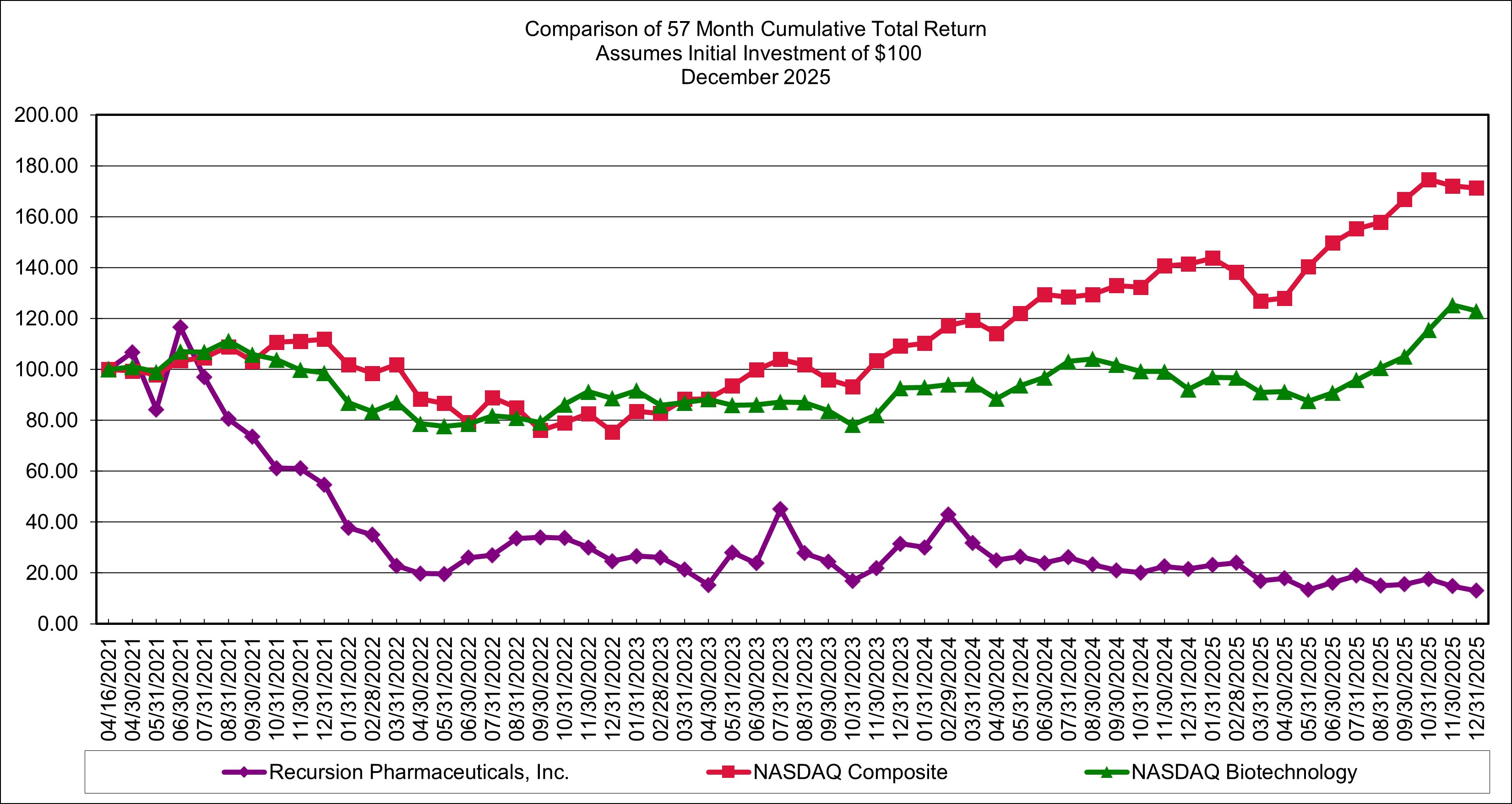
This performance graph is furnished pursuant to Item 201(e) of Regulation S-K and shall not be deemed "filed" with the SEC or subject to Regulation 14A or 14C, other than as provided in Item 201(e), or to the liabilities of Section 18 of the Securities Exchange Act of 1934, as amended, nor shall it be deemed incorporated by reference in any of Recursion’s filings under the Securities Act of 1933, as amended.
Stockholders
There were 87 stockholders of record of Recursion Class A common stock as of January 31, 2026. The actual number of stockholders of our Class A common stock is greater than this number of record holders and includes stockholders who are beneficial owners but whose shares are held in street name by brokers and other nominees.
Dividend policy
We have never declared or paid any cash dividends on our capital stock. We currently intend to retain any future earnings and do not expect to pay any dividends in the foreseeable future. Any future determination to declare cash dividends will be made at the discretion of our Board of Directors, subject to applicable laws, and will depend on a number of factors, including our financial condition, results of operations, capital requirements, contractual restrictions, general business conditions, and other factors that our Board of Directors may deem relevant, including restrictions in our current and future debt instruments, our future earnings, capital requirements, financial condition, prospects, and applicable Delaware law, which provides that dividends are only payable out of surplus or current net profits.
Securities authorized for issuance under equity compensation plans
Information about our equity compensation plans in Item 12 of Part III of this Annual Report on Form 10-K is incorporated herein by reference.
Recent sales of unregistered securities
(a) Sales of Unregistered Securities
Tempus Private Placement
In November 30, 2023, the Company entered into a Master Agreement (the “Tempus Agreement”) with Tempus pursuant to which Tempus will provide certain services and deliverables to the Company and/or license certain data to the Company. Pursuant to the Tempus Agreement, on November 24, 2025, the Company issued to Tempus an aggregate of 7.1 million shares of the Company’s Class A common Stock, (the “Tempus Shares”), in lieu of a cash payment of 32.0 million for the annual license fee owed to Tempus in exchange for the rights granted to the Company under the Tempus Agreement (the “Tempus Private Placement”). The sale was made pursuant to the exemption from registration contained in Section 4(a)(2) of the Securities Act. Pursuant to the terms of the Tempus Agreement, the Company subsequently filed a prospectus supplement to a registration statement (File No. 333-284878) pursuant to Rule 424(b) on November 26, 2025, to register the resale of the Tempus Shares by Tempus.
Stock Option Exercises
For the year ended December 31, 2025, we issued 75,200 shares of our Class A common stock to our employees, advisors and consultants upon the exercise of stock options under our Key Personnel Incentive Stock Plans for aggregate consideration of approximately $26 thousand, in reliance on the exemption provided by Rule 701(b)(2) promulgated under the Securities Act, or pursuant to Section 4(a)(2) under the Securities Act, relative to transactions by an issuer not involving any public offering, to the extent an exemption from such registration was required.
(b) Issuer Purchases of Equity Securities
None.
Item 6. [Reserved]

Item 7. Management’s Discussion and Analysis of Financial Condition and Results of Operations.
The following is a discussion and analysis of the financial condition of Recursion Pharmaceuticals, Inc. (Recursion, the Company, we, us or our) and the results of our operations. This commentary should be read in conjunction with the Consolidated Financial Statements and accompanying notes appearing in Item 8, “Financial Statements.” This discussion, particularly information with respect to our future results of operations or financial condition, business strategy and plans and objectives of management for future operations, includes forward-looking statements that involve risks and uncertainties as described under the heading "Note About Forward-Looking Statements" in this Annual Report on Form 10-K. You should review the disclosure under the heading "Risk Factors" in our Annual Report on Form 10-K for a discussion of important factors that could cause our actual results to differ materially from those anticipated in these forward-looking statements.
Overview
Recursion is a clinical-stage TechBio company with a mission to decode biology to radically improve lives. We have advanced a portfolio of differentiated internal programs and strategic partnerships that leverage our integrated drug discovery and development platform, the Recursion Operating System (OS). This platform provides end-to-end, AI-native capabilities that span from novel biological ideas through the clinic, integrating multimodal biological data generation, AI-powered small molecule synthesis, and AI-enabled clinical development. All of our technologies are designed to translate complex science into medicines that matter — faster, better, and at scale — for patients who are waiting.
Summary of Business Highlights: Driving a diversified pipeline powered by the end-to-end AI-native Recursion OS - wholly-owned and partnered programs
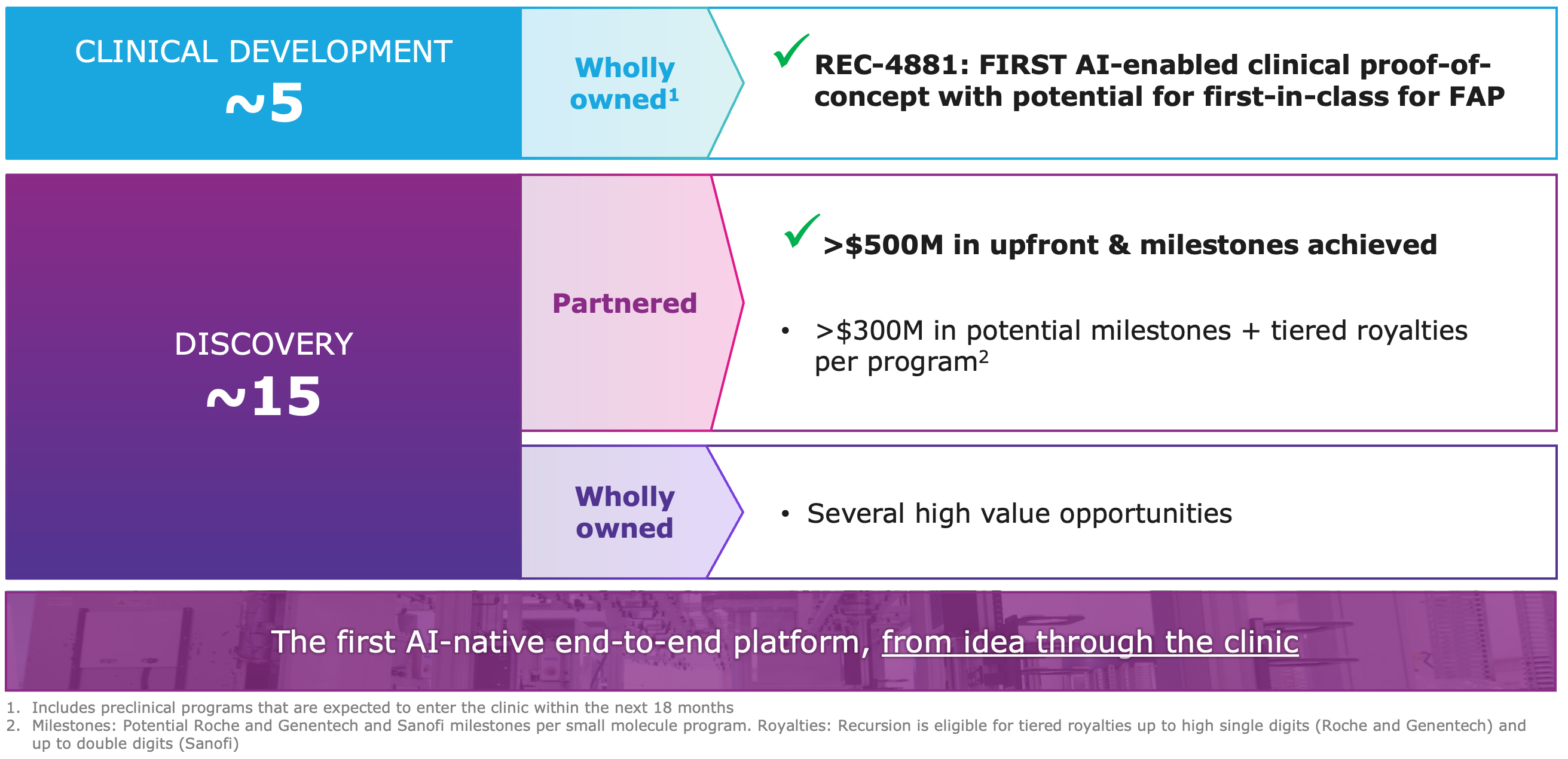
2025 Wholly Owned Pipeline Achievements: Advancing programs with strong therapeutic rationale, powered by the Recursion OS
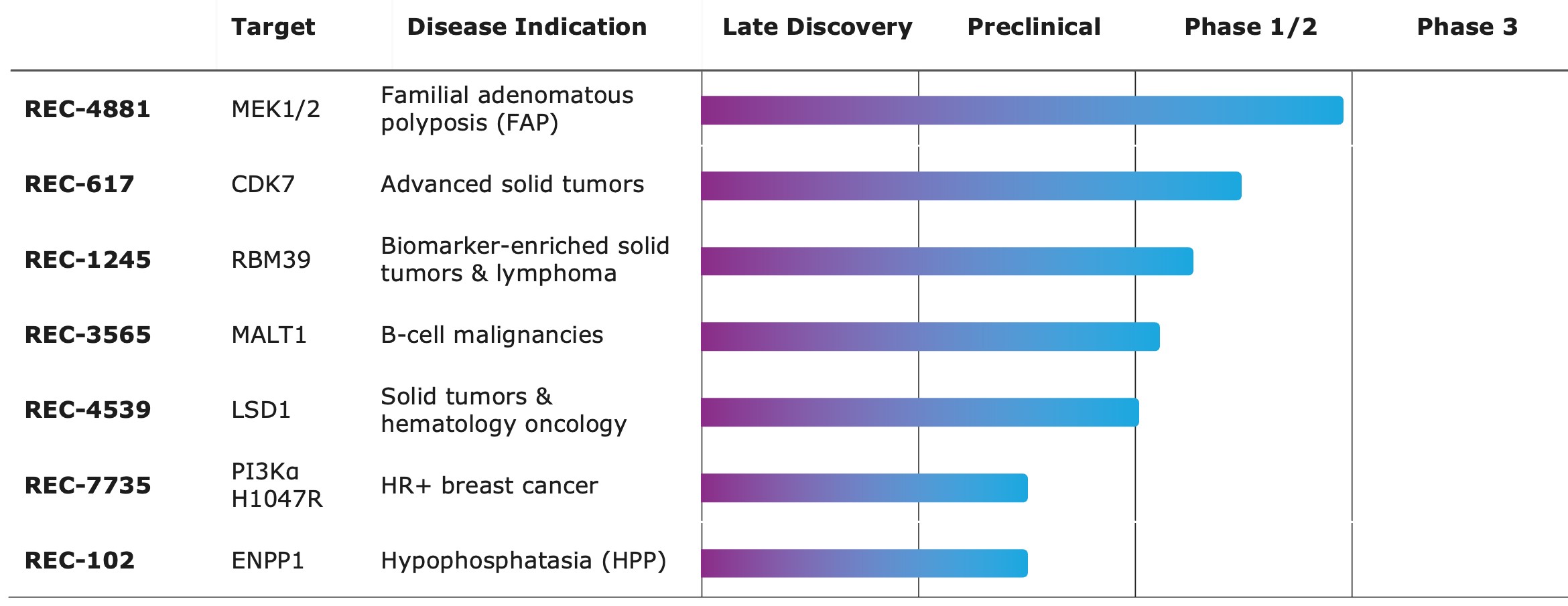
•REC-4881 (MEK1/2): Provided the first clinical validation of the Recursion OS from a novel phenotypic insight, with positive preliminary efficacy results from the ongoing Phase 2 portion of the TUPELO study in FAP, a disease with no approved pharmacotherapies
◦REC-4881 (4 mg QD) achieved rapid clinical activity, with 75% of evaluable patients showing reductions in total polyp burden and a 43% median reduction after 12 weeks of treatment (n=12).
◦After 12 weeks off therapy (week 25 of the study), 82% of evaluable patients (9 of 11) maintained a durable reduction in total polyp burden, with a 53% median reduction observed from baseline.
◦REC-4881 (4 mg QD) has a safety profile consistent with MEK1/2 inhibition, with the majority of treatment-related adverse events being Grade 1 or 2, Grade 3 events occurring in 15.8% of the safety-evaluable patients, and no Grade ≥4 TRAEs reported to date. The most frequent TRAEs (at ≥10%) included dermatitis acneiform / rash and blood CPK increase.
•REC-617 (CDK7): A potential best-in-class CDK7 inhibitor optimized for improved therapeutic index using our AI-driven precision design platform and identified as lead candidate in under 11 months with 136 novel compounds synthesized, delivered further Phase 1/2 results in November 2025, demonstrating promising safety and preliminary efficacy signals. The program is currently advancing in ongoing Phase 1 combination studies in 2L+ platinum-resistant ovarian cancer (PROC) alongside Phase 2 monotherapy expansion.
•REC-7735 (PI3Kα H1047R): Recursion announced new preclinical efficacy data on REC-7735, a potential best-in-class PI3K⍺ H1047R inhibitor, precision designed with 242 compounds synthesized from first novel hit to REC-7735 in 10 months using the Recursion OS platform. Current pan-PI3K⍺ inhibitors lack selectivity over the wild-type protein, resulting in metabolic liabilities, including hyperglycemia, that often necessitate dose reductions in a significant portion of non diabetic patients and the exclusion entirely of diabetic patients from treatment. REC-7735 demonstrates >100-fold selectivity for the H1074R mutation over WT PI3K⍺ suggesting potential improved tolerability and is currently in IND-enabling studies.
Expected upcoming milestones across Recursion’s wholly-owned pipeline:
•REC-1245 (RBM39): Early Phase 1 safety and PK monotherapy data expected in 1H26
•REC-4881 (MEK1/2):
◦Initiate FDA engagement in 1H26 to align on a potential registration pathway for REC-4881, alongside ongoing dosing optimization and expansion of TUPELO to include patients aged 18+ to support a broader development strategy.
◦Additional Phase 1b/2 clinical data expected in 1H27
•REC-7735 (PI3Kα H1047R) and REC-102 (ENPP1): IND-enabling studies ongoing; data-driven go/no-go decision on Phase 1 initiation expected in 2H26
•REC-617 (CDK7): Early Phase 1 safety and PK combination data expected in 1H27
•REC-3565 (MALT1): Early Phase 1 safety and PK monotherapy data expected in 1H27
•REC-4539 (LSD1): Early Phase 1 safety and PK monotherapy data expected in 2H27
Advancing Partnered Discovery, with Over $500 Million in Milestone Payments Achieved to Date:
•Sanofi:
◦Advancing programs for complex targets: Recursion is using its platform to discover, design, and advance a joint portfolio of 5+ AI-driven novel small molecule programs across immunology and oncology. Recursion continues to design against challenging and diverse protein targets.
◦The collaboration has the potential for up to 15 AI-designed small molecule programs.
◦Milestone payments: Recursion has now received $134 million in upfront and progress-based milestones from this partnership to date.
•In the next 12-18 months, there is potential for additional near-term milestones as the first programs advance towards development candidates and earlier-stage programs progress.
◦Fifth progress-based milestone: In February 2026, Recursion achieved its fifth milestone across the collaboration, generating a $4M payment from Sanofi. This 5th milestone reflects a first-in-class Sanofi-partnered oncology program against a historically difficult and novel biological space.
▪Recursion's AI-driven design coupled with Recursion’s physics-based capabilities has produced selective, orally active lead series.
•Roche and Genentech:
◦Neuron Map: In partnership with Roche and Genentech, Recursion built the first whole-genome CRISPR knockout map generated from a subset of 1 trillion internally manufactured iPSC-derived neuronal cells ($30 million milestone payment, accepted in 2024). This proprietary dataset is being used in partnership with Roche and Genentech to identify potential new targets in neuroscience, a field which has historically suffered from limited new discoveries.
◦Microglia Map: Recursion built and Roche and Genentech accepted a second neuroscience Phenomap, a first-of-its-kind whole-genome CRISPR knockout map generated from over 100 billion internally manufactured iPSC-derived microglial cells ($30 million milestone payment, accepted in 2025). With approximately 46 million images, the scale and quality of this proprietary map enables us, in partnership with Roche and Genentech, to leverage the power of AI to explore novel targets and pathways.
◦Gastrointestinal-Oncology Advancements: We have built four proprietary Phenomaps which are being leveraged under the collaboration to identify novel insights that can be used to initiate programs for a gastrointestinal-oncology indication including continuing to advance one program optioned by Roche and Genentech.
◦Milestones and Collaboration: In total, Recursion has received $213 million in upfront and milestone payments from the collaboration. Roche and Genentech have accepted 6 Phenomaps and initiated one small molecule program based on Phenomap insights to date. The companies have also identified a number of biological insights from Phenomaps that are now being validated or advanced as potential novel targets.
Meaningful Potential Upcoming Milestones Across Partnered Discovery:
•Sanofi programs continue advancing towards potential lead series and development candidate designation milestones in the next 12-18 months.
•The Company expects to translate biological insights from maps delivered to Roche and Genentech to early stage programs across 2026 and beyond.
2025 Recursion OS Advances: Driving Platform Innovations, Grounded in Impact
Full stack AI-powered platform: The Recursion Operating System (OS) is continuing to drive program development by integrating AI across multimodal biology, precision design, and next-generation clinical development—enabling faster, more efficient, and more innovative drug discovery and development from biology to insight, insight to molecule, and molecule to patient.
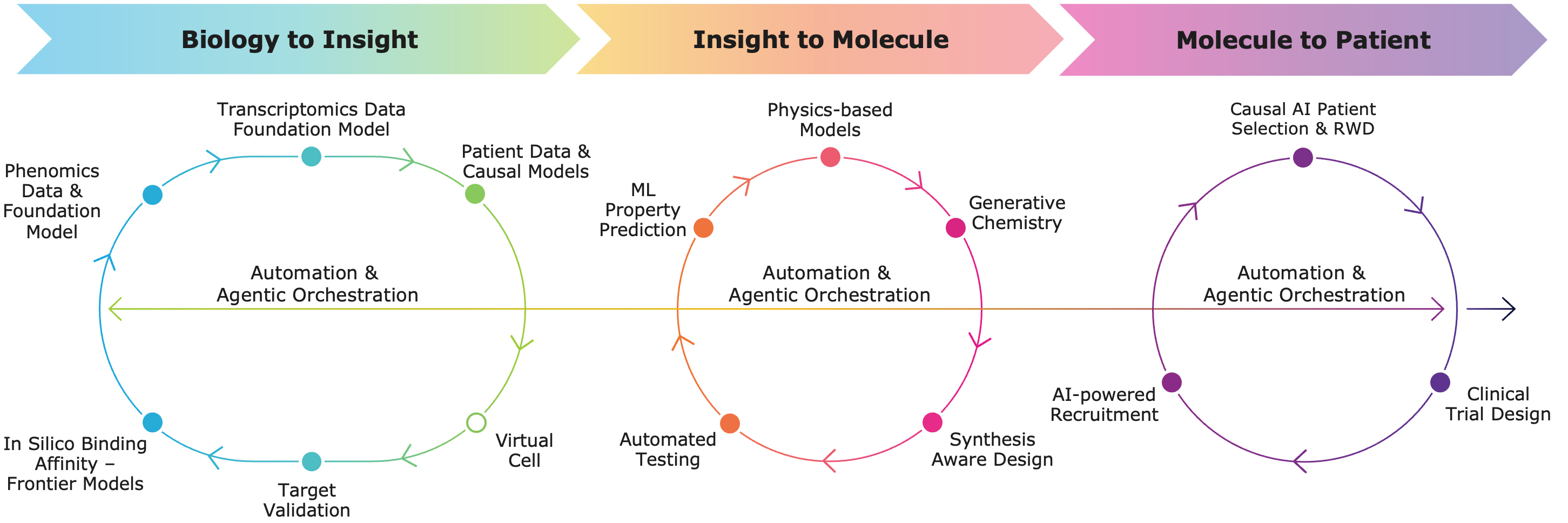
•Biology to Insight: Initiating programs with deep biological grounding
◦Unmatched multimodal scale: At-scale cellular imaging, integrated with proprietary and partner omics datasets, has created one of the most comprehensive and relatable biological datasets in biopharma.
◦From signal to selection: This foundation enables systematic discovery of novel biology — over 100 novel insights triaged into 10 actionable and translatable targets.
•Insight to Molecule: Designing differentiated molecules more efficiently
◦Proven platform productivity and reproducibility: To date, the platform has delivered >10 development candidates that address a wide variety of previously unsolved biology or chemistry problems.
◦Advanced candidates have been delivered by synthesizing ~330 compounds per program in ~17 months, compared to industry averages of over 2,500 compounds and 42 months, respectively.
◦Leverages an AI-native engine for the industrialized generation of over 100 million molecules annually through synthetically aware design, generating novel and patentable compounds.
•Molecule to Patient: Advancing medicines into the clinic with improved patient relevance.
◦Integrated high-quality, linked patient datasets to strengthen programs, bolster preclinical and early clinical data to select patients and optimize recruitment: Contextualized the single-arm efficacy of REC-4881 in the TUPELO study through real-world evidence analytics and AI-enabled data extraction, to build a comprehensive view of the lived, progressive-disease FAP patient experience, to directly inform clinical development strategy.
◦Rapid, data-driven optimization of clinical trial operations: Deployed global clinical trial site intelligence database, covering a wide swath of historical clinical trials, to reduce trial country and site selection from months to hours.
Financing and Operations
Since 2023, our financing and operating activities include the following: In July 2023, we issued an aggregate of 7.7 million shares of our Class A common stock at a purchase price of $6.49 per share in the 2023 Private Placement with NVIDIA Corporation for net proceeds of approximately $49.9 million. In August 2023, Recursion entered into an Open Market Sales Agreement with Jefferies LLC to provide for the offering, issuance and sale of up to an aggregate amount of $300.0 million of its Class A Common stock. The Company sold 26.8 million shares and received net proceeds of $199.1 million under the agreement. In June 2024, we issued an aggregate of 35.4 million shares of our Class A Common stock at a purchase price of $6.50 per share and received net proceeds of $216.4 million, after deducting transaction costs of $13.6 million. See Note 8, “Common Stock” to the Consolidated Financial Statements for additional information on the public offering. In September 2024, we received a Phenomap acceptance fee of $30.0 million from our collaboration with Roche. In February 2025, the Company terminated the Sales Agreement with Jefferies LLC and entered into a Sales Agreement with Citigroup Capital Markets Inc., to provide for the offering, issuance and sale of up to an aggregate amount of $500 million of its Class A common stock. For year ended December 31, 2025, the Company sold 99.9 million shares and received net proceeds of $491.7 million under the agreement. Pursuant to its terms, the Sales Agreement has completed and no amount
remained available for future sales as of December 31, 2025. For the year ended December 31, 2025, we received multiple milestone payments related to our collaborative development contracts totaling $37.0 million.
We use the capital we have raised to fund operating and investing activities across platform research operations, drug discovery, clinical development, digital and other infrastructure, creation of our portfolio of intellectual property and administrative support. We do not have any products approved for commercial sale and have not generated any revenues from product sales. Cash, cash equivalents and restricted cash totaled $753.9 million as of December 31, 2025. Based on our current operating plan, we believe that our cash and cash equivalents will be sufficient to fund our operations for at least the next twelve months.
Since inception, we have incurred significant operating losses. Our net losses were $644.8 million, $463.7 million and $328.1 million during the years ended December 31, 2025, 2024 and 2023, respectively. As of December 31, 2025, our accumulated deficit was $2.1 billion.
As of December 31, 2025, we did not have any unconditional outstanding commitments for additional funding. We anticipate that we will need to raise additional financing in the future to fund our operations, including the potential commercialization of any approved product candidates. Until such time, if ever, as we can generate significant product revenue, we expect to finance our operations with our existing cash and cash equivalents, any future equity or debt financings and upfront, milestone and royalty payments, if any, received under current or future license or collaboration agreements. We may not be able to raise additional capital on terms acceptable to us or at all. If we are unable to raise additional capital when desired, our business, results of operations and financial condition may be adversely affected.
We had a valuation allowance against all of our Canadian subsidiary deferred tax assets (DTAs) as of December 31, 2025, and December 31, 2024 of $26.9 million and $25.3 million respectively. We intend to continue maintaining a full valuation allowance on the Canadian DTAs until there is sufficient evidence to support the reversal of all or some portion of these allowances. However, given our current earnings and anticipated future earnings of our Canadian operations, we believe that there is a reasonable possibility that within the next 12 months, sufficient positive evidence may become available to allow us to reach a conclusion that a significant portion of the valuation allowance will no longer be needed. Release of the valuation allowance would result in the recognition of certain DTAs and a decrease to income tax expense for the period the release is recorded. However, the exact timing and amount of the valuation allowance release are subject to change on the basis of the level of profitability that we are able to actually achieve.
Results of Operations
The following table summarizes our results of operations:
| (in thousands, except percentages) | Years ended December 31, | 2025 compared to 2024 | 2024 compared to 2023 | |||||||||||||||||||||||
| 2025 | 2024 | 2023 | $ | % | $ | % | ||||||||||||||||||||
| Revenue | ||||||||||||||||||||||||||
| Operating revenue | $ | 74,256 | $ | 58,488 | $ | 43,876 | $ | 15,768 | 27.0 | % | $ | 14,612 | 33.3 | % | ||||||||||||
| Grant revenue | 425 | 351 | 699 | 74 | 21.1 | % | (348) | (49.8) | % | |||||||||||||||||
| Total revenue | 74,681 | 58,839 | 44,575 | 15,842 | 26.9 | % | 14,264 | 32.0 | % | |||||||||||||||||
| Operating costs and expenses | ||||||||||||||||||||||||||
| Cost of revenue | 70,953 | 45,238 | 42,587 | 25,715 | 56.8 | % | 2,651 | 6.2 | % | |||||||||||||||||
| Research and development | 475,271 | 314,421 | 241,226 | 160,850 | 51.2 | % | 73,195 | 30.3 | % | |||||||||||||||||
| General and administrative | 176,589 | 178,184 | 110,822 | (1,595) | (0.9) | % | 67,362 | 60.8 | % | |||||||||||||||||
| Total operating costs and expenses | 722,813 | 537,843 | 394,635 | 184,970 | 34.4 | % | 143,208 | 36.3 | % | |||||||||||||||||
| Loss from operations | (648,132) | (479,004) | (350,060) | (169,128) | 35.3 | % | (128,944) | 36.8 | % | |||||||||||||||||
| Other income, net | 3,237 | 14,216 | 17,932 | (10,979) | (77.2) | % | (3,716) | (20.7) | % | |||||||||||||||||
| Loss before income tax benefit | (644,895) | (464,788) | (332,128) | (180,107) | 38.8 | % | (132,660) | 39.9 | % | |||||||||||||||||
| Income tax benefit | 136 | 1,127 | 4,062 | (991) | (87.9) | % | (2,935) | (72.3) | % | |||||||||||||||||
| Net loss | $ | (644,759) | $ | (463,661) | $ | (328,066) | $ | (181,098) | 39.1 | % | $ | (135,595) | 41.3 | % | ||||||||||||
Revenue
The following table summarizes our components of revenue:
| Years ended December 31, | 2025 compared to 2024 | 2024 compared to 2023 | ||||||||||||||||||||||||
| (in thousands, except percentages) | 2025 | 2024 | 2023 | $ | % | $ | % | |||||||||||||||||||
| Revenue | ||||||||||||||||||||||||||
| Operating revenue | $ | 74,256 | $ | 58,488 | $ | 43,876 | $ | 15,768 | 27.0 | % | $ | 14,612 | 33.3 | % | ||||||||||||
| Grant revenue | 425 | 351 | 699 | 74 | 21.1 | % | (348) | (49.8) | % | |||||||||||||||||
| Total revenue | $ | 74,681 | $ | 58,839 | $ | 44,575 | $ | 15,842 | 26.9 | % | $ | 14,264 | 32.0 | % | ||||||||||||
Operating revenue is generated through research and development agreements derived from strategic alliances.
We are entitled to receive variable consideration as certain milestones are achieved. The timing of revenue recognition is not directly correlated to the timing of cash receipts.
For the year ended December 31, 2025, the increase in revenue compared to the prior year was due to revenue recognized from our partnership with Sanofi. In 2024, the Sanofi contract was included in Recursion’s results beginning on November 20, 2024, the date of the Exscientia combination and therefore the year ended December 31, 2024 results only included revenue starting at that point compared to a full year of revenue for the year ended December 31, 2025. See Note 9, “Collaborative Development Contracts” to the Consolidated Financial Statements for additional information. The increase related to the Sanofi contract was partially offset by a decrease in revenue recognized from Roche, which was due to the timing of our mix of work on the performance obligations. For the year ended December 31, 2024, the increase in revenue compared to the prior year was due to revenue recognized from our partnership with Roche. We recognized revenue related to the acceptance fee for the completion of a Phenomap for one of our neuroscience performance obligations. The consideration did not include the $30 million milestone until the map was accepted, which was during the third quarter of 2024.
Cost of Revenue
The following table summarizes our cost of revenue:
| (in thousands, except percentages) | Years ended December 31, | 2025 compared to 2024 | 2024 compared to 2023 | |||||||||||||||||||||||
| 2025 | 2024 | 2023 | $ | % | $ | % | ||||||||||||||||||||
| Total cost of revenue | $ | 70,953 | $ | 45,238 | $ | 42,587 | $ | 25,715 | 56.8 | % | $ | 2,651 | 6.2 | % | ||||||||||||
Cost of revenue consists of the Company’s costs to provide services for drug discovery required under performance obligations with partnership customers. These primarily include materials costs, service hours performed by our employees and depreciation of property and equipment.
For the year ended December 31, 2025, the increase in cost of revenue compared to the prior year was due to our Exscientia acquisition for which the cost of revenue is now included for the full year. For the year ended December 31, 2024, the increase in cost of revenue compared to the prior year was due to our Exscientia acquisition for which our results now also include additional customers.
Research and Development
The following table summarizes our components of research and development expense:
| (in thousands, except percentages) | Years ended December 31, | 2025 compared to 2024 | 2024 compared to 2023 | |||||||||||||||||||||||
| 2025 | 2024 | 2023 | $ | % | $ | % | ||||||||||||||||||||
| Research and development expenses | ||||||||||||||||||||||||||
| Platform | $ | 232,557 | $ | 144,413 | $ | 96,796 | $ | 88,144 | 61.0 | % | $ | 47,617 | 49.2 | % | ||||||||||||
| Discovery | 81,808 | 69,957 | 62,142 | 11,851 | 16.9 | % | 7,815 | 12.6 | % | |||||||||||||||||
| Clinical | 81,102 | 62,916 | 57,564 | 18,186 | 28.9 | % | 5,352 | 9.3 | % | |||||||||||||||||
| Acquired IPR&D | 22,840 | — | — | 22,840 | n/m | — | n/m | |||||||||||||||||||
| Stock based compensation | 63,177 | 37,331 | 22,761 | 25,846 | 69.2 | % | 14,570 | 64.0 | % | |||||||||||||||||
| UK R&D tax credit | (7,710) | (1,769) | — | (5,941) | >100% | (1,769) | n/m | |||||||||||||||||||
| Other | 1,497 | 1,573 | 1,963 | (76) | (4.8) | % | (390) | (19.9) | % | |||||||||||||||||
| Total research and development expenses | $ | 475,271 | $ | 314,421 | $ | 241,226 | $ | 160,850 | 51.2 | % | $ | 73,195 | 30.3 | % | ||||||||||||
n/m = Not meaningful
Research and development expenses account for a significant portion of our operating expenses. We recognize research and development expenses as they are incurred. Research and development expenses consist of costs incurred in performing activities including:
•costs to develop and operate our platform;
•costs of discovery efforts which may lead to development candidates, including research materials and external research;
•costs for clinical development of our investigational products;
•costs for materials and supplies associated with the manufacture of active pharmaceutical ingredients, investigational products for preclinical testing and clinical trials;
•personnel-related expenses, including salaries, benefits, bonuses and stock-based compensation for employees engaged in research and development functions;
•costs associated with operating our digital infrastructure; and
•other direct and allocated expenses incurred as a result of research and development activities, including those for facilities, depreciation, amortization and insurance.
•certain cash refundable research and development tax credits including the research and development expenditure credit (RDEC) in the United Kingdom
We recognize expenses associated with third-party contracted services as they are incurred. Upon termination of contracts with third parties, our financial obligations are generally limited to costs incurred or committed to date. Any advance payments for goods or services to be used or rendered in future research and product development activities pursuant to a contractual arrangement are classified as prepaid expenses until such goods or services are rendered.
Significant components of research and development expense include the following allocated by development phase: Platform, which refers primarily to expenses related to screening of product candidates through hit identification, this also includes expenses related to Tempus records purchased; Discovery, which refers primarily to expenses related to hit identification through development of candidates; and Clinical, which refers primarily to expenses related to development of candidates and beyond.
For the year ended December 31, 2025, the increase in research and development expenses compared to the prior year was driven by Tempus record purchases of $49.9 million, acquired IPR&D purchases of $22.8 million and the inclusion of Exscientia’s results of $102.4 million.
For the year ended December 31, 2024, the increase in research and development expenses compared to the prior year was driven by our platform and personnel costs as we continued to expand and upgrade our platform, including our chemical technology, machine learning and transcriptomics platform.
General and Administrative Expense
The following table summarizes our general and administrative expense:
| (in thousands, except percentages) | Years ended December 31, | 2025 compared to 2024 | 2024 compared to 2023 | |||||||||||||||||||||||
| 2025 | 2024 | 2023 | $ | % | $ | % | ||||||||||||||||||||
| Total general and administrative expense | $ | 176,589 | $ | 178,184 | $ | 110,822 | $ | (1,595) | (0.9) | % | $ | 67,362 | 60.8 | % | ||||||||||||
We expense general and administrative costs as incurred. General and administrative expenses consist primarily of salaries; including employee benefits and stock-based compensation. General and administrative expenses also include facilities, depreciation, information technology, professional fees for auditing and tax, legal fees for corporate and patent matters and insurance costs.
For the year ended December 31, 2025, the decrease in general and administrative expense compared to the prior year was not significant.
For the year ended December 31, 2024, the increase in general and administrative expense compared to the prior year was primarily driven by an increase in salaries and wages of $21.1 million, transaction costs of $20.5 million and the inclusion of Exscientia’s results of $11.3 million. We also had increases in software and lease expense.
Other Income, Net
The following table summarizes our components of other income, net:
| (in thousands, except percentages) | Years ended December 31, | 2025 compared to 2024 | 2024 compared to 2023 | |||||||||||||||||||||||
| 2025 | 2024 | 2023 | $ | % | $ | % | ||||||||||||||||||||
| Interest income | $ | 22,788 | $ | 15,758 | $ | 19,116 | $ | 7,030 | 44.6 | % | $ | (3,358) | (17.6) | % | ||||||||||||
| Interest expense | (1,810) | (1,572) | (97) | (238) | 15.1 | % | (1,475) | >100% | ||||||||||||||||||
| Other | (17,741) | 30 | (1,087) | (17,771) | n/m | 1,117 | n/m | |||||||||||||||||||
| Other income, net | $ | 3,237 | $ | 14,216 | $ | 17,932 | $ | (10,979) | (77.2) | % | $ | (3,716) | (20.7) | % | ||||||||||||
n/m = Not meaningful
For the year ended December 31, 2025, the decrease in other income, net compared to the prior year related to our loss on disposal of Exscientia GmbH of $4.5 million and our Vienna lease termination fee of $5.2 million. The
decrease was partially offset by an increase in interest income driven by our increase in earnings on cash and cash equivalents.
For the year ended December 31, 2024, the decrease in other income, net compared to the prior year was related to a decrease in earnings on cash and cash equivalents in money market funds.
Liquidity and Capital Resources
Sources of Liquidity
We have not yet commercialized any products and do not expect to generate revenue from the sales of any product candidates for at least several years. Cash, cash equivalents and restricted cash totaled $753.9 million and $603.0 million as of December 31, 2025 and 2024, respectively.
We have incurred operating losses and experienced negative operating cash flows and we anticipate that the Company will continue to incur losses for at least the foreseeable future. Our net loss was $644.8 million, $463.7 million and $328.1 million during the years ended December 31, 2025, 2024 and 2023, respectively. As of December 31, 2025, we had an accumulated deficit of $2.1 billion.
Since 2023, we have financed our operations primarily through Class A common stock issuances. As of December 31, 2025, we have received net proceeds of $957.1 million from Class A common stock issuances. See Note 8, “Common Stock” to the Consolidated Financial Statements for additional details on Class A common stock issuances. Additionally, since 2023, we have also received proceeds of $74.0 million from our strategic partnerships. See Note 9, “Collaborative Development Contracts” to the Consolidated Financial Statements for additional details on the strategic partnerships.
Cash Flows
The following table is a summary of the Consolidated Statements of Cash Flows:
| Years ended December 31, | |||||||||||
| (in thousands) | 2025 | 2024 | 2023 | ||||||||
| Cash used in operating activities | $ | (371,808) | $ | (359,174) | $ | (287,780) | |||||
| Cash provided by (used in) investing activities | (16,871) | 260,059 | (10,228) | ||||||||
| Cash provided by financing activities | 521,532 | 304,120 | 140,133 | ||||||||
Operating Activities
Cash used in operating activities increased during the year ended December 31, 2025 as a result of higher costs incurred for research and development and general and administrative primarily due to the Company’s acquisition of Exscientia. This included partnership inflows of $37.0 million, Exscientia GmbH disposal related payments of $9.7 million and severance payments of $15.1 million. See Note 4, “Acquisitions” to the Consolidated Financial Statements for additional details related to the Exscientia acquisition and Exscientia GmbH disposal.
Cash used in operating activities increased during the year ended December 31, 2024 as a result of higher costs incurred for research and development and general and administrative due to the Company’s expansion and upgraded capabilities. Additionally, cash used increased as a result of our acquisition of Exscientia. See Note 4, “Acquisitions” to the Consolidated Financial Statements for additional details.
Investing Activities
Cash used in investing activities during the year ended December 31, 2025 primarily consisted of the disposal of Exscientia GmbH of $4.4 million and property and equipment purchases of $6.5 million.
Cash provided by investing activities during the year ended December 31, 2024 consisted of $277.1 million as part of the Exscientia acquisition. This was partially offset by property and equipment purchases of $13.7 million, which included $2.9 million to upgrade the BioHive-2 supercomputer and lab equipment purchases. Additionally, investing activities included the purchase of an intangible asset of $3.0 million from Helix.
Financing Activities
Cash provided by financing activities during the year ended December 31, 2025 primarily included proceeds of $528.9 million from Class A common stock issuances related to our at-the-market offerings (ATMs) which was partially offset by our repayment of long-term debt and finance lease liabilities of $8.4 million.
Cash provided by financing activities during the year ended December 31, 2024 primarily included proceeds of $300.4 million from common stock issuances.
Critical Accounting Estimates and Policies
Our management’s discussion and analysis of financial condition and results of operations is based on our financial statements, which have been prepared in accordance with U.S. generally accepted accounting principles (GAAP). The preparation of our consolidated financial statements and related disclosures requires us to make estimates and assumptions that affect the reported amounts of assets and liabilities and expenses in our financial statements. We base our estimates on historical experience, known trends and events and various other factors that we believe are reasonable under the circumstances, the results of which form the basis for making judgments about the carrying values of assets and liabilities that are not readily apparent from other sources. We evaluate our estimates and assumptions on an ongoing basis. Our actual results may differ from these estimates under different assumptions or conditions.
While our significant accounting policies are described in more detail in the notes to our consolidated financial statements, we believe that the following accounting policies are those most critical to the judgments and estimates used in the preparation of our consolidated financial statements.
Revenue Recognition
We have generated revenue from our contracts with partners. Our partnerships often contain multiple components, including research and development services, licenses, options to obtain development and commercialization rights and options to obtain additional research and development services. Such arrangements may provide for various types of payments to us, including upfront fees, technical, development, regulatory and commercial milestone payments, licensing fees, option exercise fees and royalty and milestone payments on product sales. Determining how to recognize revenue from these partnerships involves judgment about whether promised goods and services are distinct from one another or should be accounted for as combined performance obligations, how to estimate and allocate various payment streams to performance obligations and how to measure performance on each performance obligation. Because of these judgments, payments are often not commensurate with the timing of revenue recognition.
Our operating revenue has primarily been generated through research and development agreements. Revenue from research and development agreements is recognized as we satisfy the performance obligation by transferring the promised services to the customer. We recognize revenue over time by measuring the progress toward complete satisfaction of the relevant performance obligation using an appropriate input or output method based on the services promised to the customer. This method of recognizing revenue requires us to make estimates to determine the progress towards completion. A significant change in these estimates could have a material effect on the timing and amount of revenue recognized in future periods.
Valuation of Goodwill and Intangible Assets
We have acquired and may continue to acquire significant intangible assets and goodwill in connection with business combinations. Amounts allocated to intangible assets and goodwill are based upon fair value estimates. We make estimates of fair value based upon assumptions believed to be reasonable and that of a market participant. These estimates are based on available historical information as well as future expectations and the estimates are inherently uncertain. The use of alternative estimates and assumptions could increase or decrease the estimated fair values, the amounts allocated to identifiable intangible assets acquired, future amortization expense and the value of goodwill.
Accrued Research and Development Expenses
As part of the process of preparing our financial statements, we are required to estimate our expenses resulting from our obligations under contracts with vendors and clinical research organizations. The financial terms of these contracts are subject to negotiations, which vary from contract to contract and may result in payment terms that do not match the periods over which materials or services are provided under such contracts. Our objective is to reflect the appropriate expenses in our financial statements by matching those expenses with the period in which services are performed and efforts are expended. We account for these expenses according to the timing of various aspects of the expenses and determine accrual estimates by taking into account discussions with applicable personnel and outside service providers as to the progress of clinical trials, or the services completed. During the course of a clinical trial, we adjust our clinical expense recognition if actual results differ from estimates. We make estimates of our accrued expenses as of each balance sheet date based on the facts and circumstances known to us at that time. Our clinical trial accruals are dependent upon the timely and accurate reporting of contract research organizations and other third-party vendors. Although we do not expect estimates to be materially different from amounts actually incurred, our understanding of the anticipated status and timing of services performed relative to the actual status and timing of services performed may vary and may result in reporting amounts that are too high or too low for any particular period.
Stock-Based Compensation
We measure stock options and other stock-based awards granted to employees, directors and non-employees based on their fair value on the date of grant and recognize the compensation expense over the requisite service period. We recognize the impact of forfeitures on stock-based compensation expenses as forfeitures occur. We generally apply the straight-line method of expense recognition to awards.
The grant date fair value of stock options is estimated using the Black-Scholes option-pricing model, which requires inputs for the expected term, stock price volatility, dividend yield and the risk-free interest rate of the options. If any assumptions used in the Black-Scholes option-pricing model change significantly, stock-compensation for future awards may differ materially compared with the awards granted previously.
Contractual Obligations
The Company’s material cash requirements include the following contractual obligations:
As of December 31, 2025, the Company had $18.7 million of debt outstanding. This balance is related to notes payable for tenant improvement allowances and the supercomputer lease.
As of December 31, 2025, the Company had $72.7 million of future lease commitments. See Note 5 “Leases” to the Consolidated Financial Statements for additional detail on the Company’s leases.
As of December 31, 2025, the Company had $147.4 million of future purchase obligations, $117.7 million of which are expected to be payable within the next year. These commitments primarily related to third-party research services, materials and supplies for research and development activities.
As of December 31, 2025, the Company had $55.4 million remaining of its various Gates Commitments. The majority of this commitment is related to the private placement of the Gates Foundation. Concurrent with the Exscientia’s IPO on October 5, 2021, the Company completed a private placement to the Gates Foundation for the sale of 1.6 million ADSs at the initial offering price of $22.00 per ADS, for gross proceeds of approximately $35.0 million. Under the terms of the Company’s agreement with the Gates Foundation, the Group is committed to spending $70.0 million over a multi-year period to the research, discovery, and development of small molecule anti-infective therapeutics for future pandemic preparedness, with a specific focus on developing therapeutics that can be applied against multiple species of coronaviridae, influenza, and paramyxoviridae (the “Pandemic Preparedness Program”). The Group had incurred $21.7 million relating to the Pandemic Preparedness Program as at December 31, 2025.
Recently Issued and Adopted Accounting Pronouncements
See Note 2, “Summary of Significant Accounting Policies” to the Consolidated Financial Statements for information regarding recently issued and adopted accounting pronouncements.
Item 7a. Quantitative and Qualitative Disclosures About Market Risk.
Interest rate risk
We are exposed to market risk related to changes in interest rates on our investment portfolio of cash and cash equivalents. As of December 31, 2025, our cash and cash equivalents consisted of money market funds and bank deposits. Our primary exposure to market risk is interest income sensitivity, which is affected by changes in interest rates. A hypothetical 100 basis point decrease in interest rates as of December 31, 2025 would have an insignificant effect on net loss in the ensuing year.
Foreign currency exchange risk
Our employees and our operations are primarily located in the United States, United Kingdom and Canada and our expenses are primarily denominated in U.S. dollars, Great British pounds and Canadian dollars. We also have entered into a limited number of contracts with vendors for research and development services that have underlying payment obligations denominated in foreign currencies. We are subject to foreign currency transaction gains or losses on our contracts denominated in foreign currencies. To date, foreign currency transaction gains and losses have not been material to our financial statements, and we do not have a formal hedging program with respect to foreign currency. A 10% increase or decrease in current exchange rates would not have had a material effect on our financial results during the years ended December 31, 2025, 2024 and 2023.

Item 8. Financial Statements and Supplementary Data.
Report of Independent Registered Public Accounting Firm
To the Board of Directors and Stockholders of Recursion Pharmaceuticals, Inc.
Opinions on the Financial Statements and Internal Control over Financial Reporting
We have audited the accompanying consolidated balance sheets of Recursion Pharmaceuticals, Inc. and its subsidiaries (the "Company") as of December 31, 2025 and 2024, and the related consolidated statements of operations, of comprehensive loss, of stockholders’ equity and of cash flows for the years then ended, including the related notes (collectively referred to as the "consolidated financial statements"). We also have audited the Company's internal control over financial reporting as of December 31, 2025, based on criteria established in Internal Control - Integrated Framework (2013) issued by the Committee of Sponsoring Organizations of the Treadway Commission (COSO).
In our opinion, the consolidated financial statements referred to above present fairly, in all material respects, the financial position of the Company as of December 31, 2025 and 2024, and the results of its operations and its cash flows for the years then ended in conformity with accounting principles generally accepted in the United States of America. Also in our opinion, the Company did not maintain, in all material respects, effective internal control over financial reporting as of December 31, 2025, based on criteria established in Internal Control - Integrated Framework (2013) issued by the COSO because material weaknesses in internal control over financial reporting existed as of that date as the Company (i) did not design and maintain effective processes and controls at the Exscientia business, including with respect to consistent review procedures within its financial statement close process, to appropriately analyze, record and disclose accounting matters timely and accurately while maintaining appropriate segregation of duties and (ii) did not design and maintain effective information technology general controls at the Exscientia business for information systems that are significant to the preparation of its financial statements, including controls to verify that conflicting duties were appropriately segregated within such systems, in addition to controls over change management and program development.
A material weakness is a deficiency, or a combination of deficiencies, in internal control over financial reporting, such that there is a reasonable possibility that a material misstatement of the annual or interim financial statements will not be prevented or detected on a timely basis. The material weaknesses referred to above are described in Management’s Annual Report on Internal Control Over Financial Reporting appearing under Item 9A. We considered these material weaknesses in determining the nature, timing, and extent of audit tests applied in our audit of the 2025 consolidated financial statements, and our opinion regarding the effectiveness of the Company’s internal control over financial reporting does not affect our opinion on those consolidated financial statements.
Basis for Opinions
The Company's management is responsible for these consolidated financial statements, for maintaining effective internal control over financial reporting, and for its assessment of the effectiveness of internal control over financial reporting, included in management's report referred to above. Our responsibility is to express opinions on the Company’s consolidated financial statements and on the Company's internal control over financial reporting based on our audits. We are a public accounting firm registered with the Public Company Accounting Oversight Board (United States) (PCAOB) and are required to be independent with respect to the Company in accordance with the U.S. federal securities laws and the applicable rules and regulations of the Securities and Exchange Commission and the PCAOB.
We conducted our audits in accordance with the standards of the PCAOB. Those standards require that we plan and perform the audits to obtain reasonable assurance about whether the consolidated financial statements are free of material misstatement, whether due to error or fraud, and whether effective internal control over financial reporting was maintained in all material respects.
Our audits of the consolidated financial statements included performing procedures to assess the risks of material misstatement of the consolidated financial statements, whether due to error or fraud, and performing procedures that respond to those risks. Such procedures included examining, on a test basis, evidence regarding the amounts and disclosures in the consolidated financial statements. Our audits also included evaluating the accounting principles used and significant estimates made by management, as well as evaluating the overall presentation of the consolidated financial statements. Our audit of internal control over financial reporting included obtaining an
understanding of internal control over financial reporting, assessing the risk that a material weakness exists, and testing and evaluating the design and operating effectiveness of internal control based on the assessed risk. Our audits also included performing such other procedures as we considered necessary in the circumstances. We believe that our audits provide a reasonable basis for our opinions.
Definition and Limitations of Internal Control over Financial Reporting
A company’s internal control over financial reporting is a process designed to provide reasonable assurance regarding the reliability of financial reporting and the preparation of financial statements for external purposes in accordance with generally accepted accounting principles. A company’s internal control over financial reporting includes those policies and procedures that (i) pertain to the maintenance of records that, in reasonable detail, accurately and fairly reflect the transactions and dispositions of the assets of the company; (ii) provide reasonable assurance that transactions are recorded as necessary to permit preparation of financial statements in accordance with generally accepted accounting principles, and that receipts and expenditures of the company are being made only in accordance with authorizations of management and directors of the company; and (iii) provide reasonable assurance regarding prevention or timely detection of unauthorized acquisition, use, or disposition of the company’s assets that could have a material effect on the financial statements.
Because of its inherent limitations, internal control over financial reporting may not prevent or detect misstatements. Also, projections of any evaluation of effectiveness to future periods are subject to the risk that controls may become inadequate because of changes in conditions, or that the degree of compliance with the policies or procedures may deteriorate.
Critical Audit Matters
The critical audit matter communicated below is a matter arising from the current period audit of the consolidated financial statements that was communicated or required to be communicated to the audit committee and that (i) relates to accounts or disclosures that are material to the consolidated financial statements and (ii) involved our especially challenging, subjective, or complex judgments. The communication of critical audit matters does not alter in any way our opinion on the consolidated financial statements, taken as a whole, and we are not, by communicating the critical audit matter below, providing a separate opinion on the critical audit matter or on the accounts or disclosures to which it relates
External Research and Development Expenses
As described in Note 2 to the consolidated financial statements, research and development expenses comprise of costs incurred in performing research and development activities (other than those performed pursuant to contracts with customers, which are recorded as revenue), including drug discovery and development studies, external research and the purchase of laboratory supplies. The Company recognizes expenses associated with its third-party contracted services based on the completion of activities as specified in the applicable contracts. The Company’s research and development expenses for the year ended December 31, 2025 were $475.3 million, a portion of which relates to external research and development expenses.
The principal consideration for our determination that performing procedures relating to external research and development expenses is a critical audit matter is a high degree of auditor effort in performing procedures related to the Company’s external research and development expenses.
Addressing the matter involved performing procedures and evaluating audit evidence in connection with forming our overall opinion on the consolidated financial statements. These procedures included testing the effectiveness of controls relating to management’s research and development expenses, including controls over external research and development expenses. These procedures also included, among others (i) testing external research and development expenses on a sample basis by obtaining and inspecting source documents, such as the underlying agreements with external vendors, purchase orders, invoices received, and information from third-party service providers and (ii) testing the allocation and classification of external research and development expenses.
/s/ PricewaterhouseCoopers LLP
February 25, 2026
We have served as the Company’s auditor since 2024.
Report of Independent Registered Public Accounting Firm
To the Shareholders and the Board of Directors of Recursion Pharmaceuticals, Inc.
Opinion on the Financial Statements
We have audited the accompanying consolidated statements of operations, comprehensive loss, stockholders’ equity and cash flows of Recursion Pharmaceuticals, Inc. for December 31, 2023, and the related notes (collectively referred to as the “consolidated financial statements”). In our opinion, the consolidated financial statements present fairly, in all material respects, the results of its operations and its cash flows for the year ended December 31, 2023, in conformity with U.S. generally accepted accounting principles.
Basis for Opinion
These financial statements are the responsibility of the Company’s management. Our responsibility is to express an opinion on the Company’s financial statements based on our audit. We are a public accounting firm registered with the Public Company Accounting Oversight Board (United States) (PCAOB) and are required to be independent with respect to the Company in accordance with the U.S. federal securities laws and the applicable rules and regulations of the Securities and Exchange Commission and the PCAOB.
We conducted our audit in accordance with the standards of the PCAOB. Those standards require that we plan and perform the audit to obtain reasonable assurance about whether the financial statements are free of material misstatement, whether due to error or fraud. Our audit included performing procedures to assess the risks of material misstatement of the financial statements, whether due to error or fraud, and performing procedures that respond to those risks. Such procedures included examining, on a test basis, evidence regarding the amounts and disclosures in the financial statements. Our audit also included evaluating the accounting principles used and significant estimates made by management, as well as evaluating the overall presentation of the financial statements. We believe that our audit provide a reasonable basis for our opinion.
/s/ Ernst & Young LLP
We served as the Company’s auditor from 2017 to 2024.
Salt Lake City, Utah
February 29, 2024
except for Note 15, as to which the date is
February 28, 2025
Recursion Pharmaceuticals, Inc.
Consolidated Balance Sheets
(in thousands, except share and per share amounts)
| December 31, | ||||||||
| 2025 | 2024 | |||||||
| Assets | ||||||||
| Current assets | ||||||||
| Cash and cash equivalents | $ | $ | ||||||
| Restricted cash | ||||||||
| Other receivables | ||||||||
| Prepaid data assets | ||||||||
| Other current assets | ||||||||
| Total current assets | ||||||||
| Restricted cash, non-current | ||||||||
| Property and equipment, net | ||||||||
| Operating lease right-of-use assets | ||||||||
| Financing lease right-of-use assets | ||||||||
| Intangible assets, net | ||||||||
| Goodwill | ||||||||
| Deferred tax assets | ||||||||
| Other assets, non-current | ||||||||
| Total assets | $ | $ | ||||||
| Liabilities and stockholders’ equity | ||||||||
| Current liabilities | ||||||||
| Accounts payable | $ | $ | ||||||
| Accrued expenses and other liabilities | ||||||||
| Unearned revenue | ||||||||
| Operating lease liabilities | ||||||||
| Notes payable and financing lease liabilities | ||||||||
| Total current liabilities | ||||||||
| Unearned revenue, non-current | ||||||||
| Operating lease liabilities, non-current | ||||||||
| Notes payable and financing lease liabilities, non-current | ||||||||
| Deferred tax liabilities | ||||||||
| Other liabilities, non-current | ||||||||
| Total liabilities | ||||||||
| Commitments and contingencies (Note 7) | ||||||||
| Stockholders’ equity | ||||||||
Common stock, $ | ||||||||
| Additional paid-in capital | ||||||||
| Accumulated deficit | ( | ( | ||||||
Accumulated other comprehensive income (loss) | ( | |||||||
| Total stockholders’ equity | ||||||||
| Total liabilities and stockholders’ equity | $ | $ | ||||||
See the accompanying notes to these consolidated financial statements.
Recursion Pharmaceuticals, Inc.
Consolidated Statements of Operations
(in thousands, except share and per share amounts)
| Years ended December 31, | ||||||||||||||
| 2025 | 2024 | 2023 | ||||||||||||
| Revenue | ||||||||||||||
| Operating revenue | $ | $ | $ | |||||||||||
Grant revenue | ||||||||||||||
| Total revenue | ||||||||||||||
| Operating costs and expenses | ||||||||||||||
| Cost of revenue | ||||||||||||||
| Research and development | ||||||||||||||
| General and administrative | ||||||||||||||
| Total operating costs and expenses | ||||||||||||||
| Loss from operations | ( | ( | ( | |||||||||||
| Other income, net | ||||||||||||||
| Loss before income tax benefit | ( | ( | ( | |||||||||||
Income tax benefit | ||||||||||||||
| Net loss | $ | ( | $ | ( | $ | ( | ||||||||
| Per share data | ||||||||||||||
| Net loss per share of Class A, B and Exchangeable common stock, basic and diluted | $ | ( | $ | ( | $ | ( | ||||||||
| Weighted-average shares (Class A, B and Exchangeable) outstanding, basic and diluted | ||||||||||||||
See the accompanying notes to these consolidated financial statements.
Recursion Pharmaceuticals, Inc.
Consolidated Statements of Comprehensive Loss
(in thousands)
| Years ended December 31, | ||||||||||||||
| 2025 | 2024 | 2023 | ||||||||||||
| Net loss | $ | ( | $ | ( | $ | ( | ||||||||
Other comprehensive income (loss): | ||||||||||||||
| Currency translation adjustments | ( | |||||||||||||
Other comprehensive income (loss): | ( | |||||||||||||
| Comprehensive loss | $ | ( | $ | ( | $ | ( | ||||||||
See the accompanying notes to these consolidated financial statements.
Recursion Pharmaceuticals, Inc.
Consolidated Statements of Stockholders’ Equity
(in thousands, except share amounts)
Common Stock (Class A, B and Exchangeable) | Additional Paid-in-Capital | Accumulated Deficit | Accumulated other comprehensive income (loss) | Stockholders’ Equity | ||||||||||||||||
Shares | Amount | |||||||||||||||||||
| Balance as of December 31, 2022 | $ | $ | $ | ( | $ | |||||||||||||||
| Net loss | — | — | — | ( | — | ( | ||||||||||||||
| Stock option exercises and other | — | — | — | |||||||||||||||||
| Stock-based compensation | — | — | — | — | ||||||||||||||||
| Common stock issuance for private placement, net of issuance costs | — | — | — | |||||||||||||||||
| Class A shares and stock options issued for acquisitions | — | — | — | |||||||||||||||||
| Common stock issued for Tempus agreement | — | — | — | |||||||||||||||||
| Balance as of December 31, 2023 | ( | |||||||||||||||||||
| Net loss | — | — | — | ( | — | ( | ||||||||||||||
| Other comprehensive loss | — | — | — | — | ( | ( | ||||||||||||||
| Stock option exercises and other | — | — | — | |||||||||||||||||
| Stock-based compensation | — | — | — | — | ||||||||||||||||
| Common stock sales issuances, net of issuance costs | — | — | ||||||||||||||||||
| Class A shares and stock options issued for acquisitions | — | — | ||||||||||||||||||
| Common stock issued for Tempus agreement | — | — | — | |||||||||||||||||
| Balance as of December 31, 2024 | ( | ( | ||||||||||||||||||
| Net loss | — | — | — | ( | — | ( | ||||||||||||||
| Other comprehensive income | — | — | — | — | ||||||||||||||||
| Stock option exercises and other | — | — | ||||||||||||||||||
| Stock-based compensation | — | — | — | — | ||||||||||||||||
| Common stock sales issuances, net of issuance costs | — | — | ||||||||||||||||||
Class A shares issued for asset acquisition | — | — | — | |||||||||||||||||
Common stock issued for Tempus agreement | — | — | — | |||||||||||||||||
| Balance as of December 31, 2025 | $ | $ | $ | ( | $ | $ | ||||||||||||||
See the accompanying notes to these consolidated financial statements.
Recursion Pharmaceuticals, Inc.
Consolidated Statements of Cash Flows
(in thousands)
| Years ended December 31, | |||||||||||
| 2025 | 2024 | 2023 | |||||||||
| Cash flows from operating activities | |||||||||||
| Net loss | $ | ( | $ | ( | $ | ( | |||||
| Adjustments to reconcile net loss to net cash used in operating activities: | |||||||||||
| Depreciation and amortization | |||||||||||
| Stock-based compensation | |||||||||||
| Asset impairment | |||||||||||
| Lease expense | |||||||||||
Loss on disposal of a business | |||||||||||
Acquired IPR&D | |||||||||||
| Other, net | ( | ||||||||||
| Changes in operating assets and liabilities: | |||||||||||
| Other receivables and assets | ( | ( | |||||||||
Prepaid data assets | ( | ||||||||||
| Unearned revenue | ( | ( | ( | ||||||||
| Accounts payable | ( | ( | |||||||||
| Accrued development expense | ( | ( | |||||||||
| Accrued expenses and other current liabilities | ( | ||||||||||
| Lease liabilities | ( | ( | ( | ||||||||
| Net cash used in operating activities | ( | ( | ( | ||||||||
| Cash flows from investing activities | |||||||||||
| Net cash acquired in the acquisition of a business | |||||||||||
| Purchases of property and equipment | ( | ( | ( | ||||||||
| Purchases of intangible assets | ( | ( | ( | ||||||||
| Decrease in cash related to disposal of a business | ( | ||||||||||
| Purchases of investments | ( | ||||||||||
| Sales and maturities of investments | |||||||||||
| Net cash provided by (used in) investing activities | ( | ( | |||||||||
| Cash flows from financing activities | |||||||||||
| Proceeds from issuance of common shares, net of issuance costs | |||||||||||
| Proceeds from equity incentive plans | |||||||||||
| Repayment of long-term debt and finance lease liabilities | ( | ( | ( | ||||||||
| Purchase of an intangible asset | ( | ||||||||||
| Net cash provided by financing activities | |||||||||||
Effect of exchange rate changes on cash, cash equivalents and restricted cash | ( | ||||||||||
Net change in cash, cash equivalents and restricted cash | ( | ||||||||||
| Cash, cash equivalents and restricted cash, beginning of period | |||||||||||
| Cash, cash equivalents and restricted cash, end of period | $ | $ | $ | ||||||||
| Supplemental disclosure of non-cash investing and financing information | |||||||||||
Issuance of shares for the acquisitions of businesses and assets | $ | $ | $ | ||||||||
| Issuance of shares for Tempus agreement | |||||||||||
| Accrued property and equipment | |||||||||||
| Purchase of an intangible asset | |||||||||||
See the accompanying notes to these consolidated financial statements.
Recursion Pharmaceuticals, Inc.
Notes to Consolidated Financial Statements
Note 1. Description of the Business
Recursion Pharmaceuticals, Inc. (Recursion, the Company, we or our) is a clinical stage TechBio company decoding biology and chemistry to industrialize drug discovery. The Recursion Operating System (OS), a platform built across diverse technologies, enables the Company to map and navigate trillions of biological and chemical relationships within the Recursion Data Universe, one of the world’s largest proprietary biological and chemical datasets. The Company integrates physical and digital components as iterative loops of atoms and bits scaling wet lab biology and chemistry data organized into virtuous cycles with computational tools to rapidly translate in silico hypotheses into validated insights and novel chemistry.
As of December 31, 2025, the Company had an accumulated deficit of $2.1 billion. The Company expects to incur substantial operating losses in future periods and will require additional capital to advance its drug candidates. The Company does not expect to generate significant revenue until the Company successfully completes significant drug development milestones or in collaboration with third parties, which the Company expects will take a number of years. In order to commercialize its drug candidates, the Company or its partners need to complete clinical development and comply with comprehensive regulatory requirements. The Company is subject to a number of risks and uncertainties similar to those of other companies of the same size within the biotechnology industry, such as the uncertainty of clinical trial outcomes, uncertainty of additional funding and a history of operating losses.
The Company has funded its operations to date primarily through the issuance of Class A common stock (see Note 8, “Common Stock” for additional details). Additionally, the Company has received payments from its strategic partnerships (see Note 9, “Collaborative Development Contracts” for additional details). Recursion will likely be required to raise additional capital. As of December 31, 2025, the Company did not have any unconditional outstanding commitments for additional funding. If the Company is unable to access additional funds when needed, it may not be able to continue the development of its products or the Company could be required to delay, scale back or abandon some or all of its development programs and other operations. The Company’s ability to access capital when needed is not assured and, if not achieved on a timely basis, could materially harm its business, financial condition and results of operations.
Recursion believes that the Company’s existing cash and cash equivalents will be sufficient to fund the Company’s operating expenses and capital expenditures for at least the next 12 months.
Note 2. Summary of Significant Accounting Policies
Use of Estimates
The consolidated financial statements have been prepared in accordance with U.S. generally accepted accounting principles (GAAP), which requires the Company to make estimates and assumptions that affect reported amounts and related disclosures. Actual results could differ from those amounts. Significant estimates and assumptions include the estimated progress towards the satisfaction of performance obligations to record revenue, the valuation of goodwill and intangible assets, accrued research and development expenses and the fair value of stock-based awards issued.
Basis of Presentation
Segment Information
Concentration of Credit Risk
Financial instruments that potentially subject the Company to a concentration of credit risk consist of cash and cash equivalents. These financial instruments are primarily held at several financial institutions that management believes are of high credit quality. Recursion’s primary bank accounts significantly exceed the federally insured limits.
Cash, Cash Equivalents and Restricted Cash
Cash and cash equivalents includes bank deposits held in checking accounts and money market funds. Short-term highly liquid investments with maturities of three months or less at the time of purchase are classified as cash and cash equivalents.
The Company is required to maintain a cash balance in a collateralized account to secure the Company’s credit cards. Additionally, the Company holds restricted cash related to an outstanding letter of credit issued by J.P. Morgan, which was obtained to secure certain Company obligations relating to tenant improvements. Additionally, the Company holds restricted cash related to some grants, for which the funds are contractually limited to specific research and development expenditures. Recursion also holds restricted cash as required by a lease agreement.
Property and Equipment
Property and equipment is carried at acquisition cost less accumulated depreciation. The cost of normal, recurring or periodic repairs and maintenance activities related to property and equipment are expensed as incurred.
Depreciation is computed using the straight-line method based on the estimated useful lives of the assets. The estimated useful lives by asset classification are generally as follows:
| Computer and Office Equipment | |||||
| Lab Equipment | |||||
| Leasehold Improvements | Lesser of | ||||
Long-Lived Assets Impairment
The Company reviews the carrying amounts of long-lived assets, including property and equipment, intangible assets and right-of-use leased assets for potential impairment when events or changes in circumstances indicate the carrying amount of an asset group may not be recoverable. In evaluating recoverability, Recursion groups assets and liabilities at the lowest level such that the identifiable cash flows relating to the group are largely independent of the cash flows of other assets and liabilities. The Company then compares the carrying amount of the asset group with the projected undiscounted future cash flows to be generated by the asset group. If the undiscounted cash flows of the asset group is lower than its respective carrying value, an impairment charge is recorded as the amount by which the carrying amount of the asset group exceeds the fair value.
Goodwill and Indefinite Intangible Assets Impairment
Goodwill represents the excess of the aggregate fair value of the consideration transferred in a business combination over the fair value of the assets acquired, net of liabilities assumed. Indefinite-lived intangible assets
primarily include in-process research and development (IPR&D) acquired in business combinations with indefinite lives.
The Company performs its annual goodwill and indefinite-lived intangible assets impairment test in the fourth quarter, or more frequently if an interim triggering event occurs that may indicate potential impairment. The Company has the option to first assess qualitative factors to determine whether it is more likely than not that the fair value is less than its carrying amount. Some of the factors considered in the qualitative assessment include general macro-economic conditions, conditions specific to the industry and market, cost factors, the overall financial performance and whether there have been sustained declines in the Company's share price. If the Company concludes it is more likely than not that the fair value of the reporting unit or IPR&D is less than its carrying amount, a quantitative impairment test is performed.
Business Combinations
Results of operations of acquired companies are included in the Recursion results of operations as of the respective acquisition dates. The purchase price of each acquisition is allocated to the net assets acquired based on estimates of their fair values at the date of acquisition. Any purchase price in excess of these net assets is recorded as goodwill. The allocation of purchase price in certain cases may be subject to revision based on the final determination of fair values during the measurement period, which may be up to one year from the acquisition date. Legal costs, due diligence costs, business valuation costs and all other business acquisition costs are expensed when incurred.
Accruals for Research and Development Expenses and Clinical Trials
Leases
The Company rents facilities under operating lease agreements and recognizes rent expense on a straight-line basis over the term of the lease. Certain lease agreements contain tenant improvement allowances, rent holidays, scheduled rent increases and renewal options. Rent holidays and scheduled rent increases are included in the determination of rent expense. Certain leases also include provisions for variable lease payments which are based on, but not limited to, maintenance, insurance, taxes and usage-based amounts. Recursion recognizes these costs as they are incurred.
Right-of-use assets and lease liabilities are recognized based on the present value of lease payments over the lease term at the lease commencement date. Present value is determined using an incremental borrowing rate when the rate implicit in the lease is not readily determinable. The incremental borrowing rate is equal to the rate of interest that Recursion would have to pay to borrow on a collateralized basis over a similar term in an amount equal to the lease payments in a similar economic environment. Renewals are not included in the determination of the lease term unless they are determined to be reasonably certain to be exercised at the commencement date of the
lease. The Company recognizes rent expense beginning on the date the Company obtains the legal right to use and control the leased space. Recursion classifies leases as operating or finance at the lease commencement date.
The Company has elected to apply the practical expedient for short-term leases whereby Recursion does not recognize a lease liability and right-of-use asset for leases with a term of less than 12 months. The Company has also elected to not separate consideration in the contract between lease and non-lease components of a contract that contains a lease. Right-of-use assets and lease liabilities are remeasured upon certain remeasurement events using the present value of remaining lease payments and estimated incremental borrowing rate upon lease modification.
Revenue Recognition
Operating revenue has primarily been generated through research and development agreements (see Note 9, “Collaborative Development Contracts” for additional details). Revenue for research and development agreements is recognized as the Company satisfies a performance obligation by transferring the promised services to the customer. The Company recognizes revenue over time by measuring the progress toward complete satisfaction of the relevant performance obligation using an appropriate input or output method based on the services promised to the customer. This method of recognizing revenue requires the Company to make estimates of the work required to complete the performance obligation in order to determine the progress towards completion. A significant change in these estimates could have a material effect on the timing and amount of revenue recognized in future periods.
Cost of Revenue
Research and Development
Stock-Based Compensation
The Company issues stock-based awards to employees and non-employees, generally in the form of stock options and restricted stock units (RSUs). Most of the Company’s stock-based awards have been made to employees. Recursion measures compensation expense for equity awards at their grant-date fair value and recognizes compensation expense over the requisite service period on a straight-line basis or using the graded vesting method. For stock-based awards with a performance condition, Recursion recognizes stock-based compensation expense based on the probable outcome of the performance condition. Awards generally vest over four years for employees. Recursion recognizes the impact of forfeitures on stock-based compensation expense as they occur.
The grant date fair value of stock options is estimated using the Black-Scholes option pricing model, which requires inputs for the expected term, stock price volatility, dividend yield and the risk-free interest rate of the options. The expected term is based on the simplified method since the Company does not have sufficient historical exercise
data to estimate the expected term. The volatility is based on an average peer historical volatility over the expected term of the option. The expected dividend yield is assumed to be zero as Recursion has never paid dividends and does not have current plans to pay dividends. The risk-free interest rate is based on the rates available at the time of the grant for zero-coupon U.S. government issues with a remaining term equal to the option's expected term.
The grant date fair value of RSUs is determined using the market price of the Company’s common stock at grant date. For stock-based awards with a market condition, the grant date fair value is determined using a Monte Carlo simulation and stock-based compensation expense is recognized using the accelerated attribution method over the implied service period. When a market condition is satisfied in a period before the end of the implied service period, any remaining unrecognized compensation cost is recognized. Stock-based compensation is recorded in cost of revenue, research and development expense and general and administrative expense based on the role of the employee.
Income Taxes
Income taxes are accounted for under the asset and liability method. Provisions for federal, state and foreign income taxes are calculated on reported pretax losses based on current tax laws. Deferred taxes are recognized using enacted tax rates on the future tax consequences of temporary differences, which are the differences between the financial statement carrying amounts of assets and liabilities and their respective tax bases and the tax benefits of carryforwards. A valuation allowance is established or maintained when, based on currently available information, it is more likely than not that all or a portion of a deferred tax asset will not be realized.
For uncertain tax positions, Recursion determines whether the position is more-likely-than-not to be sustained upon examination based on the technical merits of the position. Any tax position that meets the more-likely-than-not recognition threshold is measured and recognized in the Consolidated Financial Statements at the largest amount that is greater than 50% likely of being realized upon ultimate settlement.
Foreign Currency
The functional currency for several of Recursion’s foreign subsidiaries is the applicable local currency. Revenues and expenses for non-U.S. dollar functional currency entities are translated into U.S. dollars using average currency exchange rates for the period. Assets and liabilities for such entities are translated using exchange rates at the balance sheet date. Foreign currency translation adjustments are reflected in stockholders’ equity as a component of other comprehensive income (loss). Foreign currency transaction gains and losses on transactions not denominated in functional currency are recorded in “Other income, net” in the Consolidated Statements of Operations.
Recent Accounting Pronouncements
Recently Adopted Accounting Pronouncements
In December 2023, the FASB issued ASU No. 2023-09, Income Taxes (Topic 740). The new standard updates disclosure requirements for Accounting Standards Codification (ASC) 740 primarily by requiring additional information in the income tax rate reconciliation and additional disclosures about income taxes paid. Recursion adopted the standard in the fourth quarter of 2025. Recursion has adopted the standard using the prospective approach and included the required disclosures in our notes to the financial statements for income taxes (See Note 12, “Income Tax”). The adoption of the amendments in ASU 2023-09 impacted the Company's disclosures in the
notes to the consolidated financial statements and did not have a material impact on its Consolidated Balance Sheets, Consolidated Statements of Operations or Consolidated Statements of Cash Flows.
Recent Accounting Pronouncements Not Yet Adopted
In December 2025, the FASB issued ASU No. 2025-10, Government Grants (Topic 832). The new standard adds guidance to ASC 832 on the recognition, measurement, and presentation of government grants. This standard will be effective for Recursion starting the annual period of 2029 and for interim reporting periods within that annual reporting period. Early adoption is permitted. The amendments can be applied on a prospective, modified prospective or retrospective basis. Recursion is currently assessing the impact of adopting this guidance on its consolidated financial statements.
In September 2025, the Financial Accounting Standards Board (FASB) issued Accounting Standards Update (ASU) No. 2025-07, Derivatives and Hedging (Topic 350) and Revenue from Contracts with Customers (Topic 606). The new standard refines the scope of the guidance on derivatives in Topic 815 and clarifies the guidance on shared-based payments from a customer in ASC 606. This standard will be effective for Recursion starting the annual period of 2027 and for interim reporting periods within that annual reporting period. Early adoption is permitted. Recursion is currently assessing the impact of adopting this guidance on its consolidated financial statements.
In September 2025, the Financial Accounting Standards Board (FASB) issued Accounting Standards Update (ASU) No. 2025-06, Accounting for internal-use software costs (Topic 350). The new standard amends specific aspects of the accounting for internal-use software costs including the criteria for capitalizing software costs. It also amends the related disclosure requirements. This standard will be effective for Recursion starting the annual period of 2029 and for interim reporting periods within that annual reporting period. Early adoption is permitted. The amendments can be applied on a prospective, modified prospective or retrospective basis. Recursion is currently assessing the impact of adopting this guidance on its consolidated financial statements.
In November 2024, the Financial Accounting Standards Board (FASB) issued Accounting Standards Update (ASU) No. 2024-03, Disaggregation of Income Statement Expenses (Topic 220). The standard requires new disclosures in the notes to the financial statements about certain caption expenses presented on the face of the Income Statement including information on: purchases of inventory; employee compensation; depreciation and intangible asset amortization. Recursion must also disclose a qualitative description of the amounts remaining in expense captions that are not separately disaggregated. This standard will be effective for Recursion starting the annual period of 2027. Early adoption is permitted. The amendments can be applied on a prospective or retrospective basis. Recursion is currently assessing the impact of adopting this guidance on its consolidated financial statements.
Note 3. Supplemental Financial Information
Tempus agreement
In November 2023, Recursion entered into a five-year agreement (the Tempus Agreement) with Tempus Labs, Inc. (Tempus) to purchase access to their records of patient-centric multimodal oncology data and use rights for therapeutic development purposes. This data will be used to improve the training of Recursion’s artificial intelligence and machine learning models and is expected to accelerate Recursion’s drug discovery process. Recursion is making annual payments, ranging between $22.0 million and $42.0 million, up to $160.0 million in aggregate, to Tempus in cash or equity at the Company’s option. The equity value is determined by using the -trading day period dollar volume-weighted average price (VWAP) for Recursion Class A common stock ending on the day immediately preceding the date that is business days prior to the payment date.
Recursion is expensing the record purchases based on a contractually agreed price as “Research and Development” expenses in the Consolidated Statements of Operations as the records are downloaded. To the extent that the Recursion payments to Tempus are greater than or less than the records purchased amount, Recursion records the applicable amount to “Prepaid data assets” or “Accrued data liability” on the Consolidated Balance Sheet, respectively. The expense for the record purchases was $49.9 million, $8.4 million and $6.0 million for the years ended December 31, 2025, 2024 and 2023 respectively.
Property and Equipment, net
| December 31, | ||||||||
| (in thousands) | 2025 | 2024 | ||||||
| Lab equipment | $ | $ | ||||||
| Leasehold improvements | ||||||||
Computer and Office equipment | ||||||||
| Construction in progress | ||||||||
| Property and equipment, gross | ||||||||
| Less: Accumulated depreciation | ( | ( | ||||||
| Property and equipment, net | $ | $ | ||||||
Depreciation expense on property and equipment was $33.7 million, $18.3 million and $15.9 million during the years ended December 31, 2025, 2024 and 2023, respectively.
Accrued Expenses and Other Liabilities
| December 31, | ||||||||
| (in thousands) | 2025 | 2024 | ||||||
| Accrued compensation | $ | $ | ||||||
Accrued compute liabilities | ||||||||
| Accrued development expenses | ||||||||
Accrued early discovery expenses | ||||||||
Accrued professional fees | ||||||||
Materials received not invoiced | ||||||||
Accrued license fees | ||||||||
| Accrued other expenses | ||||||||
| Accrued expense and other liabilities | $ | $ | ||||||
For the year ended December 31, 2025, the decrease in accrued compensation from the prior year was driven by the Company’s decrease in headcount and initiative around strategic prioritization and streamlined operations.
Restructuring
In June 2025, Recursion announced a reduction in personnel program to help streamline the Company's operating strategy and post-integration efficiencies. These changes resulted in a workforce reduction of approximately 20 %. As of December 31, 2025, the Company has substantially completed the plan, which consisted of severance payments and employee benefits. Recursion recorded these costs in “” on the Consolidated Statement of Operations as incurred. The following summarizes the activity related to these restructuring actions and the related accrual as of December 31, 2025:
| (in thousands) | |||||
| Balance as of December 31, 2024 | |||||
| Expense | $ | ||||
| Payments | $ | ( | |||
Balance as of December 31, 2025 | $ | ||||
Interest Income, net
| Years ended December 31, | ||||||||||||||
| (in thousands) | 2025 | 2024 | 2023 | |||||||||||
| Interest income | $ | $ | $ | |||||||||||
| Interest expense | ( | ( | ( | |||||||||||
| Interest income, net | $ | $ | $ | |||||||||||
For the years ended December 31, 2025, 2024 and 2023, interest income primarily related to earnings on cash and cash equivalents in money market funds. Interest expense primarily related to the Company’s supercomputer financing lease. Interest income, net was included in “Other income, net” on the Consolidated Statements of Operations.
Note 4. Acquisitions
RE Ventures I
In July 2025, Recursion acquired Rallybio’s interest in the joint venture, RE Ventures I, such that Recursion now owns 100 % of the interest in RE Ventures I for total consideration of $20.2 million. Recursion determined that this transaction met the criteria for as an asset acquisition since the lead asset, ENPP1 (Rec-102), an inhibitor program for the treatment of hypophosphatasia (HPP), represented substantially all of the fair value of the gross assets acquired. For the year ended December 31, 2025, Recursion recorded an expense of $20.2 million, representing an acquired in-process research and development (IPR&D) asset with no alternative future use, to “Research and Development” on the Consolidated Statements of Operations.
Subsequent to closing, in August 2025, Recursion issued additional consideration as part of a required milestone payment related to the RE Ventures I transaction for the initiation of an additional preclinical study. This included the settlement of the previously recorded contingent consideration liability. As a result, Recursion recorded an additional expense of $2.4 million acquired IPR&D, which was recorded to “Research and Development” on the Consolidated Statements of Operations.
The following table summarizes the total consideration transferred at acquisition date:
| (in thousands) | |||||
| Recursion Class A common stock | $ | ||||
| Contingent consideration liability | |||||
| Transactions costs | |||||
| Cash paid | |||||
| Total | $ | ||||
The following table summarizes the consideration transferred for the milestone:
| (in thousands) | |||||
| Recursion Class A common stock | $ | ||||
| Cash paid | |||||
| Total | $ | ||||
As part of the agreement, Rallybio is eligible to receive additional milestone payments under certain conditions. Milestone payment obligations that are incurred prior to regulatory approval of the compound will be expensed as acquired IPR&D when recognized.
Table of Contents
Sale of Exscientia GmbH
In March 2025, Recursion completed the sale of its Austrian operations (Exscientia GmbH) to a newly formed company, Alpha Biotechnology GmbH (Alpha). As part of the sale, Recursion obtained a 49 % equity interest in Alpha. Recursion entered into this transaction as part of focusing its efforts and moderating spend. Alpha is a company leveraging a patient-tissue platform for the development of precision therapeutics for the treatment of hematological and solid cancers. For the year ended December 31, 2025, Recursion recorded a loss on the disposal of Exscientia GmbH of $4.5 million, which was classified as “Other income (loss), net” on the Consolidated Statement of Operations. Recursion also recorded a $4.4 million investment on the Consolidated Balance Sheet within “Other assets, non-current” related to its 49 % equity interest in Alpha, which was determined to be an equity method investment.
Exscientia plc
On November 20, 2024, Recursion acquired all of the outstanding equity interests of Exscientia plc (“Exscientia”), a United Kingdom based public company that was registered on the Nasdaq Global Select Market. Exscientia is a drug design company utilizing its artificial intelligence platform to efficiently design and develop differentiated medicines for diseases with high unmet patient needs. Their focus is on utilizing their platform to develop best in class molecules with improvements to known or likely points of failure to improve the probability of developmental success. The Company believes the combination of the Recursion and Exscientia platforms and pipelines will position it to be a leader of the AI-enabled drug discovery and development space.
The acquisition of Exscientia was accounted for as a business combination using the acquisition method of accounting. The consideration transferred of approximately $630.1 million consisted of $616.9 million in Recursion Class A shares and $13.2 million related to the portion of Exscientia share based awards that were replaced with Recursion share based awards that is attributable to pre-combination service. Approximately 102.1 million Recursion Class A shares were issued in exchange for Exscientia ordinary shares using a fixed exchange ratio of one Exscientia ordinary share converts to 0.7729 Recursion Class A shares (the “Exchange Ratio”). In addition, Recursion replaced all outstanding Exscientia share based awards with Recursion share based awards wherein the vesting schedule and other applicable terms were carried over except for the exercise price of share options which were adjusted using the 0.7729 exchange ratio. This included Exscientia’s stock options and restricted stock units. Recursion used $6.04 , the Company’s share price on November 20, 2024 to calculate the consideration transferred. See Note 10, “Stock-Based Compensation” for additional information on the Exscientia share based awards.
For the year ended December 31, 2025, Recursion updated the deferred tax liabilities from the acquisition, which were incomplete as of December 31, 2024. As a result, Recursion adjusted the provisional deferred tax liabilities to reflect the additional information obtained about the facts and circumstances that existed as of the acquisition date. As a result, deferred tax liabilities and goodwill increased by $6.0
172
Table of Contents
The following table summarizes the fair value of assets acquired and liabilities assumed as of the acquisition date:
| (in thousands) | |||||
| Cash and cash equivalents | $ | ||||
| Other receivables | |||||
| Other current assets | |||||
| Property and equipment | |||||
| Operating lease right-of-use assets | |||||
| Intangible assets, technology | |||||
| Intangible assets, indefinite-lived | |||||
| Deferred tax assets | |||||
| Other assets, non-current | |||||
| Accounts payable and accrued liabilities | ( | ||||
| Lease liabilities | ( | ||||
Deferred revenue | ( | ||||
Deferred tax liability | ( | ||||
| Other liabilities | ( | ||||
| Total identifiable net assets | $ | ||||
| Goodwill | |||||
| Total assets acquired and liabilities assumed | $ | ||||
Acquired contract liabilities in the scope of ASC 606 are an exception to the ASC 805 fair value measurement principle and were measured as if Recursion had originated the acquired contract. Two acquired customer contracts had contract liabilities and for each contract Recursion reassessed the identification of performance obligations, determination of transaction price, allocation of transaction price, and measure of progress for each performance obligation as if Recursion has been party to the original contract and recognized the resulting contract liability as a liability assumed. No contract assets in the scope of ASC 606 were acquired.
The intangible assets of Exscientia consist of the Exscientia artificial intelligence platform and four clinical stage oncology in process research and development (IPR&D) assets. The operating system is a critical tool used for both designing molecules for fulfilling collaboration agreements and Exscientia’s own research and development projects. The fair value of each intangible asset was valued based on the present value of future discounted cash flows prepared under the multi-period excess earnings method with the significant inputs being the estimates of future revenues, future expenses, the discount rate of 10.5 % and probabilities of technological and regulatory success. The platform asset is being amortized on a straight line basis over a six year useful life. The IPR&D assets have been assigned an indefinite useful life and will be tested for impairment prospectively and, if regulatory approval is achieved, will be assigned a useful life and amortization will commence.
Goodwill was calculated based on the excess of the consideration transferred over net assets acquired. The goodwill recognized represents the assembled workforce, future research and development projects enabled by the platform that do not yet have sufficient substance to meet the definition of in-process research and development assets and expected synergies such as the integration of Recursion and Exscientia platforms. The goodwill is not deductible for tax purposes.
Recursion’s Consolidated Statement of Operations for the year ended December 31, 2025 includes $35.3 million of revenue and $158.4 million of operating loss from Exscientia operations. The valuation of the assets acquired and liabilities assumed was finalized during the three months ended December 31, 2025.
Unaudited Pro forma financial information
The following unaudited pro forma summary presents consolidated revenue and earnings of Recursion as if the Exscientia business combination had occurred on January 1, 2023.
173
Table of Contents
| Year ended December 31, | ||||||||
| (in thousands) | 2024 | 2023 | ||||||
| Revenue | $ | $ | ||||||
| Operating loss | ||||||||
The unaudited pro forma amounts have been calculated after converting the Exscientia financial information to U.S. GAAP, applying Recursion accounting policies, and applying the acquisition method of accounting at January 1, 2023.
Note 5. Leases
The Company has entered into various long-term real estate operating leases primarily related to office, research and development, operating activities and an equipment financing lease related to the supercomputer. The Company’s leases have remaining terms from under one year to seven years and some of those leases include options that provide Recursion with the ability to extend the lease term, generally for five years . The options are included in the lease term when it is reasonably certain that the option will be exercised.
For the year ended December 31, 2025, Recursion entered into lease modifications and terminations resulting in a decrease to the right-of-use asset and lease liability of $10.1 5.2 5.2 million, which was classified as “Other income (loss), net” on the Consolidated Statement of Operations. Additionally, the Company entered into a lease modification related to the Schrodinger leases to decrease the lease terms, which now ended during the second quarter of 2025. This resulted in a decrease to both the right-of-use asset and lease liability by $4.9 6.0 million.
For the year ended December 31, 2024, Recursion entered into lease modifications resulting in a decrease to the right-of-use assets and lease liabilities of $3.1 30.3
The components of the lease cost were as follows:
| Years ended December 31, | |||||||||||
| (in thousands) | 2025 | 2024 | 2023 | ||||||||
Operating lease cost | $ | $ | $ | ||||||||
Finance lease cost: | |||||||||||
Amortization of leased assets | |||||||||||
Interest on lease liabilities | |||||||||||
Variable lease cost | |||||||||||
Short-term lease cost | |||||||||||
Total lease cost | $ | $ | $ | ||||||||
174
Table of Contents
Supplemental balance sheet information related to leases were:
(in thousands) | December 31, 2025 | December 31, 2024 | ||||||
| Assets | ||||||||
| Operating lease right-of-use assets | $ | $ | ||||||
| Financing lease right-of-use assets | ||||||||
Total lease right-of-use assets | $ | $ | ||||||
Liabilities | ||||||||
Current liabilities | ||||||||
| $ | $ | |||||||
Operating lease liabilities | ||||||||
Total current lease liabilities | ||||||||
| Non-current liabilities | ||||||||
| Operating lease liabilities, non-current | ||||||||
Total non-current lease liabilities | ||||||||
| Total lease liabilities | $ | $ | ||||||
Supplemental cash flow information related to leases were:
| Years ended December 31, | |||||||||||
(in thousands) | 2025 | 2024 | 2023 | ||||||||
| Cash paid for amount included in the measurement of lease liabilities: | |||||||||||
Operating cash flows from operating leases | $ | $ | $ | ||||||||
Operating cash flows from financing leases | |||||||||||
Financing cash flows from financing leases | |||||||||||
Right-of-use assets additions, modifications and terminations: | |||||||||||
Operating leases | $ | ( | $ | $ | |||||||
Financing leases | |||||||||||
Lease term and discount rates were:
| Years ended December 31, | ||||||||
(in thousands) | 2025 | 2024 | ||||||
| Operating leases | ||||||||
| Weighted-average remaining lease term (years) | ||||||||
| Weighted-average discount rate | % | % | ||||||
Finance leases | ||||||||
| Weighted-average remaining lease term (years) | ||||||||
| Weighted-average discount rate | % | % | ||||||
175
Table of Contents
Maturities of operating lease liabilities as of December 31, 2025 were:
(in thousands) | Operating leases | Finance leases | ||||||
| 2026 | ||||||||
| 2027 | ||||||||
| 2028 | ||||||||
| 2029 | ||||||||
2030 | ||||||||
| Thereafter | ||||||||
| Total lease payments | ||||||||
| Less: imputed interest | ( | ( | ||||||
| Present value of lease liabilities | $ | $ | ||||||
Note 6. Goodwill and Intangible Assets
Goodwill
The following table summarizes the changes in the carrying amount of goodwill:
| (in thousands) | |||||
Balance as of December 31, 2023 | $ | ||||
| Additions from acquisitions | |||||
| Foreign currency translation adjustments | ( | ||||
Balance as of December 31, 2024 | |||||
| Additions from acquisitions | |||||
| Foreign currency translation adjustments | |||||
Balance as of December 31, 2025 | $ | ||||
The additions to goodwill related to the acquisition of Exscientia. See Note 4, “Acquisitions” for additional details. No
Intangible Assets, Net
The following table summarizes intangible assets:
| December 31, 2025 | December 31, 2024 | ||||||||||||||||||||||
| (in thousands) | Gross carrying amount | Accumulated Amortization | Net carrying amount | Gross carrying amount | Accumulated Amortization | Net carrying amount | |||||||||||||||||
| Definite-lived technology intangible assets | $ | $ | ( | $ | $ | $ | ( | $ | |||||||||||||||
| Definite-lived licensed intangible assets | ( | ( | |||||||||||||||||||||
| Indefinite-lived intangible assets | — | — | |||||||||||||||||||||
| Total intangible assets | $ | $ | ( | $ | $ | $ | ( | $ | |||||||||||||||
Amortization expense was $50.3 million, $18.8 million and $8.5 million during the years ended December 31, 2025, 2024 and 2023, respectively. Amortization expense was primarily included in “Research and Development” in the Consolidated Statements of Operations. Amortization expense for the definite-lived intangible assets will be recognized over approximately the next five years .
176
Table of Contents
The estimated annual amortization expense for the definite-lived intangible assets recorded as of December 31, 2025 is as follows:
| (in thousands) | 2026 | 2027 | 2028 | 2029 | 2030 | ||||||||||||
| Estimated annual amortization expense | $ | $ | $ | $ | $ | ||||||||||||
The indefinite-lived intangible assets primarily represent in-process research and development (IPR&D) intangibles acquired in business combinations. See Note 4, “Acquisitions” for additional details on the intangible assets acquired. No
Note 7. Commitments and Contingencies
Indemnification
The Company has agreed to indemnify its officers and directors for certain events or occurrences, while the officer or director is or was serving at the Company’s request in such capacity. The Company purchases directors and officers liability insurance coverage that provides for reimbursement to the Company for covered obligations and this is intended to limit the Company’s exposure and enable it to recover a portion of any amounts it pays under its indemnification obligations. The Company had no
Employee Agreements
The Company has signed employment agreements with certain key employees pursuant to which, if their employment is terminated following a change of control of the Company, the employees are entitled to receive certain benefits, including accelerated vesting of equity incentives.
Legal Matters
The Company may, from time to time, be involved in various legal proceedings arising in the normal course of business. An unfavorable resolution of any such matter could materially affect the Company’s future financial position, results of operations or cash flows.
In April 2024, a putative class action complaint was filed in the U.S. District Court for the District of New Jersey against Exscientia plc, Andrew Hopkins, Ben R. Taylor and David Nicholson (Campanile v. Exscientia plc, Case No. 1:24-cv-05692). In June 2024, a separate complaint was filed against the same defendants in the U.S. District Court for the District of New Jersey (Case 1:24-cv-07181). Both complaints allege that the defendants violated federal securities laws by, among other things, making materially false and misleading statements regarding Exscientia’s business, operations and prospects. The complaints seek unspecified compensatory damages, as well as an award of reasonable attorneys’ fees and other costs, on behalf of persons and/or entities which purchased Exscientia securities between March 2022 and February 2024. The cases were consolidated and plaintiffs filed an amended complaint on November 11, 2024 against Exscientia plc, Andrew Hopkins and David Nicholson, and the Company moved to dismiss on January 21, 2025. In October 2025, that motion to dismiss was granted and the District Court dismissed the plaintiff’s claims without prejudice; permitting leave to re-file the complaint within 30 days. No further complaint was filed as of that deadline and the Court dismissed the amended complaint with prejudice in December 2025.
In February 2021, the Company entered into a lease agreement for laboratory and office space (the Industry Lease) with Industry Office SLC, LLC (the landlord). In March 2023, the Company sent a letter to the landlord detailing numerous construction delays and irregularities, deficiencies and deviations from applicable structural drawings and/or non-conforming conditions with applicable building codes (collectively, the Claims). On June 23, 2023, the landlord filed a lawsuit against the Company (Industry Office SLC, LLC v. Recursion Pharmaceuticals, Inc., Case No. 230904627) amended in October 2023, in the Third District Court for Salt Lake County, State of Utah (the Court), alleging anticipatory repudiation, breach of contract and breach of the implied covenant of good faith and fair dealing and seeks monetary damages and attorney’s fees. As of December 31, 2025, the Company had no liability
177
Table of Contents
recorded for these events as an unfavorable outcome was not probable. In September 2023, the Company filed claims in the Court against the landlord alleging, among other things, breach of contract and fraudulent misrepresentation (the Counterclaims). In October 2023, the landlord filed an answer and denied the Company’s allegations asserted in the Counterclaims. The Company and the landlord are currently engaged in discovery. The Company is unable to estimate the possible amount or range of damages associated with the Counterclaims.
Pledged Assets
As of December 31, 2025, assets pledged as collateral against finance leases totaled $16.6 million. Assets pledged as collateral are Lab Equipment reported in “Property and Equipment, net” on the Consolidated Balance Sheet. As of December 31, 2025, the liabilities associated with collateral pledged were solely comprised of a finance lease and had a carrying value of $18.3 million. The collateral pledged under the lease agreement may only be operated by the Company within the continental United States and must maintain a good title. The assets cannot be sold, disposed of or repledged by the Company.
Note 8. Common Stock
Each share of Class A common stock entitles the holder to one vote per share and each share of Class B common stock entitles the holder to 10 votes per share on all matters submitted to a vote of the Company’s stockholders. Common stockholders are entitled to receive dividends, as may be declared by the Company’s Board of Directors. As of December 31, 2025 and December 31, 2024, no
At-The-Market Offering (Citi)
In February 2025, the Company entered into a Sales Agreement (the Citi Sales Agreement) with Citigroup Capital Markets Inc. (Citi) to provide for the offering, issuance and sale of up to an aggregate amount of $500.0 million of its Class A common stock from time to time in “at-the-market” (ATM) offerings (the Citi ATM Offering). The Citi ATM Offering was made under a prospectus supplement dated February 28, 2025 and related prospectus filed with the Securities and Exchange Commission pursuant to the Company’s automatically effective shelf registration statement on Form S-3 (Registration No. 333-284878).
For the year ended December 31, 2025, the Company sold 99.9 million shares and received net proceeds of $491.7 million under the agreement. As of December 31, 2025, no amount remained available for future sales under the Sales Agreement as the offering was fully utilized during the year ended December 31, 2025.
At-The-Market Offering (Jefferies)
In August 2023, the Company entered into an Open Market Sales Agreement (the “Jefferies Sales Agreement”) with Jefferies LLC ( “Jefferies”), to provide for the offering, issuance and sale of up to an aggregate amount of $300.0 million of its Class A common stock from time to time in ATM offerings. In February 2025, the Company terminated the Jefferies Sales Agreement. In total, the Company sold 26.8 million shares and received net proceeds of $199.1 million under the agreement through its termination. Of the total sales and net proceeds, the Company sold 4.9 million shares and received net proceeds of $36.9 million under the agreement in 2025, prior to its termination. The Company paid Jefferies a commission of up to 3 % of the aggregate gross proceeds received from all sales of Class A common stock. The Jefferies ATM Offering was made under a prospectus supplement dated August 8, 2023 and related prospectus filed with the Securities and Exchange Commission pursuant to the Company’s automatically effective shelf registration statement on Form S-3ASR (Registration No. 333-264845).
Public Offering of Common Stock
In June 2024, the Company closed its public offering of Class A common stock and issued 35.4 million shares at a price of $6.50 per share for net proceeds of approximately $216.4 million, after deducting transaction costs of $13.6 million. In connection with the public offering of Class A common stock, the Company entered into an underwriting agreement for the offering and sale of 30.8 million shares. The Company also granted the Underwriters a 30 day option from the date of the underwriting agreement to purchase up to an additional 4.6 million shares of Class A common Stock, which was exercised in full. The public offering was made pursuant to the Company's effective
178
Table of Contents
registration statement on Form S-3 (File No. 333-264845) and a related prospectus supplement and accompanying prospectus dated June 26, 2024.
Valence Acquisition Exchangeable Shares
In May 2023, in connection with the acquisition of Valence, the Company entered into an agreement to issue up to 5.9 million shares of Class A common stock (the “Exchangeable Shares”), that may be issued upon exchange, retraction or redemption of exchangeable shares of a subsidiary of Recursion. Each exchangeable share of the subsidiary of Recursion entitles the holder to exchange those shares on a one -for-one basis for Recursion’s Class A common stock. The shares are entitled to receive dividends economically equivalent to dividends declared by Recursion, are non-voting and are subject to customary adjustments for stock splits or other reorganizations. In addition, the Company may require all outstanding exchangeable shares to be exchanged into an equal number of Class A common stock upon the occurrence of certain events and at any time following the seventh anniversary of the closing of the Valence acquisition. The exchangeable shares are substantially the economic equivalent of the Class A shares and classified as common stock within the Company’s stockholders’ equity. The Company’s calculation of weighted-average shares outstanding includes the exchangeable shares. As of December 31, 2025, 5.0 million Exchangeable shares have been redeemed for Class A shares.
Registration Rights Agreements
Tempus agreement
In November 2023, in connection with the Tempus Agreement, the Company agreed to prepare and file a registration statement (or a prospectus supplement to an effective registration statement on Form S-3ASR that will become automatically effective upon filing with the SEC pursuant to Rule 462(e)) with the SEC, for resale of the shares of Class A common stock issued or issuable under the Tempus Agreement. A prospectus supplement to a registration statement (File No. 333-264845) was subsequently filed in December 2023 to register shares issued to Tempus for the initial license fee under the Tempus Agreement for resale. In December 2024, a prospectus supplement to a registration statement (File No. 333-264845) was filed to register shares issued to Tempus in payment for the 2024 annual fee. Such registration statement (File No. 333-264845) subsequently expired. A new registration statement (333-284878) was filed in February 2025 and a prospectus supplement covering all shares that have been issued under the Tempus Agreement and remained held by Tempus was filed in May 2025, and in November 2025, a prospectus supplement was filed to register shares issued to Tempus in payment for the 2025 annual fee.
After registration of any shares issued to Tempus under the Tempus Agreement, the Company has agreed to use commercially reasonable efforts to keep such registration statement effective until such date that all shares issued to Tempus covered by such registration statement have been sold or are able to be publicly sold by relying on Rule 144 of the Securities Act without registration.
Acquisitions
In November 2024, in connection with the acquisition of Exscientia, the Company entered into a Registration Agreement providing for the registration for resale of the shares of Class A common stock issued for Recursion stock options and RSUs under the assumed Exscientia plans and the Inducement awards. A registration statement on Form S-8 (File No. 333-283347) was filed to register the shares for resale by the holders. The registration statement must remain effective as long as such Recursion stock options and RSUs remain outstanding.
In May 2023, in connection with the acquisition of Valence, the Company entered into a Registration Agreement providing for the registration for resale of the shares of Class A common stock and Exchange Shares issued or issuable in such transaction. A registration statement on Form S-3ASR (File No. 333-272281) was filed to register the shares for resale by the holders. The registration statement must remain effective for a period of not less than three years .
Class A and B Common Shares Authorization
In April 2021, the Company’s Board of Directors authorized two classes of common stock, Class A and Class B. The rights of the holders of Class A and B common stock are identical, except with respect to voting and conversion. Each share of Class A common stock is entitled to one vote per share. Each share of Class B common stock is entitled to 10 votes per share and is convertible at any time into one share of Class A common stock.
179
Table of Contents
Note 9. Collaborative Development Contracts
Sanofi
Description
In January 2022, the Company and Sanofi entered into a collaboration agreement to develop an AI-driven pipeline of precision-engineered medicines. The research is focused on up to 15 novel small molecule candidates across oncology and immunology and utilizes the Company’s AI platform. The Company is leading small molecule drug design and lead optimization activities with Sanofi assuming responsibility for preclinical and clinical development, manufacturing and commercialization.
Pricing
The Company received a $100.0 million non-refundable upfront payment. In April 2025, Recursion received a $7.0 million payment related to the achievement of a milestone for one of the performance obligations. The Company has also received multiple other milestone payments related to this agreement totaling approximately $30.0 million. These related to the advancement of several of the discovery programs within the collaboration and the addition of an existing Company program into the collaboration. Recursion is eligible for additional milestone payments based on performance progress of the collaboration and tiered royalties ranging from high-single-digits to mid-teens. Recursion could earn a maximum of $555.0 million from all research milestones and $1.8 billion from all development and regulatory milestones.
Accounting
In November 2024, Recursion acquired Exscientia as part of an acquisition. See Note 4, “Acquisitions” for additional information. As such, the initial Recursion accounting analysis for this transaction was done as of the business combination date as if Recursion had originated the contract. This agreement represents a transaction with a customer and therefore is accounted for in accordance with ASC 606. Recursion has determined that it has at least eight performance obligations related to the small molecule projects. These performance obligations are for performing research and development services for Sanofi to design small molecules and perform lead optimization activities. The performance obligations also include potential licenses related to the intellectual property. The Company concluded that licenses within the contract are not distinct from the research and development services as they are interrelated due to the fact that the research and development services significantly impact the potential licenses. Any additional services are considered customer options and will be considered as separate contracts for accounting purposes.
The Company has determined the transaction price to be $152.6 million, for the initial performance obligations, comprised of the upfront payment, several milestones that have been achieved and estimated additional target exercises. The consideration did not include the $7.0 million variable consideration milestone until the milestone was achieved, which was during the second quarter of 2025. Recursion is now recognizing the milestone as part of the transaction price over the completion period for the related performance obligation. Recursion has fully constrained the amounts of remaining variable consideration to be received from potential milestones considering the stage of development and the risks associated with the remaining development required to achieve each milestone. Recursion will re-evaluate the transaction price each reporting period.
The transaction price was generally allocated to the performance obligations based on the estimated relative stand-alone selling price of each performance obligation as determined using an expected cost plus margin approach. The milestone fees were allocated to related performance obligation as the terms of the variable consideration related specifically to Recursion’s efforts to satisfy the related performance obligation. The Company recognizes revenue over time based on costs incurred relative to total expected costs to perform the research and development services. Recursion determined that this method provides a faithful depiction of the transfer of control to the customer. This method of recognizing revenue requires the Company to make estimates of total costs to provide the services required under the performance obligations. Significant inputs used to determine the total costs included the number of projects to be performed, the number of substitutions related to those projects, length of time required, service hours performed by Company employees and materials costs. A significant change in these estimates could have a material effect on the timing and amount of revenue recognized in future periods. Recursion is unable to estimate the completion date of the performance obligations due to the current stage of work.
180
Table of Contents
In the fourth quarter of 2025, Recursion updated its cost estimate for several performance obligations following the expiry of substitution rights related to certain projects. As a result of this update, the cost estimates for the associated performance obligations decreased, leading to an increase of $12.4 million in revenue recognized in the fourth quarter of 2025. Recursion accounted for this update as a change in estimate in the period of change, which included a cumulative-effect adjustment to revenue.
Merck KGaA (Merck)
Description
In September 2023, the Company and Merck entered into a collaboration agreement to discover novel small molecule drug candidates across oncology, neuroinflammation and immunology. The collaboration utilizes the Company’s AI platform and the Company is performing drug design and discovery while Merck will be assuming responsibility for the preclinical and clinical development.
Pricing
The Company received a $20.1 million non-refundable upfront payment. Recursion is eligible for additional milestone payments based on performance progress of the collaboration and tiered royalties from the mid-single-digits to low-double-digits. The Company could earn a maximum of $73.0 million for discovery, development and sales milestones per project.
Accounting
In November 2024, Recursion acquired Exscientia as part of an acquisition. See Note 4, “Acquisitions” for additional information. As such, the initial Recursion accounting analysis for this transaction was done as of the business combination date as if Recursion had originated the contract. This agreement represents a transaction with a customer and therefore is accounted for in accordance with ASC 606. Recursion has determined that it has three performance obligations related to each project in the partnership. These performance obligations are for performing research and development services for Merck to design small molecules and perform lead optimization activities. The performance obligations also include potential licenses related to the intellectual property. The Company concluded that licenses within the contract are not distinct from the research and development services as they are interrelated due to the fact that the research and development services significantly impact the potential licenses. Any additional services are considered customer options and will be considered as separate contracts for accounting purposes.
The Company has determined the transaction price to be $20.1 million, for the initial performance obligations, comprised of the upfront payment. Recursion will fully constrain the amounts of remaining variable consideration to be received from potential milestones considering the stage of development and the risks associated with the remaining development required to achieve each milestone. Recursion will re-evaluate the transaction price each reporting period.
The transaction price was allocated to the performance obligations based on the estimated relative stand-alone selling price of each performance obligation as determined using an expected cost plus margin approach. The Company recognizes revenue over time based on costs incurred relative to total expected costs to perform the research and development services. Recursion determined that this method provides a faithful depiction of the transfer of control to the customer. This method of recognizing revenue requires the Company to make estimates of total costs to provide the services required under the performance obligations. Significant inputs used to determine the total costs included the number of projects to be performed, the number of substitutions related to those projects, length of time required, service hours performed by Company employees and materials costs. A significant change in these estimates could have a material effect on the timing and amount of revenue recognized in future periods. Recursion was unable to estimate the completion date of the performance obligations due to the current stage of work.
Roche and Genentech
Description
In December 2021, Recursion entered into a collaboration and license agreement with Roche and Genentech (collectively referred to as Roche). Recursion is constructing, using the Company’s imaging technology and proprietary machine-learning algorithms, unique maps of the inferred relationships amongst perturbation phenotypes in a given cellular context with the goal to discover and develop therapeutic small molecule programs in
181
Table of Contents
a gastrointestinal cancer indication and in key areas of neuroscience. Roche and Recursion will collaborate to select certain novel inferences with respect to small molecules or targets generated from the Phenomaps for further validation and optimization as collaboration programs. Roche and Recursion may also combine sequencing datasets from Roche with Recursion’s Phenomaps and collaborate to generate new algorithms to produce multi-modal maps from which additional collaboration programs may be initiated. For every collaboration program that successfully identifies potential therapeutic small molecules or validates a target, Roche will have an option to obtain an exclusive license to develop and commercialize such potential therapeutic small molecules or to exploit such target in the applicable exclusive field.
Pricing
In January 2022, Recursion received a $150.0 million non-refundable upfront payment from the Company’s collaboration with Roche. In September 2024, Recursion received a $30.0 million milestone payment ( “acceptance fee 1”), which was an acceptance fee related to the first accepted neuroscience Phenomap. In October 2025, Recursion received another $30.0 million milestone payment (“acceptance fee 2”), which was an acceptance fee related to the second accepted neuroscience Phenomap. Recursion is eligible for additional milestone payments based on performance progress of the collaboration. Each of the Phenomaps requested by Roche and created by Recursion may be subject to either an initiation fee, acceptance fee or both. Such fees could exceed $250.0 million for 16 accepted Phenomaps. In addition, for a period of time after Roche’s acceptance of certain Phenomaps, Roche will have the option to obtain, subject to payment of an exercise fee, rights to use outside the collaboration the raw images generated in the course of creating those Phenomaps. If Roche exercises its external use option for all 12 eligible Phenomaps, Roche’s associated exercise fee payments to Recursion could exceed $250.0 million. Under the collaboration, Roche may initiate up to 40 programs, each of which, if successfully developed and commercialized, could yield more than $300.0 million in development, commercialization and net revenue milestones for Recursion, as well as tiered royalties on net revenue.
Accounting
This agreement represents a transaction with a customer and therefore is accounted for in accordance with ASC 606. Recursion has determined that it has three performance obligations, one related to gastrointestinal cancer and two in neuroscience. These performance obligations are for performing research and development services for Roche to identify targets and medicines. The performance obligations also include potential licenses related to the intellectual property. The Company concluded that licenses within the contract are not distinct from the research and development services as they are interrelated due to the fact that the research and development services significantly impact the potential licenses. Any additional services are considered customer options and will be considered as separate contracts for accounting purposes.
The Company has determined the transaction price to be $210.0 million, comprised of the upfront payment and the acceptance fees. The consideration did not include the $30.0 million variable consideration for the first acceptance fee until the map was accepted, which was during the third quarter of 2024. As a result of Roche’s acceptance of the neuroscience Phenomap, Recursion is now recognizing the acceptance fee as part of the transaction price over the completion period of one of the neuroscience performance obligations. The consideration did not include the $30.0 million variable consideration for the second acceptance fee until the map was accepted, which was during the fourth quarter of 2025. As a result of Roche’s acceptance of the neuroscience Phenomap, Recursion is now recognizing the acceptance fee as part of the transaction price over the completion period of one of the neuroscience performance obligations. Recursion has fully constrained the remaining amounts of variable consideration to be received from potential milestones considering the stage of development and the risks associated with the remaining development required to achieve each milestone. Recursion will re-evaluate the transaction price each reporting period.
The transaction price was generally allocated to the performance obligations based on the estimated relative stand-alone selling price of each performance obligation as determined using an expected cost plus margin approach. The acceptance fees were each allocated to one of the neuroscience performance obligations as the terms of the variable consideration related specifically to Recursion’s efforts to satisfy these performance obligations. The Company recognizes revenue over time based on costs incurred relative to total expected costs to perform the research and development services. Recursion determined that this method provides a faithful depiction of the transfer of control to the customer. This method of recognizing revenue requires the Company to make estimates of total costs to provide the services required under the performance obligations. Significant inputs used to determine the total costs included the length of time required, service hours performed by Company employees and materials
182
Table of Contents
costs. A significant change in these estimates could have a material effect on the timing and amount of revenue recognized in future periods. Recursion has estimated the completion of the performance obligations by 2027.
Additional Revenue Disclosures
Revenue from two customers exceeded 10% of total revenue, and those two customers represented substantially all of Recursion’s operating revenue during the year ended December 31, 2025. For the year ended December 31, 2024 , revenue from one customer exceeded 10% of total revenues and that one customer represented primarily all of Recursion’s operating revenue. For the year ended December 31, 2023, revenue from two customers exceeded 10% of total revenues and those two customers represented primarily all of Recursion’s operating revenue.
Of the revenue recognized during the year ended December 31, 2025, $52.1 million was included in the unearned revenue balance as of December 31, 2024, and was related to the payments received by the Company for its collaborative development contracts. Of the revenue recognized during the year ended December 31, 2024, primarily all of it was included in the unearned revenue balance as of December 31, 2023. Revenue recognized during the year ended December 31, 2025 was from the upfront and variable consideration payments received from the related contracts, which decreased the aggregate unearned revenue recognized. As of December 31, 2025, the Company had $4.4 million of costs incurred to fulfill a contract on its Consolidated Balance Sheet within “Other Current Assets.”
Note 10. Stock-Based Compensation
In April 2021, the Board of Directors and the stockholders of the Company adopted the 2021 Equity Incentive Plan (the 2021 Plan). The Company may grant stock options, restricted stock units (RSUs), stock appreciation rights, restricted stock awards and other forms of stock-based compensation. As of December 31, 2025, 14.0 million shares of Class A common stock were available for grant in the 2021 plan. In 2024, the Board of Directors and the stockholders of the Company adopted the 2024 Inducement Equity Incentive Plan (the 2024 Plan) as part of the Exscientia acquisition. See Note 4, “Acquisitions” for additional information. As of December 31, 2025, 11.7 million shares of Class A common stock were available for grant in the 2024 plan.
The following table presents the classification of stock-based compensation expense for employees and non-employees within the Consolidated Statements of Operations:
| Years ended December 31, | |||||||||||
(in thousands) | 2025 | 2024 | 2023 | ||||||||
Cost of revenue | $ | $ | $ | ||||||||
| Research and development | |||||||||||
| General and administrative | |||||||||||
| Total | $ | $ | $ | ||||||||
As part of the Exscientia acquisition, Recursion issued replacement grants for the Exscientia legacy awards. Recursion recorded $8.5 million of additional one-time stock compensation expense during the year ended December 31, 2024. See Note 4, “Acquisitions” for additional information on the Exscientia acquisition.
183
Table of Contents
Stock Options
Stock options are primarily granted to executive leaders at the Company, generally vest over four years and expire no later than 10 years from the date of grant.
Stock option activity during the year ended December 31, 2025 was as follows:
(in thousands except share and per share amounts) | Shares | Weighted-Average Exercise Price | Weighted-Average Remaining Contractual Life (in years) | Aggregate Intrinsic Value | ||||||||||
| Outstanding as of December 31, 2024 | $ | $ | ||||||||||||
| Granted | ||||||||||||||
| Cancelled | ( | |||||||||||||
| Exercised | ( | |||||||||||||
| Outstanding as of December 31, 2025 | $ | $ | ||||||||||||
| Exercisable as of December 31, 2025 | $ | $ | ||||||||||||
As part of the Exscientia acquisition, Recursion granted 5.8 million stock option awards related to the Exscientia legacy awards in 2024.
The fair value of options granted to employees is calculated on the grant date using the Black-Scholes option valuation model. The weighted-average grant-date fair values of stock options granted during the years ended December 31, 2025, 2024 and 2023 were $4.42 , $5.64 and $5.64 , respectively.
The following weighted-average assumptions were used to calculate the grant-date fair value of stock options:
| Years ended December 31, | |||||||||||
| 2025 | 2024 | 2023 | |||||||||
Expected term (in years) | |||||||||||
Expected volatility | % | % | % | ||||||||
Expected dividend yield | |||||||||||
Risk-free interest rate | % | % | % | ||||||||
As of December 31, 2025, $31.8 million of unrecognized compensation cost related to stock options is expected to be recognized as expense over approximately the next two years .
RSUs
Equity awards granted to employees primarily consist of RSUs and generally vest over four years . The weighted-average grant-date fair value of RSUs generally is determined based on the number of units granted and the quoted price of Recursion’s common stock on the date of grant.
The following table summarizes Recursion’s RSU activity during the year ended December 31, 2025:
| Stock units | Weighted-average grant date fair value | |||||||
| Outstanding as of December 31, 2024 | $ | |||||||
| Granted | ||||||||
| Vested | ( | |||||||
| Forfeited | ( | |||||||
| Outstanding as of December 31, 2025 | $ | |||||||
184
Table of Contents
As part of the Exscientia acquisition, Recursion granted 1.6 million RSU awards related to the Exscientia legacy awards in 2024. Additionally, Recursion granted 8.0 million RSU awards as part of a retention program for Exscientia employees in 2024.
The fair market value of RSUs vested was $71.2 million during the year ended December 31, 2025. As of December 31, 2025, $167.6 million of unrecognized compensation cost related to RSUs is expected to be recognized as expense over approximately the next three years .
Note 11. Employee benefit plans
Note 12. Income Taxes
The loss from continuing operations before income tax benefit is disaggregated as follows:
| Years ended December 31, | |||||||||||
| (in thousands) | 2025 | 2024 | 2023 | ||||||||
Loss from continuing operations before income tax benefit | |||||||||||
| United States | ( | ( | ( | ||||||||
| Foreign | ( | ( | ( | ||||||||
Total loss from continuing operations before income tax benefit | $ | ( | $ | ( | $ | ( | |||||
The provision for income taxes consisted of the following components:
| Years ended December 31, | |||||||||||
| (in thousands) | 2025 | 2024 | 2023 | ||||||||
| Current | |||||||||||
| Federal | $ | ( | $ | ( | $ | ||||||
| State | ( | ||||||||||
| Foreign | ( | ||||||||||
Total current tax benefit (expense) | $ | ( | $ | ( | $ | ||||||
| Deferred | |||||||||||
| Federal | $ | $ | $ | ||||||||
| State | |||||||||||
| Foreign | |||||||||||
| Change in valuation allowance | ( | ( | ( | ||||||||
Total deferred benefit | $ | $ | $ | ||||||||
Total income tax benefit | $ | $ | $ | ||||||||
The benefit for income taxes results in effective rates that differ from the statutory rates. The following is a reconciliation of income tax benefit computed at the statutory federal income tax rate to the total tax benefit computed at the effective tax rate:
185
Table of Contents
| Year ended December 31, 2025 | ||||||||
(in thousands) | Percent | Amount | ||||||
U.S. federal statutory tax rate | % | $ | ||||||
State and local income taxes, net of federal income tax effectsA | % | ( | ||||||
| Foreign tax effects | ||||||||
| UK | ||||||||
| Change in valuation allowance | ( | % | ( | |||||
Gain on Exscientia GmbH sale | % | |||||||
| Statutory tax rate difference between UK and US | % | |||||||
Share-based compensation | % | |||||||
Other | % | |||||||
| Austria | ||||||||
Loss on Exscientia GmbH sale | ( | % | ( | |||||
| Other | % | ( | ||||||
| Nontaxable or nondeductible items | ||||||||
Share-based compensation | ( | % | ( | |||||
| Other | ( | % | ( | |||||
| Effect of cross-border tax laws | ( | % | ( | |||||
Tax credits | ||||||||
| R&D credit - current year generation | % | |||||||
| Orphan drug credit - current year generation | % | |||||||
| Change in valuation allowance | ( | % | ( | |||||
| Changes in unrecognized tax benefits | ( | % | ( | |||||
Other adjustments | ( | % | ( | |||||
| Effective tax rate | % | $ | ||||||
A State taxes in California and Utah made up the majority (greater than 50%) of the tax effect in this category.
186
Table of Contents
Significant components of deferred tax assets and liabilities were as follows:
| December 31, | ||||||||
| (in thousands) | 2025 | 2024 | ||||||
| Deferred tax assets | ||||||||
| Net operating loss carryforwards | $ | $ | ||||||
| Research and development capitalization | ||||||||
| Tax credit carryforwards | ||||||||
| Unearned revenue | ||||||||
| Lease liabilities | ||||||||
| Reserves and accruals | ||||||||
| Stock-based compensation | ||||||||
Other | ||||||||
| Gross deferred tax assets | ||||||||
| Valuation allowance | ( | ( | ||||||
| Net deferred tax asset | ||||||||
| Deferred tax liabilities | ||||||||
| Right-of-use assets | ( | ( | ||||||
| Definite lived intangibles | ( | ( | ||||||
| Depreciable assets | ( | ( | ||||||
| Deferred tax liabilities | ( | ( | ||||||
| Net deferred tax liability | $ | ( | $ | ( | ||||
The company paid the following income taxes (net of refunds received) during the year:
| December 31, | ||||||||
| (in thousands) | 2025 | 2024 | ||||||
| Federal | $ | $ | ||||||
Total income taxes paid (net of refunds received) | $ | |||||||
Reserves for uncertain tax positions against the credit carryforwards were as follows:
| December 31, | ||||||||
| (in thousands) | 2025 | 2024 | ||||||
| Balance at the beginning of the period | $ | $ | ||||||
| Increases for positions taken in current year | ||||||||
| Increase (decrease) for positions taken in prior year | ( | |||||||
| Balance at the end of the period | $ | $ | ||||||
As of December 31, 2025, the Company had federal NOL carryforwards of $1.1 billion available to reduce taxable income, of which $16.3 million expire beginning with 2037 and $1.1 billion do not expire. The Company had state NOL carryforwards of $894.4 million available to reduce future state taxable income, of which $472.8 million expire beginning with 2031 and $421.6 million that begin to expire in 2032.The Company had foreign NOL carryforwards of $174.8 million available to reduce future foreign taxable income, of which $20.6 million expire beginning with 2032 and $154.3 million that do not expire.
As of December 31, 2025, the Company also had federal and state research and development credit carryforwards of $60.3 million and $16.7 million respectively. As of December 31, 2024, the Company also had federal and state research and development credit carryforwards of $35.1 million and $10.2 million respectively. The Company also had federal Orphan Drug credits of $45.5 million and $24.7 million as of December 31, 2025 and December 31, 2024, respectively, which will begin expiring in 2036. The Company had reserves for uncertain tax positions against these credit carryforwards of $11.8 million and $6.7 million as of December 31, 2025 and December 31, 2024, respectively.
187
Table of Contents
The Company files income tax returns in the United States (federal and various state jurisdictions), Canada, and the United Kingdom. The Company is subject to examination by taxing authorities in these jurisdictions. In the normal course of business, the Company may be subject to audits by tax authorities regarding the timing and amount of taxable income and deductions and the allocation of income among jurisdictions. The Company is not currently under examination in any of these jurisdictions. The Company is subject to income tax examinations on all federal returns since the 2016 tax return.
Significant judgment is required in determining the Company’s provision for income taxes, recording valuation allowances against deferred tax assets and evaluating the Company’s uncertain tax positions. Due to net losses since inception and the uncertainty of realizing certain deferred tax assets, the Company records valuation allowances when it is not more-likely-than-not that such deferred tax assets will be realized. Exscientia, Inc., a separate filing wholly owned subsidiary, is a tax paying entity with no history of cumulative losses. Therefore, no valuation allowance has been placed on this entity as of December 31, 2025. If, in a future period, the Company concludes it is more-likely-than-not that additional deferred tax assets will be realized, the Company may release all, or a portion of, the valuation allowance, which would increase net deferred tax assets (or reduce net deferred tax liabilities) and decrease income tax expense in the period such release is recorded. As of December 31, 2025 and 2024, the Company’s valuation allowance was $665.4 million and $466.1 million, respectively, which increased by approximately $199.2 million and $161.5 million during the years ended December 31, 2025 and 2024, respectively.
Net operating losses (NOLs) and tax credit carry-forwards are subject to review and possible adjustment by the Internal Revenue Service (“IRS”) and may become subject to annual limitation due to ownership changes that occur under Section 382 of the Internal Revenue Code, as amended and similar state provisions. These ownership changes may limit the amount of carryforwards that can be utilized annually to offset future taxable income. In general, an ownership change, as defined by Section 382, results from transactions increasing the ownership of certain shareholders or public groups in the stock of a corporation by more than 50% over a three-year period. As of December 31, 2025, the Company conducted a Section 382 study through January 31, 2025 and concluded that a deemed ownership change occurred on September 25, 2017. As a result, the Company’s ability to utilize its NOLs and other tax attributes may be limited. The Company will continue to monitor ownership changes for any potential future limitations on its tax attributes.
The OECD released a framework, referred to as Pillar Two, to implement a global minimum corporate tax rate of 15% on certain multinational enterprises. Certain countries have enacted legislation to adopt the Pillar Two framework while several countries are considering or still announcing changes to their tax laws to implement the minimum tax directive. While we do not currently expect Pillar Two to have a material impact on our effective tax rate, our analysis will continue as the OECD continues to release additional guidance and countries implement legislation.
Note 13. Net Loss Per Share
For the years ended December 31, 2025, 2024 and 2023, Recursion calculated net loss per share of Class A, Class B and Exchangeable common stock. Basic net loss per share is computed using the weighted-average number of shares outstanding during the period. Diluted net loss per share is computed using the weighted-average number of shares and the effect of potentially dilutive securities outstanding during the period. Potentially dilutive securities consist of stock options and other contingently issuable shares. For periods presented in which the Company reports a net loss, all potentially dilutive shares are anti-dilutive and as such are excluded from the calculation. For the years ended December 31, 2025, 2024 and 2023, the Company reported a net loss and therefore basic and diluted loss per share were the same.
The rights, including the liquidation and dividend rights, of the holders of the Company’s Class A, Class B and the Exchangeable common stock are identical, except with respect to voting. As a result, the undistributed earnings for each period are allocated based on the contractual participation rights of the Class A, Class B common stock and the Exchangeable common stock as if the earnings for the period had been distributed. As the liquidation and dividend rights are identical, the undistributed earnings are allocated on a proportionate basis and the resulting amount per share for Class A, Class B and Exchangeable common stock was the same during the years ended December 31, 2025, 2024 and 2023.
188
Table of Contents
The following tables set forth the computation of basic and diluted net loss per share of Class A, Class B and Exchangeable common stock during 2025, 2024 and 2023:
| Years ended December 31, | |||||||||||
(in thousands, except share amounts) | 2025 | 2024 | 2023 | ||||||||
| Numerator: | |||||||||||
| Net loss | $ | ( | $ | ( | $ | ( | |||||
| Denominator: | |||||||||||
| Weighted average common shares outstanding | |||||||||||
| Net loss per share, basic and diluted | $ | ( | $ | ( | $ | ( | |||||
The Company excluded the following potential common shares from the computation of diluted net loss per share for the periods indicated because including them would have had an anti-dilutive effect:
| Years ended December 31, | |||||||||||
| 2025 | 2024 | 2023 | |||||||||
| Stock based compensation | |||||||||||
| Tempus agreement | |||||||||||
Contingent stock relating to RE Ventures I transaction | |||||||||||
| Total | |||||||||||
Note 14. Fair Value Measurements
The fair value hierarchy consists of the following three levels:
•Level 1 — Valuations based on unadjusted quoted prices in active markets for identical assets that the company has the ability to access;
•Level 2 — Valuations based on quoted prices for similar instruments in active markets, quoted prices for identical or similar instruments in markets that are not active and model-based valuations in which all significant inputs are observable in the market; and
•Level 3 — Valuations using significant inputs that are unobservable in the market and include the use of judgment by the company's management about the assumptions market participants would use in pricing the asset or liability.
The following tables summarize the Company’s assets and liabilities that are measured at fair value on a recurring basis:
| Basis of fair value measurement | ||||||||||||||
| (in thousands) | December 31, 2025 | Level 1 | Level 2 | Level 3 | ||||||||||
| Assets | ||||||||||||||
Cash and cash equivalents: | ||||||||||||||
Cash | $ | $ | $ | $ | ||||||||||
| Money market funds | ||||||||||||||
| Restricted cash | ||||||||||||||
Total | $ | $ | $ | $ | ||||||||||
189
Table of Contents
| Basis of fair value measurement | ||||||||||||||
| (in thousands) | December 31, 2024 | Level 1 | Level 2 | Level 3 | ||||||||||
| Assets | ||||||||||||||
Cash and cash equivalents: | ||||||||||||||
Cash | $ | $ | $ | $ | ||||||||||
| Money market funds | ||||||||||||||
| Bank deposits | ||||||||||||||
| Restricted cash | ||||||||||||||
Total | $ | $ | $ | $ | ||||||||||
In addition to the financial instruments that are recognized at fair value on the Consolidated Balance Sheet, the Company has certain financial instruments that are recognized at amortized cost or some basis other than fair value. The carrying amount of these instruments are considered to be representative of their approximate fair values.
The following tables summarize the Company’s financial instruments that are not measured at fair value:
| Book values | Fair values | ||||||||||||||||
| (in thousands) | December 31, 2025 | December 31, 2024 | December 31, 2025 | December 31, 2024 | |||||||||||||
| Liabilities | |||||||||||||||||
| Notes payable and financing lease liabilities, current | $ | $ | $ | $ | |||||||||||||
| Notes payable and financing lease liabilities, non-current | |||||||||||||||||
| Total liabilities | $ | $ | $ | $ | |||||||||||||
Note 15. Segment Information
Segment loss
Recursion operates as a single operating segment that is managed on a consolidated basis. The Company’s chief operating decision maker is its Chief Executive Officer. The Company’s chief operating decision maker uses segment net loss to evaluate the performance of its segment, analyze financial trends, compare the budget to the actual operating results, and make resource allocation decisions. Segment net loss represents the Company’s consolidated net loss. All corporate costs, global function support costs, overhead costs and other shared costs are included within this segment. Other segment items primarily include general and administrative expenses including facilities, information technology, professional fees (including auditing, tax and legal) and insurance.
190
Table of Contents
The following table presents Recursion’s segment net loss:
| Years ended December 31, | |||||||||||
| (In thousands) | 2025 | 2024 | 2023 | ||||||||
| Revenue | $ | $ | $ | ||||||||
| Significant segment expenses | |||||||||||
| Salaries | |||||||||||
| Consumables | |||||||||||
| Platform | |||||||||||
| Discovery | |||||||||||
| Clinical development | |||||||||||
| Depreciation and amortization | |||||||||||
| Other segment items | |||||||||||
| Loss from operations | |||||||||||
| Other non-operating income, net | |||||||||||
| Income tax benefit | |||||||||||
| Total segment loss | $ | $ | $ | ||||||||
| Supplemental asset information | |||||||||||
| Total expenditures for additions to long-lived assets | $ | $ | $ | ||||||||
Additional Segment Disclosures
Recursion’s revenues are attributed to the following geographic areas based on the location the services are performed:
| Years ended December 31, | |||||||||||
| (In thousands) | 2025 | 2024 | 2023 | ||||||||
| United States | $ | $ | $ | ||||||||
| United Kingdom | |||||||||||
Other | |||||||||||
| Total | $ | $ | $ | ||||||||
Recursion’s long-lived assets are attributed to the following geographic areas based on their location:
| Years ended December 31, | |||||||||||
| (In thousands) | 2025 | 2024 | 2023 | ||||||||
| United States | $ | $ | $ | ||||||||
| United Kingdom | |||||||||||
| Canada | |||||||||||
| Other | |||||||||||
Total | $ | $ | $ | ||||||||
The above long-lived assets table excludes balances relating to ROU assets of $65.5 million and $92.1 million for 2025 and 2024, respectively. The balances for 2025 and 2024 primarily related to the United States and United Kingdom.
191
Table of Contents
Recursion generates revenue primarily from a single service, research and development services, therefore, the Company does not report additional information on revenue from external customers.
Note 16. Subsequent Events
In February 2026, the Company entered into a Sales Agreement (the “TD Cowen Sales Agreement”) with TD Securities (USA), LLC (the “TD Cowen Sales Agent”), to provide for the offering, issuance and sale of up to an aggregate amount of $300.0 million of its Class A common stock from time to time in “at-the-market” offerings (the TD Cowen ATM Offering). Recursion has not yet sold any shares and is not required to sell additional shares under the TD Cowen Sales Agreement. The Company pays the TD Cowen Sales Agent a commission of less than 3.0 % of the aggregate gross proceeds received from all sales of Class A common stock less certain agreed credits and reimbursements. The TD Cowen Sales Agreement continues until the earlier of selling all shares available under the TD Cowen Sales Agreement or terminated by written notice from either of the parties.
192
Table of Contents
Item 9. Changes in and Disagreements with Accountants.
None.
Item 9A. Controls and Procedures.
Evaluation of Disclosure Controls and Procedures
The Company has established disclosure controls and procedures (as defined in Rules 13a-15(e) and 15d-15(e) under the Securities Exchange Act of 1934, as amended (the Exchange Act)) designed to provide reasonable assurance that information required to be disclosed in the reports that the Company files or submits under the Exchange Act is recorded, processed, summarized and reported within the time periods specified in the SEC’s rules and forms and is accumulated and communicated to management, including the principal executive officer (our Chief Executive Officer) and principal financial officer (our Chief Financial Officer), to allow timely decisions regarding required disclosure. Our management, with the participation of our Chief Executive Officer and Chief Financial Officer, has evaluated the effectiveness of our disclosure controls and procedures as of the end of the period covered by this report. Based on that evaluation, our Chief Executive Officer and Chief Financial Officer have concluded that as of December 31, 2025, our disclosure controls and procedures were not effective due to the material weaknesses described below.
Management recognizes that any controls and procedures, no matter how well designed and operated, can provide only reasonable assurance of achieving the desired control objectives as management necessarily applies its judgment in evaluating the cost-benefit relationship of possible controls and procedures. Our disclosure controls and procedures have been designed to provide reasonable assurance of achieving their objectives. In addition, the design of disclosure controls and procedures must reflect the fact that there are resource constraints, and that management is required to apply judgment in evaluating the benefits of possible controls and procedures relative to their costs.
Management’s Annual Report on Internal Control Over Financial Reporting
Our management is responsible for establishing and maintaining adequate internal control over financial reporting (as defined in Rules 13a-15(f) and 15d-15(f) under the Exchange Act). Our internal control over financial reporting is designed to provide reasonable assurance regarding the reliability of financial reporting and the preparation of financial statements for external purposes in accordance with generally accepted accounting principles.
Because of its inherent limitations, internal control over financial reporting may not prevent or detect misstatements. Also, projections of any evaluation of effectiveness to future periods are subject to the risk that controls may become inadequate because of changes in conditions, or that the degree of compliance with policies or procedures may deteriorate.
Management performed an assessment of the effectiveness of the Company’s internal control over financial reporting as of December 31, 2025. In performing this assessment, management used the criteria described in Internal Control-Integrated Framework (2013) issued by the Committee of Sponsoring Organizations of the Treadway Commission. Based on its assessment, management concluded that the Company’s internal control over financial reporting was not effective as of December 31, 2025 due to the material weaknesses described below. A material weakness is a deficiency, or a combination of deficiencies, in internal control over financial reporting, such that there is a reasonable possibility that a material misstatement of the Company's annual or interim financial statements will not be prevented or detected on a timely basis.
•We did not design and maintain effective process and controls at the Exscientia business, including with respect to consistent review procedures within the financial statement close process, to appropriately analyze, record and disclose accounting matters timely and accurately while maintaining appropriate segregation of duties; and
•We did not design and maintain effective information technology general controls at the Exscientia business for information systems that are significant to the preparation of our financial statements, including controls
193
Table of Contents
to verify that conflicting duties were appropriately segregated within such systems, in addition to controls over change management and program development
The material weakness related to the ineffective process and controls resulted in an immaterial misstatement to unearned revenue and unearned revenue, non-current in our consolidated financial statements as of and for the year ended December 31, 2024. Additionally, each of these material weaknesses could result in a misstatement of substantially all account balances or disclosures that would result in a material misstatement to the annual or interim consolidated financial statements that would not be prevented or detected.
The effectiveness of the Company’s internal control over financial reporting as of December 31, 2025 has been audited by PricewaterhouseCoopers LLP, an independent registered public accounting firm, as stated in their report which is included in Part II Item 8 of this Annual Report on Form 10-K.
Management’s Remediation Efforts for Unremediated Material Weaknesses
The following remediation actions have been taken in the Exscientia acquired business as of December 31, 2025 related to the material weaknesses described above:
•We have designed and implemented certain information technology general controls and are in the process of implementing additional information technology general controls within the Exscientia business, including controls over the maintenance of appropriate segregation of duties, controls over change management and controls over program development, and
•We have designed and implemented certain processes and controls to appropriately analyze, record and disclose accounting matters timely and accurately while maintaining appropriate segregation of duties and are in the process of implementing others.
In connection with the remediation actions described above, we are in the process of integrating Exscientia’s operations into our overall system of internal control over financial reporting.
We believe the above actions will be effective in remediating the material weaknesses described above. However, the material weaknesses cannot be considered remediated until remediated controls operate for a sufficient period of time and management has concluded, through testing, that these controls are operating effectively.
Remediation of Previously Reported Material Weakness relating to Revenue
For the year ended December 31, 2024, our disclosure controls and procedures and internal control over financial reporting were ineffective due to the material weakness in internal control over financial reporting disclosed in Part II, Item 9A of our Annual Report on Form 10-K for the year ended December 31, 2024. The Company did not design and maintain effective controls over the estimated costs and time to completion and controls to validate the completeness and accuracy of data used to calculate revenue and unearned revenue related to its license agreement.
For the year ended December 31, 2025, the Company undertook actions to remediate the material weakness in internal control over financial reporting including the following actions:
•Improvement of documentation procedures regarding specific inquiries related to the cost model used for revenue recognition and the resulting responses;
•Improvement of documentation for the review of changes in the cost model due to responses from inquiries;
•Provided additional documentation for internal reports to validate and support completeness and accuracy of reports; and
•Improvement of documentation of these processes was done with the input of our third-party consultants
Management has completed its testing of these remediated processes, procedures and controls and based on management’s assessment of the effectiveness of our internal control over financial reporting as of December 31, 2025, our management concluded that, as of the end of the period covered by this report, we had remediated this material weakness.
194
Table of Contents
Changes in Internal Control Over Financial Reporting
For the three months ended December 31, 2025, management was in the process of integrating the internal controls of the acquired business (Exscientia) into Recursion's existing operations as part of the planned integration activities. There were no other changes in our internal control over financial reporting (as defined in Rules 13a-15(f) and 15d-15(f) under the Exchange Act) that occurred during the three months ended December 31, 2025 that materially affected, or are reasonably likely to materially affect, our internal control over financial reporting.
Item 9B. Other Information
On February 25, 2026, Recursion entered into a Sales Agreement (the “TD Cowen Sales Agreement”) with TD Securities (USA), LLC (the “TD Cowen Sales Agent”), pursuant to which the Company may, from time to time, sell up to an aggregate amount of $300.0 million of our Class A common stock through the TD Cowen Sales Agent in an “at-the-market” offering (the “TD Cowen ATM Offering”). The Company is not required to sell shares under the TD Cowen Sales Agreement. Recursion will pay the TD Cowen Sales Agent a commission of less than 3% of the aggregate gross proceeds Recursion receive from all sales of our Class A common stock under the TD Cowen Sales Agreement. We have agreed to reimburse TD Cowen for the fees and disbursements of its counsel, payable upon execution of the sales agreement, in an amount not to exceed $100,000, in addition to certain ongoing disbursements of its legal counsel. The TD Cowen Sales Agreement continues until the earlier of selling all shares available under the TD Cowen Sales Agreement or terminated by written notice from either of the parties. No sales have been made under the TD Cowen Sales Agreement.
The TD Cowen ATM Offering is being made under a prospectus supplement dated February 25, 2026, and related prospectus to be filed with the Securities and Exchange Commission pursuant to our automatically effective shelf registration statement on Form S-3ASR (Registration No. 333-284878).
A copy of the TD Cowen Sales Agreement is attached as Exhibit 10.35 to this Annual Report on Form 10-K. The foregoing description of the TD Cowen Sales Agreement does not purport to be complete and is qualified in its entirety by reference to Exhibit 10.35. A copy of the opinion of Wilson Sonsini Goodrich & Rosati, P.C. relating to the validity of the securities issued in the TD Cowen ATM Offering is filed as Exhibit 5.1 to this Annual Report on Form 10-K. See Note 16, “Subsequent Events” to the Condensed Consolidated Financial Statements for additional details.
Item 9C. Disclosure Regarding Foreign Jurisdictions that Prevent Inspections.
Not applicable.
195
PART III
Item 10. Directors, Executive Officers and Corporate Governance.
The information required by this Item is incorporated herein by reference to the information that will be contained in our proxy statement related to the 2026 Annual Meeting of Stockholders, which Recursion intends to file with the Securities and Exchange Commission within 120 days of the end of our fiscal year.
Item 11. Executive Compensation.
The information required by this Item is incorporated herein by reference to the information that will be contained in our proxy statement related to the 2026 Annual Meeting of Stockholders, which Recursion intends to file with the Securities and Exchange Commission within 120 days of the end of our fiscal year.
Item 12. Security Ownership of Certain Beneficial Owners and Management and Related Stockholder Matters.
The information required by this Item is incorporated herein by reference to the information that will be contained in our proxy statement related to the 2026 Annual Meeting of Stockholders, which Recursion intends to file with the Securities and Exchange Commission within 120 days of the end of our fiscal year pursuant.
Item 13. Certain Relationships and Related Transactions and Director Independence.
The information required by this Item is incorporated herein by reference to the information that will be contained in our proxy statement related to the 2026 Annual Meeting of Stockholders, which Recursion intends to file with the Securities and Exchange Commission within 120 days of the end of our fiscal year.
Item 14. Principal Accountant Fees and Services.
Our independent public accounting firm is PricewaterhouseCoopers LLP, Washington, PCAOB Auditor ID 000238 .
The information required by this Item is incorporated herein by reference to the information that will be contained in our proxy statement related to the 2026 Annual Meeting of Stockholders, which Recursion intends to file with the Securities and Exchange Commission within 120 days of the end of our fiscal year.
PART IV
Item 15. Exhibits and Financial Statement Schedules.
(a) Documents filed as part of this Form 10-K.
(1) Financial Statements: See Item 8, “Financial Statements and Supplementary Data” for a list of financial statements.
(2) Financial Statement Schedules: All schedules omitted are inapplicable or the information required is shown in the consolidated financial statements or notes thereto.
(3) Exhibits Required by Item 601 of Regulation S-K: The information called for by this paragraph is set forth in Item 15(b) below.
(b) Exhibit Index:
| Incorporated by Reference | ||||||||||||||||||||
| Exhibit number | Description | Form | File No. | Exhibit No. | Filing Date | Filed / Furnished Herewith | ||||||||||||||
| 2.1 | 8-K | 001-40323 | 2.1 | August 8, 2024 | ||||||||||||||||
| 2.2 | 8-K | 001-40323 | 2.1 | November 6, 2024 | ||||||||||||||||
| 3.1 | 8-K | 001-40323 | 3.1 | April 21, 2021 | ||||||||||||||||
| 3.2 | 8-K | 001-40323 | 3.1 | January 31, 2024 | ||||||||||||||||
| 4.1 | S-1/A | 333-254576 | 4.2 | April 15, 2021 | ||||||||||||||||
| 4.2 | X | |||||||||||||||||||
| 4.3 | S-3ASR | 333-272281 | 4.2 | May 30, 2023 | ||||||||||||||||
| 4.4 | 8-K | 001-40323 | 10.2 | Oct. 25, 2022 | ||||||||||||||||
| 4.5 | S-3ASR | 333-272281 | 4.3 | May 30, 2023 | ||||||||||||||||
| 4.6 | 8-K | 001-40323 | 4.1 | June 9, 2023 | ||||||||||||||||
| 4.7 | 8-K | 001-40323 | 10.2 | July 12, 2023 | ||||||||||||||||
| 4.8# | 10-K | 001-40323 | 4.8 | February 28, 2025 | ||||||||||||||||
| 5.1 | X | |||||||||||||||||||
| 10.1 | S-1/A | 333-254576 | 10.1 | April 15, 2021 | ||||||||||||||||
| 10.2+ | S-1/A | 333-254576 | 10.2 | April 15, 2021 | ||||||||||||||||
| 10.3+ | 10-K | 001-40323 | 10.3 | February 27, 2023 | ||||||||||||||||
| 10.4+ | S-1/A | 333-254576 | 10.4 | April 15, 2021 | ||||||||||||||||
| 10.5+ | S-8 | 333-283347 | 4.6 | November 20, 2024 | ||||||||||||||||
| 10.6+ | S-8 | 333-283347 | 4.4 | November 20, 2024 | ||||||||||||||||
| 10.7+ | S-8 | 333-283347 | 4.5 | November 20, 2024 | ||||||||||||||||
| 10.8 | S-8 | 333-272282 | 4.4 | May 30, 2023 | ||||||||||||||||
| 10.9 | S-8 | 333-272027 | 4.4 | May 18, 2023 | ||||||||||||||||
| 10.10+ | S-1/A | 333-254576 | 10.20 | April 15, 2021 | ||||||||||||||||
| 10.11+ | S-1/A | 333-254576 | 10.21 | April 15, 2021 | ||||||||||||||||
| 10.12+ | S-1/A | 333-254576 | 10.10 | April 15, 2021 | ||||||||||||||||
| 10.13+ | X | |||||||||||||||||||
| 10.14+ | X | |||||||||||||||||||
| 10.15+ | S-1/A | 333-254576 | 10.5 | April 15, 2021 | ||||||||||||||||
| 10.16+ | X | |||||||||||||||||||
| 10.17+ | 10-Q | 001-40323 | 10.1 | August 8, 2024 | ||||||||||||||||
| 10.18+ | 10-K | 001-40323 | 10.16 | February 28, 2025 | ||||||||||||||||
| 10.19+ | X | |||||||||||||||||||
| 10.20+ | S-1/A | 333-254576 | 10.22 | April 15, 2021 | ||||||||||||||||
| 10.21+ | S-1/A | 333-254576 | 10.23 | April 15, 2021 | ||||||||||||||||
| 10.22 | 10-K | 001-40323 | 10.8 | February 27, 2023 | ||||||||||||||||
| 10.23#^ | S-1/A | 333-254576 | 10.14 | April 15, 2021 | ||||||||||||||||
| 10.24#^ | 10-K | 001-40323 | 10.11 | March 23, 2022 | ||||||||||||||||
| 10.25#^ | 10-K | 001-40323 | 10.21 | February 29, 2024 | ||||||||||||||||
| 10.26#^ | S-1/A | 333-254576 | 10.15 | April 15, 2021 | ||||||||||||||||
| 10.27#^ | S-1/A | 333-254576 | 10.16 | April 15, 2021 | ||||||||||||||||
| 10.28#^ | S-1/A | 333-254576 | 10.17 | April 15, 2021 | ||||||||||||||||
| 10.29#^ | 10-K | 001-40323 | 10.25 | March 23, 2022 | ||||||||||||||||
| 10.30#^ | 10-Q | 001-40323 | 10.4 | November 9, 2023 | ||||||||||||||||
| 10.31#^ | 10-K | 001-40323 | 10.35 | February 28, 2025 | ||||||||||||||||
| 10.32#^ | 10-K | 001-40323 | 10.36 | February 28, 2025 | ||||||||||||||||
| 10.33^ | 8-K | 001-40323 | 10.1 | Oct. 25, 2022 | ||||||||||||||||
| 10.34^ | 8-K | 001-40323 | 10.1 | July 12, 2023 | ||||||||||||||||
| 10.35^ | X | |||||||||||||||||||
| 10.36^ | 10-K | 001-40323 | 10.39 | February 28, 2025 | ||||||||||||||||
| 10.37 | 8-K | 001-40323 | 10.1 | August 8, 2024 | ||||||||||||||||
| 10.38 | 8-K | 001-40323 | 10.2 | August 8, 2024 | ||||||||||||||||
| 10.39 | 8-K | 001-40323 | 10.3 | August 8, 2024 | ||||||||||||||||
| 10.40 | 8-K | 001-40323 | 10.1 | August 28, 2024 | ||||||||||||||||
| 19.1^ | X | |||||||||||||||||||
| 21.1 | X | |||||||||||||||||||
| 23.1 | X | |||||||||||||||||||
| 23.2 | X | |||||||||||||||||||
| 24.1 | X | |||||||||||||||||||
| 31.1 | X | |||||||||||||||||||
| 31.2 | X | |||||||||||||||||||
| 32.1* | X | |||||||||||||||||||
| 97.1 | 10-K | 001-40323 | 97.1 | February 29, 2024 | ||||||||||||||||
| 101.INS | XBRL Instance Document | X | ||||||||||||||||||
| 101.SCH | XBRL Taxonomy Extension Schema Document | X | ||||||||||||||||||
| 101.CAL | XBRL Taxonomy Extension Calculation Linkbase Document | X | ||||||||||||||||||
| 101.DEF | XBRL Taxonomy Extension Definition Linkbase Document | X | ||||||||||||||||||
| 101.LAB | XBRL Taxonomy Extension Label Linkbase Document | X | ||||||||||||||||||
| 101.PRE | XBRL Taxonomy Extension Presentation Linkbase Document | X | ||||||||||||||||||
| 104 | Cover Page Interactive Data File (formatted as Inline XBRL and contained in Exhibit 101) | X | ||||||||||||||||||
| + | Indicates a management contract or compensatory plan. | |||||||||||||||||||
| # | Portions of the exhibit, marked by brackets and asterisks [***], have been omitted because the omitted information is not material and (i) would likely cause competitive harm to the registrant if publicly disclosed or (ii) is information that the registrant treats as private or confidential. | |||||||||||||||||||
| ^ | Certain schedules and exhibits have been omitted pursuant to Item 601(a)(5) of Regulation S-K. A copy of any omitted schedule and/or exhibit will be furnished to the SEC upon request. | |||||||||||||||||||
| * | The certifications furnished in Exhibit 32.1 hereto are deemed to accompany this Annual Report on Form 10-K and will not be deemed “filed” for purposes of Section 18 of the Securities Exchange Act of 1934, as amended. Such certifications will not be deemed to be incorporated by reference into any filings under the Securities Act of 1933, as amended, or the Securities Exchange Act of 1934, as amended, except to the extent that the Registrant specifically incorporates it by reference. | |||||||||||||||||||
Item 16. Form 10-K Summary.
None
SIGNATURES
Pursuant to the requirements of Section 13 or 15(d) of the Securities Act of 1934, Recursion Pharmaceuticals, Inc. has duly caused this report to be signed on its behalf by the undersigned, thereunto duly authorized, in the City of Salt Lake City, Utah, on February 25, 2026.
| RECURSION PHARMACEUTICALS, INC. | ||||||||
| By: | /s/ Najat Khan | |||||||
| Najat Khan | ||||||||
| Chief Executive Officer | ||||||||
Power of Attorney
KNOW ALL PERSONS BY THESE PRESENTS, that each person whose signature appears below constitutes and appoints each of Najat Khan and Ben Taylor his or her true and lawful attorney-in-fact and agent, with full power of substitution, for him or her and in his or her name, place and stead, in any and all capacities, to sign any and all amendments to this Annual Report on Form 10-K, and to file the same, with all exhibits thereto, and other documents in connection therewith, with the Securities and Exchange Commission, granting unto said attorney-in-fact and agent, full power and authority to do and perform each and every act and thing requisite and necessary to be done in connection therewith, as fully to all intents and purposes as he might or could do in person, hereby ratifying and confirming all that said attorney-in-fact and agent, or his substitutes or substitute, may lawfully do or cause to be done by virtue hereof.
IN WITNESS WHEREOF, each of the undersigned has executed this Power of Attorney as of the date indicated opposite his/her name.
Pursuant to the requirements of the Securities Act of 1934, this report has been signed by the following persons in the capacities and on the dates indicated.
| Signature | Title | Date | ||||||||||||
/s/ Najat Khan Najat Khan | Chief Executive Officer and Director (Principal Executive Officer) | February 25, 2026 | ||||||||||||
/s/ Ben Taylor Ben Taylor | Chief Financial Officer (Principal Financial and Accounting Officer) | February 25, 2026 | ||||||||||||
/s/ Christopher Gibson Christopher Gibson | Chair of the Board | February 25, 2026 | ||||||||||||
| /s/ Robert Hershberg Robert Hershberg | Vice-chair and Lead Director of the Board | February 25, 2026 | ||||||||||||
Blake Borgeson | Director | February 25, 2026 | ||||||||||||
Zachary Bogue | Director | February 25, 2026 | ||||||||||||
/s/ Zavain Dar Zavain Dar | Director | February 25, 2026 | ||||||||||||
/s/ Dean Li Dean Li | Director | February 25, 2026 | ||||||||||||
| /s/ Franziska Michor Franziska Michor | Director | February 25, 2026 | ||||||||||||
| /s/ Namandjé Bumpus Namandjé Bumpus | Director | February 25, 2026 | ||||||||||||
| /s/ Elaine Sun Elaine Sun | Director | February 25, 2026 | ||||||||||||
Exhibit 4.2
DESCRIPTION OF THE REGISTRANT’S SECURITIES
REGISTERED PURSUANT TO SECTION 12 OF THE
SECURITIES EXCHANGE ACT OF 1934
Recursion Pharmaceuticals, Inc. (the “Company”) has one class of securities registered under Section 12 of the Securities Exchange Act of 1934, as amended: our Class A common stock, par value $0.00001 per share. As used in this summary, the terms “Recursion,” “the Company,” “we,” “our” and “us” refer to Recursion Pharmaceuticals, Inc.
The following is a description of the material terms and provisions relating to our capital stock. The following description is a summary that is not complete and is subject to and qualified in its entirety by reference to our amended and restated certificate of incorporation and our amended and restated bylaws, and to provisions of the Delaware General Corporation Law, or DGCL. Copies of our amended and restated certificate of incorporation and our amended and restated bylaws, each of which may be amended from time to time, are included as exhibits to the Annual Report on Form 10-K to which this description is an Exhibit.
General
Our authorized capital stock consists of 2,200,000,000 shares of capital stock, $0.00001 par value per share, of which 200,000,000 shares are designated preferred stock and 2,000,000,000 shares are designated common stock.
Common Stock
We have two series of authorized common stock, Class A common stock and Class B common stock. 1,989,032,117 shares are designated as Class A common stock and 10,967,883 shares are designated as Class B common stock. The rights of the holders of Class A common stock and Class B common stock are identical, except with respect to voting and conversion.
Voting Rights
Each holder of Class A common stock is entitled to one vote for each share on all matters submitted to a vote of the stockholders, including the election of directors, and each holder of Class B common stock is entitled to ten votes for each share on all matters submitted to a vote of the stockholders, including the election of directors. The holders of Class A common stock and Class B common stock vote together as a single class, unless otherwise required by law. Under our amended and restated certificate of incorporation, approval of the holders of a majority of the outstanding shares of our Class B common stock voting as a separate class is required to increase the number of authorized shares of our Class B common stock. In addition, Delaware law could require either the holders of our Class A common stock or Class B common stock to vote separately as a single class in the following circumstances:
•if we were to seek to amend our amended and restated certificate of incorporation to increase or decrease the par value of a class of stock, then that class would be required to vote separately to approve the proposed amendment; and
•if we were to seek to amend our amended and restated certificate of incorporation in a manner that alters or changes the powers, preferences or special rights of a class of stock in a manner that affected its holders adversely, then that class would be required to vote separately to approve the proposed amendment.
Until the Final Conversion Date (described below), approval of the holders of at least two-thirds of the outstanding shares of our Class B common stock voting as a separate class is required to amend, repeal or adopt any provision of the amended and restated certificate of incorporation inconsistent with, or
otherwise alter, any provision of the amended and restated certificate of incorporation relating to the voting, conversion, or other rights, powers, preferences privileges, or restrictions of our Class B common stock so as to affect them adversely or to reclassify any outstanding shares of Class A common stock into shares having rights as to dividends or liquidation that are senior to the Class B common stock or the right to have more than one vote for each share thereof, except as required by law.
Our amended and restated certificate of incorporation and amended and restated bylaws do not provide for cumulative voting rights. Because of this, the holders of a plurality of the shares of Class A common stock and Class B common stock entitled to vote in any election of directors can elect all of the directors standing for election, if they should so choose. With respect to matters other than the election of directors, at any meeting of the stockholders at which a quorum is present or represented, the affirmative vote of a majority of the voting power of the shares present in person or represented by proxy at such meeting and entitled to vote on the subject matter shall be the act of the stockholders, except as otherwise required by law. The holders of a majority of the stock issued and outstanding and entitled to vote, present in person or represented by proxy, shall constitute a quorum for the transaction of business at all meetings of the stockholders.
Dividends
Subject to preferences that may be applicable to any then-outstanding preferred stock, holders of our Class A common stock and Class B common stock are entitled to receive dividends, if any, as may be declared from time to time by our board of directors out of legally available funds.
Liquidation
In the event of our liquidation, dissolution, or winding up, holders of our Class A common stock and Class B common stock are entitled to share ratably in the net assets legally available for distribution to stockholders after the payment of all of our debts and other liabilities and the satisfaction of any liquidation preference granted to the holders of any then-outstanding shares of preferred stock.
Conversion of Class B Common Stock
Each share of Class B common stock is convertible at any time at the option of the holder into one share of Class A common stock. Shares of Class B common stock automatically convert into shares of Class A common stock upon sale or transfer except for certain transfers described in our amended and restated certificate of incorporation, including transfers for estate planning.
In addition, each share of Class B common stock will convert automatically into one share of Class A common stock upon the earliest of (i) the seven year anniversary of the first day of trading of our shares of Class A common stock on the Nasdaq Global Select Market, (ii) the date specified by written consent or agreement of the holders of at least 66 2/3% of our then outstanding shares of Class B common Stock, (iii) nine months after Dr. Christopher Gibson, our co-founder and Chief Executive Officer, ceases to hold any positions as an officer or director with us or (iv) nine months after the death or disability of Dr. Gibson. We refer to the date on which such final conversion of all outstanding shares of Class B common stock pursuant to the terms of our amended and restated certificate of incorporation occurs as the Final Conversion Date.
Rights and Preferences
Holders of our Class A common stock have no preemptive, conversion, subscription, or other rights, and there are no redemption or sinking fund provisions applicable to our Class A common stock. Holders of our Class B common stock have no preemptive or subscription rights, but have conversion rights. There are no redemption or sinking fund provisions applicable to our Class B common stock. The rights, preferences and privileges of the holders of our Class A common stock and Class B common stock are
-2-
subject to and may be adversely affected by the rights of the holders of shares of any series of our preferred stock that we may designate in the future.
Fully Paid and Nonassessable
All of our outstanding shares of Class A common stock and Class B common stock are, and the shares of Class A common stock to be issued in this offering, upon payment and delivery in accordance with the sales agreement, will be fully paid and nonassessable.
Preferred Stock
Our amended and restated certificate of incorporation contains provisions that permit our board of directors to issue, without any further vote or action by the stockholders, up to 200,000,000 shares of preferred stock in one or more series and to fix the rights, preferences, privileges and restrictions thereof. These rights, preferences and privileges could include dividend rights, conversion rights, voting rights, redemption rights, liquidation preferences, sinking fund terms and the number of shares constituting any series or the designation of such series, any or all of which may be greater than the rights of Class A common stock and Class B common stock. The issuance of preferred stock could adversely affect the voting power of holders of Class A common stock and Class B common stock and the likelihood that such holders will receive dividend payments and payments upon liquidation. In addition, the issuance of preferred stock could have the effect of delaying, deferring or preventing a change in our control or other corporate action.
Anti-takeover Effects of Certain Provisions of Delaware Law, Our Amended and Restated Certificate of Incorporation and Our Amended and Restated Bylaws
Certain provisions of Delaware law and certain provisions included in our amended and restated certificate of incorporation and amended and restated bylaws summarized below may be deemed to have an anti-takeover effect and may delay, deter or prevent a tender offer or takeover attempt that a stockholder might consider to be in its best interests, including attempts that might result in a premium being paid over the market price for the shares held by stockholders.
Classified Board
Our amended and restated certificate of incorporation provides that our board of directors is divided into three classes, designated Class I, Class II, and Class III. Each class consists of an equal number of directors, as nearly as possible, consisting of one third of the total number of directors constituting the entire board of directors. The directors in each class serve for a three-year term, one class being elected each year by our stockholders, with staggered three-year terms. Only one class of directors is elected at each annual meeting of stockholders, with the other classes continuing for the remainder of their respective three-year terms.
Removal of Directors
Our amended and restated certificate of incorporation provides that stockholders may only remove a director for cause by a vote of no less than a majority of the shares present in person or by proxy at the meeting and entitled to vote.
Director Vacancies
Our amended and restated certificate of incorporation authorized only our board of directors to fill vacant directorships.
No Cumulative Voting
-3-
Our amended and restated certificate of incorporation provides that stockholders do not have the right to cumulate votes in the election of directors.
Special Meetings of Stockholders
Our amended and restated certificate of incorporation and amended and restated bylaws provide that, except as otherwise required by law, special meetings of the stockholders may be called only by an officer at the request of a majority of our board of directors, by the Chair of our board of directors or by our Chief Executive Officer.
Advance notice procedures for director nominations
Our amended and restated bylaws provide that stockholders seeking to nominate candidates for election as directors at an annual or special meeting of stockholders must provide timely notice thereof in writing. To be timely, a stockholder’s notice generally has to be delivered to and received at our principal executive offices before notice of the meeting is issued by the secretary of the Company, with such notice being served not less than 90 nor more than 120 days before the meeting. Although the amended and restated bylaws do not give the board of directors the power to approve or disapprove stockholder nominations of candidates to be elected at an annual meeting, the amended and restated bylaws may have the effect of precluding the conduct of certain business at a meeting if the proper procedures are not followed or may discourage or deter a potential acquirer from conducting a solicitation of proxies to elect its own slate of directors or otherwise attempting to obtain control of the Company.
Action by Written Consent
Our amended and restated certificate of incorporation and amended and restated bylaws provide that any action to be taken by the stockholders must be effected at a duly called annual or special meeting of stockholders and may not be effected by written consent.
Amending our Certificate of Incorporation and Bylaws
Our amended and restated certificate of incorporation may be amended or altered in any manner provided by the DGCL. Our amended and restated bylaws may be adopted, amended, altered, or repealed by stockholders only upon approval of at least majority of the voting power of all the then outstanding shares of the Class A common stock and Class B common stock, except for any amendment of the above provisions, which would require the approval of a two-thirds majority of our then outstanding Class A common stock and Class B common stock or the separate approval of a majority of our Class B common stock for any increase to the authorized number of Class B common stock or two-thirds of our then outstanding Class B common stock for certain amendments to our Class B common stock or certain reclassifications of our Class A common stock described above. Additionally, our amended and restated certificate of incorporation provides that our bylaws may be amended, altered, or repealed by the board of directors.
Authorized but Unissued Shares
Our authorized but unissued shares of Class A common stock, Class B common stock, and preferred stock is available for future issuances without stockholder approval, except as required by the listing standards of Nasdaq, and could be utilized for a variety of corporate purposes, including future offerings to raise additional capital, acquisitions and employee benefit plans. The existence of authorized but unissued and unreserved Class A common stock, Class B common stock, and preferred stock could render more difficult or discourage an attempt to obtain control of the Company by means of a proxy contest, tender offer, merger, or otherwise.
Exclusive Jurisdiction
-4-
Our amended and restated bylaws provide that, unless we consent to the selection of an alternative forum, the Court of Chancery of the State of Delaware shall be the sole and exclusive forum for any derivative action or proceeding brought on our behalf, any action asserting a claim of breach of fiduciary duty, any action asserting a claim arising pursuant to the DGCL, any action regarding our amended and restated certificate of incorporation or amended and restated bylaws, or any action asserting a claim against us that is governed by the internal affairs doctrine. This provision does not apply to suits brought to enforce a duty or liability created by the Exchange Act or any other claim for which the U.S. federal courts have exclusive jurisdiction. Our amended and restated bylaws further provide that the federal district courts of the United States of America are the exclusive forum for resolving any complaint asserting a cause of action arising under the Securities Act. Any person or entity purchasing or otherwise acquiring any interest in our securities shall be deemed to have notice of and consented to these provisions. Although we believe these provisions benefit us by providing increased consistency in the application of law for the specified types of actions and proceedings, the provisions may have the effect of discouraging lawsuits against us or our directors and officers. There is uncertainty as to whether a court would enforce such provisions, and the enforceability of similar choice of forum provisions in other companies’ charter documents has been challenged in legal proceedings. We also note that stockholders cannot waive compliance (or consent to noncompliance) with the federal securities laws and the rules and regulations thereunder.
Business Combinations with Interested Stockholders
We are governed by Section 203 of the DGCL. Subject to certain exceptions, Section 203 of the DGCL prohibits a public Delaware corporation from engaging in a business combination (as defined in such section) with an “interested stockholder” (defined generally as any person who beneficially owns 15% or more of the outstanding voting stock of such corporation or any person affiliated with such person) for a period of three years following the time that such stockholder became an interested stockholder, unless (1) prior to such time the board of directors of such corporation approved either the business combination or the transaction that resulted in the stockholder becoming an interested stockholder; (2) upon consummation of the transaction that resulted in the stockholder becoming an interested stockholder, the interested stockholder owned at least 85% of the voting stock of such corporation at the time the transaction commenced (excluding for purposes of determining the voting stock of such corporation outstanding (but not the outstanding voting stock owned by the interested stockholder) those shares owned (a) by persons who are directors and also officers of such corporation and (b) by employee stock plans in which employee participants do not have the right to determine confidentially whether shares held subject to the plan will be tendered in a tender or exchange offer); or (3) at or subsequent to such time the business combination is approved by the board of directors of such corporation and authorized at a meeting of stockholders (and not by written consent) by the affirmative vote of at least 66 2/3% of the outstanding voting stock of such corporation not owned by the interested stockholder. Our amended and restated certificate of incorporation and our amended and restated bylaws provide that we must indemnify our directors and officers to the fullest extent authorized by the DGCL. We are expressly authorized to, and do, carry directors’ and officers’ insurance providing coverage for our directors, officers and certain employees for some liabilities. We believe that these indemnification provisions and insurance are useful to attract and retain qualified directors and executive officers.
The limitation on liability and indemnification provisions in our certificate of incorporation and bylaws may discourage stockholders from bringing a lawsuit against directors for breach of their fiduciary duty. These provisions may also have the effect of reducing the likelihood of derivative litigation against directors and officers, even though such an action, if successful, might otherwise benefit us and our stockholders. In addition, your investment may be adversely affected to the extent we pay the costs of settlement and damage awards against directors and officers pursuant to these indemnification provisions.
Registration Rights
In October 2022, in connection with a private placement of our Class A common stock to certain investors, we entered into a registration rights agreement providing for the registration for resale of the shares of
-5-
Class A common stock issued in such transaction. A prospectus supplement to our registration statement (File No. 333-264845), or the Shelf Registration Statement, was subsequently filed in October 2022 to register the resale of the shares of Class A common stock purchased by such investors. Such agreement and the registration rights thereunder must remain effective until registrable securities covered by the agreement have been sold by the holders or otherwise transferred and subsequent public distribution does not require registration under the Securities Act. In the event the holders cannot sell their shares due to certain circumstances causing the agreement to be ineffective, we must pay each holder of shares outstanding on the date and each month thereafter 1% of the aggregate purchase price paid by the holder without limit until the agreement is cured.
In May 2023, in connection with the acquisition of Valence Discovery Inc., or Valence, we entered into a Registration Agreement with certain stockholders of Valence providing for the registration for resale of the shares of Class A common stock issued in such transaction as well as shares of Class A common stock issuable upon exchange of exchangeable shares of one of our subsidiaries issued in such transaction. A registration statement on Form S-3 (File No. 333-272281) was filed to register the shares for resale by the holders. The registration statement must remain effective for a period of not less than three years.
In May 2023, in connection with the acquisition of Cyclica, Inc., or Cyclica, we entered into a registration agreement providing for the registration for resale of the shares of Class A common stock issued in such transaction. A prospectus supplement to the Shelf Registration Statement was subsequently filed in June 2023 to register the shares for resale by the holders. The Shelf Registration Statement must be continuously effective until the earlier of the date that all shares have been sold thereunder or are able to be publicly sold by relying on Rule 144 of the Securities Act without registration.
In July 2023, in connection with a private placement of shares of Class A common stock to NVIDIA Corporation, or NVIDIA, we entered into a Registration Rights Agreement providing for the registration for resale of the shares of Class A common stock issued in such transaction. A prospectus supplement to the Shelf Registration Statement was subsequently filed in August 2023 to register the resale of the shares of Class A common stock issued to NVIDIA. We agreed to use commercially reasonable efforts to keep a registration statement continuously effective until such date that all registrable securities under the agreement have been sold. In the event the holders cannot sell their shares due to certain circumstances causing a registration statement to be ineffective, we must pay each holder of shares outstanding on the date and each month thereafter 1% of the aggregate purchase price with the maximum payable amount of 5% of the aggregate purchase price. We have also agreed that so long as a registration statement is in effect with respect to such shares of Class A common stock issued to NVIDIA, we will provide certain assistance in connection with underwritten offerings if requested by NVIDIA.
In November 2023, we entered into a Master Agreement, or the Tempus Agreement, with Tempus AI, Inc. (formerly known as Tempus Labs, Inc.) pursuant to which Tempus will provide certain services and deliverables to us and license certain data to us. Under the Tempus Agreement, in November 2023, we issued to Tempus an aggregate of 3.2 million shares of our Class A common stock in lieu of a cash payment of $22.0 million for the initial license fee owed to Tempus in exchange for the rights granted to us under the Tempus Agreement. We may in the future issue shares as payment for fees under the Tempus Agreement in lieu of cash payment. We have agreed pursuant to the Tempus Agreement to prepare and file a registration statement (or a prospectus supplement to an effective registration statement on Form S-3 that will become automatically effective upon filing with the SEC pursuant to Rule 462(e)) with the SEC, for resale of the shares of Class A common stock issued or issuable under the Tempus Agreement. A prospectus supplement to the Shelf Registration Statement was subsequently filed in December 2023 to register for resale the shares of Class A common stock issued to Tempus for the initial license fee under the Tempus Agreement. After registration of any shares issued to Tempus under the Tempus Agreement, we have agreed to use commercially reasonable efforts to keep such registration statement effective until such date that all shares issued to Tempus covered by such registration statement have been sold or are able to be publicly sold by relying on Rule 144 of the Securities Act without registration.
We have agreed to pay certain expenses in connection with the registration of shares of our Class A common stock pursuant to the registration rights described above.”
-6-
Listing
Our Class A common stock is listed on the Nasdaq Global Select Market under the symbol “RXRX.”
Transfer Agent and Registrar
The transfer agent and registrar for our Class A common stock is Equiniti Trust Company, LLC. The transfer agent and registrar’s address is 48 Wall Street, 23rd Floor, New York, NY 10005.
-7-
Exhibit 5.1
 | Wilson Sonsini Goodrich & Rosati Professional Corporation 701 5th Ave. Suite 5100 Seattle, Washington, 98104 o: 206.883.2500 | ||||||||||||||||
February 25, 2026
Recursion Pharmaceuticals, Inc
41 S. Rio Grand St.
Salt Lake City, Utah 84101
Re: Registration Statement on Form S-3
Ladies and Gentlemen:
We have acted as counsel to Recursion Pharmaceuticals, Inc., a Delaware corporation (the “Company”), in connection with the registration of the proposed offer and sale of up to $300,000,000 of shares (the “Shares”) of the Company’s Class A common stock, $0.00001 par value per share, pursuant to the Company’s Registration Statement on Form S-3ASR (File No. 333-284878) (the “Registration Statement”) including the prospectus dated February 12, 2025 included therein (the “Base Prospectus”), filed by the Company with the Securities and Exchange Commission (the “Commission”) in connection with the registration pursuant to the Securities Act of 1933, as amended (the “Act”), of the Shares.
The offering and sale of the Shares are being made pursuant to the Sales Agreement, dated as of February 25, 2026 (the “Sales Agreement”), by and between the Company and TD Securities (USA) LLC.
We have examined copies of the Sales Agreement, the Registration Statement, the Base Prospectus, and the prospectus supplement thereto related to the offering of the Shares, which prospectus supplement is dated as of February 25, 2026 and will be filed by the Company in accordance with Rule 424(b) promulgated under the Act (the “Prospectus Supplement” and together with the Base Prospectus, the “Prospectus”). We have also examined instruments, documents and records which we deemed relevant and necessary for the basis of our opinion hereinafter expressed.
In such examination, we have assumed (a) the authenticity of original documents and the genuineness of all signatures; (b) the conformity to the originals of all documents submitted to us as copies; (c) the truth, accuracy and completeness of the information, representations and warranties contained in the instruments, documents, certificates and records we have reviewed; (d) that the Registration Statement, and any amendments thereto (including post-effective amendments), will have
AUSTIN BOSTON BOULDER BRUSSELS HONG KONG LONDON LOS ANGELES NEW YORK PALO ALTO
SALT LAKE CITY SAN DIEGO SAN FRANCISCO SEATTLE SHANGHAI WASHINGTON, DC WILMINGTON
Recursion Pharmaceuticals, Inc.
February 25, 2026
Page 2
become effective under the Act; (e) that the Prospectus Supplement will have been filed with the Commission describing the Shares offered thereby; (f) that the Shares will be sold in compliance with applicable U.S. federal and state securities laws and in the manner stated in the Registration Statement and the Prospectus; and (g) the legal capacity of all natural persons. As to any facts material to the opinions expressed herein that were not independently established or verified, we have relied upon oral or written statements and representations of officers and other representatives of the Company.
Based on and subject to the foregoing, we are of the opinion that the Shares have been duly authorized by the Company and, when issued and delivered by the Company against payment therefor in accordance with the terms of the Sales Agreement, will be validly issued, fully paid and nonassessable.
We express no opinion as to the laws of any other jurisdiction other than the federal laws of the United States of America and the General Corporation Law of the State of Delaware.
* * *
We hereby consent to the use of this opinion as an exhibit to the Company’s Annual Report on Form 10-K, filed on or about February 25, 2026 for incorporation by reference into the Registration Statement and the Prospectus. In giving such consent, we do not thereby admit that we are in the category of persons whose consent is required under Section 7 of the Act or the rules and regulations of the Commission thereunder.
Sincerely,
/s/ Wilson Sonsini Goodrich & Rosati, P.C.
WILSON SONSINI GOODRICH & ROSATI
Professional Corporation
Professional Corporation
Exhibit 10.13
RECURSION PHARMACEUTICALS, INC.
OUTSIDE DIRECTOR COMPENSATION POLICY
Recursion Pharmaceuticals, Inc. (the “Company”) believes that providing cash and equity compensation to members of its Board of Directors (the “Board,” and members of the Board, the “Directors”) represents an effective tool to attract, retain and reward Directors who are not employees of the Company (the “Outside Directors”). This Outside Director Compensation Policy (this “Policy”) is intended to formalize the Company’s policy regarding the compensation to its Outside Directors. Unless defined in this Policy, capitalized terms used in this Policy will have the meaning given to such terms in the Company’s 2021 Equity Incentive Plan (the “Plan”), or if the Plan is no longer in place, the meaning given to such terms or any similar terms in the equity plan then in place. Each Outside Director will be solely responsible for any tax obligations incurred by such Outside Director as a result of the equity and cash payments such Outside Director receives under this Policy.
This Policy, as amended, will be effective as of the date of approval by the Board (such date, the “Effective Date”).
1.Cash Compensation.
Annual Cash Retainer
Each Outside Director will be paid an annual cash retainer of $35,000. There are no per-meeting attendance fees for attending Board meetings.
Committee Annual Cash Retainer
Effective as of the Effective Date, each Outside Director who serves as the Chair of the Board, Lead Independent Director of the Board, or the Chair or a member of a committee of the Board listed below will be eligible to earn additional annual cash retainers as follows:
Chair of the Board: $30,000
Lead Independent Director: $30,000
Chair of Audit Committee: $20,000
Member of Audit Committee: $10,000
Chair of Compensation Committee: $15,000
Member of Compensation Committee: $7,500
Chair of Nominating and Corporate Governance Committee: $10,000
Member of Nominating and Corporate Governance Committee: $5,000
Chair of Research and Development Committee: $10,000
Member of Research and Development Committee: $5,000
Chair of Technology Committee: $10,000
Member of Technology Committee: $5,000
For clarity, each Outside Director who serves as the chair of a committee will receive only the annual cash retainer as the chair of the committee, and not the additional annual cash retainer as a member of the committee.
Payment
Subject to the section below entitled “Election to Receive Fully Vested Stock,” each annual cash retainer payable under this Policy for service on the Board, Chair of the Board, Lead Independent Director of the Board, or the Chair or a member of a committee of the Board (an “Annual Cash Retainer”) will be paid quarterly in arrears on a prorated basis to each Outside Director who has served in the relevant capacity at any point during the fiscal quarter, and such payment will be made on the last business day of such fiscal quarter (or as soon thereafter as practical, but in no event later than 30 days following the end of such fiscal quarter). For purposes of clarification, an Outside Director who has served as an Outside Director and/or as a member of an applicable committee (or Chair thereof) during only a portion of the relevant Company fiscal quarter will receive a pro-rated payment of the quarterly payment of the applicable annual cash retainer(s), calculated based on the number of days during such fiscal quarter such Outside Director has served in the relevant capacities.
Election to Receive Fully Vested Stock
Subject to complying with the Retainer Award Election Mechanics below, each Outside Director may elect to convert all of his or her Annual Cash Retainer with respect to services performed in a future calendar year and otherwise scheduled to be paid following the completion of those services into an award of fully-vested Shares granted under the Plan (“Retainer Award” and such election, a “Retainer Award Election”). If an Outside Director elects to convert his or her Annual Cash Retainer into a Retainer Award, the Retainer Award will be issued automatically and quarterly (such portion of the Retainer Award, a “Quarterly Retainer Award”) in arrears on a prorated basis on the first Trading Day following the end of such immediately preceding Fiscal Quarter. The number of Shares subject to a Quarterly Retainer Award will be determined by dividing the amount of the Annual Cash Retainer that would otherwise be payable with respect to such immediately preceding Fiscal Quarter by the Fair Market Value of a Share on the issuance date (as determined in accordance with the Plan), rounded to the nearest whole Share using standard rounding principles. The “Retainer Award Election Mechanics” are set forth below.
Each Retainer Award Election must be submitted to the Company’s General Counsel in the form and manner specified by the Board or Compensation Committee. An individual who fails to make a timely Retainer Award Election shall not receive a Retainer Award for the next calendar
-2-
year, and instead shall receive the applicable Annual Cash Retainer for such calendar year. Once a Retainer Award Election is validly submitted, it will remain in effect with respect to all subsequent Annual Cash Retainers related to future calendar years unless the applicable Outside Director revokes such election as provided herein.
Retainer Award Elections must comply with the following timing requirements:
(a) Initial Election. Each individual who first becomes an Outside Director following the Effective Date (the date such individual first becomes an Outside Director, the “Initial Director Date”) may make a Retainer Award Election with respect to Annual Retainer Cash Payments payable to such Outside Director in the following calendar year (the “Initial Election”). The Initial Election must be submitted to the Company’s General Counsel within the Company’s next open trading window following the Initial Director Date that occurs in the same calendar year (the last day of such trading window, the “Initial Election Deadline”), and the Initial Election shall become irrevocable effective as of the Initial Election Deadline, provided that if no open trading window occurs in the same calendar year following the Initial Director Date, such Outside Director will not be eligible to make an Initial Election in such calendar year.
(b) Annual Election. Following the calendar year containing the Initial Director Date, each Outside Director may make a Retainer Award Election with respect to Annual Retainer Cash Payments payable to such Outside Director in the following calendar year (the “Annual Election”). The Annual Election must be submitted to the Company’s General Counsel within the Company’s fourth quarter open trading window (the “Fourth Quarter Trading Window”) of the calendar year preceding the calendar year to which the Annual Retainer Cash Payments relate (the last day of such trading window, the “Annual Election Deadline”), and, except as provided in subsection (d) below, the Annual Election shall become irrevocable effective as of the Annual Election Deadline, provided that if such calendar year does not contain a Fourth Quarter Trading Window, Outside Directors will not be eligible to make an Annual Election in such calendar year.
(c) Revocation. Following the calendar year containing the Initial Director Date, an Outside Director may revoke his or her Retainer Award Election during a Fourth Quarter Trading Window with respect to Annual Retainer Cash Payments related to future calendar years. If a calendar year does not contain a Fourth Quarter Trading Window, Outside Directors will not be eligible to revoke a Retainer Award Election in such calendar year.
2.Equity Compensation.
Outside Directors will be eligible to receive all types of Awards (except Incentive Stock Options) under the Plan (or the applicable equity plan in place at the time of grant), including discretionary Awards not covered under this Policy. All grants of Awards to Outside Directors pursuant to Section 2 of this Policy will be automatic and nondiscretionary, except as otherwise provided herein, and will be made in accordance with the following provisions:
(a) No Discretion. No person will have any discretion to select which Outside Directors will be granted any Awards under this Policy or to determine the number of Shares to be covered by such Awards.
-3-
(b) Initial Awards. Each individual who first becomes an Outside Director following the Effective Date will be granted the following awards (each, an “Initial Award”):
(i) an option to purchase a number of Shares, with such option having a grant date fair value (determined in accordance with U.S. generally accepted accounting principles) (the “Grant Value”) equal to $250,000, rounded to the nearest whole Share; and
(ii) an award of restricted stock units covering a number of Shares, with such award having a Grant Value equal to $250,000, rounded to the nearest whole Share.
Each individual’s Initial Award will be granted on the first trading date on or after the Initial Director Date, whether through election by the stockholders of the Company or appointment by the Board to fill a vacancy. If an individual was a member of the Board and also an employee, becoming an Outside Director due to termination of employment will not entitle the Outside Director to any Initial Awards.
Subject to Section 3 of this Policy, each Initial Award will vest as to 1/3rd of the Shares subject to the Initial Award on the first three anniversaries of the Initial Director Date, subject to the Outside Director continuing to be a Service Provider through the applicable vesting date.
(c) Annual Award. Subject to the following paragraph, on the date of each annual meeting of the Company’s stockholders following the Effective Date (each, an “Annual Meeting”), each Outside Director will be automatically granted the following awards (each, an “Annual Award”):
(i) an option to purchase a number of Shares, with such option having a Grant Value of $112,500, rounded to the nearest whole Share; and
(ii) an award of restricted stock units covering a number of Shares, with such award having a Grant Value of $112,500, rounded to the nearest whole Share.
Notwithstanding the foregoing, (i) if an Outside Director’s Initial Awards were granted more than 3 months before an Annual Meeting but within 6 months of such Annual Meeting, the Grant Value of each Annual Award granted to the Outside Director on the date of such Annual Meeting will be reduced by 50%, and (ii) if an Outside Director’s Initial Awards were granted within 3 months before an Annual Meeting, the Outside Director will not receive any Annual Awards on the date of such Annual Meeting.
Subject to Section 3 of this Policy, each Annual Award will vest on the earlier of (i) the first anniversary of the date the Annual Award is granted or (ii) the day prior to the date of the Annual Meeting next following the date the Annual Award was granted, in each case, subject to the Outside Director continuing to be a Service Provider through the applicable vesting date.
(d) Additional Terms of Initial Awards and Annual Awards. The terms and conditions of each Initial Award and Annual Award will be as follows.
-4-
(i) The term of each Initial Award and Annual Award that is granted as an option will be ten (10) years, subject to earlier termination as provided in the Plan;
(ii) The per Share exercise price of each Initial Award and Annual Award that is granted as an option will equal one hundred percent (100%) of the Fair Market Value per Share on such Award’s grant date; and
(iii) Each Initial Award and Annual Award will be granted under and subject to the terms and conditions of the Plan and the applicable form of Award Agreement previously approved by the Board or its Committee, as applicable, for use thereunder.
3.Change in Control.
Immediately prior to a Change in Control, each Outside Director will fully vest in and have the right to exercise Options and/or Stock Appreciation Rights as to all of the Shares underlying such Award, including those Shares which would not be vested or exercisable, all restrictions on Restricted Stock and Restricted Stock Units will lapse, and, with respect to Awards with performance-based vesting, all performance goals or other vesting criteria will be deemed achieved at 100% of target levels and all other terms and conditions met, unless specifically provided otherwise under the applicable Award Agreement or other written agreement between the Outside Director and the Company or any of its Subsidiaries or Parents, as applicable.
4.Annual Compensation Limit.
No Outside Director may be paid, issued or granted, in any Fiscal Year, cash compensation and equity compensation (including any Awards) following the Effective Date with an aggregate value greater than $850,000 for an Outside Director’s first year of service or $600,000 in any subsequent year. The value of each equity compensation award will be based on its Grant Value for purposes of the limitation under this Section 4). Any cash compensation paid or equity compensation award (including any Awards) granted to an individual for his or her services as an Employee, or for his or her services as a Consultant (other than as an Outside Director), will not count for purposes of the limitation under this Section 4.
5.Travel Expenses.
Each Outside Director’s reasonable, customary and documented travel expenses to Board or Board committee meetings or related to his or her Board service will be reimbursed by the Company.
6.Additional Provisions.
All provisions of the Plan not inconsistent with this Policy will apply to Awards granted to Outside Directors.
-5-
7.Section 409A.
In no event will cash compensation or expense reimbursement payments under this Policy be paid after the later of (i) 15th day of the 3rd month following the end of the Fiscal Year in which the compensation is earned or expenses are incurred, as applicable, or (ii) 15th day of the 3rd month following the end of the calendar year in which the compensation is earned or expenses are incurred, as applicable, in compliance with the “short-term deferral” exception under Section 409A of the Internal Revenue Code of 1986, as amended, and the final regulations and guidance thereunder, as may be amended from time to time (together, “Section 409A”). It is the intent of this Policy that this Policy and all payments hereunder be exempt from or otherwise comply with the requirements of Section 409A so that none of the compensation to be provided hereunder will be subject to the additional tax imposed under Section 409A, and any ambiguities or ambiguous terms herein will be interpreted to be so exempt or comply. In no event will the Company have any liability or obligation to reimburse, indemnify, or hold harmless an Outside Director (or any other person) for any taxes or costs that may be imposed on or incurred by an Outside Director (or any other person) as a result of Section 409A.
8.Stockholder Approval.
Unless otherwise required by applicable law, this Policy will not be subject to approval by the Company’s stockholders, including, for the avoidance of doubt, as a result of or in connection with an action taken with respect to this Policy as contemplated in Section 9 hereof.
9.Revisions.
The Board may amend, alter, suspend or terminate this Policy at any time and for any reason. No amendment, alteration, suspension or termination of this Policy will materially impair the rights of an Outside Director with respect to compensation that already has been paid or awarded, unless otherwise mutually agreed between the Outside Director and the Company. Termination of this Policy will not affect the Board’s or the Compensation Committee’s ability to exercise the powers granted to it under the Plan with respect to Awards granted under the Plan pursuant to this Policy prior to the date of such termination.
-6-
Exhibit 10.14
ADVISORY AGREEMENT
This Advisory Agreement (this “Agreement”) is effective as of January 1, 2026 (the “Effective Date”) by and between Recursion Pharmaceuticals, Inc. (the “Company”), and Christopher Gibson (“Advisor”) (each herein referred to individually as a “Party,” or collectively as the “Parties”).
1.SERVICES AND COMPENSATION
2.Advisor shall serve in the role of Advisor to the CEO and perform the services described in Exhibit A (the “Services”) for the Company (or its designee). The Company agrees to provide Advisor the compensation described in Exhibit A for Advisor’s performance of the Services. This role is designed to honor Advisor’s vision and lasting contributions to the Company while promoting a smooth leadership transition. This role enables the Advisor to continue advancing the Company’s mission through focused strategic counsel to the Company’s Chief Executive Officer and early innovation efforts as well as selective engagement on special projects at the direction of the Company’s Chief Executive Officer.
3.CONFIDENTIALITY
A.Definition of Confidential Information. “Confidential Information” means any information (including any and all combinations of individual items of information) that relates to the actual or anticipated business and/or products, research or development of the Company, its affiliates or subsidiaries, or to the Company’s, its affiliates’ or subsidiaries’ technical data, trade secrets, or know-how, including, but not limited to, research, product plans, or other information regarding the Company’s, its affiliates’ or subsidiaries’ products or services and markets therefor, customer lists and customers, software, developments, inventions, discoveries, ideas, processes, formulas, technology, designs, drawings, engineering, hardware configuration information, marketing, finances, and other business information disclosed by the Company, its affiliates or subsidiaries, either directly or indirectly, in writing, orally or by drawings or inspection of premises, parts, equipment, or other property of Company, its affiliates or subsidiaries. Notwithstanding the foregoing, Confidential Information shall not include any such information which Advisor can establish (i) was publicly known or made generally available prior to the time of disclosure to Advisor; (ii) becomes publicly known or made generally available after disclosure to Advisor through no wrongful action or inaction of Advisor; or (iii) is in the rightful possession of Advisor, without confidentiality obligations, at the time of disclosure as shown by Advisor’s then-contemporaneous written records; provided that any combination of individual items of information shall not be deemed to be within any of the foregoing exceptions merely because one or more of the individual items are within such exception, unless the combination as a whole is within such exception.
B.Nonuse and Nondisclosure. During and after the term of this Agreement, Advisor will hold in the strictest confidence, and take all reasonable precautions to prevent any unauthorized use or disclosure of Confidential Information, and Advisor will not (i) use the Confidential Information for any purpose whatsoever other than as necessary for the performance of the Services on behalf of the Company, or (ii) subject to Advisor’s right to engage in protected conduct (as set forth in the Protected Activity Not Prohibited section below), disclose the Confidential Information to any third party without the prior written consent of an authorized representative of the Company, except that Advisor may disclose Confidential Information to the extent compelled by applicable law; provided however, prior to such disclosure, Advisor shall provide prior written notice to Company and seek a protective order or such similar confidential protection as may be available under applicable law. Advisor agrees that no ownership of Confidential Information is conveyed to the Advisor. Without limiting the foregoing, Advisor shall not use or disclose any Company property, intellectual property rights, trade secrets or other proprietary know-how of the Company to invent, author, make, develop, design, or otherwise enable others to invent, author, make, develop, or design identical or substantially similar designs as those developed under this Agreement for any third party. Advisor agrees that Advisor’s obligations under this Section 2.B shall continue after the termination of this Agreement.
C.Other Client Confidential Information. Advisor agrees that Advisor will not improperly use, disclose, or induce the Company to use any proprietary information or trade secrets of any former or current employer of Advisor or other person or entity with which Advisor has an obligation to keep in confidence. Advisor also agrees that Advisor will not bring onto the Company’s premises or transfer onto the Company’s technology systems any unpublished document, proprietary
information, or trade secrets belonging to any third party unless disclosure to, and use by, the Company has been consented to in writing by such third party.
D.Third Party Confidential Information. Advisor recognizes that the Company has received and, in the future, will receive from third parties their confidential or proprietary information subject to a duty on the Company’s part to maintain the confidentiality of such information and to use it only for certain limited purposes. Advisor agrees that at all times during the term of this Agreement and thereafter, Advisor owes the Company and such third parties a duty to hold all such confidential or proprietary information in the strictest confidence and not to use it or to disclose it to any person, firm, corporation, or other third party except as necessary in carrying out the Services for the Company consistent with the Company’s agreement with such third party.
4.OWNERSHIP
A.Assignment of Inventions. Advisor agrees that all right, title, and interest in and to any copyrightable material, notes, records, drawings, designs, inventions, improvements, developments, discoveries, ideas and trade secrets conceived, discovered, authored, invented, developed or reduced to practice by Advisor, solely or in collaboration with others, during the term of this Agreement and arising out of, or in connection with, performing the Services under this Agreement and any copyrights, patents, trade secrets, mask work rights or other intellectual property rights relating to the foregoing (collectively, “Inventions”), are the sole property of the Company. Advisor also agrees to promptly make full written disclosure to the Company of any Inventions and to deliver and assign (or cause to be assigned) and hereby irrevocably assigns fully to the Company all right, title and interest in and to the Inventions.
B.Pre-Existing Materials. Subject to Section 3.A, Advisor will provide the Company with prior written notice if, in the course of performing the Services, Advisor incorporates into any Invention or utilizes in the performance of the Services any invention, discovery, idea, original works of authorship, development, improvements, trade secret, concept, or other proprietary information or intellectual property right owned by Advisor or in which Advisor has an interest, prior to, or separate from, performing the Services under this Agreement (“Prior Inventions”), and the Company is hereby granted a nonexclusive, royalty-free, perpetual, irrevocable, transferable, worldwide license (with the right to grant and authorize sublicenses) to make, have made, use, import, offer for sale, sell, reproduce, distribute, modify, adapt, prepare derivative works of, display, perform, and otherwise exploit such Prior Inventions, without restriction, including, without limitation, as part of or in connection with such Invention, and to practice any method related thereto. Advisor will not incorporate any invention, discovery, idea, original works of authorship, development, improvements, trade secret, concept, or other proprietary information or intellectual property right owned by any third party into any Invention without Company’s prior written permission.
C.Further Assurances. Advisor agrees to assist Company, or its designee, at the Company’s expense, in every proper way to secure the Company’s rights in Inventions in any and all countries, including the disclosure to the Company of all pertinent information and data with respect thereto, the execution of all applications, specifications, oaths, assignments and all other instruments that the Company may deem necessary in order to apply for, register, obtain, maintain, defend, and enforce such rights, and in order to deliver, assign and convey to the Company, its successors, assigns and nominees the sole and exclusive right, title, and interest in and to all Inventions and testifying in a suit or other proceeding relating to such Inventions. Advisor further agrees that Advisor’s obligations under this Section 3.C shall continue after the termination of this Agreement.
5.CONFLICTING OBLIGATIONS
A.Advisor represents and warrants that Advisor has no agreements, relationships, or commitments to any other person or entity that conflict with the provisions of this Agreement, Advisor’s obligations to the Company under this Agreement, and/or Advisor’s ability to perform the Services. Advisor will not enter into any such conflicting agreements, relationships, or commitments during the term of this Agreement.
B.In light of the unique and specialized nature of Advisor’s services, Advisor shall have the right to subcontract or delegate the performance of any Services only with the prior written permission of the Company.
6.RETURN OF COMPANY MATERIALS
7.Upon the termination of this Agreement, or upon Company’s earlier request, Advisor will immediately deliver to the Company, and will not keep in Advisor’s possession, recreate, or deliver to anyone else, any and all Company property, including, but not limited to, Confidential Information, tangible embodiments of the Inventions, all devices and equipment belonging to the Company, all electronically-stored information and passwords to access such property, and any reproductions of any of the foregoing items that Advisor may have in Advisor’s possession or control.
8.TERM AND TERMINATION
A.Term. The term of this Agreement will begin on the Effective Date of this Agreement and will continue until the date that is twelve (12) months after the Effective Date, provided that, prior to the end of the term or any subsequent term, the Parties may agree in writing to extend the term of this Agreement for an additional twelve (12) months or such other period as the Parties mutually agree in writing, However, the earlier of (i) final completion of the Services or (ii) the term, or any subsequent term, of this Agreement may end earlier termination as provided in Section 6.B.
B.Termination. Either Party may terminate this Agreement upon giving the other Party seven (7) days prior written notice of such termination pursuant to Section 8.G of this Agreement. The Company may terminate this Agreement immediately and without prior notice if Advisor refuses to or is unable to perform the Services or is in breach of any material provision of this Agreement.
C.Survival. Upon any termination, all rights and duties of the Company and Advisor toward each other shall cease except: the sections entitled Confidentiality, Ownership, Conflicting Obligations, Return of Company Materials, Term and Termination, Independent Contractor; Benefits, and Miscellaneous will survive termination or expiration of this Agreement in accordance with their terms.
9.INDEPENDENT CONTRACTOR; BENEFITS
A.Independent Contractor. It is the express intention of the Company and Advisor that Advisor perform the Services as an independent contractor to the Company. Nothing in this Agreement shall in any way be construed to constitute Advisor as an agent, employee or representative of the Company. Without limiting the generality of the foregoing, Advisor is not authorized to bind the Company to any liability or obligation or to represent that Advisor has any such authority. Advisor agrees to furnish (or reimburse the Company for) all tools and materials necessary to accomplish this Agreement and shall incur all expenses associated with performance. Advisor acknowledges and agrees that Advisor is obligated to report as income all compensation received by Advisor pursuant to this Agreement. Advisor agrees to and acknowledges the obligation to pay all self-employment and other taxes on such income.
B.Benefits. The Company and Advisor agree that Advisor will receive no Company-sponsored benefits from the Company where benefits include, but are not limited to, paid vacation, sick leave, medical insurance and 401k participation. If Advisor is reclassified by a state or federal agency or court as the Company’s employee, Advisor will become a reclassified employee and will receive no benefits from the Company, except those mandated by state or federal law, even if by the terms of the Company’s benefit plans or programs of the Company in effect at the time of such reclassification, Advisor would otherwise be eligible for such benefits.
10.MISCELLANEOUS
A.Governing Law. This Agreement shall be governed by the laws of the State of Utah, without regard to the conflicts of law provisions of any jurisdiction.
B.Assignability. This Agreement will be binding upon Advisor’s heirs, executors, assigns, administrators, and other legal representatives, and will be for the benefit of the Company, its successors, and its assigns. There are no intended third-party beneficiaries to this Agreement, except as expressly stated. Except as may otherwise be provided in this Agreement, Advisor may not sell, assign or delegate any rights or obligations under this Agreement. Notwithstanding anything to the contrary herein, Company may assign this Agreement and its rights and obligations under this Agreement to any successor to all or substantially all of Company’s relevant assets, whether by merger, consolidation, reorganization, reincorporation, sale of assets or stock, change of control or otherwise.
C.Entire Agreement. This Agreement constitutes the entire agreement and understanding between the Parties with respect to the subject matter herein and supersedes all prior written and oral agreements, discussions, or representations between the Parties with respect to Advisor’s advisory relationship with the Company. Advisor represents and warrants that Advisor is not relying on any statement or representation not contained in this Agreement. To the extent any terms set forth in any exhibit or schedule conflict with the terms set forth in this Agreement, the terms of this Agreement shall control unless otherwise expressly agreed by the Parties in such exhibit or schedule.
D.Headings. Headings are used in this Agreement for reference only and shall not be considered when interpreting this Agreement.
E.Severability. If a court or other body of competent jurisdiction finds, or the Parties mutually believe, any provision of this Agreement, or portion thereof, to be invalid or unenforceable, such provision will be enforced to the maximum extent permissible so as to effect the intent of the Parties, and the remainder of this Agreement will continue in full force and effect.
F.Modification, Waiver. No modification of or amendment to this Agreement, nor any waiver of any rights under this Agreement, will be effective unless in a writing signed by the Parties. Waiver by the Company of a breach of any provision of this Agreement will not operate as a waiver of any other or subsequent breach.
G.Notices. Any notice or other communication required or permitted by this Agreement to be given to a Party shall be in writing and shall be deemed given (i) if delivered personally or by commercial messenger or courier service, (ii) when sent by confirmed facsimile or email, or (iii) if mailed by U.S. registered or certified mail (return receipt requested), to the Party at the Party’s address written below or at such other address as the Party may have previously specified by like notice. If by mail, delivery shall be deemed effective three business days after mailing in accordance with this Section 8.G.
If to the Company, to:
41 S Rio Grande Street, Salt Lake City, UT 84101
Attention: Chief Legal Officer
If to Advisor, to the address for notice on the signature page to this Agreement or, if no such address is provided, to the last address of Advisor provided by Advisor to the Company.
H.Attorneys’ Fees. In any court action at law or equity that is brought by one of the Parties to this Agreement to enforce or interpret the provisions of this Agreement, the prevailing Party will be entitled to reasonable attorneys’ fees, in addition to any other relief to which that Party may be entitled.
I.Signatures. This Agreement may be signed in two counterparts, each of which shall be deemed an original, with the same force and effectiveness as though executed in a single document.
J.Protected Activity Not Prohibited. Advisor understands that nothing in this Agreement shall in any way limit or prohibit Advisor from engaging in any Protected Activity. For purposes of this Agreement, “Protected Activity” shall mean filing and/or pursuing
-2-
a charge, complaint, or report with, or otherwise communicating, cooperating, or participating in any investigation or proceeding that may be conducted by, any federal, state or local government agency or commission, including the Securities and Exchange Commission (“Government Agencies”). Advisor understands that in connection with such Protected Activity, Advisor is permitted to disclose documents or other information as permitted by law, and without giving notice to, or receiving authorization from, the Company. Notwithstanding the foregoing, Advisor agrees to take all reasonable precautions to prevent any unauthorized use or disclosure of any information that may constitute Company confidential information to any parties other than the Government Agencies. Advisor further understands that “Protected Activity” does not include the disclosure of any Company attorney-client privileged communications or privileged attorney work product. Pursuant to the Defend Trade Secrets Act of 2016, Advisor is notified that an individual will not be held criminally or civilly liable under any federal or state trade secret law for the disclosure of a trade secret that (i) is made in confidence to a federal, state, or local government official (directly or indirectly) or to an attorney solely for the purpose of reporting or investigating a suspected violation of law, or (ii) is made in a complaint or other document filed in a lawsuit or other proceeding, if (and only if) such filing is made under seal. In addition, an individual who files a lawsuit for retaliation by an employer for reporting a suspected violation of law may disclose the trade secret to the individual’s attorney and use the trade secret information in the court proceeding, if the individual files any document containing the trade secret under seal and does not disclose the trade secret, except pursuant to court order. Advisor understands that nothing in this Agreement, including its definition of Confidential Information, limits Advisor’s rights to discuss or disclose Advisor’s compensation or the terms or conditions of Advisor’s service relationship with the Company, to the extent protected by applicable law, or otherwise impairs Advisor from assisting other Company current or former service providers in the exercise of their rights under applicable law.
-3-
ADVISOR RECURSION PHARMACEUTICALS, INC.
By: /s/ Christopher Gibson By: /s/ Najat Khan
Name: Christopher Gibson Name: Najat Khan
Title: Chief Executive Officer Title: Chief R&D Officer and Chief Commercial Officer
Date: November 4, 2025 Date: November 4, 2025
Email Address for Notice:
EXHIBIT A
SERVICES AND COMPENSATION
1.Contact. Advisor’s principal Company contact:
Name: Najat Khan
Title: Chief Executive Officer
2.Services. The Services will include, but will not be limited to, the following:
1.Serving as trusted advisor and thought partner to the Company’s Chief Executive Officer on long-term vision and strategic priorities, including providing perspective, as requested by the Company’s Chief Executive Officer, on major strategic decisions of the Company;
2.Participating in select initiatives identified by the Company’s Chief Executive Officer, such as strategic partnerships, business development opportunities, or technology collaborations;
3.In coordination with the Company’s Chief Executive Officer, participating in internal or external events or thought leadership forums (e.g., company-wide TechBio Symposium) that serve to reinforce the Company’s longstanding scientific mission and culture of innovation; and
4.Such other duties and responsibilities mutually agreed between the Company’s Chief Executive Officer and Advisor.
5.Compensation.
A.Each equity award previously granted to Advisor by the Company that is outstanding immediately prior to the Effective Date (each, an “Equity Award”) shall continue to vest in accordance with the terms and conditions of the applicable equity plan under which such Equity Award was granted and the award agreement between the Company and Advisor evidencing such Equity Award, subject to the Advisor’s providing service under this Agreement and/or on the Board.
B.If Advisor elects continuation coverage under the Consolidated Omnibus Budget Reconciliation Act of 1985, as amended (“COBRA”), within the time period prescribed pursuant to COBRA for Advisor and Advisor’s eligible dependents, if applicable, the Company will pay, by remitting payment directly to the COBRA administrator, the premiums necessary to continue group health insurance benefits for Advisor and Advisor’s eligible dependents until the earlier of (i) the date the Company has paid an amount totaling twelve (12) months of COBRA Payments (as defined in this Section 3.B.) and (ii) the date upon which Advisor and/or Advisor’s eligible dependents cease(s) to be eligible for coverage under COBRA (such payments, the “COBRA Payments”). However, if the Company determines in its sole discretion that it cannot provide the COBRA Payments without potentially violating, or being subject to an excise tax under, applicable law (including, without limitation, Section 2716 of the Public Health Service Act), the Company will in lieu thereof provide to Advisor a taxable monthly payment, payable on the last day of a given month (except as provided by the last sentence of this Section 3.B.), in an amount equal to the monthly COBRA premium that Advisor would be required to pay to continue the group health coverage for Advisor and/or Advisor’s eligible dependents in effect on the date of the termination of Advisor’s employment with the Company (the “Separation Date”) (which amount will be based on the premium for the first month of COBRA continuation coverage and each, a “COBRA Replacement Payment”), which COBRA Replacement Payments will be made regardless of whether Advisor and/or Advisor’s eligible dependents elect COBRA continuation coverage and will commence on the month following the Advisor’s Separation Date and will end on the date the Company has paid an amount totaling twelve (12) months of COBRA Replacement Payments. For the avoidance of doubt, the COBRA Replacement Payments may be used for any purpose, including, but not limited to continuation coverage under COBRA, and will be subject to all applicable tax withholdings.
C.Advisor acknowledges and agrees that he is not entitled to receive any payments, compensation or benefits under the Company Executive Change in Control and Severance Plan or any other plan, arrangement or agreement providing for severance or termination benefits with the Company.
This Exhibit A is accepted and agreed upon as of November 4, 2025.
ADVISOR RECURSION PHARMACEUTICALS, INC.
By: /s/ Christopher Gibson By: /s/ Najat Khan
Name: Christopher Gibson Name: Najat Khan
Title: Chief R&D Officer and Chief Commercial Officer
Exhibit 10.16

November 5, 2025
Najat Khan, Ph.D.
c/o Recursion Pharmaceuticals, Inc.
41 S Rio Grande Street
Salt Lake City, UT 84101
Re: CEO Employment Terms
Dear Najat:
This letter agreement (the “Agreement”) is entered into between the undersigned (“you”) and Recursion Pharmaceuticals, Inc. (the “Company” or “we”) and set forth the terms of your employment as the Company’s President and Chief Executive Officer (the “CEO”), reporting to the Company’s Board of Directors (the “Board”) and a copy of your job description is attached as Exhibit A. This Agreement is effective January 1, 2026 (the “Effective Date”).
1.Base Salary. As of the Effective Date, your annual base salary is $680,000, which will be payable, less applicable withholdings and deductions, in accordance with the Company’s normal payroll practices. Your annual base salary will be subject to review and adjustment based upon the Company’s normal performance review practices.
2.Annual Bonus. You are eligible to earn an annual cash bonus with a target value of 25% of your annual base salary and an annual equity bonus with a target value of 25% of your annual base salary paid in fully vested equity awards, in each case based on achieving performance objectives established by the Board or an authorized committee thereof (the “Committee”) in its sole discretion and payable upon achievement of those objectives as determined by the Committee. If any portion of any such bonus is earned, it will be paid when practicable after the Company’ fiscal year after the Committee determines it has been earned, subject to you remaining
1
employed with the Company through the payment date. Your annual bonus opportunity will be subject to review and adjustment based upon the Company’s normal performance review practices.
3.Equity Awards.
a.RSUs.
i.Initial RSUs. Subject to the approval of the Committee, effective as of the date of this letter, the Company will grant you an award of restricted stock units ("RSUs") with a target value of at least $500,000 (USD). Upon the grant date, the target value will be converted into a number of RSUs determined in accordance with the Company’s equity practices. Each RSU subject to the award will represent a right to receive one share of the Company’s Class A Common Stock upon vesting. The RSU award will vest as follows: 1/16th of the RSUs subject to the award shall vest on February 15, 2026 and an additional 1/16th of the RSUs subject to the award will vest every Company Vesting Date (each of February 15, May 15, August 15, and November 15 is a "Company Vesting Date") thereafter until the RSU award is fully vested, subject to your continued employment with the Company, and you not having given or received notice of termination of employment, at each such Company Vesting Date. The RSU award will be subject to the terms and conditions of the Company’s equity incentive plan as then in effect and the applicable form of RSU agreement thereunder.
ii.FY26 Annual RSUs. Subject to the approval of the Committee, in accordance with the Company’s 2026 annual equity grant cycle, the Company will grant you an award of RSUs with a target value of at least $3,750,000 (USD). If the RSU award is approved by the Committee, on the grant date, the target value will be converted into a number of RSUs determined in accordance with the Company’s equity practices. Each RSU subject to the award will represent a right to receive one share of the Company’s Class A Common Stock upon vesting. The RSU award will vest as follows: 1/16th of the RSUs subject to the award shall vest on May 15, 2026 and an additional 1/16th of the RSUs subject to the award will vest every Company Vesting Date thereafter until the RSU award is fully vested, subject to your continued employment with the Company, and you not having given or received notice of termination of employment, at each such Company Vesting Date. The RSU award will be subject to the terms and conditions of the Company’s equity incentive plan as then in effect and the applicable form of RSU agreement thereunder.
2
b.Options.
i.Initial Options. Subject to the approval of the Committee, effective as of the date of this letter, the Company will grant you an option to purchase shares of the Company’s Class A Common Stock at a price per share equal to the fair market value of a share of the Company’s Class A Common Stock on the date of grant (as determined by the Committee), with such option having a target value of at least $500,000 (USD). Upon the grant date, the target value will be converted into an option to purchase a number of shares determined in accordance with the Company’s equity practices. The option will vest as follows: 1/48th of the shares subject to the option shall vest on one full month from the vesting commencement date and 1/48th of the shares subject to the option award will vest each month thereafter until the option award is fully vested, subject to your continued employment with the Company, and you not having given or received notice of termination of employment, at each such vesting date. Your option grant shall be subject to the terms and conditions of the of the Company’s equity incentive plan as then in effect and the applicable form of option agreement thereunder.
ii.FY26 Annual Options. Subject to the approval of the Committee, in accordance with the Company’s 2026 annual equity grant cycle, the Company will grant you an option to purchase shares of the Company’s Class A Common Stock at a price per share equal to the fair market value of a share of the Company’s Class A Common Stock on the date of grant (as determined by the Committee), with such option having a target value of at least $3,750,000 (USD). If the option is approved by the Committee, on the grant date, the target value will be converted into an option to purchase a number of shares determined in accordance with the Company’s equity practices. The option will vest as follows: 1/48th of the shares subject to the option shall vest on one full month from the vesting commencement date and 1/48th of the shares subject to the option award will vest each month thereafter until the option award is fully vested, subject to your continued employment with the Company, and you not having given or received notice of termination of employment, at each such vesting date. Your option grant shall be subject to the terms and conditions of the of the Company’s equity incentive plan as then in effect and the applicable form of option agreement thereunder.
c.In addition, you will be eligible to receive other awards of stock options, RSUs, or other equity awards pursuant to any plans or arrangements the Company may have in effect from time to time. The Committee will determine in its discretion whether you will be
3
granted any such equity awards and the terms of any such award in accordance with the terms of any applicable plan or arrangement that may be in effect from time to time. The grant of any such award will not imply that any further awards will be granted to you nor that you have any right to receive any further award, which remain at the Committee's discretion.
4.Severance. You will be eligible to enter into a new Participation Agreement under the Company’s Executive Change in Control and Severance Plan (the “Severance Plan”), which will provide you with the same enhanced severance benefits as the Company’s existing President and Chief Executive Officer as described in the Company’s most recent annual proxy statement filed with the U.S. Securities and Exchange Commission, except as modified by Section 6 below (the “CEO Participation Agreement”). Effective as of the Effective Date, these protections under the CEO Participation Agreement will supersede all other severance payments and benefits you would otherwise currently be eligible for to, or would become eligible for in the future, under any plan, program or policy that the Company may have in effect from time to time, including under your existing Participation Agreement.
5.Indemnification. During your employment and thereafter, the Company agrees to indemnify and hold you and your heirs and representatives harmless, to the maximum extent permitted under applicable law, by the Company's organizational documents, or pursuant to any applicable insurance policy maintained by the Company from time to time for its employees, officers and directors, to the same extent as is accorded to any of such employees, officers and directors, against and in respect of any and all actions, suits, proceedings, claims or liabilities, or threatened claims or liabilities, demands, judgments, costs, expenses (including prompt advancement of reasonable fees, costs and expenses of counsel and other professionals of your choice), losses, and damages by reason of your employment as an employee, officer or director of the Company. The indemnification rights in this Section 5 shall be in addition to (and shall not restrict) any indemnification rights otherwise applicable to you. The Company shall maintain directors and officer’s liability coverage and limits which are reasonable and customary for an entity similarly situated to the Company.
6.CEO Participation Agreement. Severance Benefits as described in your CEO Participation Agreement in the event of a Non-CIC Qualifying Termination shall, in addition to Cash Severance Benefits and Continued Medical Benefits, include vesting acceleration as to that number of your unvested RSUs and Stock Options that are outstanding as of the date of the Non-CIC
4
Qualifying Termination that otherwise would have vested within the twelve (12) month-period following the date of your Non-CIC Qualifying Termination, subject to compliance with the terms and conditions of the Severance Plan and CEO Participation Agreement.
7.Mutual Non-Disparagement. You agree not to make, or cause any other person to make, any public statement that criticizes or disparages the Company, or any of its respective officers, employees, directors or products. Nothing set forth herein shall be interpreted to prohibit you from responding publicly to incorrect public statements, making truthful statements when required by law, subpoena, court order, or the like and/or from responding to any inquiry about this Agreement or its underlying facts and circumstances by any regulatory or investigatory organization and/or from making any truthful statements in connection with any other litigation. The Company agrees that it will instruct the Company’s executive officers, directors, and other executive team members who report to the CEO, not to make any oral or written negative, disparaging or adverse statements or representations of or concerning you or your employment with the Company or induce or encourage others to disparage you in any way. Nothing set forth herein shall be interpreted to prohibit the Company from making truthful statements when required by law, subpoena, court order, or the like and/or from responding to any inquiry about this Agreement or its underlying facts and circumstances by any regulatory or investigatory organization and/or from making any truthful statements in connection with any litigation.
8.Reimbursement of Legal Fees. The Company will reimburse you for documented legal fees incurred by you in connection with the negotiation of this Agreement up to a maximum of $10,000.
All other terms of your employment with the Company, including the terms of your offer letter with the Company dated July 1, 2024, the At-Will Employment, Confidential Information, Invention Assignment, and Arbitration Agreement dated July 1, 2024, and your Company equity award agreements in effect immediately prior to the Effective Date, will continue to apply, except as otherwise described herein. Your employment with the Company continues to be at-will, and nothing herein is intended to constitute a guarantee of future employment or service with the Company.
Sincerely,
Recursion Pharmaceuticals, Inc.
5
By: /s/ Christopher Gibson
Christopher Gibson
Chief Executive Officer
I have read and understood this Agreement and hereby acknowledge, accept and agree to the terms as set forth herein and further acknowledge that no other commitments were made to me as part of my employment offer except as specifically set forth herein.
/s/ Najat Khan
Najat Khan, Ph.D.
Date: November 4, 2025
6
EXHIBIT A
Duties and Responsibilities. As the President and Chief Executive Officer of the Company, you shall devote your full business time and attention to the business and affairs of the Company, which are necessary to discharge your duties and responsibilities (excluding periods of vacation and sick leave) and shall perform your duties and responsibilities to the best of your abilities in a diligent, trustworthy, businesslike and efficient manner. You shall perform your duties primarily in the offices of the Company in New York, SLC, London/Oxford, and Montreal it being understood that you will be required to engage in travel consistent with the requirements of the business. Without limiting the generality of the foregoing, you shall engage in the duties and responsibilities reasonably assigned to you by the Board (consistent with your position), and shall have authority over management of all operations of the Company and implementation of the Company’s overall vision, mission and short and long term business strategy, capital allocation, organizational structure, talent/location strategy and communicating with external partners, stockholders and investors, which shall encompass the following areas of responsibility: (i) all personnel matters, including the authority to hire and terminate all of the Company’s employees (including officers, all of whom shall report to you); (ii) establishment or modification of salaries and target bonuses for employees of the Company, subject to compliance with applicable law or listing standards; (iii) adoption or modification of prices, terms and conditions of purchase and sale, credit policy, and advertising and promotional programs, all as consistent with the business and product development plans and annual operating budgets adopted by the Board; (iv) establishment of customer technical service policies and identification of the technological requirements of the Company; (v) coordination of the sales and marketing support efforts of the Company; and (vi) in consultation with the Board or a Board committee, and subject to compliance with applicable law, retention of auditors and key consultants (including accountants and attorneys).
You may, and it shall not be considered a violation of this Agreement for you to, (i) engage in or serve on such professional, civic, trade association, charitable, community, educational, religious or similar types of organizations or speaking engagements, as you may select; (ii) with the prior written consent of the Board, serve on the boards of directors or advisory committees of any for profit entities, or engage in other business activities; and (iii) attend to your personal matters, including personal finances, investments and business affairs, so long as such service or activities
7
described in clauses (i), (ii) and (iii) immediately preceding do not interfere with the performance of your duties and responsibilities as an employee of the Company in accordance with this Agreement. You shall also comply with all written policies, rules and regulations of the Company, as well as all reasonable directives and instructions from the Board that are consistent with this Agreement.
8
Exhibit 10.19

December 2, 2024
David Hallet
Confirmatory Employment Letter
Dear David:
Exscientia AI Ltd. (the “Company,” “we,” “us,” or “our”), a wholly owned subsidiary of Recursion Pharmaceuticals, Inc. (“Recursion”) is truly excited to extend you an offer on the terms and conditions in this letter agreement (the “Agreement”) and to confirm you will continue with us in our mission of decoding biology to radically improve lives.
1.Position. You will continue to be Recursion’s Chief Scientific Officer and will report to the Recursions’s Chief Executive Officer. You will perform the duties and have the responsibilities and authority customarily performed and held by an employee in your position or as otherwise may be assigned or delegated to you by the Company or Recursion, as applicable, or such other capacity as the Company or Recursion, as applicable, may determine from time to time. You shall at all times comply with the lawful and reasonable directions of the Company and Recursion (including Recursion’s Chief Executive Officer).
2.Duties. Your full time and attention shall be devoted to the business and affairs of the Company and any Associated Company for whom you are required to perform duties, and you shall not, without the prior written consent of Recursion, directly or indirectly carry on or be engaged, concerned or interested in any other business trade or occupation. The parties acknowledge that you have unmeasured working time for the purposes of Regulation 20 of the Working Time Regulations 1998.
3.Period of Employment. Employment under the terms of this Agreement shall start on December 2, 2024, and shall supersede any other agreements you have with the Company, Recursion, or their affiliates regarding the subject matter of this agreement. The employment shall be for an indefinite period and shall continue until either party terminates it by giving to the other not less than three months' written notice (subject as set out below). Notice may be given at any time.
4.Location. Your normal place of work shall be the Company's offices at The Schrödinger Building Oxford Science Park, Oxford OX4 4GE or such other place of business of the Company or any Associated Company as the Company may reasonably determine from time to time within the United Kingdom. You may be required to travel both inside and outside of the UK.
5.Salary. Your annual base gross salary shall be £400,000 (GBP) subject to statutory deductions and paid by equal monthly instalments in arrears by credit transfer to your bank account in accordance with the Company’s normal payroll practices. Your annual base salary may be modified from time to time at the discretion of the Company.
- 1- | ||||||||
6.Annual Bonus. You are eligible to earn an annual cash bonus with a target value of 25% of your annual base salary and an annual equity bonus with a target value of 25% of your annual base salary paid in fully vested equity awards, in each case based on achieving performance objectives established by the Board or an authorized committee thereof (the "Committee") in its sole discretion and payable upon achievement of those objectives as determined by the Committee. If any portion of any such bonus is earned, it will be paid when practicable after the Committee determines it has been earned, subject to you remaining employed with the Company, and you not having given or received notice of termination of employment, at the payment date. Your annual bonus opportunity will be subject to review and adjustment based upon the Recursion's normal performance review practices.
7.Equity Awards.
a.Subject to the approval of the Committee, Recursion will grant you an award of restricted stock units ("RSUs") with a target value of $2,500,000 (USD). If the RSU award is approved by the Committee, on the grant date, the target value will be converted into a number of RSUs determined in accordance with Recursion's equity practices. Each RSU subject to the award will represent a right to receive one share of Recursion’s Class A Common Stock upon vesting. The RSU award will vest as follows: 1/16th of the RSUs subject to the award shall vest on February 15, 2025 and an additional 1/16th of the RSUs subject to the award will vest every Recursion Vesting Date (each of February 15, May 15, August 15, and November 15 is a "Recursion Vesting Date") thereafter until the RSU award is fully vested, subject to your continued employment with the Company or an Associated Company, and you not having given or received notice of termination of employment, at each such Recursion Vesting Date. The RSU award will be subject to the terms and conditions of Recursion's equity incentive plan as then in effect and the applicable form of RSU agreement thereunder.
b.Subject to the approval of the Committee, Recursion will grant you an option to purchase shares of Recursion’s Class A Common Stock at a price per share equal to the fair market value of a share of Recursion’s Class A Common Stock on the date of grant (as determined by the Committee), with such option having a target value of $2,500,000 (USD). If the option is approved by the Committee, on the grant date, the target value will be converted into an option to purchase a number of shares determined in accordance with Recursion's equity practices. The option will vest as follows: 1/48th of the shares subject to the option shall vest on one full month from the start date of your employment under this Agreement and 1/48th of the shares subject to the option award will vest each month thereafter until the option award is fully vested, subject to your continued employment with the Company or an Associated Company, and you not having given or received notice of termination of employment, at each such vesting date. Your option grant shall be subject to the terms and conditions of the of Recursion's equity incentive plan as then in effect and the applicable form of option agreement thereunder.
c.In addition, you will be eligible to receive other awards of stock options, restricted stock units or other equity awards pursuant to any plans or arrangements Recursion may have in effect from time to time. The Committee will determine in its discretion whether you will be granted any such equity awards and the terms of any such award in accordance with the terms of any applicable plan or arrangement that may be in effect from time to time. The grant of any such award will not imply that any further awards will be granted to you nor that you have any right to receive any further award, which remain at the Committee's discretion.
8.Employee Benefits. As a regular full time employee of the Company, you will be eligible to participate in Company-sponsored benefits, including private medical insurance with global coverage,
- 2- | ||||||||
dental, death in service insurance subject to and in accordance with the terms of the Company’s policies and benefits plan and of the relevant scheme in force from time to time. Information regarding coverage, eligibility, and other information regarding these benefits is set forth in more detailed documents that are available from the Company. The Company may, from time to time, in its sole discretion, modify or eliminate its policies and/or benefits offered to employees.
9.Holiday.
a.You will be entitled to twenty-eight (28) days paid holiday in each of the Company's holiday years (which is the calendar year) in addition to the usual public and bank holidays. Holiday entitlement in the holiday years that the employment starts and ends shall be calculated on a pro rata basis for each complete month of employment. On termination of employment, you will be paid in lieu of any untaken holiday entitlement in respect of the holiday year in which termination takes effect (if any), or shall be obliged to repay any holiday pay received in excess of your entitlement (if any). One day's pay for the purposes of this clause shall be calculated at the rate of 1/260th of your annual base salary.
b.Holiday shall be taken at such times as are approved by the Company and may not be carried forward from one holiday year to the next without the approval of the Company. The Company may require you to take any holiday due during any period during which you are not required to perform any duties or at any time after notice of termination has been served by either party.
10.Severance. You will be eligible for Recursion’s Executive Change in Control and Severance Plan (the “Severance Plan”) by entering into a Participation Agreement under the Severance Plan, which is being provided to you concurrently with this Agreement. Your Participation Agreement under the Severance Plan will specify the severance payments and benefits you could be eligible to receive in connection with certain terminations of your employment with the Company. To the extent that you become eligible to receive payments and benefits under Section 11 or 12 of this Agreement, the aggregate amount of such payments and benefits will offset the corresponding payments and benefits that you may become eligible to receive under the Severance Plan, subject to compliance with applicable law.
11.Garden Leave. The Company reserves the right, at any time, to require you, for such period or periods not exceeding three month(s) as it sees fit, to cease carrying out your duties and/or to exclude you from any premises belonging to the Company or any Associated Company, provided that, during such period or periods, the Company continues to pay and provide your salary and contractual benefits and you must continue to comply, without exception, with all of your obligations under this Agreement. For the avoidance of doubt, during such period or periods, you will not, without the prior written consent of the Company, directly or indirectly carry on or be engaged, concerned or interested in any other business, trade, or occupation, or contact any customers, clients, suppliers, agents, professional advisers, directors, officers, employees, consultants or contractors of the Company or any Associated Company (other than for purely social contact).
12.Termination.
a.The Company reserves the right, in its absolute discretion, to terminate the employment with immediate effect (whether or not notice has been given by either party) by giving notice of its intention to pay to you a payment in lieu of notice and, if it does so, the Company shall make a payment of money in lieu of notice equal to your annual base salary only in respect of any
- 3- | ||||||||
unexpired part of the notice period to which you are entitled under this Agreement, less any applicable tax and national insurance, within 60 days of such notice. For the avoidance of doubt, where your employment is terminated in accordance with this clause, this Agreement will terminate on the date the Company notifies you that it is terminating your employment in accordance with this clause.
b.The Company may terminate the employment with immediate effect, at any time, without notice or payment in lieu of notice, if you:
(i)commit any serious or persistent breach or non-observance of the terms and conditions of this Agreement or rules of any applicable regulatory authority or body;
(ii)are guilty of gross misconduct or gross negligence in connection with or affecting the business or affairs of the Company or any Associated Company;
(iii)are guilty of conduct which brings or is likely to bring you or the Company or any Associated Company into disrepute;
(iv)are convicted of a criminal offence (other than a road traffic offence for which a non-custodial penalty is imposed); and/or
(v)are or become prohibited or disqualified (by law or the articles of association of the Company or any regulatory authority or body) from being a director or voluntarily resign as a director of the Company.
c.On termination of employment, you shall:
(i)at the request of the Company, immediately resign from any office you hold in the Company or any Associated Company without claim for compensation (without prejudice to any claims you may have for damages for breach of this Agreement) and, in the event of your failure to do so, the Company is irrevocably authorised to appoint some person in your name and on your behalf to sign and deliver such resignations to the Company;
(ii)immediately repay all outstanding debts and loans due to the Company or any Associated Company, and the Company is hereby authorised to deduct from any monies due to you a sum in repayment of all or any part of any such debts or loans;
(iii)not, at any time thereafter, make any untrue or misleading statement concerning the business or affairs of the Company or any Associated Company;
(iv)return to the Company all property (belonging to the Company or entrusted to it by third parties) which is in your possession, custody or control by virtue of your employment, including (without limitation) mobile phones, laptop / tablet computers, documents, correspondence, lists of customers or clients, and Company data, and all copies and duplicates of such items, whether in a physical or electronic form; and
(v)irretrievably delete all Confidential Information from any electronic devices and other data storage facilities or other re-usable material in your possession custody or control but which do not belong to the Company or any Associated Company, after first having forwarded a copy to the Company.
- 4- | ||||||||
d.You shall, on request, co-operate and provide such assistance and/or documents to the Company or any Associated Company, its or their financial or legal advisers or otherwise as required by law or regulatory authority or body in any internal investigation, administrative, regulatory, quasi-judicial proceedings or any threatened or actual litigation concerning it or them where you have, in your possession or knowledge, any facts or other matters which the Company or any Associated Company considers relevant to such investigation, proceedings or litigation. You acknowledge this may involve responding to or defending any regulatory or legal process, attending interviews, providing witness statements, providing information in relation to any such process and giving evidence in person. To the extent permitted by law, the Company or relevant Associated Company will reimburse your reasonable expenses incurred in providing such assistance and/or documents subject to the Company's applicable policies and procedures.
13.Prior Employment/Third Party Information/Conflicting Obligations. We ask that, if you have not already done so, you disclose to the Company any and all agreements relating to your prior employment that may affect your eligibility to be employed by the Company or limit the manner in which you may be employed. It is the Company’s understanding that any such agreements will not prevent you from performing the duties of your position and you represent that such is the case. Similarly, you agree not to bring any third-party confidential information to the Company, including that of any former employer, and that you will not in any way utilize any such information in performing your duties for the Company. Moreover, you agree that, during the term of your employment with the Company, you will not engage in any other employment, occupation, consulting, or other business activity directly related to the business in which the Company is now involved or becomes involved during the term of your employment, nor will you engage in any other activities that conflict with your obligations to the Company.
14.Intellectual Property
a.You represent and warrant that you have disclosed to the Company in writing to us all Intellectual Property Rights or Inventions created prior to the start date of your original employment with Exscientia AI Ltd. that are owned by you or in which you have any interest which relate to, or are reasonably capable of being used in, the business of Company (or if no disclosure has been made, you represent and warrant that none exist).
b.You shall promptly continue to provide to us full written details of all Inventions and of all works embodying Intellectual Property Rights made wholly or partially by you at any time during the course of your employment with us or Company which relate to, or are reasonably capable of being used in, the business of Company. You acknowledge that all Intellectual Property Rights subsisting (or which may in the future subsist) in all such Inventions and works shall automatically, on creation, vest in us absolutely. To the extent that they do not vest automatically, you hold them on trust for us. You agree promptly to execute all documents and do all acts as may, in our opinion, be necessary to give effect to this clause 14.
c.You hereby irrevocably waive all moral rights under the Copyright, Designs and Patents Act 1988 (and all similar rights in other jurisdictions) which you have or will have in any existing or future works referred to in clause 14.
d.You acknowledge that, except as provided by law, no further remuneration or compensation other than that provided for in this Agreement is or may become due to you in respect of
- 5- | ||||||||
your compliance with this clause 14. This clause 14 is without prejudice to your rights under the Patents Act 1977.
e.The provisions of this clause 14 will continue in force after the termination of this agreement in respect of all Inventions and all works embodying Intellectual Property Rights made by you during the course of your employment with us or Company and will be binding on your personal representatives.
15.Company Property and Confidentiality.
a.All documents and other things (in whatever form or media) relating to the business or affairs of the Company or any Associated Company which you acquire, receive or create during the employment shall be the property of the Company and shall be surrendered to the Company (together with all copies) on demand at any time and, in any event, upon termination of employment.
b.You shall not, at any time, either during or after the termination of the employment, disclose to any person or use for your own purposes any Confidential Information you acquire during the employment other than in the proper performance of your duties or as ordered by a competent court. This clause shall not apply to disclosure or use: arising in the proper performance of your duties; previously authorised in writing by the Company; of information already in the public domain other than as a consequence of your unauthorised disclosure; relating to criminal offences to law enforcement agencies; made in accordance with the Public Interest Disclosure Act 1998; ordered by a court of competent jurisdiction; or required by any statutory or regulatory authority.
16.Company Policies. You shall be familiar with and comply with all policies, procedures, rules or codes of conduct in force from time to time required by any regulatory body in relation to the business of the Company or any Associated Company or which the Company shall reasonably determine are necessary for the proper functioning of its business, including your contractual, fiduciary and common law duties, and you shall at all times carry out your duties under this Agreement in accordance with the same.
17.FDA Disbarment. As a condition of the acceptance of this Agreement, you certify that you are not and have never been debarred by the FDA pursuant to 21 USC 335, are not listed on the FDA’s disqualified/restricted list, are not excluded from participating in federal health care programs, and have not committed any actions that could lead to FDA debarment or exclusion from federal health care programs. If you become aware of a proceeding that could lead to debarment or disqualification/restriction by FDA or exclusion from federal health care programs, you will immediately inform the Company.
18.Post-Termination Undertakings.
a.You undertake that you will not, for the period of six months after the termination of your employment, without the prior written consent of the Company, either alone or jointly with or on behalf of any person, directly or indirectly solicit or entice away, or endeavour to solicit or entice away, from the Company or any Associated Company any person who, at the date of termination of the employment, is employed or engaged by the Company or any Associated Company and: (i) with whom you had material contact during the course of the employment; or (ii) is or was, at the date of termination of the employment, or at any time during the period of 12 months immediately
- 6- | ||||||||
prior to that date, directly managed by or reports to you (in both cases whether or not such person would commit a breach of contract by so doing);
b.The period during which clause 18(a) is expressed to operate shall be reduced by such period as you shall have complied with a direction to perform no duties and/or not to enter all or any premises of the Company or any Associated Company pursuant to clause 11.
c.The undertakings contained in clause 18(a) are intended to be separate and severable and enforceable as such.
19.Governing Law. This Agreement is governed by and shall be construed in accordance with English law and is subject to the non-exclusive jurisdiction of the English Courts.
20.Miscellaneous.
a.You warrant that you have lawful authority to work in the UK.
b.The Company shall be entitled at any time during the employment to set off and/or make deductions from your salary or other sums due to you monies due to the Company or any Associated Company in respect of any overpayment debt or other monies due from you.
c.The Schedule to this Agreement (which does not form part of the Agreement and it is not intended to have contractual effect) sets out those particulars of employment required by s.1 Employment Rights Act 1996 which are not otherwise provided for in this Agreement.
d.Save for any Associated Company, a person who is not a party to this Agreement has no right under the Contracts (Rights of Third Parties) Act 1999 to enforce any term of this Agreement.
21.Definitions. In this Agreement unless the context otherwise requires "Associated Company" means any entity that directly or indirectly controls, is controlled by, or is under common control with, the Company (and "control" means the beneficial ownership of more than 50% of the issued share capital of a company or the legal power to direct or cause the direction of the general management of a company) provided that in clause 20(a), an "Associated Company" shall not extend to cover any entity in respect of which you did not carry out material duties in the period of 12 months prior to the termination of the employment; "Board" means the Board of Directors for the time being of Recursion or the directors present at a meeting of the directors of Recursion at which a quorum is present; "Business" means any business carried on by the Company or any Associated Company at the date of termination of the employment and with which you were concerned to a material extent in the 12 months immediately preceding the termination of employment; "Confidential Information" means in relation to or in connection with the Company or any Associated Company or any client or customer of the Company or an Associated Company any secret or confidential information including, without limitation, account details, business plans, financial information, technical processes, systems designs, finances, computer programs, cost and pricing data, client customer lists and details, inventions, business strategies, sales and marketing strategies, products services, profit plans, personal details, remuneration arrangements and intellectual property; and “Intellectual Property Rights” means patents, rights to Inventions, copyright and related rights, trademarks, trade names, domain names, social media handles/assets, rights in get-up, goodwill and the right to sue for passing off or unfair competition, rights in designs, rights in computer software, database rights, rights to preserve the
- 7- | ||||||||
confidentiality of information (including know-how and trade secrets) and any other intellectual property rights, in each case whether registered or unregistered and including all applications (or rights to apply) for and be granted, renewals or extensions of, and rights to claim priority from, such rights and all similar or equivalent rights or forms of protection which may now or in the future subsist in any part of the world; “Inventions” means inventions, ideas and improvements, whether or not patentable, and whether or not recorded in any medium;
22.Interpretation. In this Agreement, the headings are for convenience only and shall not affect its construction or interpretation. References to clauses are references to clauses in this Agreement and references to a person shall, where the context permits, include reference to a corporate body or an unincorporated body of persons. Any word which denotes the singular shall, where the context permits, include the plural and vice versa, and any word which denotes the masculine gender shall, where the context permits, include the feminine and/or the neuter genders and vice versa. Any reference to a statutory provision shall be deemed to include a reference to any statutory amendment, modification or re-enactment.
23.Entire Agreement. This Agreement, together with the other plans and agreements referenced herein, contains the entire understanding between the parties and supersedes all (if any) subsisting agreements, arrangements and understandings (written or oral) relating to your employment, and all such agreements, arrangements and understandings shall be deemed to have been terminated by mutual consent.
24.Amendments. Any amendments to this Agreement shall only be valid if set out in writing and signed by both parties. The Company reserves the right to amend or replace any term of this Agreement and any such amendments shall be notified to you in writing.
25.Counterparts. This Agreement may be executed in two counterparts, each of which is an original and both of which together evidence the same agreement.
Sincerely,
By: /s/ Christopher Gibson
Chris Gibson
Chief Executive Officer, Recursion Pharmaceuticals, Inc.
I have read and understood this Agreement and hereby acknowledge, accept and agree to the terms as set forth herein and further acknowledge that no other commitments were made to me as part of my employment offer except as specifically set forth herein.
By: /s/ David Hallet
David Hallet
Date: December 2, 2024
- 8- | ||||||||
- 9- | ||||||||
SCHEDULE 1 - Additional Particulars of Employment under s.1 Employment Rights Act 1996
1.Your period of continuous employment starts on the same date as the employment under the Agreement.
2.Your normal working hours are usual business hours and such other hours as are required for the proper performance of your duties.
3.There is no probationary period applicable to the employment.
4.You may be provided with training from time to time either in house or externally as considered appropriate and necessary from time to time.
5.Subject to satisfying the requisite statutory requirements, you may be eligible to take paid statutory leave including: maternity, paternity, shared parental, adoption, and bereavement leave and any other statutory leave for which you are eligible from time to time as a matter of law.
6.There is no formal Company disciplinary or grievance procedure applicable to the employment.
7.There are no collective agreements applicable to the employment.
- 10- | ||||||||
Exhibit 10.35
RECURSION PHARMACEUTICALS, INC.
$300,000,000
SALES AGREEMENT
February 25, 2026
TD Securities (USA) LLC
1 Vanderbilt Avenue
New York, New York 10017
Ladies and Gentlemen:
Recursion Pharmaceuticals, Inc. (the “Company”), confirms its agreement (this “Agreement”) with TD Securities (USA) LLC (“TD Cowen”), as follows:
1. Issuance and Sale of Shares. The Company agrees that, from time to time during the term of this Agreement, on the terms and subject to the conditions set forth herein, it may issue and sell through TD Cowen, acting as agent and/or principal, shares (the “Placement Shares”) of the Company’s Class A common stock, par value $0.00001 per share (the “Class A Common Stock”), having an aggregate offering price of up to $300,000,000 (the “Maximum Amount”). The Class A Common Stock and the shares of the Company’s Class B common stock, par value $0.00001 per share, are referred to herein as the “Common Stock.” Notwithstanding anything to the contrary contained herein, the parties hereto agree that compliance with the limitation set forth in this Section 1 on the number of shares of Class A Common Stock issued and sold under this Agreement shall be the sole responsibility of the Company, and TD Cowen shall have no obligation in connection with such compliance. The issuance and sale of Class A Common Stock through TD Cowen will be effected pursuant to the Registration Statement (as defined below) that became automatically effective upon its filing with the Securities and Exchange Commission (the “Commission”), although nothing in this Agreement shall be construed as requiring the Company to use the Registration Statement (as defined below) to issue the Class A Common Stock. The Company acknowledges and agrees that sales of Class A Common Stock under this Agreement may be made through affiliates of TD Cowen, and that TD Cowen may otherwise fulfill its obligations pursuant to this Agreement to or through an affiliated broker-dealer.
The Company has filed, in accordance with the provisions of the Securities Act of 1933, as amended, and the rules and regulations thereunder (collectively, the “Securities Act”), with the Commission a registration statement on Form S-3ASR (File No. 333-284878) including a base prospectus, relating to certain securities, including the Class A Common Stock, to be issued from time to time by the Company, and which incorporates by reference documents that the Company has filed or will file in accordance with the provisions of the Securities Exchange Act of 1934, as amended, and the rules and regulations thereunder (collectively, the “Exchange Act”). The Company has prepared and will file with the Commission a prospectus supplement to
such base prospectus specifically relating to the Placement Shares (the “Prospectus Supplement”). The Company has furnished to TD Cowen, for use by TD Cowen, copies of the prospectus included as part of such registration statement, as supplemented by the Prospectus Supplement, relating to the Placement Shares. Except where the context otherwise requires, such registration statement, and any post-effective amendment thereto, as amended when it became effective, including all documents filed as part thereof or incorporated by reference therein, and including any information contained in a Prospectus (as defined below) subsequently filed with the Commission pursuant to Rule 424(b) under the Securities Act or deemed to be a part of such registration statement pursuant to Rule 430B or 462(b) of the Securities Act, or any subsequent registration statement on Form S-3 filed pursuant to Rule 415(a)(6) under the Securities Act by the Company with respect to the Placement Shares, is herein called the “Registration Statement.” Any registration statement and amendments thereto filed pursuant to Rule 462(b) of the Securities Act and relating to the offering covered by the Registration Statement is herein called a “Rule 462(b) Registration Statement” and, after such filing, the “Registration Statement” shall include any Rule 462(b) Registration Statement. The base prospectus, including all documents incorporated therein by reference, included in the Registration Statement, as it may be supplemented by the Prospectus Supplement, in the form in which such prospectus and/or Prospectus Supplement have most recently been filed by the Company with the Commission pursuant to Rule 424(b) under the Securities Act, together with any “issuer free writing prospectus,” as defined in Rule 433 under the Securities Act (“Rule 433”), relating to the Placement Shares that (i) is consented to by TD Cowen, hereinafter referred to as a “Permitted Free Writing Prospectus,” (ii) is required to be filed with the Commission by the Company or (iii) is exempt from filing pursuant to Rule 433(d)(5)(i), in each case in the form filed or required to be filed with the Commission or, if not required to be filed, in the form retained in the Company’s records pursuant to Rule 433(g), is herein called the “Prospectus.” Any reference herein to the Registration Statement, the Prospectus or any amendment or supplement thereto shall be deemed to refer to and include the documents incorporated by reference therein, and any reference herein to the terms “amend,” “amendment” or “supplement” with respect to the Registration Statement or the Prospectus shall be deemed to refer to and include the filing after the execution hereof of any document with the Commission deemed to be incorporated by reference therein. For purposes of this Agreement, all references to the Registration Statement, the Prospectus or to any amendment or supplement thereto shall be deemed to include any copy filed with the Commission pursuant to the Electronic Data Gathering Analysis and Retrieval System (“EDGAR”).
2. Placements. Each time that the Company wishes to issue and sell the Placement Shares hereunder (each, a “Placement”), it will notify TD Cowen by email notice (or other method mutually agreed to in writing by the parties) (a “Placement Notice”) containing the parameters in accordance with which it desires the Placement Shares to be sold, which shall at a minimum include the number of Placement Shares to be issued, the time period during which sales are requested to be made, any limitation on the number of Placement Shares that may be sold in any one Trading Day (as defined in Section 3) and any minimum price below which sales may not be made, a form of which containing such minimum sales parameters necessary is attached hereto as Schedule 1. The Placement Notice shall originate from any of the individuals from the Company set forth on Schedule 2 (with a copy to each of the other individuals from the Company listed on such schedule), and shall be addressed to each of the individuals from TD Cowen set forth on Schedule 2, as such Schedule 2 may be amended from time to time. The
2
Placement Notice shall be effective upon receipt by TD Cowen unless and until (i) in accordance with the notice requirements set forth in Section 4, TD Cowen declines to accept the terms contained therein for any reason, (ii) the entire amount of the Placement Shares have been sold, (iii) in accordance with the notice requirements set forth in Section 4, the Company suspends or terminates the Placement Notice for any reason, (iv) the Company issues a subsequent Placement Notice with parameters superseding those on the earlier dated Placement Notice, or (v) this Agreement has been terminated under the provisions of Section 11. The amount of any discount, commission or other compensation to be paid by the Company to TD Cowen in connection with the sale of the Placement Shares shall be calculated in accordance with the terms set forth in Schedule 3. It is expressly acknowledged and agreed that neither the Company nor TD Cowen will have any obligation whatsoever with respect to a Placement or any Placement Shares unless and until the Company delivers a Placement Notice to TD Cowen and TD Cowen does not decline such Placement Notice pursuant to the terms set forth above, and then only upon the terms specified therein and herein. In the event of a conflict between the terms of this Agreement and the terms of a Placement Notice, the terms of the Placement Notice will control.
3. Sale of Placement Shares by TD Cowen. Subject to the terms and conditions herein set forth, upon the Company’s delivery of a Placement Notice, and unless the sale of the Placement Shares described therein has been declined, suspended, or otherwise terminated in accordance with the terms of this Agreement, TD Cowen, for the period specified in the Placement Notice, will use its commercially reasonable efforts consistent with its normal trading and sales practices and applicable state and federal laws, rules and regulations and the rules of the Nasdaq Stock Market, Inc. (“Nasdaq”) to sell such Placement Shares up to the amount specified, and otherwise in accordance with the terms of such Placement Notice. TD Cowen will provide written confirmation to the Company (including by email correspondence to each of the individuals of the Company set forth on Schedule 2, if receipt of such correspondence is actually acknowledged by any of the individuals to whom the notice is sent, other than via auto-reply) no later than the opening of the Trading Day (as defined below) immediately following the Trading Day on which it has made sales of Placement Shares hereunder setting forth the number of Placement Shares sold on such day, the volume-weighted average price of the Placement Shares sold, and the Net Proceeds (as defined below) payable to the Company. In the event the Company engages TD Cowen for a sale of Placement Shares that would constitute a “block” within the meaning of Rule 10b-18(a)(5) under the Exchange Act (a “Block Sale”), the Company will provide TD Cowen, at TD Cowen’s written request and upon reasonable advance written notice to the Company, on or prior to the Settlement Date (as defined below), the opinions of counsel, accountant’s letter and officers’ certificates set forth in Section 8 hereof, each dated the Settlement Date, and such other documents and information as TD Cowen shall reasonably request. Subject to the terms of the Placement Notice, TD Cowen may sell Placement Shares in negotiated transactions, including block trades or Block Sales, or by any method permitted by law deemed to be an “at the market” offering as defined in Rule 415 of the Securities Act, including without limitation sales made through Nasdaq or on any other existing trading market for the Class A Common Stock, or by any other method permitted by law. TD Cowen shall not purchase Placement Shares for its own account as principal unless expressly authorized to do so by the Company in a Placement Notice. The Company acknowledges and agrees that (i) there can be no assurance that TD Cowen will be successful in selling Placement Shares, and (ii) TD Cowen will incur no liability or obligation to the Company or any other person or entity if it does not sell Placement Shares for any reason other than a failure by TD Cowen to use its commercially reasonable efforts consistent with its normal trading and sales practices to sell such Placement Shares as required under this Section 3. For the purposes hereof, “Trading Day” means any day on which the Company’s Class A Common Stock is purchased and sold on the principal market on which the Class A Common Stock is listed or quoted.
4. Notwithstanding any other provision of this Agreement, the Company shall not offer, sell or deliver, or request the offer or sale, of any Placement Shares pursuant to this Agreement and,
3
by notice to TD Cowen given by telephone (confirmed promptly by email), shall cancel any instructions for the offer or sale of any Placement Shares, and TD Cowen shall not be obligated to offer or sell any Placement Shares, (i) during any period in which the Company is, or could be deemed to be, in possession of material non-public information, or (ii) at any time from and including the date on which the Company shall issue a press release containing, or shall otherwise publicly announce, its earnings, revenues or other results of operations (an “Earnings Announcement”) through and including the time that the Company files a Quarterly Report on Form 10-Q or an Annual Report on Form 10-K that includes consolidated financial statements as of and for the same period or periods, as the case may be, covered by such Earnings Announcement.
5. Suspension of Sales.
6. (a) The Company or TD Cowen may, upon notice to the other party in writing (including by email correspondence to each of the individuals of the other party set forth on Schedule 2, if receipt of such correspondence is actually acknowledged by any of the individuals to whom the notice is sent, other than via auto-reply) or by telephone (confirmed immediately by verifiable facsimile transmission or email correspondence to each of the individuals of the other party set forth on Schedule 2), suspend any sale of Placement Shares; provided, however, that such suspension shall not affect or impair either party’s obligations with respect to any Placement Shares sold hereunder prior to the receipt of such notice. While a suspension is in effect, any obligation under Sections 7(m), 7(n), 7(o), and 7(p) with respect to the delivery of certificates, opinions, or comfort letters to TD Cowen, shall be waived. Each of the parties agrees that no such notice under this Section 4 shall be effective against the other unless it is made to one of the individuals named on Schedule 2 hereto, as such schedule may be amended in writing from time to time.
(b) If either TD Cowen or the Company has reason to believe that the exemptive provisions set forth in Rule 101(c)(1) of Regulation M under the Exchange Act are not satisfied with respect to the Class A Common Stock, it shall promptly notify the other party, and TD Cowen or the Company may, at its sole discretion, suspend sales of the Placement Shares under this Agreement.
(c) The Registration Statement became automatically effective on February 12, 2025. Notwithstanding any other provision of this Agreement, during any period in which the Registration Statement is no longer effective under the Securities Act, the Company shall promptly notify TD Cowen, the Company shall not request the sale of any Placement Shares, and TD Cowen shall not be obligated to sell or offer to sell any Placement Shares.
7. Settlement.
(a) Settlement of Placement Shares. Unless otherwise specified in the applicable Placement Notice, settlement for sales of Placement Shares will occur on the first (1st) Trading Day following the date on which such sales are made (each, a “Settlement Date” and the first such settlement date, the “First Delivery Date”). The amount of proceeds to be delivered to the Company on a Settlement Date against receipt of the Placement Shares sold (the
4
“Net Proceeds”) will be equal to the aggregate sales price received by TD Cowen at which such Placement Shares were sold, after deducting (i) TD Cowen’s commission, discount or other compensation for such sales payable by the Company pursuant to Section 2 hereof, (ii) any other amounts due and payable by the Company to TD Cowen hereunder pursuant to Section 7(g) (Expenses) hereof, and (iii) any transaction fees imposed by any governmental or self-regulatory organization in respect of such sales.
(b) Delivery of Placement Shares. On or before each Settlement Date, the Company will, or will cause its transfer agent to, electronically transfer the Placement Shares being sold by crediting TD Cowen’s or its designee’s account (provided TD Cowen shall have given the Company written notice of such designee prior to the Settlement Date) at The Depository Trust Company through its Deposit and Withdrawal at Custodian System (“DWAC”) or by such other means of delivery as may be mutually agreed upon by the parties hereto which in all cases shall be freely tradeable, transferable, registered shares in good deliverable form. On each Settlement Date, TD Cowen will deliver the related Net Proceeds in same day funds to an account designated by the Company on, or prior to, the Settlement Date. TD Cowen will be responsible for providing DWAC instructions or instructions for delivery by other means with regard to the transfer of the Placement Shares being sold. The Company agrees that if the Company, or its transfer agent (if applicable), defaults in its obligation to deliver duly authorized Placement Shares on a Settlement Date (other than as a result of a failure by TD Cowen to provide instructions for delivery), the Company agrees that in addition to and in no way limiting the rights and obligations set forth in Section 9(a) (Indemnification and Contribution) hereto, it will (i) hold TD Cowen harmless against any loss, claim, damage, or reasonable and documented expense (including reasonable and documented legal fees and expenses), as incurred, arising out of or in connection with such default by the Company and (ii) pay to TD Cowen (without duplication) any commission, discount, or other compensation to which it would otherwise have been entitled absent such default.
8. Representations and Warranties of the Company. The Company represents and warrants to, and agrees with, TD Cowen that, unless such representation, warranty or agreement specifies a different time, as of (i) the date of this Agreement, (ii) each Time of Sale (as defined below), (iii) each Settlement Date, and (iv) each Bring-Down Date (as defined below) (each date included in (i) through (iv), a “Representation Date”):
(a) Compliance with Registration Requirements. The Registration Statement and any Rule 462(b) Registration Statement have been declared effective by the Commission under the Securities Act. The Company has complied to the Commission’s satisfaction with all requests of the Commission for additional or supplemental information. No stop order suspending the effectiveness of the Registration Statement or any Rule 462(b) Registration Statement is in effect and no proceedings for such purpose have been instituted or are pending or, to the knowledge of the Company, contemplated or threatened by the Commission. The Company meets the requirements for use of Form S-3 under the Securities Act. The sale of the Placement Shares hereunder meets the requirements of General Instruction I.B.1 of Form S-3.
(b) No Misstatement or Omission. The Prospectus when filed complied and, as amended or supplemented, if applicable, will comply in all material respects with the Securities Act. Each of the Registration Statement, any Rule 462(b) Registration Statement, the Prospectus and any post-effective amendments or supplements thereto, at the time it became effective or its date, as applicable, complied and as of each Representation Date, complied and will comply in all material respects with the Securities Act and did not and, as of each Representation Date, did not and will not contain any untrue statement of a material fact or omit to state a material fact required to be stated therein or necessary to make the statements therein not misleading. The Prospectus, as amended or supplemented, as of its date, did not and, as of each Representation Date, will not contain any untrue statement of a material fact or omit to state
5
a material fact necessary in order to make the statements therein, in the light of the circumstances under which they were made, not misleading. The representations and warranties set forth in the two immediately preceding sentences do not apply to statements in or omissions from the Registration Statement, any Rule 462(b) Registration Statement, or any post-effective amendment thereto, or the Prospectus, or any amendments or supplements thereto, made in reliance upon and in conformity with information relating to Agent’s Information (as defined below). There are no contracts or other documents required to be described in the Prospectus or to be filed as exhibits to the Registration Statement which have not been described or filed as required. As used herein, “Time of Sale” means with respect to each offering of Placement Shares pursuant to this Agreement, the time of TD Cowen’s initial entry into contracts with purchasers for the sale of such Placement Shares.
(c) Offering Materials Furnished to TD Cowen. The Company has delivered to TD Cowen one complete copy of the Registration Statement and a copy of each consent and certificate of experts filed as a part thereof, and conformed copies of the Registration Statement (without exhibits) and the Prospectus, as amended or supplemented, in such quantities and at such places as TD Cowen has reasonably requested. The Registration Statement, the Prospectus and any Permitted Free Writing Prospectus (to the extent any such Permitted Free Writing Prospectus was required to be filed with the Commission) delivered to TD Cowen for use in connection with the public offering of the Placement Shares contemplated herein have been and will be identical to the versions of such documents transmitted to the Commission for filing via EDGAR, except to the extent permitted by Regulation S-T.
(d) Not an Ineligible Issuer. The Company currently is not an “ineligible issuer,” as defined in Rule 405 under the Securities Act. The Company agrees to notify TD Cowen promptly upon the Company becoming an “ineligible issuer.”
(e) Distribution of Offering Material By the Company. The Company has not distributed and will not distribute, prior to the completion of TD Cowen’s distribution of the Placement Shares, any offering material in connection with the offering and sale of the Placement Shares other than the Prospectus, the Registration Statement or any applicable Permitted Free Writing Prospectus.
(f) The Sales Agreement. This Agreement has been duly authorized, executed and delivered by, and is a valid and binding agreement of, the Company, enforceable in accordance with its terms, except as rights to indemnification hereunder may be limited by applicable law and except as the enforcement hereof may be limited by bankruptcy, insolvency, reorganization, moratorium or other similar laws relating to or affecting the rights and remedies of creditors or by general equitable principles.
(g) Authorization of the Class A Common Stock. The Class A Common Stock to be issued and sold pursuant to this Agreement has been duly and validly authorized and, when issued and delivered against payment therefor as provided herein, will be duly and validly issued and fully paid and non-assessable and will conform in all material respects to the description of the Class A Common Stock contained in the Registration Statement and the Prospectus; and the issuance of the Placement Shares is not subject to any preemptive or similar rights that have not been duly waived.
(h) No Applicable Registration or Other Similar Rights. There are no persons with registration or other similar rights to have any equity or debt securities registered for sale under the Registration Statement or included in the offering contemplated by this Agreement, except for such rights as have been duly waived or satisfied and have been disclosed in the Registration Statement and Prospectus.
6
(i) No Material Adverse Effect. Neither the Company nor any of its subsidiaries has, since the date of the latest audited financial statements included or incorporated by reference in the Registration Statement and the Prospectus, (i) sustained any material loss or interference with its business from fire, explosion, flood or other calamity, whether or not covered by insurance, or from any labor dispute or court or governmental action, order or decree or (ii) entered into any transaction or agreement (whether or not in the ordinary course of business) that is material to the Company and its subsidiaries taken as a whole or incurred any liability or obligation, direct or contingent, that is material to the Company and its subsidiaries taken as a whole, in each case otherwise than as set forth or contemplated in the Registration Statement and the Prospectus; and, since the respective dates as of which information is given in the Registration Statement and the Prospectus, there has not been (x) any change in the capital stock (other than as a result of (i) the exercise, if any, of stock options or the award, if any, of stock options or restricted stock in the ordinary course of business pursuant to the Company’s equity plans that are described in the Registration Statement and the Prospectus or (ii) the issuance, if any, of stock upon conversion or settlement of Company securities as described in the Registration Statement and the Prospectus) or long term debt of the Company or any of its subsidiaries or (y) any Material Adverse Effect (as defined below); as used in this Agreement, “Material Adverse Effect” shall mean any material adverse change or effect, or any development that would reasonably be expected to result in a material adverse change or effect, in or affecting (i) the business, properties, general affairs, management, financial position, stockholders’ equity, results of operations or prospects of the Company and its subsidiaries, taken as a whole, except as set forth or contemplated in the Registration Statement and the Prospectus, or (ii) the ability of the Company to perform its obligations under this Agreement, including the issuance and sale of the Placement Shares, or to consummate the transactions contemplated in the Registration Statement and the Prospectus.
(j) Independent Accountants. The accountants who have audited the consolidated financial statements of the Company and its subsidiaries included or incorporated by reference in each of the Registration Statement and the Prospectus are (i) independent public accountants as required by the Securities Act, the Exchange Act and the rules and regulations of the Commission thereunder and (ii) are registered public accounting firms as defined by the Public Company Accounting Oversight Board (“PCAOB”) whose registration has not been suspended or revoked and who has not requested such registration to be withdrawn.
(k) Preparation of the Financial Statements. The financial statements included or incorporated by reference in the Registration Statement and the Prospectus, together with the related schedules and notes, present fairly, in all material respects, the financial position of the Company and its subsidiaries at the dates indicated and the statement of operations, comprehensive loss, convertible preferred stock and stockholders’ equity (deficit) and cash flows of the Company and its subsidiaries for the periods specified; said financial statements have been prepared in conformity with U.S. generally accepted accounting principles (“GAAP”) applied on a consistent basis throughout the periods involved. The supporting schedules, if any, present fairly in all material respects and in accordance with GAAP the information required to be stated therein. The selected financial data and the summary financial information included or incorporated by reference in the Registration Statement and the Prospectus present fairly, in all material respects the information shown therein and have been compiled on a basis consistent with that of the audited financial statements included therein. To the Company’s knowledge, no person who has been suspended or barred from being associated with a registered public accounting firm, or who has failed to comply with any sanction pursuant to Rule 5300 promulgated by the PCAOB, has participated in or otherwise aided the preparation of, or audited, the financial statements, supporting schedules or other financial data filed with the Commission as a part of the Registration Statement and the Prospectus.
7
(l) XBRL. The interactive data in eXtensible Business Reporting Language included or incorporated by reference in each Registration Statement fairly presents the information called for in all material respects and has been prepared in accordance with the Commission’s rules and guidelines applicable thereto.
(m) Incorporation and Good Standing of the Company and its Subsidiaries. Each of the Company and its subsidiaries (each a “Subsidiary”) has been (i) duly organized and is validly existing and in good standing under the laws of its jurisdiction of organization, with power and authority (corporate and other) to own its properties and conduct its business as described in the Registration Statement and the Prospectus, and (ii) duly qualified as a foreign corporation for the transaction of business and is in good standing (where such concept exists) under the laws of each other jurisdiction in which it owns or leases properties or conducts any business so as to require such qualification, except, in the case of this clause (ii), where the failure to be so qualified, or in good standing would not, individually or in the aggregate, reasonably be expected to have a Material Adverse Effect, and each subsidiary of the Company that is required to be listed in the Registration Statement, the Prospectus or Exhibit 21 to the Company’s Annual Report on Form 10-K for the most recent fiscal year has been so listed.
(n) Capital Stock Matters. The Company has an authorized capitalization as set forth in the Registration Statement and the Prospectus and all of the issued shares of capital stock of the Company have been duly and validly authorized and issued and are fully paid and non-assessable and were not issued in violation of any preemptive or similar rights and conform in all material respects to the description of the Common Stock contained in the Registration Statement and the Prospectus; and all of the issued shares of capital stock of each subsidiary of the Company have been duly and validly authorized and issued, are fully paid and non-assessable and (except, in the case of any foreign subsidiary, for directors’ qualifying shares) are owned directly or indirectly by the Company, free and clear of all liens, encumbrances, equities or claims, except for such liens, encumbrances, equities or claims as would not, individually or in the aggregate, reasonably be expected to have a Material Adverse Effect.
(o) Non-Contravention of Existing Instruments; No Further Authorizations or Approvals Required. The issue and sale of the Shares and the compliance by the Company with this Agreement and the consummation by the Company of the transactions contemplated in this Agreement, the Registration Statement and the Prospectus will not conflict with or result in a breach or violation of any of the terms or provisions of, or constitute a default under, (A) any indenture, mortgage, deed of trust, loan agreement or other agreement or instrument to which the Company or any of its subsidiaries is a party or by which the Company or any of its subsidiaries is bound or to which any of the property or assets of the Company or any of its subsidiaries is subject, except, in the case of this clause (A) for such defaults, breaches, or violations that would not, individually or in the aggregate, reasonably be expected to have a Material Adverse Effect, (B) the certificate of incorporation or by-laws (or other applicable organizational document) of the Company or any of its subsidiaries, or (C) any statute or any judgment, order, rule or regulation of any court or governmental agency or body having jurisdiction over the Company or any of its subsidiaries or any of their properties, except, in the case of this clause (C) for such violations that would not, individually or in the aggregate, reasonably be expected to have a Material Adverse Effect; and no consent, approval, authorization, order, registration or qualification of or with any such court or governmental agency or body is required for the issue and sale of the Shares or the consummation by the Company of the transactions contemplated by this Agreement, except such as have been obtained under the Securities Act, the approval by the Financial Industry Regulatory Authority (“FINRA”) of the underwriting terms and arrangements, the approval for listing additional shares on Nasdaq and such consents, approvals, authorizations, registrations or qualifications as may be required under state securities or Blue Sky laws in connection with the issue and sale of the Shares and the compliance by the Company with this Agreement.
8
(p) No Material Actions or Proceedings. Other than as set forth in the Registration Statement and the Prospectus, there are no legal, governmental or regulatory investigations, actions, demands, claims, suits, arbitrations, inquiries or proceedings pending to which the Company or any of its subsidiaries or, to the Company’s knowledge, any officer or director of the Company, is a party or of which any property or assets of the Company or any of its subsidiaries or, to the Company’s knowledge, any officer or director of the Company, is the subject which, if determined adversely to the Company or any of its subsidiaries (or such officer or director), would individually or in the aggregate, reasonably be expected to have a Material Adverse Effect; and, to the Company’s knowledge, no such proceedings are threatened or contemplated by governmental authorities or others; there are no current or pending actions that are required under the Securities Act to be described in the Registration Statement or the Prospectus that are not so described therein; and there are no statutes, regulations or contracts or other documents that are required under the Securities Act to be filed as exhibits to or described in the Registration Statement, as applicable, that are not so filed or described.
(q) All Necessary Permits, etc. Except as otherwise disclosed in the Registration Statement and Prospectus, the Company possesses all material licenses, sub-licenses, certificates, authorizations and permits required by the appropriate federal, state or foreign regulatory authorities necessary to conduct its business, as described in the Registration Statement and the Prospectus, including, without limitation, from the U.S. Food and Drug Administration (“FDA”) and equivalent foreign regulatory authorities; and the Company has not received any notice of proceedings relating to the revocation or modification of any such required material license, sub-license, certificate, authorization or permit, except as described in the Registration Statement and the Prospectus.
(r) Tax Law Compliance. The Company and each of its subsidiaries have filed all federal, state, local and non-U.S. tax returns required to be filed through the date of this Agreement and have paid all taxes required to be paid thereon (except for cases in which the failure to file or pay would not reasonably be expected to have a Material Adverse Effect, or, except as currently being contested in good faith by appropriate proceedings diligently conducted and for which adequate reserves required by GAAP have been created in the financial statements of the Company), and no tax deficiency has been determined adversely to the Company or any of its subsidiaries which has had (nor does the Company nor any of its subsidiaries have any notice or knowledge of any tax deficiency which could reasonably be expected to be determined adversely to the Company or its subsidiaries and which could reasonably be expected to have) a Material Adverse Effect.
(s) Company Not an “Investment Company”. The Company has been advised of the rules and requirements under the Investment Company Act of 1940, as amended (the “Investment Company Act”). The Company is not, and after receipt of payment for the Placement Shares will not be, an “investment company” within the meaning of Investment Company Act.
(t) Insurance. Except as described in or expressly contemplated by the Registration Statement and the Prospectus, the Company has insurance covering its property, operations, personnel and businesses, including clinical trial insurance as applicable and business interruption insurance, which insurance is in amounts and insures against such losses and risks as are generally maintained by similarly situated companies and which the Company believes are reasonably adequate to protect the Company; and the Company has not (i) received notice from any insurer or agent of such insurer that capital improvements or other expenditures are required or necessary to be made in order to continue such insurance or (ii) any reason to believe that it will not be able to renew its existing insurance coverage as and when such coverage expires or to obtain similar coverage at reasonable cost from similar insurers as may be necessary to continue its business.
9
(u) No Price Stabilization or Manipulation. Neither the Company nor any of its subsidiaries, nor to the Company’s knowledge, Affiliates, has taken, directly or indirectly, any action designed to or that could reasonably be expected to cause or result in any stabilization or manipulation of the price of the Class A Common Shares or of any “reference security” (as defined in Rule 100 of Regulation M under the Exchange Act (“Regulation M”)) with respect to the Class A Common Shares, whether to facilitate the sale or resale of the Shares or otherwise, and has taken no action which would directly or indirectly violate Regulation M.
(v) Related Party Transactions. There are no business relationships or related-party transactions involving the Company or any Subsidiary or any other person required to be described in the Prospectus which have not been described as required.
(w) Incorporated Documents. The documents incorporated or deemed to be incorporated by reference in the Registration Statement and the Prospectus, at the time they were filed with the Commission, complied in all material respects with the requirements of the Exchange Act, as applicable, and, when read together with the other information in the Prospectus, do not contain an untrue statement of a material fact or omit to state a material fact required to be stated therein or necessary to make the statements therein, in light of the circumstances under which they were made, not misleading.
(x) Exchange Act Compliance. The documents incorporated or deemed to be incorporated by reference in the Prospectus, at the time they were or hereafter are filed with the Commission, and any Free Writing Prospectus or amendment or supplement thereto, complied and will comply in all material respects with the requirements of the Exchange Act, and, when read together with the other information in the Prospectus, at the time the Registration Statement and any amendments thereto became effective and at each Settlement Date, as the case may be, will not contain an untrue statement of a material fact or omit to state a material fact required to be stated therein or necessary to make the fact required to be stated therein or necessary to make the statements therein, in the light of the circumstances under which they were made, not misleading.
(y) No Unlawful Contributions or Other Payments. Neither the Company nor any of its subsidiaries, nor any director, officer or employee of the Company or any of its subsidiaries nor, to the Company’s knowledge, any agent, Affiliate or other person associated with or acting on behalf of the Company or any of its subsidiaries has (i) made, offered, promised or authorized any unlawful contribution, gift, entertainment or other unlawful expense (or taken any act in furtherance thereof); (ii) made, offered, promised or authorized any direct or indirect unlawful payment; (iii) made or taken an act in furtherance of an offer, promise or authorization of any direct or indirect unlawful payment or benefit to any foreign or domestic government official or employee, including of any government-owned or controlled entity or of a public international organization, or any person acting in an official capacity for or on behalf of any of the foregoing, or any political party or party official or candidate for political office; (iv) violated or is in violation of any provision of the Foreign Corrupt Practices Act of 1977, as amended, or the rules and regulations thereunder, the Bribery Act 2010 of the United Kingdom or any other applicable anti-corruption, anti-bribery or related law, statute or regulation (collectively, “Anti-Corruption Laws”); or (v) made, offered, agreed, requested or taken an act in furtherance of any unlawful bribe or other unlawful benefit, including, without limitation, any rebate, payoff, influence payment, kickback or other unlawful or improper payment or benefit; the Company and its subsidiaries have conducted their businesses in compliance with Anti-Corruption Laws and have instituted and maintained and will continue to maintain policies and procedures designed to promote and achieve compliance with such laws and with the representations and warranties contained herein; neither the Company nor any of its subsidiaries will use, directly or indirectly, the proceeds of the offering in furtherance of an offer, payment,
10
promise to pay, or authorization of the payment or giving of money, or anything else of value, to any person in violation of Anti-Corruption Laws.
(z) Compliance with Money Laundering Laws. The operations of the Company and its subsidiaries are and have been conducted at all times in compliance with the requirements of applicable anti-money laundering laws, including, but not limited to, the Bank Secrecy Act of 1970, as amended by the USA PATRIOT ACT of 2001, and the rules and regulations promulgated thereunder, and the applicable anti-money laundering laws of the various jurisdictions in which the Company and its subsidiaries conduct business, the rules and regulations thereunder and any related or similar rules, regulation or guidelines issued, administered or enforced by any governmental agency (collectively, the “Money Laundering Laws”) and no action, suit or proceeding by or before any court or governmental agency, authority or body or any arbitrator involving the Company or any of its subsidiaries with respect to the Money Laundering Laws is pending or, to the Company’s knowledge, threatened.
(aa) Compliance with OFAC. Neither the Company nor any of its subsidiaries, nor any director officer or employee of the Company or any of its subsidiaries nor, to the Company’s knowledge, any agent, Affiliate or other person associated with or acting on behalf of the Company or any of its subsidiaries is (i) currently the subject or the target of any sanctions administered or enforced by the U.S. Government, including, without limitation, the Office of Foreign Assets Control of the U.S. Treasury Department of the Treasury (“OFAC”) or the U.S. Department of State and including, without limitation, the designation as a “specially designated national” or “blocked person”), the United Nations Security Council, the European Union, His Majesty’s Treasury or other relevant sanctions authority (collectively, “Sanctions”) or (ii) located, organized, or resident in a country or territory that is the subject or target of Sanctions (including, without limitation, the so-called Donetsk People’s Republic, the so-called Luhansk People’s Republic, or any other Covered Region of Ukraine identified pursuant to Executive Order 14065, Crimea, Cuba, Iran, and North Korea) (a “Sanctioned Jurisdiction”), and the Company will not directly or indirectly use the proceeds of the offering of the Placement Shares hereunder, or lend, contribute or otherwise make available such proceeds to any subsidiary, joint venture partner or other person or entity (x) to fund or facilitate any activities of or business with any person, or in any country or territory, that, at the time of such funding, is the subject or the target of Sanctions or (y) in any other manner that will result in a violation by any person (including any person participating in the transaction, whether as underwriter, advisor, investor or otherwise) of Sanctions; neither the Company nor any of its subsidiaries, nor any director, officer or employee of the Company or any of its subsidiaries, is engaged in, or has, at any time in the past ten years, engaged in, any dealings or transactions with or involving any individual or entity that was or is, as applicable, at the time of such dealing or transaction, the subject or target of Sanctions or with any Sanctioned Jurisdiction; the Company and its subsidiaries have instituted, and maintain, policies and procedures reasonably designed to promote and achieve continued compliance with Sanctions.
(ab) Company’s Accounting System. The Company and each of its subsidiaries maintain a system of internal control over financial reporting (as such term is defined in Rule 13a-15(f) under the Exchange Act) that (i) complies with the requirements of the Exchange Act applicable to the Company and its subsidiaries, (ii) has been designed by the Company’s principal executive officer and principal financial officer, or under their supervision, to provide reasonable assurance regarding the reliability of financial reporting and the preparation of financial statements for external purposes in accordance with generally accepted accounting principles and (iii) is sufficient to provide reasonable assurance that (A) transactions are executed in accordance with management’s general or specific authorization, (B) transactions are recorded as necessary to permit preparation of financial statements in conformity with generally accepted accounting principles as applied in the United States and to maintain accountability for assets, (C) access to assets is permitted only in accordance with management’s
11
general or specific authorization and (D) the recorded accountability for assets is compared with the existing assets at reasonable intervals and appropriate action is taken with respect to any differences (it being understood that this subsection shall not require the Company to comply with Section 404 of the Sarbanes Oxley Act of 2002 and the rules and regulations promulgated in connection therewith (the “Sarbanes-Oxley Act”) as of an earlier date than it would otherwise be required to so comply under applicable law).
(ac) Disclosure Controls and Procedures. The Company has established and maintains disclosure controls and procedures (as such term is defined in Rules 13a-15(e) and 15d-15(e) under the Exchange Act). Such disclosure controls and procedures (i) comply with the requirements of the Exchange Act applicable to the Company, (ii) have been designed to ensure that information relating to the Company and its subsidiaries, including information required to be disclosed by the Company in the reports that it files or submits under the Exchange Act, is recorded, processed, summarized and reported within the time periods specified in the Commission’s rules and forms, and that such information is accumulated and communicated to the Company’s management, including its principal executive and principal financial officers, or persons performing similar functions, as appropriate to allow timely decisions regarding required disclosure, particularly during the periods in which the Company’s periodic reports required under the Exchange Act are being prepared, (iii) have been evaluated by management of the Company for effectiveness as of the end of the Company’s most recent fiscal quarter; and (iv) are effective in all material respects to perform the functions for which they were established. Except as disclosed in the Registration Statement and the Prospectus, since the end of the Company’s most recent audited fiscal year, there have been no significant deficiencies or material weaknesses in the Company’s internal control over financial reporting (whether or not remediated) and no change in the Company’s internal control over financial reporting that has materially affected, or is reasonably likely to materially affect, the Company’s internal control over financial reporting. Except as disclosed in the Registration Statement and the Prospectus, the Company is not aware of any change in its internal control over financial reporting that has occurred during its most recent fiscal quarter that has materially affected, or is reasonably likely to materially affect, the Company’s internal control over financial reporting.
(ad) Compliance with Environmental Laws. Except in all cases where such violation, claim, request, notice, proceeding, investigation or other matter would not, individually or in the aggregate, reasonably be expected to have a Material Adverse Effect, the Company and each of its subsidiaries: (x) is in compliance with all, and has not violated any, applicable federal, state or local laws, rules, regulations, requirements, decisions, judgments, decrees and orders relating to pollution, hazardous or toxic substances, wastes, pollutants, contaminants or the protection of human health or safety, the environment or natural resources (collectively, “Environmental Laws”); (y) has received and is in compliance with all, and has not violated any, permits, licenses, certificates or other authorizations or approvals required of it under any Environmental Laws to conduct its business; and (z) has not received notice of any actual or potential liability of the Company, or obligation of the Company under or relating to, or any actual or potential violation of, any Environmental Laws by the Company, including for the investigation or remediation of any disposal or release of hazardous or toxic substances or wastes, pollutants or contaminants, and have no knowledge of any event or condition that would reasonably be expected to result in any such notice; ii) there are no costs or liabilities associated with Environmental Laws of or relating to the Company, except in the case of each of (i) and (ii) above, for any such matter as would not, individually or in the aggregate, reasonably be expected to have a Material Adverse Effect; and iii) except as described in the Registration Statement and the Prospectus, (x) there is no proceeding that is pending, or that is known by the Company to be contemplated, against the Company under any Environmental Laws in which a governmental entity is also a party, other than such proceeding regarding which the Company reasonably believes no monetary sanctions of $100,000 or more will be imposed, and (y) the Company is not aware of any facts regarding compliance with Environmental Laws, or liabilities or other
12
obligations under Environmental Laws or concerning hazardous or toxic substances or wastes, pollutants or contaminants, that individually or in the aggregate, would reasonably be expected to have a Material Adverse Effect;
(ae) Intellectual Property Rights. Except as described in the Registration Statement and the Prospectus, (i) the Company and its subsidiaries own, possess or license or can obtain on commercially reasonable terms adequate rights to all trademarks, service marks, trade names, domain names, social media accounts and identifiers, and other source identifiers, and all goodwill associated with any of the foregoing, inventions, patents, copyrights and copyrightable works, licenses, approvals, technology, know-how, trade secrets and other unpatented and/or unpatentable proprietary or confidential information, systems or procedures, and all other intellectual property and similar proprietary rights in any jurisdiction throughout the world (including all registrations and applications for registration of any of the foregoing, as applicable) (collectively, “Intellectual Property Rights”) used or held for use in the conduct of their respective businesses as currently conducted; (ii) to the Company’s knowledge, neither the Company nor any of its subsidiaries infringes, misappropriates or otherwise violates, or has infringed, misappropriated or otherwise violated, any Intellectual Property Rights of any third party; (iii) to the Company’s knowledge, neither the manufacture of, nor the use or sale of, any of the product candidates described in the Registration Statement and the Prospectus will conflict with, infringe, misappropriate or otherwise violate the Intellectual Property Rights of any third party (it being understood that the representations and warranties in clauses (ii) and (iii) are made without giving effect to any exemption under applicable law to which the Company or any of its subsidiaries may be entitled (e.g., 35 U.S.C. Section 271(e)(1))); (iv) other than as described in the Registration Statement and the Prospectus, there are no rights of third parties (including any liens or encumbrances), except for customary retained and reversionary rights of third-party licensors and the rights of customers and strategic partners to use Company Intellectual Property Rights in the ordinary course, consistent with past practice, to any of the Intellectual Property Rights owned or purported to be owned by, or exclusively licensed to, the Company or any of its subsidiaries; (v) there is no pending or, to the Company’s knowledge, threatened action, suit, proceeding or claim by any third party (x) challenging the Company’s or any subsidiary of the Company’s rights in or to, or alleging a violation of any of the terms of, any of their owned or licensed Intellectual Property Rights, (y) alleging that the Company or any of its subsidiaries has infringed, misappropriated or otherwise violated any Intellectual Property Rights of any third party, or (z) challenging the validity, scope or enforceability of any Intellectual Property Rights owned by or exclusively licensed to the Company or any of its subsidiaries, and in the case of each of clauses (x), (y) and (z), the Company and its subsidiaries have not received any notice of and are otherwise unaware of any facts that would form a reasonable basis for any such action, suit, proceeding or claim; (vi) to the Company’s knowledge, there is no infringement, misappropriation, breach or default, or other violation by any third parties of any Intellectual Property Rights owned by or exclusively licensed to the Company or any of its subsidiaries; (vii) the Company and its subsidiaries have at all times taken reasonable steps in accordance with normal industry practice to maintain the confidentiality of all Intellectual Property Rights, the value of which to the Company or any of its subsidiaries is contingent upon maintaining the confidentiality thereof, and no such Intellectual Property Rights have been disclosed other than to employees, representatives and agents of the Company or any of its subsidiaries, or to third parties, each of whom is bound by a written confidentiality agreement or duty of confidentiality; (viii) all founders, current and former employees, and consultants involved in the development of Intellectual Property Rights for or on behalf of the Company or any of its subsidiaries have signed written and enforceable confidentiality and invention assignment agreements with the Company or any of its applicable subsidiaries pursuant to which the Company or the applicable subsidiary either (A) has obtained ownership of and is the exclusive owner of such Intellectual Property Rights, or (B) has obtained a valid and unrestricted right to exploit such Intellectual Property Rights, sufficient for the conduct of the business as currently conducted and as proposed in the Registration Statement and the Prospectus to be conducted; except, in the case of
13
each of (i) through (viii) above, where the outcome of which would not, individually or in the aggregate, reasonably be expected to have a Material Adverse Effect; and (ix) all Intellectual Property Rights owned by or licensed to the Company or any of its subsidiaries are subsisting and, to the Company’s knowledge, solely with respect to issued patents and trademarks, are valid and enforceable.
(af) Listing. The Class A Common Stock is registered pursuant to Section 12(b) or 12(g) of the Exchange Act and is listed on Nasdaq, and the Company has taken no action designed to, or likely to have the effect of, terminating the registration of the Class A Common Stock under the Exchange Act or delisting the Class A Common Stock from Nasdaq, nor has the Company received any notification that the Commission or Nasdaq is contemplating terminating such registration or listing. To the Company’s knowledge, it is in compliance with all applicable listing requirements of Nasdaq.
(ag) Brokers. Except for TD Cowen, there is no broker, finder or other party that is entitled to receive from the Company any brokerage or finder’s fee or other fee or commission as a result of any transactions contemplated by this Agreement.
(ah) No Outstanding Loans or Other Indebtedness. The Company does not have any outstanding extension of credit, in the form of a personal loan, to or for any director or executive officer (or equivalent thereof) of the Company except for such extensions of credit as are expressly permitted by Section 13(k) of the Exchange Act.
(ai) No Reliance. The Company has not relied upon TD Cowen or legal counsel for TD Cowen for any legal, tax or accounting advice in connection with the offering and sale of the Placement Shares.
(aj) Lending Relationship. Except as disclosed in the Prospectus, the Company does not intend to use any of the proceeds from the sale of the Placement Shares to repay any outstanding debt owed to TD Cowen or any affiliate of TD Cowen.
(ak) FINRA Exemption. The Company qualifies as an “experienced issuer” (within the meaning of FINRA Conduct Rule 5110(j)(6)) for purposes of the exemption from filing under FINRA Conduct Rule 5110(h)(1)(C).
(al) Compliance with Laws. The Company has not been advised, and has no reason to believe, that it and each of its subsidiaries are not conducting business in compliance with all applicable laws, rules and regulations of the jurisdictions in which it is conducting business, except where failure to be so in compliance would not result in a Material Adverse Effect. The Company (i) has operated and currently operates its business in compliance in all material respects with all statutes, rules and regulations applicable to the ownership, testing, development, manufacture, packaging, processing, use, distribution, storage, import, export or disposal of any of the Company’s product candidates, including, without limitation, requirements governing investigational drugs and devices under the U.S. Federal Food, Drug and Cosmetic Act and rules and regulations thereunder, regulations relating to Good Clinical Practices and Good Laboratory Practices, the U.S. Animal Welfare Act and rules and regulations thereunder, the Investigational Device Exemption regulations and the Quality System Regulation (collectively, “Applicable Laws”), and (ii) have not received any FDA Form 483, written notice of adverse finding, warning letter, untitled letter or other correspondence or written notice from the FDA, any court or arbitrator or governmental or other regulatory authority alleging or asserting non-compliance with (A) any Applicable Laws or (B) any permits required by any such Applicable Laws.
14
(am) Privacy Laws. Except as would not, individually or in the aggregate, reasonably be expected to have a Material Adverse Effect, (i) the Company and each of its subsidiaries have complied and are presently in compliance with all of their internal privacy policies, privacy- and data protection-related contractual obligations, and applicable laws, statutes, judgments, orders, rules and regulations of any court or arbitrator or other governmental or regulatory authority, in each case, relating to the collection, use, transfer, import, export, storage, protection, disposal and disclosure by the Company or any of its subsidiaries of personal, personally identifiable, household (in the case of household data, to the extent it is “Personal Information” under the California Consumer Privacy Act, as modified by the California Privacy Rights Act), or sensitive, confidential or regulated data or information (collectively, “Data Security Obligations,” and such data and information, “Personal Data”); (ii) the Company and its subsidiaries have not received any written notification of or written complaint regarding and are unaware of any other facts that, individually or in the aggregate, would reasonably indicate non-compliance with any Data Security Obligation by the Company or any of its subsidiaries; and (iii) there is no action, suit or proceeding by or before any court or governmental agency, authority or body pending or, to the Company’s knowledge, threatened in writing, alleging non-compliance with any Data Security Obligation by the Company or any of its subsidiaries.
(an) IT Systems. Except as would not, individually or in the aggregate, reasonably be expected to have a Material Adverse Effect, (i) the Company and its subsidiaries’ respective information technology assets and equipment, computers, systems, networks, hardware, applications, technology, data and databases (including Personal Data (as defined below) and the data and information of their respective customers, employees, suppliers, vendors and any third party data) used in connection with the operation of the Company’s and its subsidiaries’ respective businesses and in the possession or otherwise in the control of the Company or any of its subsidiaries (collectively, “IT Systems and Data”) are adequate for, and operate and perform in all material respects as required in connection with, the operation of the business of the Company and its subsidiaries as currently conducted, free and clear, to the Company’s knowledge, of all Trojan horses, time bombs, malware and other malicious code; (ii) the Company and each of its subsidiaries have taken reasonable technical and organizational measures to protect the IT Systems and Data and, without limiting the foregoing, the Company and its subsidiaries have used commercially reasonable efforts to establish and maintain, and have established, maintained, implemented and complied with, reasonable information technology, information security, cybersecurity and data protection controls, policies and procedures, including oversight, access controls, encryption, technological and physical safeguards and business continuity/disaster recovery and security plans, which controls, policies and procedures are designed to protect against and prevent security breaches, unauthorized destruction, loss, distribution, use, access, disablement, misappropriation or modification, or other compromise or misuse of any IT Systems and Data (“Breach”); and (iii) to the Company’s knowledge, there has been no such Breach and the Company and its subsidiaries have not been notified of, and have no knowledge of any event or condition that would reasonably be expected to result in, any such Breach.
(ao) Other At The Market Sales Agreements. The Company is not a party to any agreement with an agent or underwriter for any other “at the market” offering.
(ap) Actively-Traded Security. The Class A Common Stock is an “actively-traded security” exempted from the requirements of Rule 101 of Regulation M under the Exchange Act by subsection (c)(1) of such rule.
(aq) Outbound Investment Security Program. Neither the Company nor any of its subsidiaries is a “covered foreign person,” as that term is defined in 31 C.F.R. § 850.209. Neither the Company nor any of its subsidiaries currently engages, or has plans to engage,
15
directly or indirectly, in a “covered activity,” as that term is defined in in 31 C.F.R. § 850.208 (“Covered Activity”). The Company does not have any joint ventures that engages in or plans to engage in any Covered Activity. The Company also does not, directly or indirectly, hold a board seat on, have a voting or equity interest in, or have any contractual power to direct or cause the direction of the management or policies of any person or persons that engages or plans to engage in any Covered Activity.
(ar) No Violation of Organizational Documents, Laws or Existing Instruments. Neither the Company nor any of its subsidiaries is (i) in violation of its certificate of incorporation or by-laws (or other applicable organizational document), (ii) in violation of any statute or any judgment, order, rule or regulation of any court or governmental agency or body having jurisdiction over the Company or any of its subsidiaries or any of their properties, or (iii) in default in the performance or observance of any obligation, agreement, covenant or condition contained in any indenture, mortgage, deed of trust, loan agreement, lease or other agreement or instrument to which it is a party or by which it or any of its properties may be bound, except, in the case of the foregoing clauses (ii) and (iii), for such violations or defaults as would not, individually or in the aggregate, reasonably be expected to have a Material Adverse Effect.
(as) FINRA Matters. All of the information provided to TD Cowen or to counsel for TD Cowen by the Company, its counsel, its officers and directors and the holders of any securities (debt or equity) or options to acquire any securities of the Company in connection with the offering of the Shares is true, complete, correct and compliant with FINRA rules and any letters, filings or other supplemental information provided to FINRA pursuant to FINRA rules or NASD conduct rules is true, complete and correct.
(at) Dividend Restrictions. Except as disclosed in the Registration Statement and the Prospectus, no subsidiary of the Company is prohibited or restricted, directly or indirectly, from paying dividends to the Company, or from making any other distribution with respect to such subsidiary’s equity securities or from repaying to the Company or any other subsidiary of the Company any amounts that may from time to time become due under any loans or advances to such subsidiary from the Company or from transferring any property or assets to the Company or to any other subsidiary.
(au) Duties, Transfer Taxes, Etc. No stamp or other issuance or transfer taxes or duties and no capital gains, income, withholding or other taxes are payable by TD Cowen in the United States or any political subdivision or taxing authority thereof or therein in connection with the execution, delivery or performance of this Agreement by the Company or the sale and delivery by the Company of the Shares.
(av) Statistical and Market-Related Data. Nothing has come to the attention of the Company that has caused the Company to believe that the statistical and market-related data included or incorporated by reference in the Registration Statement or the Prospectus are not based on or derived from sources that are reliable and accurate in all material respects.
(aw) Clinical Data and Regulatory Compliance. Any studies, tests and preclinical and clinical trials conducted by the Company and, to the Company’s knowledge, any studies, tests and preclinical and clinical trials conducted on behalf of the Company or in which the Company has participated, were, and if still pending are, being conducted in accordance with experimental protocols, procedures and controls pursuant to accepted professional scientific standards and all applicable rules and regulations, including those of the FDA and comparable regulatory agencies outside of the United States, to which the Company is subject and, for studies submitted to regulatory authorities as a basis for regulatory approval and preclinical and clinical trials, current Good Clinical Practices and Good Laboratory Practices except where the failure to be so conducted would not reasonably be expected to have a Material Adverse Effect;
16
the descriptions of the results of such studies, tests and trials contained in the Registration Statement and the Prospectus are, to the Company’s knowledge, accurate and complete in all material respects and fairly present the data derived from such studies, tests and trials; the Company is not aware of any studies, tests or trials, the results of which the Company believes reasonably call into question the study, test, or trial results described or referred to in the Registration Statement and the Prospectus when viewed in the context in which such results are described and the clinical state of development; and, except to the extent disclosed in the Registration Statement or the Prospectus, the Company has not received any notices or correspondence from the FDA or any other comparable federal, state, local or foreign governmental or regulatory authority requiring the termination or suspension of any studies, tests or preclinical or clinical trials conducted by or on behalf of the Company.
(ax) Manufacturing Compliance. The manufacturing facilities and operations of Company’s suppliers and manufacturers are not, to the Company’s knowledge, operated in violation of applicable statutes, rules, regulations and policies of the FDA and comparable regulatory agencies outside of the United States to which the Company is subject.
(ay) Compliance with Health Care Laws. The Company and its subsidiaries are, and at all times have been, in compliance with all Health Care Laws in all material respects and to the extent applicable to the Company’s current business. For purposes of this Agreement, “Health Care Laws” means: (i) the Federal Food, Drug, and Cosmetic Act (21 U.S.C. Section 301 et seq.), the Public Health Service Act (42 U.S.C. Section 201 et seq.), and the regulations promulgated thereunder; (ii) all applicable federal, state, local and foreign health care fraud and abuse laws, including, without limitation, the Anti-Kickback Statute (42 U.S.C. Section 1320a-7b(b)), the Civil False Claims Act (31 U.S.C. Section 3729 et seq.), the criminal false statements law (42 U.S.C. Section 1320a-7b(a)), 18 U.S.C. Sections 286 and 287, the health care fraud criminal provisions under the U.S. Health Insurance Portability and Accountability Act of 1996 (“HIPAA”) (42 U.S.C. Section 1320d et seq.), the Stark Law (42 U.S.C. Section 1395nn), the civil monetary penalties law (42 U.S.C. Section 1320a-7a), the exclusion law (42 U.S.C. Section 1320a-7), the Physician Payments Sunshine Act (42 U.S.C. Section 1320-7h), and applicable laws governing government funded or sponsored healthcare programs; (iii) HIPAA, as amended by the Health Information Technology for Economic and Clinical Health Act (42 U.S.C. Section 17921 et seq.); (iv) the Patient Protection and Affordable Care Act of 2010, as amended by the Health Care and Education Reconciliation Act of 2010; (v) licensure, quality, safety and accreditation requirements under applicable federal, state, local or foreign laws or regulatory bodies; and (vi) all other local, state, federal, national, supranational and foreign laws, relating to the regulation of the Company or its subsidiaries, and (vii) the directives and regulations promulgated pursuant to such statutes and any state or non-U.S. counterpart thereof. Neither the Company nor any of its subsidiaries has received written notice of any claim, action, suit, proceeding, hearing, enforcement, investigation, arbitration or other action from any court or arbitrator or governmental or regulatory authority or third party alleging that any product operation or activity is in violation of any Health Care Laws nor, to the Company’s knowledge, is any such claim, action, suit, proceeding, hearing, enforcement, investigation, arbitration or other action threatened. The Company and its subsidiaries have filed, maintained or submitted all material reports, documents, forms, notices, applications, records, claims, submissions and supplements or amendments as required by any Health Care Laws, and all such reports, documents, forms, notices, applications, records, claims, submissions and supplements or amendments were complete and accurate on the date filed in all material respects (or were corrected or supplemented by a subsequent submission). Neither the Company nor any of its subsidiaries is a party to any corporate integrity agreements, monitoring agreements, consent decrees, settlement orders, or similar agreements with or imposed by any governmental or regulatory authority. Additionally, neither the Company, any of its subsidiaries nor any of their respective employees, officers, directors, or, to the Company’s knowledge, agents has been excluded, suspended or debarred from participation in any U.S. federal health care program or
17
human clinical research or is subject to a governmental inquiry, investigation, proceeding, or other similar action that could reasonably be expected to result in debarment, suspension, or exclusion.
(az) Open Source Software. (i) The Company and its subsidiaries use and have used any and all software and other materials distributed under a license approved by the Open Source Initiative at https://opensource.org/licenses (including but not limited to the MIT License, Apache License, GNU General Public License, GNU Lesser General Public License and GNU Affero General Public License) (“Open Source Software”) in compliance with all license terms applicable to such Open Source Software; and (ii) neither the Company nor any of its subsidiaries uses or distributes or has used or distributed any Open Source Software in any manner that requires or has required (A) the Company or any of its subsidiaries to permit reverse engineering of any software code or other technology owned by the Company or any of its subsidiaries or (B) any software code or other technology owned by the Company or any of its subsidiaries to be (1) disclosed or distributed in source code form, (2) licensed for the purpose of making derivative works or (3) redistributed at no charge, except as would not, in the cases of clause (i) or (ii), individually or in the aggregate, reasonably be expected to have a Material Adverse Effect.
(ba) Title to Properties. The Company and its subsidiaries do not own any real property and have good and marketable title to all personal property (other than with respect to Intellectual Property Rights, which is addressed exclusively in subsection 6(ee) above) owned by them, in each case free and clear of all liens, encumbrances and defects except as described in the Registration Statement and the Prospectus or such as do not materially affect the value of such property and do not interfere with the use made and proposed to be made of such property by the Company and its subsidiaries; and any real property and buildings held under lease by the Company and its subsidiaries are, to the Company’s knowledge, held by them under valid, subsisting and enforceable leases (subject to the effects of (i) bankruptcy, insolvency, fraudulent conveyance, fraudulent transfer, reorganization, moratorium or other similar laws relating to or affecting the rights or remedies of creditors generally; (ii) the application of general principles of equity; and (iii) applicable law and public policy with respect to rights to indemnity and contribution) with such exceptions as are not material and do not materially interfere with the use made and proposed to be made of such property and buildings by the Company and its subsidiaries.
(bb) ERISA Compliance. (i) Each employee benefit plan, within the meaning of Section 3(3) of the Employee Retirement Income Security Act of 1974, as amended (“ERISA”), for which the Company or any member of its “Controlled Group” (defined as including any entity, whether or not incorporated, that is under common control with the Company within the meaning of Section 4001(a)(14) of ERISA or that would be regarded as a single employer with the Company under Section 414(b),(c),(m) or (o) of the Internal Revenue Code of 1986, as amended (the “Code”)) would have any liability (each, a “Plan”) has been maintained in compliance with its terms and the requirements of any applicable statutes, orders, rules and regulations, including but not limited to ERISA and the Code, except for noncompliance that would not reasonably be expected to result in material liability to the Company; (ii) no prohibited transaction, within the meaning of Section 406 of ERISA or Section 4975 of the Code, has occurred with respect to any Plan, excluding transactions effected pursuant to a statutory or administrative exemption; (iii) no Plan has failed, or is reasonably expected to fail, to satisfy the minimum funding standards (within the meaning of Section 302 of ERISA or Section 412 of the Code) applicable to such Plan (whether or not waived); (iv) no Plan is, or is reasonably expected to be, in “at risk status” (within the meaning of Section 303(i) of ERISA) and no Plan that is a “multiemployer plan” within the meaning of Section 4001(a)(3) of ERISA is in “endangered status” or “critical status” (within the meaning of Sections 304 and 305 of ERISA); (v) no “reportable event” (within the meaning of Section 4043(c) of ERISA and the
18
regulations promulgated thereunder) has occurred or is reasonably expected to occur; (vi) each Plan that is intended to be qualified under Section 401(a) of the Code is so qualified, and to the Company’s knowledge, nothing has occurred, whether by action or by failure to act, which would cause the loss of such qualification; (vii) neither the Company nor any member of the Controlled Group has incurred, nor reasonably expects to incur, any liability under Title IV of ERISA (other than contributions to the Plan or premiums to the Pension Benefit Guarantee Corporation, in the ordinary course and without default) in respect of a Plan (including a “multiemployer plan” within the meaning of Section 4001(a)(3) of ERISA); and (viii) none of the following events has occurred or is reasonably likely to occur: (A) a material increase in the aggregate amount of contributions required to be made to all Plans by the Company or its Controlled Group Affiliates in the current fiscal year of the Company and its Controlled Group Affiliates compared to the amount of such contributions made in the Company’s and its Controlled Group Affiliates’ most recently completed fiscal year; or (B) a material increase in the Company’s “accumulated post-retirement benefit obligations” (within the meaning of Accounting Standards Codification Topic 715-60) compared to the amount of such obligations in the Company’s most recently completed fiscal year, except in each case with respect to the events or conditions set forth in (i) through (viii) hereof, as would not, individually or in the aggregate, reasonably be expected to have a Material Adverse Effect.
(bc) Accuracy of Certain Disclosure. The statements set forth in the Registration Statement and the Prospectus under the caption “Description of Capital Stock,” insofar as they purport to constitute a summary of the terms of the Common Stock are accurate, complete and fair in all material respects.
(bd) No Material Labor Disturbances. No material labor disturbance by or dispute with employees of the Company or Subsidiary exists or, to the Company’s knowledge, is contemplated or threatened, and the Company is not aware of any existing or imminent labor disturbance by, or dispute with, the employees of any of its principal suppliers or contractors, except as would not, individually or in the aggregate, reasonably be expected to have a Material Adverse Effect. The Company has not received any notice of cancellation or termination with respect to any collective bargaining agreement material to the Company.
(be) No Ratings. There are no debt securities or preferred stock issued or guaranteed by the Company nor any Subsidiary that are rated by a “nationally recognized statistical rating organization,” as such term is defined in Section 3(a)(62) under the Exchange Act.
(bf) Forward-Looking Statements. No forward-looking statement (within the meaning of Section 27A of the Securities Act and Section 21E of the Exchange Act) included in the Registration Statement or the Prospectus has been made or reaffirmed without a reasonable basis or has been disclosed other than in good faith.
(bg) Well-Known Seasoned Issuer. (A) At the time of effectiveness of the Registration Statement, (B) at the time of the most recent amendment thereto for the purposes of complying with Section 10(a)(3) of the Securities Act (whether such amendment was by post-effective amendment, incorporated report filed pursuant to Section 13 or 15(d) of the Exchange Act or form of prospectus), (C) at the time the Company or any person acting on its behalf (within the meaning, for this clause only, of Rule 163(c) under the Securities Act) made any offer relating to the Shares in reliance on the exemption of Rule 163 under the Securities Act, and (D) as of the Time of Sale, the Company was and is a “well-known seasoned issuer,” as defined in Rule 405 under the Securities Act.
19
Any certificate signed by an officer of the Company and delivered to TD Cowen or to counsel for TD Cowen pursuant to or in connection with this Agreement shall be deemed to be a representation and warranty by the Company to TD Cowen as to the matters set forth therein.
The Company acknowledges that TD Cowen and, for purposes of the opinions to be delivered pursuant to Section 7 hereof, counsel to the Company and counsel to TD Cowen, will rely upon the accuracy and truthfulness of the foregoing representations and hereby consents to such reliance.
9. Covenants of the Company. The Company covenants and agrees with TD Cowen that:
(a) Registration Statement Amendments. After the date of this Agreement and during any period in which a Prospectus relating to any Placement Shares is required to be delivered by TD Cowen under the Securities Act (including in circumstances where such requirement may be satisfied pursuant to Rule 172 under the Securities Act), (i) the Company will notify TD Cowen promptly of the time when any subsequent amendment to the Registration Statement, other than documents incorporated by reference, has been filed with the Commission and/or has become effective or any subsequent supplement to the Prospectus has been filed and of any request by the Commission for any amendment or supplement to the Registration Statement or Prospectus or for additional information (insofar as it relates to the Placement Shares or the transactions contemplated hereby), (ii) the Company will prepare and file with the Commission, promptly upon TD Cowen’s reasonable request, any amendments or supplements to the Registration Statement or Prospectus that, in TD Cowen’s reasonable opinion, may be necessary or advisable in connection with the distribution of the Placement Shares by TD Cowen (provided, however, that the failure of TD Cowen to make such request shall not relieve the Company of any obligation or liability hereunder, or affect TD Cowen’s right to rely on the representations and warranties made by the Company in this Agreement and provided, further, that the only remedy TD Cowen shall have with respect to the failure by the Company to make such filing (other than TD Cowen’s rights under Section 9 hereof) shall be to cease making sales under this Agreement until such amendment or supplement is filed)); (iii) the Company will not file any amendment or supplement to the Registration Statement or Prospectus, other than documents incorporated by reference, relating to the Placement Shares or a security convertible into the Placement Shares unless a copy thereof has been submitted to TD Cowen within a reasonable period of time before the filing and TD Cowen has not reasonably objected thereto in writing within two Business Days (provided, however, that the failure of TD Cowen to make such objection shall not relieve the Company of any obligation or liability hereunder, or affect TD Cowen’s right to rely on the representations and warranties made by the Company in this Agreement) and the Company will furnish to TD Cowen at the time of filing thereof a copy of any document that upon filing is deemed to be incorporated by reference into the Registration Statement or Prospectus, except for those documents available via EDGAR; (iv) the Company will cause each amendment or supplement to the Prospectus, other than documents incorporated by reference, to be filed with the Commission as required pursuant to the applicable paragraph of Rule 424(b) of the Securities Act, and (v) prior to the termination of this Agreement, the Company will notify TD Cowen if at any time the Registration Statement shall no longer be effective as a result of the passage of time pursuant to Rule 415 under the Securities Act or otherwise.
(b) Notice of Commission Stop Orders. The Company will advise TD Cowen, promptly after it receives notice or obtains knowledge thereof, of the issuance or threatened issuance by the Commission of any stop order suspending the effectiveness of the Registration Statement, of the suspension of the qualification of the Placement Shares for offering or sale in any jurisdiction, or of the initiation or threatening of any proceeding for any
20
such purpose; and it will promptly use its commercially reasonable efforts to prevent the issuance of any stop order or to obtain its withdrawal if such a stop order should be issued.
(c) Delivery of Prospectus; Subsequent Changes. During any period in which a Prospectus relating to the Placement Shares is required to be delivered by TD Cowen under the Securities Act with respect to a pending sale of the Placement Shares, (including in circumstances where such requirement may be satisfied pursuant to Rule 172 under the Securities Act), the Company will use commercially reasonable efforts to comply with all requirements imposed upon it by the Securities Act, as from time to time in force, and to file on or before their respective due dates (taking into account any extensions available under the Exchange Act) all reports and any definitive proxy or information statements required to be filed by the Company with the Commission pursuant to Sections 13(a), 13(c), 14, 15(d) or any other provision of or under the Exchange Act. If during such period any event occurs as a result of which the Prospectus as then amended or supplemented would include an untrue statement of a material fact or omit to state a material fact necessary to make the statements therein, in the light of the circumstances then existing, not misleading, or if during such period it is necessary to amend or supplement the Registration Statement or Prospectus to comply with the Securities Act, the Company will promptly notify TD Cowen to suspend the offering of Placement Shares during such period and the Company will promptly amend or supplement the Registration Statement or Prospectus (at the expense of the Company) so as to correct such statement or omission or effect such compliance; provided, that, the Company may delay the filing of any amendment or supplement, if in the reasonable judgment of the Company, it is in the best interest of the Company.
(d) Listing of Placement Shares. During any period in which the Prospectus relating to the Placement Shares is required to be delivered by TD Cowen under the Securities Act with respect to a pending sale of the Placement Shares (including in circumstances where such requirement may be satisfied pursuant to Rule 172 under the Securities Act), the Company will use its commercially reasonable efforts to cause the Placement Shares to be listed on Nasdaq and to qualify the Placement Shares for sale under the securities laws of such jurisdictions as TD Cowen reasonably designates and to continue such qualifications in effect so long as required for the distribution of the Placement Shares; provided, however, that the Company shall not be required in connection therewith to qualify as a foreign corporation or dealer in securities or file a general consent to service of process in any jurisdiction.
(e) Delivery of Registration Statement and Prospectus. The Company will furnish to TD Cowen and its counsel (at the expense of the Company) copies of the Registration Statement, the Prospectus (including all documents incorporated by reference therein) and all amendments and supplements to the Registration Statement or Prospectus that are filed with the Commission during any period in which a Prospectus relating to the Placement Shares is required to be delivered under the Securities Act (including all documents filed with the Commission during such period that are deemed to be incorporated by reference therein), in each case as soon as reasonably practicable and in such quantities as TD Cowen may from time to time reasonably request and, at TD Cowen’s request, will also furnish copies of the Prospectus to each exchange or market on which sales of the Placement Shares may be made; provided, however, that the Company shall not be required to furnish any document (other than the Prospectus) to TD Cowen to the extent such document is available on EDGAR.
(f) Earnings Statement. The Company will make generally available to its security holders as soon as practicable, but in any event not later than 15 months after the end of the Company’s current fiscal quarter, an earnings statement covering a 12-month period that satisfies the provisions of Section 11(a) and Rule 158 of the Securities Act.
21
(g) Expenses. The Company, whether or not the transactions contemplated hereunder are consummated or this Agreement is terminated, in accordance with the provisions of Section 11 hereunder, will pay the following expenses all incident to the performance of its obligations hereunder, including, but not limited to, expenses relating to (i) the preparation, printing and filing of the Registration Statement and each amendment and supplement thereto, of each Prospectus and of each amendment and supplement thereto, (ii) the preparation, issuance and delivery of the Placement Shares, (iii) the qualification of the Placement Shares under securities laws in accordance with the provisions of Section 7(d) of this Agreement, including filing fees (provided, however, that any fees or disbursements of counsel for TD Cowen in connection therewith shall be paid by TD Cowen except as set forth in (vii) below), (iv) the printing and delivery to TD Cowen of copies of the Prospectus and any amendments or supplements thereto, and of this Agreement, (v) the fees and expenses incurred in connection with the listing or qualification of the Placement Shares for trading on Nasdaq, (vi) the filing fees and expenses, if any, of the Commission, (vii) the filing fees and associated legal expenses of TD Cowen’s outside counsel for filings with the FINRA Corporate Financing Department, such legal expense reimbursement not to exceed $10,000 and, (viii) the reasonable fees and disbursements of TD Cowen’s counsel in amounts not to exceed (A) $100,000 in connection with the execution of this Agreement and (B) $25,000 in connection with each Bring-Down Date with respect to which the Company is obligated to deliver a certificate pursuant to Section 7(m), for which no waiver is applicable.
(h) Use of Proceeds. The Company will use the Net Proceeds as described in the Prospectus in the section entitled “Use of Proceeds.”
(i) Notice of Other Sales. During the pendency of any Placement Notice given hereunder, and for 2 Trading Days following the termination of any Placement Notice given hereunder, the Company shall provide TD Cowen notice as promptly as reasonably possible before it offers to sell, contracts to sell, sells, grants any option to sell or otherwise disposes of any shares of Common Stock (other than Placement Shares offered pursuant to the provisions of this Agreement) or securities convertible into or exchangeable for Common Stock, warrants or any rights to purchase or acquire Common Stock; provided, that such notice shall not be required in connection with the (i) offer, issuance, grant or sale of Common Stock, options to purchase shares of Common Stock, restricted stock units or other equity awards or Common Stock issuable upon the exercise of options or other equity awards pursuant to any stock option, stock bonus or other stock plan or arrangement described in the Prospectus, (ii) the offer or issuance of securities in connection with an acquisition, merger or sale or purchase or license of assets, (iii) the issuance or sale of Common Stock pursuant to any dividend reinvestment plan that the Company may adopt from time to time provided the implementation of such is disclosed to TD Cowen in advance, (iv) the issuance of any shares of Common Stock, or securities convertible into or exercisable for Common Stock, offered and sold in a privately negotiated transaction to vendors, customers or strategic partners, and otherwise conducted in a manner so as not to be integrated with the offering of the Placement Shares or (v) any shares of common stock issuable upon the exchange, conversion or redemption of securities or the exercise of warrants, options or other rights in effect or outstanding. Notwithstanding the foregoing provisions, subject to the Company’s compliance with the notice provisions set forth in this Section 7(i), nothing herein shall be construed to restrict the Company from entering into and/or consummating a committed underwritten equity offering or other similar offering of its registered securities, or otherwise prohibit the issuance of its equity securities in a private placement transaction, or require that the Company provide notice of, or obtain TD Cowen’s prior written consent to do, any of the foregoing.
(j) Change of Circumstances. The Company will, at any time during a fiscal quarter in which the Company intends to tender a Placement Notice or sell Placement Shares, advise TD Cowen promptly after it shall have received notice or obtained knowledge thereof, of
22
any information or fact that would alter or affect in any material respect any opinion, certificate, letter or other document provided to TD Cowen pursuant to this Agreement.
(k) Due Diligence Cooperation. The Company will cooperate with any reasonable due diligence review conducted by TD Cowen or its agents in connection with the transactions contemplated hereby, including, without limitation, providing information and making available documents and senior corporate officers, during regular business hours and at the Company’s principal offices, as TD Cowen may reasonably request.
(l) Required Filings Relating to Placement of Placement Shares. The Company agrees that on such dates as the Securities Act shall require, the Company will (i) file a prospectus supplement with the Commission under the applicable paragraph of Rule 424(b) under the Securities Act (each and every filing under Rule 424(b), a “Filing Date”), and (ii) deliver such number of copies of each such prospectus supplement to each exchange or market on which such sales were effected as may be required by the rules or regulations of such exchange or market. The Company shall disclose in its quarterly reports on Form 10-Q and in its annual report on Form 10-K, the number of the Placement Shares sold through TD Cowen under this Agreement and the Net Proceeds to the Company from the sale of the Placement Shares pursuant to this Agreement during the relevant quarter or, in the case of an Annual Report on Form 10-K, during the fiscal year covered by such Annual Report and the fourth quarter of such fiscal year.
(m) Bring-Down Dates; Certificate. On or prior to the First Delivery Date and each time (i) the Company files the Prospectus relating to the Placement Shares or amends or supplements the Registration Statement or the Prospectus relating to the Placement Shares (other than a prospectus supplement filed in accordance with Section 7(l) of this Agreement) by means of a post-effective amendment, sticker, or supplement but not by means of incorporation of document(s) by reference to the Registration Statement or the Prospectus relating to the Placement Shares; (ii) the Company files an annual report on Form 10-K under the Exchange Act; (iii) the Company files its quarterly reports on Form 10-Q under the Exchange Act; or (iv) the Company files a report on Form 8-K containing amended financial information (other than an earnings release or other information “furnished”) under the Exchange Act (each date of filing of one or more of the documents referred to in clauses (i) through (iv) shall be a "Bring-Down Date"); the Company shall furnish TD Cowen with a certificate, in the form attached hereto as Exhibit 7(m) within one (1) Trading Day of any Bring-Down Date if requested by TD Cowen. The requirement to provide a certificate under this Section 7(m) shall be automatically waived for any Bring-Down Date occurring at a time at which no Placement Notice is pending, which waiver shall continue until the earlier to occur of the date the Company delivers a Placement Notice hereunder (which for such calendar quarter shall be considered a Bring-Down Date) and the next occurring Bring-Down Date; provided, however, that such waiver shall not apply for any Bring-Down Date on which the Company files its annual report on Form 10-K. Notwithstanding the foregoing, if the Company subsequently decides to sell Placement Shares following a Bring-Down Date when the Company relied on such waiver and did not provide TD Cowen with a certificate under this Section 7(m), then before the Company delivers the Placement Notice or TD Cowen sells any Placement Shares, the Company shall provide TD Cowen with a certificate, in the form attached hereto as Exhibit 7(m), dated the date of the Placement Notice.
(n) Legal Opinion. On or prior to the First Delivery Date and within one (1) Trading Day of each Bring-Down Date with respect to which the Company is obligated to deliver a certificate in the form attached hereto as Exhibit 7(m) for which no waiver is applicable, the Company shall cause to be furnished to TD Cowen (i) a written opinion and negative assurance letter of Wilson Sonsini Goodrich & Rosati P.C. (“Company Counsel”) or other counsel reasonably satisfactory to TD Cowen, in form and substance reasonably satisfactory to TD Cowen and its counsel, dated the date that the opinion is required to be
23
delivered and (ii) a written opinion of Marshall, Gerstein & Borun LLP, intellectual property counsel to the Company (“Company IP Counsel”), or other counsel reasonably satisfactory to TD Cowen, in form and substance reasonably satisfactory to TD Cowen and its counsel, dated the date that the opinion is required to be delivered; provided, however, that in lieu of such opinions for subsequent Bring-Down Dates, Company Counsel and Company IP Counsel, as applicable, may furnish TD Cowen with a letter (a “Reliance Letter”) to the effect that TD Cowen may rely on a prior opinion delivered under this Section 7(n) to the same extent as if it were dated the date of such letter (except that statements in such prior opinion shall be deemed to relate to the Registration Statement and the Prospectus as amended or supplemented at such Bring-Down Date).
(o) Comfort Letter. On or prior to the First Delivery Date and within one (1) Trading Day of each Bring-Down Date with respect to which the Company is obligated to deliver a certificate in the form attached hereto as Exhibit 7(m) for which no waiver is applicable, the Company shall cause PricewaterhouseCoopers to furnish TD Cowen letters (the "Comfort Letters"), dated the date the Comfort Letter is delivered, in form and substance reasonably satisfactory to TD Cowen, (i) confirming that they are an independent registered public accounting firm within the meaning of the Securities Act and the PCAOB, (ii) stating, as of such date, the conclusions and findings of such firm with respect to the financial information and other matters ordinarily covered by accountants’ “comfort letters” to TD Cowen in connection with registered public offerings (the first such letter, the “Initial Comfort Letter”) and (iii) updating the Initial Comfort Letter with any information that would have been included in the Initial Comfort Letter had it been given on such date and modified as necessary to relate to the Registration Statement and the Prospectus, as amended and supplemented to the date of such letter.
(p) Chief Financial Officer’s Certificate. On or prior to the First Delivery Date and, if requested, within one (1) Trading Day of each Bring-Down Date with respect to which the Company is obligated to deliver a certificate in the form attached hereto as Exhibit 7(p) for which no waiver is applicable, the Company shall have delivered to TD Cowen a certificate executed by the Chief Financial Officer of the Company (“CFO Certificate”), dated as of such date, in form and substance reasonably satisfactory to TD Cowen.
(q) Market Activities. The Company will not, directly or indirectly, (i) take any action designed to cause or result in, or that constitutes or would reasonably be expected to constitute, the stabilization or manipulation of the price of any security of the Company to facilitate the sale or resale of the Placement Shares or (ii) sell, bid for, or purchase the Class A Common Stock to be issued and sold pursuant to this Agreement in violation of Regulation M, or pay anyone any compensation for soliciting purchases of the Placement Shares other than TD Cowen; provided, however, that the Company may bid for and purchase shares of its common stock in accordance with Rule 10b-18 under the Exchange Act.
(r) Insurance. The Company and its subsidiaries shall maintain, or cause to be maintained, insurance in such amounts and covering such risks as is reasonable and customary for the business for which it is engaged.
(s) Compliance with Laws. The Company and each of its subsidiaries shall maintain, or cause to be maintained, all material environmental permits, licenses and other authorizations required by federal, state and local law in order to conduct their businesses as described in the Prospectus, and the Company and each of its subsidiaries shall conduct their businesses, or cause their businesses to be conducted, in substantial compliance with such permits, licenses and authorizations and with applicable Environmental Laws, except where the failure to maintain or be in compliance with such permits, licenses and authorizations would not reasonably be expected to result in a Material Adverse Effect.
24
(t) Investment Company Act. The Company will conduct its affairs in such a manner so as to reasonably ensure that neither it nor its subsidiaries will be or become, at any time prior to the termination of this Agreement, an “investment company,” as such term is defined in the Investment Company Act, assuming no change in the Commission’s current interpretation as to entities that are not considered an investment company.
(u) Securities Act and Exchange Act. The Company will use its best efforts to comply with all requirements imposed upon it by the Securities Act and the Exchange Act as from time to time in force, so far as necessary to permit the continuance of sales of, or dealings in, the Placement Shares as contemplated by the provisions hereof and the Prospectus.
(v) No Offer to Sell. Other than a Permitted Free Writing Prospectus, neither TD Cowen nor the Company (including its agents and representatives, other than TD Cowen in its capacity as such) will make, use, prepare, authorize, approve or refer to any written communication (as defined in Rule 405 under the Securities Act), required to be filed with the Commission, that constitutes an offer to sell or solicitation of an offer to buy Class A Common Stock hereunder.
(w) Sarbanes-Oxley Act. The Company and its subsidiaries will use their best efforts to comply with all effective applicable provisions of the Sarbanes-Oxley Act.
(x) Affirmation. Each Placement Notice delivered by the Company to TD Cowen shall be deemed to be (i) an affirmation that the representations, warranties and agreements of the Company herein contained and contained in any certificate delivered to TD Cowen pursuant hereto are true and correct at the time of delivery of such Placement Notice, and (ii) an undertaking that such representations, warranties and agreements will be true and correct on any applicable Time of Sale and Settlement Date, as though made at and as of each such time (it being understood that such representations, warranties and agreements shall relate to the Registration Statement and the Prospectus as amended and supplemented to the time of such Placement Notice acceptance).
(y) Renewal. If immediately prior to the third anniversary (the “Renewal Deadline”) of the initial effective date of the Registration Statement, the aggregate gross sales price of Placement Shares sold by the Company is less than the Maximum Amount and this Agreement has not expired or been terminated, the Company will, prior to the Renewal Deadline, file, if it has not already done so and is eligible to do so, a new shelf registration statement relating to the Placement Shares, in a form satisfactory to TD Cowen, and, if not automatically effective, will use its best efforts to cause such registration statement to be declared effective within 60 days after the Renewal Deadline. The Company will take all other action necessary or appropriate to permit the issuance and sale of the Placement Shares to continue as contemplated in the expired registration statement relating to the Placement Shares. References herein to the Registration Statement shall include such new shelf registration statement.
10. Conditions to TD Cowen’s Obligations. The obligations of TD Cowen hereunder with respect to a Placement Notice will be subject to the continuing accuracy and completeness of the representations and warranties made by the Company herein, to the due performance by the Company of its obligations hereunder and thereunder, to the completion by TD Cowen of a due diligence review satisfactory to TD Cowen in its reasonable judgment, and to the continuing satisfaction (or waiver by TD Cowen in its sole discretion) of the following additional conditions:
(a) Registration Statement Effective. The Registration Statement shall be effective and shall be available for (i) all sales of Placement Shares issued pursuant to all prior
25
Placement Notices and (ii) the sale of all Placement Shares contemplated to be issued pursuant to any Placement Notice.
(b) No Material Notices. None of the following events shall have occurred and be continuing: (i) receipt by the Company or any of its subsidiaries of any request for additional information from the Commission or any other federal or state governmental authority during the period of effectiveness of the Registration Statement, the response to which would require any post-effective amendments or supplements to the Registration Statement or the Prospectus; (ii) the issuance by the Commission or any other federal or state governmental authority of any stop order suspending the effectiveness of the Registration Statement or the initiation of any proceedings for that purpose; (iii) receipt by the Company of any notification with respect to the suspension of the qualification or exemption from qualification of any of the Placement Shares for sale in any jurisdiction or the initiation or threatening of any proceeding for such purpose; or (iv) the occurrence of any event that makes any material statement made in the Registration Statement or the Prospectus or any material document incorporated or deemed to be incorporated therein by reference untrue in any material respect or that requires the making of any changes in the Registration Statement, related Prospectus or such documents so that, in the case of the Registration Statement, it will not contain any materially untrue statement of a material fact or omit to state any material fact required to be stated therein or necessary to make the statements therein not misleading and, that in the case of the Prospectus, it will not contain any materially untrue statement of a material fact or omit to state any material fact required to be stated therein or necessary to make the statements therein, in the light of the circumstances under which they were made, not misleading.
(c) No Misstatement or Material Omission. TD Cowen shall not have advised the Company that the Registration Statement or Prospectus, or any amendment or supplement thereto, contains an untrue statement of fact that in TD Cowen’s reasonable opinion is material, or omits to state a fact that in TD Cowen’s reasonable opinion is material and is required to be stated therein or is necessary to make the statements therein not misleading.
(d) Material Changes. Except as contemplated in the Prospectus, or disclosed in the Company’s reports filed with the Commission, there shall not have been any change reasonably expected to result in a Material Adverse Effect, on a consolidated basis, in the authorized capital stock of the Company or any Material Adverse Effect or any development that could reasonably be expected to result in a Material Adverse Effect, or any downgrading in or withdrawal of the rating assigned to any of the Company’s securities (other than asset backed securities) by any rating organization or a public announcement by any rating organization that it has under surveillance or review its rating of any of the Company’s securities (other than asset backed securities), the effect of which, in the case of any such action by a rating organization described above, in the reasonable judgment of TD Cowen (without relieving the Company of any obligation or liability it may otherwise have), is so material as to make it impracticable or inadvisable to proceed with the offering of the Placement Shares on the terms and in the manner contemplated in the Prospectus.
(e) Company Counsel Legal Opinion. TD Cowen shall have received the opinion and negative assurance letter of Company Counsel and the opinion of Company IP Counsel required to be delivered pursuant to Section 7(n) on or before the date on which such delivery of such opinion is required pursuant to Section 7(n).
(f) TD Cowen Counsel Legal Opinion. TD Cowen shall have received from Davis Polk & Wardwell LLP, counsel for TD Cowen, such opinion or opinions, on or before the date on which the delivery of the Company Counsel legal opinion is required pursuant to Section 7(n), with respect to such matters as TD Cowen may reasonably require, and the Company shall
26
have furnished to such counsel such documents as they request for enabling them to pass upon such matters.
(g) Comfort Letter. TD Cowen shall have received the Comfort Letter required to be delivered pursuant to Section 7(o) on or before the date on which such delivery of such Comfort Letter is required pursuant to Section 7(o).
(h) Representation Certificate. TD Cowen shall have received the certificate required to be delivered pursuant to Section 7(m) on or before the date on which delivery of such certificate is required pursuant to Section 7(m).
(i) Secretary’s Certificate. On or prior to the First Delivery Date, TD Cowen shall have received a certificate, signed on behalf of the Company by its corporate secretary, in form and substance satisfactory to TD Cowen and its counsel.
(j) CFO Certificate. TD Cowen shall have received the CFO Certificate required to be delivered pursuant to Section 7(p) on or before the date on which delivery of such certificate is required pursuant to Section 7(p).
(k) No Suspension. Trading in the Class A Common Stock shall not have been suspended on Nasdaq.
(l) Other Materials. On each date on which the Company is required to deliver a certificate pursuant to Section 7(m), the Company shall have furnished to TD Cowen such appropriate further information, certificates and documents as TD Cowen may have reasonably requested. All such opinions, certificates, letters and other documents shall have been in compliance with the provisions hereof. The Company will furnish TD Cowen with such conformed copies of such opinions, certificates, letters and other documents as TD Cowen shall have reasonably requested.
(m) Securities Act Filings Made. All filings with the Commission required by Rule 424 under the Securities Act to have been filed prior to the issuance of any Placement Notice hereunder shall have been made within the applicable time period prescribed for such filing by Rule 424.
(n) Approval for Listing. To the extent required by the rules of Nasdaq, the Placement Shares shall either have been (i) approved for listing on Nasdaq, subject only to notice of issuance, or (ii) the Company shall have filed an application for listing of the Placement Shares on Nasdaq at, or prior to, the issuance of any Placement Notice.
(o) No Termination Event. There shall not have occurred any event that would permit TD Cowen to terminate this Agreement pursuant to Section 11(a).
11. Indemnification and Contribution.
(a) Company Indemnification. The Company agrees to indemnify and hold harmless TD Cowen, its affiliates and each of their respective directors, officers, partners, employees and agents of TD Cowen and each person, if any, who (i) controls TD Cowen within the meaning of Section 15 of the Securities Act or Section 20 of the Exchange Act, or (ii) is controlled by or is under common control with TD Cowen from and against any and all losses, claims, liabilities, expenses and damages (including, but not limited to, any and all reasonable documented investigative, legal and other expenses incurred in connection with, and any and all amounts paid in settlement (in accordance with Section 9(c)) of, any action, suit or proceeding between any of the indemnified parties and any indemnifying parties or between any indemnified
27
party and any third party, or otherwise, or any claim asserted), as and when incurred, to which TD Cowen, or any such person, may become subject under the Securities Act, the Exchange Act or other federal or state statutory law or regulation, at common law or otherwise, insofar as such losses, claims, liabilities, expenses or damages arise out of or are based, directly or indirectly, on (x) any untrue statement or alleged untrue statement of a material fact contained in the Registration Statement or the Prospectus or any amendment or supplement to the Registration Statement or the Prospectus or in any free writing prospectus or in any application or other document executed by or on behalf of the Company or based on written information furnished by or on behalf of the Company filed in any jurisdiction in order to qualify the Class A Common Stock under the securities laws thereof or filed with the Commission, (y) the omission or alleged omission to state in any such document a material fact required to be stated in it or necessary to make the statements therein, in light of the circumstances under which they were made not misleading or (z) any breach by any of the indemnifying parties of any of their respective representations, warranties and agreements contained in this Agreement; provided, however, that this indemnity agreement shall not apply to the extent that such loss, claim, liability, expense or damage arises from the sale of the Placement Shares pursuant to this Agreement and is caused directly or indirectly by an untrue statement or omission or alleged untrue statement or omission made in reliance upon and in conformity with solely Agent’s Information. “Agent’s Information” means, solely, the following information in the Prospectus: the third sentence in the ninth paragraph under the caption “Plan of Distribution” in the Prospectus. This indemnity agreement will be in addition to any liability that the Company might otherwise have.
(b) TD Cowen Indemnification. TD Cowen agrees to indemnify and hold harmless the Company and its directors and each officer of the Company that signed the Registration Statement, and each person, if any, who (i) controls the Company within the meaning of Section 15 of the Securities Act or Section 20 of the Exchange Act or (ii) is controlled by or is under common control with the Company against any and all loss, liability, claim, damage and expense described in the indemnity contained in Section 9(a), as incurred, but only with respect to untrue statements or omissions, or alleged untrue statements or omissions, made in the Registration Statement (or any amendments thereto) or the Prospectus (or any amendment or supplement thereto) or in any free writing prospectus in reliance upon and in conformity with the Agent’s Information.
(c) Procedure. Any party that proposes to assert the right to be indemnified under this Section 9 will, promptly after receipt of notice of commencement of any action against such party in respect of which a claim is to be made against an indemnifying party or parties under this Section 9, notify each such indemnifying party in writing of the commencement of such action, enclosing a copy of all papers served, but the omission so to notify such indemnifying party will not relieve the indemnifying party from (i) any liability that it might have to any indemnified party otherwise than under this Section 9 and (ii) any liability that it may have to any indemnified party under the foregoing provision of this Section 9 unless, and only to the extent that, such omission results in the forfeiture of substantive rights or defenses by the indemnifying party. If any such action is brought against any indemnified party and it notifies the indemnifying party of its commencement, the indemnifying party will be entitled to participate in and, to the extent that it elects by delivering written notice to the indemnified party promptly after receiving notice of the commencement of the action from the indemnified party, jointly with any other indemnifying party similarly notified, to assume the defense of the action, with counsel reasonably satisfactory to the indemnified party, and after notice from the indemnifying party to the indemnified party of its election to assume the defense, the indemnifying party will not be liable to the indemnified party for any legal or other expenses except as provided below and except for the reasonable and documented costs of investigation subsequently incurred by the indemnified party in connection with the defense. The indemnified party will have the right to employ its own counsel in any such action, but the reasonable and documented fees, expenses and other charges of such counsel will be at the expense of such
28
indemnified party unless (1) the employment of counsel by the indemnified party has been authorized in writing by the indemnifying party, (2) the indemnified party has reasonably concluded (based on advice of counsel) that there may be legal defenses available to it or other indemnified parties that are different from or in addition to those available to the indemnifying party, (3) a conflict or potential conflict exists (based on advice of counsel to the indemnified party) between the indemnified party and the indemnifying party (in which case the indemnifying party will not have the right to direct the defense of such action on behalf of the indemnified party) or (4) the indemnifying party has not in fact employed counsel to assume the defense of such action within a reasonable time after receiving notice of the commencement of the action, in each of which cases the reasonable and documented fees, disbursements and other charges of counsel will be at the expense of the indemnifying party or parties. It is understood that the indemnifying party or parties shall not, in connection with any proceeding or related proceedings in the same jurisdiction, be liable for the reasonable and documented fees, disbursements and other charges of more than one separate firm admitted to practice in such jurisdiction at any one time for all such indemnified party or parties. All such fees, disbursements and other charges will be reimbursed by the indemnifying party promptly as they are incurred. An indemnifying party will not, in any event, be liable for any settlement of any action or claim effected without its written consent. No indemnifying party shall, without the prior written consent of each indemnified party, settle or compromise or consent to the entry of any judgment in any pending or threatened claim, action or proceeding relating to the matters contemplated by this Section 9 (whether or not any indemnified party is a party thereto), unless such settlement, compromise or consent includes an unconditional release of each indemnified party from all liability arising or that may arise out of such claim, action or proceeding.
(d) Contribution. In order to provide for just and equitable contribution in circumstances in which the indemnification provided for in the foregoing paragraphs of this Section 9 is applicable in accordance with its terms but for any reason is held to be unavailable from the Company or TD Cowen, the Company and TD Cowen will contribute to the total losses, claims, liabilities, expenses and damages (including any documented investigative, legal and other expenses reasonably incurred in connection with, and any amount paid in settlement of, any action, suit or proceeding or any claim asserted, but after deducting any contribution received by the Company from persons other than TD Cowen, such as persons who control the Company within the meaning of the Securities Act, officers of the Company who signed the Registration Statement and directors of the Company, who also may be liable for contribution) to which the Company and TD Cowen may be subject in such proportion as shall be appropriate to reflect the relative benefits received by the Company on the one hand and TD Cowen on the other. The relative benefits received by the Company on the one hand and TD Cowen on the other hand shall be deemed to be in the same proportion as the total Net Proceeds from the sale of the Placement Shares (before deducting expenses) received by the Company bear to the total compensation received by TD Cowen from the sale of Placement Shares on behalf of the Company. If, but only if, the allocation provided by the foregoing sentence is not permitted by applicable law, the allocation of contribution shall be made in such proportion as is appropriate to reflect not only the relative benefits referred to in the foregoing sentence but also the relative fault of the Company, on the one hand, and TD Cowen, on the other, with respect to the statements or omission that resulted in such loss, claim, liability, expense or damage, or action in respect thereof, as well as any other relevant equitable considerations with respect to such offering. Such relative fault shall be determined by reference to, among other things, whether the untrue or alleged untrue statement of a material fact or omission or alleged omission to state a material fact relates to information supplied by the Company or TD Cowen, the intent of the parties and their relative knowledge, access to information and opportunity to correct or prevent such statement or omission. The Company and TD Cowen agree that it would not be just and equitable if contributions pursuant to this Section 9(d) were to be determined by pro rata allocation or by any other method of allocation that does not take into account the equitable considerations referred to herein. The amount paid or payable by an indemnified party as a result
29
of the loss, claim, liability, expense, or damage, or action in respect thereof, referred to above in this Section 9(d) shall be deemed to include, for the purpose of this Section 9(d), any documented legal or other expenses reasonably incurred by such indemnified party in connection with investigating or defending any such action or claim to the extent consistent with Section 9(c) hereof. Notwithstanding the foregoing provisions of this Section 9(d), TD Cowen shall not be required to contribute any amount in excess of the commissions received by it under this Agreement and no person found guilty of fraudulent misrepresentation (within the meaning of Section 11(f) of the Securities Act) will be entitled to contribution from any person who was not guilty of such fraudulent misrepresentation. For purposes of this Section 9(d), any person who controls a party to this Agreement within the meaning of the Securities Act, and any officers, directors, partners, employees or agents of TD Cowen, will have the same rights to contribution as that party, and each director or officer of the Company who signed the Registration Statement will have the same rights to contribution as the Company, subject in each case to the provisions hereof. Any party entitled to contribution, promptly after receipt of notice of commencement of any action against such party in respect of which a claim for contribution may be made under this Section 9(d), will notify in writing any such party or parties from whom contribution may be sought, but the omission to so notify will not relieve that party or parties from whom contribution may be sought from any other obligation it or they may have under this Section 9(d) except to the extent that the failure to so notify such other party materially prejudiced the substantive rights or defenses of the party from whom contribution is sought. Except for a settlement entered into pursuant to the last sentence of Section 9(c) hereof, no party will be liable for contribution with respect to any action or claim settled without its written consent if such consent is required pursuant to Section 9(c) hereof.
12. Representations and Agreements to Survive Delivery. The indemnity and contribution agreements contained in Section 9 of this Agreement and all representations and warranties of the Company herein or in certificates delivered pursuant hereto shall survive, as of their respective dates, regardless of (i) any investigation made by or on behalf of TD Cowen, any controlling persons, or the Company (or any of their respective officers, directors or controlling persons), (ii) delivery and acceptance of the Placement Shares and payment therefor or (iii) any termination of this Agreement.
13. Termination.
(a) TD Cowen shall have the right by giving notice as hereinafter specified at any time to terminate this Agreement if (i) any Material Adverse Effect, or any development that could reasonably be expected to result in a Material Adverse Effect has occurred that, in the reasonable judgment of TD Cowen, may materially impair the ability of TD Cowen to sell the Placement Shares hereunder, (ii) the Company shall have failed, refused or been unable to perform any agreement on its part to be performed hereunder, or (iii) any other condition of TD Cowen’s obligations hereunder is not fulfilled, or (iv), any suspension or limitation of trading in the Placement Shares or in securities generally on Nasdaq shall have occurred. Any such termination shall be without liability of any party to any other party except that the provisions of Section 7(g) (Expenses), Section 9 (Indemnification and Contribution), Section 10 (Representations and Agreements to Survive Delivery), Section 16 (Applicable Law; Consent to Jurisdiction) and Section 17 (Waiver of Jury Trial) hereof shall remain in full force and effect notwithstanding such termination. If TD Cowen elects to terminate this Agreement as provided in this Section 11(a), TD Cowen shall provide the required notice as specified in Section 12 (Notices).
(b) The Company shall have the right, by giving ten (10) days’ notice as hereinafter specified to terminate this Agreement in its sole discretion at any time after the date of this Agreement. Any such termination shall be without liability of any party to any other
30
party except that the provisions of Section 7(g), Section 9, Section 10, Section 16 and Section 17 hereof shall remain in full force and effect notwithstanding such termination.
(c) TD Cowen shall have the right, by giving ten (10) days’ notice as hereinafter specified to terminate this Agreement in its sole discretion at any time after the date of this Agreement. Any such termination shall be without liability of any party to any other party except that the provisions of Section 7(g), Section 9, Section 10, Section 16 and Section 17 hereof shall remain in full force and effect notwithstanding such termination.
(d) Unless earlier terminated pursuant to this Section 11, this Agreement shall automatically terminate upon the issuance and sale of all of the Placement Shares through TD Cowen on the terms and subject to the conditions set forth herein; provided that the provisions of Section 7(g), Section 9, Section 10, Section 16 and Section 17 hereof shall remain in full force and effect notwithstanding such termination.
(e) This Agreement shall remain in full force and effect unless terminated pursuant to Sections 11(a), (b), (c), or (d) above or otherwise by mutual agreement of the parties; provided, however, that any such termination by mutual agreement shall in all cases be deemed to provide that Section 7(g), Section 9, Section 10, Section 16 and Section 17 shall remain in full force and effect.
(f) Any termination of this Agreement shall be effective on the date specified in such notice of termination; provided, however, that such termination shall not be effective until the close of business on the date of receipt of such notice by TD Cowen or the Company, as the case may be. If such termination shall occur prior to the Settlement Date for any sale of Placement Shares, such Placement Shares shall settle in accordance with the provisions of this Agreement.
14. Notices. All notices or other communications required or permitted to be given by any party to any other party pursuant to the terms of this Agreement shall be in writing, unless otherwise specified in this Agreement, and if sent to TD Cowen, shall be delivered to TD Cowen at TD Securities (USA) LLC, 1 Vanderbilt Avenue, New York, NY 10017, fax no. 646-562-1130, Attention: Head of Equity Capital Markets, email: ***@tdsecurities.com; or if sent to the Company, shall be delivered to Recursion Pharmaceuticals, Inc., 41 S Rio Grande Street, Salt Lake City, UT 84101 Attention: Najat Khan with a copy to Wilson Sonsini Goodrich & Rosati, P.C. 701 Fifth Avenue, Suite 5100 Seattle, Washington 98104-7036 Attention: Patrick J. Schultheis. Each party to this Agreement may change such address for notices by sending to the parties to this Agreement written notice of a new address for such purpose. Each such notice or other communication shall be deemed given (i) when delivered personally or by verifiable facsimile transmission (with an original to follow) on or before 4:30 p.m., New York City time, on a Business Day (as defined below), or, if such day is not a Business Day on the next succeeding Business Day, (ii) on the next Business Day after timely delivery to a nationally-recognized overnight courier, (iii) on the Business Day actually received if deposited in the U.S. mail (certified or registered mail, return receipt requested, postage prepaid) and (iv) when delivered by electronic communication, at the time the party sending such communication receives verification of receipt by the receiving party, other than via auto reply. For purposes of this Agreement, “Business Day” shall mean any day on which Nasdaq and commercial banks in the City of New York are open for business.
15. Successors and Assigns. This Agreement shall inure to the benefit of and be binding upon the Company and TD Cowen and their respective successors and the affiliates, controlling persons, officers and directors referred to in Section 9 hereof. References to any of the parties contained in this Agreement shall be deemed to include the successors and permitted assigns of such party. Nothing in this Agreement, express or implied, is intended to confer upon
31
any party other than the parties hereto or their respective successors and permitted assigns any rights, remedies, obligations or liabilities under or by reason of this Agreement, except as expressly provided in this Agreement. Neither party may assign its rights or obligations under this Agreement without the prior written consent of the other party; provided, however, that TD Cowen may assign its rights and obligations hereunder to an affiliate of TD Cowen without obtaining the Company’s consent.
16. Adjustments for Share Splits. The parties acknowledge and agree that all share-related numbers contained in this Agreement shall be adjusted to take into account any share split, share dividend or similar event effected with respect to the Class A Common Stock.
17. Entire Agreement; Amendment; Severability. This Agreement (including all schedules and exhibits attached hereto and Placement Notices issued pursuant hereto) constitutes the entire agreement and supersedes all other prior and contemporaneous agreements and undertakings, both written and oral, among the parties hereto with regard to the subject matter hereof. Neither this Agreement nor any term hereof may be amended except pursuant to a written instrument executed by the Company and TD Cowen; provided¸ that each party hereto may amend the list of individuals appearing under such party’s name on Schedule 2 by giving notice to the other party hereto. In the event that any one or more of the provisions contained herein, or the application thereof in any circumstance, is held invalid, illegal or unenforceable as written by a court of competent jurisdiction, then such provision shall be given full force and effect to the fullest possible extent that it is valid, legal and enforceable, and the remainder of the terms and provisions herein shall be construed as if such invalid, illegal or unenforceable term or provision was not contained herein, but only to the extent that giving effect to such provision and the remainder of the terms and provisions hereof shall be in accordance with the intent of the parties as reflected in this Agreement.
18. Applicable Law; Consent to Jurisdiction. This Agreement shall be governed by, and construed in accordance with, the internal laws of the State of New York without regard to the principles of conflicts of laws. Each party hereby irrevocably submits to the non-exclusive jurisdiction of the state and federal courts sitting in the City of New York, borough of Manhattan, for the adjudication of any dispute hereunder or in connection with any transaction contemplated hereby, and hereby irrevocably waives, and agrees not to assert in any suit, action or proceeding, any claim that it is not personally subject to the jurisdiction of any such court, that such suit, action or proceeding is brought in an inconvenient forum or that the venue of such suit, action or proceeding is improper. Each party hereby irrevocably waives personal service of process and consents to process being served in any such suit, action or proceeding by mailing a copy thereof (certified or registered mail, return receipt requested) to such party at the address in effect for notices to it under this Agreement and agrees that such service shall constitute good and sufficient service of process and notice thereof. Nothing contained herein shall be deemed to limit in any way any right to serve process in any manner permitted by law.
19. Waiver of Jury Trial. The Company and TD Cowen each hereby irrevocably waives any right it may have to a trial by jury in respect of any claim based upon or arising out of this Agreement or any transaction contemplated hereby.
20. Absence of Fiduciary Relationship. The Company acknowledges and agrees that:
(a) TD Cowen has been retained solely to act as an arm’s length contractual counterparty to the Company in connection with the sale of the Placement Shares contemplated hereby and that no fiduciary, advisory or agency relationship between the Company and TD Cowen has been created in respect of any of the transactions contemplated by this Agreement, irrespective of whether TD Cowen has advised or is advising the Company on other matters;
32
(b) the Company is capable of evaluating and understanding and understands and accepts the terms, risks and conditions of the transactions contemplated by this Agreement;
(c) the Company has been advised that TD Cowen and its affiliates are engaged in a broad range of transactions which may involve interests that differ from those of the Company and that TD Cowen has no obligation to disclose such interests and transactions to the Company by virtue of any fiduciary, advisory or agency relationship; and
(d) the Company waives, to the fullest extent permitted by law, any claims it may have against TD Cowen, for breach of fiduciary duty or alleged breach of fiduciary duty and agrees that TD Cowen shall have no liability (whether direct or indirect) to the Company in respect of such a fiduciary claim or to any person asserting a fiduciary duty claim on behalf of or in right of the Company, including stockholders, partners, employees or creditors of the Company.
21. Counterparts. This Agreement may be executed in two or more counterparts, each of which shall be deemed an original, but all of which together shall constitute one and the same instrument. Delivery of an executed Agreement by one party to the other may be made by facsimile or other electronic transmission (including pdf or any electronic signature complying with the U.S. federal ESIGN Act of 2000, e.g., www.docusign.com or www.echosign.com) or other transmission method and any counterpart so delivered shall be deemed to have been duly and validly delivered and be valid and effective for all purposes.
22. Recognition of the U.S. Special Resolution Regimes.
(a) In the event that TD Cowen is a Covered Entity and becomes subject to a proceeding under a U.S. Special Resolution Regime, the transfer from TD Cowen of this Agreement, and any interest and obligation in or under this Agreement, will be effective to the same extent as the transfer would be effective under the U.S. Special Resolution Regime if this Agreement, and any such interest and obligation, were governed by the laws of the United States or a state of the United States.
(b) In the event that TD Cowen is a Covered Entity and TD Cowen or a BHC Act Affiliate of TD Cowen becomes subject to a proceeding under a U.S. Special Resolution Regime, Default Rights under this Agreement that may be exercised against TD Cowen are permitted to be exercised to no greater extent than such Default Rights could be exercised under the U.S. Special Resolution Regime if this Agreement were governed by the laws of the United States or a state of the United States.
(c) For purposes of this Section 20; (a) “BHC Act Affiliate” has the meaning assigned to the term “affiliate” in, and shall be interpreted in accordance with, 12 U.S.C. § 1841(k), (b) “Covered Entity” means any of the following: (i) a “covered entity” as that term is defined in, and interpreted in accordance with, 12 C.F.R. § 252.82(b); (ii) a “covered bank” as that term is defined in, and interpreted in accordance with, 12 C.F.R. § 47.3(b); or (iii) a “covered FSI” as that term is defined in, and interpreted in accordance with, 12 C.F.R. § 382.2(b), (c) “Default Right” has the meaning assigned to that term in, and shall be interpreted in accordance with, 12 C.F.R. §§ 252.81, 47.2 or 382.1, as applicable, and (d) “U.S. Special Resolution Regime” means each of (i) the Federal Deposit Insurance Act and the regulations promulgated thereunder and (ii) Title II of the Dodd-Frank Wall Street Reform and Consumer Protection Act and the regulations promulgated thereunder.
[Remainder of Page Intentionally Blank]
33
If the foregoing correctly sets forth the understanding between the Company and TD Cowen, please so indicate in the space provided below for that purpose, whereupon this letter shall constitute a binding agreement between the Company and TD Cowen.
Very truly yours,
TD SECURITIES (USA) LLC
By: /s/ Michael Murphy
Name: Michael Murphy
Title: Managing Director
ACCEPTED as of the date
first-above written:
RECURSION PHARMACEUTICALS, INC.
By: /s/ Najat Khan
Name: Najat Khan
Title: Chief Executive Officer
34
SCHEDULE 1
FORM OF PLACEMENT NOTICE
From: [ ]
Cc: [ ]
To: [ ]
Subject: TD Cowen At the Market Offering—Placement Notice
Gentlemen:
Pursuant to the terms and subject to the conditions contained in the Sales Agreement between Recursion Pharmaceuticals, Inc. (the “Company”), and TD Securities (USA) LLC (“TD Cowen”) dated February 25, 2026 (the “Agreement”), I hereby request on behalf of the Company that TD Cowen sell up to [ ] shares of the Company’s common stock, par value $0.00001 per share, at a minimum market price of $_______ per share. Sales should begin on the date of this Notice and shall continue until [DATE] [all shares are sold].
SCHEDULE 2
Notice Parties
Company
Najat Khan Chief Executive Officer ****@recursionpharma.com
Ben Taylor Chief Financial Officer ****@recursionpharma.com
Nathan Hatfield Chief Legal Officer ****@recursion.com
TD Cowen
Michael J. Murphy Managing Director
William Follis Managing Director
Adriano Pierroz Director
Megan Sanford Associate
SCHEDULE 3
Compensation
TD Cowen shall be paid compensation of up to 3% of the gross proceeds from the sales of Class A Common Stock pursuant to the terms of this Agreement.
Exhibit 7(m)
OFFICER CERTIFICATE
The undersigned, the duly qualified and elected _______________________, of Recursion Pharmaceuticals, Inc. (“Company”), a Delaware corporation, does hereby certify in such capacity and on behalf of the Company, pursuant to Section 7(m) of the Sales Agreement dated February 25, 2026 (the “Sales Agreement”) between the Company and TD Securities (USA) LLC, that to the best of the knowledge of the undersigned.
(i) The representations and warranties of the Company in Section 6 of the Sales Agreement (A) to the extent such representations and warranties are subject to qualifications and exceptions contained therein relating to materiality or Material Adverse Effect, are true and correct on and as of the date hereof with the same force and effect as if expressly made on and as of the date hereof, except for those representations and warranties that speak solely as of a specific date and which were true and correct as of such date, and (B) to the extent such representations and warranties are not subject to any qualifications or exceptions, are true and correct in all material respects as of the date hereof as if made on and as of the date hereof with the same force and effect as if expressly made on and as of the date hereof except for those representations and warranties that speak solely as of a specific date and which were true and correct as of such date; and
(ii) The Company has complied with all agreements and satisfied all conditions on its part to be performed or satisfied pursuant to the Sales Agreement at or prior to the date hereof.
By:
Name:
Title:
Date:
Exhibit 19.1
RECURSION PHARMACEUTICALS, INC.
INSIDER TRADING POLICY
(Adopted on March 19, 2021; most recently amended October 23, 2025)
A.POLICY OVERVIEW
Recursion Pharmaceuticals, Inc. (together with any subsidiaries, collectively the “Company”) has adopted this Insider Trading Policy (the “Policy”) to help you comply with the federal and state securities laws and regulations that govern trading in securities and to help the Company minimize its own legal and reputational risk.
It is your responsibility to understand and follow this Policy. Insider trading is illegal and a violation of this Policy. In addition to your own liability for insider trading, the Company, as well as individual directors, officers and other supervisory personnel, could face liability. Even the appearance of insider trading can lead to government investigations or lawsuits that are time-consuming, expensive and can lead to criminal and civil liability, including damages and fines, imprisonment and bars on serving as an officer or director of a public company, not to mention irreparable damage to both your and the Company’s reputation.
The Chief Legal Officer shall be responsible for the administration and interpretation of this Policy and may designate others, from time to time, to assist with the execution of his or her duties under this Policy. In the event the Company does not have a Chief Legal Officer, the head of the legal department shall assume all responsibilities and authority under this Policy.
B.POLICY STATEMENT
1.No Trading on Material Nonpublic Information. It is illegal for anyone to trade in securities on the basis of material nonpublic information. If you are in possession of material nonpublic information about the Company, you are prohibited from:
a.using it to transact in securities of the Company;
b.disclosing it to other directors, officers, employees, consultants, contractors or advisors whose roles do not require them to have the information;
c.disclosing it to anyone outside of the Company, including family, friends, business associates, investors or consulting firms, without prior written authorization from the Chief Legal Officer; or
d.using it to express an opinion or make a recommendation about trading in the Company’s securities.
In addition, material nonpublic information about another company that you learn through your service with the Company is subject to these same restrictions around disclosure and trading and you cannot use that information to trade securities. Any such action will be deemed a violation of this Policy.
No Disclosure of Confidential Information. You may not at any time disclose material nonpublic information about the Company or about another company that you obtained in connection with your service with the Company to friends, family members or any other person or entity that the Company has not authorized to know such information. In addition, you must handle the confidential information of others in accordance with any related non-disclosure agreements and other obligations that the Company has with them and limit your use of the confidential information to the purpose for which it was disclosed.
If you receive an inquiry for information from someone outside of the Company, such as a stock analyst, or a request for sensitive information outside the ordinary course of business from someone outside of the Company, such as a business partner, vendor, supplier or salesperson, then you should refer the inquiry to the Chief Financial Officer. Responding to a request yourself may violate this Policy and, in some circumstances, the law. Please consult the Company’s External Communications Policy for more details.
2.Definition of Material Nonpublic Information. “Material information” means information that a reasonable investor would be likely to consider important in deciding whether to buy, hold or sell securities of the Company or view as significantly altering the total mix of information available in the marketplace about the Company as an issuer of the securities. In general, any information that could reasonably be expected to affect the market price of a security is likely to be material. Either positive or negative information may be material.
It is not possible to define all categories of “material” information. However, some examples of information that could be regarded as material include, but are not limited to:
a.significant developments in research and development, relating to the Company’s pre-clinical and clinical studies, including, without limitation, status, results and communications with regulatory agencies, or relating to intellectual property;
b.significant legal or regulatory developments, whether positive or negative, actual or threatened, including litigation or resolving litigation and government investigations;
c.business plans or budgets;
d.creation of significant financial obligations, or any significant default under or acceleration of any financial obligation;
e.significant developments involving business relationships, including execution, modification or termination of significant agreements or orders with customers, suppliers, distributors, manufacturers or other business partners;
2
f.financial results, key metrics, financial conditions, earnings pre-announcements, guidance, projections or forecasts, particularly if inconsistent with the Company’s guidance or the expectations of the investment community;
g.restatements of financial results, impending bankruptcy, financial liquidity problems, material impairments, write-offs or restructurings;
h.changes in independent auditors, or notification that the Company may no longer rely on an audit report;
i.significant information relating to a product or potential product;
j.major events involving the Company’s securities, including calls of securities for redemption, adoption of stock repurchase programs, option repricings, stock splits, changes in dividend policies, public or private securities offerings, modification to the rights of security holders or notice of delisting;
k.significant corporate events, such as a pending or proposed merger, joint venture or tender offer, a significant investment, the acquisition or disposition of a significant business or asset or a change in control of the Company;
l.major personnel changes, such as changes in senior management, key employees or employee lay-offs;
m.data breaches or other cybersecurity events;
n.updates regarding any prior material disclosure that will materially change or has materially changed; and
o.the existence of a special restricted trading period.
“Material nonpublic information” means material information that is not generally known or made available to the public. Even if information is widely known throughout the Company, it may still be nonpublic. Generally, in order for information to be considered public, it must be made generally available through media outlets or SEC filings.
After the release of information, a reasonable period of time must elapse in order to provide the public an opportunity to absorb and evaluate the information provided. As a general rule, at least one full trading day must pass after the dissemination of information before being considered public.
As a rule of thumb, if you think something might be material nonpublic information, it probably is and you should treat it as such. You can always reach out to the Chief Legal Officer if you have questions.
3
C.PERSONS COVERED BY THIS POLICY
This Policy applies to you if you are a director, officer, employee, consultant, contractor or advisor of the Company, both inside and outside of the United States. To the extent applicable to you, this Policy also covers your immediate family members, persons with whom you share a household, persons who are your economic dependents and any entity whose transactions in securities you influence, direct or control; provided, however, that this Policy shall not apply to any such entity that engages in the investment of securities in the ordinary course of its business (e.g., an investment fund or partnership) if such entity has established its own insider trading controls and procedures in compliance with applicable securities laws, but for the avoidance of doubt this Policy applies to any director of the Company that is affiliated with any such entity.
You are responsible for making sure that these other individuals and entities comply with this Policy.
This Policy continues to apply even if you leave the Company or are otherwise no longer affiliated with or providing services to the Company, for as long as you remain in possession of material nonpublic information. In addition, if you are subject to a restricted trading period under Section E of this Policy at the time you leave the Company, you must abide by the applicable trading restrictions until at least the end of the relevant restricted trading period.
D.TRADING COVERED BY THIS POLICY
Except as discussed in Section H (Exceptions to Trading Restrictions), this Policy applies to all transactions involving the Company’s securities or other companies’ securities for which you possess material nonpublic information obtained in connection with your service with the Company. This Policy therefore applies to:
1.any purchase, sale, loan or other transfer or disposition of any equity securities (including common stock, options, restricted stock units, warrants and preferred stock) and debt securities (including debentures, bonds and notes) of the Company and such other companies, whether direct or indirect (including transactions made on your behalf by money managers), and any offer to engage in the foregoing transactions;
2.any disposition in the form of a gift of any securities of the Company;
3.any distribution to holders of interests in an entity if the entity is subject to this Policy; and
4.any other arrangement that generates gains or losses from or based on changes in the prices of such securities including derivative securities (for example, exchange-traded put or call options, swaps, caps and collars), hedging and pledging transactions, short sales and certain arrangements regarding participation in benefit plans.
There are no exceptions from insider trading laws or this Policy based on the size of the transaction or the type of consideration received.
4
E.TRADING RESTRICTIONS
Subject to the exceptions set forth below, this Policy restricts trading during certain periods and by certain people as follows:
1.Quarterly Restricted Trading Periods. Except as discussed in Section H (Exceptions to Trading Restrictions), all directors and officers of the Company, and those employees identified by the Company must refrain from conducting transactions involving the Company’s securities during quarterly restricted trading periods. Individuals subject to quarterly restricted trading periods will be informed by the Chief Legal Officer that they are listed on the covered persons list maintained by the Chief Legal Officer (the “Covered Person List”). To the extent applicable to you, quarterly restricted trading periods also cover your immediate family members, persons with whom you share a household, persons who are your economic dependents, and any entity whose transactions in securities you influence, direct or control. Even if you are not specifically identified as being subject to quarterly restricted trading periods, you should exercise caution when engaging in transactions during quarterly restricted trading periods because of the heightened risk of insider trading exposure.
2.Quarterly restricted trading periods will start at the end of the last day of each fiscal quarter and will end at the start of the second full trading day following the Company’s earnings release.
3.The prohibition against trading during the restricted trading period also means that brokers cannot fulfill open orders on your behalf or on behalf of your immediate family members, persons with whom you share a household, persons who are your economic dependents, or any entity whose transactions in securities you influence, direct or control, during the restricted trading period, including “limit orders” to buy or sell stock at a specific price or better and “stop orders” to buy or sell stock once the price of the stock reaches a specified price. If you are subject to restricted trading periods or pre-clearance requirements, you should so inform any broker with whom such an open order is placed at the time it is placed.
4.From time to time, the Company may identify other persons who should be subject to quarterly restricted trading periods, and the Chief Legal Officer may update and revise the Covered Persons List as appropriate.
5.Special Restricted trading Periods. The Company always retains the right to impose additional or longer trading restricted trading periods at any time on any or all of its directors, officers, employees, consultants, contractors, and advisors. The Chief Legal Officer will notify you if you are subject to a special restricted trading period by providing to you a notice in writing, which may be via email. If you are notified that you are subject to a special restricted trading period, you may not engage in any transaction involving the Company’s securities until the special restricted trading period has ended other than the transactions that are covered by the exceptions below. You also may not disclose to anyone else that the Company has imposed a special restricted trading period. To the extent applicable to you, special restricted trading periods also cover your immediate family members, persons with whom you
5
share a household, persons who are your economic dependents, and any entity whose transactions in securities you influence, direct or control.
6.Regulation BTR . Directors and officers may also be subject to restricted trading periods pursuant to Regulation Blackout Trading Restriction, or Regulation BTR, under U.S. federal securities laws. In general, Regulation BTR prohibits any director or officer from engaging in certain transactions involving Company securities during periods when 401(k) plan participants are prevented from purchasing, selling or otherwise acquiring or transferring an interest in certain securities held in individual account plans. Any profits realized from a transaction that violates Regulation BTR are recoverable by the Company, regardless of the intentions of the director or officer effecting the transaction. In addition, individuals who engage in such transactions are subject to sanction by the SEC as well as potential criminal liability. The Company will notify directors and officers if they are subject to a trading restriction under Regulation BTR. Failure to comply with an applicable restricted trading period in accordance with Regulation BTR is a violation of law and this Policy.
F.PROHIBITED TRANSACTIONS
7.You may not engage in any of the following types of transactions other than as noted below, regardless of whether you have material nonpublic information or not.
1.Short Sales. You may not engage in short sales (meaning the sale of a security that must be borrowed to make delivery) or “sell short against the box” (meaning the sale of a security with a delayed delivery) if such sales involve the Company’s securities.
2.Derivative Securities and Hedging Transactions. You may not, directly or indirectly, (a) trade in publicly-traded options, such as puts and calls, and other derivative securities with respect to the Company’s securities (other than stock options, restricted stock units and other compensatory awards issued to you by the Company) or (b) purchase financial instruments (including prepaid variable forward contracts, equity swaps, collars and exchange funds), or otherwise engage in transactions, that hedge or offset, or are designed to hedge or offset, any decrease in the market value of Company equity securities either (i) granted to you by the Company as part of your compensation or (ii) held, directly or indirectly, by you.
3.Pledging Transactions. If you are required to comply with the restricted trading periods or pre-clearance requirements under this Policy, you may not pledge the Company’s securities as collateral for any loan or as part of any other pledging transaction.
4.Margin Accounts. If you are required to comply with the restricted trading periods or pre-clearance requirements under this Policy, you may not hold the Company’s common stock in margin accounts.
G.PRE-CLEARANCE OF TRADES
5.The Company’s directors and officers and any other persons identified by the Chief Legal Officer from time to time as being subject to pre-clearance requirements must obtain pre-clearance prior to trading the Company’s securities. If you are subject to pre-clearance requirements, you should submit a
6
pre-clearance request to the Chief Legal Officer. The pre-clearance request must be made on the form provided by the Chief Legal Officer. The person requesting pre-clearance will be asked to certify that he or she is not in possession of material nonpublic information about the Company. The Chief Legal Officer is under no obligation to approve a transaction submitted for pre-clearance and may determine not to permit the transaction.
6.If the Chief Legal Officer is the requester, then the Company’s Chief Executive Officer, Chief Financial Officer, or their delegate, must pre-clear or deny any trade. If recommended by the Chief Legal Officer, trades made by the Chief Executive Officer or the Chief Financial Officer also must be approved by a committee of the Company’s board of directors. All trades must be executed within two business days of any pre-clearance.
Even after preclearance, a person may not trade the Company’s securities if they become subject to a restricted trading period or aware of material nonpublic information prior to the trade being executed.
H.EXCEPTIONS TO TRADING RESTRICTIONS
7.There are no unconditional “safe harbors” for trades made at particular times, and all persons subject to this Policy should exercise good judgment at all times. Even when a quarterly restricted trading period is not in effect, you may be prohibited from engaging in transactions involving the Company’s securities because you possess material nonpublic information, are subject to a special restricted trading period or are otherwise restricted under this Policy.
8.The following are certain limited exceptions to the restricted trading period restrictions and pre-clearance requirements imposed by the Company under this Policy:
1.stock option exercises where the purchase price of such stock options is paid in cash and there is no other associated market activity;
2.receipt and vesting of stock options, restricted stock units, restricted stock or other equity compensation awards from the Company;
3.purchases pursuant to the employee stock purchase plan; however, this exception does not apply to subsequent sales of the shares;
4.net share withholding with respect to equity awards where shares are withheld by the Company in order to satisfy tax withholding requirements, (x) as required by either the Company’s board of directors (or a committee thereof) or the award agreement governing such equity award or (y) if permitted by the Company, so long as any election is irrevocable and made in writing at a time when a restricted trading period is not in place and you are not in possession of material nonpublic information;
5.sell to cover transactions where shares are sold on your behalf upon vesting of equity awards and sold in order to satisfy tax withholding requirements, (x) as required by either the Company’s board of directors (or a committee thereof) or the award agreement governing such equity award or (y) if permitted by the Company, so long as any election is irrevocable and made in writing at a time when a restricted trading period is not in place and you are not in possession of material nonpublic information;
7
however, this exception does not apply to any other market sale for the purposes of paying required withholding;
6.transactions made pursuant to a valid 10b5-1 trading plan approved by the Company (see Section I (10b5-1 Trading Plans) below;
7.purchases of the Company’s stock in the 401(k) plan resulting from periodic contributions to the plan based on your payroll contribution election; provided, however, that the trading restrictions and pre-clearance requirements do apply to elections you make under the 401(k) plan to (a) increase or decrease the amount of your contributions under the 401(k) plan if such increase or decrease will increase or decrease the amount of your contributions that will be allocated to a Company stock fund, (b) increase or decrease the percentage of your contributions that will be allocated to a Company stock fund, (c) move balances into or out of a Company stock fund, (d) borrow money against your 401(k) plan account if the loan will result in liquidation of some or all of your Company stock fund balance, and (e) prepay a plan loan if the pre-payment will result in the allocation of loan proceeds to a Company stock fund;
8.transfers by will or the laws of descent or distribution and, provided that prior written notice is provided to the Chief Legal Officer, distributions or transfers (such as certain tax planning or estate planning transfers) that effect only a change in the form of beneficial interest without changing your pecuniary interest in the Company’s securities; and
9.changes in the number of the Company’s securities you hold due to a stock split or a stock dividend that applies equally to all securities of a class, or similar transactions.
If there is a Regulation BTR restricted trading period then the limited exceptions set forth in Regulation BTR will apply. Please be aware that even if a transaction is subject to an exception to this Policy, you will need to separately assess whether the transaction complies with applicable law. Any other Policy exceptions must be approved by the Chief Legal Officer, in consultation with the Company’s board of directors or an independent committee of the board of directors.
I.10B5-1 TRADING PLANS
The Company requires all its directors and officers who are subject to Section 16 of the Securities and Exchange Act of 1934 who trade in the Company’s securities and permits its other officers and employees to adopt written 10b5-1 trading plans in order to mitigate the risk of trading on material nonpublic information. These plans allow for individuals to enter into a prearranged trading plan as long as the plan is not established or modified during a restricted trading period or when the individual is otherwise in possession of material nonpublic information. To be approved by the Company and qualify for the exception to this Policy, any 10b5-1 trading plan adopted by a director, officer or employee must be submitted to the Chief Legal Officer for approval and must comply with the requirements set forth in the Requirements for Trading Plans attached as Exhibit A. If the Chief Legal Officer is the requester, then the Company’s Chief Executive Officer, Chief Financial Officer, or their delegate, must approve the written 10b5-1 trading plan. From time to time, the Chief Legal Officer or his or her delegate may update and revise Exhibit A as necessary or desirable and in consultation with outside counsel for the Company,
8
subject to review and ratification by the Company’s board of directors on an annual basis to the extent there are any such updates or revisions.
J.SECTION 16 COMPLIANCE
All of the Company’s officers and directors and certain other individuals are required to comply with Section 16 of the Securities and Exchange Act of 1934 and related rules and regulations which set forth reporting obligations, limitations on “short swing” transactions, which are certain matching purchases and sales of the Company’s securities within a six-month period, and limitations on short sales.
To ensure transactions subject to Section 16 requirements are reported on time, each person subject to these requirements must provide the Company with detailed information (for example, trade date, number of shares, exact price, etc.) about his or her transactions involving the Company’s securities.
The Company is available to assist in filing Section 16 reports, but the obligation to comply with Section 16 is personal. If you have any questions, you should check with the Chief Legal Officer.
K.VIOLATIONS OF THIS POLICY
Company directors, officers, employees, consultants, contractors, and advisors who violate this Policy will be subject to disciplinary action by the Company, including ineligibility for future Company equity or incentive programs or termination of employment or an ongoing relationship with the Company. The Company has full discretion to determine whether this Policy has been violated based on the information available.
There are also serious legal consequences for individuals who violate insider trading laws, including large criminal and civil fines, significant imprisonment terms and disgorgement of any profits gained or losses avoided. You may also be liable for improper securities trading by any person (commonly referred to as a “tippee”) to whom you have disclosed material nonpublic information that you have learned through your position at the Company or made recommendations or expressed opinions about securities trading on the basis of such information.
Please consult with your personal legal and financial advisors as needed. Note that the Company’s legal counsel, both internal and external, represent the Company and not you personally. There may be instances where you suffer financial harm or other hardship or are otherwise required to forego a planned transaction because of the restrictions imposed by this Policy or under securities laws. If you were aware of the material nonpublic information at the time of the trade, it is not a defense that you did not “use” the information for the trade. Personal financial emergency or other personal circumstances are not mitigating factors under securities laws and will not excuse your failure to comply with this Policy. In addition, a trading-restricted period will not extend the term of your options. As a consequence, you may be prevented from exercising your options by this Policy or as a result of a restricted trading period or other restriction on your trading, and as a result your options may expire by their term. It is your responsibility to manage your economic interests and to consider potential trading restrictions when determining whether to exercise your options. In such instances, the Company cannot extend the term of your options and has no obligation or liability to replace the economic value or lost benefit to you.
9
L.PROTECTED ACTIVITY NOT PROHIBITED
Nothing in this Policy, or any related guidelines or other documents or information provided in connection with this Policy, shall in any way limit or prohibit you from engaging in any of the protected activities set forth in the Company’s Whistleblower Policy, as amended from time to time.
M.REPORTING
If you believe someone is violating this Policy or otherwise using material nonpublic information that they learned through their position at the Company to trade securities, you should report it to the Chief Legal Officer, or if the Chief Legal Officer is implicated in your report, then you should report it in accordance with the Company’s Whistleblower Policy.
N.AMENDMENTS
The Company reserves the right to amend this Policy at any time, for any reason, subject to applicable laws, rules and regulations, and with or without notice, although it will attempt to provide notice in advance of any change. Unless otherwise permitted by this Policy, any amendments must be approved by the Board of Directors of the Company.
10
EXHIBIT A
REQUIREMENTS FOR TRADING PLANS
For transactions under a trading plan to be exempt from (A) the prohibitions in the Company’s Insider Trading Policy (the “Policy”) of Recursion Pharmaceuticals, Inc. (together with any subsidiaries, collectively the “Company”) with respect to transactions made while aware of material nonpublic information and (B) the pre-clearance procedures and restricted trading periods established under the Policy, the trading plan must comply with the affirmative defense set forth in Exchange Act Rule 10b5-1 and must meet the following requirements:
1.The trading plan must be in writing and signed by the person adopting the trading plan.
2.The trading plan must be adopted at a time when:
a.the person adopting the trading plan is not aware of any material nonpublic information; and
b.there is no quarterly, special or other restricted trading period in effect with respect to the person adopting the plan.
3.The trading plan must be entered in good faith and not as part of a plan or scheme to evade the prohibitions of Rule 10b5-1, and the person adopting the trading plan must act in good faith with respect to the trading plan.
4.The trading plan must include representations that, on the date of adoption of the trading plan, the person adopting the trading plan:
a.is not aware of material nonpublic information about the securities or the Company; and
b.is adopting the trading plan in good faith and not as part of a plan or scheme to evade the prohibitions of Rule 10b5-1.
5.The person adopting the trading plan may not have entered into or altered a corresponding or hedging transaction or position with respect to the securities subject to the trading plan and must agree not to enter into any such transaction while the trading plan is in effect.
6.The first trade under the trading plan for directors and officers (as defined in Rule 16a-1(f) of the Securities Exchange Act of 1934) may not occur until the expiration of a cooling-off period consisting of the later of (a) 90 calendar days after the adoption of the trading plan and (b) two business days after the filing by the Company of its financial results in a Form 10-Q or Form 10-K for the completed fiscal quarter in which the trading plan was adopted (but, in any event, this required cooling-off period is subject to a maximum of 120 days after adoption of the trading plan). The first trade under the trading plan for all other persons (other than the Company) may not occur until the expiration of a cooling-off period that is 30 calendar days after adoption of the trading plan.
7.The trading plan must have a minimum term of one year starting from the date of adoption.
8.All transactions during the term of the trading plan (except for the “Exceptions to Trading Restrictions” identified in the Policy and bona fide gifts) must be conducted through the trading plan. In addition, the person adopting the trading plan may not have an outstanding (and may not subsequently enter into any additional) trading plan except as permitted by Rule 10b5-1.
9.Any modification or change to the amount, price or timing of transactions under the trading plan (each such modification or change, a “Material Modification”) is deemed the termination of the trading plan and the adoption of a new trading plan. Therefore, any plan adopted by making a Material Modification is subject to the same conditions as a new trading plan as set forth in Sections 1 through 8 herein.
10.Within the one year preceding the adoption of a trading plan (including the adoption of a plan by making a Material Modification), a person may not have otherwise adopted a plan more than once.
11.A person may adopt a trading plan designed to cover a single trade only once in any consecutive 12-month period except as permitted by Rule 10b5-1.
12.If the person that adopted the trading plan terminates the plan prior to its stated duration, he or she may not trade in the Company’s securities outside of a trading plan until 30 calendar days after termination.
13.The Company must be promptly notified of any modification or termination of the trading plan, including any suspension of trading under the trading plan.
14.The Company must have authority to require the suspension or cancellation of the trading plan at any time.
15.If the trading plan grants discretion to a stockbroker or other person with respect to the execution of trades under the trading plan:
a.trades made under the trading plan must be executed by someone other than the stockbroker or other person that executes trades in other securities for the person adopting the trading plan;
b.the person adopting the trading plan may not confer with the person administering the trading plan regarding the Company or its securities; and
c.the person administering the trading plan must provide prompt notice to the Company of the execution of a transaction pursuant to the plan.
16.All transactions under the trading plan must be in accordance with applicable law.
17.The trading plan (including any modified trading plan) must meet such other requirements as the Chief Legal Officer may determine.
18.The trading plan must be submitted to the Company’s Chief Legal Officer with an executed certificate stating that the trading plan complies with Rule 10b5-1 and the criteria set forth above.
Exhibit 21.1
List of Subsidiaries
The following is a list of subsidiaries of Recursion Pharmaceuticals Inc. as of December 31, 2025.
Name of Subsidiary* | Jurisdiction of Incorporation | ||||
| Exscientia Limited | United Kingdom | ||||
| Exscientia (UK) Holdings Ltd. | United Kingdom | ||||
| Exscientia AI Ltd. | Scotland | ||||
| Kinetic Discovery Ltd | Scotland | ||||
| Exscientia Inc. | Delaware | ||||
| Exscientia Ventures I Inc. | Delaware | ||||
| RE Ventures I LLC | Delaware | ||||
| Exscientia Ventures II Inc. | Delaware | ||||
| RE Ventures II LLC | Delaware | ||||
| Recursion London Ltd. | United Kingdom | ||||
Recursion Canada, Inc. | Canada | ||||
| Valence Discovery Inc. | Canada | ||||
| Valence Discovery USA, Inc. | Delaware | ||||
| Cyclica Therapeutics Inc. | Canada | ||||
| Cyclica Inc. | Delaware | ||||
| Giro Health Inc. | Delaware | ||||
| 1414517 B.C. Unlimited Liability Company | Canada | ||||
CereXis, Inc. | Delaware | ||||
*Inclusion on the list above is not an admission that any of the above entities, individually or in the aggregate, constitutes a significant subsidiary within the meaning of Rule 1-02(w) of Regulation S-X and Item 601(b)(21)(ii) of Regulation S-K.
Exhibit 23.1
CONSENT OF INDEPENDENT REGISTERED PUBLIC ACCOUNTING FIRM
We hereby consent to the incorporation by reference in the Registration Statements on Form S-8 (Nos. 333-255315, 333-264847, 333-271719, 333-272027, 333-272282, 333-279290, 333-283347, and 333-286963) and Form S-3 (Nos. 333-272281 and 333-284878) of Recursion Pharmaceuticals, Inc. of our report dated February 25, 2026 relating to the financial statements and the effectiveness of internal control over financial reporting, which appears in this Form 10-K.
/s/ PricewaterhouseCoopers LLP
Seattle, Washington
February 25, 2026
Exhibit 31.1
Certification of Principal Executive Officer
Pursuant to Rules 13a-14(a) and 15d-14(a) of the Securities Exchange Act of 1934, as amended
I, Christopher Gibson, certify that:
1. I have reviewed this Annual Report on Form 10-K of Recursion Pharmaceuticals, Inc.;
2. Based on my knowledge, this report does not contain any untrue statement of a material fact or omit to state a material fact necessary to make the statements made, in light of the circumstances under which such statements were made, not misleading with respect to the period covered by this report;
3. Based on my knowledge, the financial statements, and other financial information included in this report, fairly present in all material respects the financial condition, results of operations and cash flows of the registrant as of, and for, the periods presented in this report;
4. The registrant’s other certifying officer and I are responsible for establishing and maintaining disclosure controls and procedures (as defined in Exchange Act Rules 13a-15(e) and 15d-15(e)) and internal control over financial reporting (as defined in Exchange Act Rules 13a-15(f) and 15d-15(f)) for the registrant and have:
(a) Designed such disclosure controls and procedures, or caused such disclosure controls and procedures to be designed under our supervision, to ensure that material information relating to the registrant, including its consolidated subsidiaries, is made known to us by others within those entities, particularly during the period in which this report is being prepared;
(b) Designed such internal control over financial reporting, or caused such internal control over financial reporting to be designed under our supervision, to provide reasonable assurance regarding the reliability of financial reporting and the preparation of financial statements for external purposes in accordance with generally accepted accounting principles;
(c) Evaluated the effectiveness of the registrant’s disclosure controls and procedures and presented in this report our conclusions about the effectiveness of the disclosure controls and procedures, as of the end of the period covered by this report based on such evaluation; and
(d) Disclosed in this report any change in the registrant’s internal control over financial reporting that occurred during the registrant’s most recent fiscal quarter (the registrant’s fourth fiscal quarter in the case of an annual report) that has materially affected, or is reasonably likely to materially affect, the registrant’s internal control over financial reporting; and
5. The registrant’s other certifying officer and I have disclosed, based on our most recent evaluation of internal control over financial reporting, to the registrant’s auditors and the audit committee of the registrant’s board of directors (or persons performing the equivalent functions):
(a) All significant deficiencies and material weaknesses in the design or operation of internal control over financial reporting which are reasonably likely to adversely affect the registrant’s ability to record, process, summarize and report financial information; and
(b) Any fraud, whether or not material, that involves management or other employees who have a significant role in the registrant’s internal control over financial reporting.
/s/ Najat Khan
Najat Khan, Chief Executive Officer (principal executive officer)
Date: February 25, 2026
Exhibit 31.2
Certification of Principal Financial Officer
Pursuant to Rules 13a-14(a) and 15d-14(a) of the Securities Exchange Act of 1934, as amended
I, Ben Taylor, certify that:
1. I have reviewed this Annual Report on Form 10-K of Recursion Pharmaceuticals, Inc.;
2. Based on my knowledge, this report does not contain any untrue statement of a material fact or omit to state a material fact necessary to make the statements made, in light of the circumstances under which such statements were made, not misleading with respect to the period covered by this report;
3. Based on my knowledge, the financial statements, and other financial information included in this report, fairly present in all material respects the financial condition, results of operations and cash flows of the registrant as of, and for, the periods presented in this report;
4. The registrant’s other certifying officer and I are responsible for establishing and maintaining disclosure controls and procedures (as defined in Exchange Act Rules 13a-15(e) and 15d-15(e)) and internal control over financial reporting (as defined in Exchange Act Rules 13a-15(f) and 15d-15(f)) for the registrant and have:
(a) Designed such disclosure controls and procedures, or caused such disclosure controls and procedures to be designed under our supervision, to ensure that material information relating to the registrant, including its consolidated subsidiaries, is made known to us by others within those entities, particularly during the period in which this report is being prepared;
(b) Designed such internal control over financial reporting, or caused such internal control over financial reporting to be designed under our supervision, to provide reasonable assurance regarding the reliability of financial reporting and the preparation of financial statements for external purposes in accordance with generally accepted accounting principles;
(c) Evaluated the effectiveness of the registrant’s disclosure controls and procedures and presented in this report our conclusions about the effectiveness of the disclosure controls and procedures, as of the end of the period covered by this report based on such evaluation; and
(d) Disclosed in this report any change in the registrant’s internal control over financial reporting that occurred during the registrant’s most recent fiscal quarter (the registrant’s fourth fiscal quarter in the case of an annual report) that has materially affected, or is reasonably likely to materially affect, the registrant’s internal control over financial reporting; and
5. The registrant’s other certifying officer and I have disclosed, based on our most recent evaluation of internal control over financial reporting, to the registrant’s auditors and the audit committee of the registrant’s board of directors (or persons performing the equivalent functions):
(a) All significant deficiencies and material weaknesses in the design or operation of internal control over financial reporting which are reasonably likely to adversely affect the registrant’s ability to record, process, summarize and report financial information; and
(b) Any fraud, whether or not material, that involves management or other employees who have a significant role in the registrant’s internal control over financial reporting.
/s/ Ben Taylor
Ben Taylor, Chief Financial Officer (principal financial officer)
Date: February 25, 2026
Exhibit 32.1
Certifications of Principal Executive Officer and Principal Financial Officer Pursuant to 18 U.S.C. Section 1350, as Adopted Pursuant to Section 906 of the Sarbanes-Oxley Act of 2002
In connection with the Annual Report of Recursion Pharmaceuticals, Inc. (the “Company”) on Form 10-K for the period ended December 31, 2025 as filed with the Securities and Exchange Commission on the date hereof (the “Report”), The undersigned certify, pursuant to 18 U.S.C. Section 1350, as adopted pursuant to Section 906 of the Sarbanes-Oxley Act of 2002, that:
1. The Report fully complies with the requirements of Section 13(a) or 15(d) of the Securities Exchange Act of 1934, as amended; and
2. The information contained in the Report fairly presents, in all material respects, the financial condition and results of operations of the Company.
/s/ Najat Khan
Najat Khan, Chief Executive Officer (principal executive officer)
/s/ Ben Taylor
Ben Taylor, Chief Financial Officer (principal financial officer)
Date: February 25, 2026
Exhibit 23.2
Consent of Independent Registered Public Accounting Firm
We consent to the incorporation by reference in the following Registration Statements:
1)Registration Statement (Form S-3 No. 333-272281) of Recursion Pharmaceuticals, Inc.,
2)Registration Statement (Form S-3 No. 333-264845) of Recursion Pharmaceuticals, Inc.,
3)Registration Statement (Form S-3 No. 333-284878) of Recursion Pharmaceuticals, Inc.,
4)Registration Statement (Form S-8 No. 333-272282) pertaining to the assumption of the Cyclica Inc. Second Amended and Restated Stock Option Plan, by Recursion Pharmaceuticals, Inc.,
5)Registration Statement (Form S-8 No. 333-272027) pertaining to the assumption of the Valence Discovery Inc. Stock Option Plan dated April 17, 2018 as amended and restated on November 16, 2021, by Recursion Pharmaceuticals, Inc.,
6)Registration Statement (Form S-8 No. 333-271719) pertaining to the 2021 Equity Incentive Plan and 2021 Employee Stock Purchase Plan, of Recursion Pharmaceuticals, Inc.,
7)Registration Statement (Form S-8 No. 333-264847) pertaining to the 2021 Equity Incentive Plan and 2021 Employee Stock Purchase Plan of Recursion Pharmaceuticals, Inc.,
8)Registration Statement (Form S-8 No. 333-255315) pertaining to the 2021 Equity Incentive Plan, 2021 Employee Stock Purchase Plan, and the 2016 Equity Incentive Plan of Recursion Pharmaceuticals, Inc.,
9)Registration Statement (Form S-8 No. 333-279290) pertaining to the 2021 Equity Incentive Plan, 2021 Employee Stock Purchase Plan, and the 2016 Equity Incentive Plan of Recursion Pharmaceuticals, Inc.,
10)Registration Statement (Form S-8 No. 333-283347) pertaining to the Exscientia Unapproved Share Option Plan with RSU Sub-Plan, Exscientia plc 2021 Equity Incentive Plan with Non-Employee Sub-Plan and CSOP Sub-Plan, and Recursion Pharmaceuticals, Inc. 2024 Inducement Equity Incentive Plan of Recursion Pharmaceuticals, Inc.; and
11)Registration Statement (Form S-8 No. 333-286963) pertaining to the 2021 Equity Incentive Plan, 2021 Employee Stock Purchase Plan, and the 2016 Equity Incentive Plan of Recursion Pharmaceuticals, Inc.,
of our report dated February 29, 2024, except for Note 15, as to which the date is February 28, 2025, with respect to the consolidated financial statements of Recursion Pharmaceuticals, Inc. included in this Annual Report (Form 10-K) of Recursion Pharmaceuticals, Inc. for the year ended December 31, 2025.
/s/ Ernst and Young
Salt Lake City, Utah
February 25, 2026